Category: Hypervalency

Dealing with unusual valencies beyond the Lewis model

  • Caesium trifluoride: could it be made?

    Mercury (IV) tetrafluoride attracted much interest when it was reported in 2007[cite]10.1002%2Fanie.200703710[/cite] as the first instance of the metal being induced to act as a proper transition element (utilising d-electrons for bonding) rather than a post-transition main group metal (utilising just s-electrons) for which the HgF2 dihalide would be more normal (“Is mercury now a transition element?”[cite]http://dx.doi.org/10.1021%2Fed085p1182[/cite]). Perhaps this is the modern equivalent of transmutation! Well, now we have new speculation about how to induce the same sort of behaviour for caesium; might it form CsF3 (at high pressures) rather than the CsF we would be more familiar with.[cite]10.1038/nchem.1754[/cite] Here I report some further calculations inspired by this report.

    The argument goes something like this. Xenon difluoride (XeF2) is a well-known stable compound of xenon. Caesium comes immediately after xenon in the periodic table (electron shell properties [Xe].6s1) and so Cs+ would be iso-electronic with Xe. If the latter can form a stable difluoride (and higher), why not Cs? A neutral compound following this line of argument would therefore be CsF3.

    So here comes a calculation. I used a large basis set (Def2-QZVPPD basis for Cs), with a pseudopotential describing 46 core electrons (including the two d-shells) and a further 8 in the 5s/p shell to make up the [Xe] core + 1 extra in the 6s shell) using the ωB97XD functional to obtain the geometry, shown below.[cite]10.6084/m9.figshare.861029[/cite]

    Click for 3D
    Click for 3D and normal modes

    All 3N-6 normal vibrational modes are real, which indicates it is a proper minimum in the potential energy surface. A QTAIM analysis shows that ρ(r) at the bond critical points is pretty respectable for bonds (below). The QTAIM-derived average number of electrons on Cs is 7.4, which gives a charge of 1.6 on the Cs , thus involving the 5p shell as well as the 6s.

    CsF3-AIM

    The most obvious question is what is the free energy change when the species dissociates to CsF and F2? This is exo-energic by 25.1 kcal/mol[cite]10.6084/m9.figshare.861030[/cite], not as large as you might have thought! Well, what about the barrier to such dissociation? The transition state for this process is shown below, delightfully asymmetric![cite]http://hdl.handle.net/10042/26513[/cite] and this gives a free energy barrier of 33.9 kcal/mol (the IRC smoothly defines this reaction[cite]10.6084/m9.figshare.861038[/cite],[cite]10.6084/m9.figshare.861047[/cite]).

    Click for animation
    Click for animation

    We may conclude from this brief foray that in CsF3 caesium would indeed deserve to be called a p-block element, although this is not quite as good as it sounds. Take a look for example at the highest occupied molecular orbital. It certainly involves the p-block, but this orbital is in fact anti-bonding, and the Cs-F bonds derive their strength from the lower occupied orbitals.

    Click for  3D
    HOMO. Click for 3D


    Click for 3D
    HOMO-6. Click for 3D

    And the final take-home message. The report of this molecule[cite]10.1038/nchem.1754[/cite] suggests it could be stable under high pressure. Here, the free energy barrier to dissociation is calculated to be indeed high, which implies that if made it could be kinetically quite stable even under normal pressures (in an inert matrix where it would be prevented from reacting with itself).

    POSTSCRIPT: The LUMO below is also antibonding, but is mostly 6s on Cs. If one force-populates this by a double excitation from the  HOMO, the resulting state is higher in energy (the wavefunction is stable to both singlet and triplet excitations). Which shows that Cs utilises (antibonding) 5p rather than (antibonding) 6s in this species.

    CsF3-LUMO

  • VSEPR Theory: A closer look at chlorine trifluoride, ClF3.

    Valence shell electron pair repulsion theory is a simple way of rationalising the shapes of many compounds in which a main group element is surrounded by ligands. ClF3 is a good illustration of this theory.

    ClF3

    The standard application of VSEPR theory to this molecule is as follows:

    1. Central atom: chlorine
    2. Valence electrons on central atom: 7
    3. Three fluorine atoms contribute: 1 each
    4. Total: 10 = five electron pairs.
    5. The highest repulsion is between any two “lone electron pairs”, resulting in these moving apart as far as possible
    6. the next highest is between one lone pair and a bond pair
    7. the lowest is between two bond pairs.

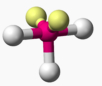
     As applied to chlorine trifluoride, it results in a trigonal bipyramidal geometry for the shape-determining five electron pairs. One of the trigonal positions is occupied by the pair deriving from a Cl-F bond (F=white, Cl=red below). The other two trigonal positions are occupied by two sets of electron lone pairs (yellow below) at ≥ 120° (rule 5, but much more and the repulsions between the lone pair and the  trigonal Cl-F bond would become too great, rule 6 above). The remaining two Cl-F bond pairs occupy the di-axial positions (rule 7 above).

    VSEPR

    The above at least is the standard “text-book” picture. Regular readers of this blog may have noted that I often like to question the text books. So here goes. My issue is with the above explanation, of five electron pairs all associated in some way with the central atom. An expanded octet in other words. Well, if you take a look at earlier blogs, you may have observed that this expanded octet is not real (IMHO). If it’s not real, then we cannot be dealing with five electron pairs. Can VSEPR work with only eight electrons in this instance? And what are the coordinates of the so-called two “lone pairs”: is the angle subtended at the Cl by them really trigonal (~120)?

    I start with computing an accurate wavefunction, using the DFT-based ωB97XD/6-311++G(d,p)[cite]10.6084/m9.figshare.757728[/cite]. The electron count and the coordinates of the localised basins will be obtained using ELF (Electron localisation function).

    Click for  3D
    Click for 3D
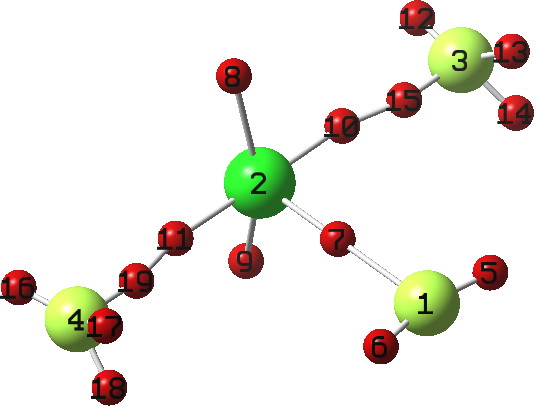
    1. The electron basins are shown here as red spheres; 8 and 9 are the “lone pairs”, as it happens a very reasonable description since the populations for these are 2.07e. The 8-2-9 angle of 154° results from rule 5 above; lone pairs repel greatly. Indeed, one might almost describe 8 and 9 as being di-axial. In which case, the geometry is not that of a trigonal bipyramid but is closer to that of a square pyramid.
    2. Basin 7 is a Cl-F bond, with a population of 0.87e, rather less than a “pair” (the Wiberg bond index is 0.82).
    3. Basins 11+19 and 10+15 (similar basin splitting is observed for F2[cite]10.1002/chem.200500265[/cite]) each total 0.91e; again less than a pair (Wiberg index 0.63).  So the three Cl-F bonds are < 2-electron bonds and so their mutual repulsion might be expected to be less than rule 7 above. Indeed, any small 2-electron-3-centre 1-4 or 1-3 contributions (Wiberg index 0.07) might cause these bonds to actually move together resulting in the "T" shape in which the angle 4-2-3 is actually < 180° (174). 
    4. Other features include eg the orientation of the “lone pairs” on fluorines 3 and 4, in which e.g. 16 is oriented anti-periplanar to the 2-1 bond. This is in fact an anomeric effect! An NBO analysis reveals E(2) between Lp16 and σ*2-1 to be 6.3 kcal/mol, a relatively weak but still a real anomeric interaction.
    5. The total electron count for the ELF basins surrounding the central Cl is 6.84, not 10 as was implied in the simple argument set out above.

    VSEPR theory is a highly simplified way of looking at the geometric origins of this odd little molecule; an ELF analysis likewise paints only a partial picture. Indeed, it seems doubtful that any simple way of regarding this species can ever be entirely adequate. But we should be mindful that the “EP” (electron pair) of VSEPR might itself be rather misleading in perpetuating the idea that such main group elements contain expanded octets. But the geometry of chlorine trifluoride makes sense without imposing 10 valence electrons on the chlorine after all!


    See slso bromine trifluoride and crystal data for such species.

    Acknowledgments

    This post has been cross-posted in PDF format at Authorea.

  • Hexacoordinate hydrogen.

    A feature of a blog which is quite different from a journal article is how rapidly a topic might evolve. Thus I started a few days ago with the theme of dicarbon (C2), identifying a metal carbide that showed C2 as a ligand, but which also entrapped a single carbon in hexa-coordinated mode. A comment was posted bringing attention to the origins of the discovery of hexacoordinated carbon, and we moved on to exploring the valency in one such species (CLi6). Here I ask if hydrogen itself might exhibit such coordination.

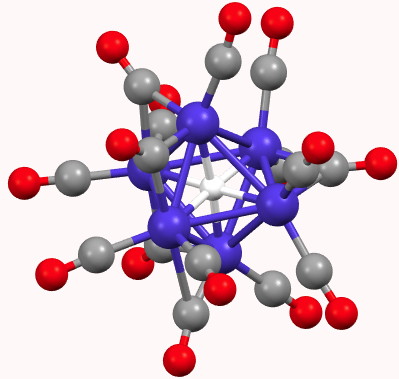
    Click for  3D.
    Click for 3D.

    In fact, such a system was first reported as long ago as 1981[cite]10.1021/ja00396a028[/cite]. This contains a cobalt carbonyl anion of the type [Co6H(CO)15]. The hexacoordinated hydrogen had a measured 1H NMR chemical shift of 23.2 ppm (very low field), a value normally more associated with a proton rather than a hydride.

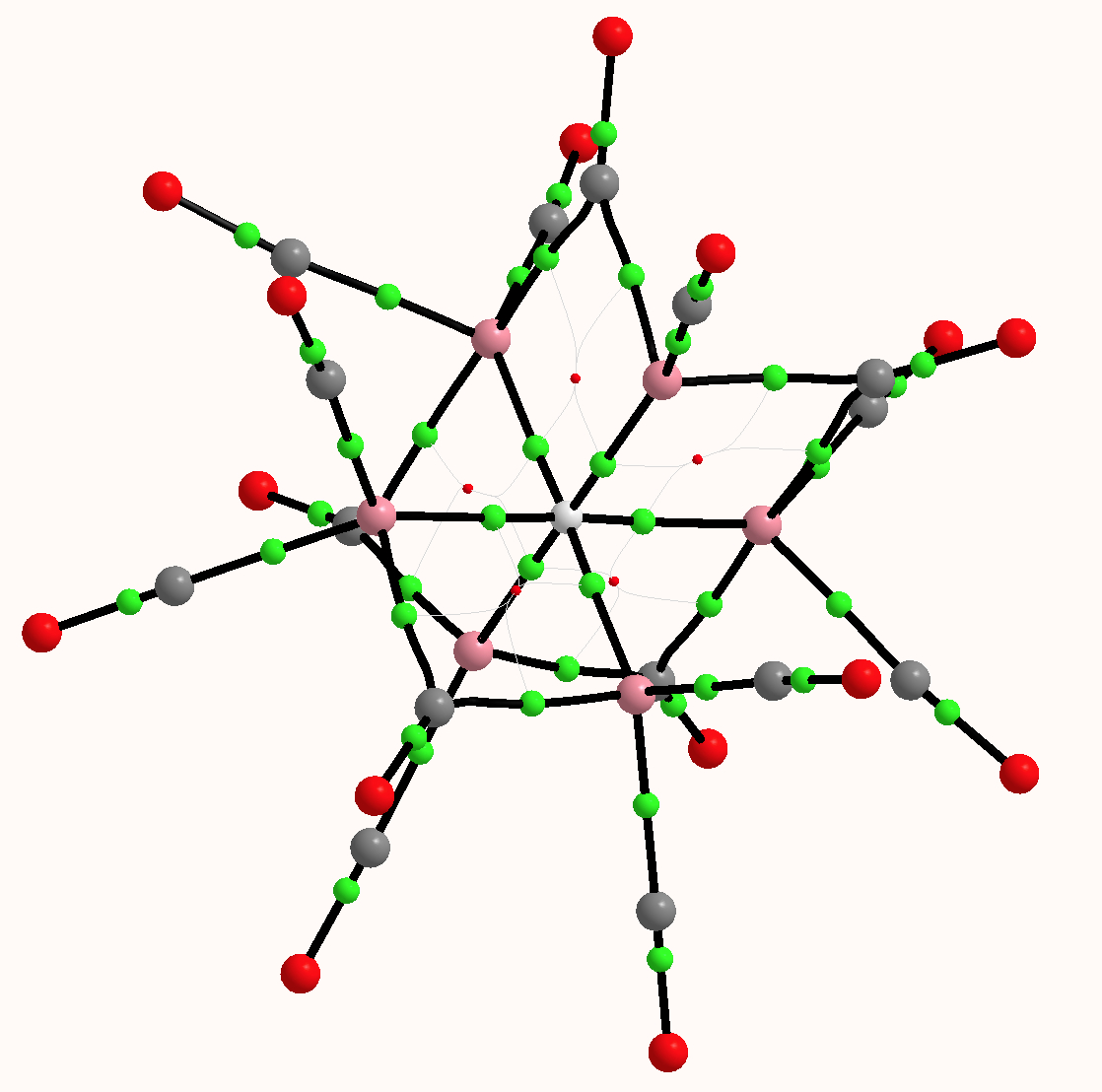
    What does quantum mechanics say about this system? The QTAIM (ωB97XD/6=311G(d,p) calculation[cite]10.6084/m9.figshare.741232[/cite]) is shown below. The green spheres represent bond critical points, and indeed six surround the central hydrogen with octahedral coordination. The value of ρ(r) for these varies from 0.074 to 0.082 au, which is a higher electron density than might be found for e.g. a hydrogen bond (which is typically 0.020 – 0.010 au). The individual Co…H Wiberg bond order indices are ~0.1 (the total Wiberg bond index is 0.86).

    Co6H-QTAIM

    The computed 1H chemical shift[cite]http://hdl.handle.net/10042/24804[/cite] (relative to TMS) of the hydrogen is 30.8 ppm, which seems to agree with an interpretation based on a proton in the interstitial cavity. However, the NBO natural charge on this hydrogen is -0.41, for a valence population of 1.40 electrons (and a Rydberg population of 0.01), which makes it more of a hydride anion than a cationic proton. NBO characterises this electron population as “Lp” (Lone pair). One might conclude from these apparently opposed indications that the deshielding of the 1H is less to do with its resemblance to a proton, and is more due to the local magnetic currents originating from the metal atoms.

    It is still nicely surprising that even an element as small as hydrogen can sustain hexa-coordination. It also reminds that although each of the coordinations is via what can reasonably be called a bond, the hydrogen nevertheless does not exceed its maximum valence electron shell electron count of two;  in that sense it is not hypervalent.

  • Is CLi6 hypervalent?

    A comment made on the previous post on the topic of hexa-coordinate carbon cited an article entitled “Observation of hypervalent CLi6 by Knudsen-effusion mass spectrometry“[cite]10.1038/355432a0[/cite] by Kudo as a amongst the earliest of evidence that such species can exist (in the gas phase). It was a spectacular vindication of the earlier theoretical prediction[cite]10.1021/ja00379a051[/cite],[cite]10.1021/ja00356a045[/cite] that such 6-coordinate species are stable with respect to dissociation to CLi4 and Li2.

    The terminology describes these lithium carbides as effectively hypervalent; Kudo in the abstract of his 1992 article uses the more explicit phrase “carbon can expand its octet of electrons to form this relatively stable molecule“. We are taught early on in chemistry that the carbon octet is due to double occupation of four molecular orbitals formed using linear combinations derived from the relatively low energy 2s/2p carbon atomic orbital basis. Octet expansion on carbon must therefore involve to some degree the next atomic shell (3s/3p), which is normally regarded as too high in energy to be capable of significant population for carbon. But use of the 3s/3p shell seems at first sight inevitable. If one constructs an octahedral complex CLi6 surely ten electrons must be involved in bonding, four from the carbon and six from the equivalent lithiums? The 3s/3p carbon population must therefore be ~2 electrons, and we can truly describe a molecule where carbon has of necessity expanded its octet of electrons to ten as hypervalent. Or can we?

    How does a quantitative (ωB97XD/6-311++G(d) ) calculation[cite]http://hdl.handle.net/10042/24790[/cite] reveal this effective hypervalency? 

    1. The octahedral geometry is indeed a stable minimum, with the lowest vibrational wavenumber being 194 cm-1.
    2. It also checks out as clearly a closed shell species, stable to open shell perturbations.
    3. An NBO analysis reveals the Rydberg population (those 3s/3p atomic orbitals) to be only 0.09 electrons.
    4. It partitions the electrons into 13.97 for the 1s cores of the seven atoms, 7.67 “valence-Lewis” (i.e. shared covalent) and a mysterious 2.27 (valence, non-Lewis).

    We now have a problem. One of the standard methods for partitioning electrons has isolated two of our ten electrons and placed them, with small partial occupancy, into unshared “lone pairs”, located as it happens on the lithium atoms (shown below for one of these partial lone “pairs”). The carbon is NOT hypervalent, and it has NOT expanded its octet.

    Click for  3D
    Click for 3D

    So I tried another procedure, deliberately chosen to be rather different from the orbital-based NBO formalism. This is analysis of the ELF, or electron localisation function, and represents an attempt to derive the result based on a function related to the electron density. The red spheres shown below are the centroids of the twelve ELF basins located:

    Click for  3D
    Click for 3D

    Each of these (equivalent) basins has an electron population of ~0.81, making ~9.7 electrons in total. Each lithium sits on a square arrangement of four of these basins, and so has access to ~3.2 valence electrons. How do we interpret the situation for carbon however? Does its valence shell contain an expanded 9.7 electrons? Well, not necessarily. You can see that each of the basins has a three-centre relationship between the one carbon and TWO lithiums. These electrons contribute not just to C-Li bonding, but also to Li…Li bonding. So these 9.7 electrons contribute in part to bonding that does NOT involve the carbon. We can see this in the (Wiberg) bond orders, 0.254 for the C-Li interaction, and 0.116 for adjacent Li…Li interactions (such an explanation was also suggested for why II7 has no expanded octet at the central iodine). In fact, the origins of this effect were first clearly identified in the theoretical analysis of 1983[cite]10.1021/ja00356a045[/cite]: “the extra electrons beyond the usual octet are involved with metal-metal bonding rather than with interactions of the metals with the central atoms“.

    It is nice to see that despite the passage of 30 years, and despite the introduction of many new ways of analysing the wavefunctions and hence the bonding of molecules, the essential original interpretation[cite]10.1021/ja00356a045[/cite] remains robustly correct! 

  • Au and Pt π-complexes of cyclobutadiene.

    In the preceding post, I introduced Dewar’s π-complex theory for alkene-metal compounds, outlining the molecular orbital analysis he presented, in which the filled π-MO of the alkene donates into a Ag+ empty metal orbital and back-donation occurs from a filled metal orbital into the alkene π* MO. Here I play a little “what if” game with this scenario to see what one can learn from doing so.

    Au+cbd

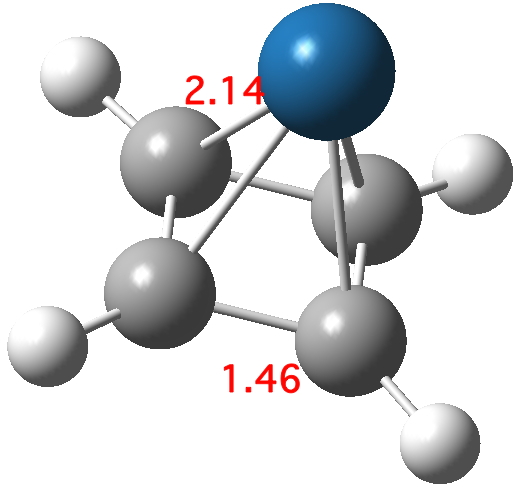
    Firstly, I will use Au+ instead of Ag+, so as to make a comparison with Pt2+ a little more direct. The electronic configurations are of course [Xe].4f14.5d10.6s0 and [Xe].4f14.5d8.6s0 respectively. I will also replace a simple ethene with cyclobutadiene, the intent here being that this cyclo-diene is a very much better π-donor due to its anti-aromatic character. It also now has the possibility of acting as a four or a two-electron donor. I started with M=Pt+[cite]10.6084/m9.figshare.703546[/cite] by adding another double bond to the structure of the ethene complex. 

    Pt-cbd

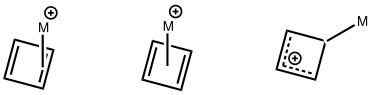
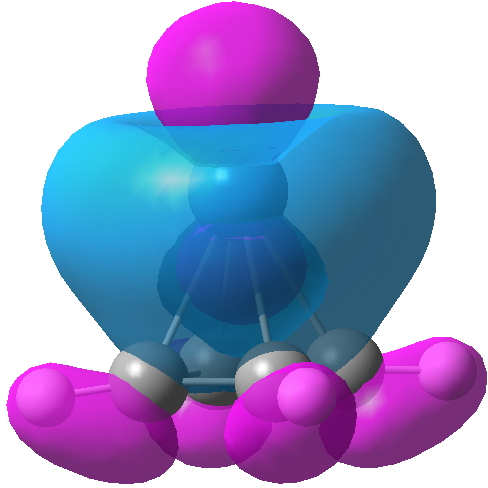
    Optimising this starting structure in fact moves the metal and the final geometry has C4v symmetry; in other words the metal is bound symmetrically to all four carbons. The four C-C lengths are all the same (1.46Å) and strongly suggest that four electrons from the cyclobutadiene are participating in bonding; the Pt2+ is clearly capable of accepting four electrons, two into 6sand two into 5d8. In the process, the cyclobutadiene looses its antiaromaticity. The molecular orbitals of this species are all lovely; I illustrate just one below.

    Click for  3D.
    Click for 3D.

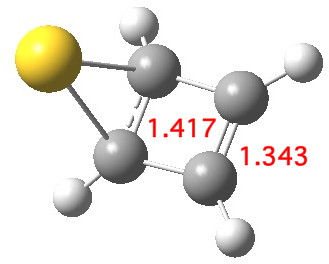
    If the Pt in this C4v structure is mutated into Au+, the resulting optimised stationary point exhibits a negative force constant characteristic of a transition state[cite]10.6084/m9.figshare.703547[/cite]. As the d-shell is already fully, the Au can only accept two electrons, and this is therefore a nice illustration of the “18-electron” rule in operation. So, the Au+ complex must exist in at least one lower energy form. For example, one where the Au+ is coordinated to only one alkene is 94 kcal/mol lower in free energy.[cite]10.6084/m9.figshare.703576[/cite] This form results in electrons from the coordinated alkene being donated into the 6s Au orbital, and this action reduces the anti-aromaticity of the cyclobutadiene ring.

    Au-cs

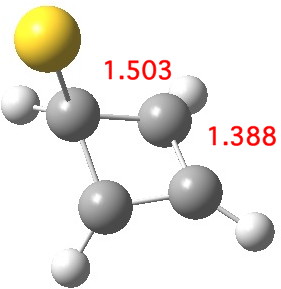
    Another isomer also achieves this result, resulting in a further lowering in free energy of 11.0 kcal/mol[cite]10.6084/m9.figshare.703577[/cite] The anti-aromaticity this time is eliminated by forming an allyl cation on the ring. I have described this mode in another post, commenting on the effect when a guanidinium cation interacts with cyclobutadiene.Au-cs1

    We have learnt that cyclobutadiene has many modes for eliminating 4n-electron antiaromaticity and other destabilising influences upon the ring. It can accept four electrons from a suitable acceptor (Pt2+), or two electrons from Au+ in two different ways.

  • Lithiation of heteroaromatic rings: analogy to electrophilic substitution?

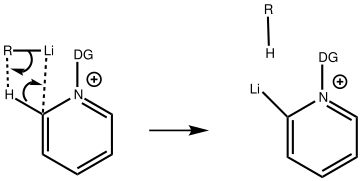
    Functionalisation of a (hetero)aromatic ring by selectively (directedly) removing protons using the metal lithium is a relative mechanistic newcomer, compared to the pantheon of knowledge on aromatic electrophilic substitution. Investigating the mechanism using quantum calculations poses some interesting challenges, ones I have not previously discussed on this blog.

    Li

    My model will be the system above, based on the pyridine ring, and also carrying a directing group (R=Me, DG = O). The reagent used to remove the hydrogen and to substitute it (with a carbon-metal bond) is an alkyl lithium. The arrow pushing I have shown is speculative, since at this stage we have no idea if it really is such a pericyclic process. Indeed things are about to get complicated when we find out that the structure of the electron deficient lithium alkyls is much more complex than one might imagine.

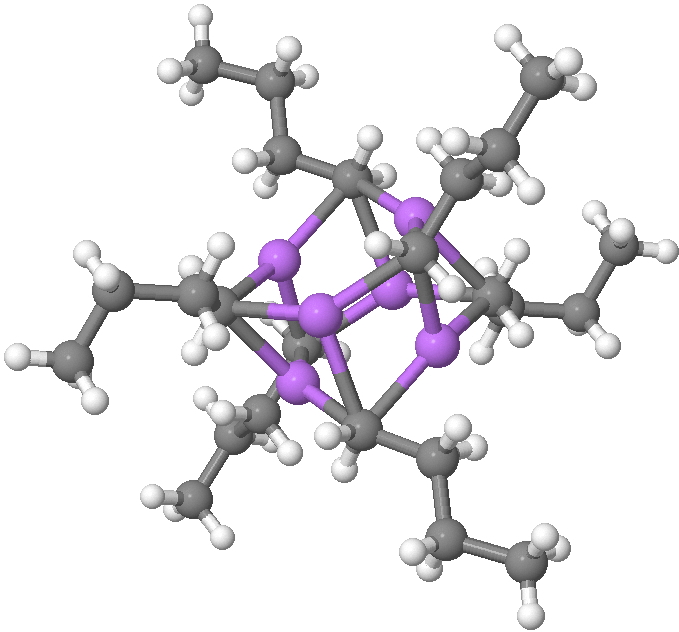
    Fortunately, crystal structures are available. Let me start with n-butyl lithium, a very commonly used reagent[cite]10.1002/anie.199305801[/cite]. This forms a complex cluster of six lithiums, in which each metal is surrounded by three CH2 terminii of the n-butyl anion, and vice-versa, each  CH2 group is in contact with three lithium atoms (making the carbanionic carbon in effect hexa-coordinate).

    SUHBEC. CLICK FOR 3D.
    SUHBEC. CLICK FOR 3D.

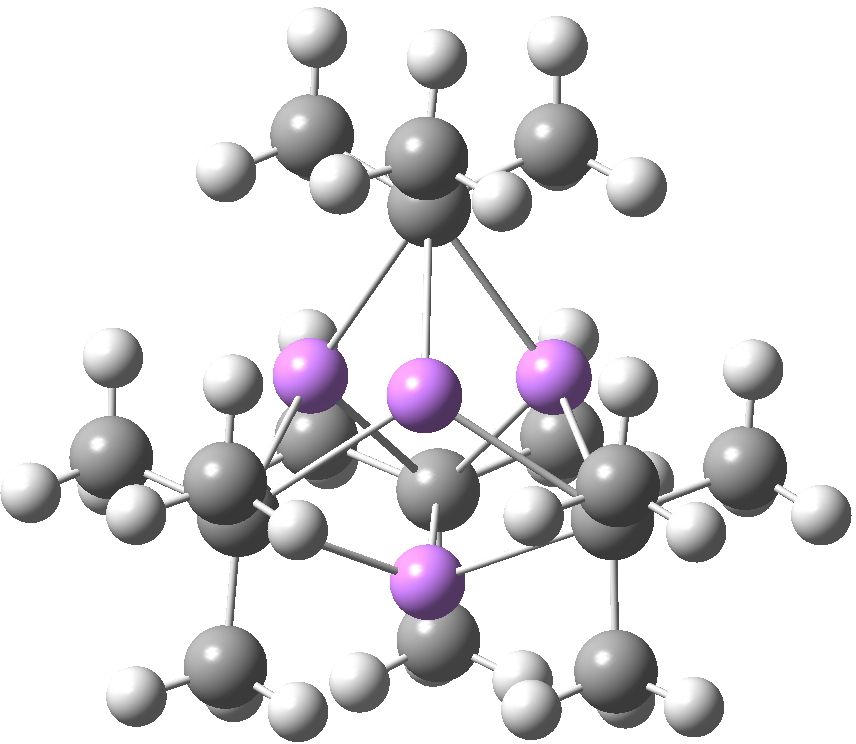
    Another frequently used lithium alkyl is the t-butyl derivative, which has a different tetrameric motif, again with each Me3C coordinated to three Li atoms (making this carbon again hexa-coordinate).

    SUHBIG. Click for 3D.
    SUHBIG. Click for 3D.

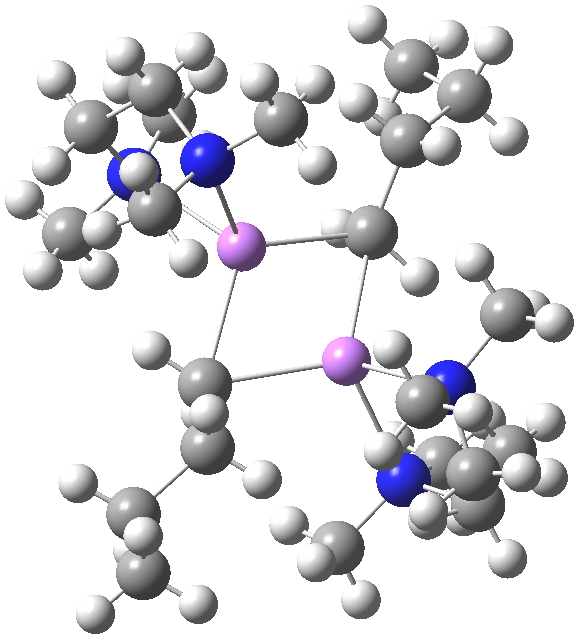
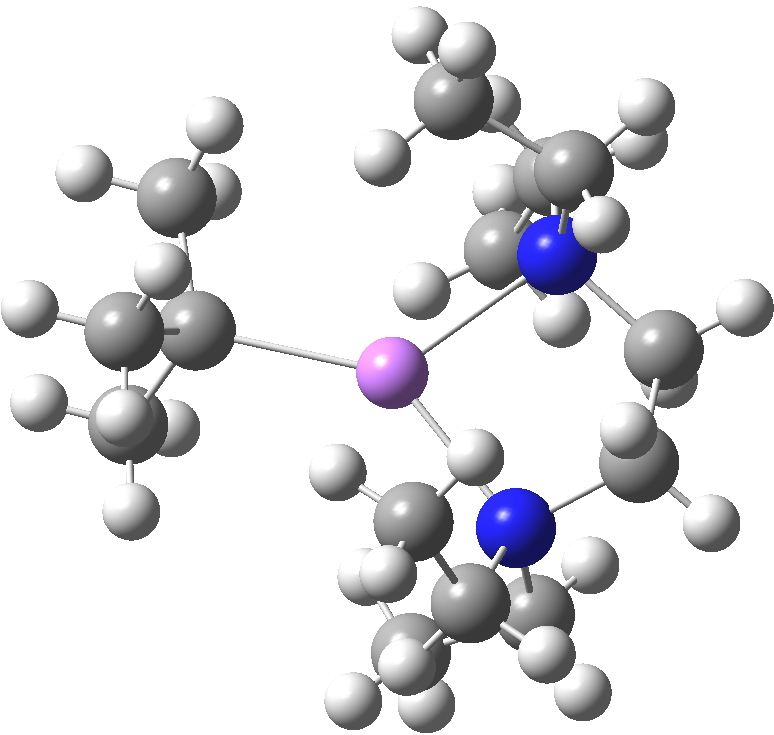
    The interesting issue now is whether these metal alkyls react in these oligomeric forms or whether they are in equilibrium with a reduced monomeric form that constitutes the reactive species. With n-butyl lithium, it is possible to try to achieve this chemically by adding tetramethylethylenediamine. As you can see from the structure below, this strategy can be only partially successful; in this instance the  CH2  coordination is reduced from three Li atoms to two[cite]10.1021/ja00057a050[/cite]. With t-butyl lithium, this strategy reduces the structure to a true monomer[cite]10.1021/ja8058205[/cite], the Me3C now being just 4-coordinate.
    WAFJAO. Click for 3D.
    WAFJAO. Click for 3D.
    LOKTAH. Click for 3D.
    LOKTAH. Click for 3D.

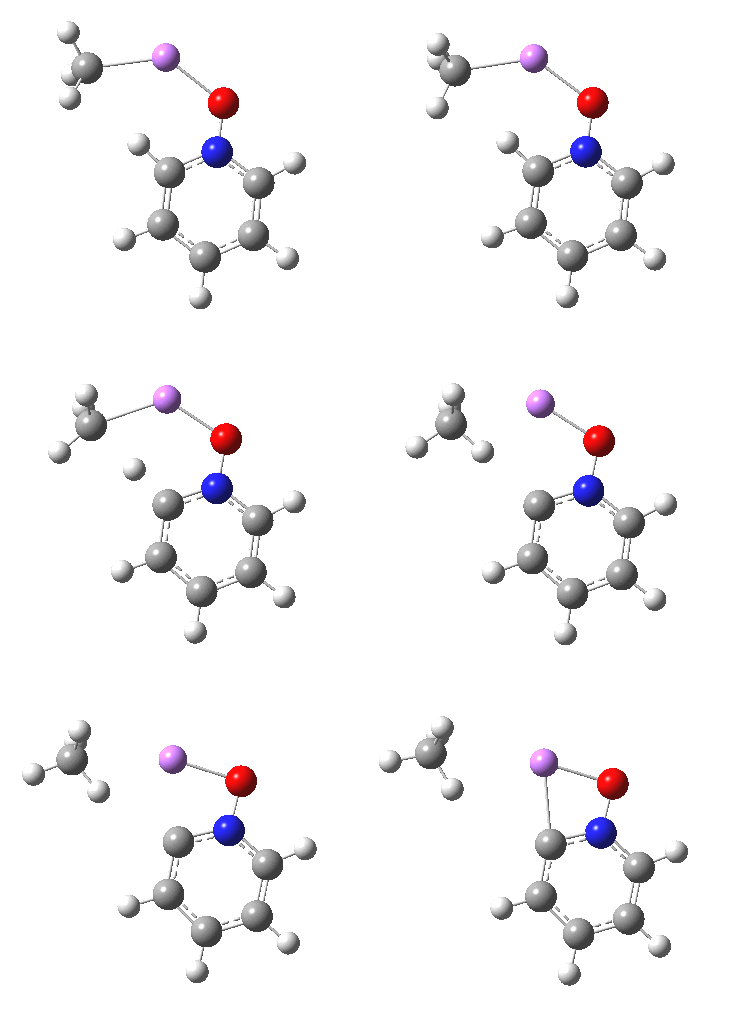
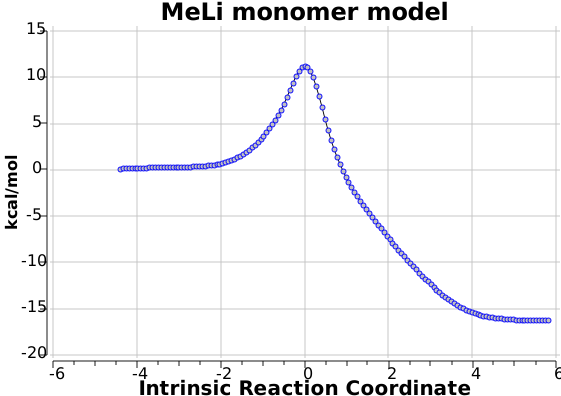
    These systems are all pretty large to investigate using modelling, and so I will start the process by reducing the alkyl lithium model down to just a monomeric CH3Li molecule, placing it and pyridine-N-oxide into a continuum solvent cavity (ωB97XD/6-311G(d,p)/SCRF=benzene) and seeing what happens[cite]10.6084/m9.figshare.651068[/cite]. You can see it is both facile and a concerted process, corresponding pretty much to the arrow pushing illustrated at the top of this post.

    Li1a  Li1a

    But wait, where have we seen an aromatic substitution reaction which does exactly this in a single concerted step, first remove a proton and then replace it with an electrophile? This was in fact revealed in the IRC for electrophilic substitution of indole in the 1-position! Of course, there is a difference. With indole, we had pseudo-inversion at the nitrogen centre (a pseudo-Sn2 reaction if you will), whereas here it is pseudo-retention at the 2-carbon.

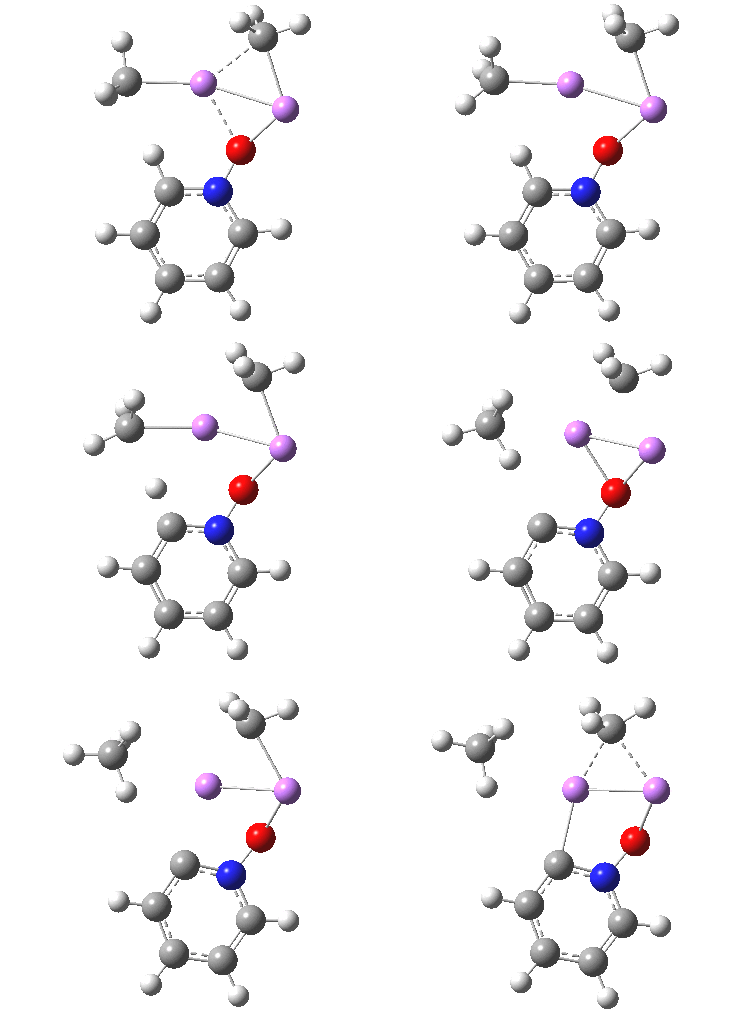
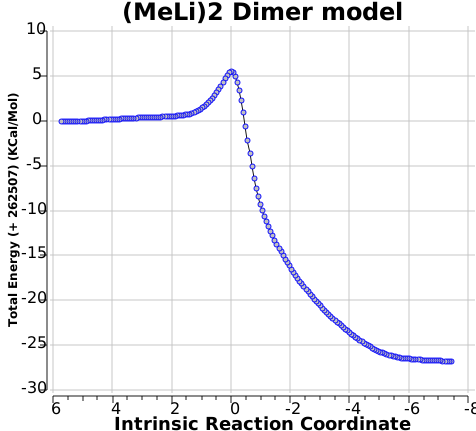
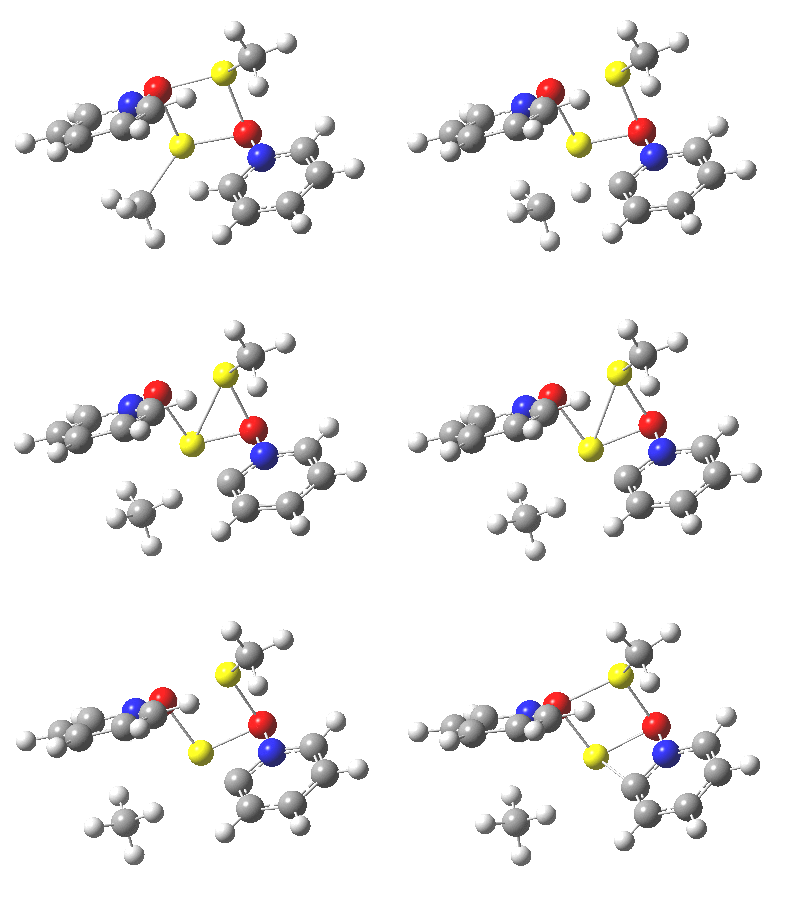
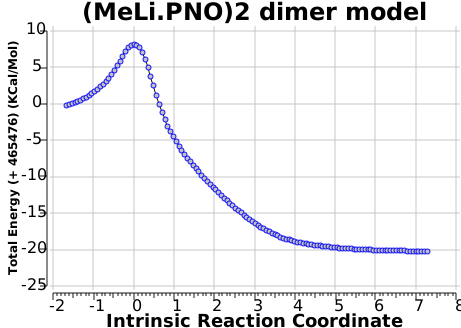
    Is this model robust? Let us try a dimeric (MeLi)2 model coordinated to one pyridine-N-oxide. The IRC[cite]10.6084/m9.figshare.651764[/cite] is very similar, but the initial barrier to proton transfer is lower.

    Li2 Li2

    Next, we have a model in which two molecules of pyridine-N-oxide (PNO) aggregate around two molecules of MeLi. This model is starting to resemble the tetramethylethylenediamine partially de-aggregated n-butyl lithium structure shown as WAFJAO above. The basic features[cite]http://doi.org/10042/24399[/cite] of the process remain intact, including the small barrier.

    Li2d Li2d

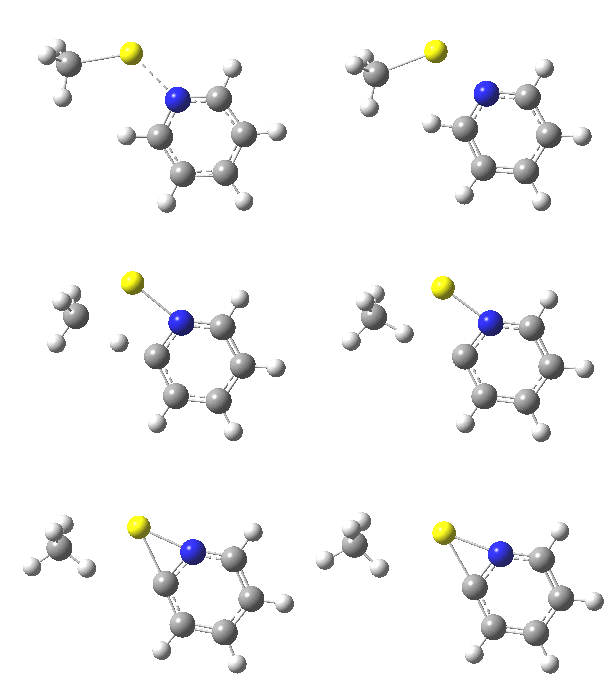
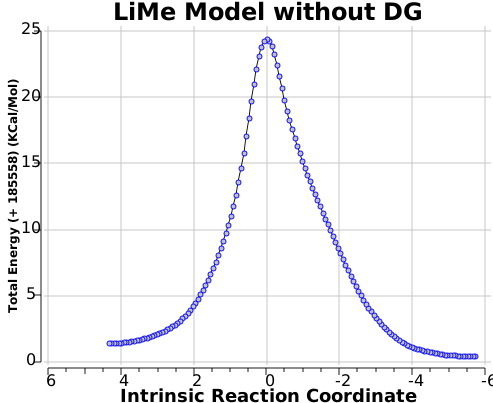
    Finally, I go back to the simple model, but with the directing group (DG) removed to give just pyridine. The profile[cite]10.6084/m9.figshare.653672[/cite] is the same, but the barrier is much larger. So perhaps both aggregation and coordination to a directing group help accelerate the reaction?

    Li0a Li0a

    So two reaction types, not normally associated with each other, turn out to have some intriguing similarities and an interesting difference.

  • The “shocking” Xe-Au bond.

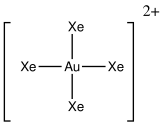
    Chemistry rarely makes it to the cover of popular science magazines. Thus when this week, the New Scientist ran the headline “Forbidden chemistry. Reactions they said could never happen“, I was naturally intrigued. The examples included Woodward and Hoffmann’s “symmetry-forbidden” reactions, which have been the subject of several posts here already. But in the section on nobel gas chemistry, the same Hoffmann is reported as having been shocked to hear of a compound of xenon and gold, both of which in their time were thought of as solidly inert, and therefore even more unlikely to form a union.


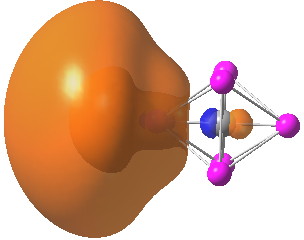
    Science magazines are often fearful of showing molecular structures on their pages (much like mathematical equations) and so the “shocking” compound is not illustrated in the article; you can see the essential feature above (the counterion is the otherwise unremarkable Sb2F11). Here, I include the 3D crystallographic coordinates (published in 10.1126/science.290.5489.117) which you can explore by clicking on the above graphic or view below as a rotatable 3D model.

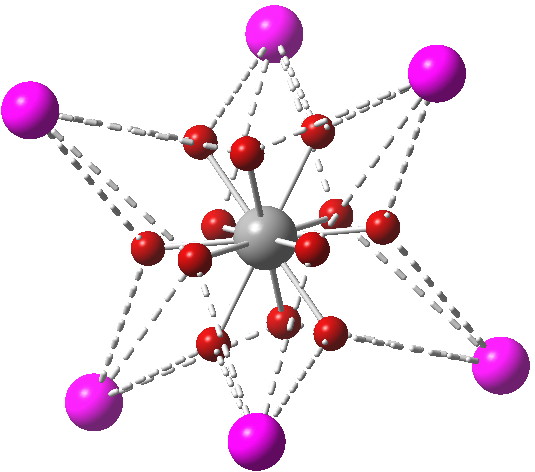
    Since the year 2000, when the above was reported, there have been very few additional examples, and so it remains a rare phenomenon. I thought it might be amusing to also give an example of the reverse phenomenon, a reaction that chemists said should happen, but which they had great difficulty in inducing, namely the formation of perbromate salts. The reaction was eventually induced by resorting to nuclear physics, and the radioactive transmutation of Se83 to Br83. Once chemists had been persuaded it really could be made, lots of more conventional ways of preparing perbromates were discovered.

    Finally, I ponder how long it might take for magazines such as New Scientist to include interactive diagrams such as the below on the pages of the (increasingly) electronically delivered editions? Or indeed, when mainstream chemistry journals might start incorporating “HTML5” into their own production processes.


  • Hunt the charge: the Cheshire cat of chemistry

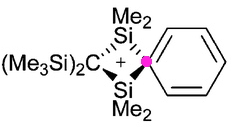
    Charges in chemistry, like the grin on Lewis Carroll’s cat, can be mysterious creatures. Take for example the following structure, reported by Paul Lickiss and co-workers (DOI: 10.1039/b513203g).

    A silenium cation.

    A student of chemistry might be wondering what is going on, since this representation seems to “break the rules”. Thus there is a clear-cut pentavalent carbon atom, but even more mysteriously, there is a positive charge that seems to be floating uncertainly (much like Carroll’s Cheshire cat). Another Lewis famously introduced the concept of the covalent electron pair bond in 1916, and ever since then we tend to represent these types of bond with (straight) lines. If this convention is adhered to rigidly, then the carbon highlighted with the purple dot would have five lines to it, 10 electrons, and therefore in violation of the octet rule for main group elements. Nowadays however, a line between two atoms is not necessarily interpreted as a Lewis structure, but more simply representing a connection to be used in a connection table for indexing and searching the structure. So what IS the valency of this carbon, and where IS that charge located?

    One starts by converting the above representation into more formally correct Lewis, or valence-bond structures.

    Valence bond structures

    These structures (there are more, but they are related by symmetry to those shown above) are bound, by the rules, to locate the bonds exactly, and hence allow one to infer where the charge is. The latter two emerge as different resonance forms of what we call Wheland intermediates. The former is the silicon equivalent of a tertiary carbocation. Quantum mechanics now tells us which of these (if any) is the most realistic. To do this, I invoke the ELF (electron localisation function) method, which identifies so-called synaptic basins in the function, and how much electron density is contained in each (there are of course many other ways of partitioning the electrons).

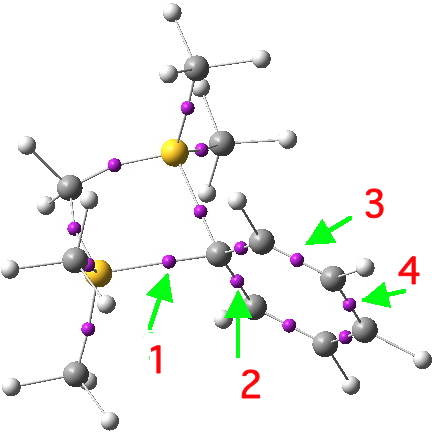
    ELF basin integrations.

    Basin 1 has 1.51, basin 2 has 2.39, basin 3 has 2.84 and basin 4 has 2.65e. Let us discuss the significance of these.

    1. Basins 1+2 (+ their symmetric equivalent) together contain 3.02 + 4.78 = 7.8e. Thus this carbon definitely is not hypervalent, since its octet is pretty much satisfied! But notice that this carbon is not a conventional so-called sp3 hybridized carbon, which has four equal two-electron bonds. This one has two bonds with significantly less than two electrons, and two with significantly more! A most unusual 4-coordinate carbon. Bond 1 has a Wiberg bond index of 0.48 and bond  2 is 1.29.
    2. By the same process, each Si atom integrates to 7.72e. If either were to be a silacation, that would imply only 6 electrons, which is clearly not the case for either  Si.
    3. How about the ortho, meta and para carbons of the phenyl ring? These are respectively 7.39, 7.64 and 7.44e. These are definitely a bit low, and taken together they constitute the equivalent of a six-valence electron carbocation. So it looks as if we have found our positive charge, which is delocalized on the phenyl ring in the manner of a Wheland intermediate (with more of the +ve charge on the o/p positions).

    Well, if this species is really a Wheland intermediate in which the cyclic conjugation of π-electrons is disrupted, the phenyl ring should not be aromatic. In fact, it turns out this ring IS recognisably (if not highly) aromatic. Its NICS(1) index value is -8.3ppm (benzene is ~-11 on the same scale). Exactly the same phenomenon was found for the supposed Wheland intermediate (which in fact turned out to be a transition state) identified as the mechanism of nitrosation of benzene using CF3COONO. Can all these disparate properties be reconciled?

    Yet another way of looking at what is happening in this molecule is Natural bond orbital analysis (NBO). I have previously used this technique to probe the structure of DNA, and for identifying unexpected anomeric effects (amongst others). Applied to this system, it reveals four donor-acceptor interaction energies E(2), each of ~ 10.5 kcal/mol, between the four permutations of e.g. bond 1 acting as the donor, and bond 3 acting as an acceptor, a σSi-C*C-C interaction. The value of E(2) corresponds to almost a full anomeric effect (these tend to be ~15 kcal/mol if the donor is a O lone pair and the acceptor a  C-O bond), and there are four of them after all! This particular conjugation is the one that makes the phenyl ring retain much of its aromaticity, i.e. having its cake and eating it.

    Notice that individually, each of the effects I have described above is actually borrowed from fairly conventional introductory level organic chemistry (Lewis structures, the octet rule, cation stability, aromaticity, stereoelectronic/anomeric effects), and it shows how a combination of these in a single molecule can result in quite unusual properties.

  • Extreme chemical intimacy: the Xe2@C60 ion-pair.

    Unusual bonds are always intriguing, and the Xe-Xe bond is no exception. It was first reported (10.1002/anie.199702731) for the species Xe2+. Sb4F21 and its length (3.09Å) was claimed as “unsurpassed in length in main group chemistry by any other element -element bond”. Krapp and Frenking then creatively tweaked the bond (in a computer). The counterion was replaced by C60, and the two xenon atoms placed inside! Buckyballs have a fascinating ability to absorb electrons, up to six in fact, from whatever is placed inside the cavity, and so this assembly acts as a rather intriguing ion-pair. So the issue reduces to how many electrons does C60 manage to scavenge from two Xenon atoms, and what is the nature of any resulting bonding formed between these two atoms?

    Before taking a look at that question, I note first a previous post in which I speculate upon the ultimate chemical bond, a 5f-φ bond between two uranium atoms inside C60. The U2 atoms have indeed been stripped of the full complement of six electrons, and the resulting U26+ ion is claimed to support a φ bond. But back to Xe. Krapp and Frenking conclude (from NBO charges) that ~1 electron has been stripped out of Xe2, and the resulting (calculated) Xe-Xe bond length is shortened to 2.49Å, which is actually less than calculated for an isolated Xe22+ ion (2.75Å). This is an unusual (and it has to be said hypothetical) example of a compressed (thermodynamically unstable) bond which would certainly “explode” if released from its prison, reclaiming the electron in the process. The system is also of interest given the unusual nature of the (charge shift) bonding in F2, Cl2, Br2 and also what the effect of injecting electrons into an aromatic periphery of carbon atoms would be (adding two electrons nominally subverts an aromatic 4n+2 rule into an antiaromatic 4n one).

    I decided to take another look at Xe2@C60 because since the original study of this species in 2007, computational methodology has evolved to (a) allow the effect of dispersion forces to be included and (b) if the outer skeleton does indeed absorb electrons, a (continuum) solvation correction may also influence the properties. This was done as a ωB97XD/cc-pVDZ/SCRF=water calculation, with aug-cc-pVDZ-pp on Xe.

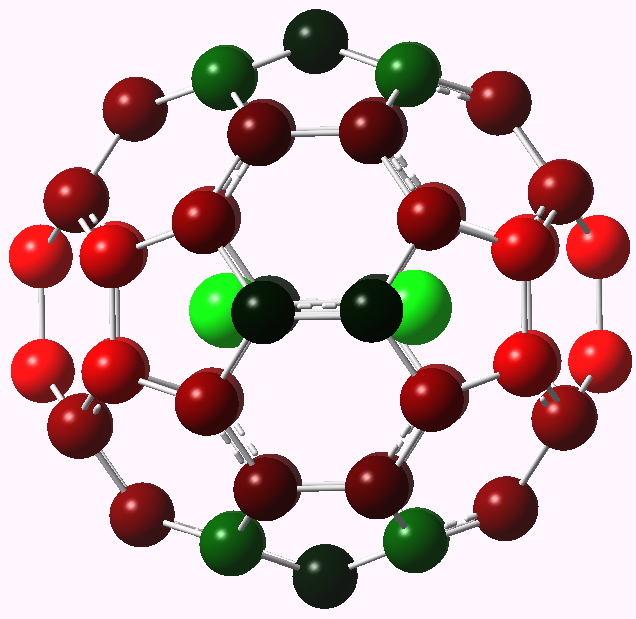
    Xe2@C60 showing charge distribution. Click for 3D.
    The result is shown with the  atoms colour-coded for charge distribution (red = -ve, green = +ve), showing the two six-membered rings opposite the two  Xe atoms have accumulated electrons, at the expense of the Xe and the central carbon atoms. Appropriately, these two  end rings are also de-aromatised, with ring bonds of  1.498, 1.424, 1.473, 1.486, 1.473, 1.424Å, compared with 1.451/1.388Å for pure C60 with nothing inside. The results of a QTAIM analysis of the electron density ρ(r) show a Xe-Xe bond critical point (νXe-Xe 401 cm-1) with ρ 0.114, and ∇2 -0.0013 for a length  of 2.43Å. ELF shows a  Xe-Xe basin integrating to 0.81 electrons. All of this is pretty much in accord with Krapp and Frenking‘s original very comprehensive study. So we see how the effect of pressure can induce (1-electron) bonds to form between atoms which would normally be considered impossible as bonding partners. It is also an unusual example where ionisation is accompanied by covalent bond formation (normally, ionization is at the expense of a covalent bond).

  • Hexavalent carbon revisited (and undecavalent boron thrown in).

    A little while ago, I speculated (blogs are good for that sort of thing) about hexavalent carbon, and noted how one often needs to make (retrospectively) obvious connections between two different areas of chemistry. That post has attracted a number of comments in the two years its been up, along the lines: what about carboranes? So here I have decided to explore that portal into boron chemistry. The starting point is the reported crystal structure of a molecule containing a CH12B11anion (DOI: 10.1021/ja00201a073). This differs from the molecule I previously reported in having not so much 5C-C + 1C-H bonds around a single carbon, but instead 5B-C + 1C-H bonds. The basic cluster is much in fashion (as B12Cl122-) for its properties as a non-coordinating counterion.

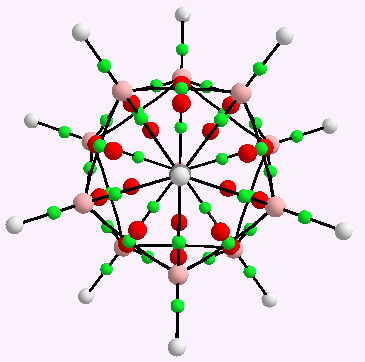
    The CH12B11 (-) anion. AIM analysis. Click for 3D.
    Above is the QTAIM topological analysis of the electron density (B3LYP/6-311G(d,p) calculation) which reveals all 11 borons and the single carbon atom as being surrounded by six bond critical points. ELF tells us how many electrons populate the synaptic basins.

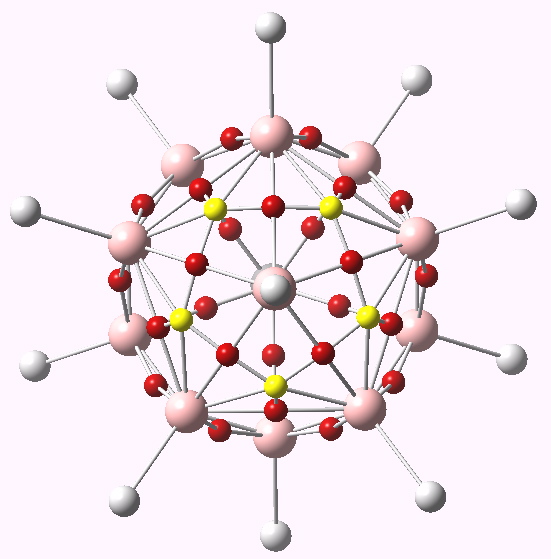
    The CH12B11 (-) anion ELF basins. Click for 3D.
    This clearly reveals that the bonding to the carbon and all the boron atoms is non-Lewis, i.e. that of the six bonds to each of the non-hydrogens, five are not of the Lewis two-electron pair type. The carbon for example is surrounded by five C-B basins, each of 1.02e, with its valence shell occupied by ~7.2e in total. The boron involved in each of the C-B bonds also has five bonds, with basins corresponding to 1.01, 2*0.95 and 2*0.73e. The boron directly opposite the carbon has five basins corresponding to five B-B two-centre bonds of 0.6e each, and a further five basins of 0.3e corresponding to 3-centre BBB bonds (shown as yellow spheres above). Arguably, that particular boron atom has eleven bonds to it!

    This molecule reveals quite clearly how sterile the debate is about whether carbon can be hypervalent. If the Lewis definition of a bond as an electron pair is removed, then hypervalency exceeding four can easily be obtained. What is certainly sacrosanct is the valence shell octet for carbon (and boron).

    Finally, I throw B12H122- in. This has the wonderful icosahedral symmetry, and as you might expect, each boron is defined by five two-centre B-B bonds (~0.66e) and five three-centre BBB bonds (~0.24e), as well as a conventional two-electron B-H bond. Each boron is undecavalent! Not seen that particular valency before!!