Category: Interesting chemistry

Comments on interesting chemistry in the recent literature.

  • A 1965 precedent to the Dewar Pyrimidone MOST system – and text book examples of the Woodward-Hoffmann pericyclic reaction selection rules

    In the previous post,[cite]10.59350/jhsbq-sfs70[/cite] I noted the photochemical isomerisation of a pyrimidone into what is called the bicyclic Dewar form, being part of a solar energy storage system.[cite]10.1126/science.aec6413[/cite] A colleague (thanks Alan!) has recollected a very similar example dating from 1965[cite]10.1039/C19650000468[/cite] in which a related molecule known as a diazepinone 72 (scheme below) is converted by light into a Dewar form 73.

    This example was first highlighted in Woodward and Hoffmann’s (WH) famous 1971 book on the topic of the conservation of orbital symmetry in which they noted that the Dewar form of a diazepinone (73 in scheme) had been observed[cite]10.1039/C19650000468[/cite] to thermally “revert to diazepinone in the dark”. The original authors[cite]10.1039/C19650000468[/cite] also specifically noted that the Dewar diazepinone was “stable to storage” after being protonated. These two properties are the exact inverse of the recent report,[cite]10.1126/science.aec6413[/cite] whereby the photochemical bicyclic form of pyrimidone was found to be thermally stable, but very rapid ring opening was induced by protonation with acid. Here I explore whether these apparently contradictory reports can be reconciled.

    In discussing the reaction of 72 in their book, WH suggest that the stereochemical aspects of the thermal ring opening of 73 could be explained using their rules by prior inversion of the ring nitrogen stereochemistry to that of 73-inv, followed by conrotatory/antarafacial ring opening to 72. Here, with the help of ωB97XD/Def2-TZVPP/DCM DFT calculations,[cite]10.14469/hpc/15948[/cite] I discuss whether this suggestion is viable, and also propose an alternative mechanism (72-trans, Scheme above).

    Firstly, I show the calculated reaction path[cite]10.14469/hpc/15975[/cite],[cite]10.5281/zenodo.20455914[/cite] along which HTS3 and 73-inv are found, being the WH suggestion for this reaction.


    Figure 1. IRC Energy plot and animation for TS3

    1. At IRC ~8, (Figure 1) the potential shows what can be called a “hidden transition state”, at which point the gradient norm is close to zero. This is the point labelled HTS3, followed soon after by a “hidden intermediate” (IRC ~4) or 73-inv. The process corresponds to inversion of the nitrogen lone pair to produce a bicyclic species with a trans ring fusion. These are both “hidden” because the gradient norm (Figure 2) does not actually reach a value of 0.0 as required for “real” transition states and intermediates, but comes very close.
    2. ΔG298 at these points relative to the starting point is ~34 kcal/mol, rather higher than would be needed for a truly thermal reaction. The CN bond length has not yet started to change (Figure 3).
    3. At IRC = 0.0 the true transition state is reached (TS3), involving WH-allowed antarafacial cleavage (Figure 5) of the bicyclic C-N bond (length @TS 2.035Å). The energy is now ~65 kcal/mol above the starting point, which makes this pathway very unlikely.
    4. The thermal reaction is exothermic by -19 kcal/mol (Figure 1), significantly less than that for Dewar pyrimidone.

    Figure 2. Gradient norm plot for TS3


    Figure 3. C-N bond length plot for TS3


    Figure 4. Dipole moment plot for TS3, just for fun!


    Figure 5. Geometry of TS3, showing C-N bond with antarafacial component (top face connecting bottom face) corresponding to conrotation (both clockwise) of the two termini.

    Next, I tried an alternative mechanism, involving direct ring opening via TS1 to give a 7-ring with a trans bond, 72-trans. [cite]10.14469/hpc/15960[/cite],[cite]10.5281/zenodo.20279953[/cite] (Figure 6). Back in 1971, 7-rings with trans bonds were a rarity, so WH were probably reluctant to suggest this.


    Figure 6. Energy plot for TS1

    1. The activation energy (corresponding to ΔG298 27.84 kcal/mol) is looking much better, matching to a slow (hours, days) thermal reaction at room temperatures. This value is somewhat less than the value of 32.9 kcal/mol for the analogous ring opening of Dewar pyrimidone,[cite]10.59350/jhsbq-sfs70[/cite] probably because the larger 5-ring ring means less transition state strain.
    2. The reaction again occurs with conrotation/antarafacial (Figure 7), C-N 2.192Å.
    3. But it is now endothermic by about +15 kcal/mol, reflecting the relatively high energy of a 7-ring product with a trans bond (Figure 6).


    Figure 7. Geometry of TS1, showing C-N bond with antarafacial component (top face connecting bottom face) corresponding to conrotation (both clockwise) of the two termini.

    To complete the mechanism, a route must now be found to convert 72-trans back to 72 itself.

    1. This can be done via a linear arrangement of the C-N-N atoms[cite]10.14469/hpc/15962[/cite] but the barrier to doing so is prohibitive (ΔG298 39.7 kcal/mol).
    2. An alternative is direct rotation about the C=N bond via an allylic biradical transition state (TS2),[cite]10.14469/hpc/15967[/cite],[cite]10.5281/zenodo.20406989[/cite] which yields ΔG298
      26.74 kcal/mol. This value is less than that for TS1, and so is not rate determining.

    Figure 8. Energy plot for TS2

    When TS1 is protonated, ΔG298 becomes 26.4 kcal/mol (Figure 9, [cite]10.14469/hpc/15979[/cite],[cite]10.5281/zenodo.20474465[/cite], C-N 2.198Å) compared to the unprotonated value of ΔG298 27.8 kcal/mol. The slight decrease in barrier upon protonation does not match the observation[cite]10.1039/C19650000468[/cite] that protonated 73 is “stable to storage”. This still leaves open the question of why computations indicate that the rate of ring opening of Dewar diazepinone is relatively unchanged by protonation, whereas that of Dewar pyrimidone is greatly accelerated – the former involves protonating a hydrazine whereas the latter involves protonating an amide. Further models will need investigating to confirm whether this accounts for the essential difference in behaviour.


    Figure 9. Energy plot for TS1 upon protonation.

    To conclude, WH’s suggestion of a nitrogen inversion mechanism for the slow thermal pericyclic reaction of 72 followed by conrotatory C-N ring opening is instead replaced here by one invoking the electrocylic formation of a 7-ring intermediate with a trans bond and then biradical rotation of this bond.


    Woodward, R. B.; Hoffmann, Roald (1971). The Conservation of Orbital Symmetry (3rd printing, 1st ed.). Weinheim, BRD: Verlag Chemie GmbH (BRD) and Academic Press (USA). pp. 1–178. ISBN 978-1483256153. The kinetics of this process were not noted, nor was the temperature.

  • A breakthrough in Molecular Solar Thermal (MOST) energy storage – Dewar Pyrimidone.

    MOST is a chemical method of converting photonic or light energy into storable thermal energy which can be released on demand. A recent breakthrough in such methods has been reported[cite]10.1126/science.aec6413[/cite] in which a pyrimidone molecule is efficiently converted by 310nm light into the isomeric Dewar pyrimidone. This molecule is thermally stable, but when protonated, rapidly releases thermal (enthalpic) energy in converting down to protonated pyrimidone – the energy release is sufficiently rapid that it can boil water and reaching energy storage levels previously inaccessible to MOST systems. The basic chemistry is shown below – treatment with base makes it fully cyclic.

    The chemical reactions are interesting. The light catalysed step is a pericyclic electrocyclic reaction, allowed by the Woodward-Hoffmann rules with stereochemical disrotation via suprafacial bond formation. The acid catalysed thermal reaction however, in order to conform to these rules, would nominally need to be an electrocycic ring opening with an antarafacial stereochemical component. This would require the bicyclic ring system to contain a trans rather than the cis bridgehead stereochemistry shown above.This reaction was first studied many years ago[cite]10.1039/C39770000728[/cite] when it was shown that the thermal ring opening of a cis Dewar isomer indeed has a high barrier, due to its “forbidden” character. This imparts one of the desirable characteristics of a MOST system, namely the ability to store the high energy compound if necessary for long periods of time. The key step in the above is recognising that protonating the bicyclic nitrogen of the Dewar form should significantly reduce the barrier to ring opening. Here to illustrate these two reactions, I show intrinsic reaction coordinates (IRCs) for both steps.

    The calculated free energy of activation ΔG298 for ring opening of the neutral form is 32.9 kcal/mol (ωB97XD/Def2-TZVPP/SCRF=DMF).[cite]10.14469/hpc/15935[/cite] which corresponds to a very slow thermal reaction (= storable). This reaction has no biradical character along the entire IRC.


    ΔG298 is reduced to 15.5 kcal/mol for the protonated form (above), a very substantial reduction and corresponding to a rapid thermal and even more exothermic reaction. The “forbidden” nature of the electrocyclic ring opening is greatly reduced – perhaps it counts as one of lowest energy forbidden pericyclic reactions to ever have been observed? This example also nicely shows[cite]10.1126/science.aec6413[/cite] how the system can be quickly optimised by varying substituents using quantum DFT modelling for both its exothermic character and its neutral and protonated barriers to ring opening.

  • Anomeric isomerism in cyclo-heptasulfur.

    A little while back, I wrote about anomeric-like effects in the sulfur ring S7.[cite]10.59350/rzepa.28407[/cite] I had started that exploration by retrieving the crystal structure from the ICSD (Inorganic crystal structure database) and then optimising these coordinates using a DFT method (MN15L/Def2-TZVPP to be precise). In demonstrating this effect to a student, I decided to create an initial guess for the molecule coordinates not from the crystal structure but by drawing and then minimising using a simple molecular mechanics force field – and only then subjecting it to DFT re-optimisation.[cite]10.14469/hpc/15924[/cite] It turns out the result was quite surprising in one respect and so here I tell the rest of the story.

    I start by noting that there is one fundamental difference between a DFT optimisation of the geometry and a molecular mechanics procedure – the latter cannot respond to (stereo)electronic orbital interactions, such as those found in anomeric effects. Thus DFT optimisation (using a simple opt keyword) starting from the mechanics coordinates leads – surprisingly perhaps – to a transition state rather than an equilibrium species. Normally the opt keyword does not produce such results – although to be certain of course the opt(calcfc) should be used to guarantee that a minimum rather than a transition state is found. The DFT optimised geometry has a C2 axis of symmetry, rather than the plane of symmetry expected for S7, running through atom 7 and the mid point of atoms 1 and 3 (Figure 1). All the S-S bond lengths are almost equal (Figure 1) – there is little discrimination and no anomeric effects are reflected in this geometry.

    Figure 1.

    To find out what the transition state connects, an IRC (intrinsic reaction coordinate calculation) was performed (Figure 2). It is symmetrical about the transition state, and leads to the known conformation of S7 in both directions, albeit with one strongly lengthened bond between S5-S7 on one side and between S6-S7 on the other side. As noted previously[cite]10.59350/rzepa.28407[/cite], this bond lengthening is a direct consequence of the anomeric orbital interactions. So the transition state is a low energy isomerisation, converting one anomeric isomer to the adjacent bond-lengthened one. To my knowledge, such a process has never been previously reported. It reminds one of mechanisms that exchange axial and equatorial positions in e.g. square planar or trigonal metal complexes.[cite]10.1021/ic0519988[/cite] (see also this link).

    Figure 2.

    The principle process occuring can be inferred by inspecting the dihedral angles S6-S7-S5-S4 and S2-S6-S7-S5 (Figures 3 and 4). The first changes from a dihedral close to 90° down to 0°, the second changes from 0° down to -90° and so directly relates to the orientation of a p-orbital on one sulfur and the adjacent S-S σ*-bond. The anomeric effect shifts by one bond during this process.

    Figure 3.

    Figure 4.

    The process can be animated as in Figure 5.

    Figure 5.

    The NBO7 orbital perturbation energies (kcal/mol) for transition state and equilibrium state[cite]10.59350/rzepa.28407[/cite] respectively are shown below. The former are all very close in value (note the absence of S7, through which the axis of symmetry passes) and hence induce no bond length discrimination, whereas the equilibrium state reveals the differences we have identified as an anomeric effect.

    Transition state
    LP S1 BD* S2-S6 5.81
    LP S1 BD* S3-S4 7.17
    LP S2 BD* S1-S3 6.82
    LP S2 BD* S6-S7 7.33
    LP S3 BD* S1-S2 7.17
    LP S3 BD* S4-S5 5.81
    LP S4 BD* S1-S3 6.82
    LP S4 BD* S5-S7 7.33
    LP S5 BD* S3-S4 5.53
    LP S5 BD* S6-S7 5.27
    LP S6 BD* S1-S2 5.53
    LP S6 BD* S5-S7 5.27
    Sum              75.9
    Equilibrium geometry
    LP S1 BD* S2-S6 5.03
    LP S1 BD* S3-S4 7.08
    LP S2 BD* S6-S7 12.34
    LP S3 BD* S1-S2 7.06
    LP S3 BD* S4-S5 7.04
    LP S4 BD* S1-S3 7.08
    LP S4 BD* S5-S7 5.03
    LP S5 BD* S6-S7 12.34
    LP S6 BD* S1-S2 10.09
    LP S7 BD* S4-S5 10.09
    Sum              83.2

    This (accidentally discovered) transition state teaches us that the bond lengthening in S7 is directly associated with orbital orientations. And never to ignore a strange result – learning what happened can teach us a great deal.

  • The fast disappearance of hydroxycarbene through hydrogen tunnelling – or is it really tunnelling?

    In 2008, the previously elusive hydroxycarbene, H-C-OH was finally reported[cite]10.1038/nature07010[/cite] as having been captured by matrix isolation, accompanied by the observation that “we unexpectedly find that H–C–OH rearranges to formaldehyde with a half-life of only 2h at 11K by pure hydrogen tunnelling through a large energy barrier in excess of 30 kcal mol–1. A subsequent theoretical study of this tunnelling in 2017[cite]10.1016/j.proeng.2017.03.024[/cite] reported that “the half-life calculation after monodeuteration is 2.97 × 10¹⁶ hours, which is extremely longer than before monodeuteration that is only 2.5 hours using the same calculation methods“; in other words a kinetic isotope effect kH/kD of ~1016, which is by far the largest ever suggested.[cite]10.59350/qgwfn-rsc92[/cite] In 2011, the original study was extended to methylhydroxycarbene (X=Me)[cite]10.1126/science.1203761[/cite], again arguing for “Tunneling Control of a Chemical Reaction.” In this post, I explore an alternative mechanism for rearrangement of hydroxycarbene to formaldehyde using a “double hydrogen transfer” via a dimeric transition state (Figure 1).

    Figure 1. Two mechanistic possibilities for hydrogen transfer in hydroxycarbene.

    There is general agreement that the rearrangement via a [1,2]-hydrogen shift (a four electron Woodward-Hoffmann “forbidden” pericyclic process) occurs with a barrier of > 30 kcal/mol. I will start with a traditional DFT method, ωB97XD/Def2-TZVPP/SCRF=dichloromethane) to see if I can replicate this assertion,[cite]10.14469/hpc/15587[/cite],[cite]10.14469/hpc/15596[/cite] which yields 32.95 kcal/mol for the monomer free energy barrier. A CCSD(T)/Def2-TZVPP follow up gives 32.6 kcal/mol,[cite]10.14469/hpc/15861[/cite] so we may presume that ωB97XD is a reasonable DFT method. These values represent a very slow thermal reaction. Kinetic isotope effects (using KINISOT, DOI: 10.5281/zenodo.10403662) for this reaction are listed below.

    KIE 1,2-H shift (ωB97XD) KIE 1,2-H shift (CCSD(T) ) Temp, K
    4.97 5.23 298.15
    11.04 11.92 200.00
    125.72 146.28 100.00
    16,221.02 21,906.65 50.00
    34,837,481,344.42 73,565,737,699.94 20.00

    To locate a transition state for the dimer reaction, some subterfuge was used (for reasons that will become apparent). I needed a (computational) reaction that would generate two molecules of hydroxycarbene, which would then allow these two molecules to interact as they wished. Such a (hypothetical) reaction is shown in Figure 2.

    Figure 2. Generation of two hydroxycarbene molecules from a precursor.

    A transition state (X = Y = H, Figure 1) for this was located[cite]10.14469/hpc/15586[/cite] which is -4.6 kcal/mol lower than the free energy of two molecules of hydroxycarbene at 298K and -13.7 kcal/mol lower at 20K.[cite]10.14469/hpc/15860[/cite] At the CCSD(T)/Def2-TZVPP level @298K, the computed free energy of this TS[cite]10.14469/hpc/15874[/cite] is -2.3 kcal/mol lower than two isolated monomers.

    The located transition states are shown in Figure 3, and it consists of two hydroxycarbene molecules with a hydrogen bond formed between the hydrogen of one hydroxyl group and the carbene lone pair of the other hydroxycarbene.

    Figure 3. ωB97XD/Def2-TZVPP (red) and CCSD(T)/Def2-TZVPP (black) calculated TS for generation of two hydroxycarbene molecules. Click image for 3D model

    There is support for such a hydrogen bond forming in the crystal structure database – see Figure 4.

    Figure 4. Crystal structure of an N-heterocyclic carbene with methanol.[cite]10.1021/ol050773y[/cite],[cite]10.5517/cc971sb[/cite]

    An IRC (Figure 5) is needed to make more sense of the transition state. At this point, we need not concern ourselves about the preceding reaction profile (IRC 8 to 0), which as I mentioned was a computational subterfuge to generate two hydroxy carbene monomers in close proximity.

    Figure 5. Intrinsic reaction coordinate for the reaction shown in Figure 2.[cite]10.14469/hpc/15585[/cite]

    It is what  happens next that is crucial, which the IRC animation (Figure 6) makes clear. This is shown pausing at the TS and you should focus on what happens next, which is a rotation followed by two successive (but not entirely synchronous) proton transfers. As appropriate for a TS, the energy past this point only goes down.

    Figure 6. IRC animation ωB97XD/Def2-TZVPP for the reaction shown in Figure 2.[cite]10.14469/hpc/15585[/cite]

    Further insight can be found by inspecting the gradient norm of the IRC (Figure 7).


    Figure 7. The calculated gradient normals along the IRC.

    1. From IRC 8 to 0, the generating reaction occurs (the “hidden intermediate” at IRC 1.5 is interesting but will not be discussed here).
    2. From IRC 0 to -4, a rotation of the two fragments occurs, setting up the hydrogen transfers.
    3. At IRC  -5.5 the first hydrogen transfers.
    4. At IRC -6.1 the second hydrogen transfers.

    The important observation is that at this stationary point (Figure 3), the computed free energy at 298K is -4.6 kcal/mol lower relative to two fully isolated hydroxycarbene molecules and it is even lower at 20K. We conclude from this analysis that when placed close to each other, two hydroxycarbenes react WITHOUT a barrier for exchanging hydrogens to form two molecules of formaldehyde. Hence the trick of generating the two hydroxycarbenes from a precursor to model this behaviour.

    Kinetic isotope effects with deuterium substitution on both OH groups can be approximated using this new bimolecular transition state, via these outputs.[cite]10.14469/hpc/15856[/cite],[cite]10.14469/hpc/15586[/cite]

    HCOH: KIE (no tunnelling) KIE (Bell tunneling) Temperature, K
    3.366175 3.398699 298.15
    5.622623 5.748042 200.00
    25.480480 28.428388 100.00
    504.392382 50.00
    4,246,513.724875 20.00

    I next look at a fluorinated version (X = Y = F).[cite]10.14469/hpc/15593[/cite],[cite]10.14469/hpc/15590[/cite] The transition state[cite]10.14469/hpc/15595[/cite] has C2h symmetry (Figure 8).


    Figure 8. Transition state for synchronous double hydrogen transfer for X=Y=F.

    The IRC[cite]10.14469/hpc/15594[/cite] shows different behaviour (Figure 9, animation Figure 10). The dimer is a clear albeit very shallow intermediate now[cite]10.14469/hpc/15593[/cite] – rather than just a point on the reaction coordinate as for  X = Y = H, but the free energy of the TS (ωB97XD/Def2-TZVPP) is still lower by -4.4 kcal/mol compared to two isolated fluorohydroxycarbenes (ΔΔG -3.0 at the CCSD(T)/Def2-TZVPP level.[cite]10.14469/hpc/15929[/cite]).


    Figure 9. IRC for synchronous double hydrogen transfer for X=Y=F (Figure 1).

    Figure 10. IRC animation for synchronous double hydrogen transfer for X=Y=F. (Figure 1)

    The hydroxycarbene dimer itself is shown below (click image to view model)

    Figure 11. The structure of the FCOH H-bonded dimer.

    The computed KIE are somewhat higher for the fluorinated molecule.[cite]10.14469/hpc/15865[/cite],[cite]10.14469/hpc/15860[/cite]

    FCOH: KIE (no tunnelling) KIE (Bell tunneling) Temperature, K
    6.587916 6.751828  298.15
    14.724290 15.598102 200.00
    187.689465 269.048707 100.00
    31344.686809 32,350.352820 50.00
    142,555,714,740.5 20.00

    The conclusion is that whereas a unimolecular proton transfer to generate formaldehyde indeed passes (“tunnels”) through the significant barrier of a “forbidden” pericyclic reaction, an alternative bimolecular reaction is predicted to occur without a free energy barrier – the entropic penalty of combining two molecules is offset by the strong hydrogen bonds formed. Generating hydroxycarbene in a low temperature matrix suppresses the bimolecular mode, but when the matrix is warmed up, the two monomers can diffuse together to rapidly react. This speed can be achieved either through extreme tunnelling of one monomer, or by a barrierless concerted double hydrogen transfer via a dimer. Could it be that the fast disappearance of hydroxycarbene after formation might not be due to tunnelling control after all?


    All the results are published as a FAIR data collection.[cite]10.14469/hpc/15584[/cite] This post has DOI:10.59350/syhqn-7md47[cite]10.59350/syhqn-7md47[/cite] A half-fluorinated reaction of HCOH + FCOH shows a similar profile to the non-fluoro version[cite]10.14469/hpc/15598[/cite]

  • The first “half-Möbius” molecule: A question about its twist?

    The recent report[cite]10.1126/science.aea3321[/cite] of what is termed a “half-Möbius” molecule is generating a lot of excitement. It has its origins in a project to make odd-numbered cyclocarbons on STM (scanning tunnelling microscope) surfaces. I had discussed even-numbered cyclocarbons in another post[cite]10.59350/g4309-gv109[/cite], where I also happened to include several odd-numbered examples, such as C49 and C51. In this study[cite]10.1126/science.aea3321[/cite] they were focussing on C13 and a precursor to this was to be C13Cl2. As part of the microscopy, they noticed this latter species was asymmetric (chiral) and so started the story of a “half-Möbius” molecule (molecules with twists in their topology are of course chiral). I should at this stage say that the concept of a half-Möbius is quite new and thought provoking. Perhaps the simplest way of explaining why, is that a conventional Möbius molecule (as with the strip or ribbon) requires two full circuits of the edge of the ribbon to return to the start, whereas this half version requires a full four circuits to achieve the same. More about this later.

    Since STM microscopy is not capable of yielding accurate molecular geometries and bond lengths, the authors proceeded to calculate these – a non trivial undertaking! Basically, because of orbital degeneracies, the wavefunction has important multi-reference character. I thought I would illustrate some of the outcomes here. I actually start with a single reference calculation, using the r2scan-3c method,[cite]10.1063/5.0040021[/cite] which I had previously shown[cite]10.59350/g4309-gv109[/cite],[cite]10.59350/k0kjg-hpc66[/cite] seemed to reliably reproduce geometries of even-numbered cyclocarbons such as C48, and also predicted the onset of bond length alternation (BLA) for rings of about 58 carbon atoms or greater. Applied to C13Cl2 r2scan-3c yields a planar molecule (Figure 1) with symmetrically disposed bond lengths.[cite]10.14469/hpc/15786[/cite]

    Figure 1. A r2SCAN-3c/Def2-mTZVPP optimised geometry for C13Cl2.[cite]10.14469/hpc/15786[/cite]

    The reported[cite]10.1126/science.aea3321[/cite] calculation using CASPT2/cc-pVDZ[cite]10.5281/zenodo.15495263[/cite] shows different behaviour (Figure 2). The singlet state geometry is asymmetric and non-planar, with interesting BLA in both the C6 and C7 fragments, but also more “aromatic-looking” values of ~1.40Å at the chlorine-connected carbon.

    Figure 2. A CASPT2/cc-pVDZ gas phase optimised geometry for A: singlet C13Cl2 and b: Triplet.

    A pure CASSCF(12,12) calculation performed here (Figure 3) using the Def2-TZVPP basis set (a triple-ζ basis – the geometry above is for a smaller double-ζ basis) reproduces both the non-planarity and the BLA, but not the aromatic-like bond lengths, confirming that a higher level of theory which includes MP2-like electron correlation perturbation corrections is needed for these deceptively simple molecules.

    Figure 3. A CASSCF(12,12)/Def2-TZVPP calculation for singlet C13Cl2.

    But what about that twist?

    Now to the next stage of the story. Using orbitals derived from the wavefunctions, the authors[cite]10.1126/science.aea3321[/cite] showed that only a 90° rotation (½π) occurred during a single trip around the edge of the molecular ribbon and hence 4*½π = 2π (360°) was required to achieve a return to the start. A full-Möbius molecule would achieve a 180° rotation or 1π for one circuit, and therefore requires only two circuits to achieve 2π. At this point, my thoughts turned to a well known topological theorem for these types of twisted systems[cite]10.1021/ja710438j[/cite], the Cãlugãreanu−White−Fuller theorem.[cite]10.21136/CMJ.1961.100486[/cite]. This defines a topological invariant known as the linking number (Lk) which itself is the sum two quantities, the sum of local twists Tw and a writhe Wr. The latter can be thought of as the extent to which coiling of the central curve of the object can relieve local twisting of the ribbon. It is stated as:

    Lk = Wr + Tw (each of which can be expressed in units of π).

    One practical example is C14H14,[cite]10.1021/ja710438j[/cite], a molecule not entirely unrelated to C13Cl2. This has a “figure-eight”, lemniscular or “double-Möbius” topology (Figure 4).

    Figure 4: A double-twist Möbius annulene, calculated at the B3LYP/6-31G level. For the (almost identical) geometry using the more modern r2scan-3c/Def2-mTZVPP, see the FAIR data archive.[cite]10.14469/hpc/15786[/cite]

    When analysed using the expression above,[cite]10.1021/ja710438j[/cite] it shows values of Lk = , Wr = 0.89π and Tw = 1.11π (B3LYP/6-31G* calculation).

    Firstly, a bit of (unrecorded) history. When I discovered this little lemniscular lovely, I did what had been done above, namely I added the total rotation of the orbital basis (the p-π-orbitals on each carbon) and returned to my starting point in just one circuit. I obtained a rotational sum of ~180°, or ~π. I knew that returning to the starting point in one circuit (2π) meant it was not a conventional Möbius molecule but a “figure-eight” or double twist topological isomer (which Möbius, along with Listing, had identified!). This form had, not C2 symmetry as per a single twist Möbius, but the higher D2 chiral symmetry. The correct answer for this twist sum was therefore surely 2π, not 1π? I had lost ~1π worth of twist! And this is when I came across the above theorem, which put simply indeed allows any fraction of twist to be “lost” by its conversion into writhe, as can be seen from the values shown above.

    So here is my question. Might it be possible that the same has happened to C13Cl2? A measured orbital rotation of ~90° or ~½π (and hence the term half-Möbius) would only be correct if the writhe for this molecule – the coiling of the central curve out of a plane – was zero. If instead the writhe also had a value of lets say ~½π, then

    Lk = ~1π, comprising Wr = ~½π and Tw = ~½π

    which would make it a conventional rather than half-Möbius molecule.

    To conclude: the reported interpretation of C13Cl2 as a “half-Möbius” molecule is only correct if it does not “writhe” topologically to any significant extent. Watch this space for updates!


    Lk can be both a positive or a negative integer, depending on which enantiomer is used, and hence acts as a chiral descriptor in the manner of the Cahn-Ingold-Prelog convention. Wr and Tw do not have to have the same sign. Thus the value of Tw can be greater than that of Lk if Wr is opposite in sign. For an extreme example of these various effects see here.[cite]10.59350/j60gh-gzr35[/cite]. The proposed molecular trefoil knot has values of Lk 6π = Tw -0.8π + Wr +6.8π Not only are the twist and writhe of opposite sign, the knot is composed almost entirely of writhe and no twist!


    This post has DOI: 10.59350/5q3ka-2ag71

  • Valence bond representations with +ve charges on adjacent atoms? An odd titanium complex analysed.

    A few posts back, I contemplated the curly arrows appropriate for the formation of nitrosobenzene dimer from nitrosobenzene,[cite]10.59350/rzepa.28849[/cite] and commented on the odd nature of the N=N double bond formed in this process.[cite]10.59350/rzepa.29383[/cite]. Odd, because the valence bond representation of this dimer (1 below[cite]10.1021/ja00827a021[/cite]) has two formally positive adjacent nitrogen atoms. An energy decomposition analysis (NEDA[cite]10.1021/acs.organomet.5b00429[/cite]) of species 1 showed an unusually small negative interaction energy of -27.6 kcal/mol between the two nitrosobenzene fragments (typical ΔE values ~-130 to -180 kcal/mol[cite]10.59350/rzepa.29410[/cite]), commensurate with the facile equilibrium between two monomers and the dimer[cite]10.1002/mrc.1260251118[/cite] A little later I went on to speculate upon a similar theme for the more hypothetical nitric oxide dimer, a species 2 which again has two adjacent +ve charges[cite]10.59350/rzepa.29429[/cite] and even a smaller +ve NEDA for the triple bond! You can imagine discussing these results with organic chemists, who would normally shrink from placing two (formal) positive charges on adjacent atoms.

    Browsing (as one does) the CSD crystal structure database, I came across a molecule shown as representation 5 above.[cite]10.1021/om980661t[/cite]. This rang a small alarm bell – why was the central nitrogen atom there shown as neutral? To balance the only +ve charge (on the pyridinium cation), the Ti had a single -ve charge. Representation 3 installs a second +ve charge on the second nitrogen, just as with 1 and 2. The ligand in question (PyN2-1) has an overall charge of -1, and together with the other three negatively charged ligands results in TiIV. The total formal count around the Ti is 6 (from Cp-1) + 2×2 (2Cl-1) + 6 (PyN2-1), making 16e, a fairly normal count for many Ti species and only two short of a filled valence shell of 18e. Alternative representation 4 shows only one +ve and one -ve charge in the molecule, but now the Ti formal valence shell has only 14e.

    I decided firstly to find out if there was any supporting data for the N≡Ti triple bond as shown in 3 and 5. A search of the CSD database for species with a Ti-N bond (of any order or type) produces the following plot.

    There is a distinct cluster in the region 1.7-1.8Å, which we may assume corresponds to the shortest TiN bonds, presumed to be triple. Two more diffuse clusters are in the region 1.9 – 2.0 (double bonds) and 2.0-2.3Å (single and other bonds). The crystal structure of HOPSUA shows as 1.735Å and hence appears to be in the triple (3) rather than the double bond (4) region. Moreover the measured TiNN angle is 165° whereas 4 might be expected to be more highly bent. The N-N bond length is 1.362Å.

    MN15L/Def2-TZVPP and R2-SCAN-3c calculations give respectively TiN 1.784Å/1.806Å and NNTi 147°/152°.[cite]10.14469/hpc/15774[/cite] The observed NN distance of 1.362Å in HOPSUA and containing an N(+)-N(+) motif (calculated N-N 1.337Å/1.303Å) compares with the distribution below in the CSD, where the main features are ~1.3Å (double), 1.4Å (aromatic) and ~1.58Å (single). So the NN bond order in HOPSUA is rather less than double.

    A NEDA (natural energy decomposition analysis)[cite]10.14469/hpc/15774[/cite] shows that the interaction energy of a neutral singlet pyridine with a singlet NTiCl2Cp fragment (a metal nitrido complex[cite]10.5517/cc1jplh9[/cite]) is -89 kcal/mol. The charge transfer (CT) component is large (-677.4 kcal/mol) because combining two fragments, each deploying a lone pair of electrons to form less than a double bond requires transferring electrons out of this region. This overall interaction energy is larger than for nitrosobenzene, but it is still unusually small for a bond interaction and indeed perhaps a feature of systems which have two (formal) repulsive positive charges on adjacent atoms. For completeness, the interaction energy for the two fragments PyN2 and TiCl2Cp both as doublet states is -83.36 kcal/mol, with a much smaller charge transfer component of -307.4 kcal/mol compared to the NN bond. Despite the apparent disparity between the bond orders of the NN and NTi bonds, they appear to have similar interaction energies! The quartet-quartet decomposition is -184.5, whilst the ionic decompositions [singlet C5H5TiCl2(-) and C5H5N2(+)] vs [singlet C5H5TiCl2(+) and C5H5N2(-)] are respectively -210.6 and -244.6 kcal/mol.

    Both 1 and 2 were previously mooted as systems where adjacent atoms bear formal +ve charges, and characterised by their unusually low interaction energies emerging from an energy decomposition analysis. We can now add the known system 3 to this class, albeit its interaction energy being somewhat higher than 1 or 2. There are probably many more of this type out there.

  • Quantum crystallography: The structure and C-C bond length alternation of [18]-annulene.

    In my story about one of the molecules of the year, cyclo[48]carbon,[cite]10.1126/science.ady6054[/cite] I noted that the DFT method used in the literature to model the C-C bond length alternation around the ring (OX B3LYP30[cite]10.1021/acsnano.4c14100[/cite]) had been re-calibrated against a remeasured crystal structure[cite]10.5517/ccdc.csd.cc2gzmz2[/cite] of C18H18 or [18]-annulene (below) in order to reproduce the observed values for this molecule.


    [18]-annulene

    A noteworthy aspect of this structure is the six hydrogen atoms pointing into the centre of the ring, which come into very close contact with each other. The conventional method of refining the crystal structure (which includes an assumption that the electron density surrounding the H and indeed other atoms is spherical) results in C-H distances which are too short by about 0.1Å, which has the knock on effect that the H…H separations are now too long. The recent introduction of a refinement method (NoSpherA2) which uses DFT-calculated non-spherical atom electron density distributions rather than spherical ones has the effect of producing more sensible values for e.g. C-H distances[cite]10.59350/5dy8w-0zs92[/cite] and so by implication, results in much shorter inner H..H distances for [18]-annulene. The question now is: do these shorter H…H distances in turn have any effect on the C-C ring distances, and hence affect the alternation of these distances around the ring and the resulting outcome of the calibration process for the development of the OX B3LYP30 method.

    Method: We decided to re-refine the structure of [18]annulene (CCDC refcode ANULEN03[cite]10.5517/ccdc.csd.cc2gzmz2[/cite]) using modern quantum crystallography (NoSpherA2[cite]10.1107/S0021889808042726[/cite],[cite],[cite]10.1039/d0sc05526c[/cite]). To do this, we used Def2-SVP as the basis set and wB97X-V for the method, with a multiplicity of 2 in the settings for the OLEX2 program.

    The published structure has the molecule sitting across a centre of symmetry so only half of it is unique, and it was found to be disordered with a second orientation of the complete molecule (effectively the macrocycle rotated in plane by ca. 30°) in a ca. 84:16 ratio. This caused trouble with the quantum crystallography refinements as allowing all of the hydrogen atoms to be positionally free (i.e. removing the AFIX commands) and anisotropic at the same time caused 6 of the 8 hydrogen atoms of the minor occupancy component to “wander off” into chemically nonsensical positions, and 4 of the major occupancy plus all 8 of the minor occupancy hydrogen atoms went non positive definite (one of the thermal ellipsoid radii refined to a negative length).

    However, we discovered that doing the refinement in stages allowed a more settled structure. Starting with the published structure and allowing all of the hydrogen atoms to be positionally free gave a nice stable result. Allowing the hydrogens to go anisotropic afterwards did result in 1 of the major occupancy and all 8 of the minor occupancy hydrogen atoms going non positive definite (n.p.d.), but the positions of the hydrogen atoms remained sensible. Subsequently reverting all 8 hydrogen atoms of the minor occupancy component to be isotropic resulted in a stable and sensible refinement where the sole non positive definite atom of the major occupancy component corrected itself into being normal (i.e. no longer non positive definite). This is the re-refined version of the structure we used for further analysis below.[cite]10.14469/hpc/15681[/cite]

    Analysis: The closest H···H separations for the “inner” hydrogen atoms of the major occupancy orientation emerge as 1.8276(9), 1.8791(9) and 1.9022(8) Å (Figure 1, mean 1.870Å) This compares to the values extracted from the published structure of 1.99252(4), 2.02490(3) and 2.05217(3), mean = 2.0232Å for the major occupancy orientation, a difference of Δ -0.153Å.

    Figure 1.

    A search for other close H…H contacts: A search of the crystal structure database for close intramolecular H…H distances of <1.9 Å (< 100K, R < 0.05, no errors, excluding H-C-H substructures) reveals the following distribution (Figure 2). Although examples of distances <1.9 Å are relatively sparse (95, February 2026), they are not that unusual. It is highly probable that all these examples were determined using the classical method of spherical atoms. It is to be expected that in the future, examples refined using non-spherical atoms will start appearing – and that one will be specifically able to search for such analyses.

    Figure 2.

    We focussed on just one of the entries in the figure: DOCKEO[cite]10.1021/acs.orglett.9b00717[/cite]
    ,[cite]10.5517/ccdc.csd.cc21qkbp[/cite] (which is a masked [14]annulene) being an example (see Figure 3) of a compound having an even shorter apparent H…H contact of ~1.65Å (after C-H distance correction). This was also subjected to NoSpherA2[cite]10.1107/S0021889808042726[/cite],[cite],[cite]10.1039/d0sc05526c[/cite] analysis. The structure is in a chiral space group P212121 with no firm indication of the correct enantiomer (the Flack of 0.3(4) is very indeterminate with a large error that encompasses the whole range). It was initially refined as a 2-component racemic twin (using TWIN/BASF) to no real effect. Although this is the standard approach when the Flack is far from zero, it was not really surprising that it had no effect, given the large error (σ = 0.4). Next it was noticed that the original authors had not modelled some evident disorder in one of the CF3 groups. Since the fluorine thermal parameters were reasonable, it is understandable to ignore it, but the largest residual electron density peaks were around this group in obvious disorder positions and with the extra precision desired in quantum crystallography refinements, it was best to model this. A quick rough and ready approach was adopted, one not to be used in a structure of “publication quality”, but enough to “soak up” the electron density. Next, NoSpherA2 was used in a refinement that relaxed the H atom positions (no AFIXes). This worked sensibly, though it had fairly little effect on the R-factor. However, refining the hydrogen atoms anisotropically went poorly; of the 15 hydrogen atoms, 5 went n.p.d, another 5 went nearly n.p.d, and only 2 of them could be described as approaching reasonable. Ultimately, handling the hydrogen atoms was done isotropically. Finally, adding an extinction parameter caused a final 0.2% drop in the R-factor and the H…H distance of closest approach emerged as 1.600Å (Figure 3).

    Figure 3.

    It is worth noting that this distance is not what it might seem. Thus the calculated DFT H-H distance (using r2SCAN-3c) is 1.8975Å, or Δ0.2975Å. It corresponds to a calculated double minimum potential energy well. However, a Cs-symmetric form with the hydrogen located at the centre of this double well turns out to be a transition state with a shorter H…H separation of 1.7393Å. The imaginary calculated transition mode of νi 61 cm-1 is associated with a tiny free energy barrier of ~0.03 kcal/mol, well below a quantum of vibrational energy and hence the observed hydrogen will in fact correspond to that of a single minimum potential well. The lesson learnt from this analysis is that measured distances (for a single potential well) and calculated distances (for a double potential well) may not always correspond and care must be taken in interpreting such distances.

    C-C Distances in [18]-annulene. The nine unique pairs of C-C distances in the measured structure of [18]annulene derive from Figure 4 and the atom numbering shown there.

    Figure 4.

    Table 1. Crystallographic C-C bond lengths and Δ differences for [18]-annulene, Å

    Original refinement[cite]10.5517/ccdc.csd.cc2gzmz2[/cite]
                                       old Δ
    C2 C3 1.403(2)   C2 C1 1.3883(17)  0.0147
    C3 C4 1.3913(14) C2 C3 1.403(2)    0.0117
    C5 C4 1.3926(15) C3 C4 1.3913(14)  0.0013
    C5 C6 1.4056(18) C5 C4 1.3926(15)  0.0130
    C7 C6 1.3870(15) C6 C5 1.4056(18)  0.0186
    C8 C7 1.3927(15) C7 C6 1.3870(15)  0.0057
    C8 C9 1.4032(19) C8 C7 1.3927(15)  0.0105
    C9 C1 1.3897(15) C8 C9 1.4032(19)  0.0135
    C2 C1 1.3883(17) C9 C1 1.3897(15)  0.0014
                                  Mean 0.0100Å
    NoSpherA2 refinement                New Δ     old Δ
    C2 C3 1.4036(12)  C2 C1 1.3948(11)  0.0088   0.0147
    C3 C4 1.3954(9)   C2 C3 1.4036(12)  0.0082   0.0117
    C5 C4 1.3939(10)  C3 C4 1.3954(9)   0.0015   0.0013
    C5 C6 1.4064(11)  C5 C4 1.3939(10)  0.0125   0.0130
    C7 C6 1.3928(10)  C5 C6 1.4064(11)  0.0136   0.0186
    C8 C7 1.3938(10)  C7 C6 1.3928(10)  0.0010   0.0057
    C8 C9 1.4126(12)  C8 C7 1.3938(10)  0.0188   0.0105
    C9 C1 1.3846(10)  C8 C9 1.4126(12)  0.0280   0.0135
    C2 C1 1.3948(11)  C9 C1 1.3846(10)  0.0102   0.0014
                                   Mean 0.0114Å  0.0100Å
    

    Shown below is the atom numbering used in the r2-SCAN-3C DFT geometry optimisation[cite]10.14469/hpc/15615[/cite] (Figure 5).

    Figure 5

    Table 2. Computed r2-SCAN-3c C-C bond lengths and Δ differences for [18]-annulene, Å

                                     Δ
    1 5   1.40751  5 11  1.39010  0.01741
    5 11  1.39010 11 3   1.39020  0.00010
    11 3  1.39020  3 15  1.40755  0.01735
    3 15  1.40755 15 13  1.39017  0.01738
    15 13 1.39017 13 7   1.38998  0.00019
    13 7  1.38998  7 9   1.40748  0.01750
    7 9   1.40748  9 35  1.39009  0.01739
    9 35  1.39009 35 19  1.39009  0.00000
    35 19 1.39009 19 23  1.40752  0.01743
                             Mean 0.0116
    

    Conclusions: We set out to study the extent to which the C-C distances in the [18]-annulene molecule, as used to calibrate a modified DFT method[cite]10.1126/science.ady6054[/cite] could be affected by steric compressions in the centre of the ring caused by close approaches of the inward pointing hydrogens. The NoSpherA2 method of crystal structure refinement results in a slight increase in the C-C bond length alternation around the ring, from 0.0100 to 0.0114Å, but  given that this analysis is quick and easy to perform, there is no reason not to use it as a standard method for structures used for calibration purposes. The newly re-refined bond alternating distance compares with 0.0116Å calculated using the r2-SCAN-3c DFT procedure and 0.0112Å calculated using the original literature[cite]10.1126/science.ady6054[/cite] OX B3LYP30 method which had been calibrated against this distance. Both the DFT methods are thus seen to perform very well against the measured bond length alternation. Clearly however there is a need to undertake more such studies for a clearer understanding of the performance of DFT methods in this area.


    As the macrocycle sits across a centre of symmetry there are only 3 unique H…H distances and 9 unique C-C differences.

  • Molecules of the year 2025: Benzene-busting inverted sandwich.

    Sandwich compounds are the colloquial term used for molecules where a metal atom such as an iron dication is “sandwiched” between two carbon-based rings as ligands, most commonly cyclopentadienyl anion (the “bread”) as in e.g. Ferrocene – a molecule first discovered in 1951. An “inverted” sandwich is where the carbon ring is itself sandwiched between two metal ions and one such was reported this year [cite]10.1021/jacs.5c08414[/cite] containing benzene in the middle with scandium as the metal. The novelty of the subsequent four-electron reduction of the benzene “filler” and its ring opening to a linear hexadiene unit resulted in this being selected as one “molecule of the year” for 2025.

    The first example of such an inverted sandwich was reported in 1983 (CAMZAP)[cite]10.1021/ja00354a050[/cite] and this made me wonder how many examples have subsequently been discovered. A search of the CSD (crystal structure database) using the following query was undertaken.

    This query places a centroid to the central benzene ring and measures its distances to the two metal ions, along with the angle subtended at the centroid. A C-C distance is also defined. The results (82 hits, increasing to 182 for the more general CR, R=C or H above) are shown below (Figure 1).

    Figure 1a. Metal to centroid distances and angle at the benzene centroid.

    Figure 1b. Benzene CC ring distances.

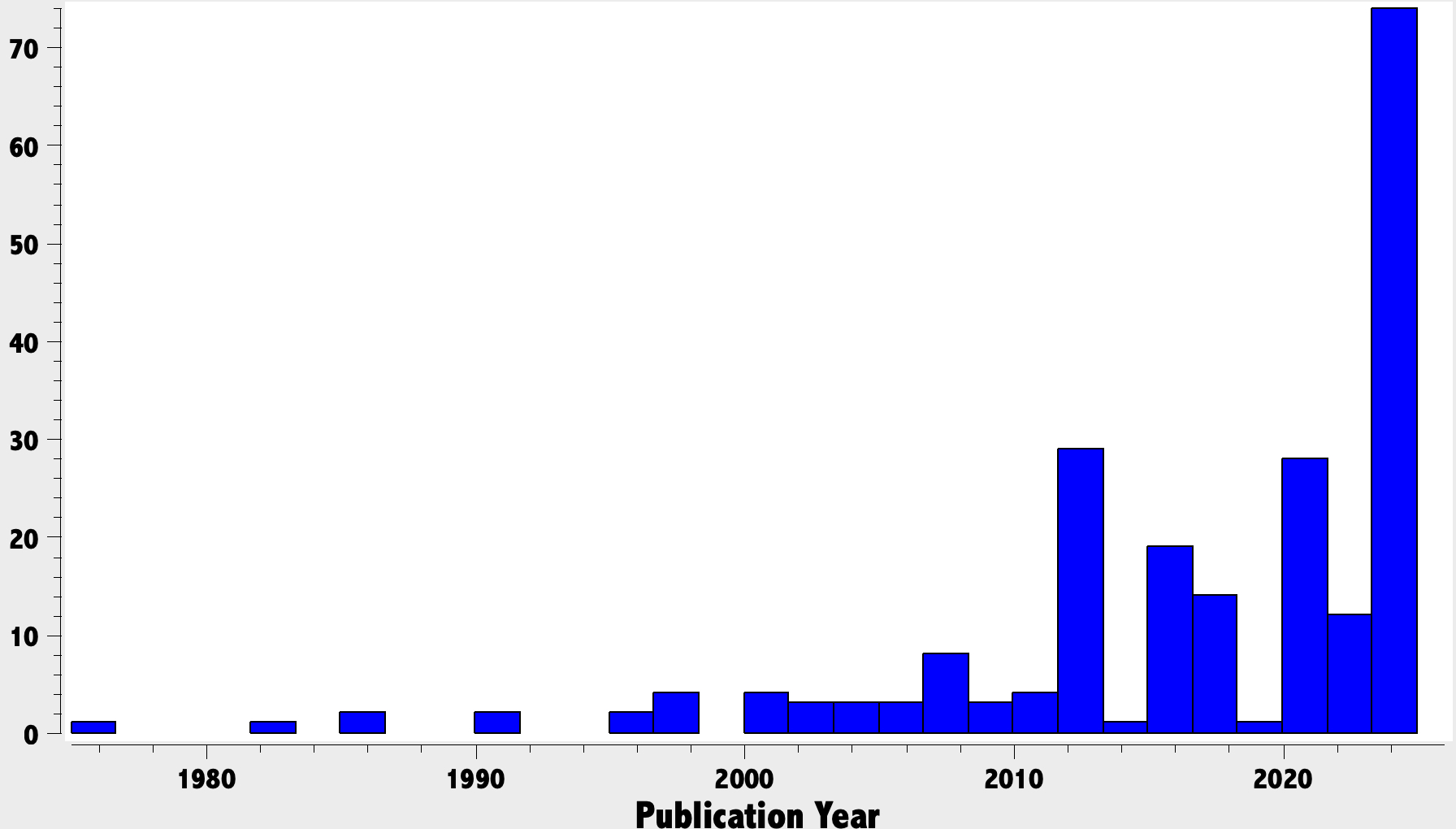
    Figure 1c. Publication year for benzene as sandwich filler.

    Figure 1d. Publication year for structures including substituted benzenes as sandwich filler.

    An outlier in Figure 1c that dates from 1975 also corresponds to the outlier in Figure 1a seen as a blue dot and is actually an example of TWO metal Pd atoms sandwiched by benzene rings (inadvertently captured by the search definition above). There has been an explosive growth in the reports of crystal structures of such complexes since 2024, which suggests that this is currently an area of intense activity.

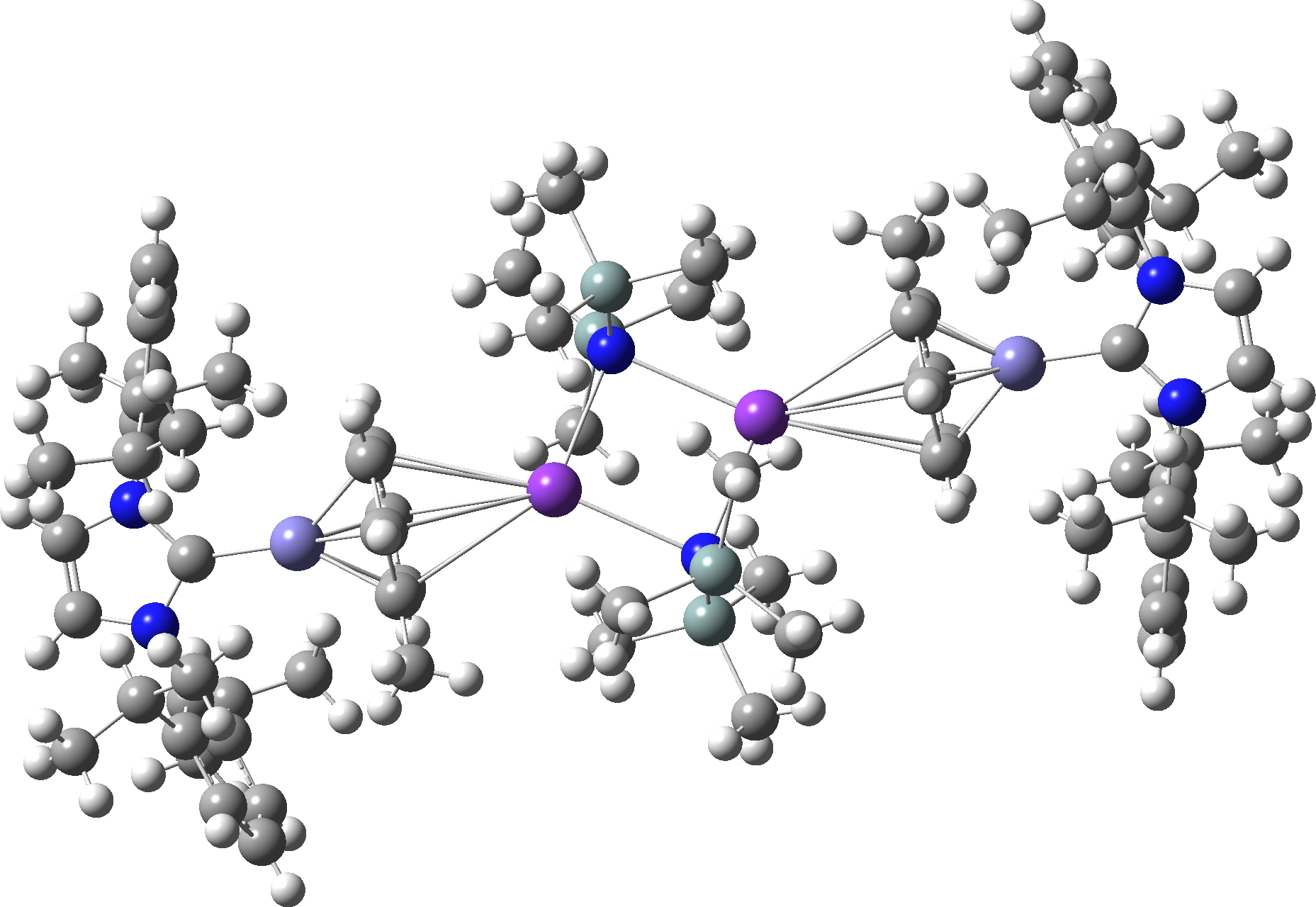
    The molecule of the year referred to above goes by the CSD name BAFHUQ[cite]10.5517/ccdc.csd.cc2m4ffn[/cite] and its structure is shown below (Figure 2, M-centroid length 1.856Å). This molecule has a calculated[cite]10.14469/hpc/15647[/cite] (D4) dispersion stabilisation of 62.8 kcal/mol, deriving in large measure from interactions of the isopropyl groups on the P ligand.

    Figure 2. BAFHUG

    HOQNEK[cite]10.1021/acs.inorgchem.4c00149[/cite],[cite]10.5517/ccdc.csd.cc2j0r7k[/cite] with Ti as metal (Figure 3) is an example having the shortest M-benzene centroid length (1.69Å). The dispersion contribution in this case is 46.2 kcal/mol.

    Figure 3. HOQNEK

    CALNIP[cite]10.1039/C6DT03565E[/cite],[cite]10.5517/ccdc.csd.cc1l9wrj[/cite] has the shortest distance to the ring centroid of 1.56Å, with toluene as the sandwich filler.

    Figure 4. CALNIP (Fe-centroid 1.56Å, K-centroid 2.96Å).

    The trends above suggest that a new area of the reactivity of aromatic molecules such as benzene when sandwiched between two metal atoms may be emerging.


    Actually a “triple decker” sandwich containing both ligand-metal-ligand and the inverted metal-ligand-metal motifs.

  • Molecules of the year 2025: Cyclo[48]carbon and others – the onset of bond alternation and the Raman Activity Spectrum.

    The annual “Molecules of the Year” selections are available for the year 2025. A theme was elemental allotropes and one such was carbon in the form of C48 stabilised by formation of a catenane C48.M3 (M = red ligand below)[cite]10.1126/science.ady6054[/cite] – it was not possible however to crystallise C48.M3. When “unmasked” by removal of the M ligand, the true allotrope C48 had a solution half-life of about 1 hour at 20°C. This follows the reports from 2019 onwards of a series of smaller cyclo[n]carbon allotropes, (n=6,10,12,13,14,16,18,20,26)[cite]10.1126/science.aay1914[/cite],[cite]10.59350/jdy16-7rv58[/cite] which were only characterised on a solid surface and not in solution.

    Since I did not find 3D model coordinates for the 285 atom C48.M3 in the article ESI, I generated them using the following procedures:

    1. Using the Chemdraw CDXML file located in the article ESI, saving as a MDL molfile and opening in Avogadro2 (direct opening of the CDXML file fails) and running Extensions/Optimise geometry. This produces an approximate 3D model using a simple molecular mechanics force field.
    2. These coordinates were then refined using the semi-empirical PM6 and PM7 QM methods implemented in Gaussian. The latter includes a dispersion attraction term whilst the former does not; the difference is clear to see.[cite]10.59350/x9m30-5aa79[/cite]
    3. This system was also finally optimised using the r2-SCAN-3c[cite]10.1063/5.0040021[/cite],[cite]10.1063/5.0004608[/cite] “Swiss army knife” thrice corrected density functional. The initial geometry was based on PM6, using the tightopt keyword, followed by a frequency calculation. Interestingly, the final geometry is closer to PM6 than to PM7. Click on the graphic above to view this 3D model.
    Table 1.
    PM6 optimised
    PM7 optimised
    r2-SCAN-3c optimised. Click on image to view 3D model

    The geometry of [n]-annulenes and [n]-cyclocarbons

    Calculating the quantum mechanical geometry of both [n]-annulenes and by association [n]-cyclocarbons is non trivial.[cite]10.59350/nnctg-v6535[/cite],[cite]10.1021/acs.jpca.3c07797[/cite] Many DFT functionals for example tend to over-estimate the degree of C-C bond length alternation around the ring.[cite]10.3390/molecules25030711[/cite] Recognising this, the authors of this article[cite]10.1126/science.ady6054[/cite] calibrated their own adjustment to the veritable CAM-B3LYP functional against a redetermined crystal structure of [18]-annulene[cite]10.5517/ccdc.csd.cc2gzmz2[/cite],[cite]10.5517/cc1krr46[/cite],[cite]10.1021/acs.jpca.3c07797[/cite] calling the resulting functional OX B3LYP30[cite]10.1021/acsnano.4c14100[/cite] It was specifically optimized for extended conjugated systems by including 30% short-range exact HF exchange.[cite]10.1021/acs.jpca.3c07797[/cite] Significantly, [18]-annulene is an example of a 4n+2 (n = 4) cyclo-aromatic molecule for which significantly less bond alternation (if any) is expected, compared to so-called 4n-class antiaromatic molecules (e.g. cyclobutadiene (n=1)[cite]10.59350/7m9dm-an754[/cite]). The focus of this blog – C48 – is doubly anti-aromatic (n=12), once in the σ- and then the π-frameworks and so its bonds would certainly be expected to alternate in length. This alternation directly results in the Raman activity observed in the C-C stretching regions (see Figure 4c in the article[cite]10.1126/science.ady6054[/cite] and reproduced in Figure 1a below).

    Here I also explore the recent r2-SCAN-3c functional,[cite]10.1063/5.0040021[/cite],[cite]10.1063/5.0004608[/cite] which importantly has NOT been adjusted, re-parametrised or scaled to achieve a particular result for these molecules and which – unlike the OX B3LYP30 method – also includes dispersion corrections. Included in the table below are not only results for [18]-annulene and cyclo[48]carbon but two types of variation on the latter to test the scope of the functionals. The first was to include charged versions of C48, which reduce the electron count by either 4 (changing both the π- and σ- electron manifolds to a 4n+2 count) or by ±2 (changing just one of the manifolds to 4n+2). Also included are C14, C18, C46 (n=11; 4n+2 =46), C50 (n=12; 4n+2 =50), C58 (n=14, 4N+2=58), C62 (n=15, 4N+2=62) and C98 (n=24; 4n+2 = 98) which are all aromatic rings for which bond alternation should be much smaller, if it occurs at all. C60 is included as a larger 4n anti-aromatic molecule. It also proved possible to model the geometry of the full C48M3 catenane system as shown above using r2-SCAN-3c. FAIR data for the present calculations are published in a data repository.[cite]10.14469/hpc/15614[/cite].

    Entry System Δra OX B3LYP30
    [cite]10.14469/hpc/15617[/cite]
    Δra r2-SCAN-3c
    [cite]10.14469/hpc/15615[/cite]
    ΔG C2e
    -75.872686
    1 C14 0.00017 (2)[cite]10.14469/hpc/15640[/cite]
    0.00001 (0)[cite]10.14469/hpc/15641[/cite]
    0.00002 (0) -76.124925 (+6.32)
    2 C18[cite]10.1126/science.aay1914[/cite] 0.00000 (2)[cite]10.14469/hpc/15619[/cite]
    0.06345 (0)[cite]10.14469/hpc/15620[/cite]
    0.00000 (0) -76.129778 (+3.28)
    3 C18H18 0.0166 (0)[cite]10.14469/hpc/15625[/cite] 0.0178 (0)
    0.0165[cite]10.5517/ccdc.csd.cc2gzmz2[/cite]
    0.0192[cite]10.5517/cc1krr46[/cite]
    4 C46 0.11003 (0)[cite]10.14469/hpc/15626[/cite] 0.00005 (0) -76.135596 (-0.37)
    5 C484+ 0.06892[cite]10.14469/hpc/15627[/cite],[cite]10.14469/hpc/15628[/cite] 0.00005 (0) -76.078196
    6 C482+ 0.07459 (0)[cite]10.14469/hpc/15629[/cite] 0.03059 (0)g -76.112352
    7 C48 0.11087b[cite]10.14469/hpc/15630[/cite] 0.05781c (0) -76.135003 (0.0)
    8 C48 (chloroform) 0.11087[cite]10.14469/hpc/15631[/cite],[cite]10.14469/hpc/15622[/cite] 0.05810 (0) -76.135020
    9 C48M3 n/a 0.05666 (in) 0.05676 (out)d
    10 C482- 0.07077 (0)[cite]10.14469/hpc/15632[/cite] 0.02895 (0)g -76.144764
    11 C50 0.00006 (2)[cite]10.14469/hpc/15635[/cite] 0.00011 (1)[cite]10.14469/hpc/15633[/cite], 0.11021  (0) [cite]10.14469/hpc/15637[/cite] 0.00003 (0) -76.135728 (-0.45)
    12 C58 0.00001 (1),[cite]10.14469/hpc/15636[/cite]
    0.11022 (0)[cite]10.14469/hpc/15634[/cite]
    0.00011 (1, 178i),0.01159 (0) -76.135900 (-0.56)
    13 C60 0.11068 (0)[cite]10.14469/hpc/15624[/cite] 0.05300 (0) -76.135547 (-0.34)
    14 C62 0.11020 (0)[cite]10.14469/hpc/15618[/cite] 0.0001 (1, 373i) 0.02145 (0) -76.135966 (-0.60)
    15 C98 0.11035 (0) [cite]10.14469/hpc/15638[/cite] 0.04035 (0) -76.135986 (-0.61)

    16 C49 0.09494 (0) [cite]10.14469/hpc/15671[/cite] 0.010050 (0)
    17 C51 0.10230 (0) [cite]10.14469/hpc/15670[/cite] 0.000110 (0)
    18 C54 0.11032 (0) [cite]10.14469/hpc/15669[/cite] 0.00002 (0) -76.135839

    aNumber of negative force constants at this geometry in parentheses. b Raman Activity 2088, 2192 (expt 1890 A1g, 2012 E2g cm-1) cRaman Activity 1752, 1993 cm-1. d Inside and outside an M ligand. Raman modes 1767, 2013 cm-1. Calculating the intensity of these modes is still in progress, whilst program issues are resolved. eFree energy, Hartree (kcal/mol) normalised to C2 vs C2 itself at the r2-SCAN-3c level. gThis has one aromatic and one antiaromatic electron manifold.

    Bond length alternation by table entry.

    1. For cyclo[14]carbon, the two methods agree.
    2. For cyclo[18]carbon, the two methods differ; the OX B3LYP30 model predicts significant bond alternation.
    3. Both DFT methods however closely reproduce the bond length alternation in [18]annulene.[cite]10.59350/k0kjg-hpc66[/cite]
    4. Cyclo[46]carbon is formally 4n+2 aromatic (n=11) in both σ and π manifolds and a clear difference in bond length alternation between the two DFT methods emerges, with OX B3LYP30 predicting strong alternation and r2-SCAN-3c none.
    5. As with 2, entry 5 is also a 4n+2 aromatic (n=11) and again OX B3LYP30 predicts (weaker) alternation and again r2-SCAN-3c none.
    6. The dication has a mixed 4n+2/4n system. The same is true of entry 10.
    7. For the key entry 7, a 4n antiaromatic system, OX B3LYP30 predicts twice the bond alternation of r2-SCAN-3c. More surprisingly, the degree of alternation for OX B3LYP30 for this antiaromatic system is almost identical to that for eg entries 2, 5, 11 12, 14, 15, 18 all 4n+2 aromatic. So This functional is not responding to the 4n+2/4n rule in the normal bond length sense.
    8. The original calculations were done for the gas phase. Including eg chloroform as a continuum solvent has no effect on the OX B3LYP30, and a very minor effect with r2-SCAN-3c in slightly increasing the alternation.
    9. This is the full system, with three enclosing groups M. These have a small effect using r2-SCAN-3c, in very slightly decreasing the bond alternation depending on whether the carbon chain is enclosed by the ligand M or not.
    1. This is the two-carbon homologue of C48, and conforms to the 4n+2 rule. Again r2-SCAN-3c predicts no alternation (and indeed no Raman activity), whilst OX B3LYP30 again predicts a strangely invariant value of ~0.11Å.
    2. This 4n+2 electron molecule has one particular point of interest. Whilst the OX B3LYP30 method sticks to its standard bond length variation of Δr ~0.11Å, r2-SCAN-3c starts to depart from its previous prediction of no alternation for 4n+2 systems. One -ve force constant corresponds to an imaginary (Kekule type[cite]10.59350/jdy16-7rv58[/cite]) mode of 177i cm-1 and a geometric distortion along this mode now leads to a small bond alternation of 0.0116Å. This is particularly exciting since it has long been thought that given a large enough ring, bond alternation will start to manifest. Perhaps for r2-SCAN-3c the onset of such an effect is around 58 carbons? Previous estimates of this transition have been rather lower (~30).[cite]10.1063/1.476083[/cite]
    3. This entry is included partially because of the fame of the C60 fullerene allotrope (which has a very different structure). As a cyclocarbon it is again 4n antiaromatic. Both methods predict bond alternation, albeit that the value for OX B3LYP30 is twice that of r2-SCAN-3c.
    4. This continues the trend first seen with entry 12; r2-SCAN-3c showing a doubling in the bond length alternation of a 4n+2 system.
    5. With this size ring, the bond alternation of this 4n+2 system is beginning to approach the value for a 4n system, and hence the aromatic/antiaromatic distinction is beginning to vanish.

    To summarise, the entries shown in red above correspond to systems for which OX B3LYP30 predicts an almost constant bond alternation of ~0.11Å whereas for the same system using r2-SCAN-3c, the bond alternation is essentially zero (green). The entries marked with orange or pink are 4n+2 aromatic (except entries 16 and 17 which have odd numbers of carbons) in one or both manifolds and for which the onset of intrinsic bond variation may have started.

    Raman Activity.

    For C48M3, the measured activity as shown in figure 4c[cite]10.1126/science.ady6054[/cite] is reproduced below (Figure 1a). Two modes are active, the A1g mode (the “kekule vibration“) and a less intense E2g mode. The OX B3LYP30 functional appears to reproduce this, with the values quoted in this figure (A1g 1959 and E2g 2058 cm-1 derived from scaling the OX B3LYP30 calculated values of 2088 and 2192 cm-1 reported in the supporting information data file by 0.9386). The r2-SCAN-3c functional likewise predicts the A1g mode (1752 cm-1, unscaled) to be more intense than E2g 1993 cm-1 (Figure 1b). Before we conclude which method is achieving the better result, the effect induced by the surrounding M3 ligands should be taken into account. We see in the table that the predicted CC bond length variation in the unmasked ring (0.0578) is slightly decreased in C48M3 to 0.0567, as are the bond lengths themselves (1.24839Å gas; 1.24699Å M3). The Raman modes in C48M3 (1767, 2013 cm-1) are calculated a little higher in wavenumber than C48 itself, but final assignment will depend on calculation of the Raman intensity, which is ongoing (see comment below).

    Figure 1a. Observed Raman activity for C48

    Figure 1b. Calculated r2-SCAN-3c Raman activity for C48

    Figure 1c. Calculated r2-SCAN-3c Raman activity for C50

    Figure 1d. Calculated r2-SCAN-3c Raman activity for C58

    Figure 1e. Calculated r2-SCAN-3c Raman activity for C98

    Conclusions

    The synthesis of cyclo[48]carbon and its stabilized derivative C48.M3 has provided a nice opportunity to investigate the strange phenomenon of bond alternation in cyclic carbon systems, coupled with experimental measurements of Raman activity and comparison with calculation. The recent constrained functional r2-SCAN-3c and perhaps similar ones such as the forthcoming COACH[cite]10.59350/rzepa.28931[/cite] might prove useful in modelling the properties of these unusual compounds of carbon. The r2-SCAN-3c method also suggests that the 4n+2 series cyclocarbons are slightly more stable in terms of free energy than the 4n series.

    It is to be hoped that a 4n+2 series example can be synthesized. For one such, e.g. cyclo[58]carbon or especially cyclo[98]carbon, Raman activity is again predicted (Figure 1d,e), whilst for the smaller cyclo[50]carbon (Figure 1c), this activity is predicted absent. Providing a test of this behaviour might provide a motivation for the synthesis of these larger systems!


    Thus the dispersion stabilisation for C48 is -11.5 kcal/mol. Constraints are exact conditions that an ideal (DFT) functional should have. Though the exact density functional is not known, researchers have discovered analytical properties of such a functional.[cite]10.1109/SCW63240.2024.00027[/cite]. The functional SCAN[cite]10.1021/acs.jpclett.0c02405[/cite] satisfies the 17 derived constraints; many earlier functionals satisfy less than 6 or fewer.


    This post has DOI: 10.59350/g4309-gv109

  • Short B-H…H-O Interactions in crystal structures – a short DFT Exploration using B3LYP+D4 and r2scan-3c

    In the previous post,[cite]10.59350/x5k75-t2m40[/cite] I was commenting that the transition state for borohydride reduction of a ketone contained some close contacts between the hydrogen of the borohydride and the hydrogen of water. A systematic search of the CSD reveals a modest number of such contacts have been observed in crystal structures (Table).  Since it is always good to have a reality check for constructed transition states, here I take a look at some of compounds showing the closest H…H contacts in the experimental database of structures.

    The DFT procedures I used to calculate the geometries of the examples tabled below[cite]10.14469/hpc/15566[/cite] were

    1. the classical B3LYP/Def2-TZVPP method, but enhanced with the D4 dispersion correction – the latter developed as a successor to the often used D3+BJ predecessor.
    2. The DFT method named  r2scan-3c, a composite described by its developers as the “Swiss army knife of DFT methods” and  “r2SCAN-3c Works Well On Everything”.[cite]10.26434/chemrxiv.13333520.v2[/cite] rather grandly quotesThe specific features are described as  “The unaltered r2SCAN functional is combined with a tailor-made triple-ζ Gaussian atomic orbital basis set as well as with refitted D4 and geometrical counter-poise corrections for London-dispersion and basis set superposition error“.[cite]10.1063/5.0040021[/cite] The method scales efficiently to several hundred atoms. Results for both types of DFT calculation are  collected here.[cite]10.14469/hpc/15566[/cite]
    Table. Calculated and observed BH…HO interactions
    Molecule rH…H using B3LYP+D4/
    Def2-TZVPP
    rH…H using r2SCAN-3c/
    Def2-mTZVPP
    Crystal structure,
    rH…H, Å
    angle, BH…H, ° angle, OH…H, °
    JATMUN 1.531 1.544 1.519 (1.513)
    [cite]10.1016/j.jorganchem.2005.02.037[/cite],[cite]10.5517/cc8gcz1[/cite]
    95.1 158.6
    OLEVIL 1.612 1.654 1.806 (1.67)
    [cite]10.1016/j.tetlet.2010.12.106[/cite],[cite]10.5517/ccvkd70[/cite]
    107.7 171.4
    OLEVEH 1.623 1.666 1.857 (1.757)
    [cite]10.1016/j.tetlet.2010.12.106[/cite],[cite]10.5517/ccvkd6z[/cite]
    105.1 176.6
    OWUKID 1.685 1.770 1.871 (1.778)
    [cite]10.1002/cplu.202000427[/cite],[cite]10.5517/ccdc.csd.cc252bp9[/cite]
    131.7 157.8
    SASVAS 1.757 1.872 1.901 (1.807)
    [cite]10.1002/chem.200902915[/cite],[cite]10.5517/cct86qz[/cite]
    94.3 155.0
    BOTFOJ 1.741 1.810 1.976 (1.856)
    [cite]10.5517/ccdc.csd.cc2k93ww[/cite]
    129.6 171.0
    MOPXOG 1.888 1.966 1.990 (1.872)
    [cite]10.1021/om5005989[/cite],[cite]10.5517/cc136fzq[/cite]
    95.4 159.5
    FOLREF 1.881 1.966 1.998 (1.908)
    [cite]10.1021/ol500970x[/cite],[cite]10.5517/cc12tj5l[/cite]
    110.2 160.8


    OLEVIL@r2SCAN-3c
    OLEVIL @B3LYP+D4

    In general, the B3LYP+D4 method predicts slightly shorter H…H contacts than does r2SCAN-3c. Comparison with experiment is tricky, since OH and BH distances obtained directly from a classical crystal structure refinement tend to emerge as ~0.1A too short (see eg [cite]10.59350/5dy8w-0zs92[/cite] for more detailed discussion). A simple correction for these values is shown in parentheses in the table above. However, given that the angle subtended at the hydrogen atom varies  enormously, this correction may too simplistic. Better would be if the original crystallographic data could be re-refined using the non-spherical atom model model described in [cite]10.59350/5dy8w-0zs92[/cite]  A provisional conclusion without such treatment might be that r2SCAN-3c is somewhat more accurately predicting the H…H distances.

    OLEVIL is interesting because it contains two OH groups, with only one interacting with a proximate BH group. Calculating (r2scan-3c) νOH gives values of 3477 cm-1 as perturbed by the close BH vs a BH unperturbed value of 3801 cm-1  or Δν 324 cm-1. The corresponding values using B3LYP+D4 are 3700 vs 3803, Δν 103 cm-1. This large difference in perturbation predicted by these two DFT methods could be easily tested experimentally. Unfortunately, the experimental information reported for this compound[cite]10.1016/j.tetlet.2010.12.106[/cite] does not contain the OH stretching values, which might have been a good test of the claim that “r2SCAN-3c Works Well On Everything”.

    This selection of compounds illustrates how one aspect of a transition state can be given a reality check by comparing a key interaction with experimentally determined crystal structures.