Tag: activation energy

  • The Graham reaction: Deciding upon a reasonable mechanism and curly arrow representation.

    Students learning organic chemistry are often asked in examinations and tutorials to devise the mechanisms (as represented by curly arrows) for the core corpus of important reactions, with the purpose of learning skills that allow them to go on to improvise mechanisms for new reactions. A common question asked by students is how should such mechanisms be presented in an exam in order to gain full credit? Alternatively, is there a single correct mechanism for any given reaction? To which the lecturer or tutor will often respond that any reasonable mechanism will receive such credit. The implication is that a mechanism is “reasonable” if it “follows the rules”. The rules are rarely declared fully, but seem to be part of the absorbed but often mysterious skill acquired in learning the subject. These rules also include those governing how the curly arrows should be drawn.† Here I explore this topic using the Graham reaction.[cite]10.1021/ja00947a040[/cite]‡

    I start by noting the year in which the Graham procedure was published, 1965. Although the routine representation of mechanism using curly arrows had been established for about 5-10 years by then, the quality of such representations in many articles was patchy. Thus, this one (the publisher will need payment for me to reproduce the diagram here, so I leave you to get it yourself) needs some modern tidying up. In the scheme below, I have also made a small change, using water itself as a base to remove a NH proton, rather than hydroxide anion as used in the article (I will return to the anion later). The immediate reason is that water is a much simpler molecule to use at the start of our investigation than solvated sodium hydroxide. You might want to start with comparing the mechanism above with the literature version[cite]10.1021/ja00947a040[/cite] to discover any differences. 

    The next stage is to compute all of this using quantum mechanics, which will tell us about the energy of the system as it evolves and also identify the free energy of the transition states for the reaction. I am not going to go into any detail of how these energies are obtained, suffice to say that all the calculations can be found at the following DOI: 10.14469/hpc/5045 The results of this exercise are represented by the following alternative mechanism.♥

    How was this new scheme obtained? The key step is locating a transition state in the energy surface, a point where the first derivatives of the energy with respect to all the 3N-6 coordinates defining the geometry (the derivative vector) are zero and where the second derivative matrix has just one negative eigenvalue (check up on your Maths for what these terms mean). Each located transition state (which is an energy maximum in just one of the 3N-6 coordinates) can be followed downhill in energy to two energy minima, one of which is declared the reactant of the reaction and the other the product, using a process known as an IRC (intrinsic reaction coordinate). The coordinates of these minima are then inspected so they can be mapped to the conventional representations shown above. New bonds in the formalism above are shown with dashed lines and have an arrow-head ending at their mid-point; breaking bonds (more generally, bonds reducing their bond order) have an arrow starting from their mid-point. The change in geometry along the IRC for TS1 can then be shown as an animation of the reaction coordinate, which you can see below.

    Don’t worry too much about when bonds appear to connect or disconnect, the animation program simply uses a simple bond length rule to do this. The major difference with the original mechanism is that it is the chlorine on the nitrogen also bearing a proton that gets removed. Also, the N-N bond is formed as part of the same concerted process, rather than as a separate step.

    Shown above is the computed energy along the reaction path. Here a “reality check” can be carried out. The activation free energy (the difference between the transition state and the reactant) emerges as a rather unsavoury ΔG‡=40.8 kcal/mol. Why is this unsavoury? Well, according to transition state theory, the rate of a (unimolecular) reaction is given by the expression: Ln(k/T) = 23.76 – ΔG‡/RT where T is temperature (~323K in this example), R = is the gas constant and k is the unimolecular rate constant. When you solve it for Î”G‡=40.8, it turns out to be a very slow reaction indeed. More typically, a reaction that occurs in a few minutes at this sort of temperature has Î”G‡= ~15 kcal/mol. So this turns out to be an “unreasonable” mechanism, but based on the quantum mechanically predicted rate and not on the nature of the “curly arrows”. And no, one cannot do this sort of thing in an examination (not even on a mobile phone; there is no app for it, yet!) I must also mention that the “curly arrows” used in the above representation are, like the bonds, based on simple rules of connecting a breaking with a forming bond with such an arrow. There IS a method of computing both their number and their coordinates “realistically”, but I will defer this to a future post. So be patient!

    The next thing to note is that the energy plot shows this stage of the reaction as being endothermic. Time to locate TS2, which it turns out corresponds to the N to C migration of the chlorine to complete the Graham reaction. As it happens, TS2 is computed to be 10.6 kcal/mol lower than TS1 in free energy, so it is not “rate limiting”.

    To provide insight into the properties of this reaction path, a plot of the calculated dipole moment along the reaction path is shown. At the transition state (IRC value = 0), the dipole moment is a maximum, which suggests it is trying to form an ion-pair, part of which is the diazacylopropenium cation shown in the first scheme above. The ion-pair is however not fully formed, probably because it is not solvated properly.

    We can add the two reaction paths together to get the overall reaction energy, which is no longer endothermic but approximately thermoneutral. Things are still not quite “reasonable” because the actual reaction is exothermic.

    Time then to move on to hydroxide anion as the catalytic base, in the form of sodium hydroxide. To do this, we need to include lots of water molecules (here six), primarily to solvate the Na+ (shown in purple below) but also any liberated Cl. You can see the water molecules moving around a lot as the reaction proceeds, via again TS1 to end at a similar point as before.

    The energy plot is now rather different. The activation energy is now lower than the 15 kcal/mol requirement for a fast reaction; in fact ΔG‡= 9.5 kcal/mol and overall it is already showing exothermicity. What a difference replacing a proton (from water) by a sodium cation makes!

    Take a look also at this dipole moment plot as the reaction proceeds! TS1 is almost entirely non-ionic!

    To complete the reaction, the chlorines have to rearrange. This time a rather different mode is adopted, as shown below, termed an Sn2′ reaction. The energy of TS2′ is again lower than TS1, by 9.2 kcal/mol. Again no explicit diazacylopropenium cation-anion pair (an aromatic 4n+2, n=0 Hückel system) is formed.


    Combing both stages of the reaction as before. The discontinuity in the centre is due to further solvent reorganisation not picked up at the ends of the two individual IRCs which were joined to make this plot. Note also that the reaction is now appropriately exothermic overall.

    So what have we learnt?

    1. That a “reasonable” mechanism as shown in a journal article, and perhaps reproduced in a text-book, lecture or tutorial notes or even an examination, can be subjected in a non-arbitrary manner to a reality check using modern quantum mechanical calculations.
    2. For the Graham reaction, this results in a somewhat different pathway for the reaction compared to the original suggestion.
      1. In particular, the removal of chlorine occurs from the same nitrogen as the initial deprotonation
      2. This process does not result in an intermediate nitrene being formed, rather the chlorine removal is concerted with N-N bond formation.
      3. The resulting 1-chloro-1H-diazirine does not directly ionize to form a diazacyclopropenium cation-chloride anion ion pair, but instead can undertake an Sn2′ reaction to form the final 3-chloro-3-methyl-3H-diazirine.
    3. A simple change in the conditions, such as replacing water as a catalytic agent with Na+OH(5H2O) can have a large impact on the energetics and indeed pathways involved. In this case, the reaction is conducted in NaOCl or NaOBr solutions, for which the pH is ~13.5,♣ indicating [OH] is ~0.3M.
    4. The curly arrows here are “reasonable” for the computed pathway, but are determined by some simple formalisms which I have adopted (such as terminating an arrow-head at the mid-point of a newly forming bond). As I hinted above, these curly arrows can also be subjected to quantum mechanical scrutiny and I hope to illustrate this process in a future post.

    But do not think I am suggesting here that this is the “correct” mechanism, it is merely one mechanism for which the relative energies of the various postulated species involved have been calculated relatively accurately. It does not preclude that other, perhaps different, routes could be identified in the future where the energetics of the process are even lower. 


    †This blog is inspired by the two students who recently asked such questions. â€¡In fact, you also have to acquire this completely unrelated article[cite]10.1021/ja00947a041[/cite] for reasons I leave you to discover yourself. ♥You might want to consider the merits or demerits of an alternative way of showing the curly arrows. Is this representation “more reasonable”? ♣I thank Ed Smith for measuring this value for NaOBr and for suggesting the Graham reaction in the first place as an interesting one to model.
  • A tutorial problem in stereoelectronic control. The Tiffeneau-Demjanov rearrangement as part of a prostaglandin synthesis.

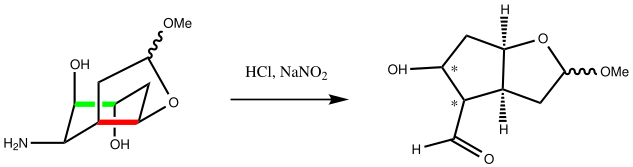
    This reaction emerged a few years ago (thanks Alan!) as a tutorial problem in organic chemistry, in which students had to devise a mechanism for the reaction and use this to predict the stereochemical outcome at the two chiral centres indicated with *.  It originates in a brief report from R. B. Woodward’s group in 1973 describing a prostaglandin synthesis,[cite]10.1021/ja00801a066[/cite] the stereochemical outcome being crucial. Here I take a look at this mechanism using computation.

    TD

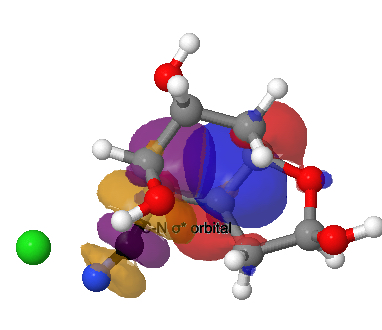
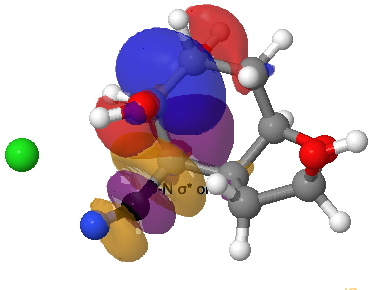
    The amino group is firstly converted to a diazonium chloride by nitrous acid and the resulting group is then easily eliminated. The problem is easy once you spot that either of the coloured bonds in the reactant is approximately antiperiplanar to the diazonium group, and might migrate to contract the ring. The green bond has a dihedral angle of ~174° with respect to the C-N≡N bond whilst the red bond has a less optimal value of ~166°. This alignment can also be viewed using orbital overlaps, in this case the (localised) NBO corresponding to the green or red bond and the empty antibonding NBO for the C-N bond. Below, the blue phase of the C-C bond is presumed to overlap constructively with the purple phase of the C-N anti bond, and likewise for the red/orange phases for the red bond.

    Click for  3D
    Click for 3D
    Click  for  3D
    Click for 3D

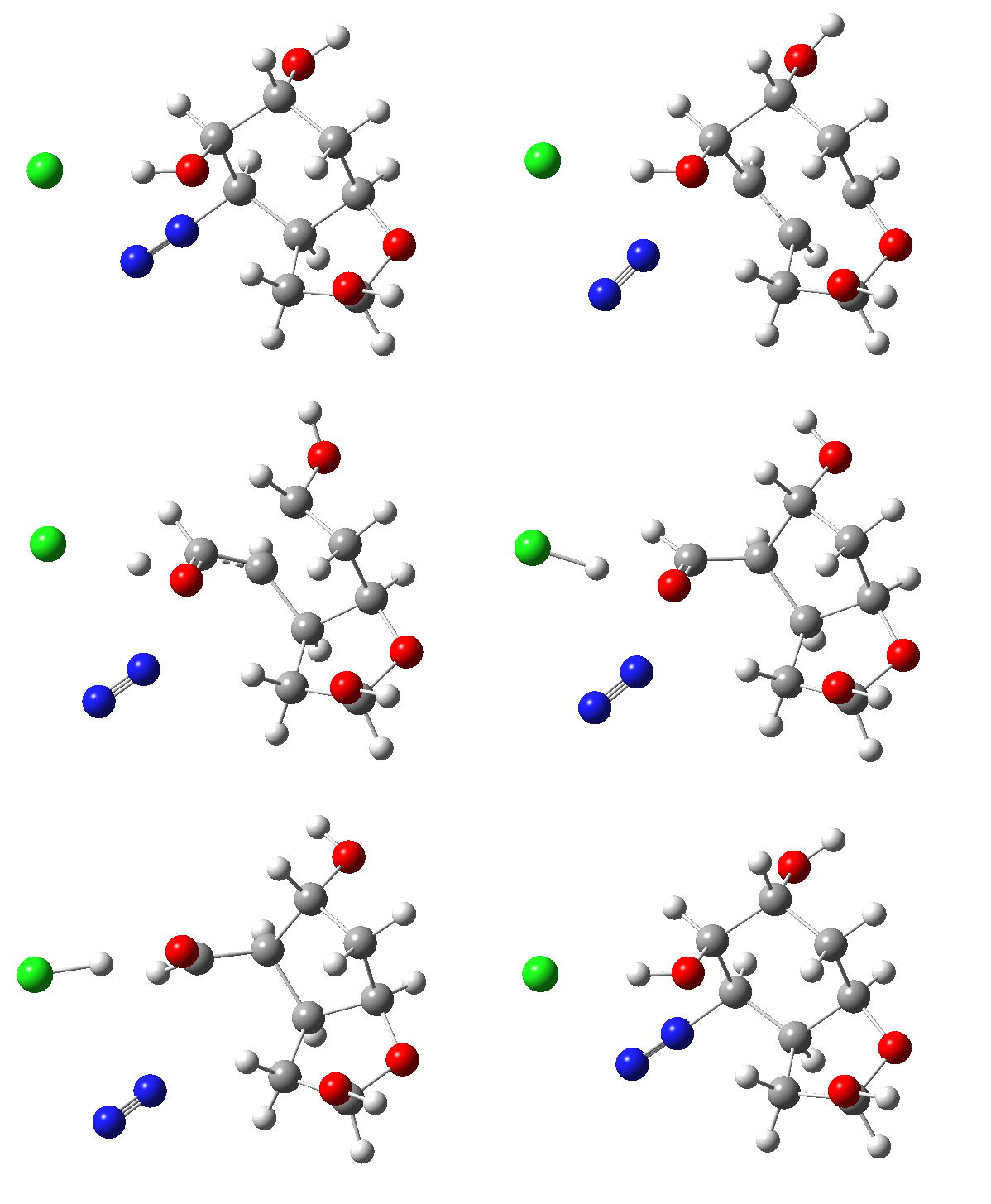
    A transition state (ωB97XD/6-311G(d,p)/SCRF=dichloromethane) can be located[cite]10.14469/ch/191625[/cite] and this yields[cite]10.14469/ch/191626[/cite] the reaction animation shown below;

    Ta

    This has lots of interesting features, itemised below. The essence of the mechanism is that the green bond is induced to migrate by the proton removal from the OH bond by the chloride group. The red bond, although also aligned more or less correctly, has no such assistance.

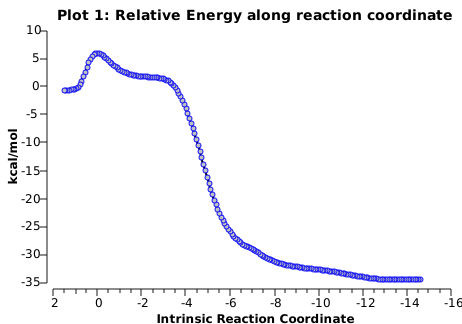
    1. Plot 1 of energy shows a small activation energy (7 kcal/mol), leading to an exothermic reaction by about 34 kcal/mol.
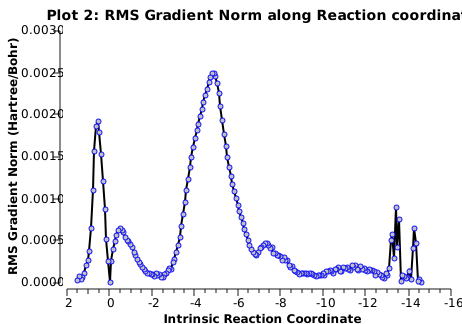
    2. The gradient plot 2 (the derivative of the energy with respect to the geometry) shows several interesting features
      1. The reaction starts at IRC = 1.5 with zero gradients.
      2. It reaches the transition state very early (IRC=0.0), at which point the gradients are again zero.
      3. and then the gradients (almost but not quite) reach zero again (IRC ~-2). This is called a hidden reaction intermediate and corresponds to the cations noted above (as an ion pair, with chloride anion). Because the ion pair has a large dipole moment, one might expect the reaction to be sensitive to the polarity of any solvent, and these hidden intermediates might become real ones in highly polar solvents.
      4. At IRC -5, the gradients become large as the carbon starts to migrate.
      5. The migration (with retention of stereochemistry, it is a cationic [1,2] sigmatropic shift) is induced by the chloride anion starting to abstract the proton from the OH group, in synchrony with the carbon migration.
      6. After IRC -8, we see only conformational changes occurring, which may also be interesting to analyse.
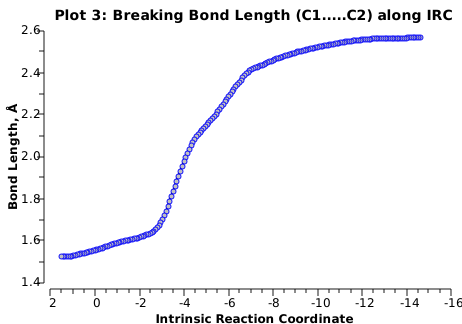
    3. Plot 3 shows the length of the breaking (migrating) C-C (green) bond. It hardly changes up to the transition state; it is only afterwards that it really starts to break/migrate. Curiously, the red bond actually lengthens more than the green one at this stage (watch the animation above carefully) before changing its mind and reforming.
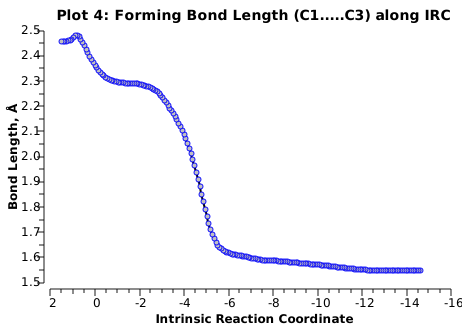
    4. Plot 4 the length of the newly forming (migrating) C-C bond. Note how initially, up to the transition state, this bond also lengthens (rather more than the green one does), before slowly reversing itself to contract at the transition state after IRC -3.
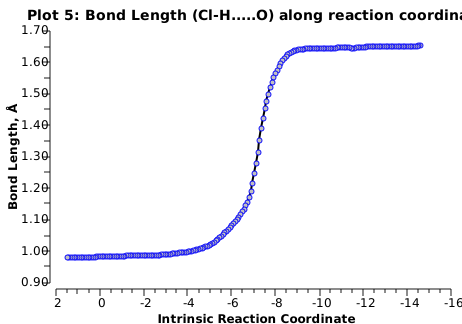
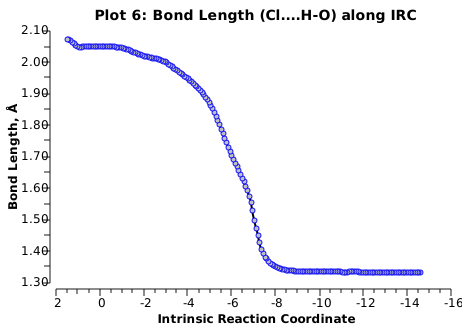
    5. Plots 5 and 6 show the lengths of the O…H and Cl…H bonds as the proton transfer proceeds. This mostly occurs AFTER the transition state is passed, and so the reaction should not exhibit any primary kinetic isotope effect induced by e.g. deuterium substitution.
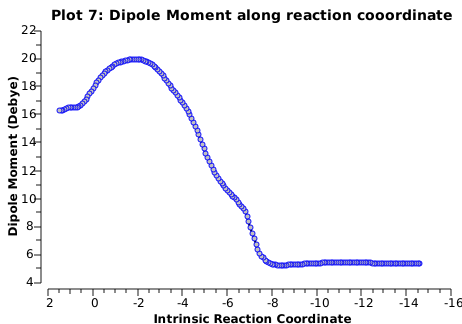
    6. Plot 7 shows the dipole moment evolving along the reaction. At the start the species is an ion pair (diazonium chloride), but as the reaction proceeds HCl is formed and the dipole moment decreases to that of a less ionic compound.

    TSE

    TSG

    TSBL12

    TSBL13

    TSBLOH

    TSBLClH

    TSDM

    As a learning tool, I find such animations carry a lot of information about reactions and their mechanism and it does not take more than a day or so to chart their course in the manner above.

  • Full circle. Stereoisomeric transition states for [1,4] pericyclic shifts.

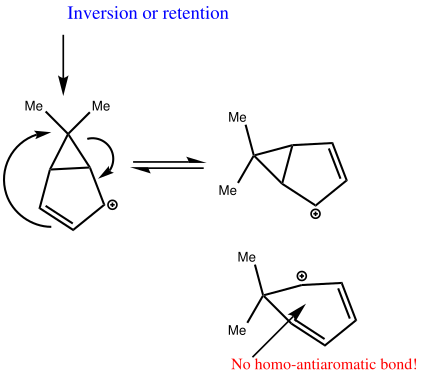
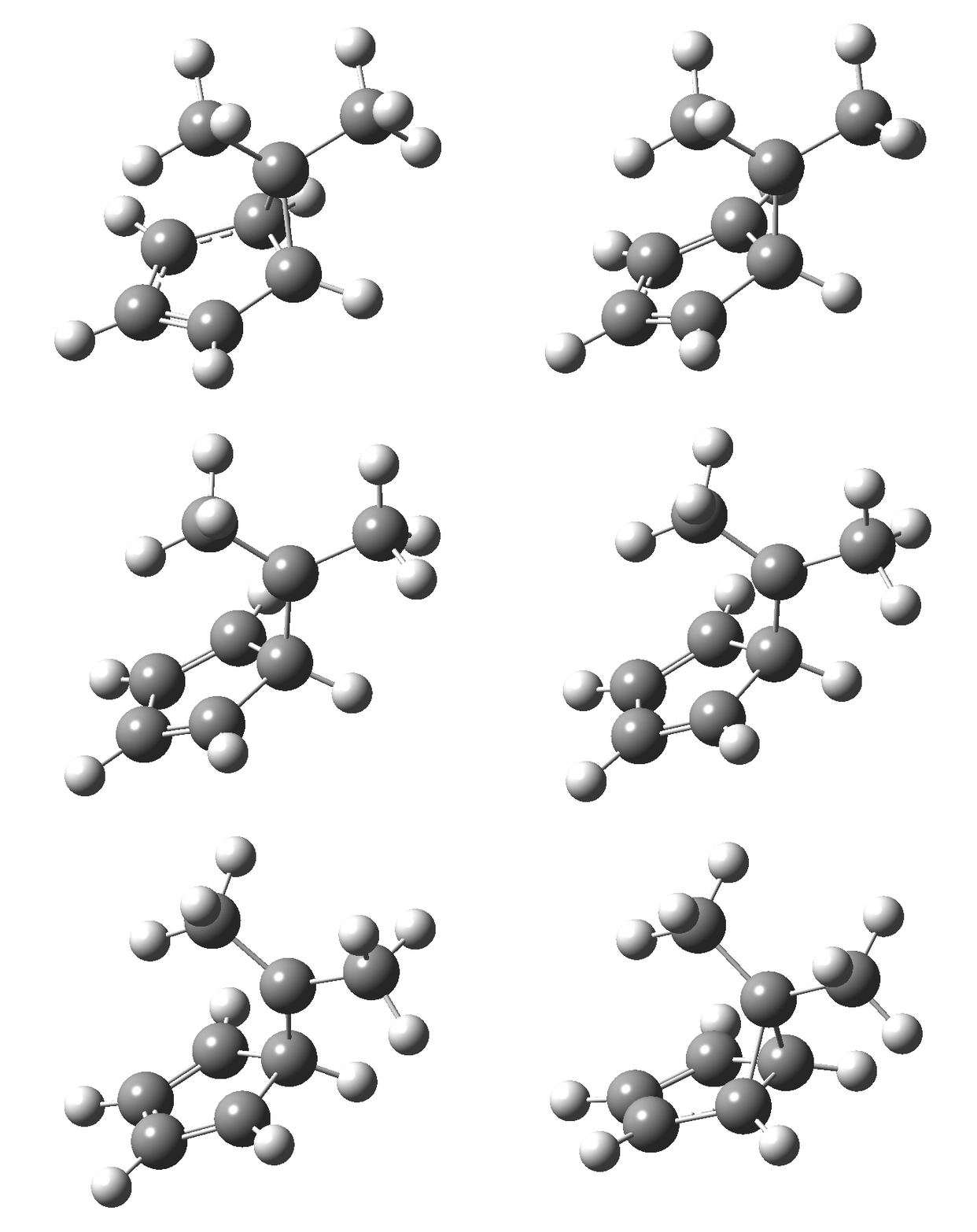
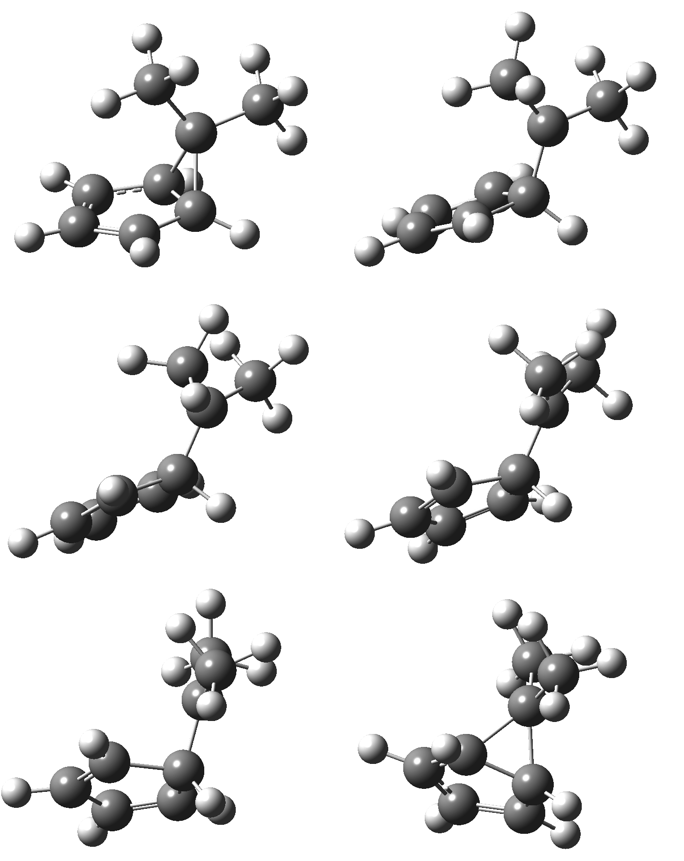
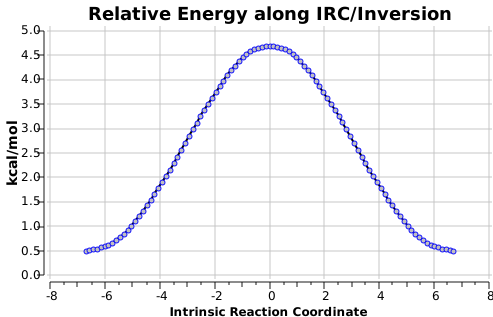
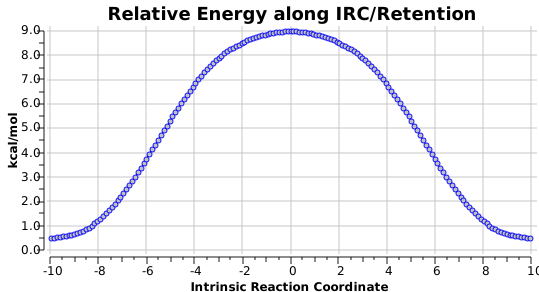
    This post, the fifth in the series, comes full circle. I started off by speculating how to invert the stereochemical outcome of an electrocyclic reaction by inverting a bond polarity. This led to finding transition states for BOTH outcomes with suitable substitution, and then seeking other examples. Migration in homotropylium cation was one such, with the “allowed/retention” transition state proving a (little) lower in activation energy than the “forbidden/inversion” path. Here, I show that with two electrons less, the stereochemical route indeed inverts.mob-inva First, a [1,4] alkyl shift with inversion at the migrating carbon (ωB97XD/6-311G(d,p)/SCRF=chloroform); as a four-electron process, this is the “allowed” route.[cite]10.6084/m9.figshare.1142175[/cite] mob-inva The “forbidden” route corresponds to retention of configuration at the migrating carbon.[cite]10.6084/m9.figshare.1142174[/cite] mob-retb The barriers for each process can be seen below from the IRCs. That for inversion is ~4.5 kcal/mol lower than retention. This nicely transposes the values for the six-electron homologue shown in the previous post. mob-invmob-ret There is one more nugget of insight that can be extracted. The start/end-point for the six-electron process (homotropylium cation) was, as the name implies, homoaromatic. Now, with a four-electron system we also have an inverse. Nominally, we should now end with homo-antiaromaticity (but see [cite]10.1021/ct8001915[/cite]). But antiaromaticity is avoided whenever possible, and so the homoaromatic bond observed in homotropylium is not formed. It resolutely remains a σ-bond (1.48Ã…) thus sequestering two electrons, and the remaining two electrons simply form a delocalised allyl cation. With the six-electron homotropylium, reactant/product were stabilised by that additional (homo)aromaticity, thus inducing a relatively high barrier. With the four-electron system here, no such reactant/product stabilisation occurs, and hence the reaction barriers are now significantly lower. A rather neat pedagogic example.

  • Aromatic electrophilic substitution. A different light on the bromination of benzene.

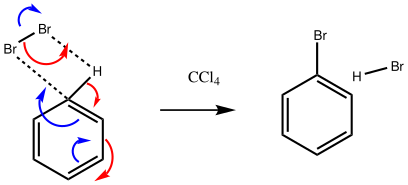
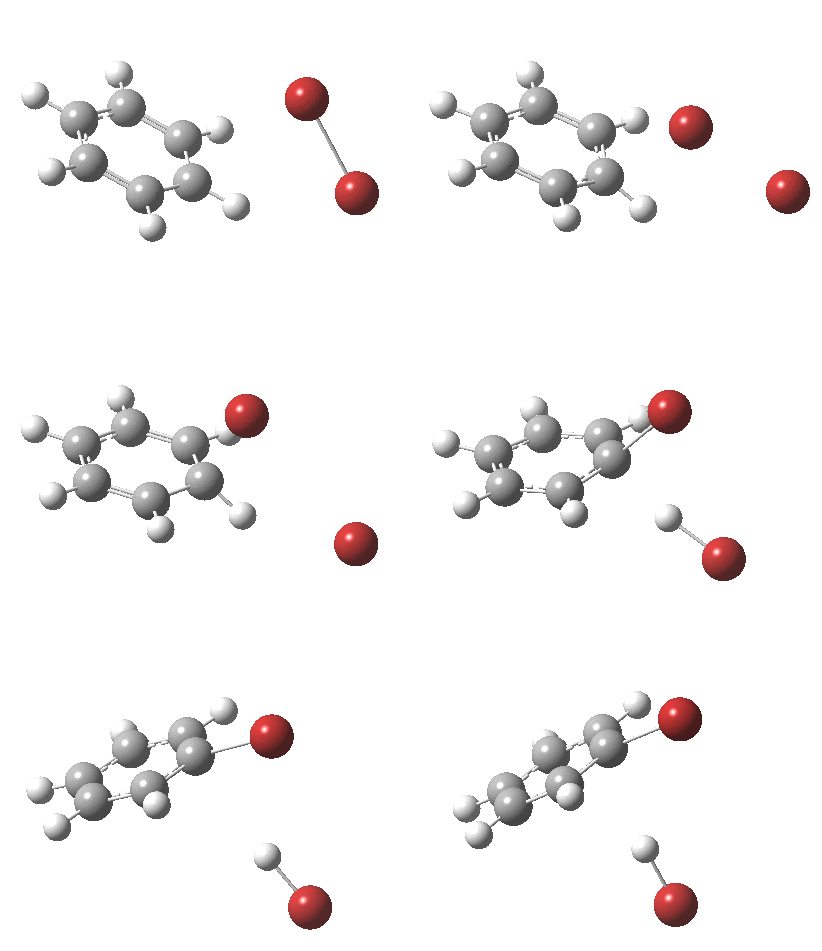
    My previous post related to the aromatic electrophilic substitution of benzene using as electrophile phenyl diazonium chloride. Another prototypical reaction, and again one where benzene is too inactive for the reaction to occur easily, is the catalyst-free bromination of benzene to give bromobenzene and HBr. 

    br2+benzenebr2+benzene

    The “text-book” mechanism involves nucleophilic attack by the benzene on the bromine to form a “Wheland intermediate” (the blue arrows) followed in a clear second step by proton removal by the liberated bromide anion (the red arrows). But one group had other ideas[cite]10.1002/anie.201101852[/cite], proposing in 2011 that the blue and red arrows conflate into a single concerted process which does NOT involve an explicit Wheland intermediate ion-pair. The text-books would have to be re-written! Paul Schleyer (a co-author of the above) recently contacted me about this reaction, noting that no explicit intrinsic reaction coordinate (IRC) had been reported in the 2011 article. Could I run one to establish that the course of this reaction really was concerted and “Whelandless“?

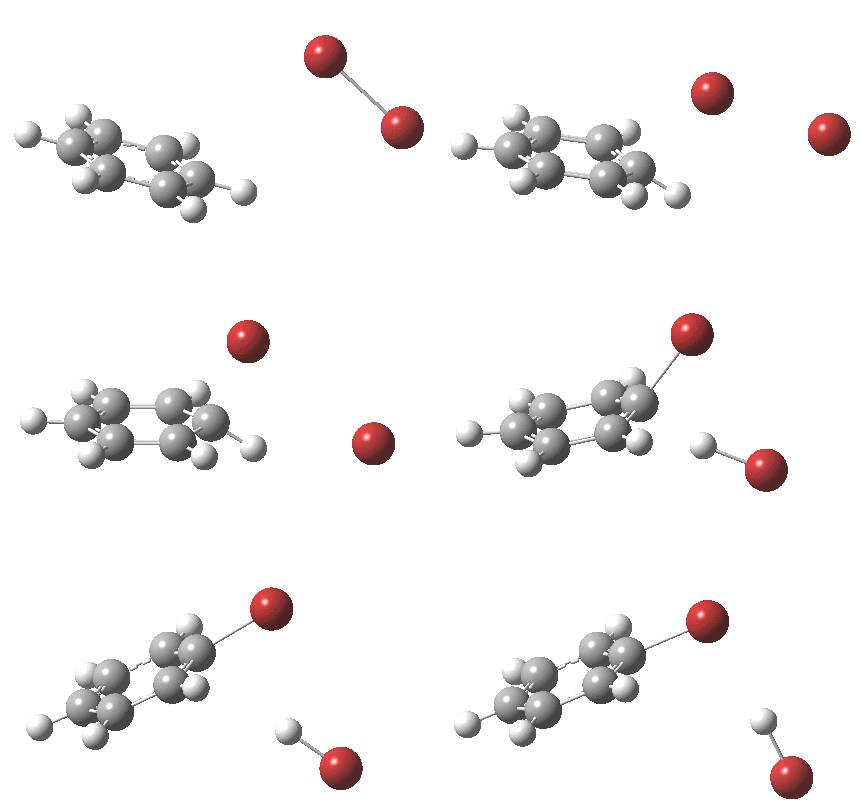
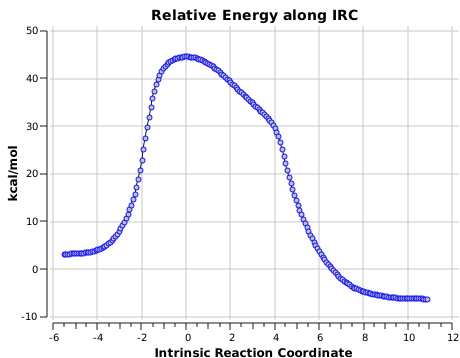
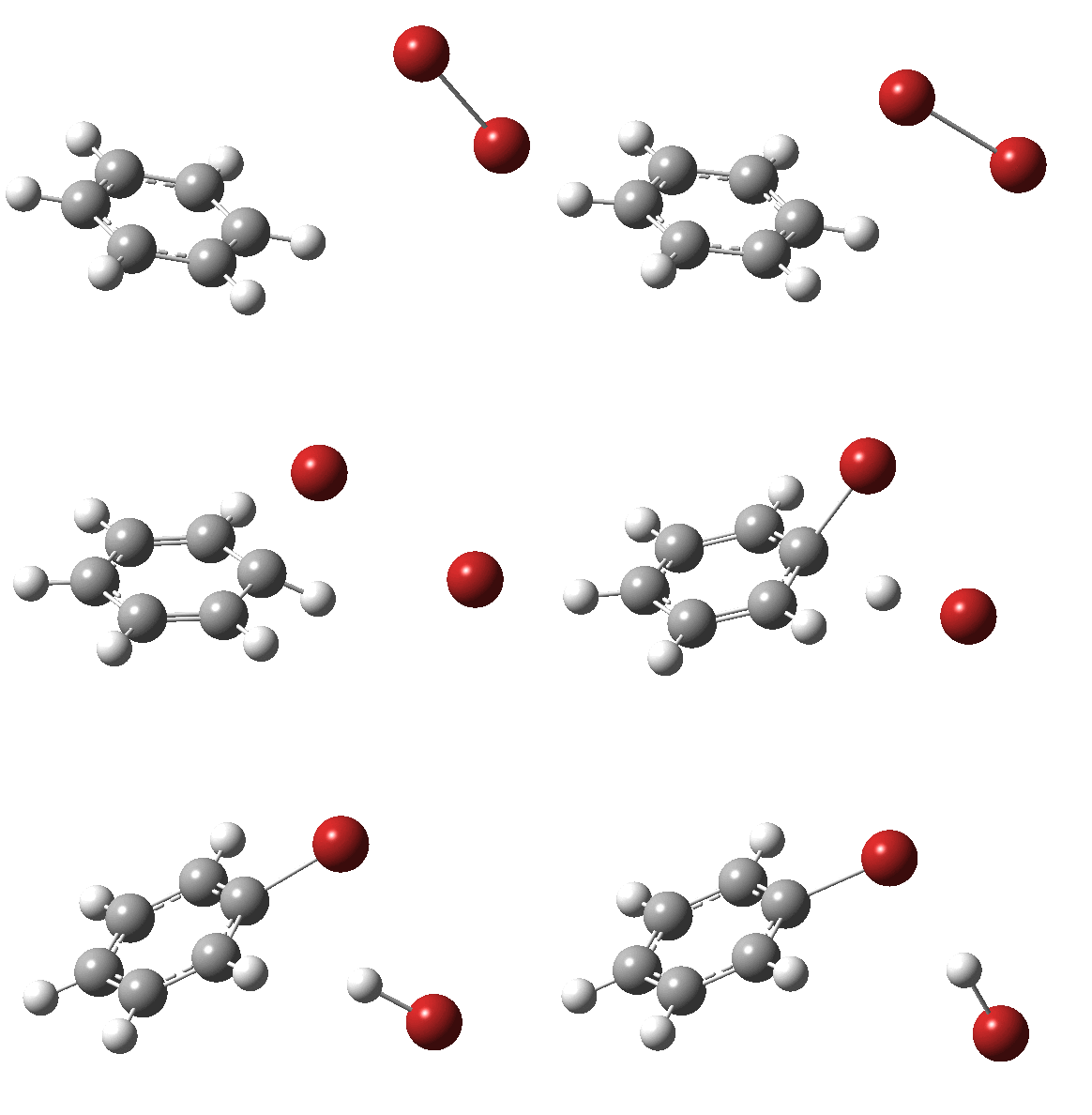
    The level of theory used before[cite]10.1002/anie.201101852[/cite] is rb3lyp/6-311++G(2d,2p)/SCRF=CCl4 (the r is added here, for reasons that will soon become apparent) and the animation[cite]10.6084/m9.figshare.956223[/cite] is shown below, which is followed by repeating the calculation with addition of a D3-type dispersion correction to the core rb3lyp DFT method.[cite]10.6084/m9.figshare.956247[/cite] Without dispersion, the final HBr becomes H-bonded to the other Br, but with dispersion it instead forms a π-facial hydrogen bond to the aromatic ring. Even for such a small molecule, one can easily observe the effects of dispersion forces!

    Br2+benzeneBr2+benzene+D3

    br2-d3br2+d3

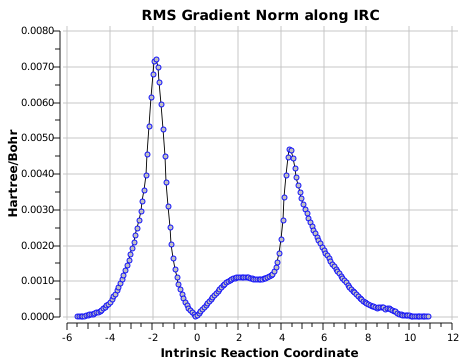
    The reaction is indeed concerted, but it is also asynchronous as revealed by the characteristic feature at IRC ~3. We might conclude that the Wheland does make an appearance in this mechanism, but only as a “hidden intermediate“. It is a relay-race with the blue arrows above running first, and then without pause smoothly passing the baton of the reaction to the red arrows. The activation energy is high, commensurate with a reaction that in fact does not take place at normal temperatures.

    Boris Galabov (another co-author[cite]10.1002/anie.201101852[/cite]) then pointed out to me that the spin-restricted wavefunction (r above) at the transition state is unstable with respect to spin unrestriction.[cite]10.1016/0009-2614(77)85311-6[/cite] This means that some open-shell biradical character is present at least at the transition state if not the entire pathway. So what would happen if the IRC were repeated using ub3lyp instead of rb3lyp? Would allowing for biradical character still retain the concerted nature?

    Before showing the results, I have to point out that the uIRC must be done in two stages,‡ the first being the path to the transition state and the second the path down from it to products (the program I use to show the profiles is not capable has errors when splicing the two together). First the upward path[cite]10.6084/m9.figshare.958784[/cite] (without dispersion) ending at the TS, followed by the path down.[cite]10.6084/m9.figshare.958785[/cite]

    urE

    IRC profile for spin-unrestricted pathway 
    ufE
    ufG

    On the approach path, the spin expectation operator <S2> starts at zero but at IRC ~2.0 it becomes non-zero (biradical character forms) and this persists to the transition state and to IRC ~-2 beyond on the downward path before reverting again to a closed shell singlet. In this central region we have what amounts to a “hidden biradicaloid intermediate”. Since the C-Br bond formation and the subsequent C-H bond cleavage are NOT synchronous, we also retain the hidden Wheland characteristics. So this system is perhaps best described as having a “hidden biradicaloid Wheland intermediate“; a double whammy in the vernacular.  The non zero value of  <S2> lowers the activation barrier from  ~42 kcal/mol to  ~37 kcal/mol, but it still remains a barrier which is insurmountable at room temperatures.

    The bottom line remains: according to this quantum model, the reaction is concerted, as originally claimed.[cite]10.1002/anie.201101852[/cite]


    ‡ The technical explanation is as follows. The IRC is started at the TS, and the SCF is converged using a broken-symmetry keyword guess(mix). As the IRC proceeds on the path down to reactant, each step uses the density matrix from the previous step as the initial SCF guess. This ensures that the unrestricted wavefunction remains symmetry broken if that is the lowest energy solution. Before the reactant is reached however, <S2> has collapsed to zero. Then the forward path is started, again from the TS. However, the program continues to use the last density matrix and hence <S2> continues to be zero for this entire path. Hence the reason for performing two separate IRC calculations, to ensure that the correct value of <S2> is achieved on both pathways.


  • Mechanism of the reduction of a carboxylic acid by borane: revisited and revised.

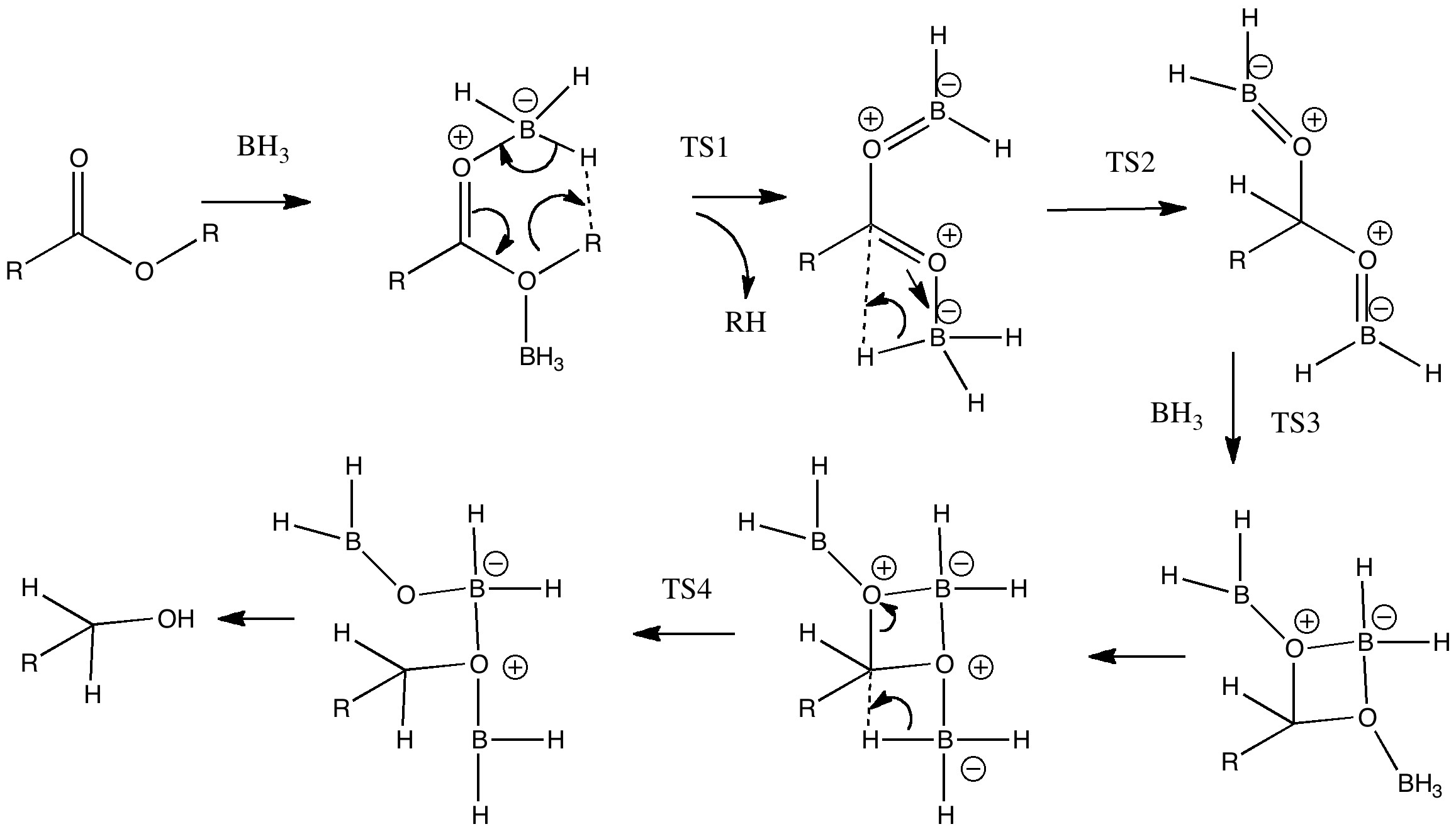
    I asked a while back whether blogs could be considered a serious form of scholarly scientific communication (and so has Peter Murray-Rust more recently). A case for doing so might be my post of about a year ago, addressing why borane reduces a carboxylic acid, but not its ester, where I suggested a possible mechanism. Well, colleagues have raised some interesting questions, both on the blog itself and more silently by email to me. As a result, I have tried to address some of these questions, and accordingly my original scheme needs some revision! This sort of iterative process of getting to the truth with the help of the community (a kind of crowd-sourced chemistry) is where I feel blogs do have a genuine role to play.

    The reduction of a carboxylic acid by borane

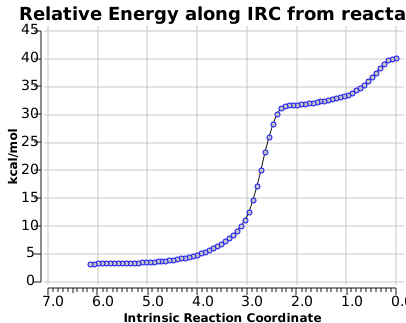
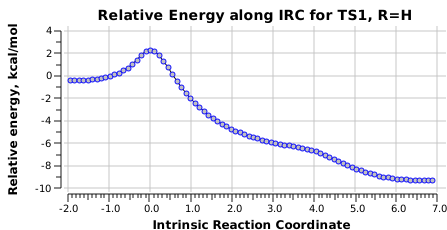
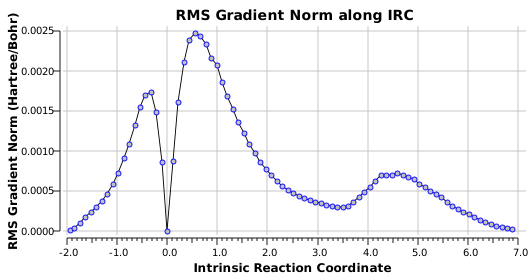
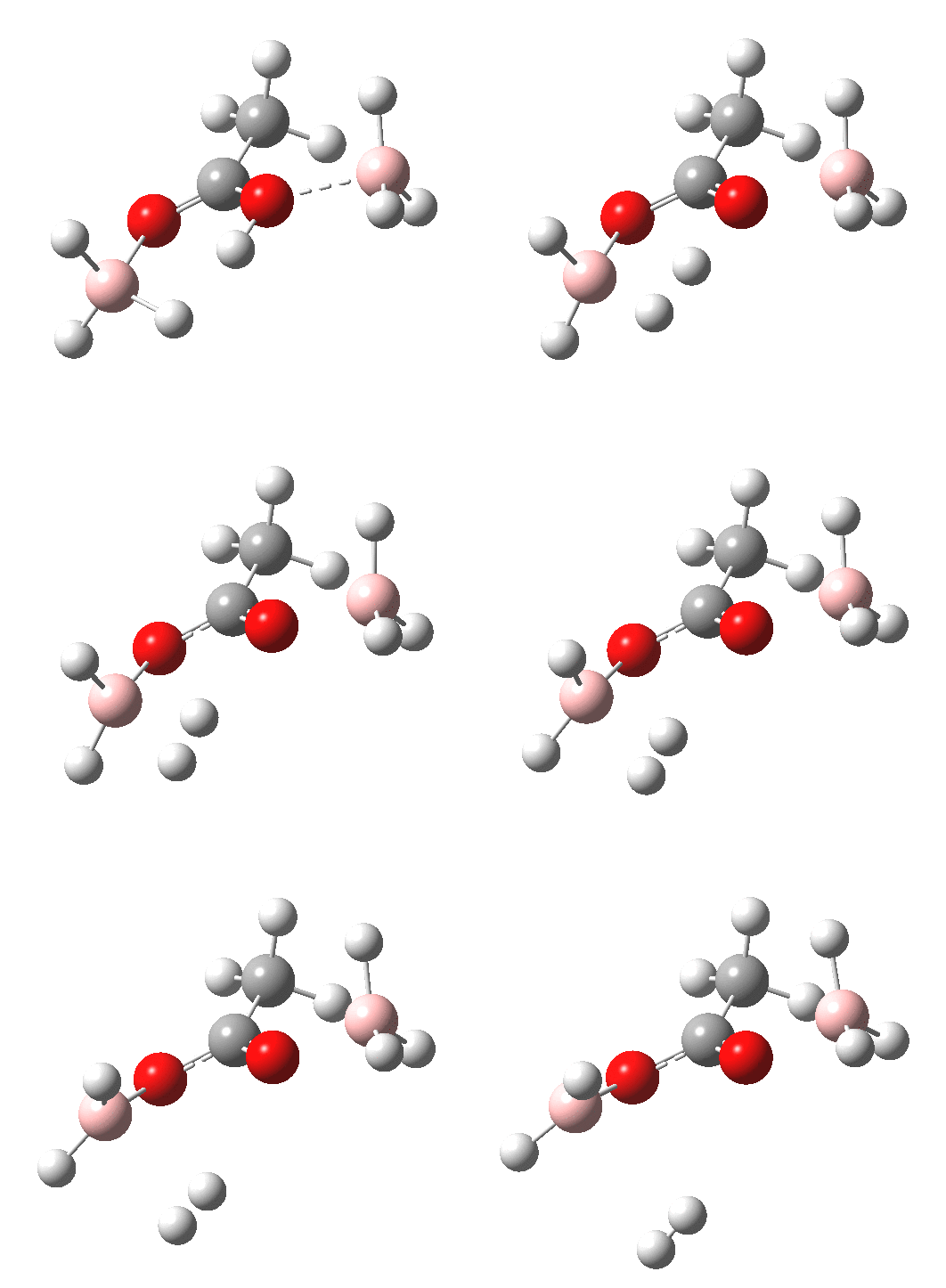
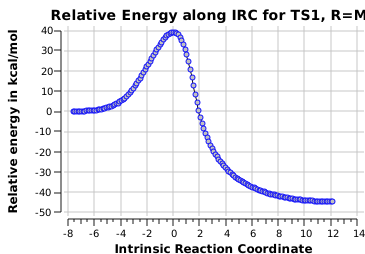
    TS1 in this scheme is modified from before to include an extra borane coordinating to the oxygen of the O-R group. I will include here the intrinsic reaction coordinate [computed at ωB97XD/6-311G(d,p)], since it shows some fascinating features.

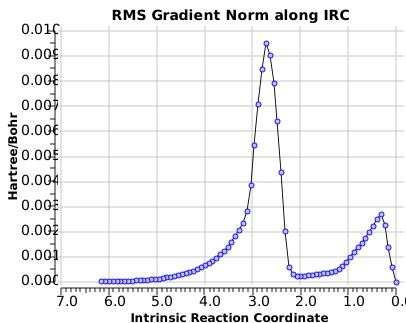
    One notes that the barrier for extrusion (R=H) is lower than before, due to the effect of the extra coordinated BH3 group. But notice the “bump” at an IRC value of ~4.0. If one inspects the gradients along the IRC, they reveal that the ejecting H-H molecule is tempted to coordinate to the boron to form a 5-coordinate species (a “hidden intermediate”) before abruptly changing direction and flying off into space!

    You can see an animation by invoking this link  or below:

    acyloxy+bh3-irc

    What happens if R=Me (an ester)? Well, the activation energy is now closer to 40 kcal/mol, which means the rate of the reaction would be very slow. Notice the bump corresponding to 5-coordinate boron has now vanished!

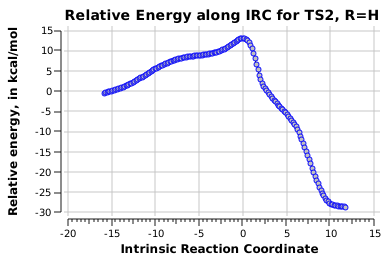
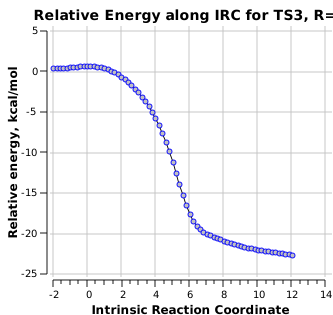
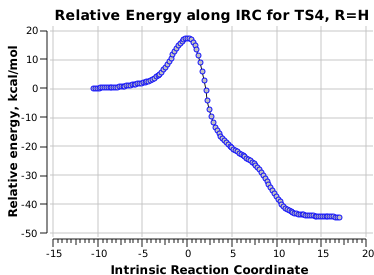
    Again, a link for IRC animation of the reaction (it is rather nice, even if a say so myself). QED? Well, not quite. One still has to show that TS2 – TS4 do not control things! The IRC for TS2 (the first addition of a hydrogen to the carbon) is shown below, again with fascinating bumps along the way. The TS2 animation is here. The free energy of TS2 is 6.9 kcal/mol lower than TS1 (even though the actual activation barrier is higher), which makes the latter the rate determining step. Note the bumps at  IRC = -8 and +5. These are due to rotations setting up the reaction.

    TS3, a ring closing reaction (animation) shows an unexpected feature which I leave you to discover for yourself. TS4 is the second and final addition of a hydrogen to the carbon, with animation and resembling an SN2 inversion. The reaction is completed by hydrolysis.

    The relative free energies of TS1, 2, 3 and 4 are respectively 0.0, -6.9, -35.0 and -19.4 kcal/mol, which makes the overall rate limiting step TS1. If that is the case, then this explains why borane reduces only a carboxylic acid and not an ester.

    Now all I have to do is explain all of this to my tutorial group! Mind you, this is a deceptively complex mechanism, and who knows if it may yet spring surprises.

    Acknowledgments

    This post has been cross-posted in PDF format at Authorea.