Tag: chemical bonding

  • Imaging normal vibrational modes of a single molecule of CoTPP: a mystery about the nature of the imaged species.

    Previously, I explored (computationally) the normal vibrational modes of Co(II)-tetraphenylporphyrin (CoTPP) as a “flattened” species on copper or gold surfaces for comparison with those recently imaged[cite]10.1038/s41586-019-1059-9[/cite]. The initial intent was to estimate the “flattening” energy. There are six electronic possibilities for this molecule on a metal surface. Respectively positively, or negatively charged and a neutral species, each in either a low or a high-spin electronic state. I reported five of these earlier, finding each had quite high barriers for “flattening” the molecule. For the final 6th possibility, the triplet anion, the SCF (self-consistent-field) had failed to converge, but for which I can now report converged results.

    charge

    Spin

    Multiplicity

    ΔG, Twisted Ph,
    Hartree
    ΔG, “flattened”,
    Hartree

    ΔΔG,

    kcal/mol

    -1 Triplet -3294.68134 (C2) -3294.64745 (C2v) 21.3
    -3294.616684 (C2v) 40.6
    -3294.37012 (D2h) 195.3
    Singlet -3294.67713 (S4) -3294.39418 (D4h) 175.6
    -3294.39321 (D2h) 178.2
    -3294.56652 (D2) 69.4
    FAIR data at DOI:10.14469/hpc/5486 FAIR data version of the tables in this and previous post at DOI:10.14469/hpc/5561

    I am exploring the so-called “flattened” mode, induced by the voltage applied at the tip of the STM (scanning-tunnelling microscope) probe and which causes the phenyl rings to rotate as per above. This rotation in turn causes the hydrogen atom-pair encircled above to approach each other very closely. To avoid these repulsions, the molecule buckles into one of two modes. The first causes the phenyl rings to stack up/down/up/down. The second involves an all-up stacking, as shown below. Although these are in fact 4th-order saddle points as isolated molecules, the STM voltage can inject sufficient energy to convert these into apparently stable minima on the metal surface.

    All syn mode, Triplet anion

    The up/down/up/down “flattened” form (below) shows a much more modest planarisation energy than all the other charged/neutral states reported in the previous post, whereas the all-up isomer (which on the face of it looks a far easier proposition to come into close contact with a metal surface) is far higher in free energy.

    The caption to Figure 3 in the original article[cite]10.1038/s41586-019-1059-9[/cite] does not explicitly mention the nature of the metal surface on which the vibrations were recorded, but we do get “The intensity in the upper right corner of the 320-cm−1 map is from a neighbouring Cu–CO stretch” which suggests it is in fact a copper surface. Coupled with the other observation that in “contrast to gold, the Kondo resonance of cobalt disappears on Cu(100), suggesting that it acquires nearly a full electron from the metal (see Extended Data Fig. 2),” the model below of a triplet-state anion on the Cu surface seems the most appropriate.

    Syn/anti mode, Triplet anion with C2v symmetry

    There is one final remark made in the article worth repeating here: “This suggests that the vibronic functions are complex-valued in this state, as expected for Jahn–Teller active degenerate orbitals of the planar porphyrin.26” Orbital degeneracy can only occur if the molecule has e.g. D4h point group symmetry, whereas the triplet anion stationary-point shown in the figure above has only C2v symmetry for which no orbital degeneracies (E) are expected. Enforcing D4h symmetry on Co(II) tetraphenylporphyrin results in eight pairs of H…H contacts of 1.34Å, which is an impossibly short distance (the shortest known is ~1.5Å). Moreover this geometry has an equally impossible free energy 176 kcal/mol above the relaxed free molecule. Visually from Figure 3, the H…H contact distance looks even shorter (below, circled in red)! A D2h form (with no E-type orbitals) can also be located.

    Singlet, Calculated with D4h symmetry. Click for vibrations.
    Singlet, Calculated with D2h symmetry. Click for vibrations.
    Taken from Figure 3 (Ref 1).

    These totally flat species are calculated to be at 13 or 12th-order saddle points, with the eight most negative force constants having vectors which correspond to up/down avoidance motions of the proximate hydrogen pairs encircled above and the remaining being buckling modes of the entire ring.

    So to the mystery, being the nature of the “flattened” CoTPP on the copper metal surface, as represented in Figure 3 of the article.[cite]10.1038/s41586-019-1059-9[/cite] Is it truly flat, as implied by the article? If so, the energy of such a species would be beyond the limits of what is normally considered feasible. Moreover, it would represent a species with truly mind-blowing short H…H contacts. Or could it be a saddle-shaped geometry, where the phenyl rings are not lying flat in contact with the metal but interacting via the phenyl para-hydrogens? That geometry has not only a much more reasonable energy above the unflattened free molecule, but also acceptable H…H contacts (~2.0.Å) However, would such a shape correspond to the visualised vibrational modes also shown in Figure 3? I have a feeling that there must be more to this story.


    These convergence problems were solved by improving the basis set via adding “diffuse” functions, as in (u)ωB97XD/6-311+G(d,p). Convergence to the lowest energy electronic state (3B2) is achieved using a Huckel initial guess rather than the default Harries, which gives the higher energy 3A2. If the crystal structure for these species is flattened without geometry optimisation, the H-H distance is around 0.8Å This blog has a DOI: 10.14469/hpc/5559.

  • Imaging vibrational normal modes of a single molecule.

    The topic of this post originates from a recent article which is attracting much attention.[cite]10.1038/s41586-019-1059-9[/cite] The technique uses confined light to both increase the spatial resolution by around three orders of magnitude and also to amplify the signal from individual molecules to the point it can be recorded. To me, Figure 3 in this article summarises it nicely (caption: visualization of vibrational normal modes). Here I intend to show selected modes as animated and rotatable 3D models with the help of their calculation using density functional theory (a mode of presentation that the confinement of Figure 3 to the pages of a conventional journal article does not enable).

    I should start by quoting some pertinent aspects obtained from the article itself. The caption to Figure 3 includes assignments, which I presume were done with the help of Gaussian calculations. Thus in the Methods section, we find … The geometry of a free CoTPP molecule is optimized under tight convergence criteria using Gaussian 09 (ref. 33). The orientationally averaged Raman spectrum and vibrational normal modes are calculated with the geometry of a free molecule … All the calculations mentioned above are performed at the B3LYP/6-31G* level with the effective core potential at the cobalt centre. Armed with this information, I looked at the data included with the article (the data supporting the findings of this study are available within the paper. Experimental source data for Figs. 1–4 are provided with the paper) but did not spot any data specifically relating to those Gaussian 09 calculations; in particular any data that would allow me to animate some vibrational normal modes for display here. No matter, it is easy to re-calculate, although I had to obtain the basic 3D coordinates from the Cambridge crystal data base (e.g. entry IKUDOH, DOI: 10.5517/cc6hj4b) since they were unavailable from the article itself. At this point some decisions about molecular symmetry needed to be made (the symmetry is not mentioned in the article), since it is useful to attach the irreducible representations (IR) of each mode as a label (lacking in Figure 3). The crystal structure I picked has idealised S4 symmetry, but it could be higher at D2d or lower at C2.

    The next issue to be solved is how many electrons to associate with the molecule. Tetraphenylporphyrin has 347 electrons and the free molecule would be expected to be a doublet spin state (with the quartet as an excited state). Were the vibrational modes calculated for this state? Perhaps not since I then found this statement: The physisorbed CoTPP is positively charged on gold, as demonstrated through TERS measurements using CO-terminated tips24 and through the Smoluchowski effect29…. In contrast to gold, the Kondo resonance of cobalt disappears on Cu(100), suggesting that it acquires nearly a full electron from the metal (see Extended Data Fig. 2). So it seems worth calculating both the cation and the anion singlets as well as the neutral doublet. But at this stage we do not know for certain what spin state the Gaussian 09 assignments in Figure 3 were done for, since there is no data associated with the article to tell us, only that they were done for the free molecule (nominally a doublet).

    There is one more remark made in the article we need to take into account: After lowering the sample bias to approach the molecule and scanning at close range, the molecule flattens. Its phenyl rings, which in the free molecule assume a dihedral angle of 72°, rotate to become coplanar (see Extended Data Fig. 1b). Evidently, the binding energy of the phenyl groups to copper overcomes the steric hindrance in the planar geometry. So it might be useful to calculate this “flattened” form to see how much steric repulsion energy needs to be overcome by that binding of the phenyl groups to the surface of the metal. 

    Finally, I decided to not try to replicate exactly the reported calculations (B3LYP/6-31G(d)) since this type of DFT mode does not include any dispersion attraction terms; moreover by today’s standards the basis set is also rather small. So here you have an ωB97Xd/6-311G(d,p) calculation, with tight convergence criteria (integral accuracy 10-14 and SCF 10-9; again we do not know what values were used for the article). To ensure that my data is as FAIR as possible, here is its DOI: 10.14469/hpc/5461

    charge Multiplicity ΔG, Twisted Ph
    Hartree
    ΔG, Co-planar Ph
    Hartree
    ΔΔG, kcal/mol
    0 Doublet -3294.58693 -3294.48867 61.7
    0 Quartet -3294.58777 -3294.51985 42.6
    +1 Singlet -3294.35473 -3294.24973 65.9
    +1 Triplet -3294.40821 -3294.33092 48.5
    -1 Singlet -3294.67713 -3294.56652 69.4

    Starting with a singlet cation as a model, the intent is to compare the “free molecule” energy with that of a flattened version where the dihedral angles of the phenyl rings relative to the porphyrin ring are constrained to ~0° rather than ~72°. This emerges as a 4th order saddle point (a stationary point with four negative roots for the force constant matrix). Such a property means that each co-planar phenyl group is independently a transition state for rotation. The calculated geometry overall is far from planar, having S4 symmetry. The image below in (a) shows how non-planar the molecule still is; (b) an attempt to orient it into the same position as is displayed in Figure 3 of the article.[cite]10.1038/s41586-019-1059-9[/cite]

    Singlet cation. Click on the image to get a rotatable model.

    The free energy ΔG is 65.9 kcal/mol higher than the twisted form, which means that according to the model proposed, the binding energy of the phenyl groups to copper must recover at least this much energy. If we consider a cationic porphyrin interacting with an anionic metal surface as an ion-pair, then this is perhaps feasible. It is difficult however to see how more than two of the phenyl rings can simultaneously interact with a flat metal surface.

    Next, the triplet state of the cation, again a 4th-order saddle point with a rotational barrier of ΔG48.5 kcal/mol; the triplet being 33.6 kcal/mol lower than the singlet using this functional (singlet-triplet separations can be quite sensitive to the DFT functional used).

    Triplet cation. Click on the image to get a rotatable model.

    Next, the neutral doublet, another 4th-order saddle point and below it the quartet state, which this time is just a 2nd-order saddle point (an interesting observation in itself).

    Neutral Doublet
    Neutral Quartet

    Finally, the “flattened” singlet anion, which also emerges as a 4th-order saddle point (the triplet state has SCF convergence issues which I am still grappling with).

    Singlet anion

    To inspect the vibrational modes of any of these species, click on the appropriate image to open a JSmol display. Then right-click in the molecule window, navigate to the 3rd menu down from the top (Model – 48/226), where the frames/vibrations are ordered in sets of 25. Open the appropriate set and select the vibration you want from the list of wavenumbers shown. The preselected normal mode is the one identified in Figure 3 as 388 cm-1, the symmetric N-Co stretch (I note the figure 3 caption refers to them as vibrational frequencies; they are of course vibrational wavenumbers!). You can also inspect the four modes shown as negative numbers (correctly as imaginary numbers) to see how the phenyl groups rotate. If you want to analyze the vibrational modes using other tools (the free Avogadro program is a good one), then download the appropriate log or checkpoint file from the FAIR data archives at 10.14469/hpc/5461.

    I conclude by noting that the aspect of this article which I presume reports the Gaussian normal vibrational mode calculations (Figure 3, caption Bottom, assigned vibrational normal modes), has been a challenging one to analyse. Neither the charge state nor the spin state of these calculations is clearly indicated in the article (unless I missed it somewhere). The barriers to flattening out the molecule by twisting all four phenyl groups are unreported in the article, but emerge as substantial from the calculations here. The various species I calculated (summarised in the table and figures above) are all predicted to be non-planar. In the absence of provided coordinates with the article, the visual appearances (bottom row, Figure 3) are the only information available. These certainly appear flat and rather different from my projections shown above or below.

    All of which amounts to a plea for more data and especially FAIR data to be submitted, providing information such as the charge and spin states used for the calculations, along with a full listing of all the normal mode vectors and wavenumbers. The article is only a letter at this stage; perhaps this information will appear in due course!


    As noted above I have not attempted a direct replication, not least because there is no reported data to which any replication could be compared. The IRs of each vibrational mode are displayed along with the wavenumber when the 3D JSmol display is shown with a right-mouse-click.

  • The shortest known CF…HO hydrogen bond.

    There is a predilection amongst chemists for collecting records; one common theme is the length of particular bonds, either the shortest or the longest. A particularly baffling type of bond is that between the very electronegative F atom and an acid hydrogen atom such as that in OH. Thus short C-N…HO hydrogen bonds are extremely common, as are C-O…HO. But F atoms in C-F bonds are largely thought to be inert to hydrogen bonding, as indicated by the use of fluorine in many pharmaceuticals as inert isosteres.[cite]10.1039/B610213C[/cite] Here I do an up-to-date search of the CSD crystal structure database, which is now on the verge of accumulating 1 million entries, to see if any strong C-F…HO hydrogen bonding may have been recently discovered.

    The search query uses the CF…HO distance as one variable, and the C-F-H angle as the second. The first diagram shows just intermolecular interactions, up to a distance of 2.7Å which is the sum of the van der Waals radii of the two elements. The hot spot occurs at this value, and an angle of ~95°.

    The intra-molecular plot shows a similar value for the most common F…H distance, with the interesting variation that the angle subtended at F is about 80°. The outlier at the short end of the spectrum (arrow) was observed in 2014[cite]10.1002/anie.201403599[/cite] with the structure shown below. It is indeed the current record holder by some margin! This length by the way is however a great deal longer than the shortest O…HO hydrogen bonds, which can be in the region of 1.2Å (with the proton sometimes symmetrically disposed between the two oxygen atoms). The value is also very similar to the record holder for the shortest C-H…H-C interaction.

    It is always useful to check up on crystallographic hydrogen atom positions using a quantum calculation, so here is one at the ωB97XD/Def2-TZVPP level (Data DOI: 10.14469/hpc/5131) which replicates the values nicely.

    ωB97XD/Def2-TZVPP Calculation

    A QTAIM analysis of the critical points shows that the F…H BCP has a high value of ρ(r) (most hydrogen bonds only reach about 0.03 au).

    NBO analysis indicates the  E(2) perturbation energy for donation from an F lone pair into the H-O σ* orbital is 21.2 kcal/mol, which indicates a strong  H-bond (typical C-O…HO values are 18-22 kcal/mol). The F…H bond order is 0.05.

    This molecule has another interesting property, also noted in the original article;[cite]10.1002/anie.201403599[/cite] the shift in wavenumber of the O-H stretching vibration. Most hydrogen bonds are characterised by the shift (mostly red and recently discovered blue shifts) that occurs in the OH group when it hydrogen bonds. These shifts are typically 100-200 cm-1 but in this molecule there is no shift, which is described as “exceptional”.

    The 1H NMR shift of the OH proton is observed at δ 4.8 ppm, with the value calculated here (ωB97XD/Def2-TZVPP) being 4.75 ppm. A very large H-F coupling was observed of 68 Hz, again a very high value for a “through space” hydrogen bond.

    So another record for the molecule makers to try to break!


    Respectively 7142 and 31428 intermolecular (3859 and 10602 intra) examples using the same search parameters as above, with the shortest values being ~1.28 and ~1.2Å.

  • What are the highest bond indices for main group and transition group elements?

    A bond index (BI) approximately measures the totals of the bond orders at any given atom in a molecule. Here I ponder what the maximum values might be for elements with filled valence shells.

    Following Lewis in 1916[cite]10.1021/ja02261a002[/cite] who proposed that the full valence shell for main group elements should be 2 (for the first two elements) and 8 (the “octet“), Bohr (1922[cite]10.1007/BF01326955[/cite]), Langmuir (1919-1921[cite]10.1126/science.54.1386.59[/cite]) and Bury (1921[cite]10.1021/ja01440a023[/cite]) extended this rule to include 18 (the transition series) and 32 (the lanthanides and actinides). If we assume no contributions from higher Rydberg shells (thus 3s, 3p, 3d for carbon etc) and an electron pair model for orbital population (which amounts to the single-determinantal model), then the maximum bond index for hydrogen (and helium) would be 1, it would be 4 for main group elements, and then what?

    For the special case of hydrogen, I have previously identified (for a hypothetical species) a bond index of 1.33, due mostly to a high Rydberg occupancy of 1.19e. The more normal BI is <1.0, as noted for this hexacoordinated hydride system. My current estimate for the maximum bond index for main group elements is <4.5. Thus for SF6, it has the value of ~4.33 and that includes a modest occupancy of Rydberg shells of 0.36e = 0.18 BI. Exclude these and it is close to 4.

    Move on from group 16 to group 6 and you get compounds such as Me4CrCrMe44- or ReMe82- where the metal bond indices are ~6.5. Compounds such as Cr(Me)6 (BI = 5.6)  and W(Me)(BI = 6.1) are rather lower. This is a long way from 18/2 = 9. The lanthanides and actinides[cite]10.1002/9781118688304.ch15[/cite] are unlikely to reveal many large BIs (32/2= 16 maximum value) since they are often ionic and the wavefunctions may be too complex to allow a simple index such as a BI to be safely computed.
    So if we are hunting for record BIs, the transition elements are the place to hunt. Can a BI of 6.5 be beaten? Can it even approach 9, its maximum value? Does anyone know of candidate molecules? 


    FAIR Data doi: 10.14469/hpc/3352.

  • Hypervalent or not? A fluxional triselenide.

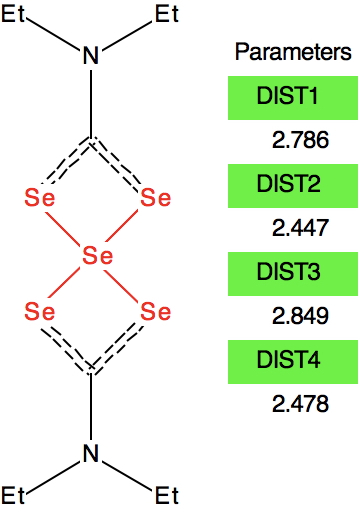
    Another post inspired by a comment on an earlier one; I had been discussing compounds of the type I.In (n=4,6) as possible candidates for hypervalency. The comment suggests the below as a similar analogue, deriving from observations made in 1989.[cite]10.1016/S0040-4039(00)99132-9[/cite]

    This compound was investigated using 77Se NMR, with the following conclusions:

    1. The compound is fluxional, with the lines at room temperature broadened compared to those at -50°C.
    2. At -50°C the peaks are sharp enough to discern 1JSe-Se couplings, with multiplicities and integrations that suggest a central Se is surrounded by four equivalent further Se atoms, with shifts of 655.1 and 251.2 ppm.
    3. The magnitude of this 1JSe-Se coupling (391 Hz) leads to the suggestion of a considerable contribution of a resonance form with Se=Se bonds (structure 2 above).
    4. This was supported by 2J13C-77Se couplings which also imply a symmetrically coordinated central  Se.
    5. Thus the two resonance forms 1 or 2 above were suggested as the predominant form at -50°C, with an increasing incursion of the open chain isomer 3 at higher temperatures giving rise to the observed fluxional dynamic behaviour.
    6. One may surmise from these results that the central Se is certainly hypercoordinated and by the classical interpretations hypervalent.

    Here are some calculations (R=H), at the ωB97XD/Def2-TZVPP/SCRF=chloroform level.‡ In red are the calculated Wiberg Se-Se bond orders, which give little indication of any Se=Se double bond character. 

    The calculated 77Se shifts are shown in magenta, with the observed values being 655 and 255 ppm. The match is not good, the errors were 120 and 20.5 ppm.  However calculated shifts for elements adjacent to e.g. Se or Br etc suffer from relativistic effects such as spin orbit coupling.[cite]10.1021/np0705918[/cite] Thus the shift for the central Se, surrounded by four other Se atoms is likely to have a significant error, but the error for the four other Se atoms should be less. The reverse is true.

    However, all the calculations of this species (up to Def2-TZVPPD basis set) showed this symmetric form of D2h symmetry to actually be a transition state, as per below.

    There is a minimum with the structure below in which one pair of Se-Se lengths are longer than the other pair and for which the free energy is 6.5 kcal/mol lower. The Wiberg bond orders for the two sets of Se-Se bonds are now 0.16 and 0.86, which very much corresponds to structure 3 above.

    Assuming that this compound is fluxional even at -50°C, the average of the pairs of Se atoms gives calculated shifts of 667 ppm (655 obs) whilst the central Se is 204.6 ppm (251 obs). The latter, influenced by two especially short Se-Se distances, is likely to have a very large spin-orbit coupling error, whilst for the former the error will be smaller (13C shifts adjacent to one Br typically have induced calculated errors of about 14 ppm[cite]10.1021/np0705918[/cite]).

    At this point I searched the Cambridge structure database for Se coordinated by four other Se atoms. A close analogue[cite]10.1039/DT9760000908[/cite] has the structure shown below, in which pairs of Se-Se interactions have unequal bond lengths, the shorter being ~2.45Å. This matches the calculation above reasonably well.

    Reconciling these various observations, we might assume that even at -50°C the fluxional behaviour has not been frozen out. Given that the fluxional barrier is only 6.5 kcal/mol, it is unlikely that the spectrum could be measured at a sufficiently low temperature to reveal not two sets of Se signals in the ratio 4:1 but three in the ratio 2:2:1. The spin-spin couplings reported presumably are a result of averaging a genuine 1JSe-Se coupling with a through space coupling.

    So it appears that the analysis of the 77Se NMR reported in this article [cite]10.1016/S0040-4039(00)99132-9[/cite] may not be quite what it seems. A better interpretation is that structure 3 is the most realistic. This means no hypercoordination for the Se, never mind hypervalence!


    FAIR data at DOI: 10.14469/hpc/3724. The original reference, Me2Se was incorrectly calculated without solvation by chloroform. The values shown here are now corrected from those shown in the original post.

  • Hypervalent Helium – not!

    Last year, this article[cite]10.1038/nchem.2716[/cite] attracted a lot of attention as the first example of molecular helium in the form of Na2He. In fact, the helium in this species has a calculated bond index of only 0.15 and it is better classified as a sodium electride with the ionisation induced by pressure and the presence of helium atoms. The helium is neither valent, nor indeed hypervalent (the meanings are in fact equivalent for this element). In a separate blog posted in 2013, I noted a cobalt carbonyl complex containing a hexacoordinate hydrogen in the form of hydride, H. A comment appended to this blog insightfully asked about the isoelectronic complex containing He instead of H. Here, rather belatedly, I respond to this comment!

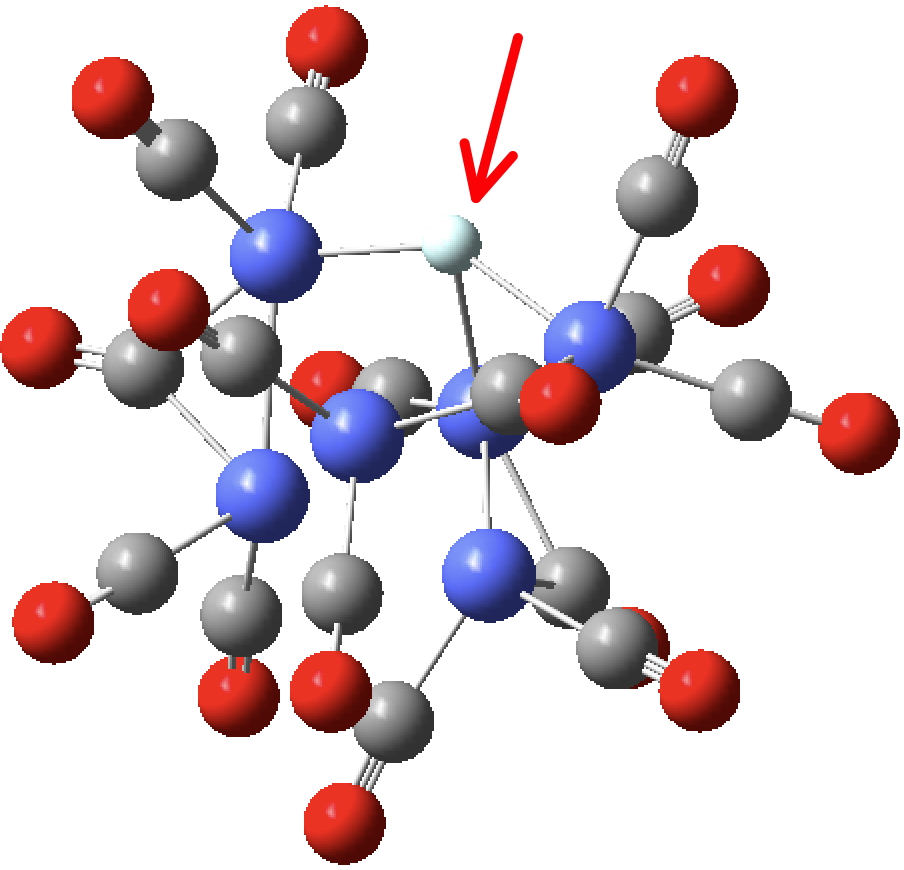
    The complex [HCo6(CO)15] has a calculated bond index at the hydrogen of 0.988 and a calculated NMR chemical shift of 21.6 ppm (ωB97XD/Def2-TZVPPD calculation) compared to a measured value of 23.2 ppm. Despite being six-coordinate, the hydride has a bond index that does not exceed one (it is not hypervalent).

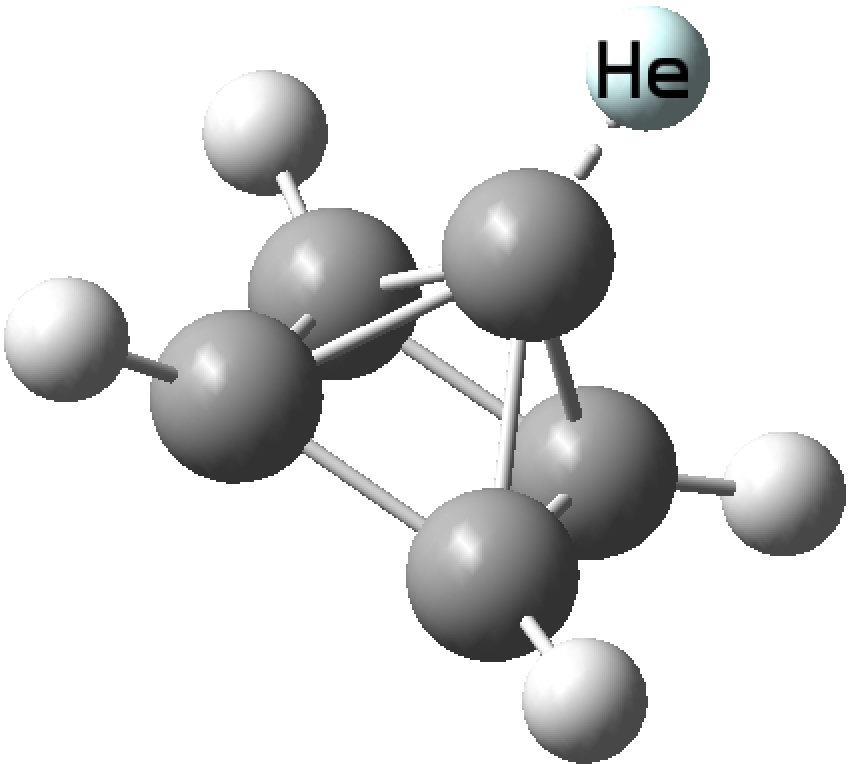
    So here is the neutral helium analogue. The He bond index emerges as 0.71 at the geometry of the hydride complex. Compare this with the bond index of 0.15 calculated for Na2He and it would be fair to say that at this geometry, the helium in [HeCo6(CO)15] would have a greater claim to be a molecular compound. Back in 2010, extrapolating from a series of posts here, I had speculated[cite]10.1038/NCHEM.596[/cite] about other molecular species of He, including the di-cation below. This has a He bond index of 0.54, rather less than that in [HeCo6(CO)15] but much more than in Na2He. It is also vibrationally stable.

    But now, [HeCo6(CO)15] goes “pear-shaped” (why do pears have such a bad press?). I started a process of optimizing the geometry of this complex (ωB97Xd/Def2-TZVPPD). Slowly, the He started to creep out of the centre of the complex and emerge from the cavity. After about 100 steps it reached the geometry shown below, at which point the Wiberg bond index has dropped to 0.62 and still going down. I think it might take a few more steps to be completely expelled, but I have stopped the geometry optimisation at this stage.

    So helium appears not to be valent in [HeCo6(CO)15]. However, I have yet to try Ne, which is both larger and softer. I will post results here.


    All data at 10.14469/hpc/3587.

  • Hypervalent hydrogen?

    I discussed the molecule the molecule CH3F2- a while back. It was a very rare computed example of a system where the added two electrons populate the higher valence shells known as Rydberg orbitals as an alternative to populating the C-F antibonding σ-orbital to produce CH3 and F. The net result was the creation of a weak C-F “hyperbond”, in which the C-F region has an inner conventional bond, with an outer “sheath” encircling the first bond. But this system very easily dissociates to CH3 and F and is hardly a viable candidate for experimental detection.  In an effort to “tune” this effect to see if a better candidate for such detection might be found, I tried CMe3F2-. Here is its story.

    The calculation is at the ωB97XD/Def2-TZVPPD/SCRF=water level (water is here used as an approximate model for a condensed environment, helping to bind the two added electrons).

    1. An NBO (Natural Bond orbital) analysis reveals a total Rydberg orbital population of 1.186e and the following bond indices; F 0.853, C 3.977, C(methyl) 4.051, H(*3) 1.332. The latter corresponds to the three methyl hydrogens aligned antiperiplanar to the C-F bond.
    2. To put this value into context, the hydrogen in the FHF anion has an NBO H bond index of 0.724, and the bridging hydrogens in diborane only have a value of 0.988. Even the hexa-coordinate hydride system [Co6H(CO)15] discussed in an earlier blog  has an H bond index of just 0.86. Actually, coordination of six or even higher for hydrogen is no longer rare; some 28 crystal structures of the type HM6 (M=metal) are known (it would be useful to find out if any of the other 27 such structures might have a hydrogen bond index >1).
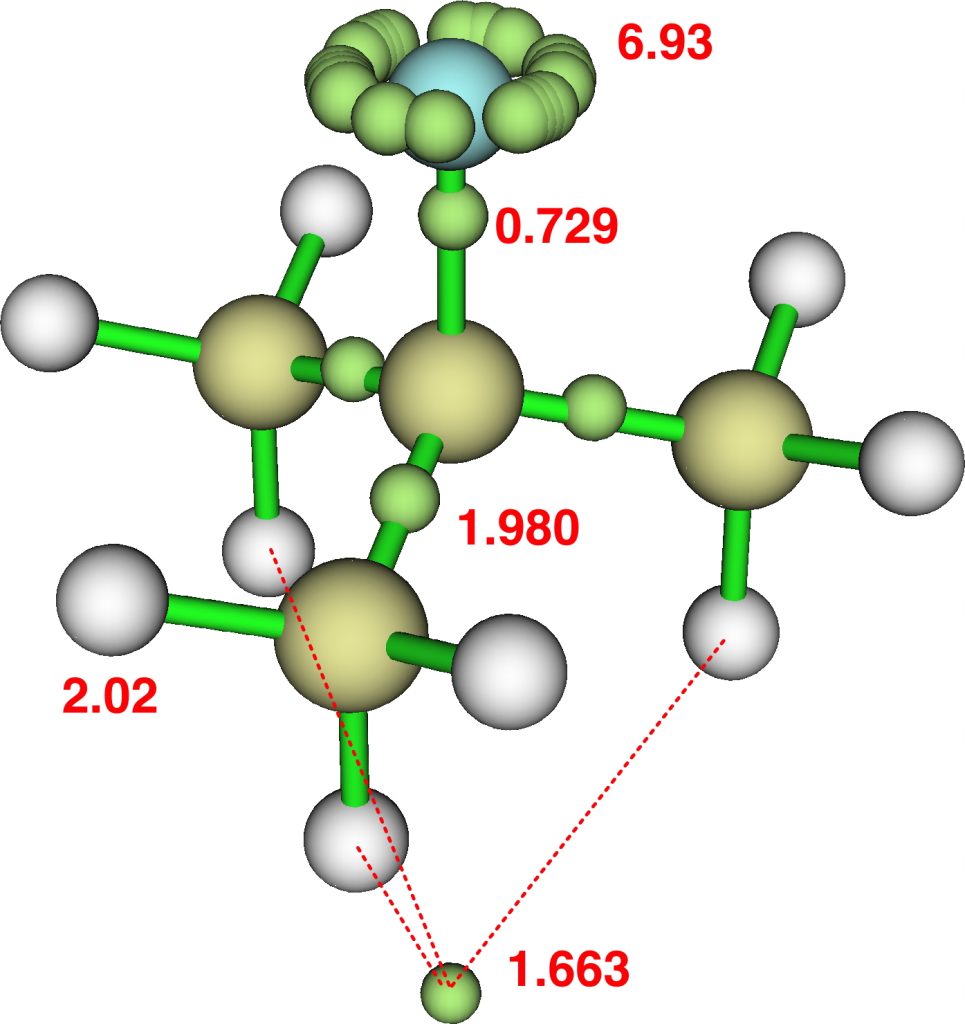
    3. Next, the ELF analysis (Electron localisation function), analysed firstly using the excellent MultiWFN program.[cite]10.1002/jcc.22885[/cite]

      This reveals an attractor basin integrating to 1.663e and located along the axis of the F-C bond and extended into the region of the three antiperiplanar methyl hydrogens. The C-F bond itself only supports a basin of 0.729e, typical of the fairly ionic C-F bond. The covalent C-Me bonds are also pretty normal, as are the other hydrogens.
    4. I also show ELF analysis using the alternative TopMod program[cite]10.1016/S0097-8485(99)00039-X[/cite]; the numerical values on this diagram are the calculated bond lengths in Å. The basin integrations are very similar to those obtained using MultiWFN.

      The Wiberg bond orders of the three H…H regions shown connected by dashed lines above are 0.154, which contributes to the bond index of >1 at these three hydrogens.
    5. The predicted 1H chemical shift of these three “hypervalent” hydrogens is +3.0 ppm, whilst the other six methyl hydrogens are at -0.87ppm.

    So changing CH3F2- to CMe3F2- has dramatically changed the bonding picture that emerges, rather than a fine-tuning. The C-F is no longer a “hyperbond”, although the Rydberg occupancy of 1.186e remains unusually large. Most of the additional electrons have fled the torus surrounding the C-F bond and relocated to the exo-region of that bond where they now influence the three antiperiplanar methyl hydrogens. A two-electron-three-centre interaction if you like, but with the electron basin occupying a tetrahedral vertex rather than the triatom centroid.

    I end with a challenge. Is it possible to find “real” molecules containing hydrogen where the formal bond index for at least one hydrogen exceeds 1.0 significantly, thus making it hypervalent? 


    The calculations are all collected at FAIR doi; 10.14469/hpc/3372.

  • Are diazomethanes hypervalent molecules? An attempt into more insight by more “tuning” with substituents.

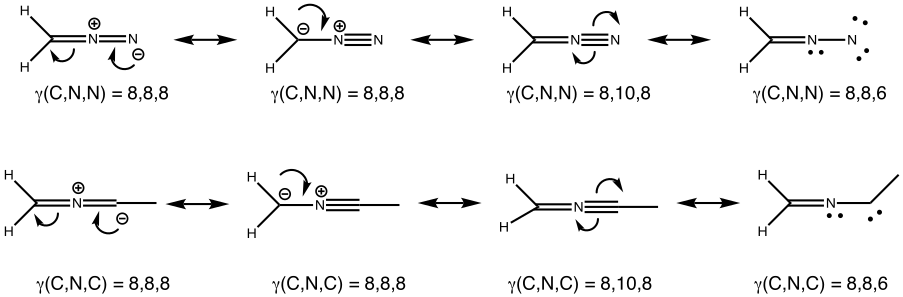
    Recollect the suggestion that diazomethane has hypervalent character[cite]10.1039/C5SC02076J[/cite]. When I looked into this, I came to the conclusion that it probably was mildly hypervalent, but on carbon and not nitrogen. Here I try some variations with substituents to see what light if any this casts.

    I have expanded the resonance forms of diazomethane by one structure from those shown in the previous two posts (a form by the way not considered in the original article[cite]10.1039/C5SC02076J[/cite]) to include a nitrene. This takes us back to an earlier suggestion on this blog that HC≡S≡CH is not a stable species but a higher order saddle point which distorts down to a bis-carbene, together with the suggestion that hypervalent triple bonds have the option of converting four of the six electrons into two carbene lone pairs, replacing the triple bond with a single bond. This in turn harks back to G. N. Lewis’ 101 year old idea for acetylene itself!

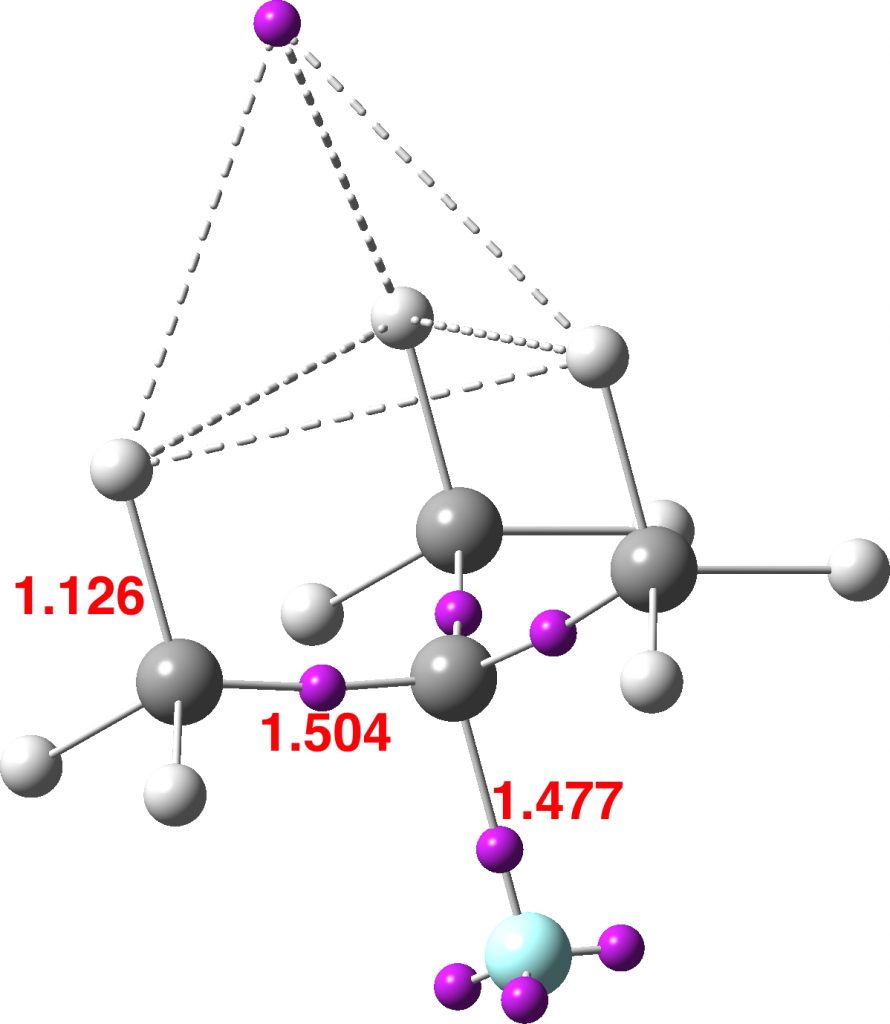
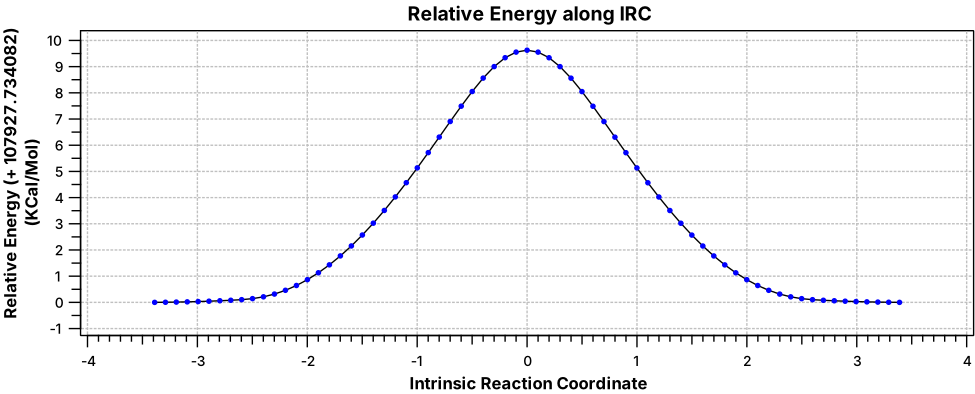
    To explore this mode, I start by replacing the terminal ≡N in diazomethane with a ≡C-Me group, which cannot absorb electrons into lone-pairs in the manner that nitrogen can. A ωB97XD/Def2-TZVPP calculation reveals that the linear form is a transition state for interconversion into a carbene. The IRC for the process (below) shows this carbene is ~10 kcal/mol lower than the linear “hypervalent” form. 

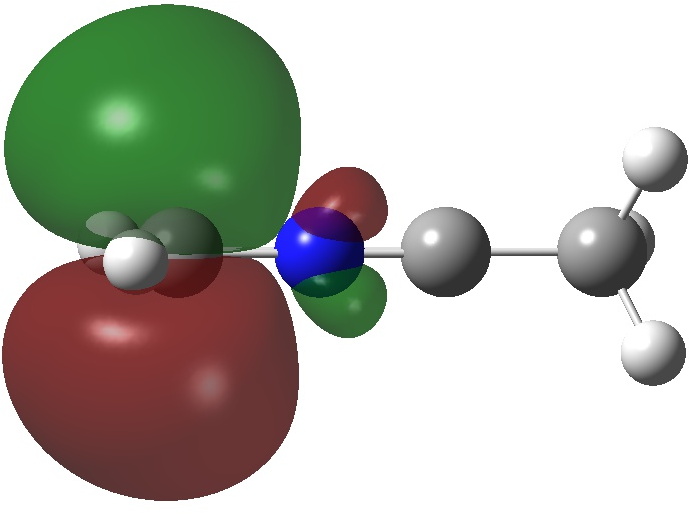
    NBO analysis of this transition state reveals a similar orbital pattern to diazomethane itself, including a non-bonding orbital on the H2C carbon. The Wiberg carbon bond indices are 3.6764 and N 3.6454 and the bond orders C=N 1.1390 and N=CMe 1.6192.

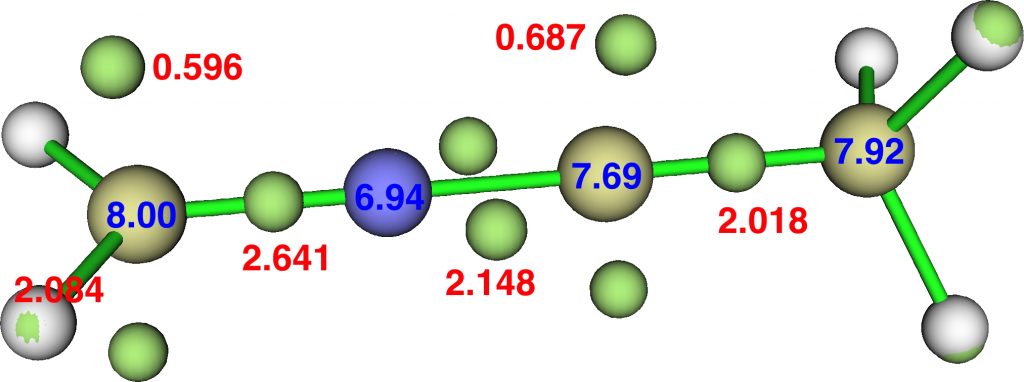
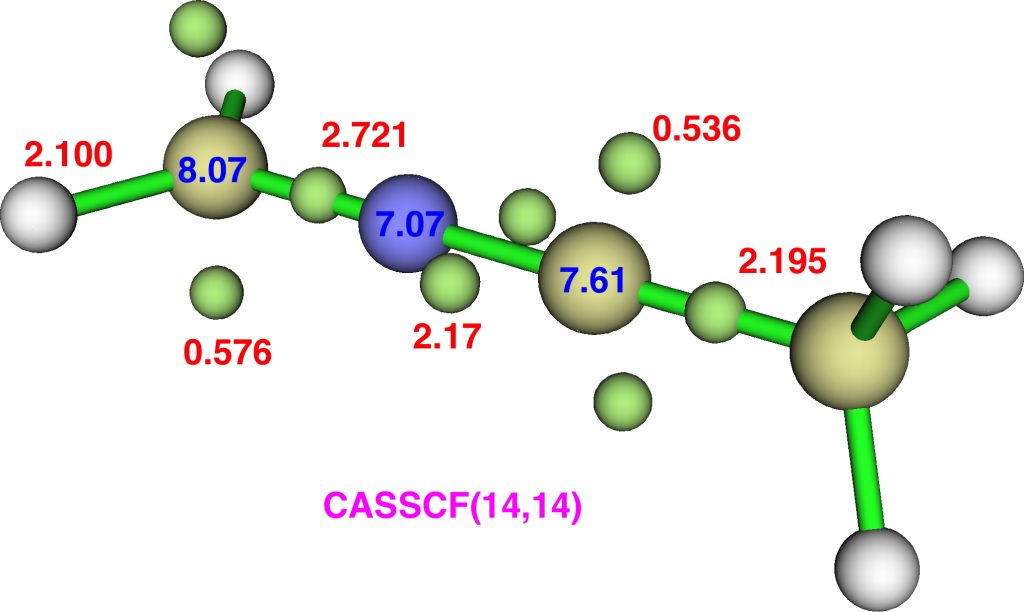
    ELF analysis of this transition state reveals the presence of two non-bonding pairs on the carbon atoms either side of the nitrogen but unshared with it, with populations of 1.19e and 1.37e (DFT). That nitrogen really does not like excess electrons! The four atoms C,N,C,C have ELF valence basins totalling 8.00, 6.94, 7.69 and 7.92e (DFT) or 8.07, 7.07 and 7.61e (CASSCF), suggesting that unlike diazomethane itself, the octet-excess induced hypervalence on carbon is slightly decreased.

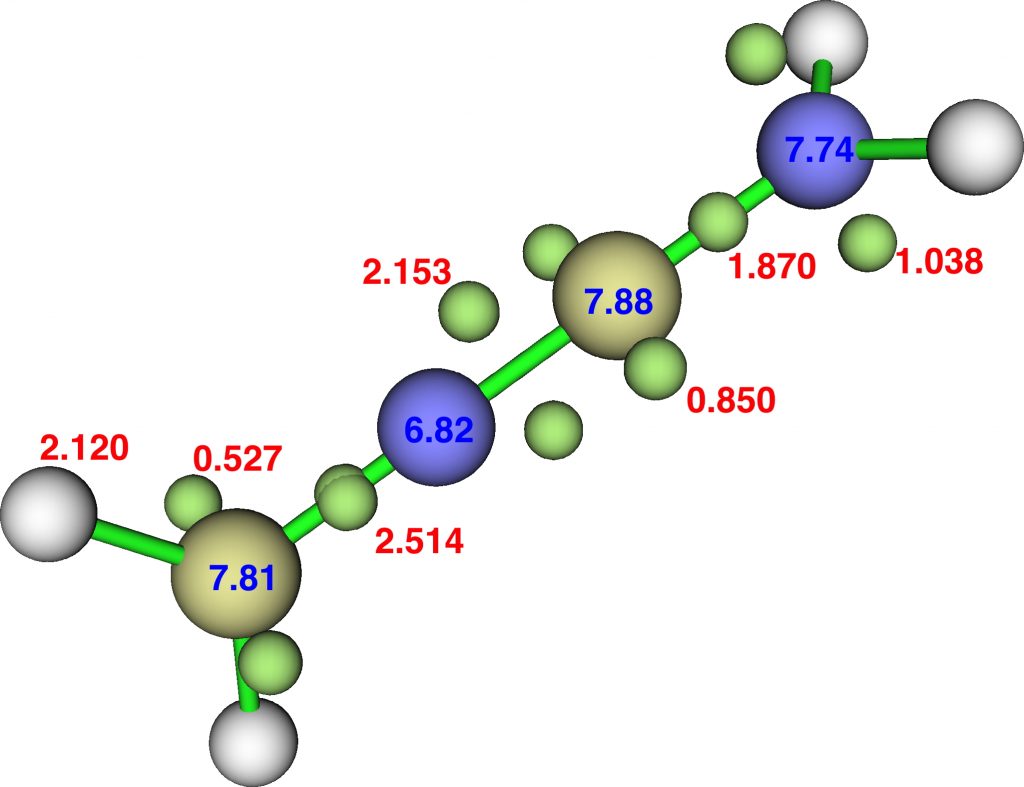
    Pumping even more electrons in by replacing the ≡C-Me group with ≡C-NH2 does not increase any hypervalence, but does induce more electrons to reside in “lone pairs”. Of the four atoms along the chain, three have “lone pairs” associated with them, a total of 4.83e that do not contribute to bonds (valence).

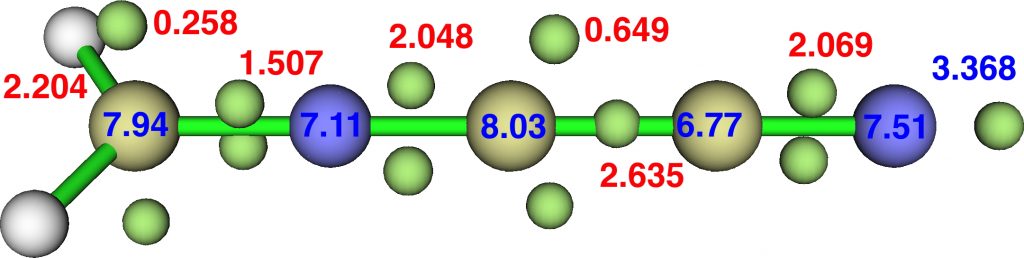
    An electron withdrawing ≡C-CN group replacing the ≡C-NH2 reverses the effect of the latter, but this linear species is still a transition state for carbon isomerisation:

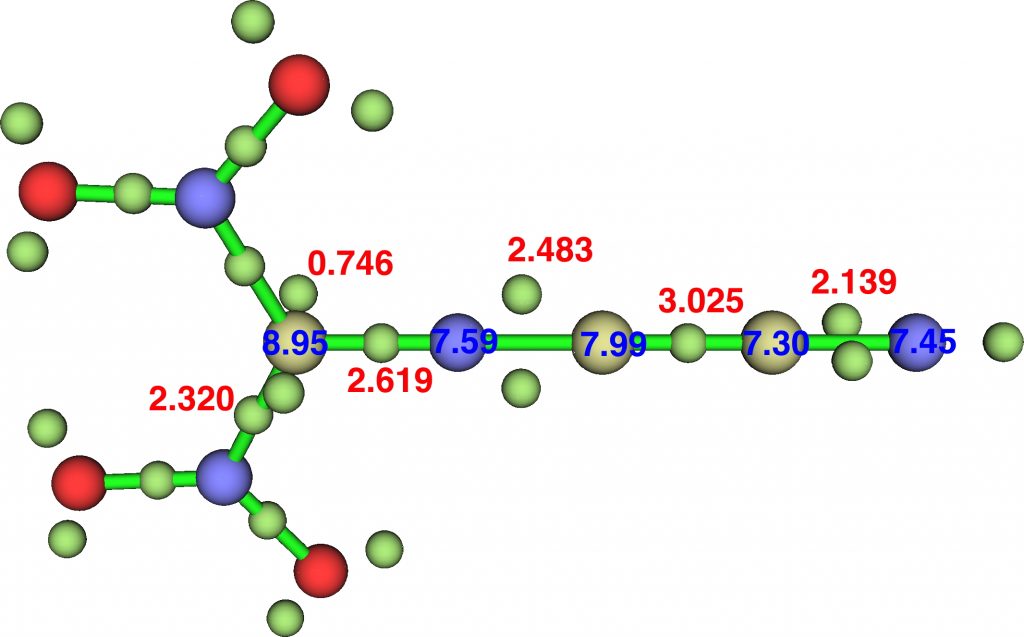
    Finally, combining all we have learnt by adding in nitro groups on the first carbon. This is no longer a transition state but now a stable species; the sum of the ELF basin integrations around the carbon on the left reaches 8.95e, slightly higher than the dinitro-diazomethane discussed in the previous post. The numerical Wiberg atom bond indices are C 3.8713, N 3.6898, C 3.8503, C 3.9958 and N 3.0288 for the atoms along the chain, with the first nitrogen the “least-valent”.

    So we see that “hypervalence”, or at least “octet-excess”, which is not exactly the same as hypervalence since it includes contributions from non-bonding electrons, is balanced on a knife-edge. Trying to increase the octet-excess by pumping electrons in turns the system into a transition state for carbene formation. Octet-excess is seen as a metastable property, to be relieved by geometric distortions where possible or localization of electrons into non-bonding lone pairs. And I remind yet again that no evidence has manifested in calculations of the molecules above that the central nitrogen of these diazomethane-like systems has any propensity for octet or valence-excess as implied by the formula C=N≡X.[cite]10.1039/C5SC02076J[/cite]


    FAIR data for all calculations is available at DOI: 10.14469/hpc/3476

  • Can any hypervalence in diazomethanes be amplified?

    In the previous post, I referred to a recently published review on hypervalency[cite]10.1039/C5SC02076J[/cite] which introduced a very simple way (the valence electron equivalent γ) of quantifying the effect. Diazomethane was cited as one example of a small molecule exhibiting hypervalency (on nitrogen) by this measure. Here I explore the effect of substituting diazomethane with cyano and nitro groups.

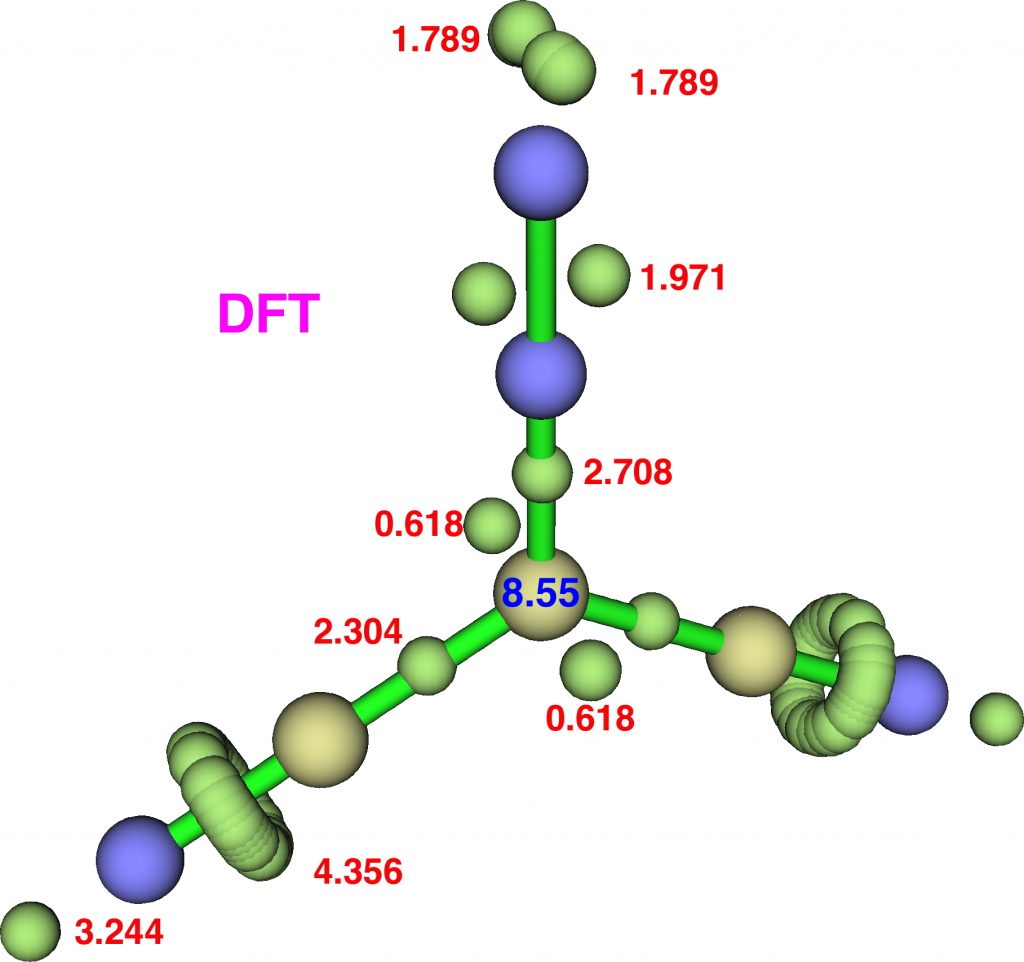
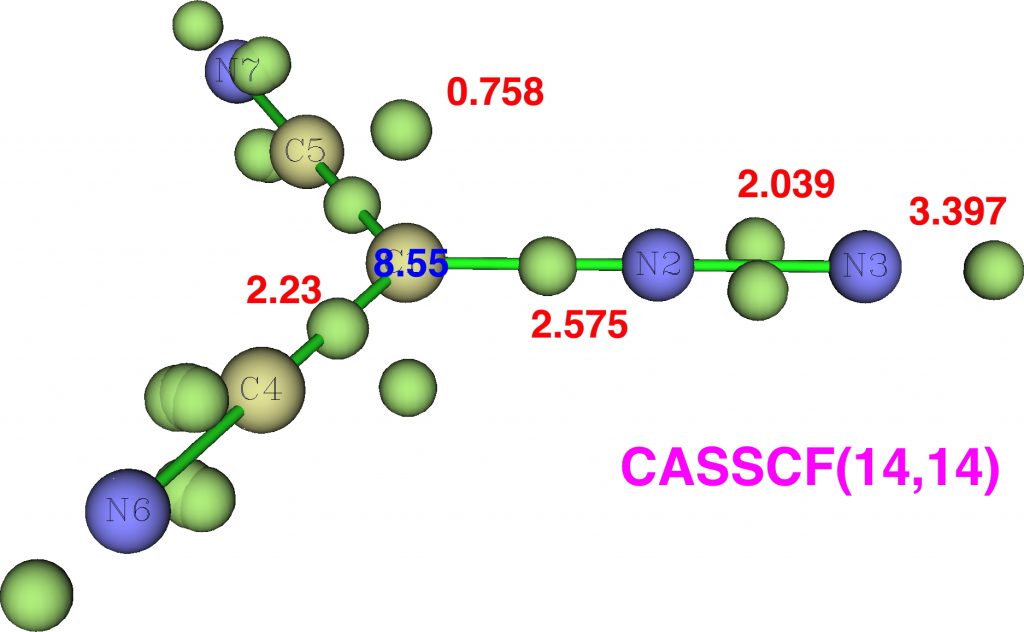
    Firstly, dicyanodiazomethane. NBO analysis reveals the following atom bond indices; C, 3.810; N 3.834; N 2.971. Compare these values to diazomethane itself, C, 3.716; N 3.802; N 2.907 and you can see that the carbon bond index has increased slightly. The ELF basin integrations (below) which also take into account the “lone pair” on carbon are: C, 8.55, N, 6.65, N, 7.52 (DFT), again compared with diazomethane as C, 8.16; N, 6.59; N, 7.52. The CASSCF(14,14) result is very similar.

    So the “γ(C)” has increased from 8.2 to 8.55. Next, dinitrodiazomethane;

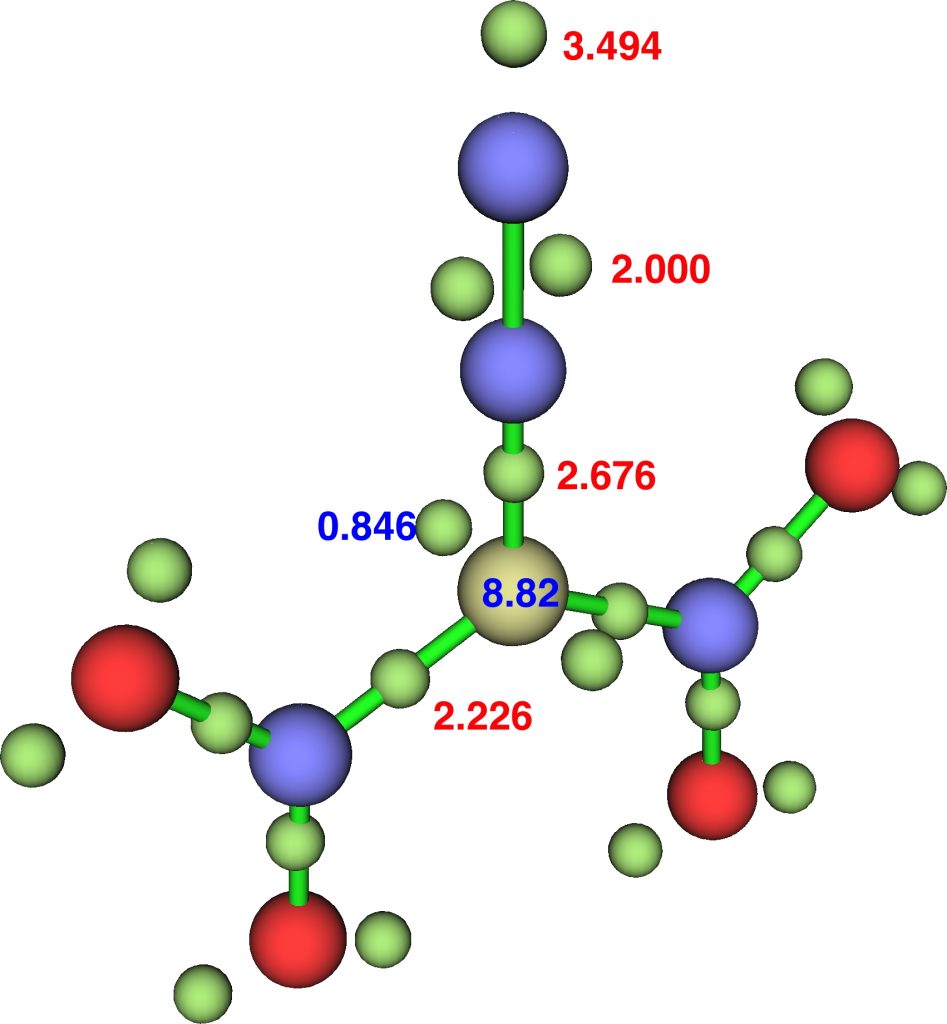
    The NBO bond indices are C, 3.8203; N 3.8255; N 2.9802 and ELF integrations C, 8.82, N, 6.68, N, 7.49 (DFT).

    So “γ(C)”  increases along the series 8.16 → 8.55 → 8.82, whereas “γ(N)” changes as 6.59 → 6.65 → 6.68, a smaller effect. Whilst 8.82 is still some way off the value of γ(N)=10 quoted[cite]10.1039/C5SC02076J[/cite] for diazomethane, dinitrodiazomethane is still a pretty good candidate for hypervalent carbon. The question now is whether even larger values of “γ(C)” can be identified in other molecules. 


    FAIR data for all calculations is available at DOI: 10.14469/hpc/3476. The quotes in “γ(C)” indicate it is calculated here using ELF integrations rather than charge maps.

  • Octet expansion and hypervalence in dimethylidyne-λ6-sulfane.

    I started this story by looking at octet expansion and hypervalence in non-polar hypercoordinate species such as S(-CH3)6, then moved on to S(=CH2)3. Finally now its the turn of S(≡CH)2.

    As the triple bonds imply, this seems to represent twelve shared valence electrons surround the sulfur, six from S itself and three from each carbon. The octet is clearly expanded from eight to twelve. But is all as it seems?

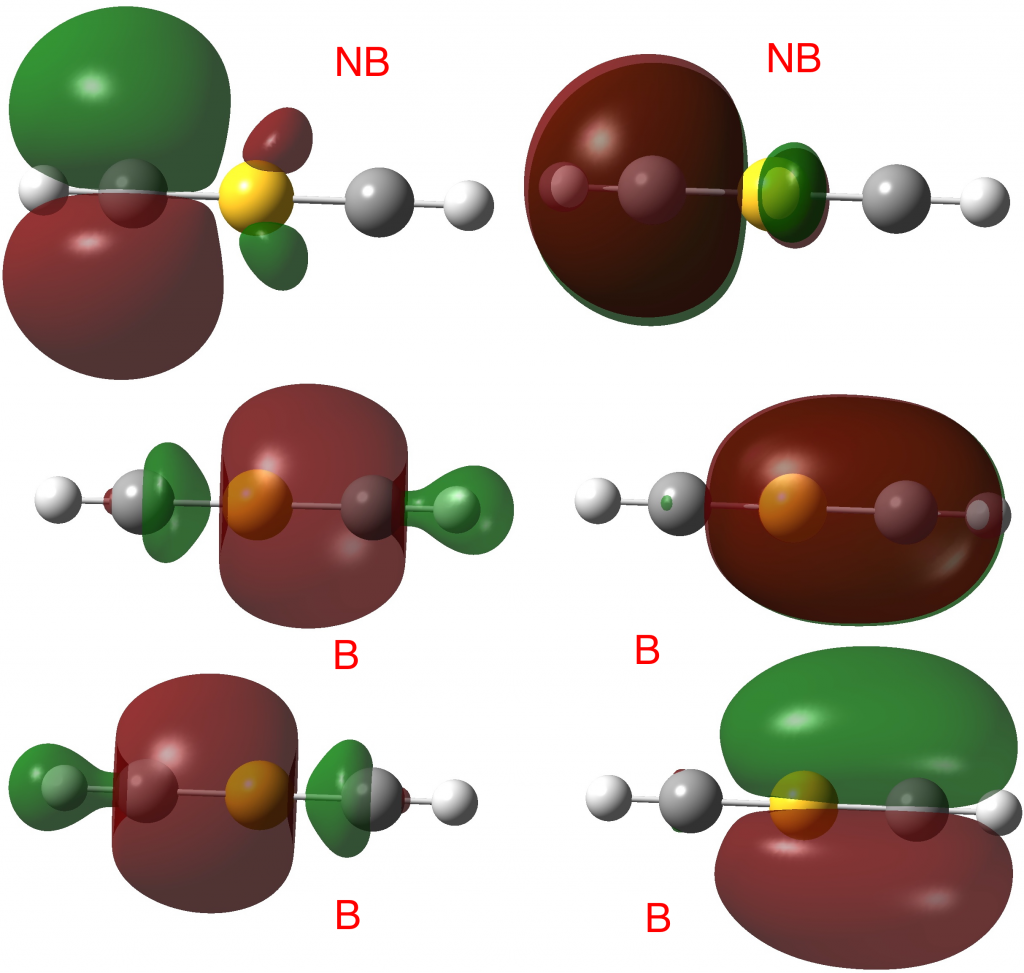
    The linear form reveals the following localized orbitals. Six NBOs are localized to the S-C regions, of which four are bonding, two σ and two π. The remaining four electrons are in two non-bonding lone pairs, with a mild anti-bonding S-C component. So the bond order comes out as ~four, not six! This corresponds to the story told in the earlier blogs that the electrons in excess of the octet tend to occupy either non or antibonding orbitals.

    In fact the full NBO analysis gives a value of 4.0920 for the S bond index and little Rydberg character; S: [core]3S(1.02)3p(3.61)3d(0.13).

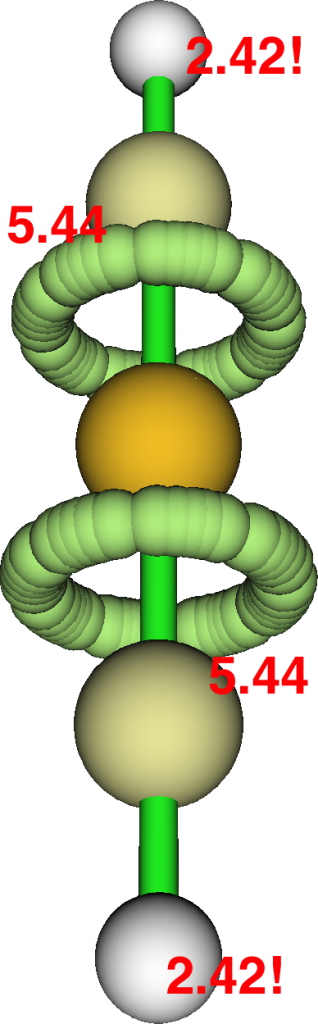
    Next, the ELF analysis, based not on orbitals but the derived electron densities. Each S-C region shows an ELF circular attractor integrating to 5.44e (or 10.88e for the S valence region). So the ELF reflects not only the density arising from bonding orbitals, but the non-bonding ones as well! 

    Take a look at the ELF basin for the two hydrogen atoms; at 2.42e each this shell is ALSO expanded from the normal 2! Apart from the normal C-H localised NBO orbital, one can also see small C-H bonding contributions from the four NBOs labelled B above as well. So ELF analysis of the shared electrons in this species seems to show octet expansion for S and similar shell expansion for H. But we now know that simply taking the ELF basin population and dividing by two to get the bond or valence index can be misleading. The ELF analysis includes non or even anti-bonding density contributions and so it cannot be used to infer hyperbonding (hypervalence).

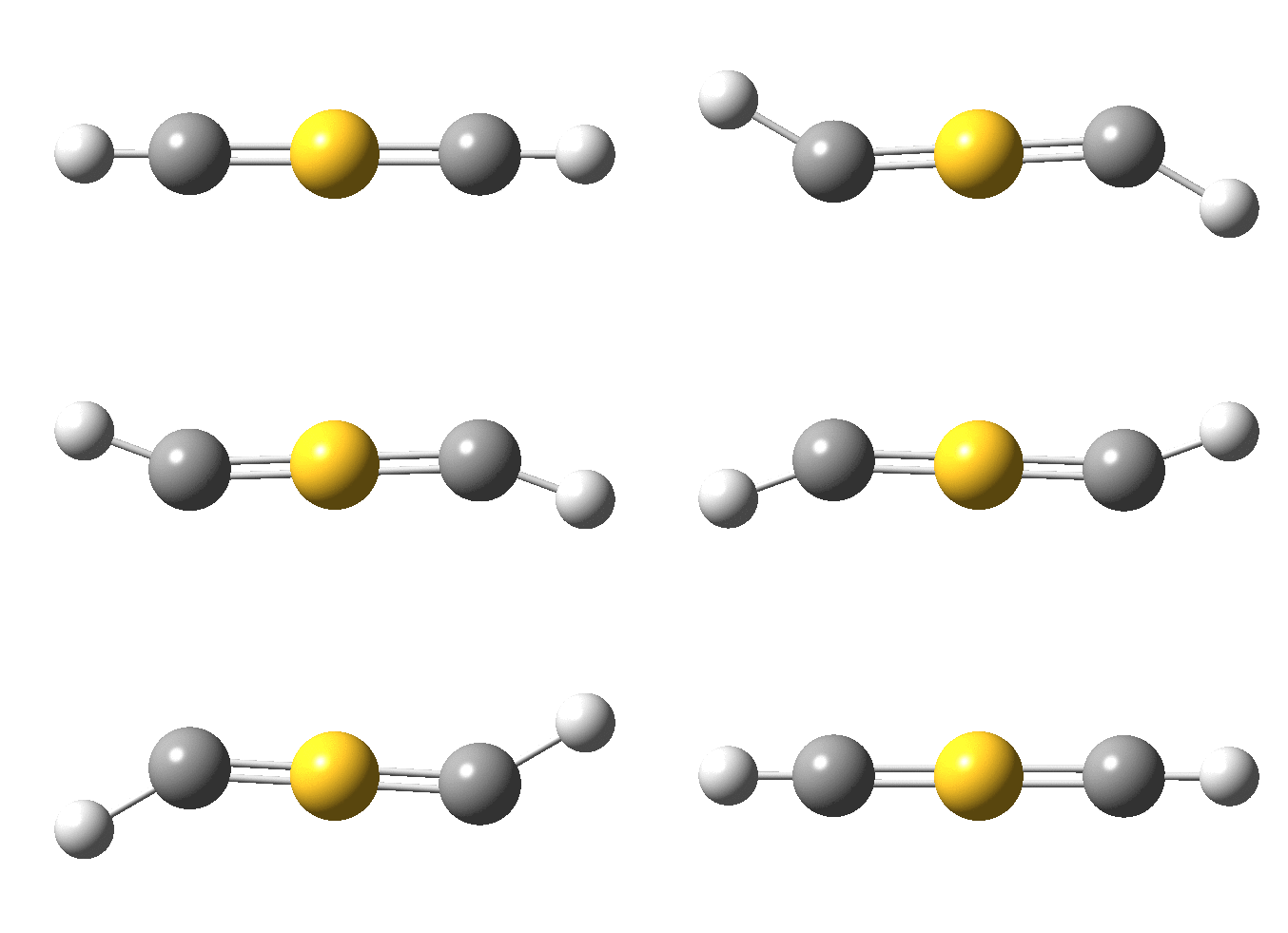
    I must now confess to withholding some vital information from you. The linear HC≡S≡CH molecule is not a minimum, having four computed negative force constants, the normal mode of one of which is animated  below. 

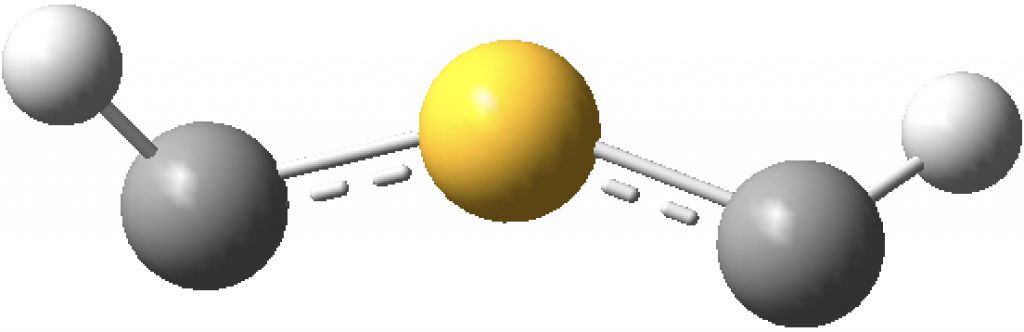
    The true minimum has C2 symmetry as follows and it corresponds to that mysterious structure shown at the top and hitherto not mentioned. This form is 14.6 kcal/mol lower in free energy than the linear variety. 

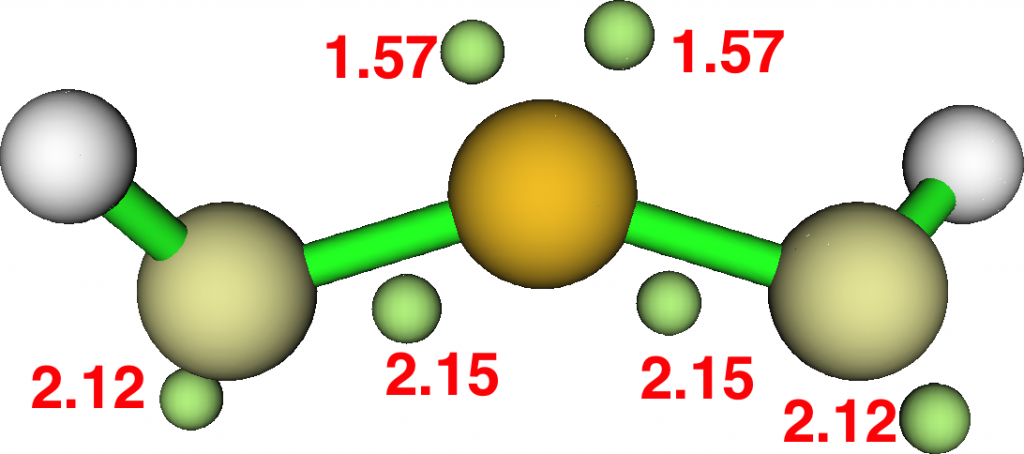
    The ELF analysis confirms this species as bis(carbene), with two “lone pairs” on S. All the octet expansion has vanished; of the ~six electrons hitherto located in each C-S region, four have morphed into lone pairs, leaving only ~two in the S-C regions. The sulfur is now allocated 7.44e, a  “normal” octet.

    At this point, I remind that the great G. N. Lewis himself, the original coiner of the eight electron valence rule, pondered whether acetylene might have a related bis(carbene) form. It is nice to come up with an example of this more than 100 years after his original suggestion.


    FAIR Data DOI for the collection: 10.14469/hpc/3333