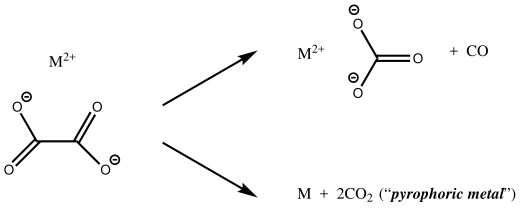
A pyrophoric metal is one that burns spontaneously in oxygen; I came across this phenomenon as a teenager doing experiments at home. Pyrophoric iron for example is prepared by heating anhydrous iron (II) oxalate in a sealed test tube (i.e. to 600° or higher). When the tube is broken open and the contents released, a shower of sparks forms. Not all metals do this; early group metals such as calcium undergo a different reaction releasing carbon monoxide and forming calcium carbonate and not the metal itself. Here as a prelude to the pyrophoric reaction proper, I take a look at this alternative mechanism using calculations.
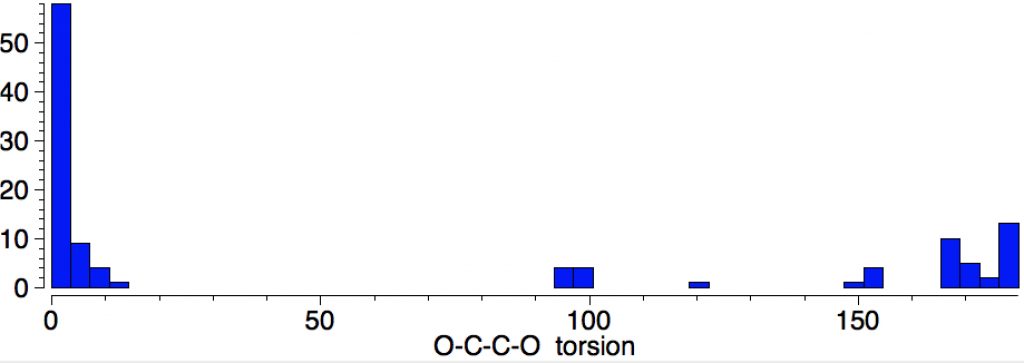
There are ~60 crystal structures of metal oxalates, of which several are naturally occurring minerals (Fe, humboldtine[cite]10.1007/s00269-008-0241-7[/cite], Ca, Weddellite[cite]10.1107/S0365110X65002219[/cite], Li[cite] 10.1107/S0365110X64002079[/cite], Na[cite]10.1021/ja01650a007[/cite], K[cite]10.5517/cc6fzcy[/cite], Cs[cite]10.5517/cc6fzf0[/cite]. The natural geometry of the oxalate di-anion is planar (torsion 0 or 180°) but a small number are twisted such as the caesium oxalate.

The kinetics of pyrolysis of a number of metal oxalates were studied some years ago (Ca[cite]10.1021/j100861a029[/cite], Li[cite]10.1039/j19710003043[/cite]) indicating barriers ranging from 53-68 kcal/mol. One proposed mechanism is as shown in this article.[cite]10.1021/j100861a029[/cite]
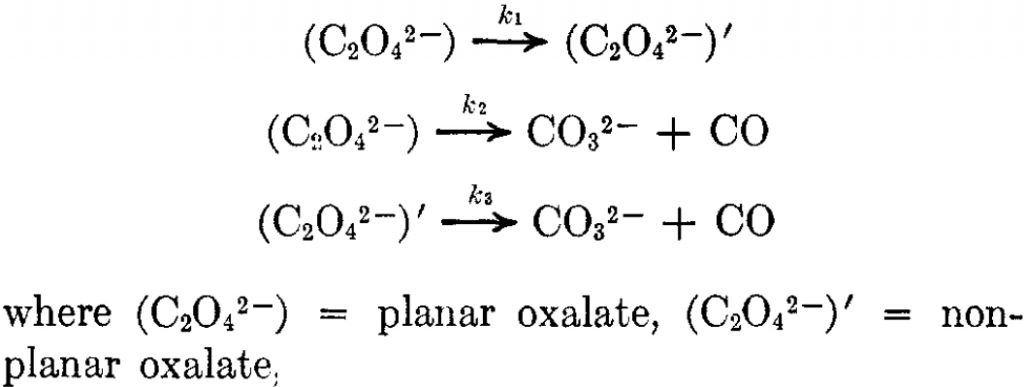
It was surmised from the kinetic analysis that the k1 activation step (rotation about the C-C bond from planar to twisted) was ~12 ± 20 kcal/mol, whilst steps k2 or k3 had the much higher activation energy noted above. A search (of Scifinder) for quantum mechanical “reality checks” of this mechanism revealed a blank and so I apply such a check here using Mg as the metal.
The carbonyl extrusion step (ωB97XD/Def2-TZVPPD/SCRF=water, DOI: 10.14469/hpc/2320) was studied with a water solvent field applied in an effort to mimic the solid state crystal structure of the species as a better representation of the ionic lattice than a pure vacuum calculation.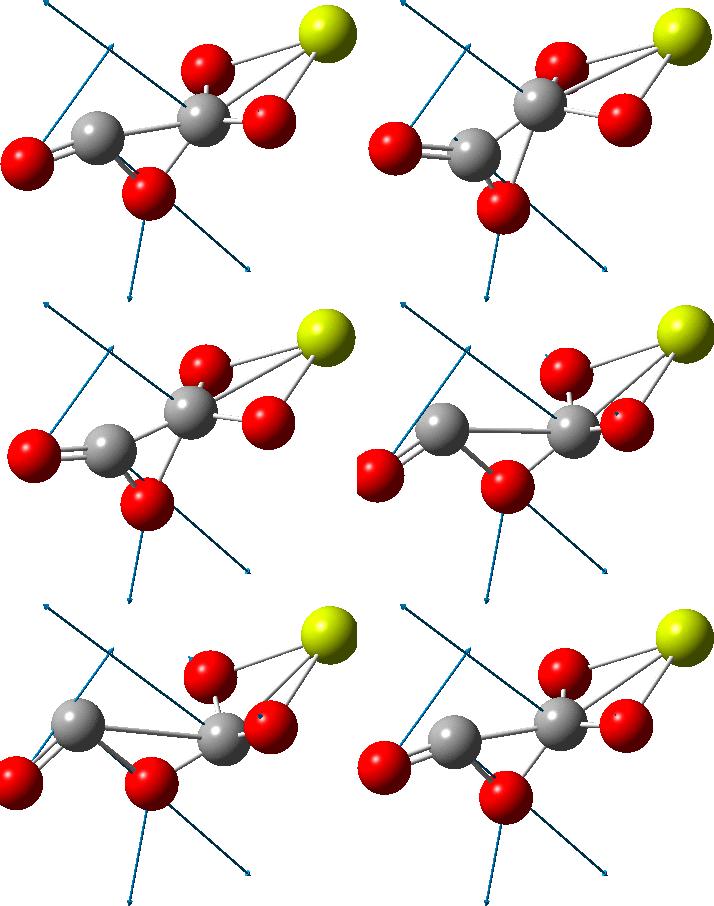
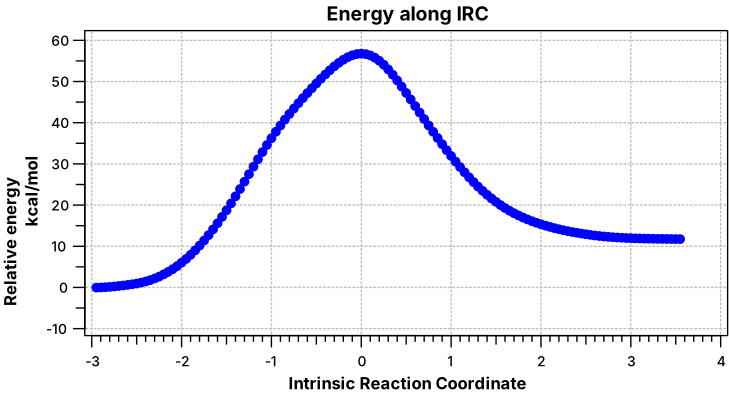 An IRC (intrinsic reaction coordinate, DOI: 10.14469/hpc/2324) reveals the start-point geometry still has a very small negative force constant (-38 cm-1, DOI: 10.14469/hpc/2321) which now corresponds to a small rotation about the C-C bond to give a C2-symmetric conformation:
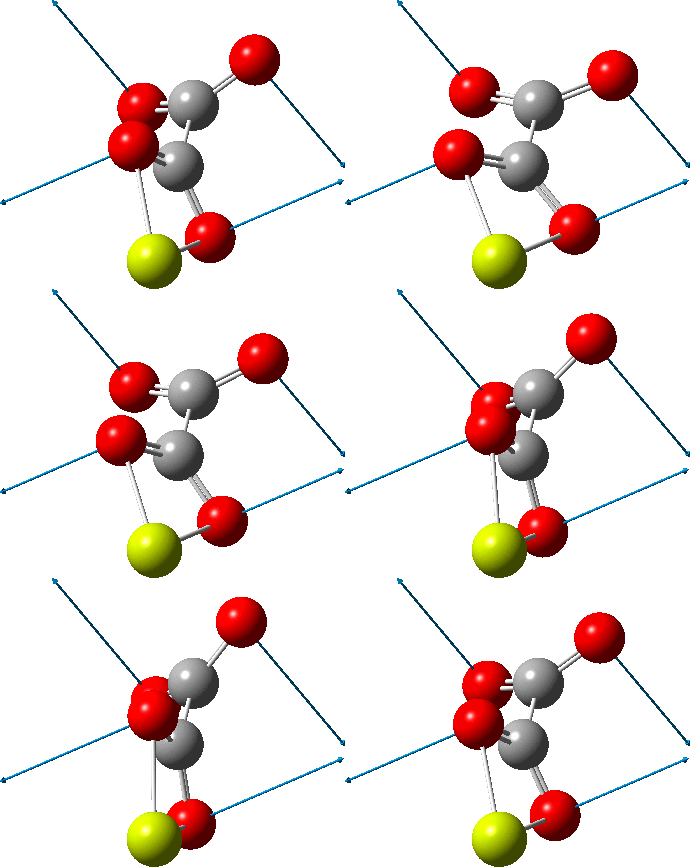 But the barrier for this process is tiny and nothing like the ~12 ± 20 kcal/mol inferred from the kinetic analysis. Perhaps most of the incentive to pack into a totally planar geometry comes from the interactions in the ionic lattice. The calculated free energy barrier (ΔG298‡ 54.7 kcal/mol, ΔG755‡ 55.1 kcal/mol) is within the reported measured range.
The mechanism for production of pyrophoric metal itself is likely to be far more complex, involving (inter alia) electron transfer from oxygen to metal. If I find anything I will report back here.