Tag: pericyclic

  • Woodward’s symmetry considerations applied to electrocyclic reactions.

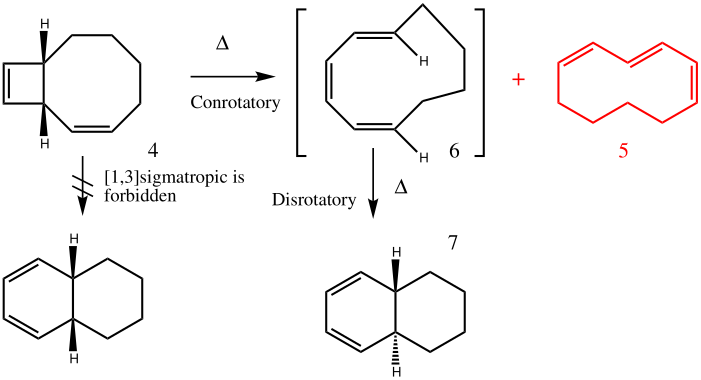
    Sometimes the originators of seminal theories in chemistry write a personal and anecdotal account of their work. Niels Bohr[cite]10.1007/BF01326955[/cite] was one such and four decades later Robert Woodward wrote “The conservation of orbital symmetry” (Chem. Soc. Special Publications (Aromaticity), 1967, 21, 217-249; it is not online and so no doi can be given). Much interesting chemistry is described there, but (like Bohr in his article), Woodward lists no citations at the end, merely giving attributions by name. Thus the following chemistry (p 236 of this article) is attributed to a Professor Fonken, and goes as follows (excluding the structure in red):
    wood

    A search of the literature reveals only one published article describing this reaction[cite]10.1021/jo00238a023[/cite] by Dauben and Haubrich, published some 21 years after Woodward’s description (we might surmise that Gerhard Fonken never published his own results). In fact this more recent study was primarily concerned with 193-nm photochemical transforms (they conclude that “the Woodward-Hoffmann rules of orbital symmetry are not followed”) but you also find that the thermal outcome of heating 4 is a 3:2 mixture of compounds 5 and 6, and that only 6 goes on to give the final product 7. It does look like a classic and uncomplicated example of Woodward-Hoffmann rules.

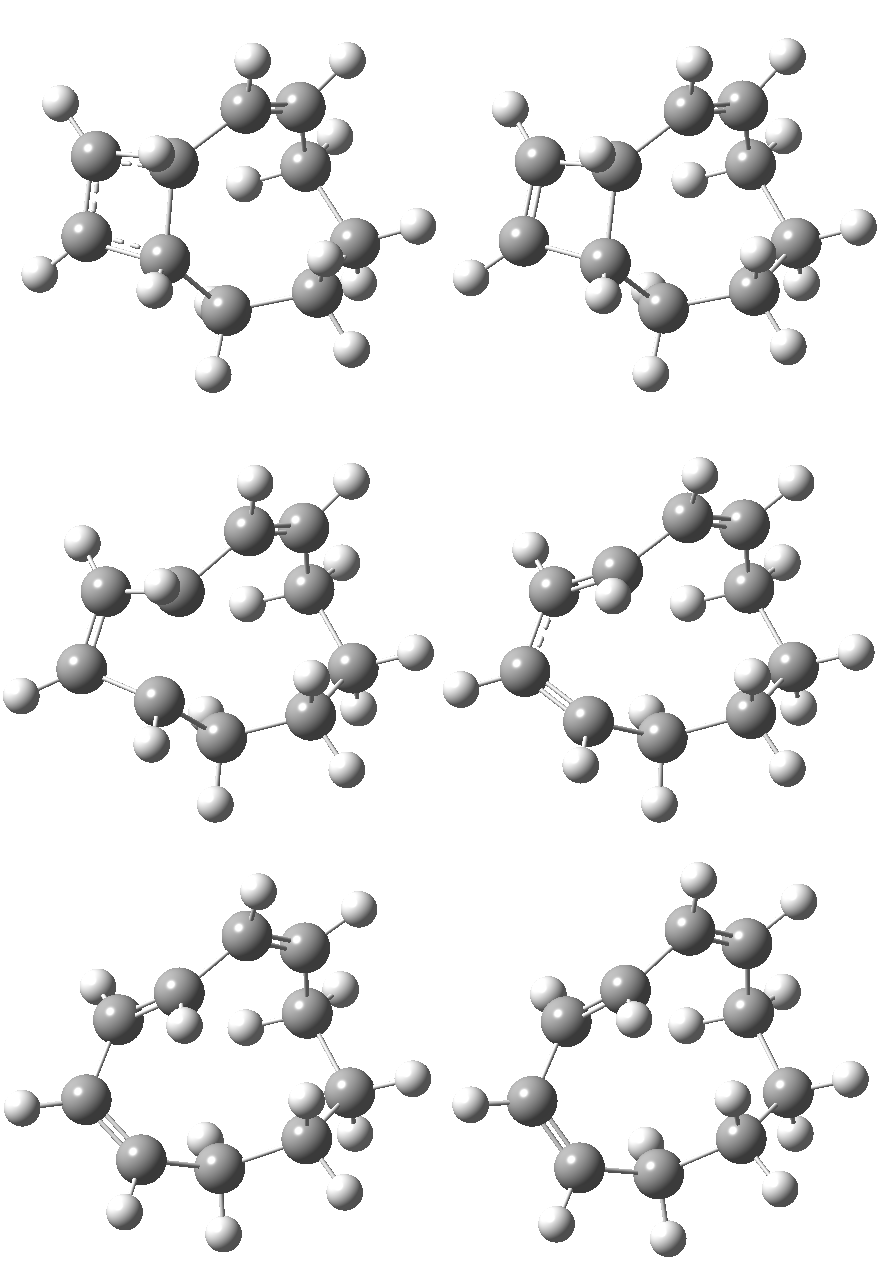
    So let us subject this system to a “reality check” (ωB97XD/6-311G(d,p) calculations). The transform of 4 → 5 rotates the two termini of the cleaving bond in a direction that produces the stereoisomer 5, with a trans alkene straddled by two cis-alkenes[cite]10.6084/m9.figshare.704833[/cite]. The two carbon atoms that define the termini of the newly formed hexatriene are ~ 4.7Ã… apart; too far to be able to close to form 7.

     4 → 5  4 → 6
    8 8

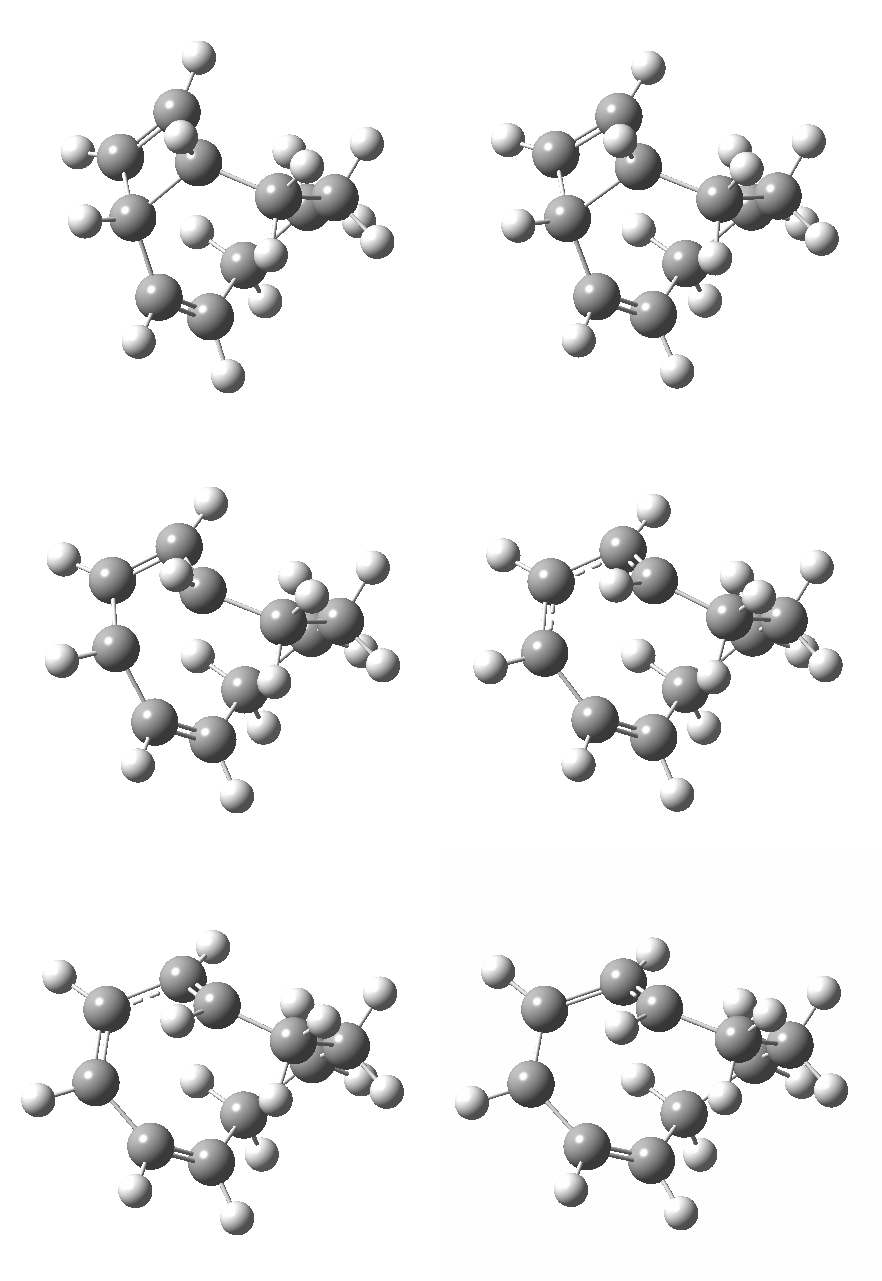
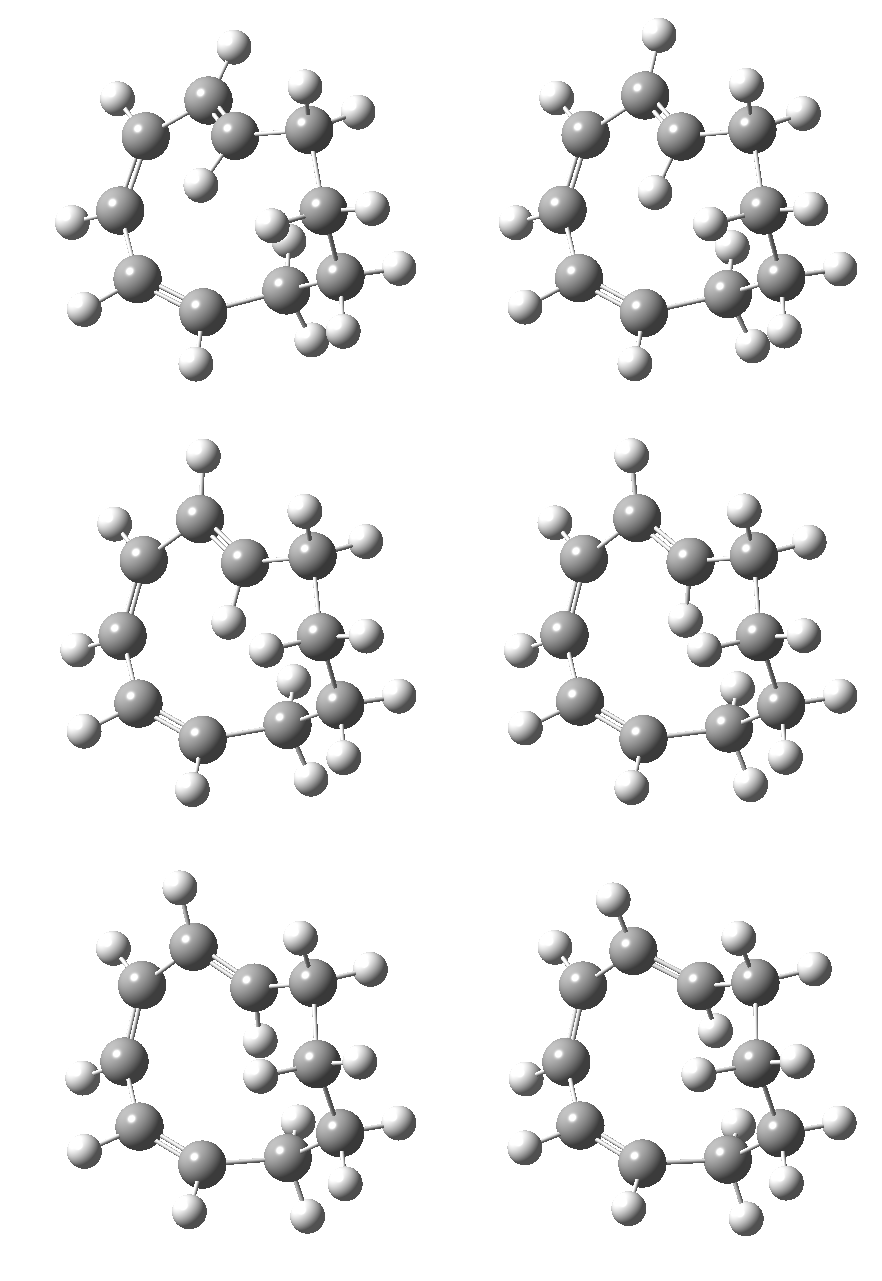
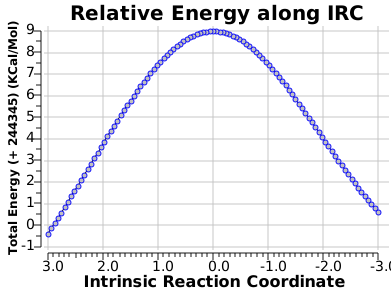
    But with any electrocyclic reaction, two directions of rotation are always possible, and it is a rotation in the other direction that gives 4 → 6[cite]10.6084/m9.figshare.704834[/cite], ending up with a hexatriene with the trans-alkene at one end and not the middle (for which the free energy of activation is 3.1 kcal/mol higher in energy). Now the two termini of the hexatriene end up ~3.0Å apart, much more amenable to forming a bond between them to form 7.

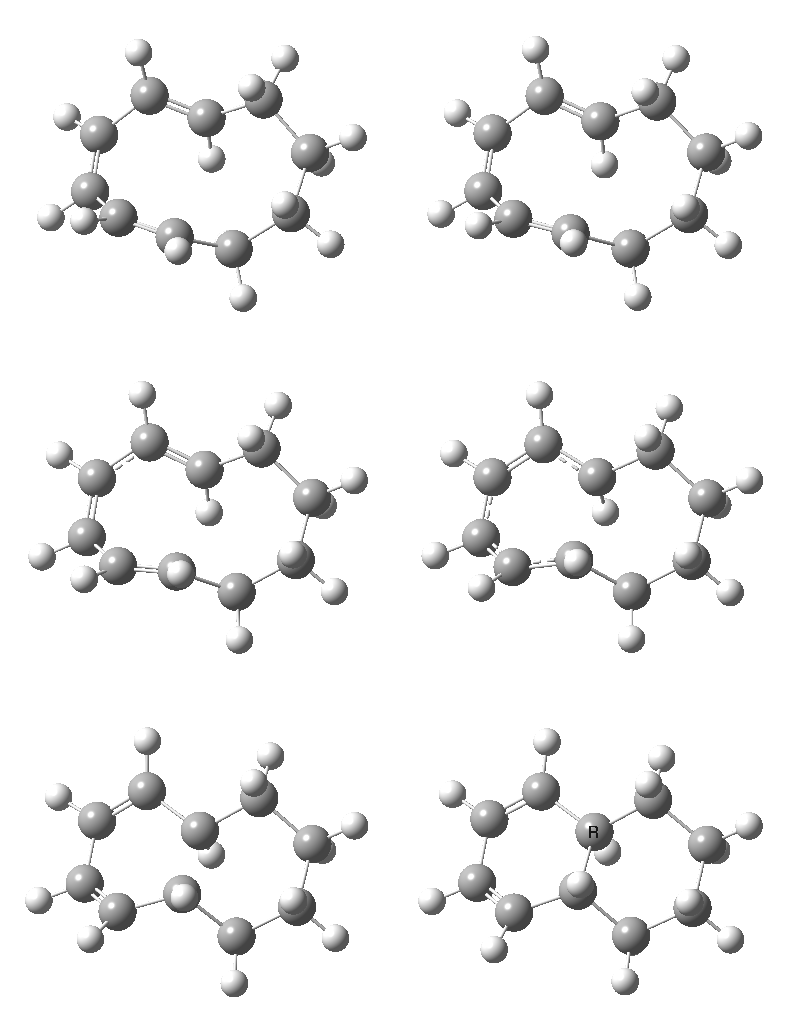
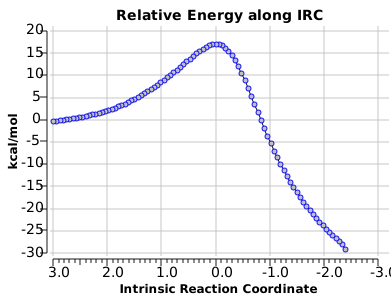
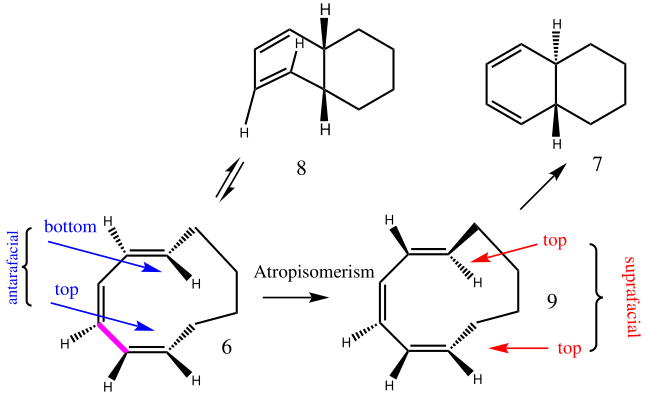
    It is at this point that the apparently uncomplicated nature of this example starts to unravel. If one starts from the 3.0Å end-point of the above reaction coordinate and systematically contracts the bond between these two termini, a transition state is found leading not to 7 but to the (endothermic) isomer 8.[cite]10.6084/m9.figshare.704755[/cite]This form has a six-membered ring with a trans-alkene motif (which explains why it is so endothermic). 
    wood1
    6 ↠ 8
    8 wood2

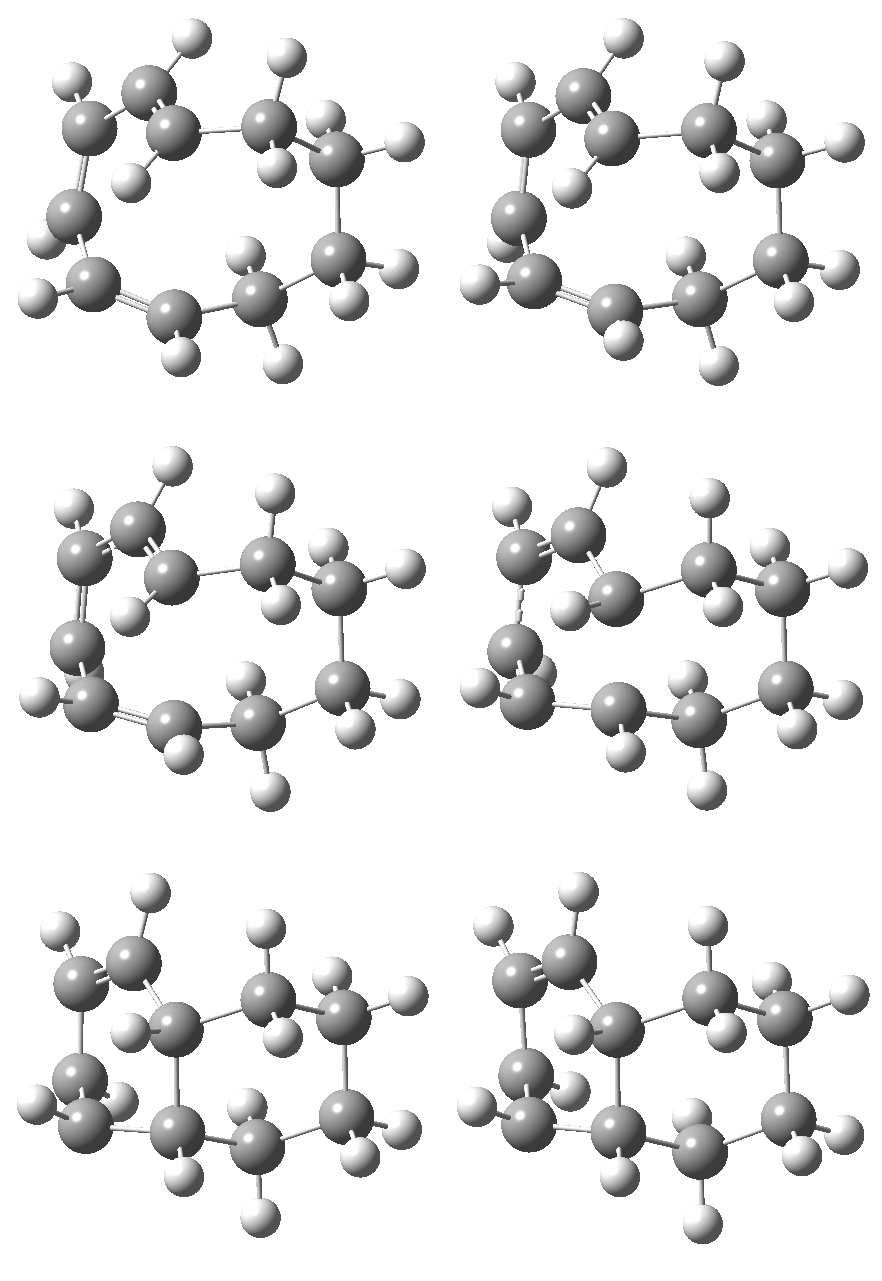
    Before discussing the implications of this transition state, I illustrate another isomerism that 6 can undertake; a low-barrier atropisomerism[cite]10.6084/m9.figshare.704754[/cite] to form 9, followed by another reaction with a relatively low barrier, 9 ↠  7[cite]10.6084/m9.figshare.704844[/cite]to give the product that Woodward gives in his essay.

    6 ↠ 9
    6-atrop 6-atrop
    9 ↠ 7
    9to7a 9to7a

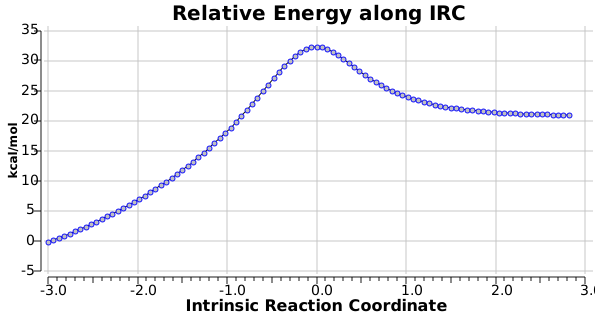
    We can now analyse the two transformations 6 ↠ 8 and 9 ↠  7. The first involves antarafacial bond formation (blue arrows) at the termini and an accompanying 180° twisting about the magenta bond which creates a second antarafacial component[cite]10.6084/m9.figshare.704841[/cite]. So this is a thermally allowed six-electron (4n+2) electrocyclisation with a double-Möbius twist[cite]10.1039/b510508k[/cite]. The second reaction is a more conventional purely suprafacial version[cite]10.6084/m9.figshare.704995[/cite] (red arrows) of the type Woodward was certainly thinking of; it is 18.0 kcal/mol lower in free energy than the first (the transition state for 6 ↠ 9 is 10.8 kcal/mol lower than that for 9 ↠ 7).

    I hope that this detailed exploration of what seems like a pretty simple example at first sight shows how applying a “reality-check” of computational quantum mechanics can cast (some unexpected?) new light on an old problem. We may of course speculate on how to inhibit the pathway 6 ↠ 9 ↠ 7 to allow only 6 ↠ 8 to proceed (the reverse barrier from 8 is quite low, so 8 would have to be trapped at very low temperatures). 
  • Lithiation of heteroaromatic rings: analogy to electrophilic substitution?

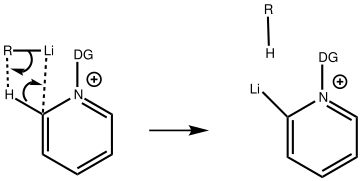
    Functionalisation of a (hetero)aromatic ring by selectively (directedly) removing protons using the metal lithium is a relative mechanistic newcomer, compared to the pantheon of knowledge on aromatic electrophilic substitution. Investigating the mechanism using quantum calculations poses some interesting challenges, ones I have not previously discussed on this blog.

    Li

    My model will be the system above, based on the pyridine ring, and also carrying a directing group (R=Me, DG = O). The reagent used to remove the hydrogen and to substitute it (with a carbon-metal bond) is an alkyl lithium. The arrow pushing I have shown is speculative, since at this stage we have no idea if it really is such a pericyclic process. Indeed things are about to get complicated when we find out that the structure of the electron deficient lithium alkyls is much more complex than one might imagine.

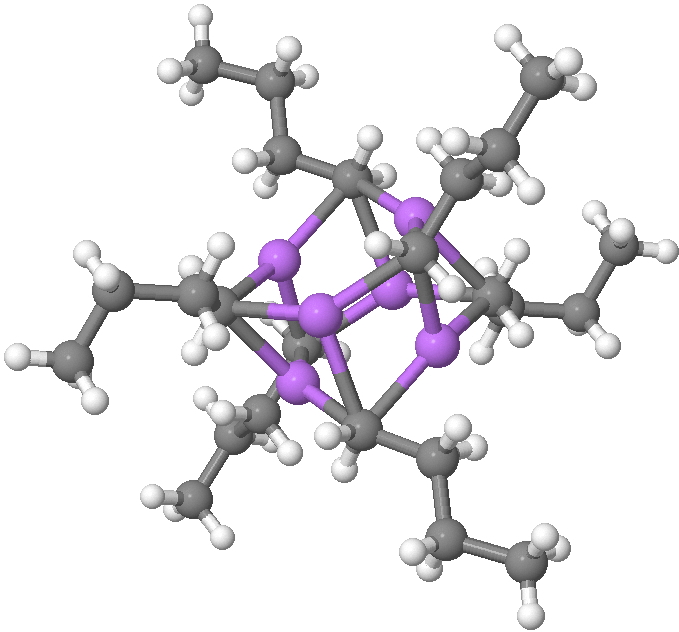
    Fortunately, crystal structures are available. Let me start with n-butyl lithium, a very commonly used reagent[cite]10.1002/anie.199305801[/cite]. This forms a complex cluster of six lithiums, in which each metal is surrounded by three CH2 terminii of the n-butyl anion, and vice-versa, each  CH2 group is in contact with three lithium atoms (making the carbanionic carbon in effect hexa-coordinate).

    SUHBEC. CLICK FOR 3D.
    SUHBEC. CLICK FOR 3D.

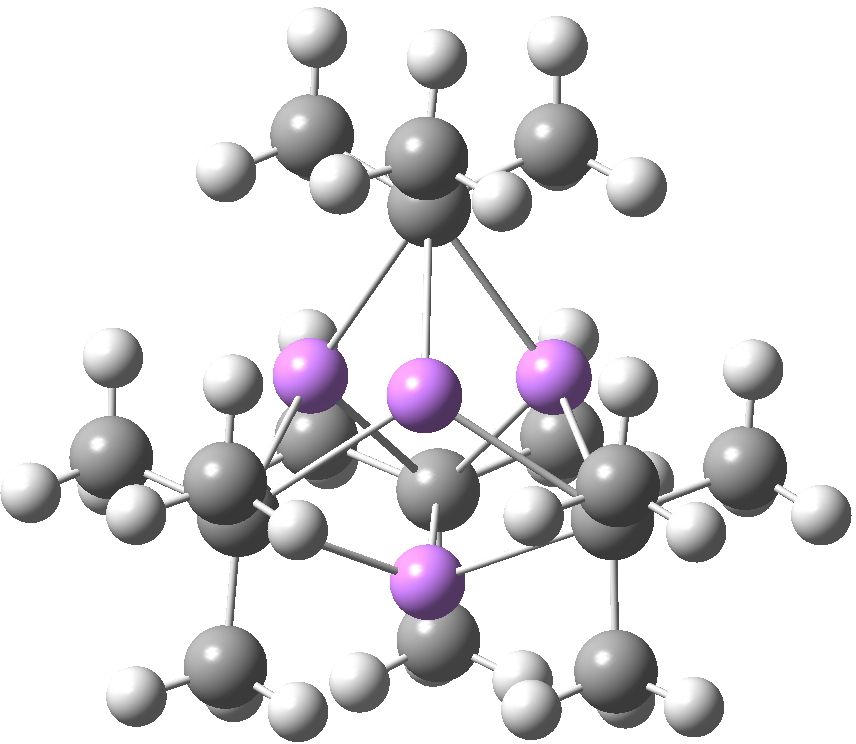
    Another frequently used lithium alkyl is the t-butyl derivative, which has a different tetrameric motif, again with each Me3C coordinated to three Li atoms (making this carbon again hexa-coordinate).

    SUHBIG. Click for 3D.
    SUHBIG. Click for 3D.

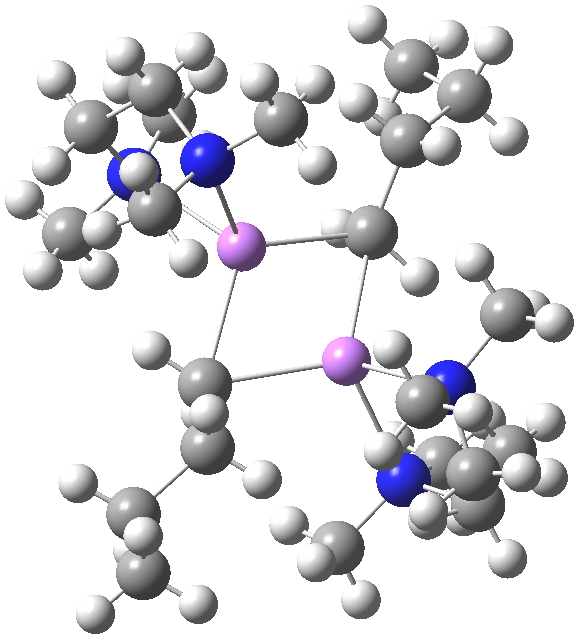
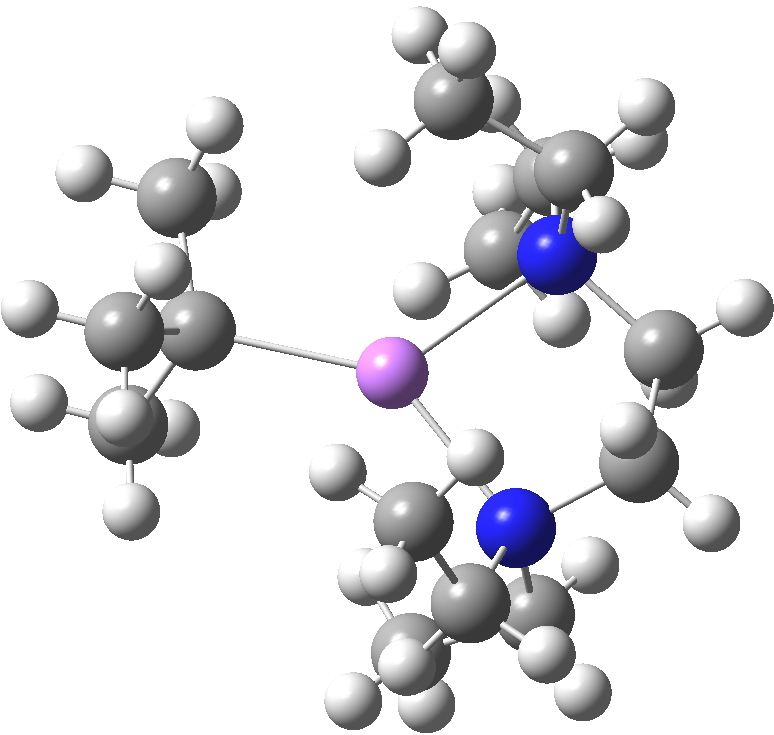
    The interesting issue now is whether these metal alkyls react in these oligomeric forms or whether they are in equilibrium with a reduced monomeric form that constitutes the reactive species. With n-butyl lithium, it is possible to try to achieve this chemically by adding tetramethylethylenediamine. As you can see from the structure below, this strategy can be only partially successful; in this instance the  CH2  coordination is reduced from three Li atoms to two[cite]10.1021/ja00057a050[/cite]. With t-butyl lithium, this strategy reduces the structure to a true monomer[cite]10.1021/ja8058205[/cite], the Me3C now being just 4-coordinate.

    WAFJAO. Click for 3D.
    WAFJAO. Click for 3D.
    LOKTAH. Click for 3D.
    LOKTAH. Click for 3D.

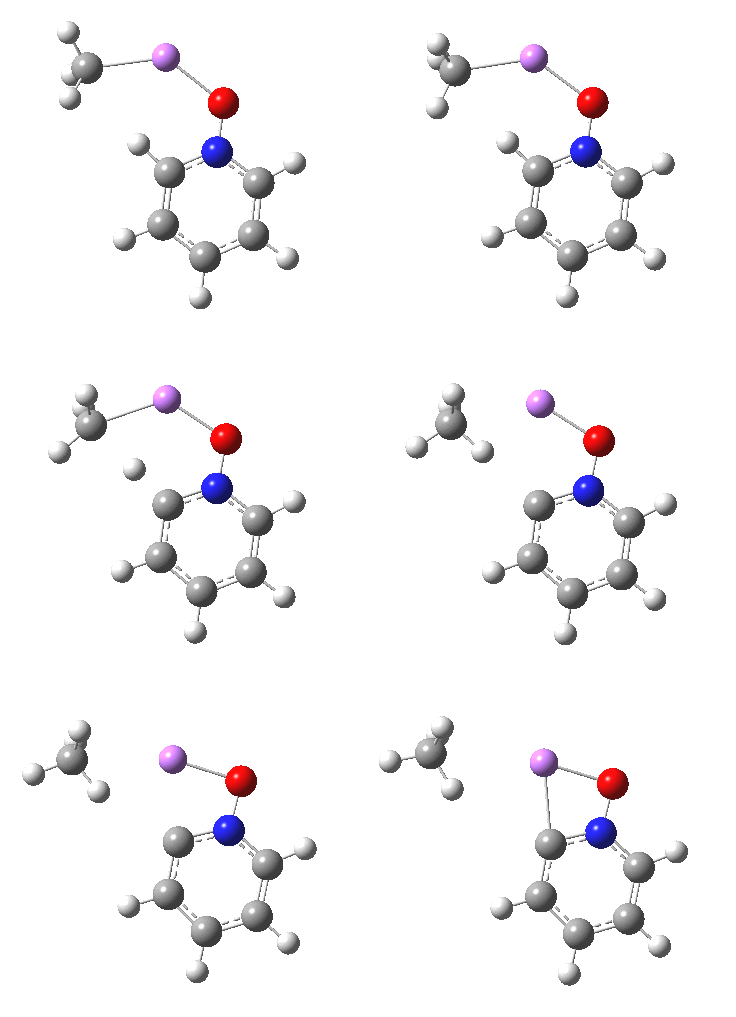
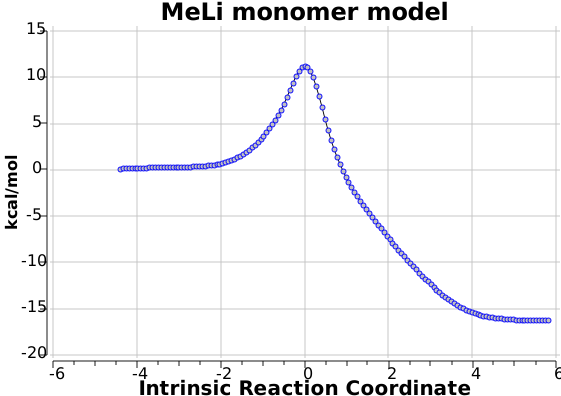
    These systems are all pretty large to investigate using modelling, and so I will start the process by reducing the alkyl lithium model down to just a monomeric CH3Li molecule, placing it and pyridine-N-oxide into a continuum solvent cavity (ωB97XD/6-311G(d,p)/SCRF=benzene) and seeing what happens[cite]10.6084/m9.figshare.651068[/cite]. You can see it is both facile and a concerted process, corresponding pretty much to the arrow pushing illustrated at the top of this post.

    Li1a  Li1a

    But wait, where have we seen an aromatic substitution reaction which does exactly this in a single concerted step, first remove a proton and then replace it with an electrophile? This was in fact revealed in the IRC for electrophilic substitution of indole in the 1-position! Of course, there is a difference. With indole, we had pseudo-inversion at the nitrogen centre (a pseudo-Sn2 reaction if you will), whereas here it is pseudo-retention at the 2-carbon.

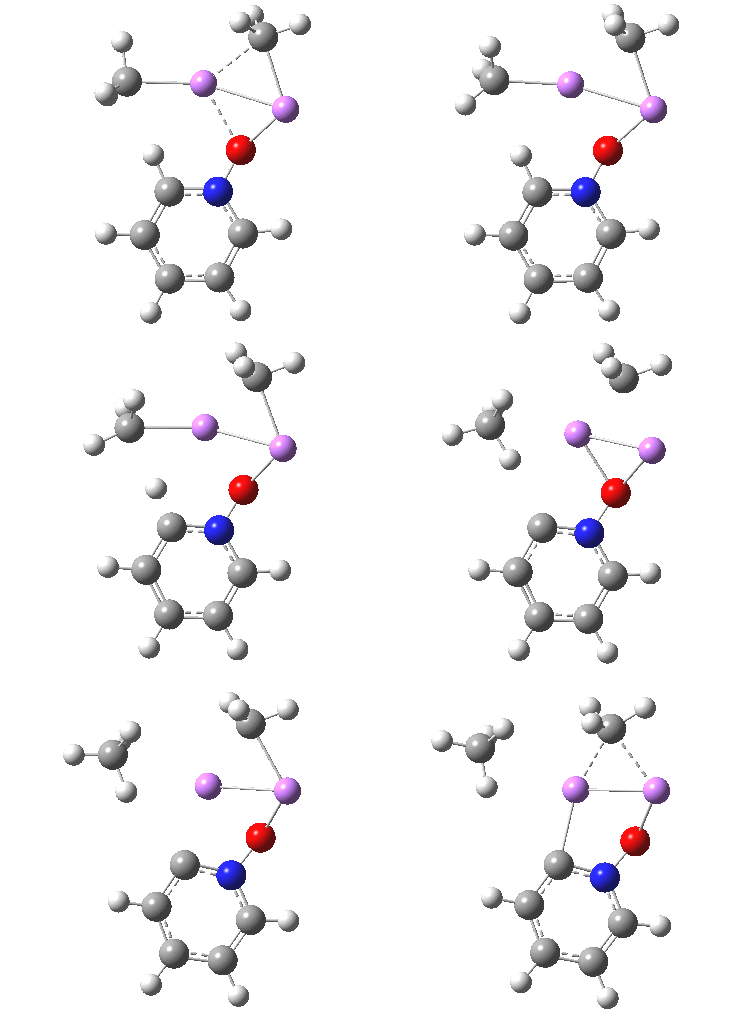
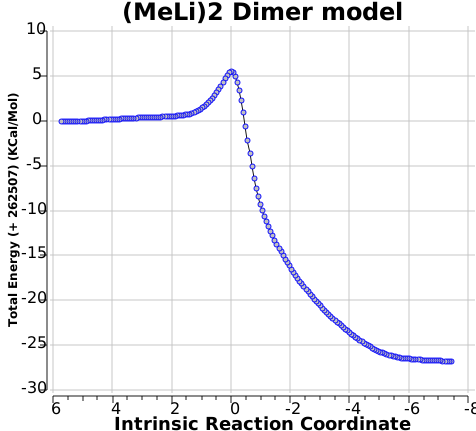
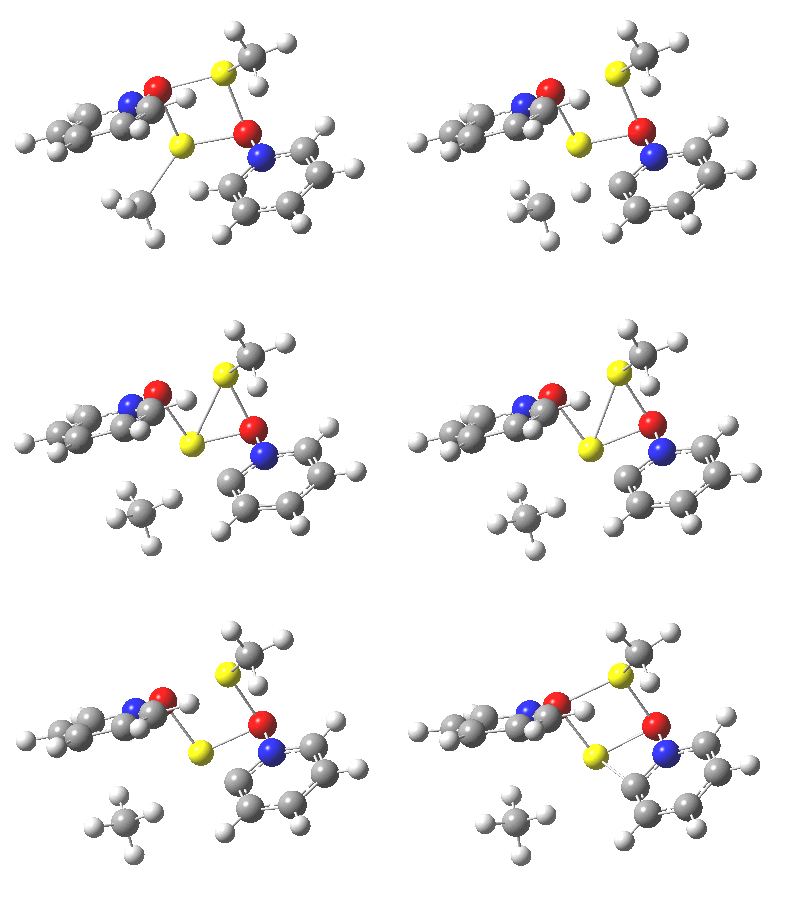
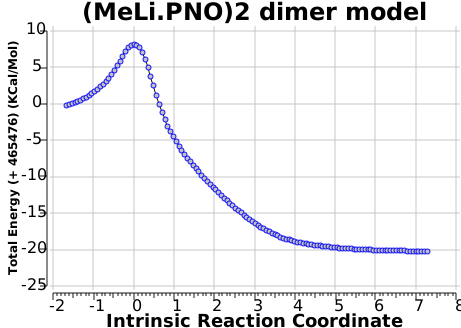
    Is this model robust? Let us try a dimeric (MeLi)2 model coordinated to one pyridine-N-oxide. The IRC[cite]10.6084/m9.figshare.651764[/cite] is very similar, but the initial barrier to proton transfer is lower.

    Li2 Li2

    Next, we have a model in which two molecules of pyridine-N-oxide (PNO) aggregate around two molecules of MeLi. This model is starting to resemble the tetramethylethylenediamine partially de-aggregated n-butyl lithium structure shown as WAFJAO above. The basic features[cite]http://doi.org/10042/24399[/cite] of the process remain intact, including the small barrier.

    Li2d Li2d

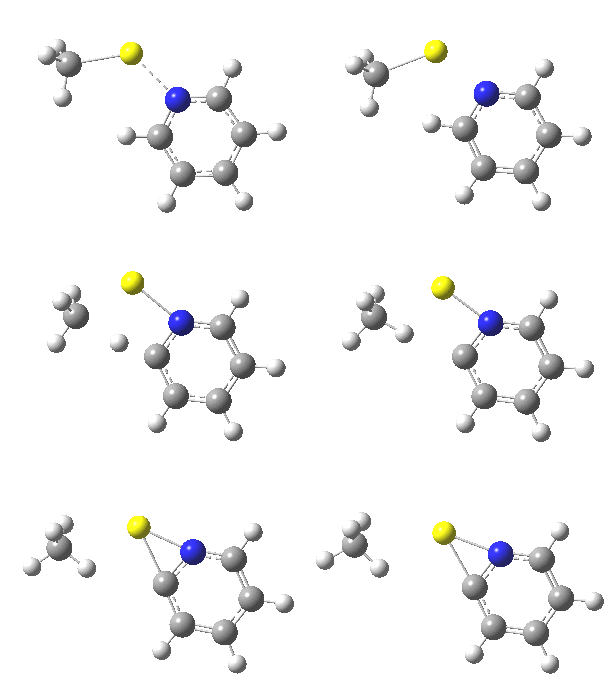
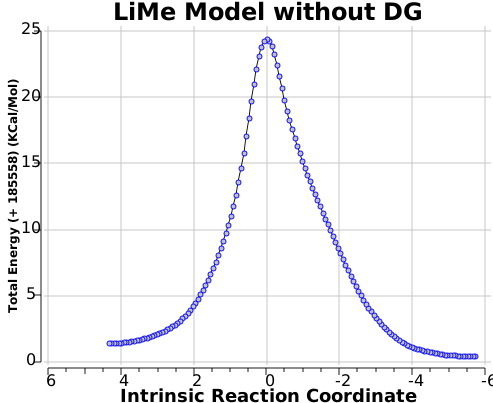
    Finally, I go back to the simple model, but with the directing group (DG) removed to give just pyridine. The profile[cite]10.6084/m9.figshare.653672[/cite] is the same, but the barrier is much larger. So perhaps both aggregation and coordination to a directing group help accelerate the reaction?

    Li0a Li0a

    So two reaction types, not normally associated with each other, turn out to have some intriguing similarities and an interesting difference.

  • Secrets of a university tutor: unravelling a mechanism using spectroscopy.

    It is always rewarding when one comes across a problem in chemistry that can be solved using a continuous stream of rules and logical inferences from them. The example below[cite]10.1039/P19930000299[/cite] is one I have been using as a tutor in organic chemistry for a few years now, and I share it here. It takes around 50 minutes to unravel with students.

    14

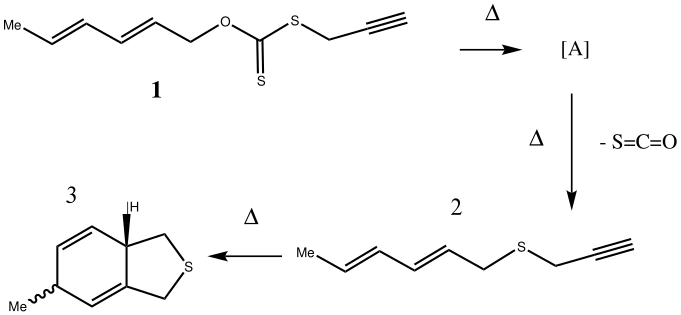
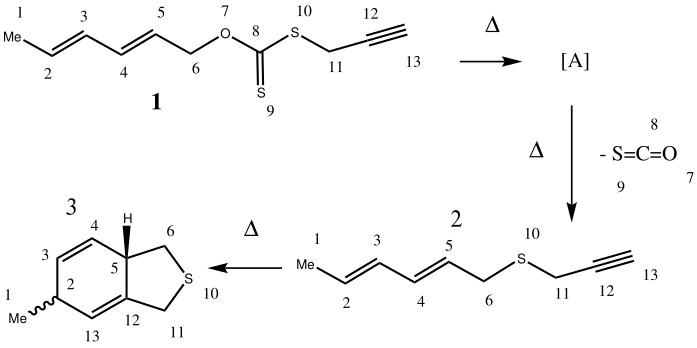
    The narrative is that attempted preparation of 1 resulted instead in a mysterious compound [A], which when heated extruded S=C=O to give 2, and upon further heating gave 3. The challenge is to identify [A] with the help of the spectroscopic information provided, to infer the mechanism of its formation and further to suggest what the stereochemistry of the methyl group in 3 might be.

    The 1H NMR of [A] is set out below for future reference: δ 1.70 (3H,d,6Hz), 2.23 (1H, t, 3Hz), 3.73 (2H, d, 3Hz), 4.84 (1H, dd, 7,8Hz), 5.15 (1H, d, 10Hz), 5.27 (1H, d, 17Hz), 5.51 (1H, dd, 8,16.5 Hz), 5.77 (1H, dq, 6,16.5 Hz), 5.88 (1H, ddd, 7,10,17Hz). 

    As usual, one has to start somewhere, and here the task is to number the atoms, and then try to “reaction map” them to the products.

    14a

    1. The first real decision is how to map S9 or S10. Occam’s razor suggests that the sulfur in the SCO comes from S9 (this would allow C10-C11 to be left alone), but if that hypothesis is wrong, we can always return and try the alternative. Let us go with the simpler option first.
    2. Another relatively simple decision is to map C12-C13 as shown in 3, since this only changes its bond order by one (few mechanisms require a change in bond order of > 1 in any single mechanistic step). 

    Analysis of the 1H NMR starts with the most obvious (marker) group, the methyl:

    1. The methyl is J-coupled to C2-H (6Hz), and hence this is assigned to 5.77 ppm.
    2. C2-H is J-coupled to C3-H (16.5 Hz) and hence this is assigned to 5.51 ppm
    3. C3-H is J-coupled to C4-H (8 Hz) and hence this is assigned to 4.84 ppm. 
    4. We now encounter a problem. C4-H has a chemical shift which suggests it is not attached to an sp2-C, but has become sp3-hybridized. But the relatively high chemical shift suggests that this carbon may be attached to electronegative substituents. C4 is flagged for attention below.
    5. C4-H is J-coupled via J 7 Hz to the peak at 5.88 ppm. The chemical shift is typical of sp2-C, and is assigned as C5-H.
    6. C5-H is J-coupled via two couplings of 10 and 17 Hz to peaks at 5.15 and 5.27 ppm. Both these are also sp2-C, which may be assigned as C6-H. As such it can only carry three attached atoms (two Hs and a C-C) and so the C6-O7 bond cannot be retained. C6 is flagged for attention below.
    7. The remaining peaks can be assigned as C11-H and C13-H from their mutual 4J coupling of 3Hz.

    Armed with these inferences, a list of to-dos can now be assembled.

    1.  For the transform 1 → [A], break C6-O7
    2. Form a bond to C4 using if possible an electronegative atom.

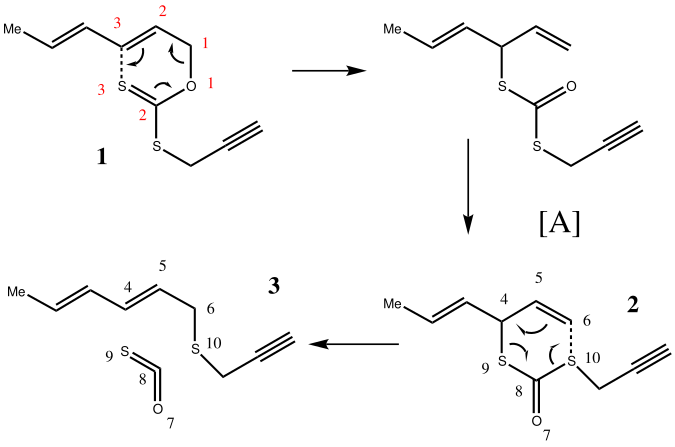
    This pattern of break one σ-bond/form one σ-bond, reminds of a sigmatropic pericyclic reaction. A typical example is the Cope rearrangement, in which a bond forms between the termini of two double bonds separated by three σ-bonds. The penny drops when one re-draws the original compound by rotating about a single bond (a perfectly allowed operation):

    14b

    A [3,3] Cope is now exposed. The (re)-numbering in red shows the pattern described above, and completes the assignment of the bond forming above to C4 as C4-S9. The next step is to find out how to extrude S=C=O. 

    1. To get to 2, one needs to create the C6-S10 bond (it is  sp2-C in [A]). 
    2. The O8-S10 bond needs to break.
    3. The recently formed C4-S9 bond needs to break again, with the result of extruding the required S=C=O.

    This pattern of forming and breaking bonds, but in unequal number reminds of the so-called ene class of pericyclic reaction. Both the Cope and now the ene are six-electron thermal pericyclic processes.

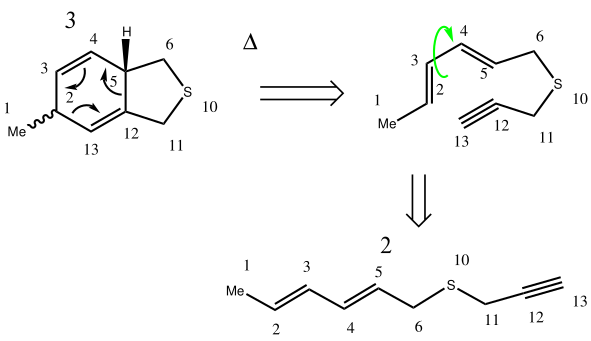
    We can now turn our attention to the last reaction shown above. Since we have both structures now, we can do a retrosynthetic analysis, which reveals that in the final step, C2-C13 and C5-C12 have both got to form. Such a pattern is another six-electron pericyclic reaction, the Diels-Alder π2s + π4s cycloaddition. Again, we have to rotate about the C3-C4 single bond (green arrow) to get the diene of the reactant into a conformation capable of undertaking this reaction. We are helped in this by ensuring that the trans hydrogens at both C2-C3 and C4-C5 (which we inferred from the values of the J-couplings above) are not transformed during our redrawing of this conformation.

    14c

    The conclusion to this tutorial comes in assigning the stereochemistry of that methyl group. The π4s component of the cycloaddition mandates that the two bonds forming to C5 and to C2 must both form suprafacially across this four-carbon unit. We know that the bond to C5 must form on the bottom face, so as to rotate the C5-H up. Therefore it must form on the bottom face also of C2, likewise rotating the attached hydrogen up. Therefore the methyl must point  down in the final product.

    QED.

    But not quite, since nowadays, one can take the NMR analysis one step further. In another post, I will perform a full quantum mechanical prediction of the above NMR spectrum to see how well it matches what is reported above.

  • Why is N,O-diphenyl hydroxylamine (PhNHOPh) unknown?

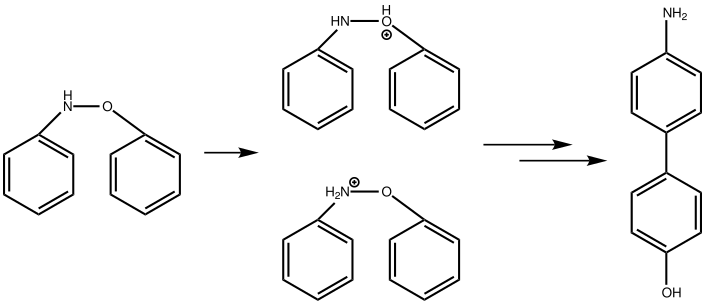
    If you search e.g. Scifinder for N,O-diphenyl hydroxylamine (RN 24928-98-1) there is just one literature citation, to a 1962 patent. Nothing else; not even a calculation (an increasing proportion of the molecules reported in Chemical Abstracts have now only ever been subjected to calculation, not synthesis). A search of Reaxys also offers only one hit[cite]10.1016/S0040-4039(01)90757-9[/cite] reporting one unsuccessful attempt in 1963 to prepare this compound. Again, nothing else. Yet show this structure to most organic chemists, and I venture to suggest few would immediately predict this (unless they are experts on benzidine rearrangements).‡

    PhNHOPh

    The eagle-eyed reader of this blog may have noticed my noting in previous posts that the benzidine rearrangement proper is normally promoted by double protonation, and that reaction via monoprotonation has a significantly higher barrier. So what are the corresponding predicted reaction barriers for PhNHOPh? I start in fact with catalytic monoprotonation. The calculations are at ωB97XD/6-311G(d,p)/SCRF=water (closed shell) level.

    System N-protonated O-Protonated‡
    Reactant  0.0  11.3
    TS N-O  7.3  17.4
    π-complex  2.1  6.0
    TS C-C  4.8  13.2
    ‡Relative to N-protonated reactant, in kcal/mol.

    So it seems that even monoprotonation (on nitrogen) results in a very small ΔG298‡ barrier to the formation of a π-complex and its subsequent facile breakdown to form a C-C bond. I had noted in the earlier post that Ghigo and co-workers[cite]10.1002/ejoc.201001636[/cite] had found that with diprotonated diphenyl hydrazine, the resulting π-complex has some open shell (biradical) character. The calculations reported here on the monoprotonated system are done as closed shell, but any biradical character this might have will only serve to even further reduce the barriers seen in the table. So we may confidently conclude that even monoprotonated N,O-diphenyl hydroxylamine will rapidly rearrange. A follow-up investigation for the diprotonated route hardly seems necessary!

    But here is a challenge: if one were able to prepare PhNHOPh in thoroughly deprotic conditions, might it be isolable? There is precedent; the keto form of phenol can indeed be isolated under such conditions.[cite]10.1021/ja00951a064[/cite].

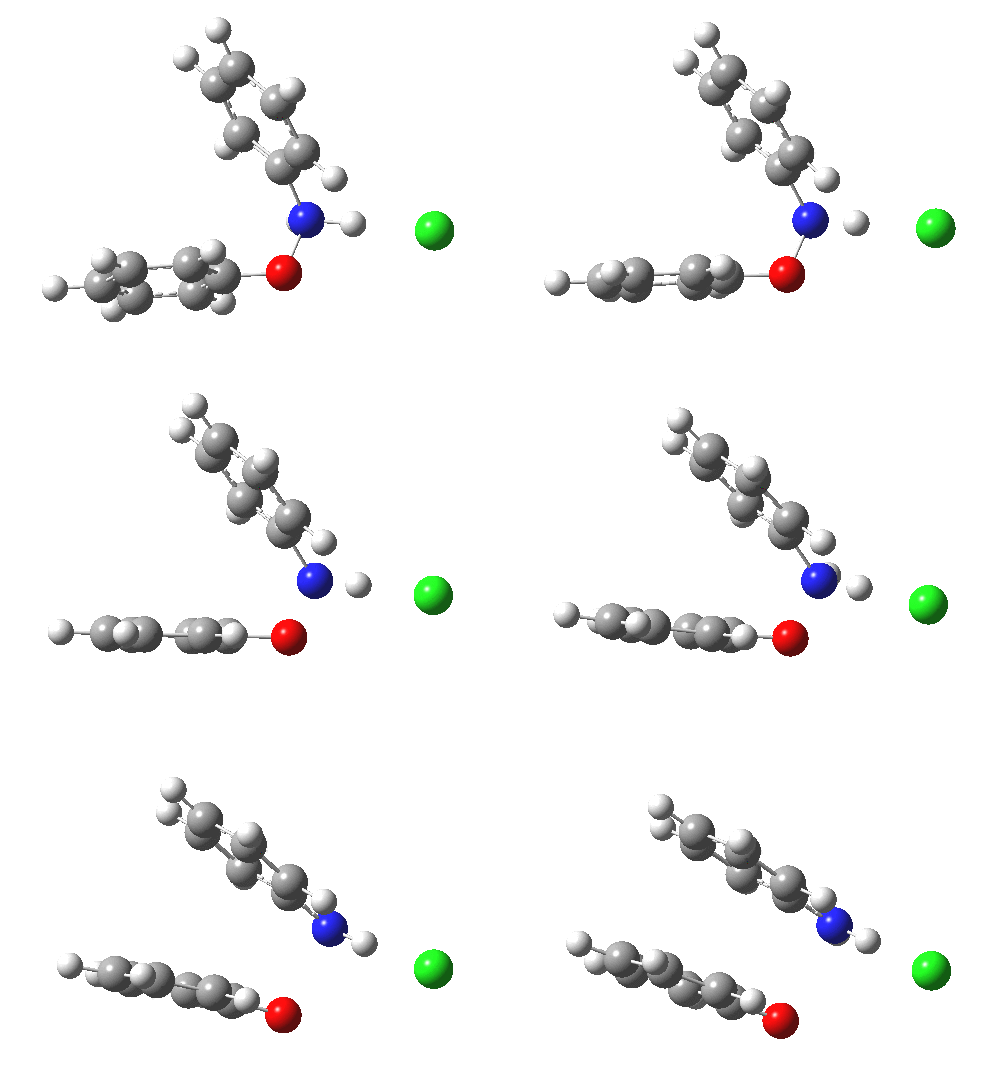
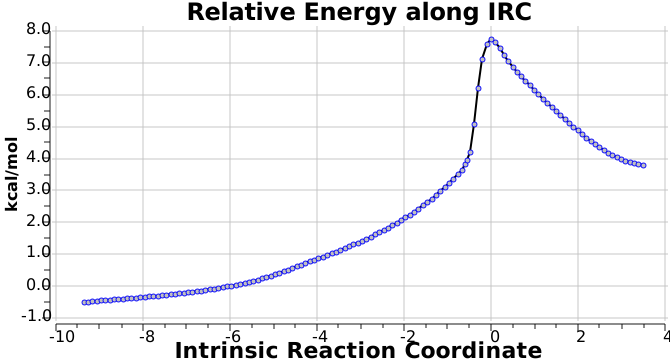
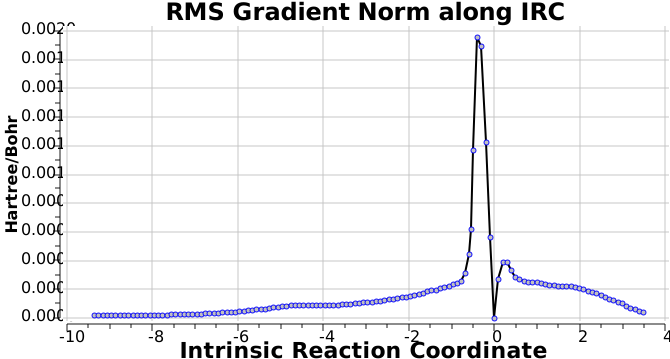
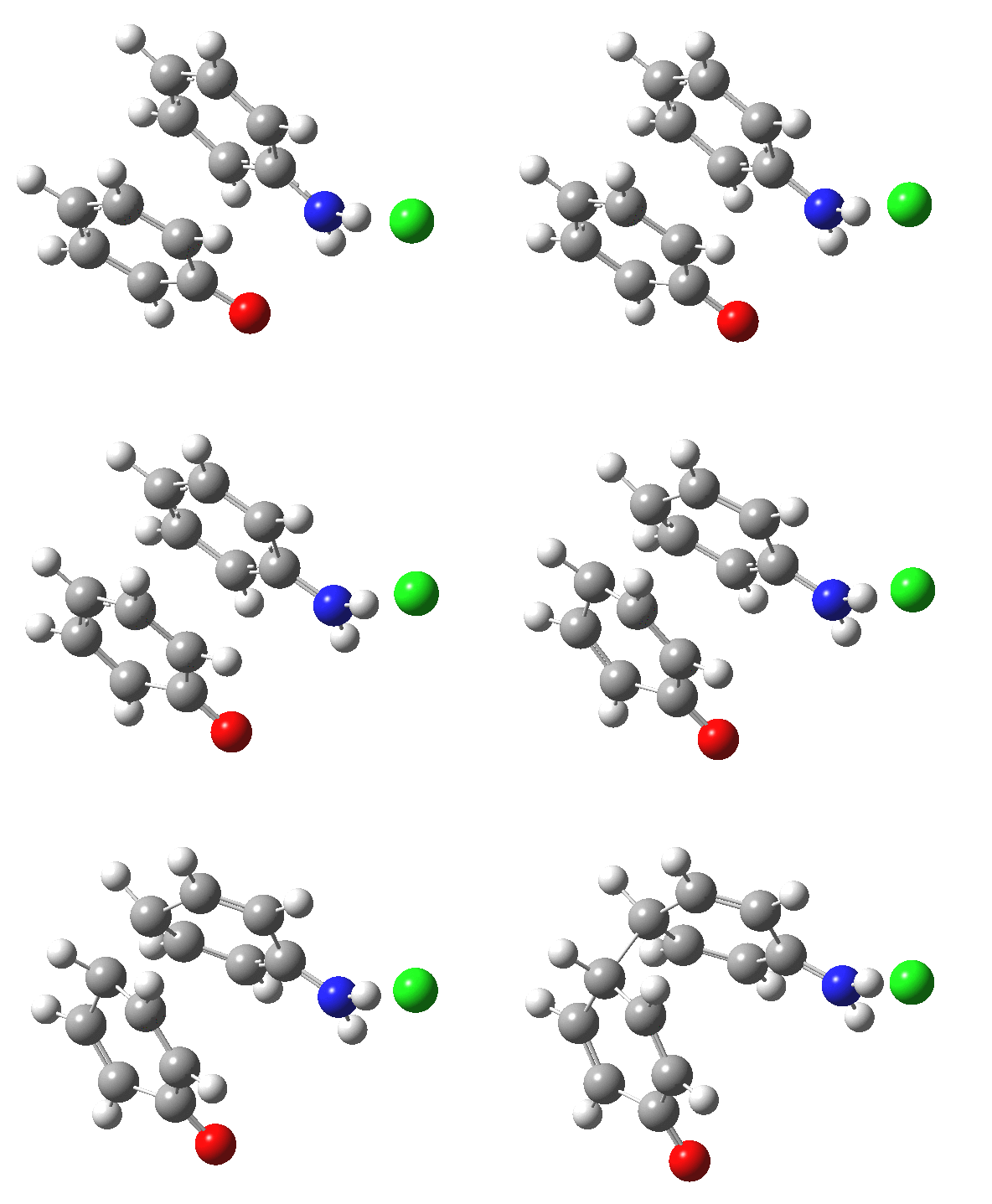
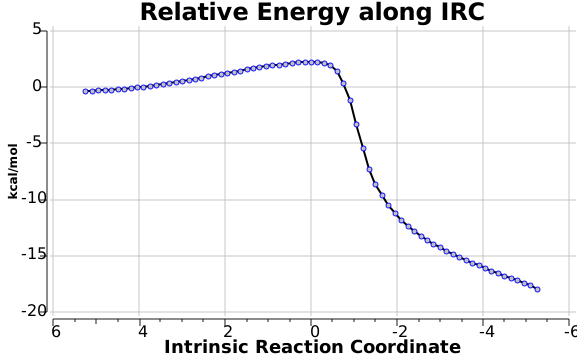
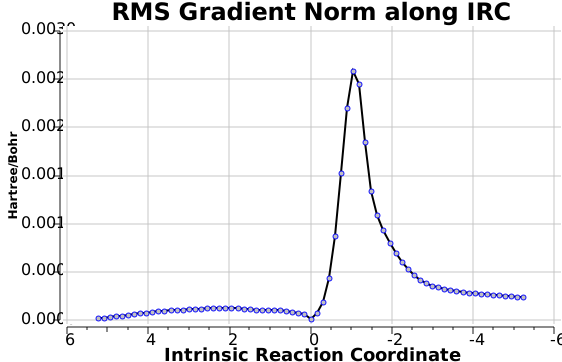
    Here are some intrinsic reaction coordinates to finish with. Firstly, for the formation of the  π-complex from N-protonated precursor:

    PhNH2OPh-NO
     PhNH2OPh-NO PhNH2OPh-NOG 

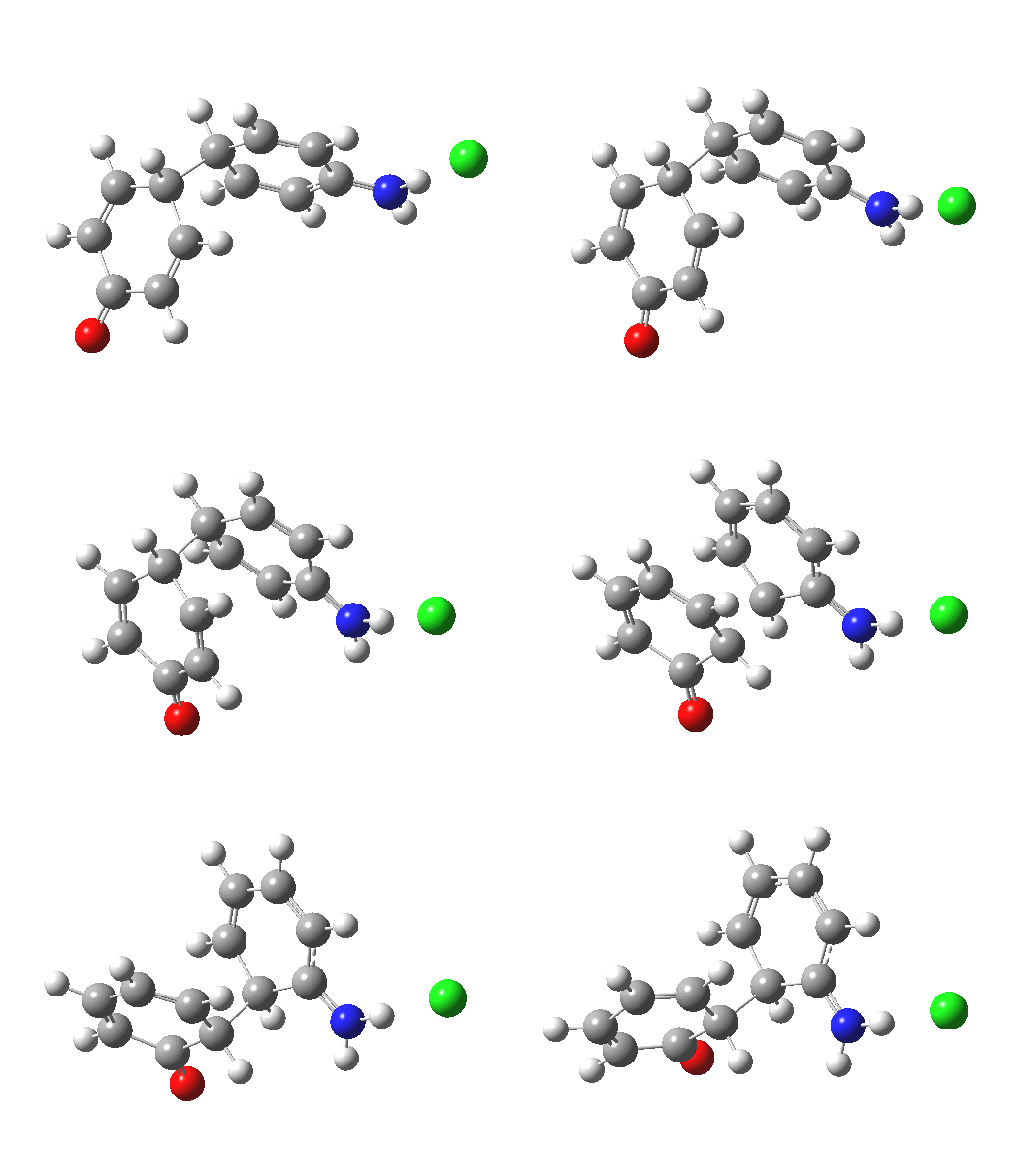
    Once formed, the  π-complex collapses readily to the 4,4′-coupled biphenyl. 

    PhNH2OPh-pi2p
     PhNH2OPh-pi2p PhNH2OPh-pi2pG 

    There may be another pathway which collapses to the 1,1′-coupled biphenyl which I have not found yet. A [3,3] sigmatropic rearrangement converting the 4,4′ to the 1,1′-biphenyl is higher in energy, but still just about accessible thermally.

    PhNH2OPh-o2p
     
    PhNH2OPh-o2p
    PhNH2OPh-o2pG
     

    To end, here is a question. Could one systematically identify “gaps” in the distribution of known molecules; species which appear as if they should exist, but have never been reported? Of these, the majority will no doubt be absent from the record simply because they uninteresting. But some, as here, are absent because they are too unstable to exist, unless (extreme?) precautions are taken to remove the factors responsible for their instability (in this case, protons). Cyclobutadiene was one such famous example (stabilised by coordination to a metal). Certainly, computation nowadays can help identify conditions for how such molecules might be isolated.


    ‡In contrast, PhNHSPh (N-Phenylbenzenesulfenamide) is a well known species[cite]10.1107/S1600536808019491[/cite].

  • A conflation of concepts: Conformation and pericyclic.

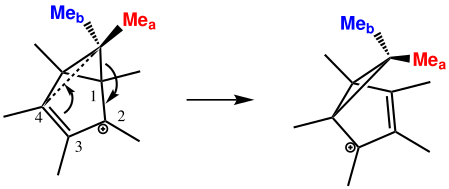
    This is an interesting result I got when studying the [1,4] sigmatropic rearrangement of heptamethylbicyclo-[3.1.0]hexenyl cations. It fits into the last lecture of a series on pericyclic mechanisms, and just before the first lecture on conformational analysis. This is how they join.

    14me

    The experiment it relates to[cite]10.1021/ja01027a059[/cite] may well be a contender for the top ten list of most influential experiments ever conducted in chemistry. At -40°C, the 1H NMR spectrum of this species has three peaks, at δ2.06, 1.57 and 1.13 ppm with an integral ratio of 15:3:3. The five basal methyls are averaged to 2.06 ppm, whereas those marked above as Mea and Meb exhibit distinct separate resonances. At -90°C, the five basal methyls split into peaks at δ2.48, 2.02, 1.66, in the integral ratio of 6:3:6. This indicates a process that is slow at the lower temperature but becomes fast (on the NMR time scale) at the higher temperature. The process must retain the individual identity of Mea and Meb.

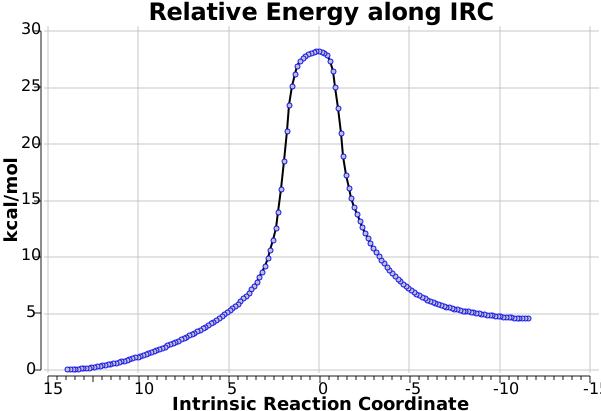
    The explanation is of course that a pericyclic [1,4] sigmatropic shift occurs. As a four electron process, this must have one antarafacial component, and this is by far easier to achieve by inverting the configuration at the migrating carbon centre. To convince oneself that this process does indeed retain the individual identity of Mea and Meb, an IRC of the reaction can be computed (ωB97XD/6-311G).

    Click for  3D.

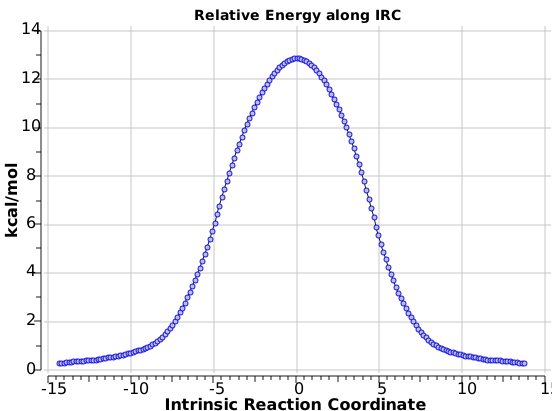
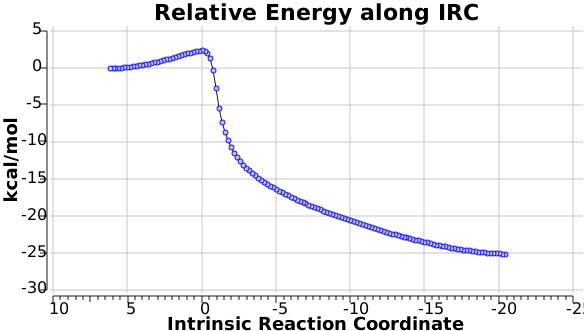
    The energy profile is smooth and springs no surprises. The barrier is about right for the temperatures noted above. 14meE

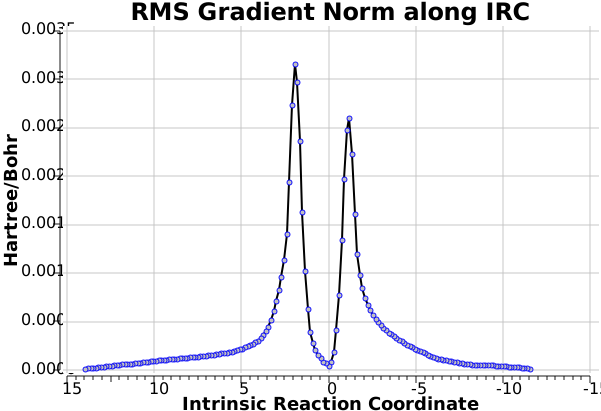
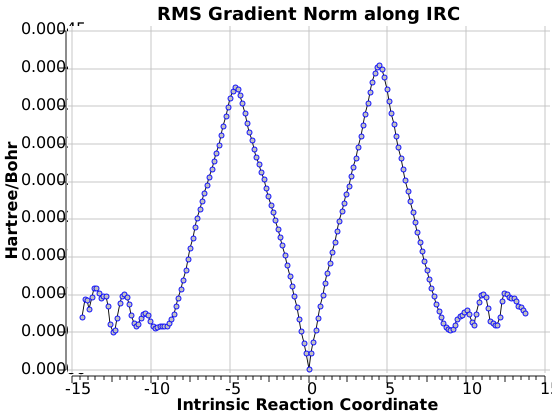
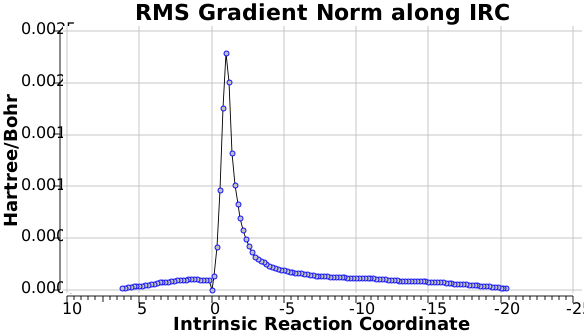
    But the RMS gradient norm along the IRC is unexpected. 14meG

    1. Between the limits IRC ± 9, the profile is that of a reaction, involving bonds breaking and forming.
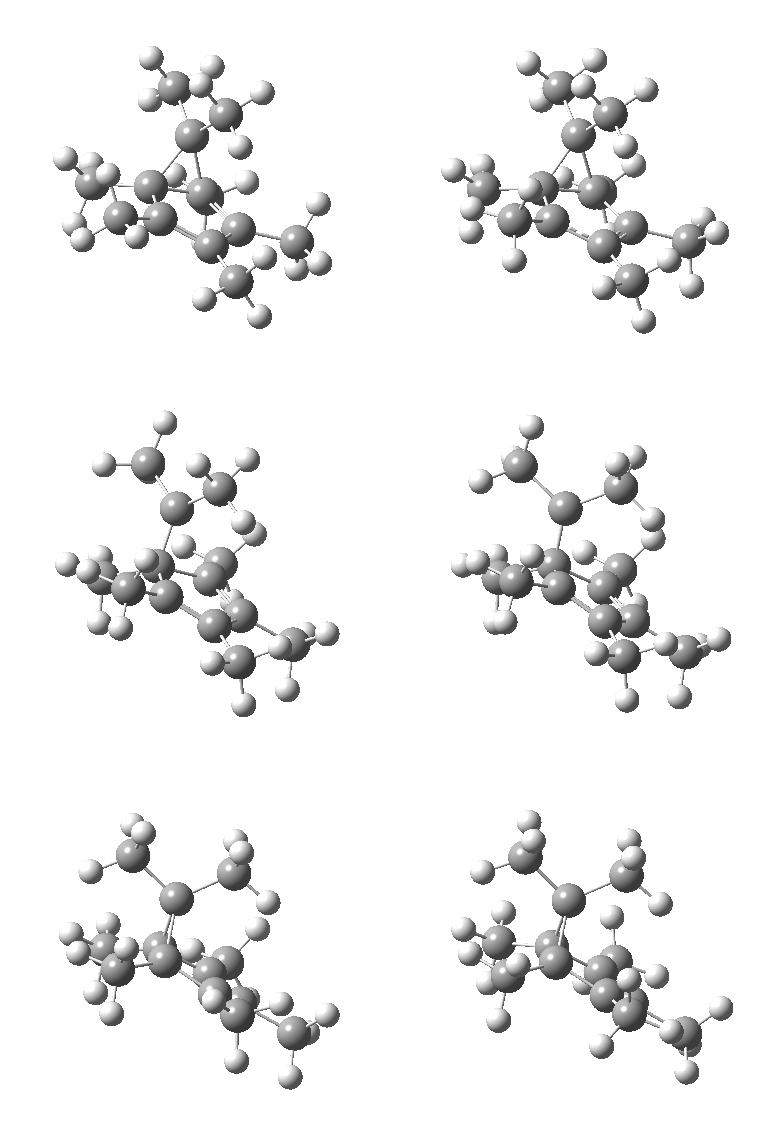
    2. In the range IRC ± (9 – 15), unexpected features appear (hidden intermediates if you check this post). A whole plethora of them. This is the conformational region where the methyl flags start waving (and no bonds are formed or broken). If you watch the animation above very carefully, you will note that the methyl groups start rotating at the start and at the end of the migration, at a stage when the ring has an allyl cation. This delocalised cation has a different impact upon the conformation of the methyl groups from that of the transition state, where the charge now resides largely on the migrating carbon, and the ring now has just a neutral butadiene. This latter imparts a different conformational preference upon the methyl groups. You can see an orbital analysis of these effects at this post.
    3. But perhaps the most surprising aspect of all of this is that each methyl flag waves at a different time from the others; first one waves, then the second and then the third. The two remaining basal methyls (attached to sp3 carbons) do not wave at all.

    So this classic reaction is not just a pericyclic exemplar, it also illustrates nicely and concisely the conformational analysis of methyl groups interacting with an unsaturated system. Two for the price of one so to speak.

  • The mechanism of the Benzidine rearrangement.

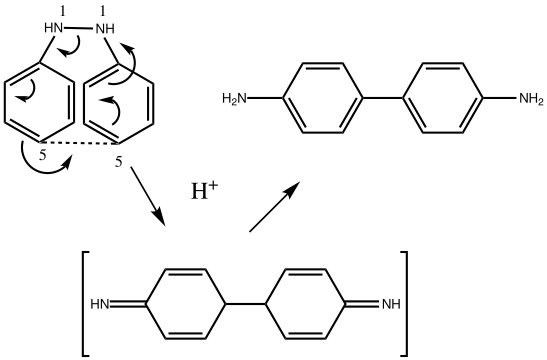
    The benzidine rearrangement is claimed to be an example of the quite rare [5,5] sigmatropic migration[cite]10.1021/ja00335a035[/cite], which is a ten-electron homologation of the very common [3,3] sigmatropic reaction (e.g. the Cope or Claisen). Some benzidine rearrangements are indeed thought to go through the [3,3] route[cite]10.1021/ja00309a041[/cite]. The topic has been reviewed here[cite]10.1002/poc.610020702[/cite].

    benzidine

    In this post, I offer a calculated transition state and IRC for this reaction, to see what insights might accrue. How was this obtained?

    1. At the ωB97XD/6-311G(d,p)/SCRF=water level. This procedure would allow for any dispersion-like effects to be allowed for in the π-π-stacking. 
    2. The rearrangement is normally promoted by acid, and the active species is thought to be diprotonated[cite]10.1002/ejic.201101115[/cite]‡ (although monoprotonated catalysis is also observed[cite]10.1021/ja00335a035[/cite]. Here I report just the diprotonated route, together with chloride anions to balance the charges, and have added a continuum water field to allow this double ion-pair to be at least partially stabilised.
    3. The rate determining step is the N-N cleavage/C-C bond formation. This is followed by presumed rapid proton transfers, which are not modelled here.
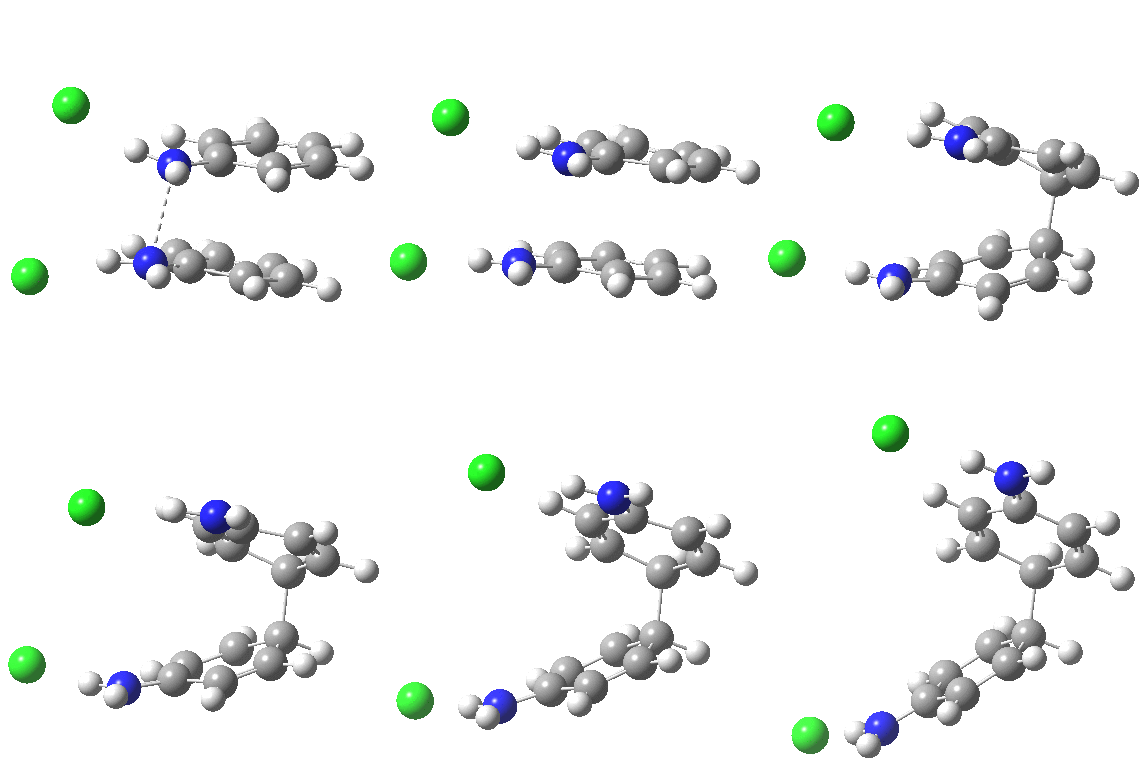
    The [5,5] transition state for the benzidine rearrangement. Click for  3D.
    The [5,5] transition state for the benzidine rearrangement. Click for 3D.
    benzidine-55
    benzidine-55E benzidine-55G

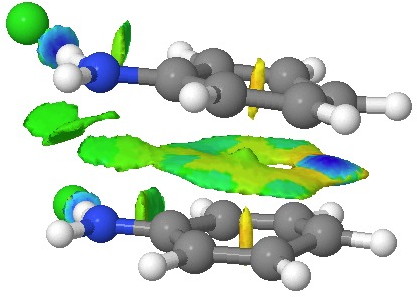
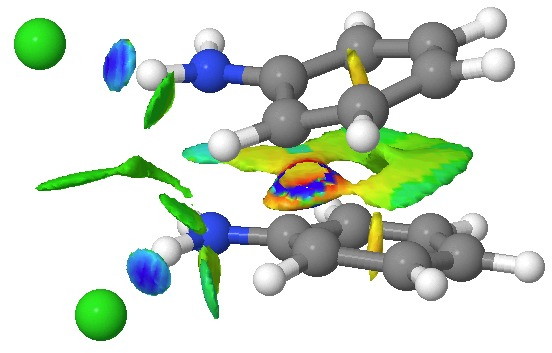
    This [5,5] transition state is 2.9 kcal/mol lower in ΔG‡298 than the transition state for the isomeric [3,3] rearrangement. The NCI (non-covalent-interactions) shows the forming C-C bond to be on the border of covalent, and non-covalent (blue), but that the π-π-stacking region is all weakly attractive (green). You can also observe the strong hydrogen bonds between the chloride anion and an N-H group (blue), and the weak attractive zones between the two nitrogen centres, between the chloride and the ortho-C-H hydrogens, and even between the two chloride anions (blue-green or green). I should point out that the initial position for these anions was over the aryl ring, but they migrated to the NH region during optimisation of the transition state.

    NCI surface. Click for  3D.
    NCI surface. Click for 3D.

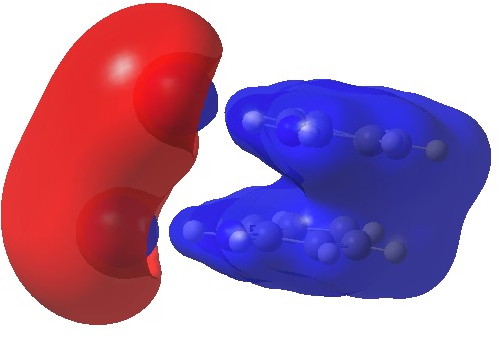
    The molecular electrostatic potential (isosurface = 0.11 au) shows both aryl rings as a single unit attracted by a positive potential (blue)

    Calculated electrostatic potential. Click for  3D.
    Calculated electrostatic potential. Click for 3D.

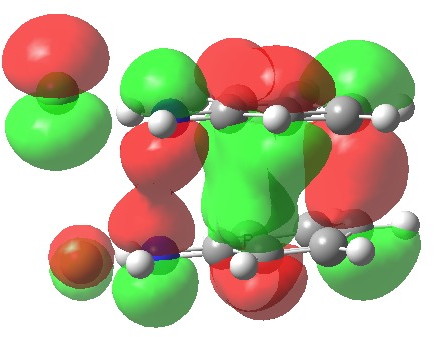
    The highest-occupied molecular orbital shows the two bonds involved in the [5,5] shift (N-N and C-C) are both bonding, but more significantly, the central region of the two stacked aryl rings is also bonding. This is a clear manifestation of a π-complex, which the benzidine rearrangement has often (and it has to be said controversially) described as, and which elevates this particular reaction from that of a simple bond forming/bond cleaving sigmatropic. Another way of looking at it is that secondary orbital interactions (such as often invoked in Diels-Alder cycloadditions) are exceptionally important here.

    HOMO for 5,5 benzidine rearrangement. Click for  3D.
    HOMO for 5,5 benzidine rearrangement. Click for 3D.

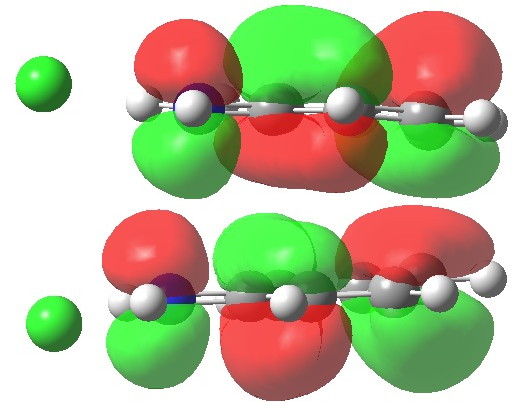
    The LUMO is strongly antibonding in that region; indeed adding two electrons to form a 12-electron process would be strongly destabilising. In this regard, this unusual sigmatropic reaction follows the same 4n+2 electron rule as more conventional ones.

    LUMO. Click for  3D.
    LUMO. Click for 3D.

    The next two diagrams illustrate the competing (higher energy) [3,3] shift, which also has some π-complex character.

    A [3,3] alternative to the benzidine rearrangement. Click for  3D.
    A [3,3] alternative to the benzidine rearrangement. Click for 3D.


    NCI surface for  3,3 rearrangement. Click for  3D.
    NCI surface for 3,3 rearrangement. Click for 3D.

    I will end with three autobiographical notes.

    1. The benzidine rearrangement was one of the earliest reactions I did in my home laboratory, at the age of about  13. As I recollect, I prepared about 1.5 grams (blissfully ignorant of how carcinogenic it is), and used it via diazotization to couple to phenol. My fascination with chemistry most certainly started with colour (and how to express the bonding in nitric oxide).
    2. About eight years later, I was about to commence my Ph.D. studies. The objective was to use kinetic isotope effects to infer the structure of transition states. In my case (proton transfers to indoles) I never did achieve this objective. But it is noteworthy that the mechanism of the benzidine rearrangement was largely unravelled using such isotopic studies.
    3. By 1974 as a post-doctoral researcher, I had moved on to studying mechanisms using  quantum theory and had decided that it was easier to invert the use of isotope effects by predicting a transition structure using this method, and then seeing if the computed isotope effects matched the experiment. We did this for the Diels-Alder reaction[cite]10.1021/ja00486a013[/cite] and more generally[cite]10.1021/ja00493a008[/cite], and then for some gas-phase eliminations[cite]10.1039/C39810000939[/cite], this latter being my first entirely independent publication.
    4. So, putting all this together, one might infer that armed with a computed transition state structure for the benzidine rearrangement, it is trivial to compute the kinetic isotope effects and hence to see if they correspond to those measured. You might expect a report on this in a future post here.

    ‡ Crystal structures of diprotonated dimethyl hydrazines[cite]10.1002/ejic.201101115[/cite] show a N-N bond length of ~1.45Å (typical counter-anions being nitrate, perchlorate or sulfate). That calculated for the diprotonated diphenyl hydrazine is ~2.5Å, which suggests that with the phenyl group, electrons from the N-N region may be borrowed to contribute to the π-π-complex.

  • Vitamin B12 and the genesis of a new theory of chemistry.

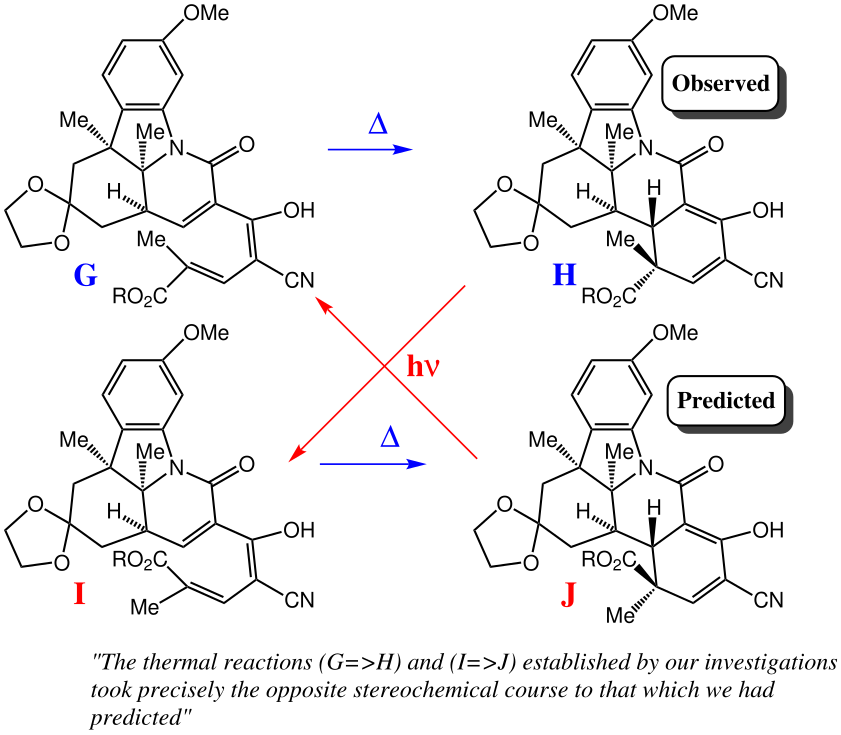
    I have written earlier about dihydrocostunolide, and how in 1963 Corey missed spotting the electronic origins of a key step in its synthesis.[cite]10.1021/ja00952a037[/cite]. A nice juxtaposition to this failed opportunity relates to Woodward’s project at around the same time to synthesize vitamin B12. The step in the synthesis that caused him to ponder is shown below.

    p2

    In the 1950s, Linus Pauling was the shining example in the use of model building in chemistry, and the so-called CPK (Corey, Pauling and Koltun) model was being adopted by most synthetic chemists as a part of the design of their syntheses (I have argued that the progenitor of the CPK model was in fact created by Loschmidt, in 1860). These were physical models, and it is quite likely that Woodward would have used one to ponder the conversion shown above as G ⇒ J or H. As you can read from the quote above (taken from  Chem. Soc. Special Publications (Aromaticity), 1967, 21, 217, a document not available online), he had concluded that G ⇒ J was more likely than G ⇒ H, and so was considerably surprised when the reaction actually proceeded to give the latter and not the former. In fact, photolysis of (the undesired) H gave I, which then did give (the desired) J upon heating, so he got what he wanted in the end (he usually did!). Of course, we now know that this electrocyclisation proceeds under what is sometimes called orbital control (as explained by Woodward and Hoffmann[cite]10.1021/ja01080a054[/cite]) and what can also be taught as a manifestation of transition state aromaticity[cite]10.1021/ed084p1535[/cite].

    For this blog, I do not want to investigate the transition states, but just to update Woodward’s use of physical (possibly CPK) models to predict the outcome of reactions. CPK models are characterised by their use of van der Waals radii for the atom spheres, the so-called space-filling representation, and as such they are in effect looking at the repulsive steric interactions (the 12 of the 6-12 potential). What they do not do is measure the attractive dispersion contributions to the model. I had suggested that differential dispersion contributions may be a (dominant?) factor in explaining why Sharpless epoxidation goes enantioselectively. With this in mind, I optimized the geometry of species H and J above at a dispersion and solvent-corrected level of theory (ωB97XD/6-311G(d,p)/SCRF=dichloromethane) to see if the relative stabilities of the products might agree with Woodward’s prediction that J should have formed.

    ΔG 0.0 kcal/mol ΔG +1.0 kcal/mol
    H. Click for 3D
    H. Click for 3D
    J. Click for  3D.
    J. Click for 3D.

    This computation shows that H is the lower in free energy by 1.0 kcal/mol, and by 0.8 kcal/mol in dispersion energy. So Woodward’s hypothesis that J was the more likely to form on steric grounds is not supported by this modern equivalent of a CPK model. I should add that a CPK model may only take an hour or so to build (but possibly weeks to order the components) whereas this quantum model took around 9 hours to compute. 

  • A pericyclic dichotomy.

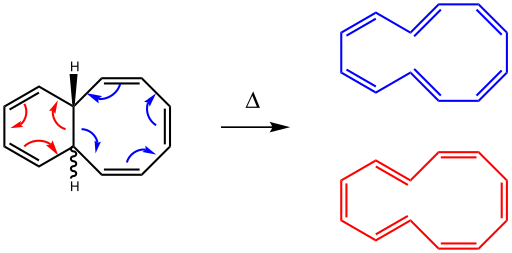
    A dichotomy is a division into two mutually exclusive, opposed, or contradictory groups. Consider the reaction below. The bicyclic pentadiene on the left could in principle open on heating to give the monocyclic [12]-annulene (blue or red) via what is called an electrocyclic reaction as either a six (red) or eight (blue) electron process. These two possibilities represent our dichotomy; according to the Woodward-Hoffmann (WH) pericyclic selection rules, they represent contradictory groups. Depending on the (relative) stereochemistry at the ring junctions, if one reaction is allowed by the WH rules, the other must be forbidden, and of course vice-versa. It is a nice challenge to ask students to see if the dichotomy can be reconciled.

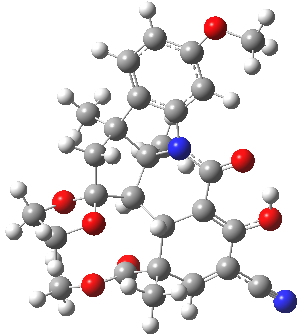
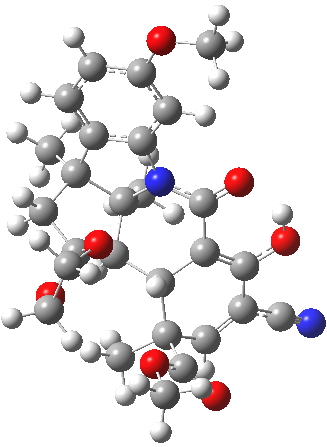
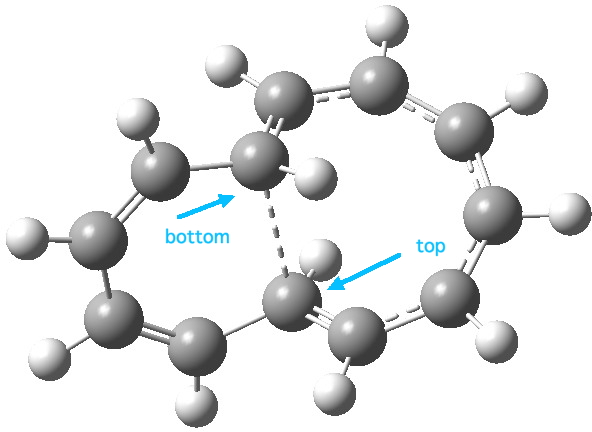
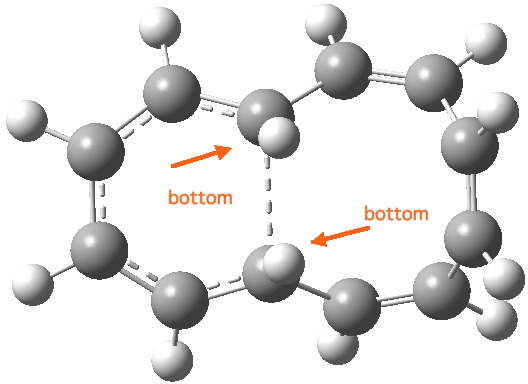
    I start the process by pondering the relationship between the two forms of the [12]annulene shown on the right. Are the representations shown in red or blue just resonance isomers (analogous to the Kekule forms of benzene), or something else? If the former, then they truly represent the same species; they are just different ways of representing the contributions to the wavefunction, and the dichotomy stands. But if they are in fact different species, then we can start to eliminate the apparent contradiction by stating that the red and the blue arrows actually represent different reactions, leading to different (albeit isomeric) products. In this scenario, the red and blue forms of the [12]-annulene are NOT resonance isomers but distinct valence bond isomers, with a positive energy activation barrier to their interconversion. To find out, let us start with the transition states for both processes:

    C2 symmetry Cs symmetry
    Transition state for blue arrows. Click for 3D.
    Transition state for red arrows. Click for 3D.
    1.  The blue arrows (representing 4n,n=2 electrons) result in a transition state with an axis of symmetry
    2. with the bond forming/cleaving from the bottom face of one terminus of the rhs-conjugated system to the top face of the other terminus, in other words an antarafacial bond, 
    3. with conrotation of the groups at the termini, resulting in
    4. all the bonds in the 8-ring being approximately 1.4Å in length (other than the central bond), whilst those in the 6-ring alternate strongly. The 8-ring is (Möbius) aromatic and the 6-ring is (Möbius) anti-aromatic.
    5. Contrary-wise, the red arrows (representing 4n+2,n=1 electrons) result in a transition state with a plane of symmetry
    6. with the bond forming from the same bottom face of the lhs-conjugated termini, in other words a suprafacial bond, 
    7. with disrotation of the groups at the termini, resulting in 
    8. all the bonds in the 6-ring being approximately 1.4Å in length, whilst those in the 8-ring alternate strongly. The 6-ring is now (Hückel) aromatic and the 8-ring is (Hückel) anti-aromatic.
    9. The transition state with C2 symmetry is in fact 10.1 kcal/mol lower in free energy than the one with Cs symmetry.
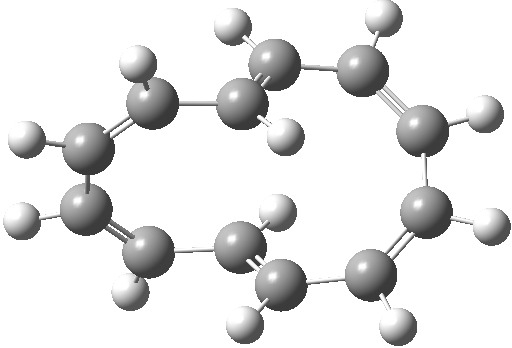
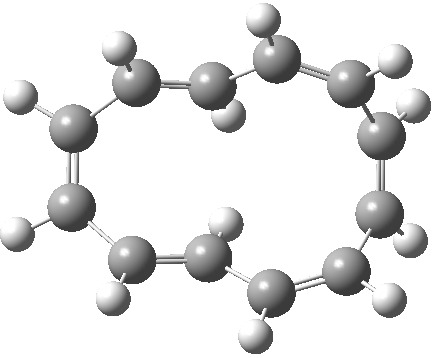
    So the arrows follow the aromaticity (or vice versa), and this determines the stereochemistry (axis or plane of symmetry) and ultimately the nature of the product of each reaction. Are these annulenes indeed different? Shown below are the final outcomes of following an IRC (intrinsic reaction coordinate) from the transition state of the red and the blue reaction downhill to the [12]-annulenes. Not only is the outcome valence bond isomers, but they are also atropisomers.
    Product, C2 (axis) Product, Cs (plane)

    So at the end we see that there is no actual dichotomy. The reactions above (red or blue arrows) give different products, with different symmetries, and differently aromatic transition states. But in doing so, they encapsulate the selection rules for pericyclic reactions very nicely indeed. For more details of this, see this citation [cite]10.1021/ed084p1535[/cite].

  • Di-imide reduction with a twist: A Möbius version.

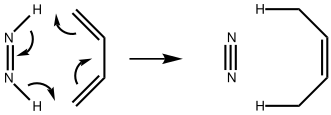
    I was intrigued by one aspect of the calculated transition state for di-imide reduction of an alkene; the calculated NMR shieldings indicated an diatropic ring current at the centre of the ring, but very deshielded shifts for the hydrogen atoms being transferred. This indicated, like most thermal pericyclic reactions, an aromatic transition state. Well, one game one can play with this sort of reaction is to add a double bond. This adds quite a twist to this classical reaction!

    The original di-imide reduction can be viewed as a six-electron process; one that fits the 4n+2 aromaticity rule. In fact, this is a specific instance of a more general topological rule, first proposed in 2008, which suggests that for 4n+2 electron thermal reactions, the electronic topology conforms to that of a Möbius link, for which the so-called linking number Lk is even (o, 2, 4, etc). For systems in which 4n electrons participate, such as the homologated example above, the rule changes to the topology of a Möbius knot, for which the linking number is odd (1, 3, etc)[cite]10.1021/ja710438j[/cite]. One interesting consequence of all this topology is that all the systems for which Lk > 0 are chiral (achiral benzene is thus seen as an exception rather than the norm of aromaticity)[cite]10.1021/jp902176a[/cite].

    Transition state for 8-electron di-imide reduction. Click for 3D.

    The calculated transition state for this reaction is shown above. As befits a torus knot, the two hydrogen atoms are transferred to opposite faces of the butadiene; an antarafacial mode. Now, to be fair the alternative mode in which the hydrogens are delivered suprafacially to just a single alkene is 26.1 kcal/mol lower in free energy. We might conclude that di-imide does not reduce butadiene in this manner, and that getting an experimental example of such stereochemistry might be a challenge!

    What of the aromaticity of this Möbius version? The NICS(0) at the ring critical point is -15.7 ppm, whilst the shieldings of the transferring hydrogens are +14.0 ppm. So just like its 4n+2 electron counterpart, this Möbius di-hydrogen transfer reaction also proceeds through an aromatic transition state.

  • The regiospecificity of di-imide reduction of an alkene.

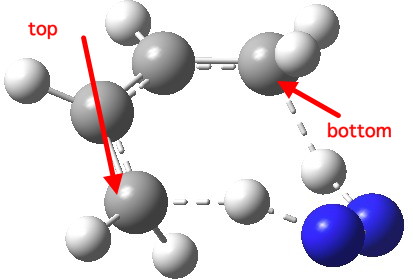
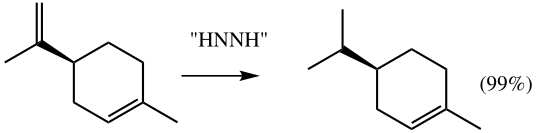
    Not a few posts on this blog dissect the mechanisms of well known text-book reactions. But one reaction type where there are few examples on these pages are reductions. These come in three types; using electrons, using a hydride anion and using di-hydrogen. Here I first take a closer look at the third type, and in particular di-hydrogen as delivered from di-imide.

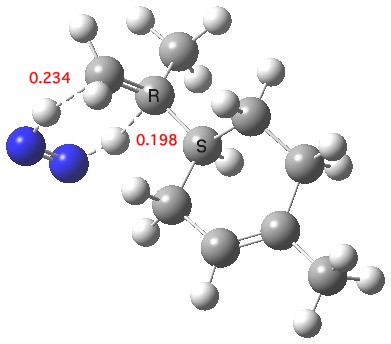
    This reagent tends to be specific for terminal (less highly substituted) double bonds[cite]10.1021/jo801588d[/cite]. Two ωB97XD/6-311G(d,p) calculations predicts a free energy discrimination of 2.85 kcal/mol for the two double bonds in the system above, which works out as a ratio of 125:1 in favour of the less substituted system. The Wiberg bond orders of the two forming C-H bonds indicate that at the transition state the one to the less substituted terminal carbon is more highly formed (0.234) than the one to the more substituted carbon (0.198). The NICS(0) magnetic index of aromaticity at the ring critical point  (centroid) of the pericyclic participating atoms has a value of -22.2 ppm, which indicates a significant diamagnetic ring current indicative of a (σ-aromatic) transition state. The two transferring hydrogens have predicted “aromatic” shifts of 11.6 and 10.5 ppm.

    Transition state for di-hydrogen transfer. Click for 3D.

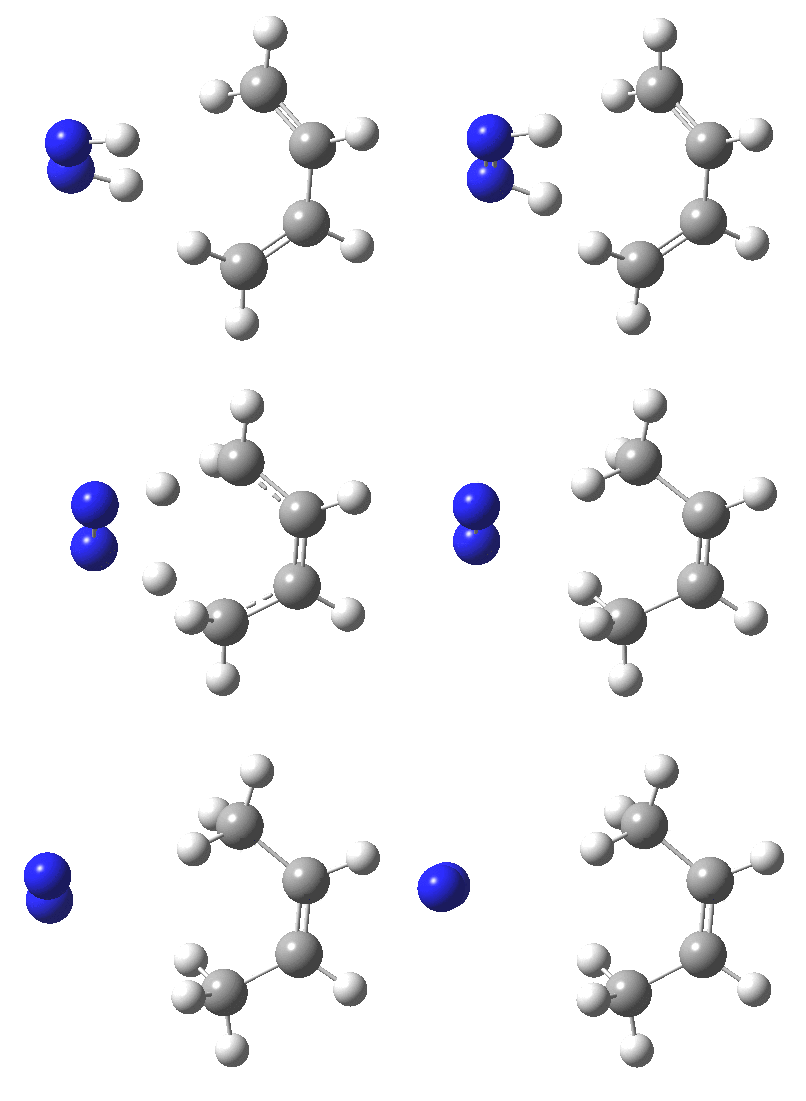
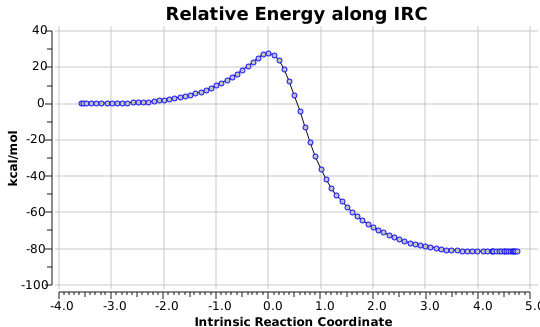
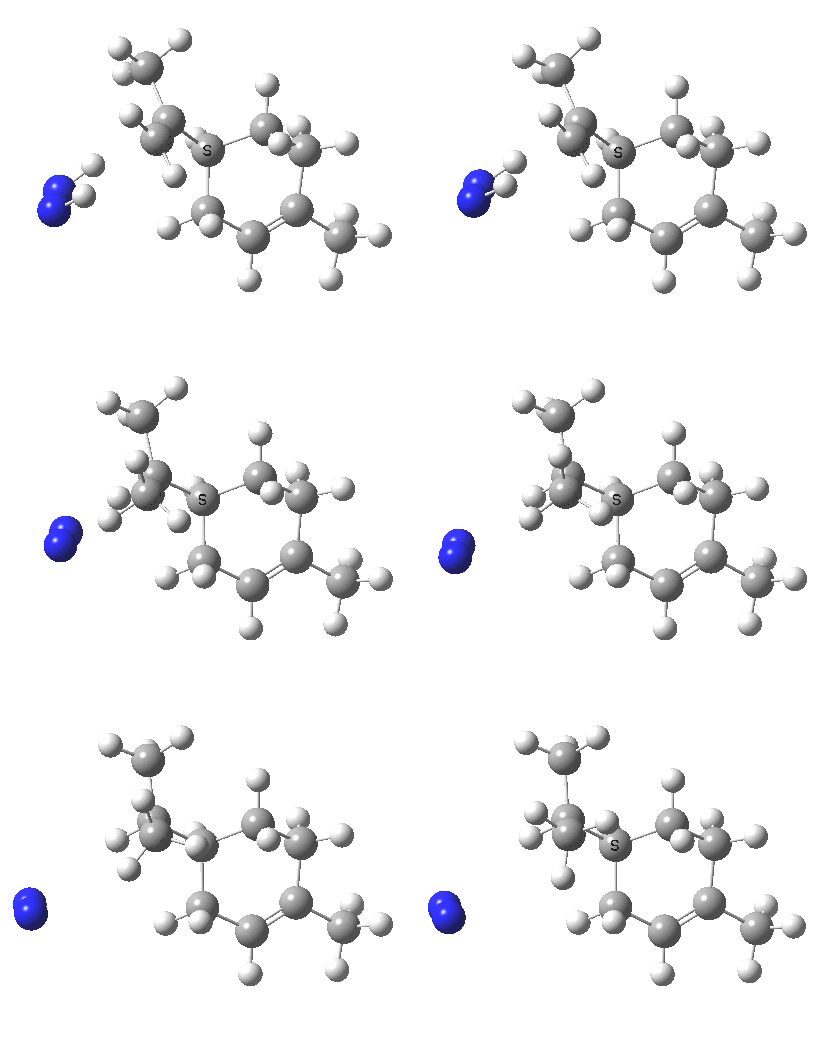
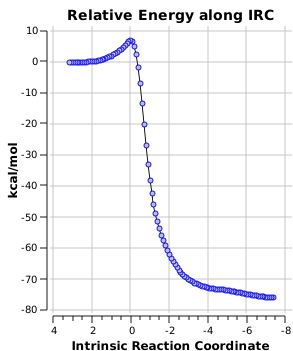
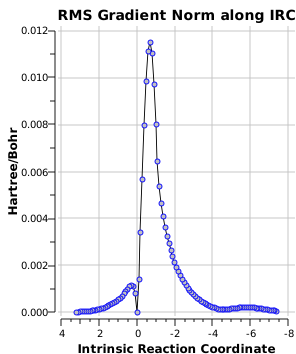
    The intrinsic reaction coordinate (IRC) shows two distinct phases:

    1. From IRC 3 to -3, it represents a pericyclic process, involving an (aromatic) transition state in which the six atoms involved are all co-planar.
    2. From IRC -4 however, the newly reduced C-C bond starts to rotate to change the conformation from syn-planar to gauche. This rotation only comes at the very end of the reaction.

    No real surprises here then, but it is useful to know that the regiospecificity of such reactions can apparently be well predicted.