Tag: Reaction Mechanism

  • Feist’s acid. Stereochemistry galore.

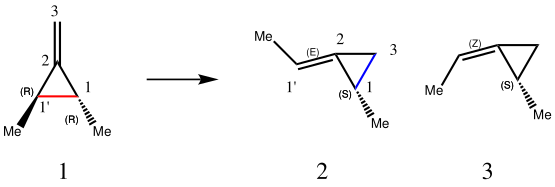
    Back in the days (1893) when few compounds were known, new ones could end up being named after the discoverer. Thus Feist is known for the compound bearing his name; the 2,3 carboxylic acid of methylenecyclopropane (1, with Me replaced by CO2H). Compound 1 itself nowadays is used to calibrate chiroptical calculations[cite]10.1021/ct300359s[/cite], which is what brought it to my attention. But about four decades ago, and now largely forgotten, both 1 and the dicarboxylic acid were famous for the following rearrangement that gives a mixture of 2 and 3[cite]10.1021/ja00747a019[/cite]. I thought I might here unpick some of the wonderfully subtle stereochemical analysis that this little molecule became subjected to.
    methylene-cyclopropane

    Feist’s acid and its derivatives have attracted constant attention a long while. The rearrangement shown above was identified in 1932, and by 1960 it was shown that 1 as a pure enantiomer gave products 2 and 3 that retained optical activity (read about all of this here[cite]10.1016/S0040-4020(01)92859-5[/cite]). By 1970 attention had shifted to the absolute configurations of the molecules involved and the mechanism of the reaction. Why? Woodward and Hoffmann had just put pericyclic reactions on the map[cite]10.1002/anie.196907811[/cite], and one of the examples they cited was this one. They identified the reaction as a [1,3]sigmatropic rearrangement (the red bond breaks and the blue bond forms) and their new theory required the configuration at carbon 1 to be inverted by the reaction, from (R) to (S) as shown above. In order to verify this, von Doering (who had been a student of Woodward’s) subjected Feist’s ester and its rearrangement products to a series of chemical transformations[cite]10.1002/anie.196907811[/cite] in order to relate its absolute stereochemistry to that of known compounds. Gajewski[cite]10.2012/ja00747a019[/cite] took over and with four further chemical transformations, was able to assert that the (S,S)-dimethyl enantiomer of 1 has an optical rotation of -59.4°. The molecules 2 and 3 were subjected to a similar stereochemical analysis, which finally revealed them to have (S) configuration at the carbon labelled 1, thus confirming the inversion of configuration so confidently predicted by Woodward and Hoffmann. I imagine Feist never imagined the molecule which came to bear his name would be used as a confirmation of one of the pivotal 20th century stereochemical theories of organic chemistry.

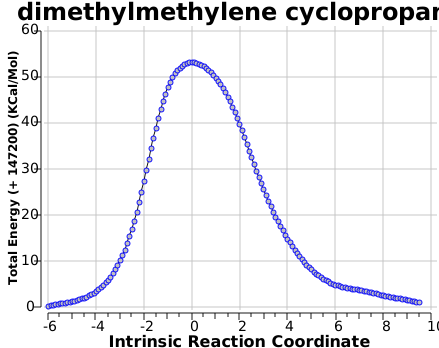
    So what of the mechanism for this rearrangement? Well, a ωB97XD/6-311G(d,p) calculation reveals the transition state as shown below. The two dashed lines represent the red and blue bonds shown schematically above, and these bond either break or form to the same face of the three-carbon allyl fragment (suprafacially), but that carbon 1 (pointed to by the blue arrow below) suffers an Sn2-like inversion of configuration (= antarafacial) as proven by all that hard chemical synthesis noted above. methylene-cyclopropane
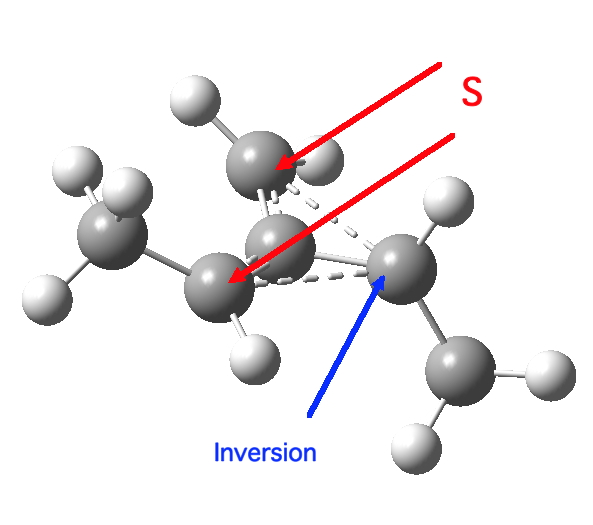
    The reaction is concerted, with a predicted barrier of around 50 kcal/mol. This is a little higher than the measured value of ~41 kcal/mol[cite]10.1021/ja00901a009[/cite]. This is taken to indicate that the wavefunction has a contribution from an open-shell biradical configuration (indeed it is unstable at the transition state, having a lower energy triplet state) which would lower the barrier by 10-15 kcal/mol. The observation that the product has NOT lost optical activity suggests that the mechanism cannot simply be that of an achiral biradical, and that a “memory” of the starting stereochemical configuration must be retained throughout the dynamic reaction trajectory. Modelling such a process requires more sophisticated (multi-configuration) techniques than the one I have illustrated here, and quite probably a smattering of reaction dynamics thrown in. It goes to show that quite innocent looking molecules can be devils to model (both for their reaction dynamics and their optical activity!). 
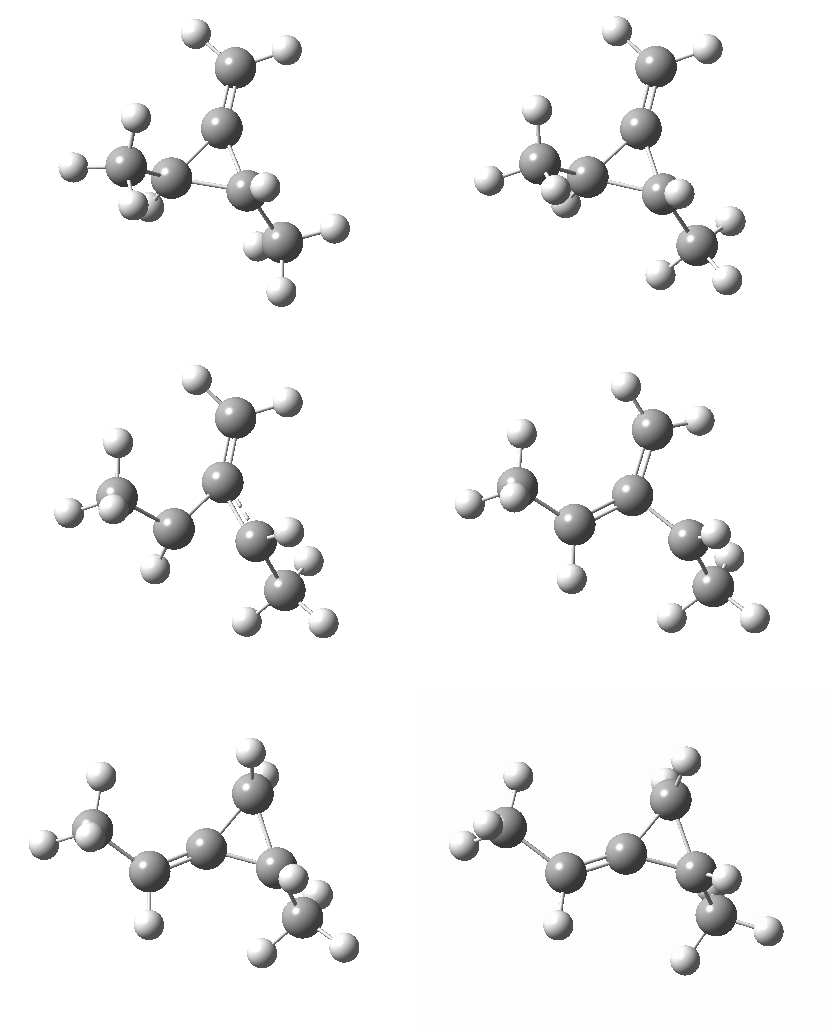
    methylenecyclopropane-[cite]10.6084/m9.figshare.670632[/cite] methylenecyclopropane

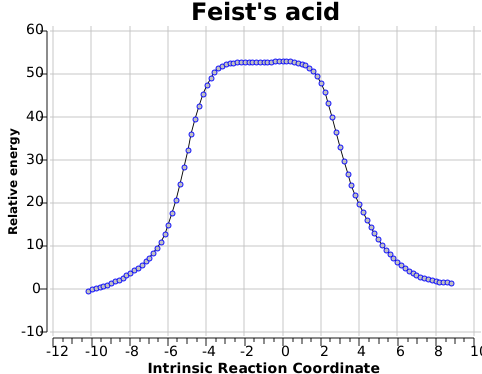
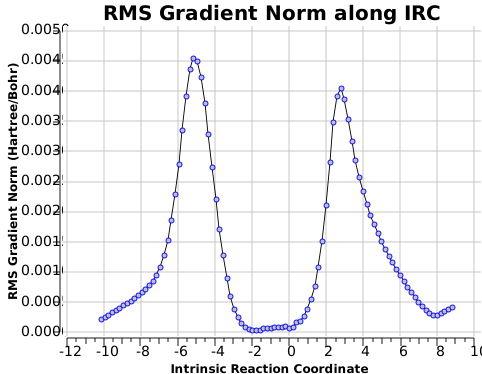
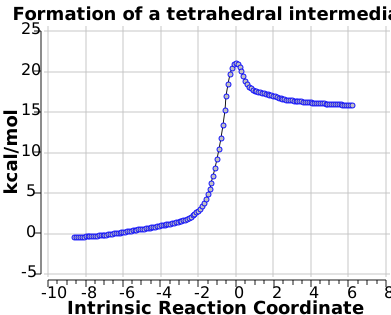
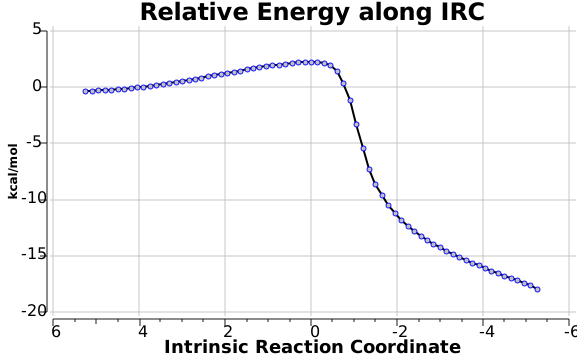
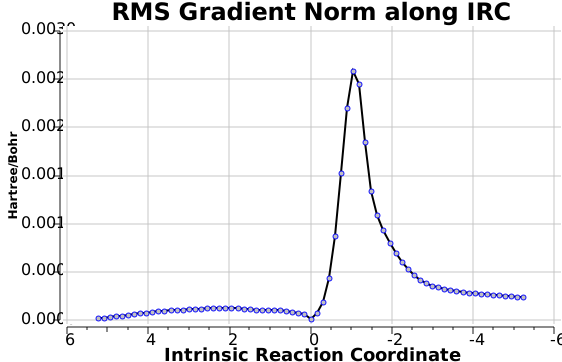
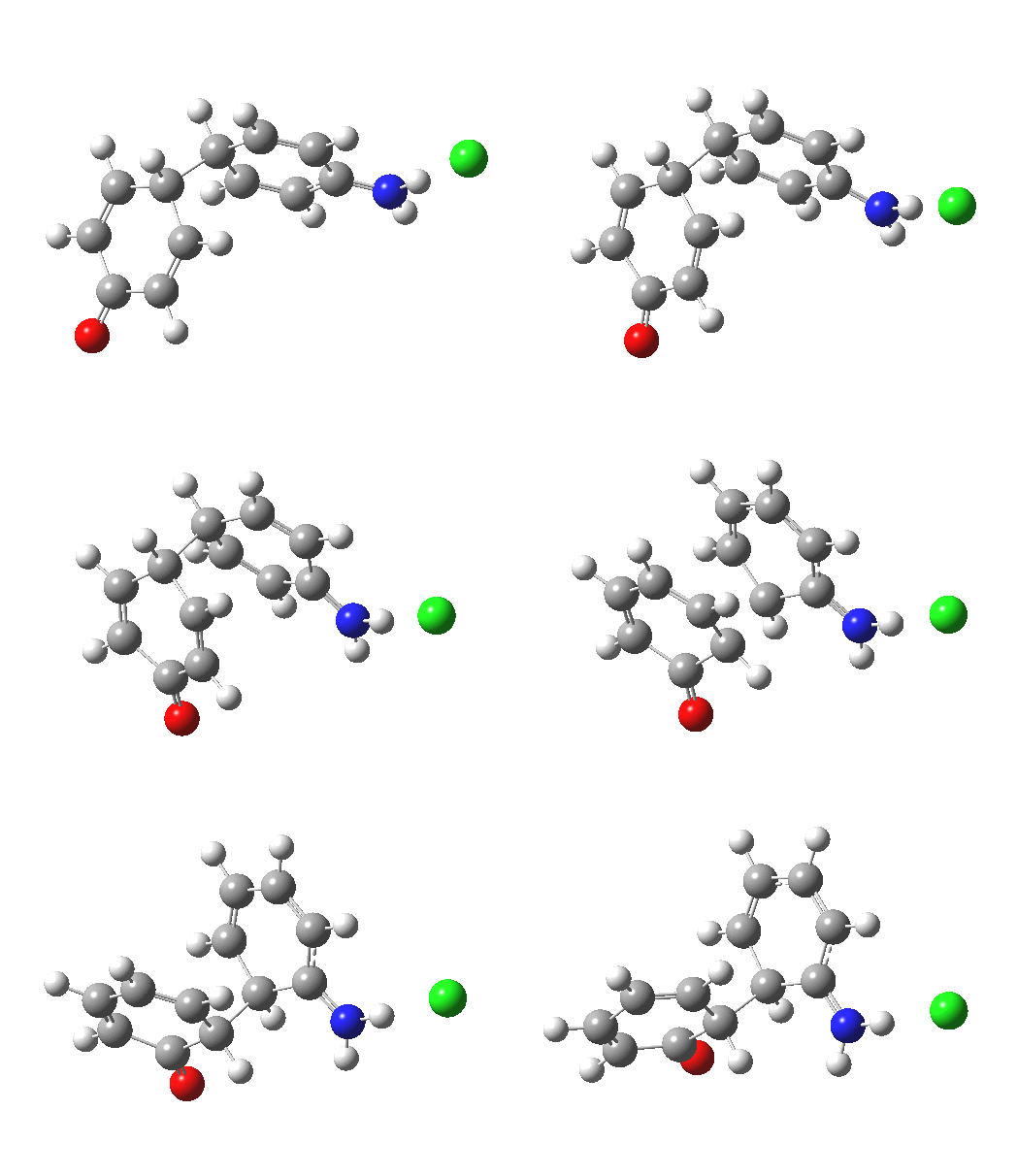
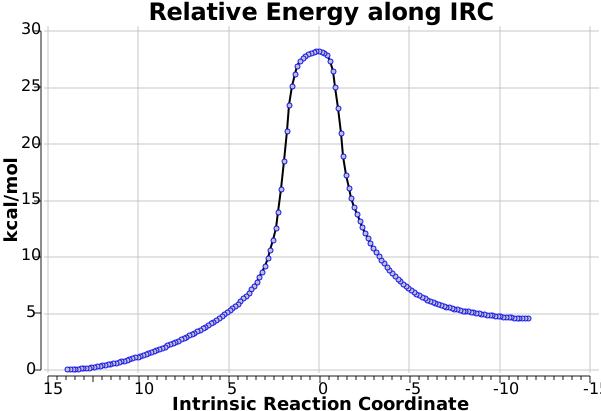
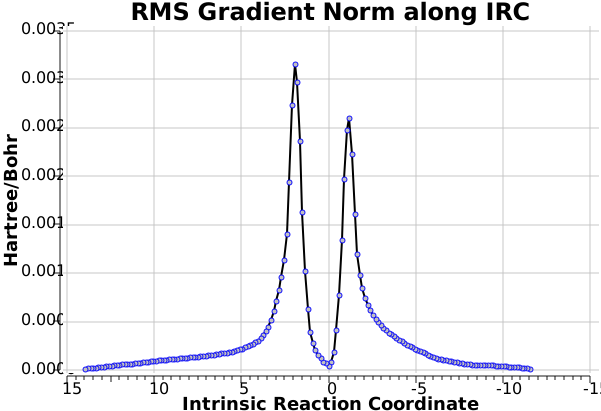
    Feist’s acid itself reveals a profile for the computed rearrangement IRC (ωB97XD/6-311G(d,p)/SCRF=water) that I have never seen as prominently before, a veritable table top of a mountain! This feature (and its reflection in the gradient norm) is a nice example of a “hidden intermediate”. In this case, it is a species which may be either biradical or zwitterionic, and which sits atop the mountain plateau. It can drop (bifurcate) off the mountain to form either compound 2 or 3, a process which must likely be best studied by dynamics rather than purely as an intrinsic reaction coordinates.
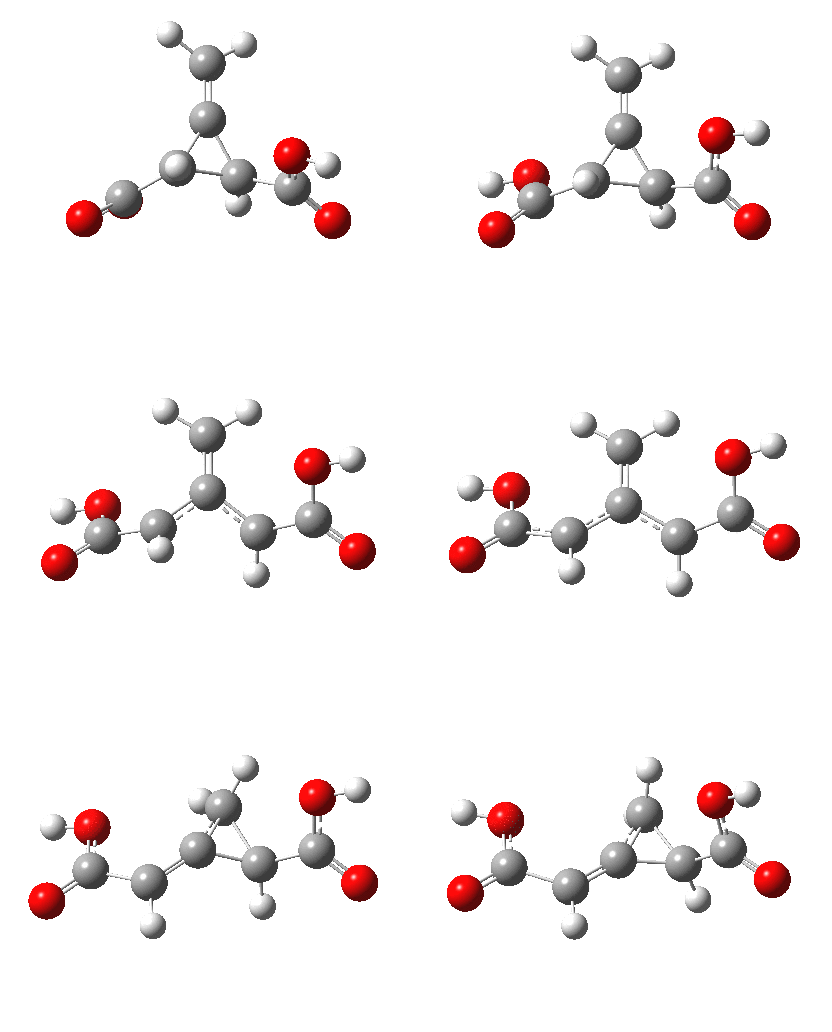
    feist1
    Click for 3D


    [cite]10.6084/m9.figshare.674600[/cite]
    feiste
     feistg


    See comment here.

  • The mechanism of ester hydrolysis via alkyl oxygen cleavage under a quantum microscope

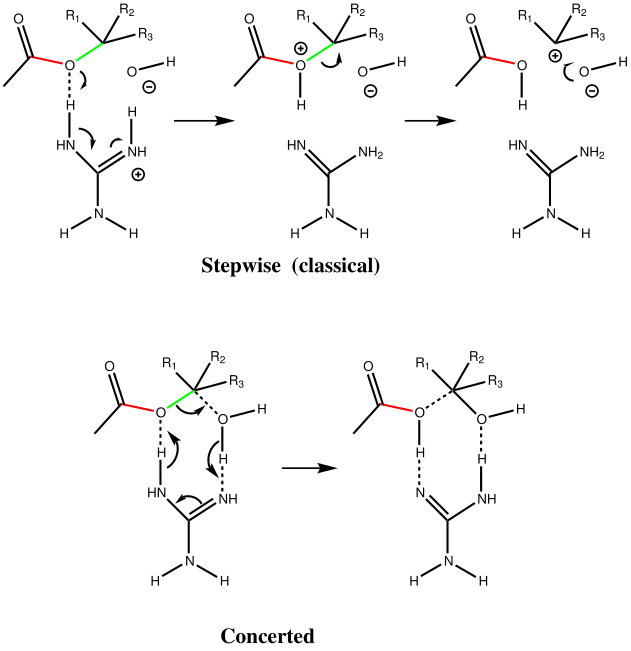
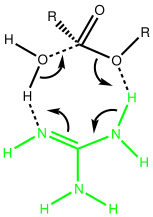
    My previous dissection of the mechanism for ester hydrolysis dealt with the acyl-oxygen cleavage route (red bond). There is a much rarer[cite]10.1039/jr9550001522[/cite] alternative: alkyl-oxygen cleavage (green bond) which I now place under the microscope.

    alkyl-ester

    Here, guanidine is used as a general acid/base, which results in a reasonable activation barrier for the hydrolysis (using pure water as the catalyst led to high barriers). What I will call the classical stepwise route is shown above, with charge-separated structures in abundance (particularly at the allyl group, where the possibility of forming a carbocation at this centre is central to the mechanism). My philosophy here is to allow quantum mechanics to decide whether to separate charge or not (in effect, only it is allowed decisions about where electrons are). So one can start with a concerted mechanism in which no formal charges are separated, and by subjecting them to wB97XD/6-311G(d,p)/SCRF=water calculation, decide where and if charges develop.

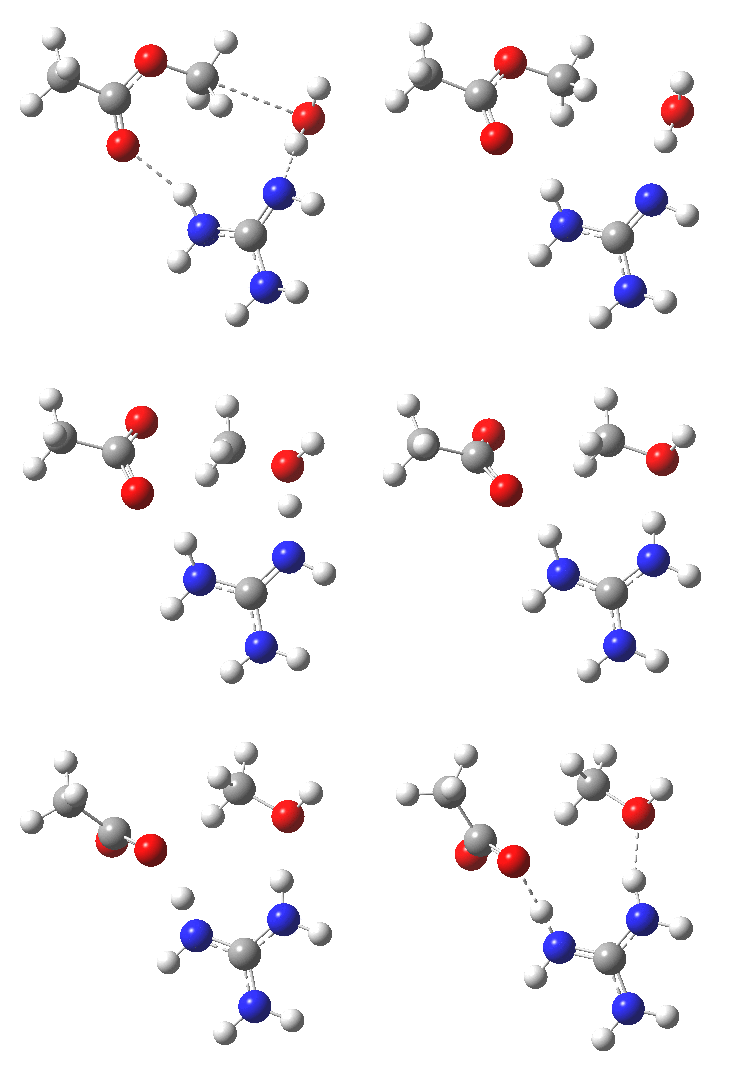
    There are two distinct possibilities; hydrolysis with either retention or inversion of configuration at the alkyl group. The results for the transition states are shown below, with the analogous energy for acyl-oxygen cleavage shown for comparison.

    Relative energies for hydrolysis of Alkyl acetate
    R Acyl-oxygen Alkyl O,inversion Alkyl-O,retention
    all H 0.0 15.3 42.5
    Me 0.0 16.6 35.0
    Me,Me 0.0 16.3 18.2
    Me,Me,Me 0.0 16.4 (14.4)  ?

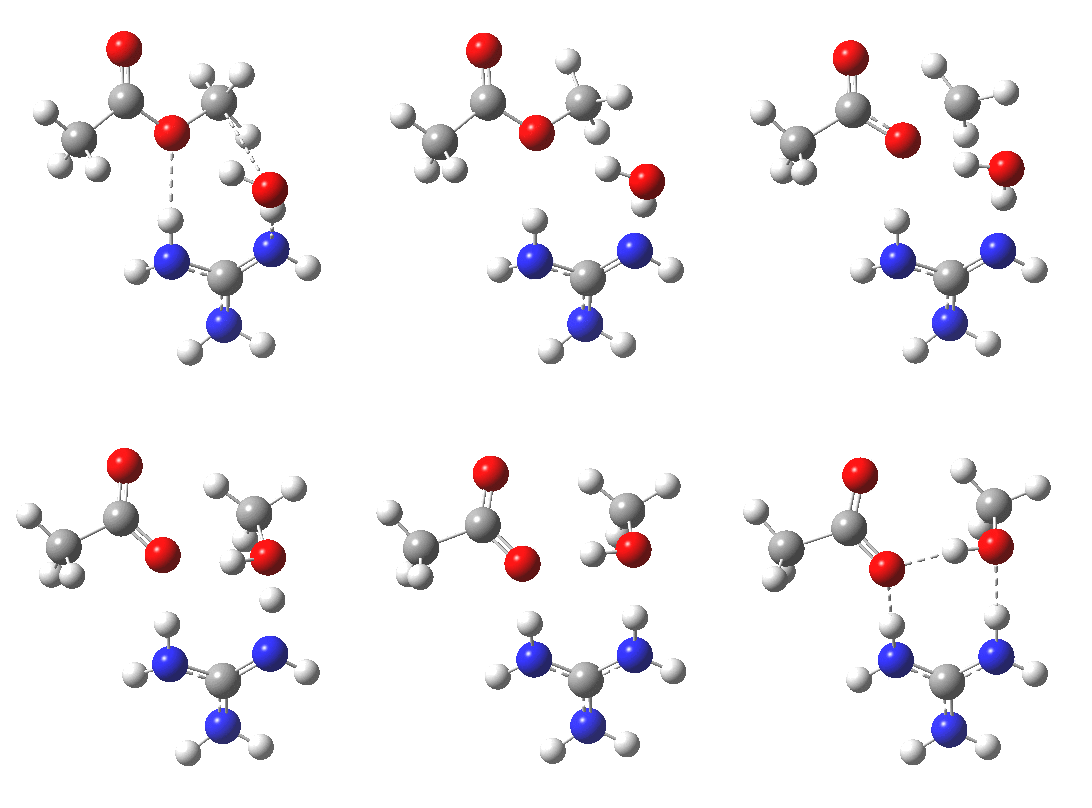
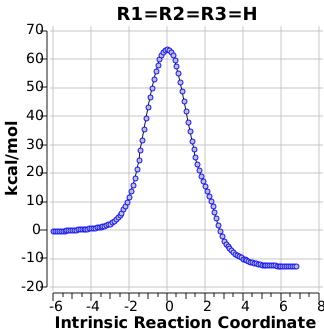
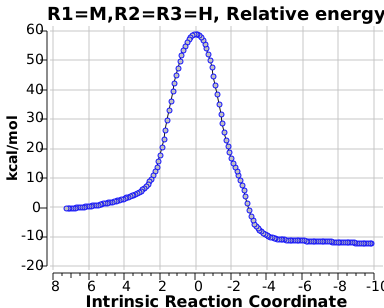
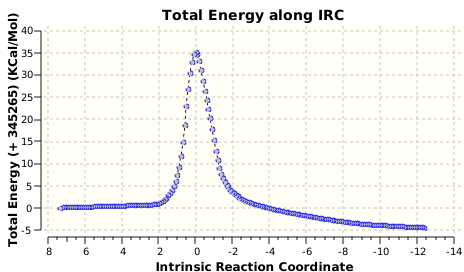
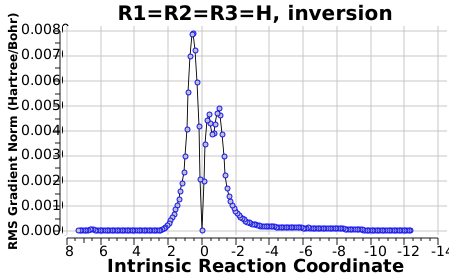
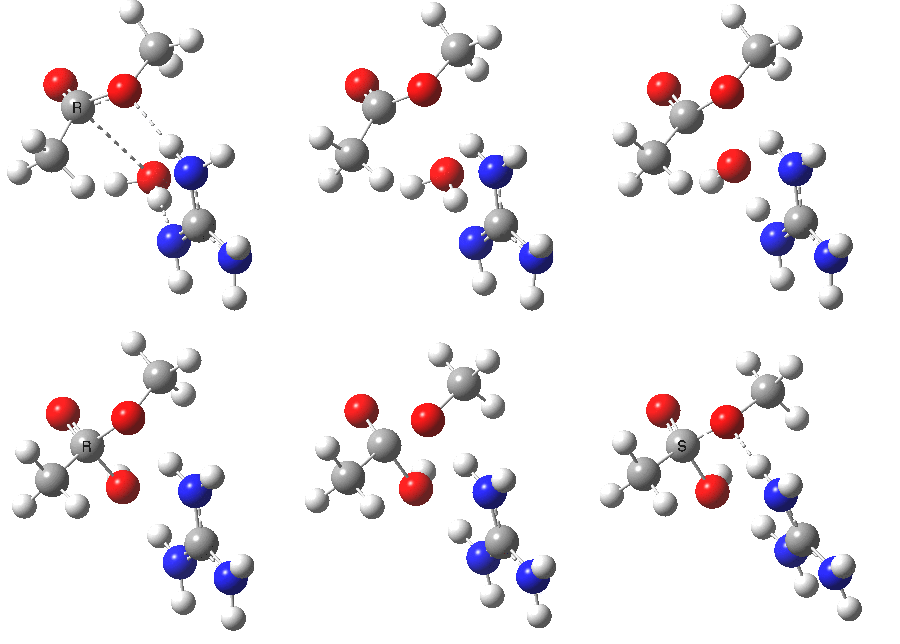
    For R1=R2=R3=H and R1=Me,R2=R3=H proceeding with retention of configuration. The IRCs are as below, which reveal a “hidden intermediate” feature (visible as a dip in the gradient norm), which corresponds to a charge-separated zwitterionic intermediate immediately preceding the proton transfer. In other words, the non-charge-separated cyclic/concerted mechanism shown above is “interrupted” by charge separation in a hidden way during, and in an explicit way at the final stage, preferring finally to form the ionic ion-pair rather than neutral acetic acid and guanidine.

    alkylg[cite]10.6084/m9.figshare.663603[/cite] alkylg
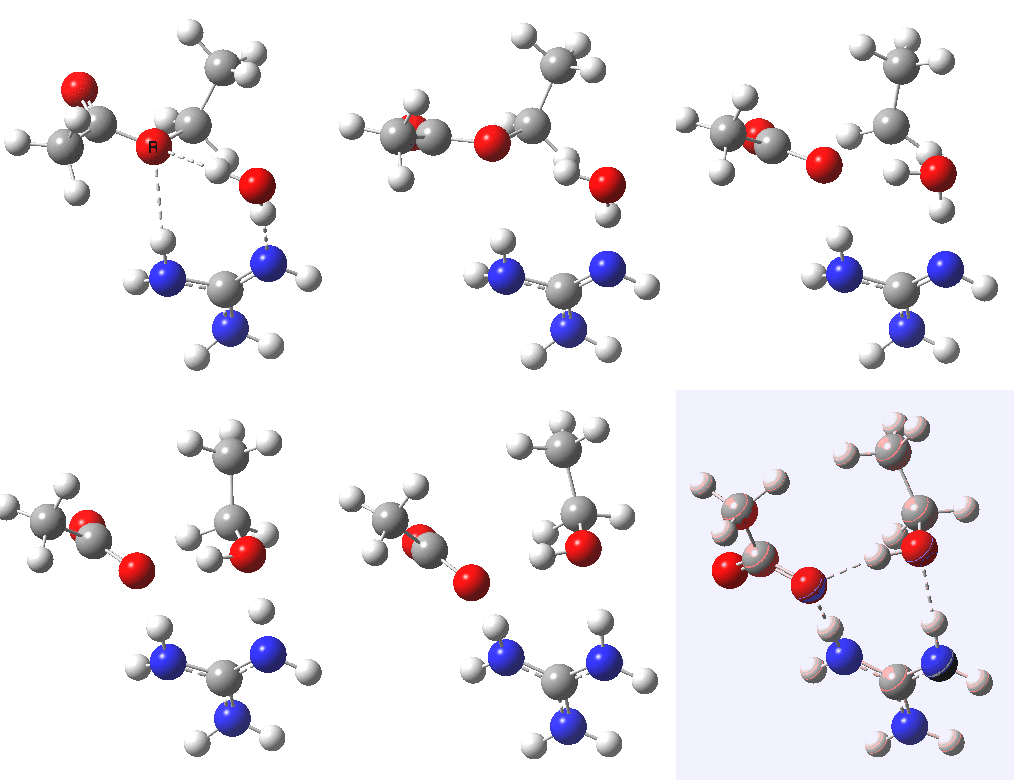
    alkylMe[cite]10.6084/m9.figshare.663619[/cite] alkylMe
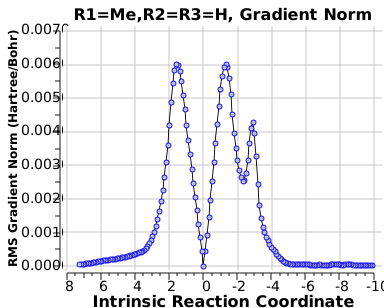
    alkylMeG

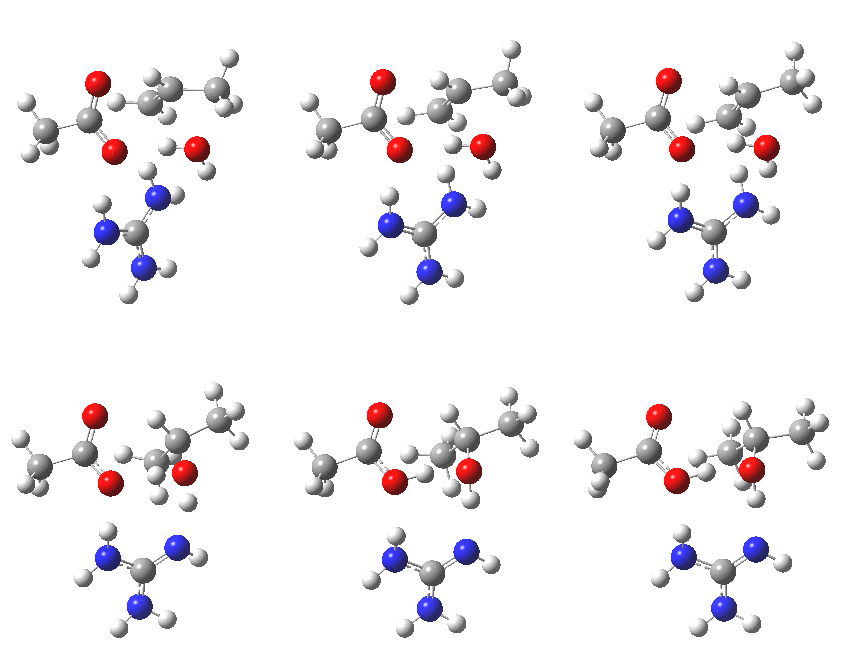
    For R1=R2=Me, R3=H, we have a change. The C-O bond lengths at the solvolysing methyl increase as the substitution at this carbon increases, e.g. 2.2Å (R=H) → 2.4Å (R1=Me) as the transition state becomes more carbocation like. With increasing carbocationic character, the acidity of the adjacent C-H group increases, until with R1=R2=Me, R3=H it has become acidic enough to be abstracted by any close-by base (in this instance, guanidine). Experimentally, the aqueous hydrolysis of t-butyl acetate is known to proceed with alkyl-oxygen cleavage[cite]10.1039/jr9550001522[/cite]. In the computational model, the solvolysis mechanism has been intercepted by an elimination mechanism: the two potential surfaces under these circumstances are very close and they merge to ensure a different outcome of the reaction. You can see this effect below;

    alkylG-Me2
    Click for 3D.

    The reaction barrier also drops as the degree of substitution at the migrating carbon increases. At time of writing, no TS had been located for R1=R2=R3 (? in table above) but as you can see the trend could easily take it below the energy for acyl oxygen hydrolysis.

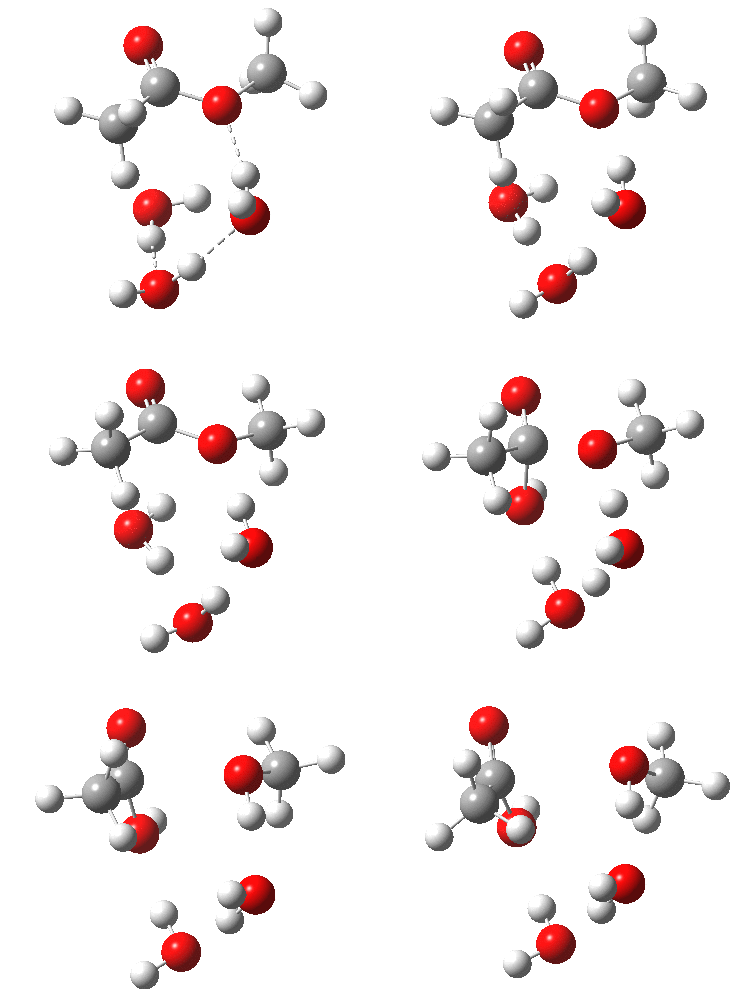
    A much lower energy route however is apparently available for the alkyl-oxygen solvolysis route. For R1=R2=R3=H, it proceeds much more favourably with inversion of configuration, an intramolecular Sn2 solvolysis in fact.

    alkylg-inva alkylg-inva
    alkylg-invg

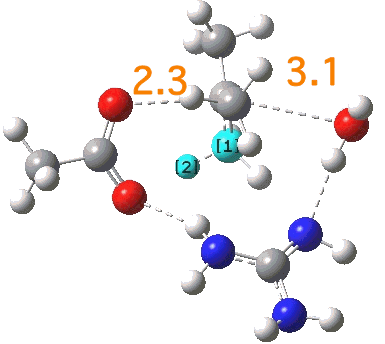
    That for R1=R2=R3 shows a qualitative difference, in resembling the mechanism for Sn1 solvolysis of t-butyl chloride in water. In this case the bond O-C bond labelled 2.3 is cleaving, whilst the C-O bond labelled 3.1 has not yet started to form; an apparently classical Sn1 solvolysis. But take a look at the two atoms labelled [1] and [2]; this C-H bond is also set up to be abstracted by an adjacent base (the carboxylate), and indeed an IRC shows the formation of butene (not solvolysis) to be the final outcome. 

    Click for 3D.
    Click for 3D.

    Unlike the mechanism involving retention of configuration, the barrier for the inversion route does not change much as the substitution at the carbon increases, remaining above the acyl-oxygen solvolysis for even the t-butyl ester (R1=R2=R3=Me). 

    To summarise what we might have learnt. Firstly, the mechanism of the apparently simple hydrolysis of alkyl esters of ethanoic (acetic) acid suddenly got much more complicated. It might seem that solvolysis of the O-alkyl bond can proceed with either inversion or retention of configuration at the alkyl carbon; if the latter then the barrier seems to decrease as the stabilisation of the carbocation at this carbon increases. But for both retention and inversion, the mechanistic pathway can easily be subverted by a different reaction involving the formation of an alkene.

    One starts to suspect that the model I am using here to study this reaction may be either the wrong kind, or certainly incomplete. In the absence of any explicit water (merely a continuum model acting on its behalf), it seems more basic molecules bound in by hydrogen bonds (guanidine or carboxylate) can take over by acting as bases and abstracting hydrogens from a H-C bond adjacent to the carbocationic centre. In order to redirect the mechanism onto the solvolysis pathway, one probably needs to have a few more explicit water molecules hanging around (so to speak) so as to quickly intercept the forming carbocation, before it can release its proton to the base. In other words, one needs to set up a more statistical model, in which the probability of the desired outcome is in part determined by the probability of having a favourable molecule adjacent to the reacting centre. Who would have thought such a basic prototype for organic chemistry could be so tricky to pin down in a computational model! 

  • A sideways look at the mechanism of ester hydrolysis.

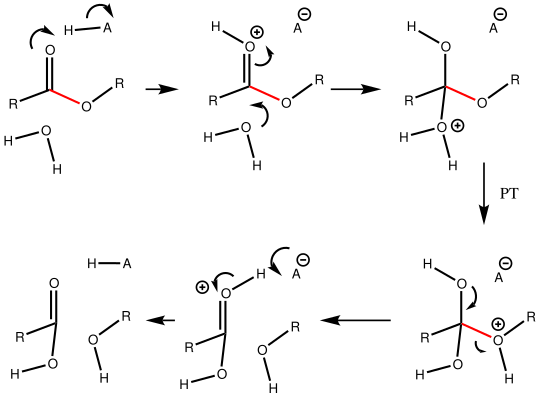
    The mechanism of ester hydrolysis is a staple of examination questions in organic chemistry. To get a good grade, one might have to reproduce something like the below. Here, I subject that answer to a reality check.

    actyl

    In this scheme, HA is a general acid, R=Me, and the net result is to break what is called the acyl-oxygen bond (red). The mechanism is actually incomplete, since the label PT designates a proton-transfer (the mechanism for which is left somewhat undefined). Additionally, a lot of charges come and go and five steps or so are involved. So a student might be tempted to “fast-track” the whole process. Below I show two such fast-tracks (I prefer to say simplifications):

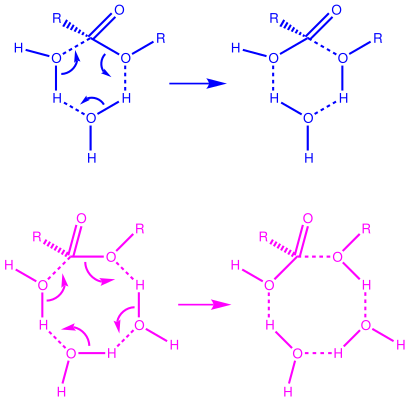
    acetyl-ester1

    In the blue mechanism, the role of HA is actually played by one water molecule, and a second water is assisting the PT step (a far more thorough analysis of the mechanism can be found in this reference[cite]10.1139/V09-011[/cite]). The reaction is bimolecular in ester and the HA (=water in this case). The third water would make it a termolecular reaction overall, but if the reaction takes place in water itself than [H2O] would be constant. It would correspond to what the text books call AAC2 since we consider one molecule as an acid HA. But, one could look at it differently and consider the second water as a nucleophile generated by concurrent deprotonation (by the first water). This would make it a BAC2 type. It turns out that if one makes the mechanism cyclic, the AAC2 and BAC2 annihilate each other in effect to create a single (peri)cyclic mechanism (which has no well known name, but might be referred to as the co-operative pathway). Such a mechanism can be extended using a third water molecule (magenta diagram); I will come to the reason for including that presently.

    Why would one want to even consider such mechanisms? Because, if you look carefully, you will see no charges! Charge separation (= large dipole moment) takes energy. It is normally thought that this energy is more than compensated for by additional solvation (a process which is implicit rather than explicitly shown in text-book diagrams). But if you do not generate charge separation, you might not need that solvation energy. I will turn to quantum mechanics to try to decide what might be viable (I hesitate to use the term “going on”). 

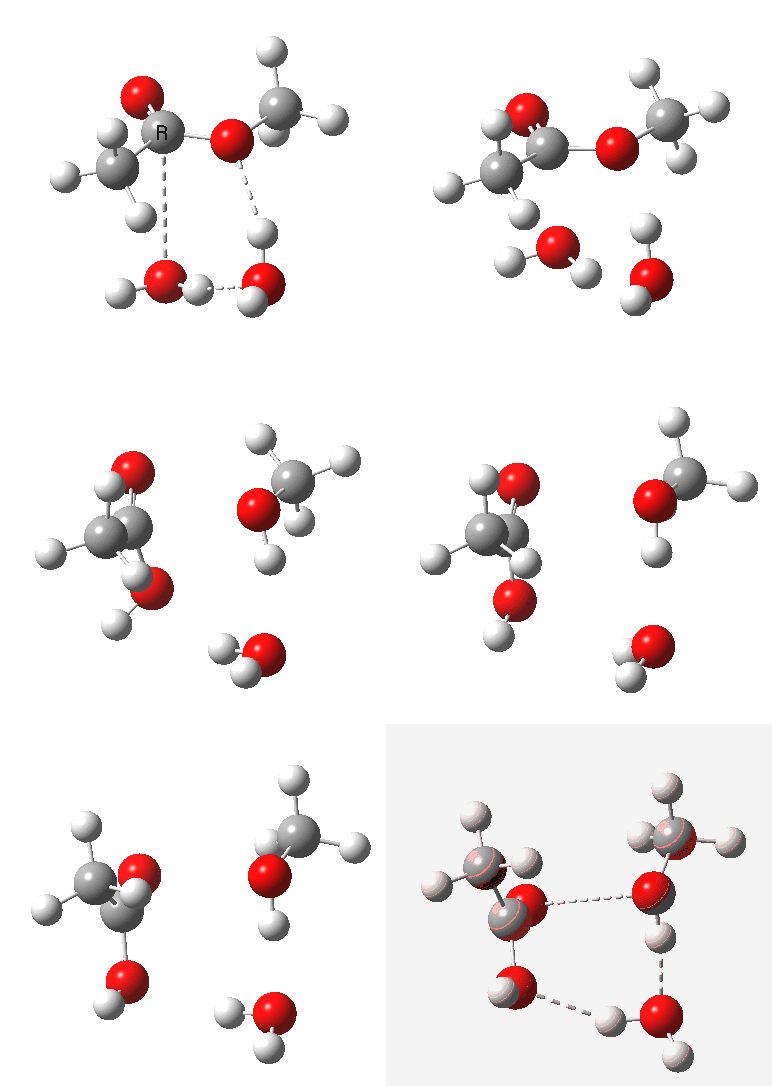
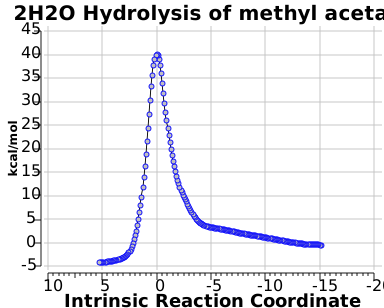
    A ωB97XD/6-311G(d,p)/SCRF=water model (in which solvation is approximately included as a continuum model) calculation yields the following for the blue mechanism.

    acyl-ester[cite]10.6084/m9.figshare.661351[/cite] acyl-ester
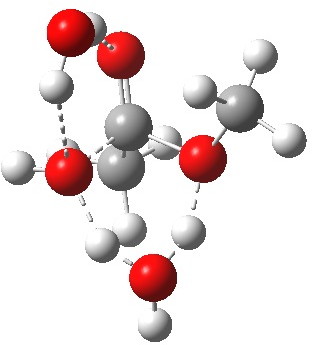
    1. Points to note are that it is concerted, in other words the quantum mechanics tells us that all the bonds CAN make and break in a single concerted process within a single kinetic step.
    2. The mechanism has an uncanny resemblance to the nucleophilic aromatic substitution I reported a couple of posts ago! It resembles an Sn2 displacement at an sp2 centre. Such juxtaposition of these two mechanisms is also not found in text-books. Recollect that with such aromatic substitution, it was possible to get both cncerted and stepwise mechanisms, depending on the substituents. Perhaps the same might be possible here?
    3. However, the energy barrier for the process with the substituents shown above (~45 kcal/mol) is rather too high (the experimental value is estimated as >22 kcal/mol[cite]10.1139/V09-011[/cite]). There may be at least three reasons for this;
      • (a) a better solvation model would be needed to lower the energy,
      • (b) the angles subtended at the transferring protons are strained (they optimally should be linear) and
      • (c) water is a very poor general acid (or base)!

    But as an answer in an examination, would the blue mechanism actually be wrong? You will have to ask the instructor setting the question how they might respond to that, although these authors[cite]10.1139/V09-011[/cite] certainly conclude that such a concerted mechanism is the more “correct”, at least for hydrolysis in water without added acid or base.

    Point  (b) above can be addressed by adding another water molecule, as per the magenta mechanism so as to enlarge the ring and reduce the angular strain. But before I present the results, I need to “normalise” the system by ALSO adding one (solvating) water molecule to the blue route, as below, so that we can directly compare the energies of the blue and magenta pathways.

    Click for  3D.
    Click for 3D.

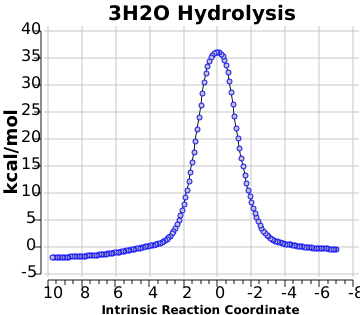
    The result is a larger ring where the angular strain is clearly reduced. There is an entropic penalty for introducing that third water molecule, but despite this the free energy comes out 5.5 kcal/mol lower, and the activation barrier is also lower (~37 kcal/mol, still rather higher than experiment). It has been reported that incorporation of a 4th water molecule further improves matters[cite]10.1139/V09-011[/cite].

    acetyl3H2Oa[cite]10.6084/m9.figshare.661789[/cite]  acetyl3H2Oa
    We can also address both points (b) and (c) above by replacing HA=H2O by HA=guanidiniumH+ (green), a better general acid. This polar modification introduces the ability for the system to better sustain charge separations, and indeed the initial product is now an ion pair tetrahedral intermediate (methoxide anion and guanidinium cation) carrying a dipole moment of 14.5D, an increase over the value for the transition state with three waters, 9.7D. The barrier (~21 kcal/mol) has gone in the opposite direction, decreasing significantly compared to the water catalysed reaction. The tetrahedral intermediate sits in an energy well of ~4 kcal/mol.

    acetyl-ester2

    acet-g[cite]10.6084/m9.figshare.661791[/cite] acet-g
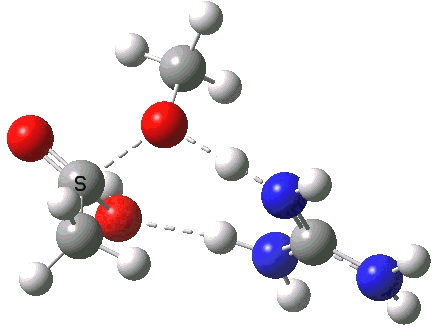
    A second transition state exiting the tetrahedral intermediate has a free energy barrier[cite]10.6084/m9.figshare.661799[/cite] about 2.5 kcal/ol lower than the one entering it.

    Click for  3D.
    Click for 3D.

    What might we have learnt? That ester hydrolysis using pure water could proceed through a cyclic and concerted transition state, involving three (or perhaps more) water molecules passing a proton baton along the chain, and in the process avoiding any large build up of charge separation. Replace two of these waters with say guanidine as a general acid/conjugate base capable of conjugatively stabilising charge-separated species and the mechanism changes to a stepwise reaction involving a dipolar tetrahedral intermediate sitting in a relatively shallow energy well.

    Not possibly a picture that we might expect a student sitting an introductory examination in organic chemistry to reflect in its entirety, but also one that perhaps the text-books might start to hint at? Or: at some stage, armed  merely with a “smart watch-cum-supercomputer”, a student taking such an exam might respond by performing the calculations described here as their submitted answer? Well, not for a year or two perhaps. But it has to be said that everything you see in this post was performed over less than two days of elapsed time, so these “reality checks” are not that time-consuming. Whether you choose to believe them or not of course is another matter.

  • Concerted vs stepwise (Meisenheimer) mechanisms for aromatic nucleophilic substitution.

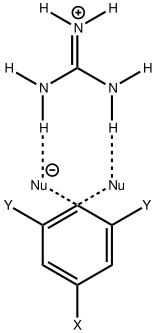
    My two previous explorations of aromatic substitutions have involved an electrophile (NO+ or Li+). Time now to look at a nucleophile, representing nucleophilic aromatic substitution. The mechanism of this is thought to pass through an intermediate analogous to the Wheland for an electrophile, this time known as the Meisenheimer complex[cite]10.1002/jlac.19023230205[/cite]. I ask the same question as before; are there any circumstances under which the mechanism could instead be concerted, by-passing this intermediate?

    meis

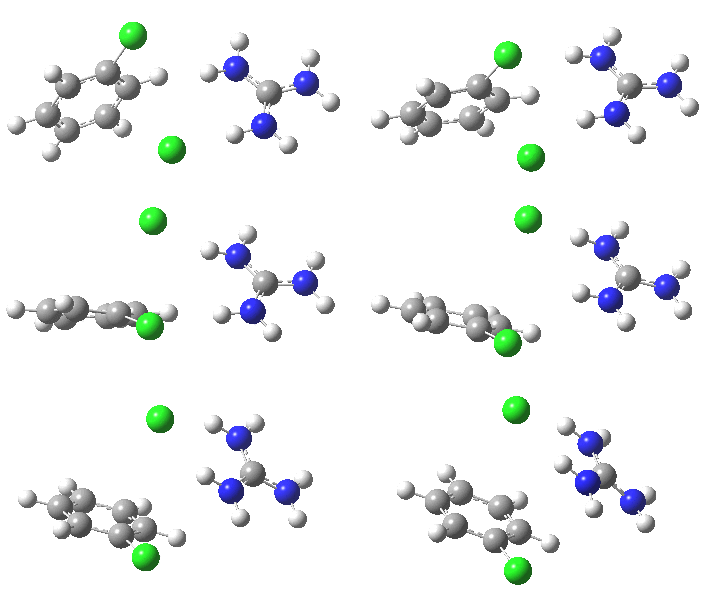
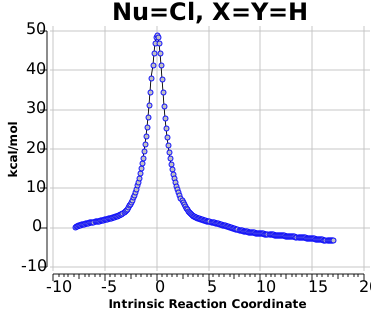
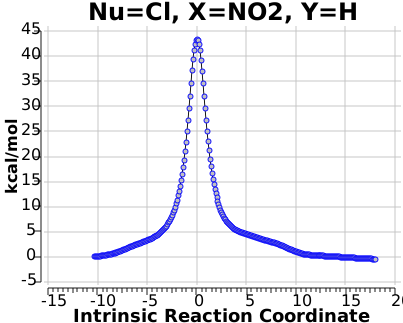
    To start, I will adopt Nu = Cl(-), X=Y=H, and as the positive counter-ion I will use the guanidinium cation. As usual, wB97XD/6-311G(d,p) with a continuum water model applied. A transition state is located at the half way stage[cite]10.6084/m9.figshare.658805[/cite], indicating no intermediate Meisenheimer! It represents in effect a direct Sn2 substitution at an aromatic sp2 carbon. The barrier for this (unactivated) substitution is very high (an imaginary νi 507 cm-1 for the asymmetric Cl-C-Cl stretch confirms it as a transition state).

    meis[cite]10.6084/m9.figshare.658893[/cite] meis
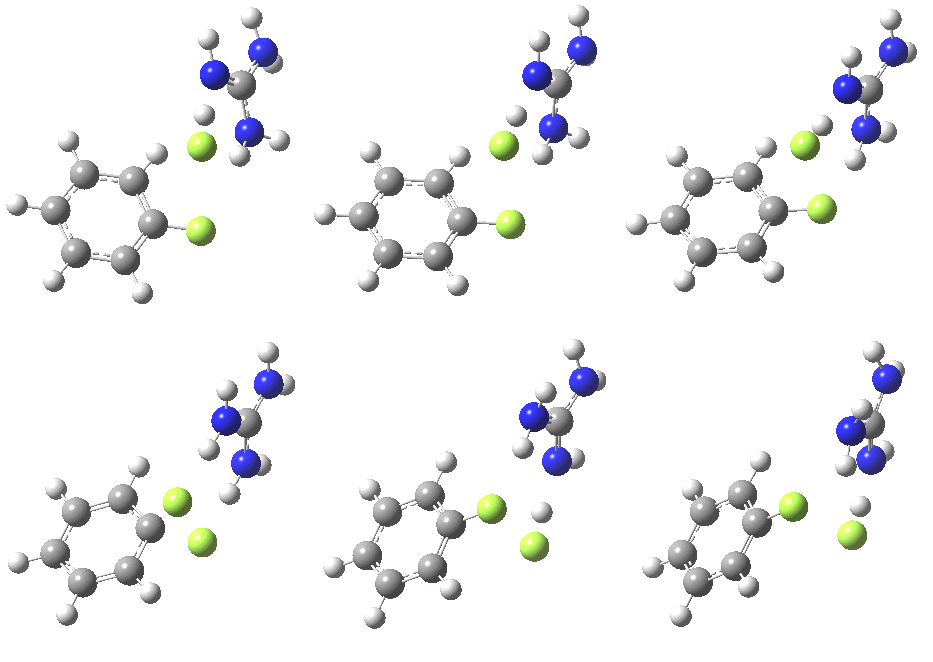
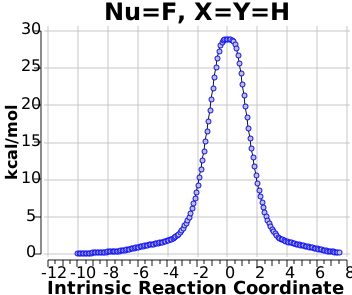
    With Nu=F(-), the barrier decreases significantly[cite]10.6084/m9.figshare.658831[/cite] and the curvature of the potential at the transition state becomes much broader (νi 130 cm-1), a prelude perhaps to the mechanism transitioning from being concerted to a stepwise manifestation involving a discrete intermediate.

    meisf[cite]10.6084/m9.figshare.658890[/cite] meisf
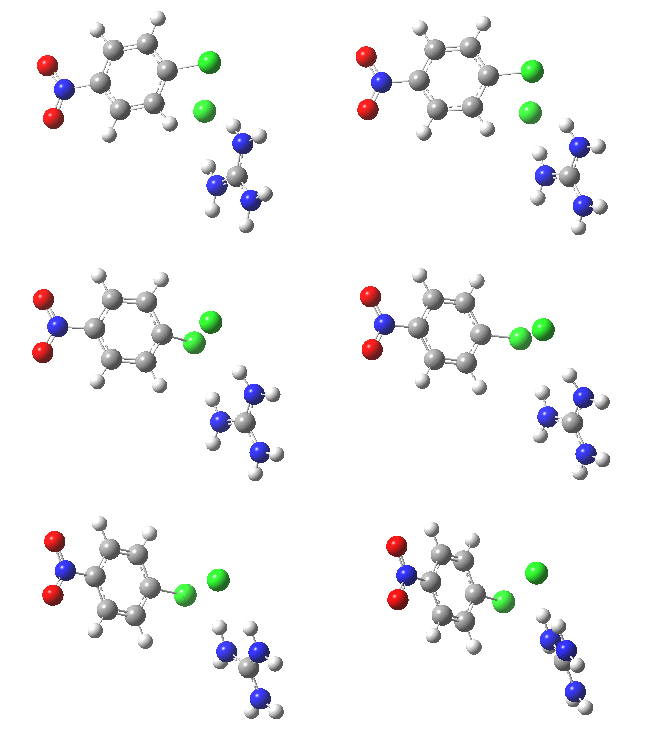
    With X=p-NO2, Nu = Cl(-), a similar trend is seen[cite]10.6084/m9.figshare.658806[/cite] with a barrier that is both lower and wider (νi 355 cm-1); the o-NO2 isomer continues that trend (νi 333 cm-1)[cite]10.6084/m9.figshare.658891[/cite]

    meisno2[cite]10.6084/m9.figshare.658910[/cite] meisno2
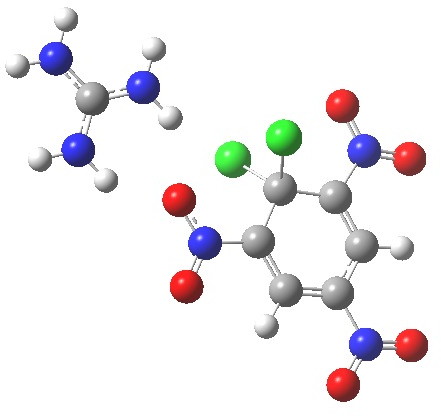
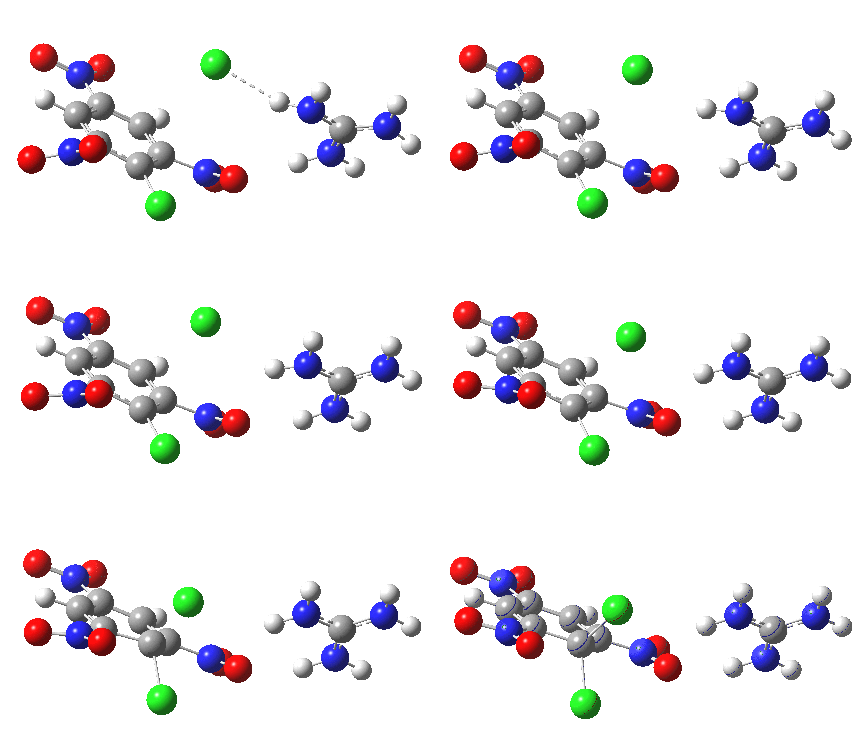
    Finally with X=Y=NO2, Nu = Cl(-), a proper Meisenheimer intermediate is now located; the asymmetric Cl-C-Cl stretch is no longer imaginary but real (ν 385 cm-1)[cite]10.6084/m9.figshare.658897[/cite]. This is closely related to a known crystal structure (Nu=OEt with Cs replacing the guanidinium cation)[cite]10.1107/S0567740868004322[/cite].

    Click for  3D.
    Click to view asymmetric Cl-C-Cl stretch.

    So we see here a mechanism which can be finely tuned by the substituents to exhibit either concerted mechanistic behaviour, or armed with groups that stabilise an intermediate ion-pair, to transition to a fully stepwise reaction.

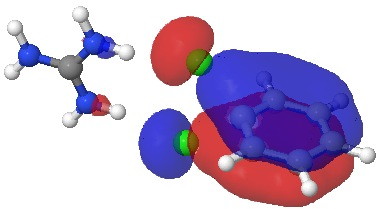
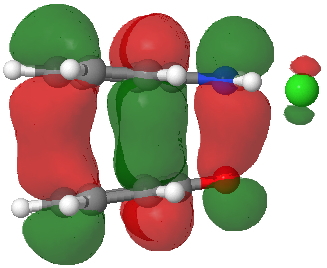
    There is one other aspect I want to explore. In the Meisenheimer intermediate, the cyclic conjugation and hence the aromaticity of the original aryl ring is (at least partially) interrupted. But what of the concerted transition state; must it too loose the original aromaticity? In the structure diagram drawn at the top of this post, I hinted it might not! A NICS(0) probe place at the QTAIM-determined centroid of the aryl ring (X=Y=H, Nu=Cl) indicates a value of -9.0[cite]10.6084/m9.figshare.658903[/cite] (benzene itself is about -10 ppm), indicating relatively little cyclic conjugation is actually lost in the transition state. The nature of the molecular orbital confirms this. Shown below is the most stable of the three aromatic π-MOs, again resembling that of benzene very closely and the two C-Cl partially formed bonds participate fully in this conjugation. So we might call this strongly hyper-conjugated aromaticity.

    Click for  3D
    Click for 3D

    So I end by restating that this classical text-book mechanism, in which aromatic nucleophilic substitution is shown as proceeding through a Meisenheimer intermediate (the analogue of the electrophilic Wheland intermediate) may in fact only be true of aryl groups substituted with electron withdrawing groups. Without these, the mechanism converts to a concerted type, albeit with a much higher reaction barrier, possibly high enough that no actual examples of this type actually occur in reality. But it again reinforces that mechanisms may not always be what the text-books tell us.


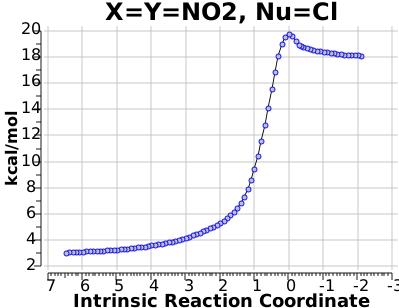
    Postscript: I append here the IRC for X=Y=NO2, Nu = Cl(-), which as  I noted above has become a stepwise reaction:

    meis-trinitro[cite]10.6084/m9.figshare.659274[/cite] meis-trinitro
  • Lithiation of heteroaromatic rings: analogy to electrophilic substitution?

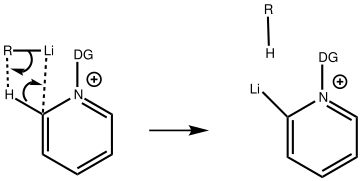
    Functionalisation of a (hetero)aromatic ring by selectively (directedly) removing protons using the metal lithium is a relative mechanistic newcomer, compared to the pantheon of knowledge on aromatic electrophilic substitution. Investigating the mechanism using quantum calculations poses some interesting challenges, ones I have not previously discussed on this blog.

    Li

    My model will be the system above, based on the pyridine ring, and also carrying a directing group (R=Me, DG = O). The reagent used to remove the hydrogen and to substitute it (with a carbon-metal bond) is an alkyl lithium. The arrow pushing I have shown is speculative, since at this stage we have no idea if it really is such a pericyclic process. Indeed things are about to get complicated when we find out that the structure of the electron deficient lithium alkyls is much more complex than one might imagine.

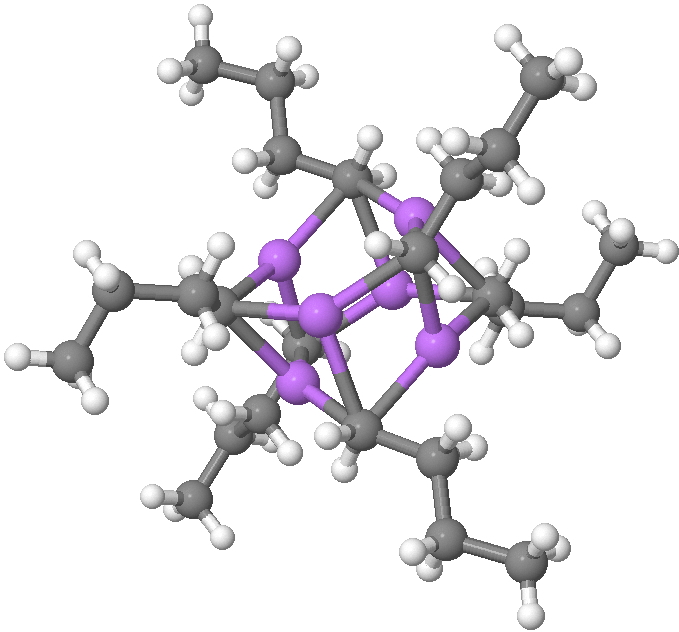
    Fortunately, crystal structures are available. Let me start with n-butyl lithium, a very commonly used reagent[cite]10.1002/anie.199305801[/cite]. This forms a complex cluster of six lithiums, in which each metal is surrounded by three CH2 terminii of the n-butyl anion, and vice-versa, each  CH2 group is in contact with three lithium atoms (making the carbanionic carbon in effect hexa-coordinate).

    SUHBEC. CLICK FOR 3D.
    SUHBEC. CLICK FOR 3D.

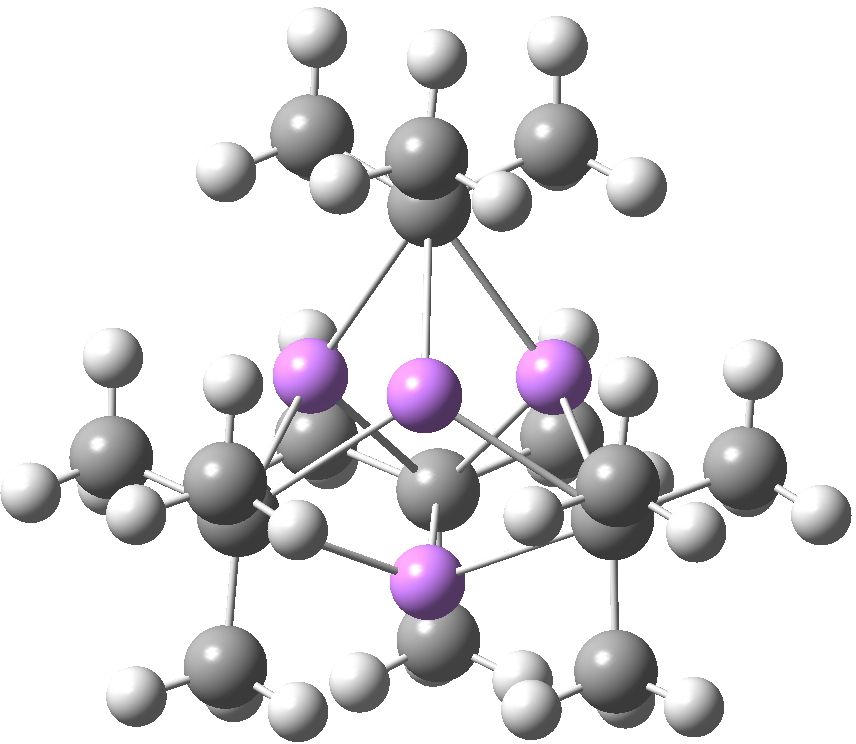
    Another frequently used lithium alkyl is the t-butyl derivative, which has a different tetrameric motif, again with each Me3C coordinated to three Li atoms (making this carbon again hexa-coordinate).

    SUHBIG. Click for 3D.
    SUHBIG. Click for 3D.

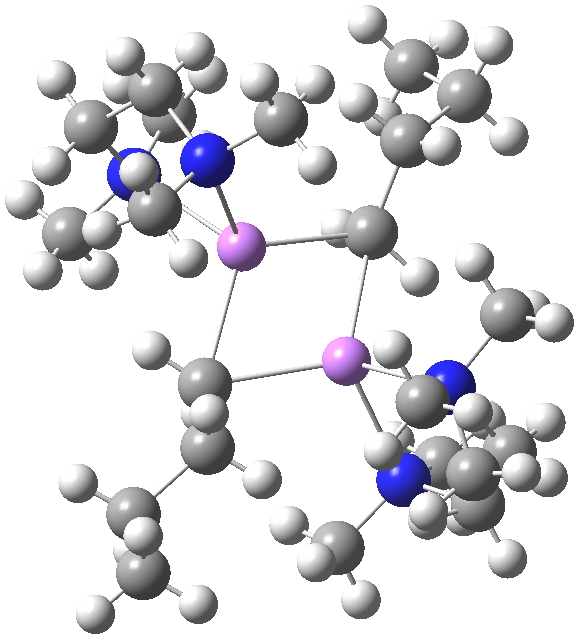
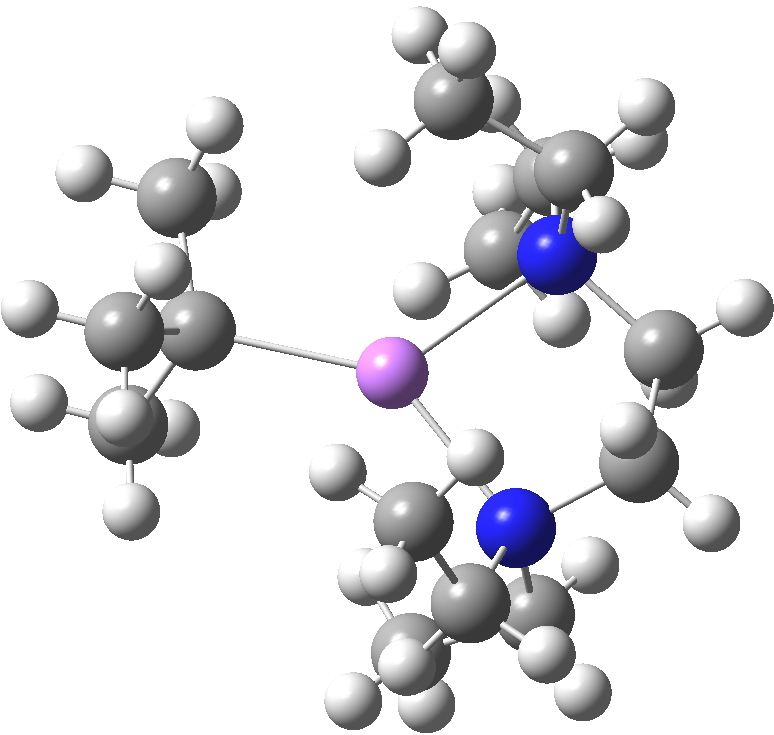
    The interesting issue now is whether these metal alkyls react in these oligomeric forms or whether they are in equilibrium with a reduced monomeric form that constitutes the reactive species. With n-butyl lithium, it is possible to try to achieve this chemically by adding tetramethylethylenediamine. As you can see from the structure below, this strategy can be only partially successful; in this instance the  CH2  coordination is reduced from three Li atoms to two[cite]10.1021/ja00057a050[/cite]. With t-butyl lithium, this strategy reduces the structure to a true monomer[cite]10.1021/ja8058205[/cite], the Me3C now being just 4-coordinate.

    WAFJAO. Click for 3D.
    WAFJAO. Click for 3D.
    LOKTAH. Click for 3D.
    LOKTAH. Click for 3D.

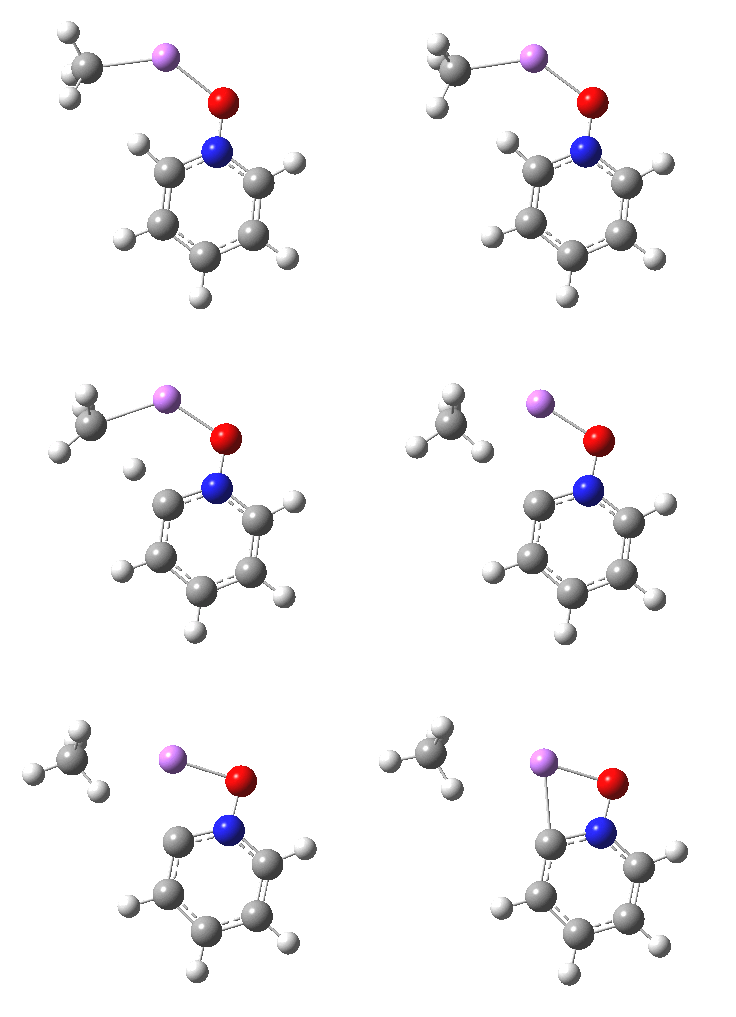
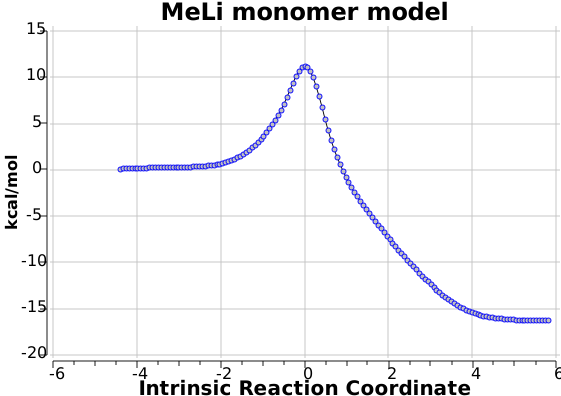
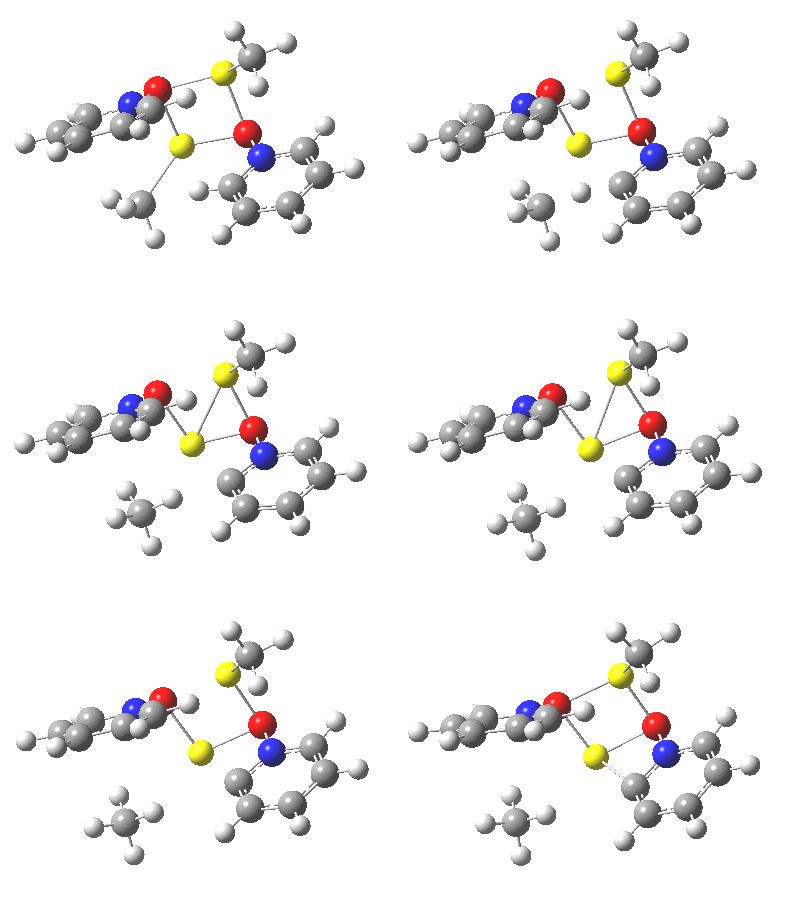
    These systems are all pretty large to investigate using modelling, and so I will start the process by reducing the alkyl lithium model down to just a monomeric CH3Li molecule, placing it and pyridine-N-oxide into a continuum solvent cavity (ωB97XD/6-311G(d,p)/SCRF=benzene) and seeing what happens[cite]10.6084/m9.figshare.651068[/cite]. You can see it is both facile and a concerted process, corresponding pretty much to the arrow pushing illustrated at the top of this post.

    Li1a  Li1a

    But wait, where have we seen an aromatic substitution reaction which does exactly this in a single concerted step, first remove a proton and then replace it with an electrophile? This was in fact revealed in the IRC for electrophilic substitution of indole in the 1-position! Of course, there is a difference. With indole, we had pseudo-inversion at the nitrogen centre (a pseudo-Sn2 reaction if you will), whereas here it is pseudo-retention at the 2-carbon.

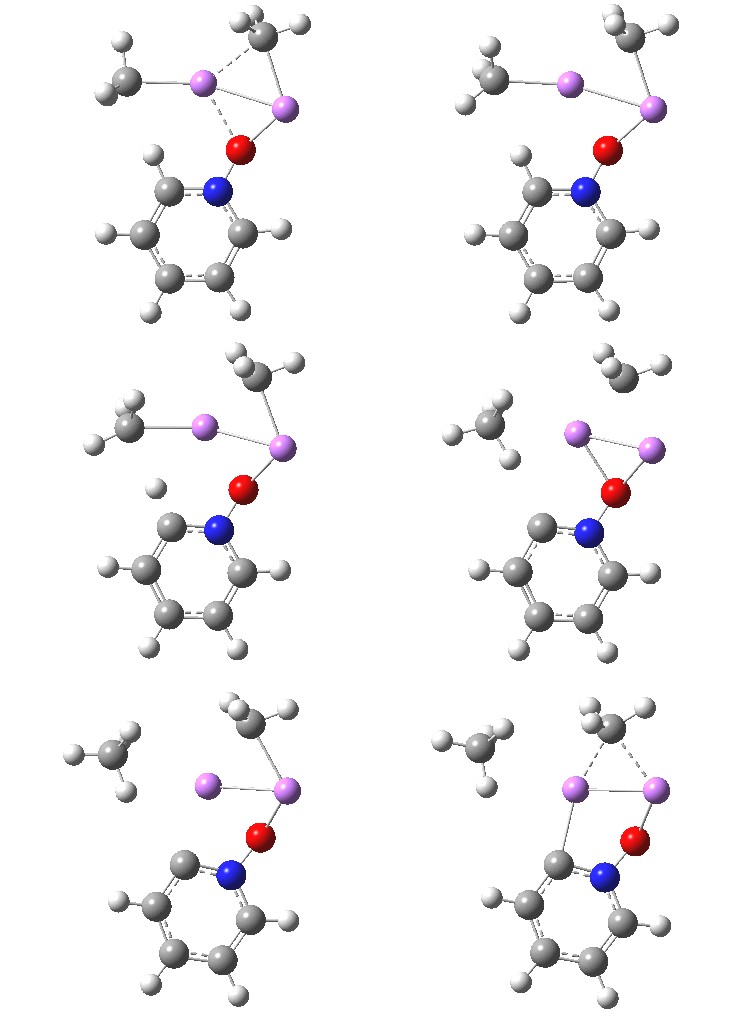
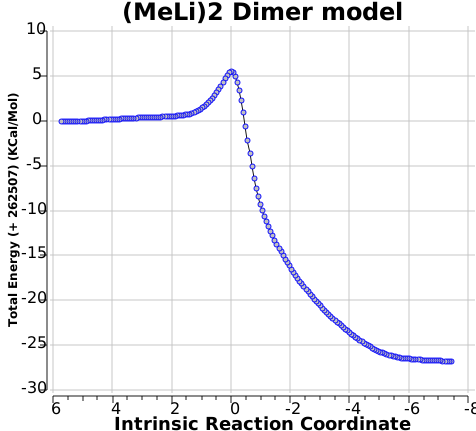
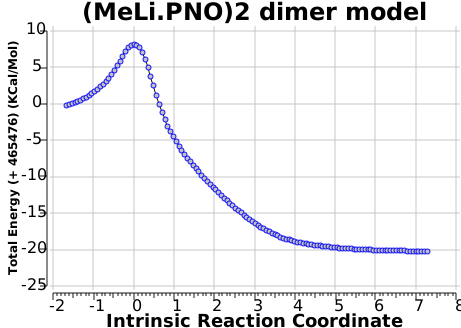
    Is this model robust? Let us try a dimeric (MeLi)2 model coordinated to one pyridine-N-oxide. The IRC[cite]10.6084/m9.figshare.651764[/cite] is very similar, but the initial barrier to proton transfer is lower.
    Li2 Li2

    Next, we have a model in which two molecules of pyridine-N-oxide (PNO) aggregate around two molecules of MeLi. This model is starting to resemble the tetramethylethylenediamine partially de-aggregated n-butyl lithium structure shown as WAFJAO above. The basic features[cite]http://doi.org/10042/24399[/cite] of the process remain intact, including the small barrier.
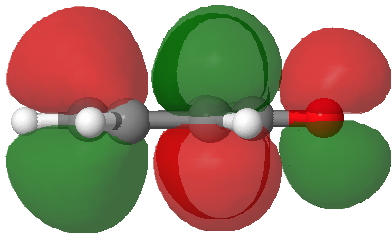
    Li2d Li2d

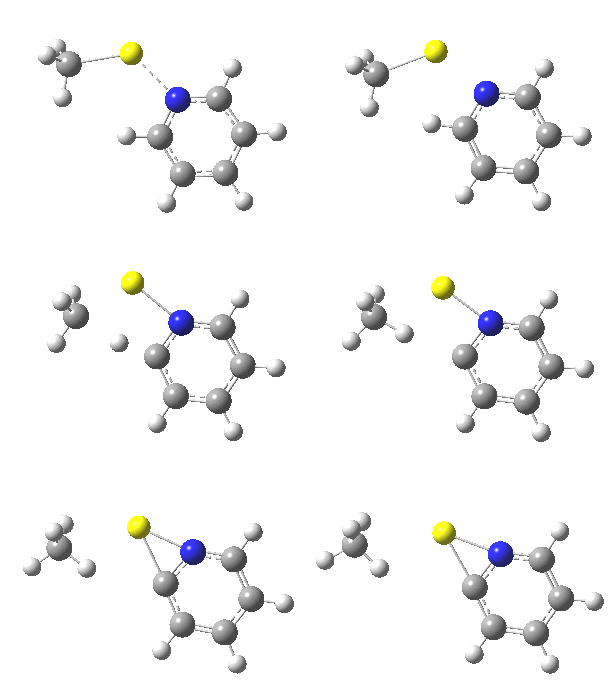
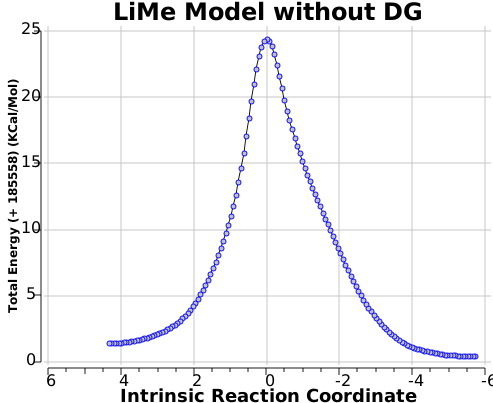
    Finally, I go back to the simple model, but with the directing group (DG) removed to give just pyridine. The profile[cite]10.6084/m9.figshare.653672[/cite] is the same, but the barrier is much larger. So perhaps both aggregation and coordination to a directing group help accelerate the reaction?
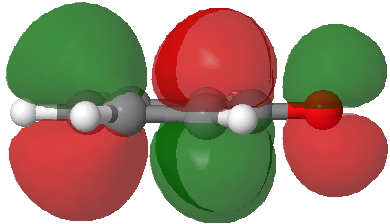
    Li0a Li0a

    So two reaction types, not normally associated with each other, turn out to have some intriguing similarities and an interesting difference.

  • Kinetic vs Thermodynamic control. Subversive thoughts for electrophilic substitution of Indole.

    I mentioned in the last post that one can try to predict the outcome of electrophilic aromatic substitution by approximating the properties of the transition state from those of either the reactant or the (presumed Wheland) intermediate by invoking Hammond’s postulate[cite]10.1021/ja01607a027[/cite]. A third option is readily available nowadays; calculate the transition state directly. Here are the results of exploring this third variation.

    indole

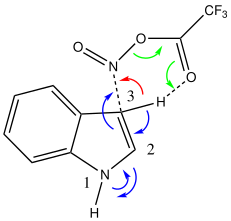
    I am going to use the model shown above, which is actually the relatively unusual electrophile nitrosium trifluoracetate. My reasons for this strange selection are:

    1. I prefer the complete model, with counter-ion. In this instance, we leave open the option of whether the reagent reacts via an ion-pair or whether it involves a concerted process involving covalency at any stage for the O=N…O bond.
    2. To make this model more realistic, we are going to add a continuum solvent field (dichloromethane) to allow any (partial) ion-pair character to develop.
    3. The acetate counter-ion is also retained in order to allow the proton removal to occur, either concurrently with the formation of a C-N bond or (pre- or post) successively with it.
    4. This combination does allow for a properly characterised transition state to be located and an intrinsic reaction coordinate can then be used to probe for the nature of the pathway.
    5. This model is then applied to three positions around the pyrrole ring, including the nitrogen itself (position 1). The known outcome of course is that the electrophile substitutes in the 3-position.

    The mechanism can either be a more conventional stepwise nucleophilic/electrophilic push-pull (blue + green arrows) or it has the potential of avoiding the formation of any (Wheland) intermediate by instead being a concerted (red + green arrows) process. We will leave the detailed timing of these arrows to the quantum mechanics to settle. The results (ωB97XD/6-311G(d,p)/SCRF=dichloromethane) are as follows (relative energies in kcal/mol).

    Substitution at the nitrogen (1-position) is the clear winner in terms of the free energy of activation (ΔG, kinetic control) but the clear looser in terms of the free energy of reaction (thermodynamic control).

    Position Transition state Product
    1 -4.93 10.62
    2 1.96 4.86
    3 0.0 0.0

    Time to take a detailed look at the three transition states located and their intrinsic reaction coordinates.

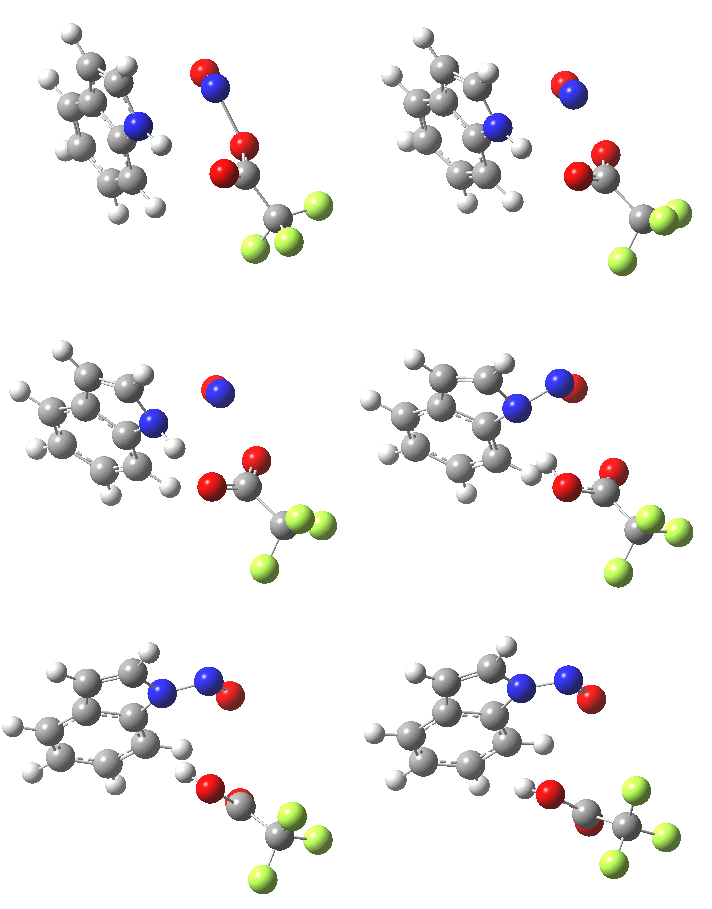
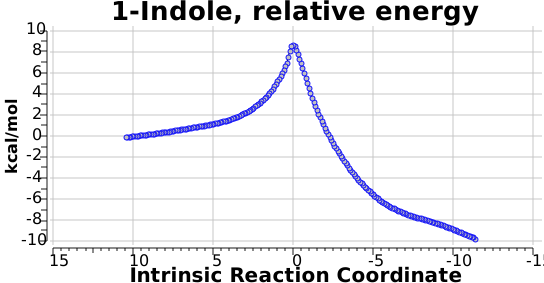
    1. The IRC profile for the N-reaction is a nice example of a concerted reaction (the equivalent red + green arrows above) in which the trifluoracetate firstly heterolyses off the nitrosonium cation to form an ion-pair, and then as a basic anion, it abstracts the relatively acidic N-H proton. Only then does the N-NO bond fully form to quench the ion-pair. The overall barrier to this process is only ~9 kcal/mol. This detailed choreography is certainly not a variation I have ever seen described in any text-book!
      indole1 indole1
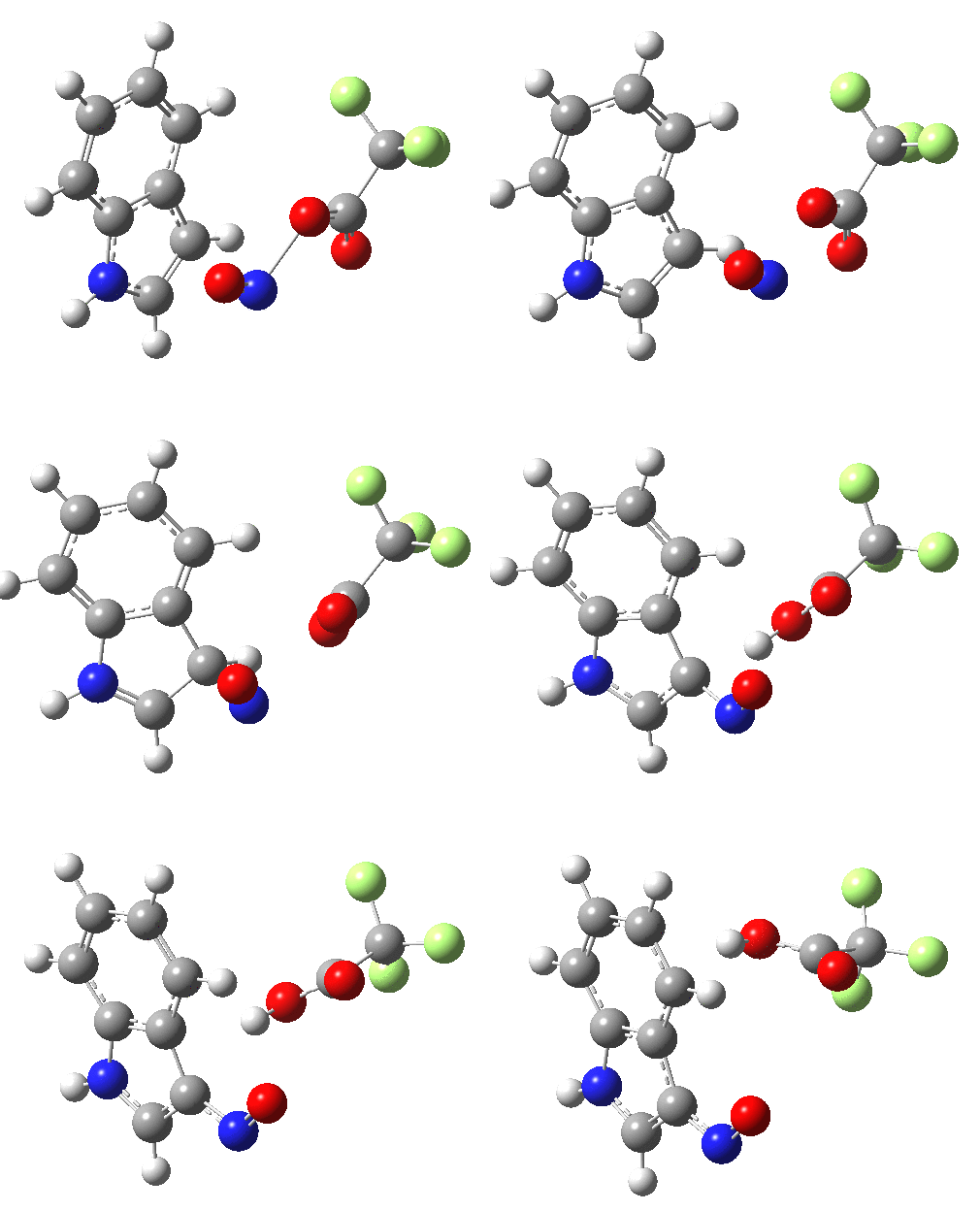
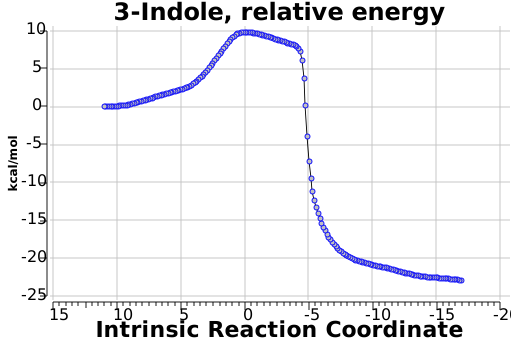
    2. In contrast, the IRC for substitution at the 3-position reverses the order of C-N formation and C-H removal, the latter now happening at the end (IRC ~ -5) rather than at the start. As before, the process is however still concerted, with no formation of an actual Wheland intermediate at any stage. This makes the Hammond-based prediction of the transition state properties by extrapolating those of such a presumed intermediate rather tenuous if the intermediate in question actually has no existence on the potential energy surface!
      Indole3a Indole3b
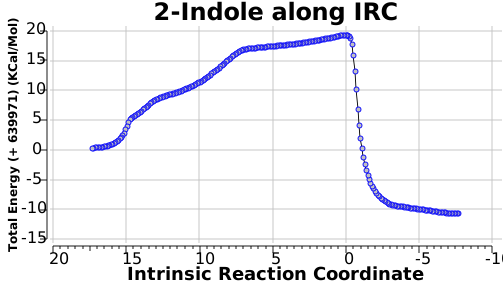
    3. Yet another surprise in store for reaction at the 2-position. Although the transition state itself has the form expected and the IRC leads down from this TS to the expected 2-substituted product, the trifluoracetate counter-ion adopts a different role by being enticed away from a cyclic geometry to instead form a strong hydrogen bond to the N-H proton. This means that the start point is no longer the covalent nitrosyltrifluoroacetate, but instead an ion-pair involving an actual Wheland intermediate at the 3-position! So the existence or otherwise of this intermediate very much depends on where the counter-ion is. I would again remind that this counter-ion rarely has much of a role (if any) to play in text-book analyses of this reaction. And now the reaction becomes one involving a migration of the NO group from the 3-Wheland intermediate to the 2-position, followed by proton-removal from that position. The barrier (~15 kcal/mol) is however higher than the others, and so this variant pathway is not actually observed.
      indole2 indole2

    The actual outcome (3-position) emerges as the clear thermodynamic winner, but 1-substitution as the (reversible?) kinetic preference. This does raise one intriguing question: might electrophilic substitution of indole in the 3-position actually arise from this initial kinetically controlled 1-substitution followed by some form of rearrangement to the most stable thermodynamic 3-product? I have not identified such a route, which may well be mediated by the position of the trifluoracetate component (and the nature of the solvent and its ability to stabilize ion-pairs).

    I am however encouraged that this exploration of transition states has if nothing else introduced some new ideas. I do worry that much organic chemistry continues to be taught against the “text-book” interpretations, and we do need to identify conduits for new ideas to ensure that the core of organic chemistry continues to be vibrant.


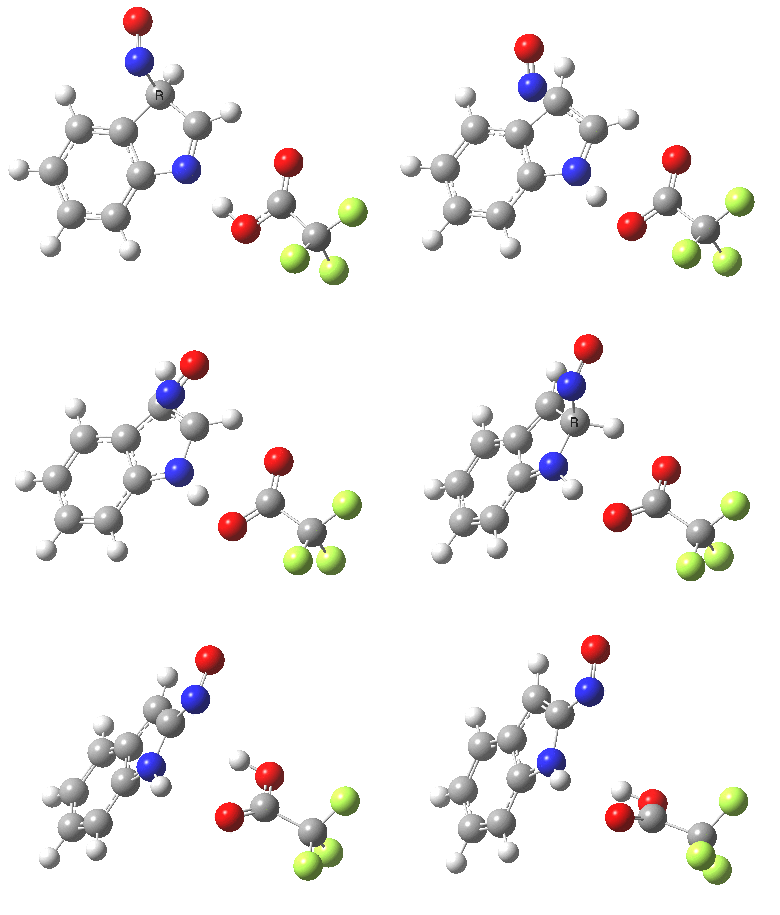
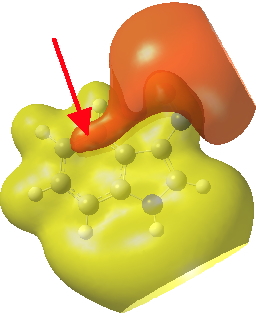
    Postscript: If you inspect the tail end of the  IRC for the  3-indole substitution, you will see the formation of trifluoroacetic acid by proton abstraction from the  3-position. This tail involves a gradual drifting of this acid (IRC ~-10 to -18) to take up a new position over the 4-carbon of the indole by the formation of a π-facial bond. This more or less coincides with the shape of the molecular electrostatic potential of the product in that region (below). 

    Click for  3D.
    Click for 3D.

    ‡ A concerted process for aromatic electrophilic substitution of benzene by the nitrosonium cation has been reported[cite]10.1021/ja021152s[/cite], but here the proton transfer occurs AFTER the C-N=O bond is formed.

  • Understanding the electrophilic aromatic substitution of indole.

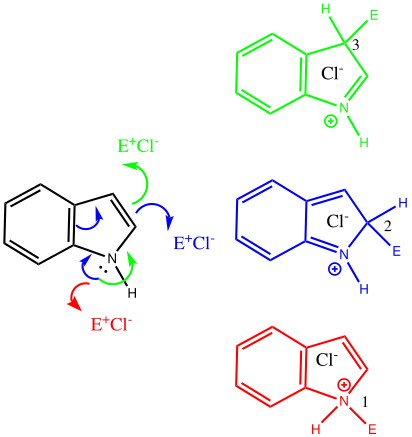
    The electrophilic substitution of indoles is a staple of any course on organic chemistry. Indoles also hold a soft-spot for me, since I synthesized not a few as part of my Ph.D. studies.[cite]10.1039/P29750001209[/cite],[cite]10.1039/P29770000281[/cite] The preference for substitution in the 3-position is normally explained using the arrows shown below (position 3=green,2=blue,1=red). Here I explore how these arrows might be interpreted in terms of various quantum mechanical properties.
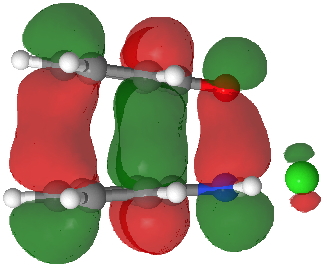
    indole

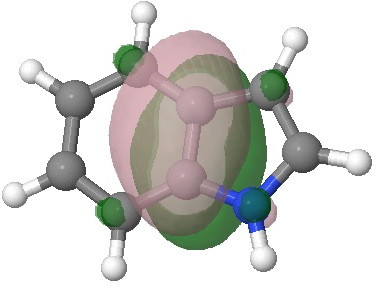
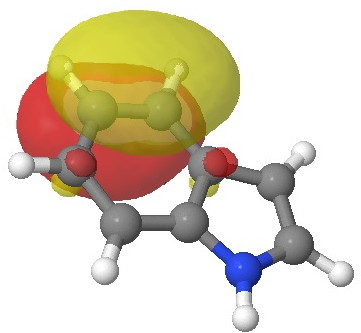
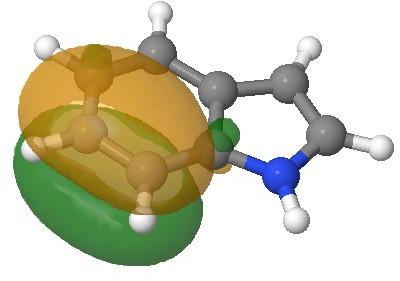
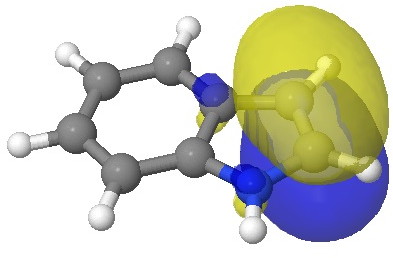
    I have elsewhere in these posts shown how NBO (natural bond orbitals) can often be used to probe donor-acceptor interactions in molecules. Can it be applied to indole (as donor) interacting with an electrophile (as acceptor) in order to predict where the most nucleophilic centre is? The law is that the pair of such filled/empty orbitals with the lowest energy gap will predict the reactivity. Since the electrophile E is common, we might presume that the NBO donor orbital with the highest energy is the relevant predictor. Well, this emerges as the NBO describing the 8,9 bond; it is not any of those shown above! The next NBO in energy is also located on the benzo group. Only the 3rd-highest NBO corresponds to the red arrows above. In fact the NBO with the least-favourable energy is the one that maps to positions 2 or 3, those normally implicated in the reactions of this molecule. What has gone wrong?

    Click for 3D
    E=-0.2910au.
    Click for 3D
    Click for 3D
    E=-0.3107au.
    Click for 3D
    Click for 3D
    E=-0.3113au.
    Click for 3D
    Click for 3D
    E=-0.3142au.
    Click for 3D
    Click for 3D
    E=-0.3335au.
    Click for 3D

    To start understanding, we must review the assumptions made in the above analysis.

    1. Firstly, we need to distinguish between local and global properties of molecules. A local property is one e.g. associated perhaps with an atom or bond. A global property might be the aromaticity of the system as a whole. The NBO analysis, by definition, tries to localise the wavefunction to one or two centres. This means that it reduces a six-electron aromatic ring to three two-centre bonds. But breaking up an aromatic ring may not be the best way of looking at the problem. In this case, the 2,3 N=C bond emerges as the most stable double bond, largely because the six electrons of the benzo group are delocalised and hence not so stable locally! So too much localisation can throw the baby away with the bath water. So let us try a rather more global property, the molecular electrostatic potential (MEP):
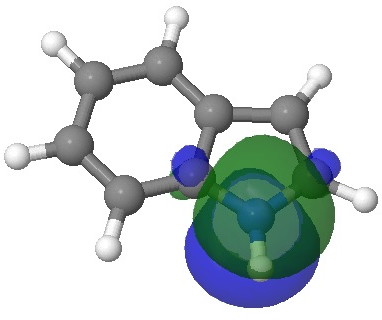
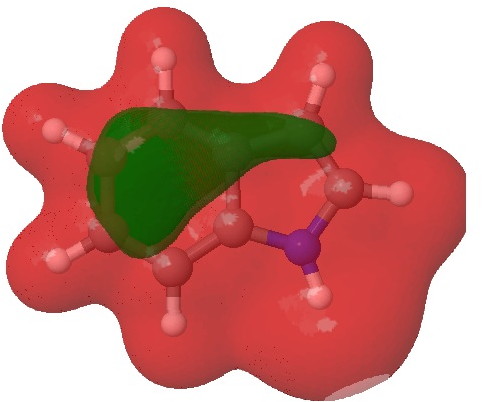
      Molecular electrostatic potential. Click  for 3D.
      Molecular electrostatic potential. Click for 3D.

      This probes the molecule for regions which are the most attractive to a proton (=E+). Perhaps surprisingly, the benzo group still emerges as the most attractive region, but at least there is a small attractive finger (green) that reaches out to the 3-position rather than the 2-position (the “right” answer). It is not entirely convincing though, is it?

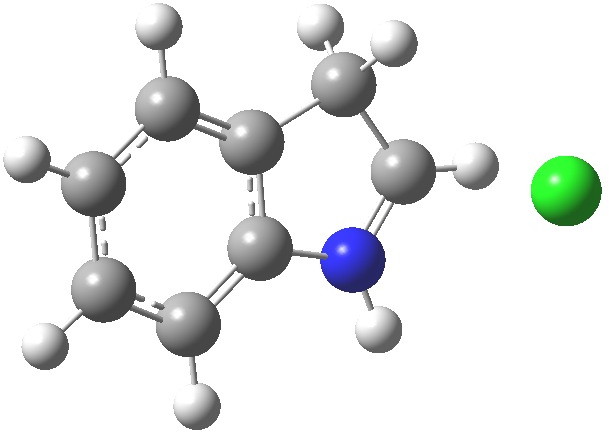
    2. Which leads us on to another assumption, which invokes Hammond’s postulate that the transition state for the reaction will resemble the stable species nearest to it in free energy. What if the transition state (which is what determines the rate of a reaction) more closely resembles the (initial) product of this reaction, the so-called Wheland intermediate rather than indole itself? I am going to calculate this intermediate in a novel manner; as an ion-pair resulting from reaction of indole with HCl in methanol (I have blogged elsewhere that I regard it as lazy to simple add a proton and put +1 as the overall charge of the system). So here are the relative free energies of indole reacted with HCl in respectively the 1,2 and 3 positions: 4.1, 10.0, 0.0 kcal/mol.The relatively high energy of the 2-substituted intermediate reflects its loss of global aromaticity compared to the other two, rather than necessarily any local property. 
      3-Wheland intermediate. Click for  3D.
      3-Wheland intermediate. Click for 3D.

      We might therefore conclude that one should not seek evidence in the wavefunction of indole itself for the preference for green rather than blue or red arrows as shown above, but in a reaction product which best reflects the global properties such as aromaticity.

    3. One could go one stage further and actually locate explicit transition states for the three isomeric reactions, as was done here. I may report back on this in the future.

    I set out these approaches aware that a subject is often taught by reducing it to rules (heuristics) which one then hopes are transferable between different molecules with common local or global features. One does not want to reduce it down merely to numbers computed from a wave equation. But one should also remember that whilst arrow-pushing may be fine for relatively simple systems, it may not be robust towards increasing complexity (i.e. multiple substituents around the ring). At some stage, one will have to take the decision to augment the simple heuristics with computed numbers. Deciding when to do so will be one of the challenges facing the teaching of chemistry over the next decade.

  • The π-complex in the benzidine rearrangement: a molecular orbital analysis.

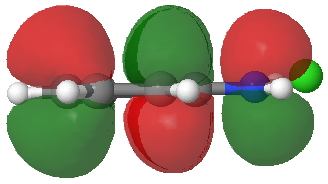
    Michael Dewar[cite]10.1016/S0040-4039(01)82765-9[/cite] famously implicated a so-called π-complex in the benzidine rearrangement, back in the days when quantum mechanical calculations could not yet provide a quantitatively accurate reality check. Because this π-complex actually remains a relatively unusual species to encounter in day-to-day chemistry, I thought I would try to show in a simple way how it forms.
    pi-complex

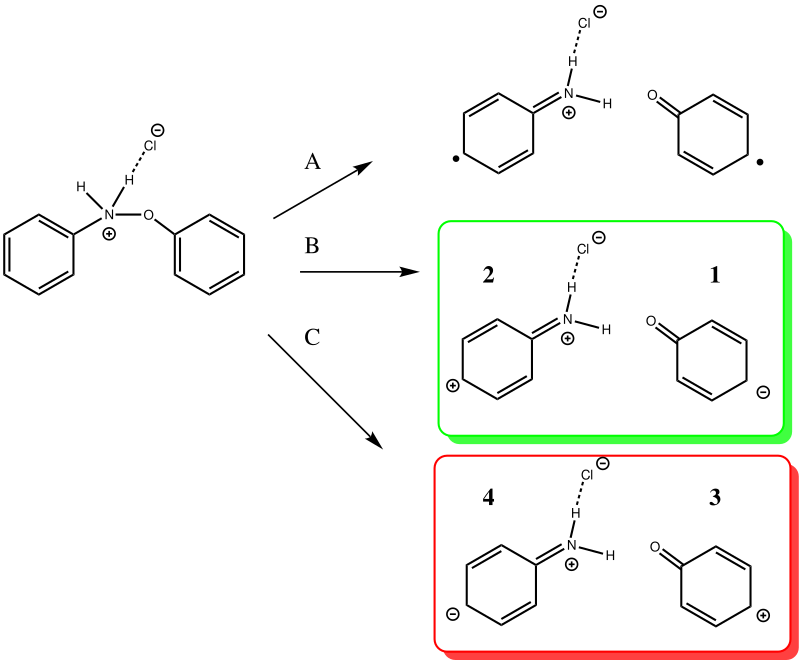
    I am actually illustrating it with the benzidine rearrangement of monoprotonated PhNHOPh, which I dealt with in the previous post, if only because the energy of this π-complex relative to monoprotonated PhNHOPh is amazingly low (in other words, it is not one of these high energy molecules which only exist in the virtual world of computational modelling). The mechanism can be conceptually broken down to considering how the N-O bond can be cleaved in one of three ways. Route A is the homolytic route to give a 4-biradical (in one of the possible resonance forms), which of course can couple to form a 4,4′-biphenyl. Route B is a heterolytic route in which the two electrons from the N-O σ-bond are retained by 1, whilst for route C this electron pair is retained by 4.

    These two fragments can then interact in several ways to form the π-complex.  Here I will illustrate just the two closed shell options (B/C), whilst recognising that there may also be contribution from the open shell biradical (in water as solvent, the two ionic configurations are clearly going to be stabilised by solvation and so may contribute relatively more than the non-polar radical-pair ).

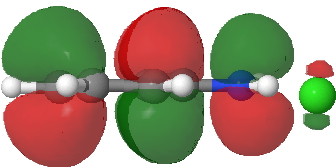
    1. Route B (green), overlapping the HOMO of 1 with the LUMO of 2 to create a new π-MO to be occupied by the two electrons extracted from the N-O σ-bond (a similar promotion of a σ- to a π-pair was noted in this post).
    2. Route C (red), overlapping the HOMO of 4 with the LUMO of 3 to achieve the same result.
    Route B
    HOMO for 5,5 benzidine rearrangement. Click for 3D.
    LUMO of 2. Click for 3D.
    HOMO for 5,5 benzidine rearrangement. Click for 3D.
    HOMO for π-complex. Click for 3D.
    HOMO for π-complex. Click for 3D.
    HOMO of 1. Click for 3D.
    Route C
    HOMO for 5,5 benzidine rearrangement. Click for 3D.
    LUMO of 3. Click for 3D.
    HOMO for 5,5 benzidine rearrangement. Click for 3D.
    HOMO for π-complex. Click for 3D.
    HOMO for π-complex. Click for 3D.
    HOMO of 4. Click for 3D.

    The relative weight of these two combinations is largely determined by the difference in energies between the two HOMO/LUMO pairs and their overlap. ΔE is different for the two combinations, being 0.021 Hartree (route B) and 0.091 (route C), with lower being better.

    The overlap of the HOMO/LUMO (in either orbital combination) is almost perfect for the face-to-face π-stacking of the complex. Note that this π-π-stacked arrangement in effect returns some electrons to the N-O region, in what is now called σ-π conjugation, and which used to be called hyperconjugation (it also resembles the conjugation of a Si-C bond with a phenyl ring in the Wheland intermediate).


    Acknowledgments

    This post has been cross-posted in PDF format at Authorea.

  • Why is N,O-diphenyl hydroxylamine (PhNHOPh) unknown?

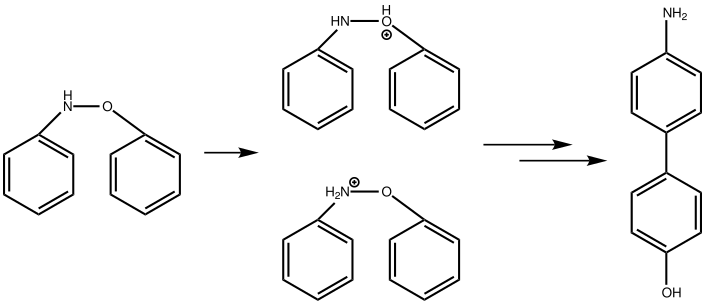
    If you search e.g. Scifinder for N,O-diphenyl hydroxylamine (RN 24928-98-1) there is just one literature citation, to a 1962 patent. Nothing else; not even a calculation (an increasing proportion of the molecules reported in Chemical Abstracts have now only ever been subjected to calculation, not synthesis). A search of Reaxys also offers only one hit[cite]10.1016/S0040-4039(01)90757-9[/cite] reporting one unsuccessful attempt in 1963 to prepare this compound. Again, nothing else. Yet show this structure to most organic chemists, and I venture to suggest few would immediately predict this (unless they are experts on benzidine rearrangements).
    PhNHOPh

    The eagle-eyed reader of this blog may have noticed my noting in previous posts that the benzidine rearrangement proper is normally promoted by double protonation, and that reaction via monoprotonation has a significantly higher barrier. So what are the corresponding predicted reaction barriers for PhNHOPh? I start in fact with catalytic monoprotonation. The calculations are at ωB97XD/6-311G(d,p)/SCRF=water (closed shell) level.

    System N-protonated O-Protonated
    Reactant  0.0  11.3
    TS N-O  7.3  17.4
    π-complex  2.1  6.0
    TS C-C  4.8  13.2
    Relative to N-protonated reactant, in kcal/mol.

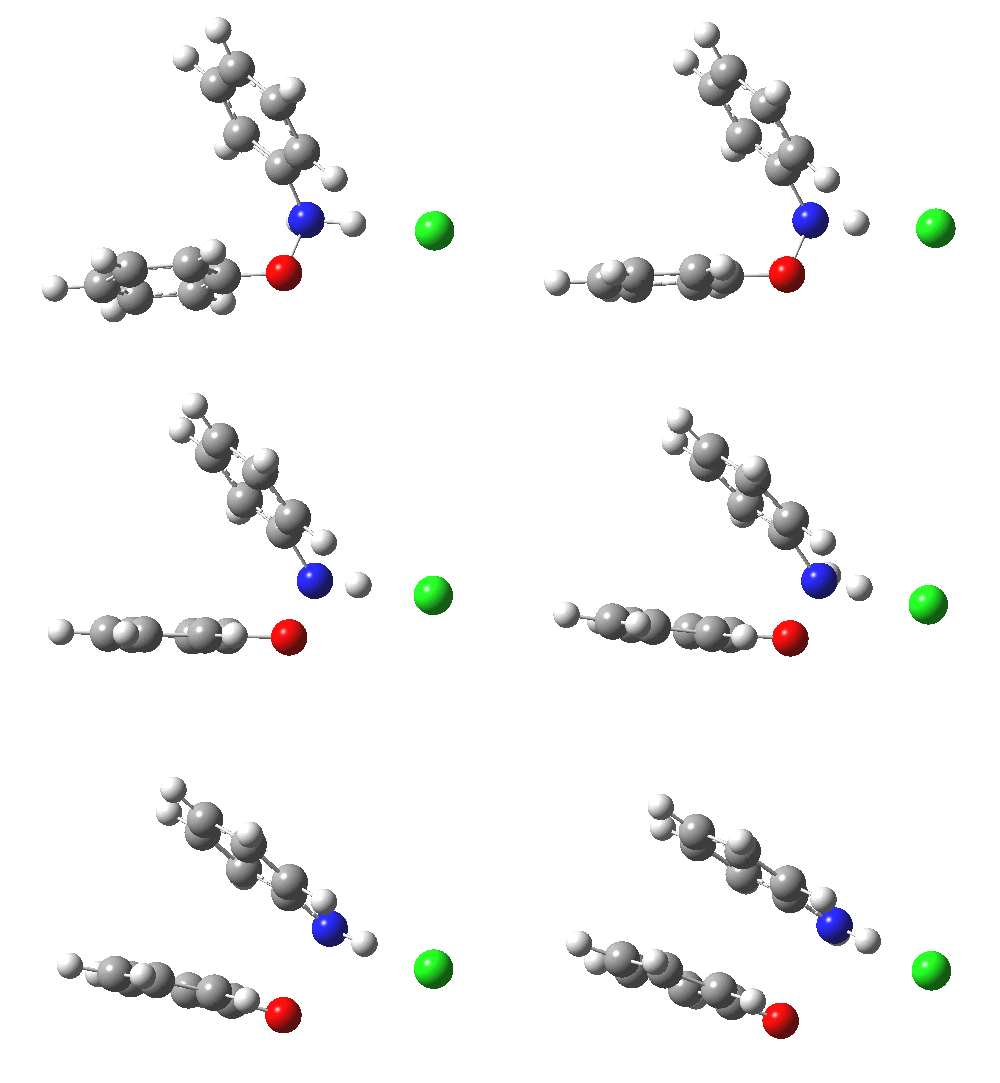
    So it seems that even monoprotonation (on nitrogen) results in a very small ΔG298 barrier to the formation of a π-complex and its subsequent facile breakdown to form a C-C bond. I had noted in the earlier post that Ghigo and co-workers[cite]10.1002/ejoc.201001636[/cite] had found that with diprotonated diphenyl hydrazine, the resulting π-complex has some open shell (biradical) character. The calculations reported here on the monoprotonated system are done as closed shell, but any biradical character this might have will only serve to even further reduce the barriers seen in the table. So we may confidently conclude that even monoprotonated N,O-diphenyl hydroxylamine will rapidly rearrange. A follow-up investigation for the diprotonated route hardly seems necessary!
    But here is a challenge: if one were able to prepare PhNHOPh in thoroughly deprotic conditions, might it be isolable? There is precedent; the keto form of phenol can indeed be isolated under such conditions.[cite]10.1021/ja00951a064[/cite].

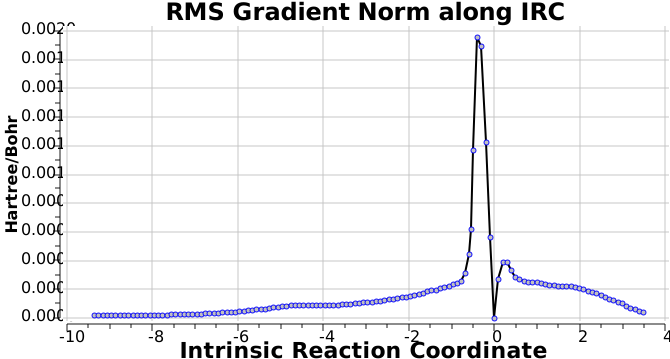
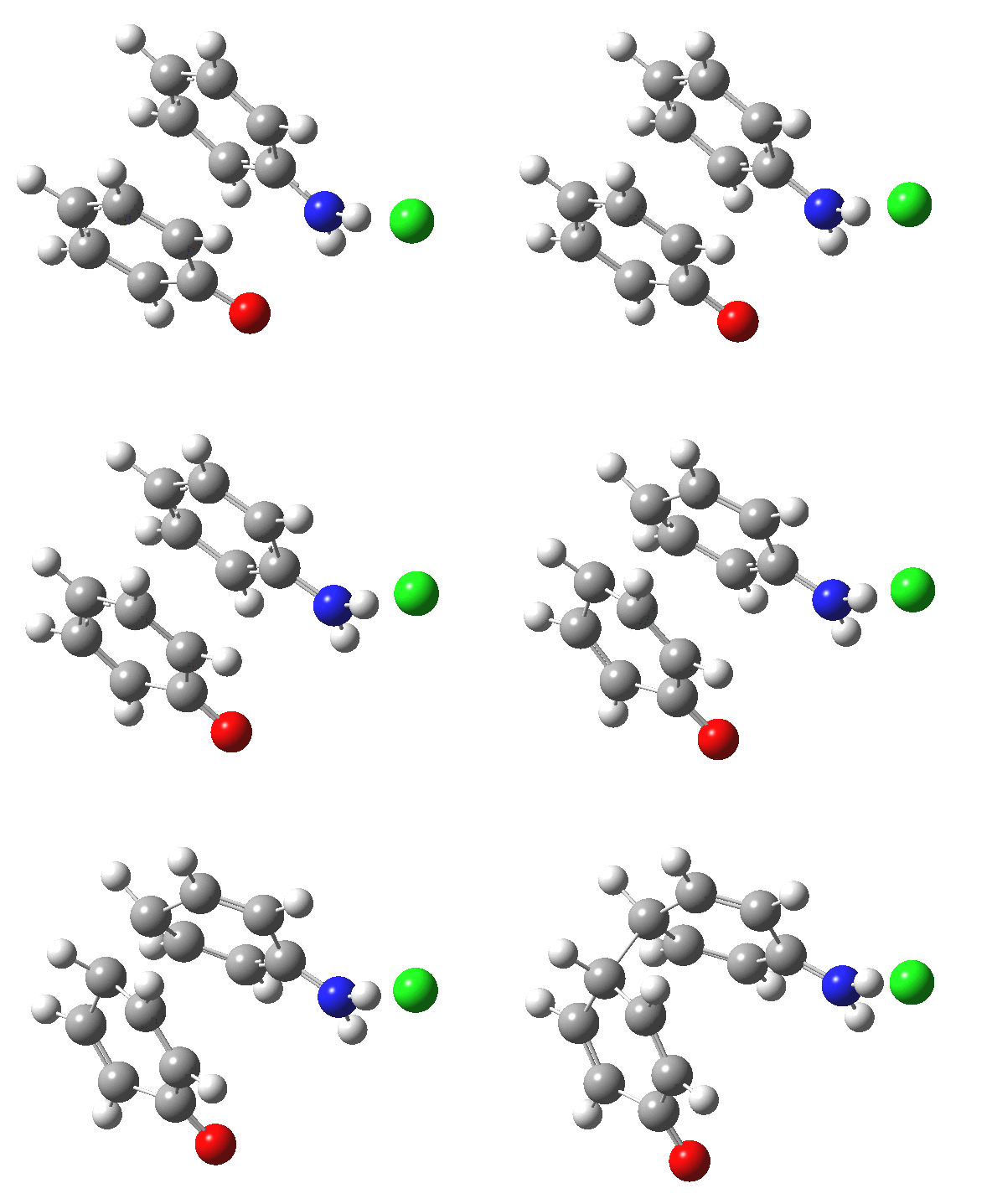
    Here are some intrinsic reaction coordinates to finish with. Firstly, for the formation of the  π-complex from N-protonated precursor:

    PhNH2OPh-NO
     PhNH2OPh-NO PhNH2OPh-NOG 

    Once formed, the  π-complex collapses readily to the 4,4′-coupled biphenyl. 

    PhNH2OPh-pi2p
     PhNH2OPh-pi2p PhNH2OPh-pi2pG 

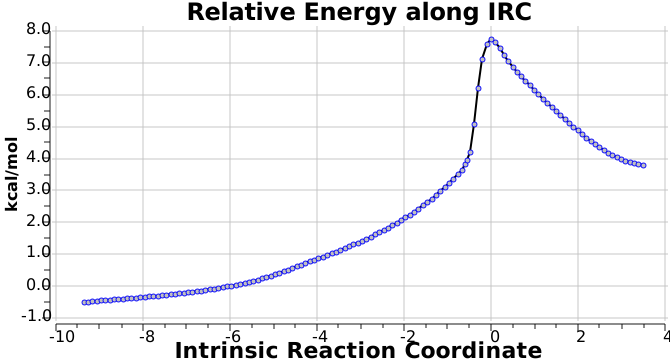
    There may be another pathway which collapses to the 1,1′-coupled biphenyl which I have not found yet. A [3,3] sigmatropic rearrangement converting the 4,4′ to the 1,1′-biphenyl is higher in energy, but still just about accessible thermally.
    PhNH2OPh-o2p
     
    PhNH2OPh-o2p
    PhNH2OPh-o2pG
     

    To end, here is a question. Could one systematically identify “gaps” in the distribution of known molecules; species which appear as if they should exist, but have never been reported? Of these, the majority will no doubt be absent from the record simply because they uninteresting. But some, as here, are absent because they are too unstable to exist, unless (extreme?) precautions are taken to remove the factors responsible for their instability (in this case, protons). Cyclobutadiene was one such famous example (stabilised by coordination to a metal). Certainly, computation nowadays can help identify conditions for how such molecules might be isolated.


    In contrast, PhNHSPh (N-Phenylbenzenesulfenamide) is a well known species[cite]10.1107/S1600536808019491[/cite].

  • The Benzidine rearrangement. Computed kinetic isotope effects.

    Kinetic isotope effects have become something of a lost art when it comes to exploring reaction mechanisms. But in their heyday they were absolutely critical for establishing the mechanism of the benzidine rearrangement[cite]10.1021/ja00373a028[/cite]. This classic mechanism proceeds via bisprotonation of diphenyl hydrazine, but what happens next was the crux. Does this species rearrange directly to the C-C coupled intermediate (a concerted [5,5] sigmatropic reaction) or does it instead form a π-complex, as famously first suggested by Michael Dewar[cite]10.1016/S0040-4039(01)82765-9[/cite] [via TS(NN] and only then in a second step [via TS(CC)] form the C-C bond? Here I explore the isotope effects measured and calculated for this exact system.

    benzidine-KIE

    It boils down to the following. It was supposed that if the mechanism was a concerted [5,5] sigmatropic shift, then both the N-N and the C-C bonds would be breaking/forming at the transition state and both N and C isotope effects would be expected. However, if a π-complex were formed, then either TS(NN) OR TS(CC) would be the rate determining step, and so either a NN OR a CC isotope effect should manifest, but not BOTH. The experiment carried out by Henry Shine and colleagues was thus expected to be the definitive one.[cite]10.1021/ja00065a018[/cite] The results (in aqueous ethanol, at 273K) revealed the following: k(2H/1H) = 0.962, k(14C/12C) = 1.013, k(13C/13C) = 1.013, k(15N/14N) = 1.041. This might have appeared to prove conclusively that the reaction was concerted, involving both the C-C and N-N bonds; in other words a [5,5] sigmatropic rearrangement.

    The quantum mechanical (closed shell) surface reveals only two separate transition states, TS(NN) and TS(CC), and so at first sight seems to contradict the experimental isotope inference. But the experimental values are very unlikely to be wrong. So how can one reconcile these two methods? Well, the answer is not to give up, but to calculate the isotope effects for BOTH transition states, and see if either of them matches the experimental result. Here are these calculations:

    TS k(2H/1H) k(14C/12C) k(13C/13C) k(15N/14N)
    CC  0.946  1.050  1.050  1.032
    NN  1.002  1.008  1.007  1.075
    Expt  0.962  1.013  1.013  1.041

    The match between experiment and theory for TS(CC) is reasonable (given the approximations in both the theory and the difficulty of the experiments and ensuring isotopic purities) but not so for TS(NN). But TS(CC) is a “stepwise-concerted” reaction as a closed shell singlet; as shown in the  IRC computed from TS(CC). 

    Yamabe and co[cite]10.1039/b909313c[/cite] have come to similar conclusions (their model used a dication rather than an ion-pair). In the latest twist, Ghigo et al[cite]10.1016/j.tet.2012.01.014[/cite] used the same model as here (HCl to provide protonation as an ion-pair) but identified biradical (radical-cation) character at the transition state. The latter group also calculated kinetic isotope effects[cite]10.1002/ejoc.201001636[/cite] for the open shell biradical TS, finding an even better match with experiment than above.

    So this see-saw mechanism has oscillated between a stepwise π-complex, then a direct [5,5] rearrangement and in more recent times using computational modelling, a concerted [5,5] sigmatropic proceeding via an initially formed π-complex, and (finally) via a multi-step mechanism proceeding through a biradical π-complex and involving radical coupling, which nevertheless appears to behave in some aspects as a concerted [5,5] rearrangement. It is fascinating that a simple diprotonation of a hydrazine could so readily induce biradical character, and that such an apparently simple reaction could have so many twists and turns!


    For one 14C-12C pair.