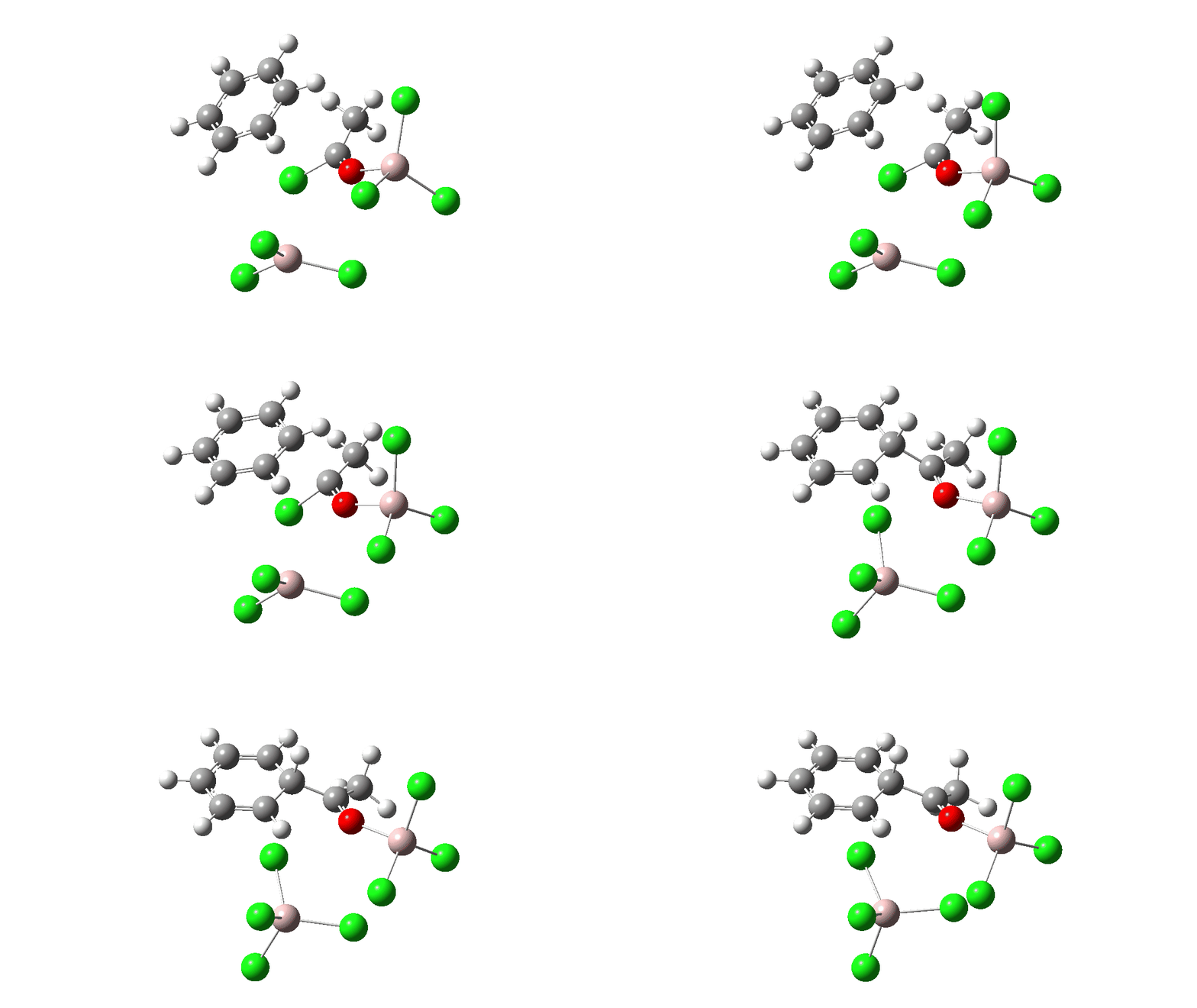
I asked the question in my previous post. A computational mechanism revealed that AlCl3 or its dimer Al2Cl6 could catalyse a concerted 1,1-substitution reaction at the carbon of Cl-C≡N, with benzene displacing chloride which is in turn captured by the Al. Unfortunately the calculated barrier for this simple process was too high for a reaction apparently occuring at ~room temperatures. Comments on the post suggested using either a second AlCl3 or a proton to activate the carbon of the C≡N group by coordination on to nitrogen. A second suggestion was to involve di-cationic electrophiles. Here I report the result of implementing the N-coordinated model below.

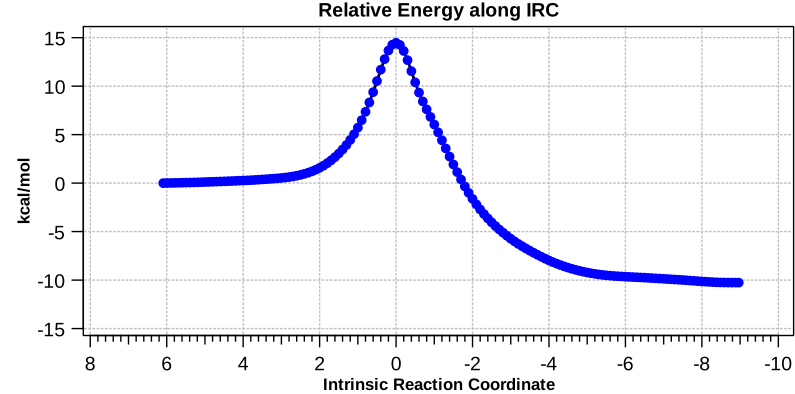
The free energy barrier ΔG‡298 is 20.8 kcal/mol (FAIR Data DOI: 10.14469/hpc/7584), which corresponds to a facile reaction at room temperatures. There does not seem to be any need to invoke super-reactive di-cationic electrophiles in this instance. This is yet another illustration that computational modelling nowadays is good enough to flag unviable mechanisms, and hence to instigate a search for a better model.


Leave a Reply