Tag: Quantum chemistry

  • A periodic table for anomeric centres, this time with quantified interactions.

    The previous post contained an exploration of the anomeric effect as it occurs at an atom centre X for which the effect is manifest in crystal structures. Here I quantify the effect, by selecting the test molecule MeO-X-OMe, where X is of two types:

    1. A two-coordinate atom across the series B-O and Al-S, and carrying the appropriate molecular charge such that X carries two lone pairs of electrons (thus the charge is 0 for O, but -3 for B).
    2. A four-coordinate atom across the series B-O and Al-S, with X-H bonds replacing the lone pairs on this centre in the previous example, and again with appropriate molecule charges (e.g. +2 for  SH2).

    The donor in the anomeric interaction always originates on the oxygen of the MeO group attached to X. The acceptor is always the X-O σ* empty orbital. The results (table below, ωB97XD/Def2-TZVPP calculation, NBO E(2) in kcal/mol) confirm that as X gets more electronegative, the X-O σ* empty orbital becomes a better acceptor, and so the NBO E(2) interaction energy which quantifies the anomeric interaction gets larger. Eventually (with X=OH2) the donation of electrons into the X-O σ* empty orbital becomes so effective that the X-O bond (in this case O-O) dissociates fully and the NBO perturbation cannot be computed. Also for reference, a “normal” anomeric interaction (such as is found in e.g. sugars) is around 18 kcal/mol. Anything larger than this could be considered especially strong, and anything less than ~10 kcal/mol would be regarded as weak. 

    X[cite]10.14469/hpc/1221[/cite]*
    BH2 CH2 NH2 OH2
    12.5 17.7 18.5 dissociates
    AlH2 SiH2 PH2 SH2
    6.9 12.9 21.9 31.3
    B C N O
    8.3 11.7 12.9 14.2
    Al Si P S
    4.8 6.6 11.2 18.2

    For the entry X=S, the E(2) term is actually larger than for the oxygen. I should note that the Me group itself is not passive in this process. The C-H bonds can also act as significant electron donors, but here I am not going to analyse this additional complexity.

    This table reveals that there is nothing special about carbon as an anomeric centre, and here also the normal intimate association with the term anomeric and heterocyclohexanes such as found in sugars.


    * Here I introduce a refinement to my normal process of citing the data produced for any specific calculation. Rather than including 16 individual citations for each cell in the table, I have gathered all these calculations into a collection and cite here only the DOI of that collection. When resolved, the individual members of that collection can then be inspected for the actual data.
  • Quintuple bonds: resurfaced.

    Six years ago, I posted on the nature of a then recently reported[cite]10.1002/anie.200803859[/cite] Cr-Cr quintuple bond. The topic resurfaced as part of the discussion on a more recent post on NSF3, and a sub-topic on the nature of the higher order bonding in C2. The comment made a connection between that discussion and the Cr-Cr bond alluded to above. I responded briefly to that comment, but because I want to include 3D rotatable surfaces, I expand the discussion here and not in the comment.

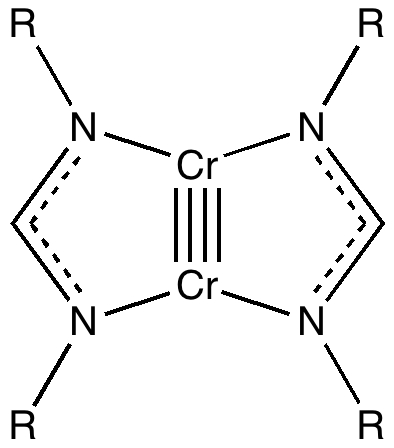
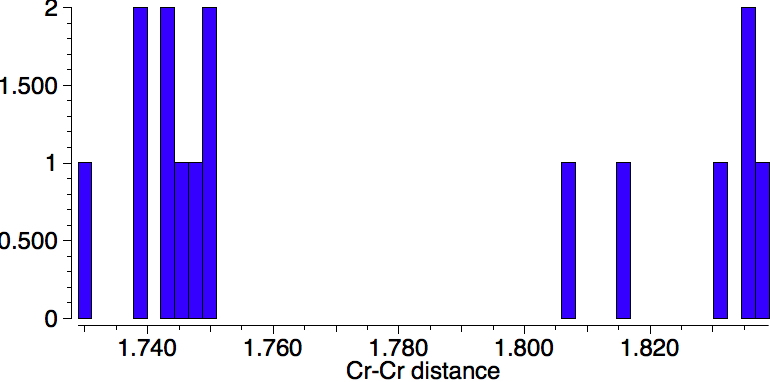
    Firstly, a quick update. Since the original post, quite a few Cr-Cr quintuple bonds have been reported. In searching the crystal structure database, I used the text "quintuple" as a text search term (since specifying a quintuple bond as such is not supported) along with a Boolean AND using the sub-structure Cr-Cr (with any type of bond allowed). The result is shown below. It is striking that in fact these "quintuple" bonds cluster into a set with a bond distance of ~1.74Å and another with 1.83Å. Are these valence bond isomers?


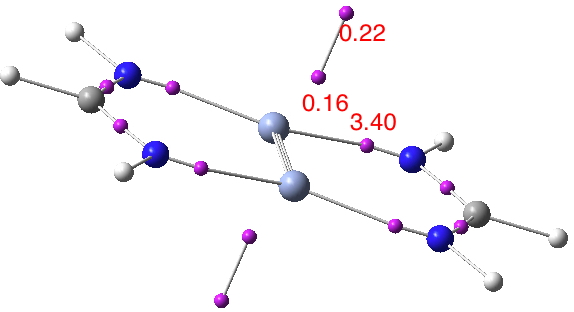
    Now to the system shown at the top (one of the 1.74Å set). My original post discussed the results of a density functional evaluation of the properties of the electron density in the Cr-Cr region. Most striking was the value of the Laplacian ∇2ρ(r) of this density, the value of +1.45au being the largest ever reported for a pair of identical atoms. I should remind that ∇2ρ(r) is used as one measure of the character of a bond, being the balance between electronic kinetic energy density and potential energy density along a bond. But it is well recognised that the bonding between such transition metals has what is called multi-reference character; the wavefunction is not well described by just a single doubly occupied electronic configuration. More electronic configurations have to be included, and hence a MC-SCF (multi-configuration) self-consistent description of the wavefunction is needed. So as a response to the comment noted above, I decided to carry out CASSCF/6-311G(d) calculations, in which an active space of electrons and molecular orbitals is specified, and using the geometry previously obtained at the DFT level. Thus a CASSCF(8,8) calculation takes 8 electrons and evaluates all possible configurations arising from placing them into an active space of eight molecular orbitals. With metals unfortunately the active space is likely to be large, and so I decided to computed (10,10), (12,12) and (14,14) CASSCF as well to see if any convergence might occur. The last is close to the limit offered by the program. The values shown below are at the QTAIM line (bond) critical point along the Cr-Cr axis.

    Active space ρ(r) 2ρ(r) Total energy, Hartree % of CS config Calculation DOI
    8 .303 1.720 -2383.48049 63 [cite]10.14469/ch/191860[/cite]
    10 .308 1.612 -2383.68830 61 [cite]10.14469/ch/191857[/cite]
    12 .308 1.612 -2383.70398 60.6 [cite]10.14469/ch/191858[/cite]
    14 .308 1.612 -2383.72161 59 [cite]10.14469/ch/191855[/cite]
    DFT .313 1.45 100 [cite]10.14469/ch/4156[/cite]

    From the trend above, we might safely conclude that the CASSCF active space IS convergent, at least for the density if not for the energy. Also convergent are the properties of the density such as ∇2ρ(r), and noteworthy is that the value of this property is even higher than was obtained using single-configuration DFT theory. So the claim that this system has a record such property does not change. Negative values of the Laplacian are normally taken to indicate a conventionally covalent bond, whereas +ve values show the bond has what is called charge-shift character.[cite]10.1038/nchem.327[/cite] So these Cr-Cr quintuple bonds must be amongst the most charge-shifted exemplars!

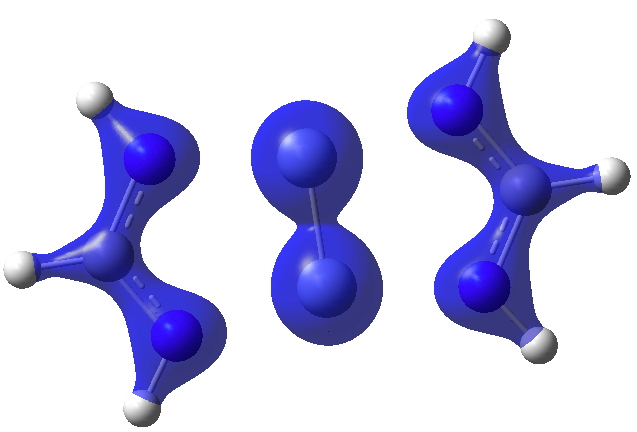
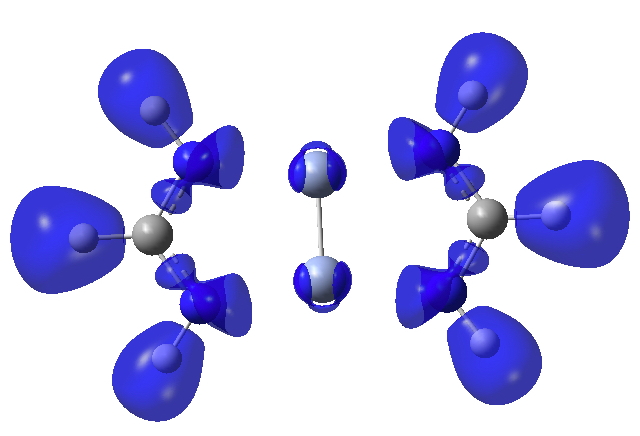
    I show some surfaces (click on the image to get a rotatable model) computed from the CASSCF(14,14) density. Firstly the electron density ρ(r) itself, contoured at 0.25au, showing the high value between the chromium atoms.

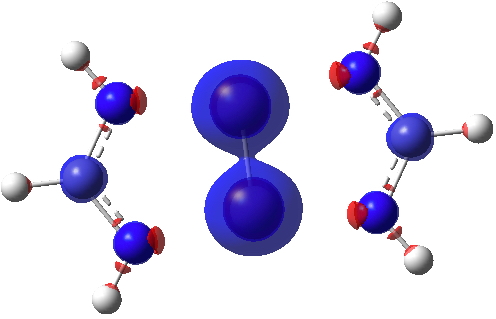
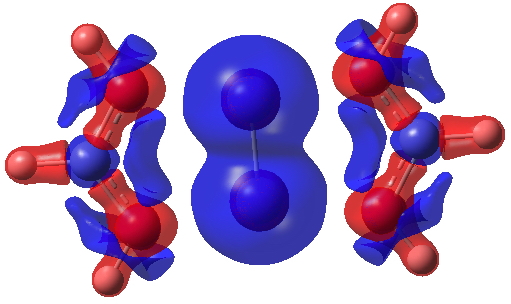
    Next, ∇2ρ(r) contoured at ±1.5, revealing its high value in the Cr-Cr region (blue = +ve, red = -ve) and then below at ± 0.25 which includes the covalent bonds of the ligands.

    Finally, the ELF (electron localisation function) function which tries to gather the electron density into localised ELF basins (numbers are the integration of the electron density in this basin). This looks very similar to that shown previously and is striking because there is no basin in the Cr-Cr region. Instead, the localisation is along the Cr-N bonds. One might describe this as saying that the Cr-Cr region is very highly correlated.


    It is a limitation of the WordPress system that such objects cannot be included in comments.


  • VSEPR Theory: A closer look at trifluorothionitrile, NSF3.

    The post on applying VSEPR ("valence shell electron pair repulsion") theory to the geometry of ClF3 has proved perennially popular. So here is a follow-up on another little molecue, F3SN. As the name implies, it is often represented with an S≡N bond. Here I take a look at the conventional analysis.

    trifluoorothionitrile

    This is as follows:

    1. Six valence electrons on the central S atom.
    2. Three F atoms contribute one electron each.
    3. One electron from the N σ-bond.
    4. Donate two electrons from S to the two π-bonds.
    5. Eight electrons left around central S, ≡ four valence shell electron pairs.
    6. Hence a tetrahedral geometry.
    7. The bond-bond repulsions however are not all equal. The SN bond repels the three SF bonds more than the S-F bonds repel each-other.
    8. Hence the N-S-F angle is greater than the F-S-F angle, a distorted tetrahedron.

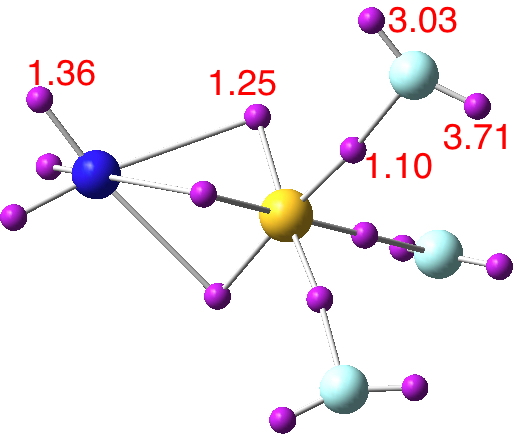
    Now for a calculation[cite]10.14469/ch/191808[/cite];  ωB97XD/Def2-TZVP, where the wavefunction is analysed using ELF (electron localisation function), which is a useful way of locating the centroids of bonds and lone pairs (click on diagram below to see 3D model).

    Trifluorosulfonitrile

    • At the outset one notes that there are six ELF disynaptic basins surrounding the central S, integrating to a total of 7.05e. The sulfur is NOT hypervalent; it does not exceed the octet rule.
    • These six "electron sub-pair" basins are arranged octahedrally around the sulfur. The coordination is NOT tetrahedral, as implied above.
    • The three S-N basins have slightly more electrons (1.25e) than the three S-F basins (1.10e), resulting in …
    • the angle subtended at the S for the SN basins being 96° (a bit larger than octahedral) whilst the angle subtended at the S for the SF basins being smaller (89.9°). This matches point 7 above, but is achieved in an entirely different manner.
    • As a result, the N-S-F angle (122.5°) is larger than the ideal tetrahedral angle and the F-S-F angle (93.9°) is smaller, an alternative way of expressing point 7 above.
    • The S≡N triple bond as shown above does have some reality;  it is a "banana bond" with three connectors rather than two. Each banana bond however has only 1.25e, so the bond order of this motif is ~four (not six) but nevertheless resulting in a short S-N distance (1.406Å) with multiple character.

    So we have achieved the same result as classical VSEPR, but using partial rather than full electron pairs to do so. We got the same result with ClF3 before. So perhaps this variation could be called "valence shell partial electron pair repulsions" or VSPEPR.

  • A visualization of the anomeric effect from crystal structures.

    The anomeric effect is best known in sugars, occuring in sub-structures such as RO-C-OR. Its origins relate to how the lone pairs on each oxygen atom align with the adjacent C-O bonds. When the alignment is 180°, one oxygen lone pair can donate into the C-O σ* empty orbital and a stabilisation occurs. Here I explore whether crystal structures reflect this effect.

    Scheme

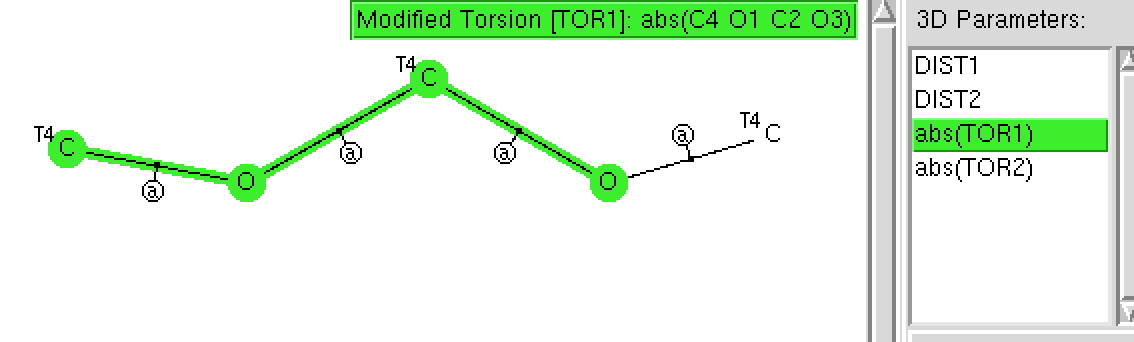
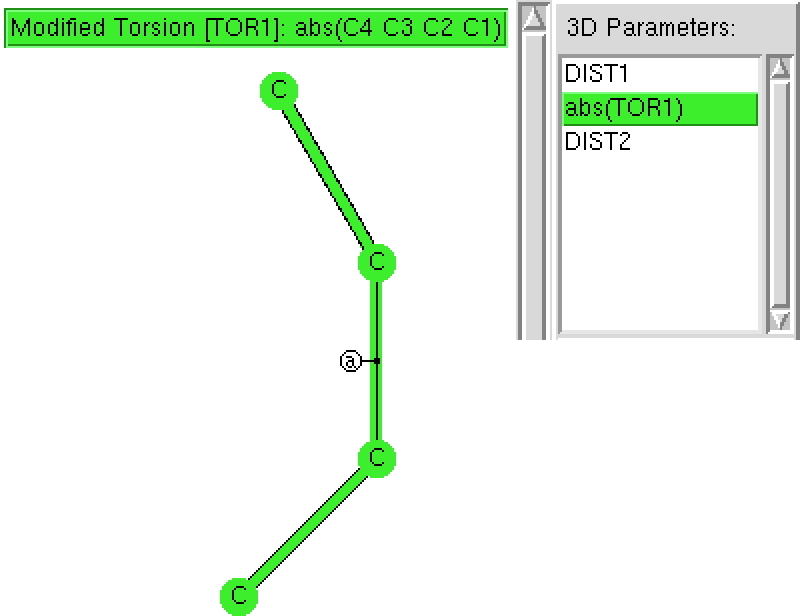
    The torsion angles along each O-C bond are specified, along with the two C-O distances. All the bonds are declared acyclic, and the usual R < 5%, no disorder and no errors specified.

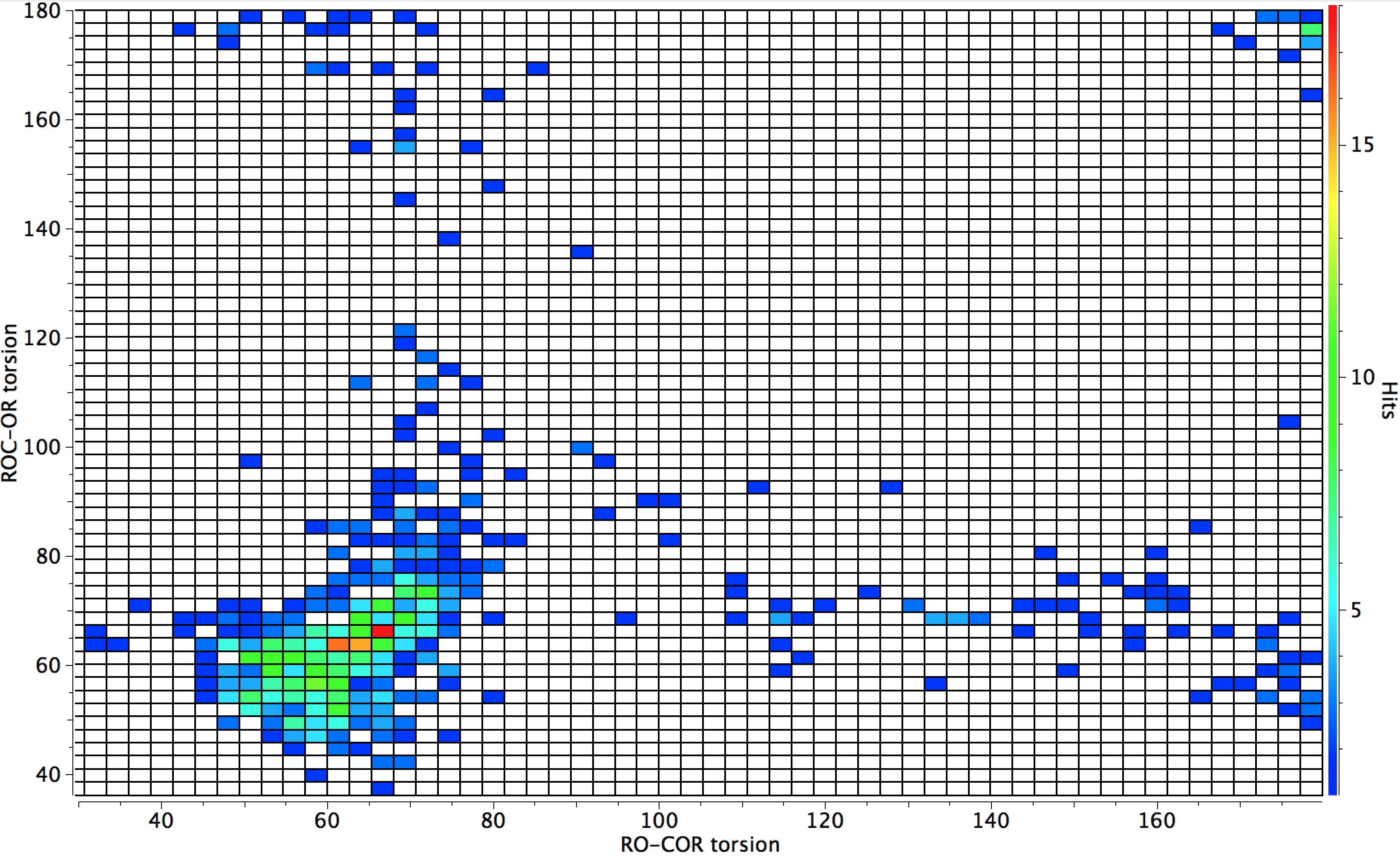
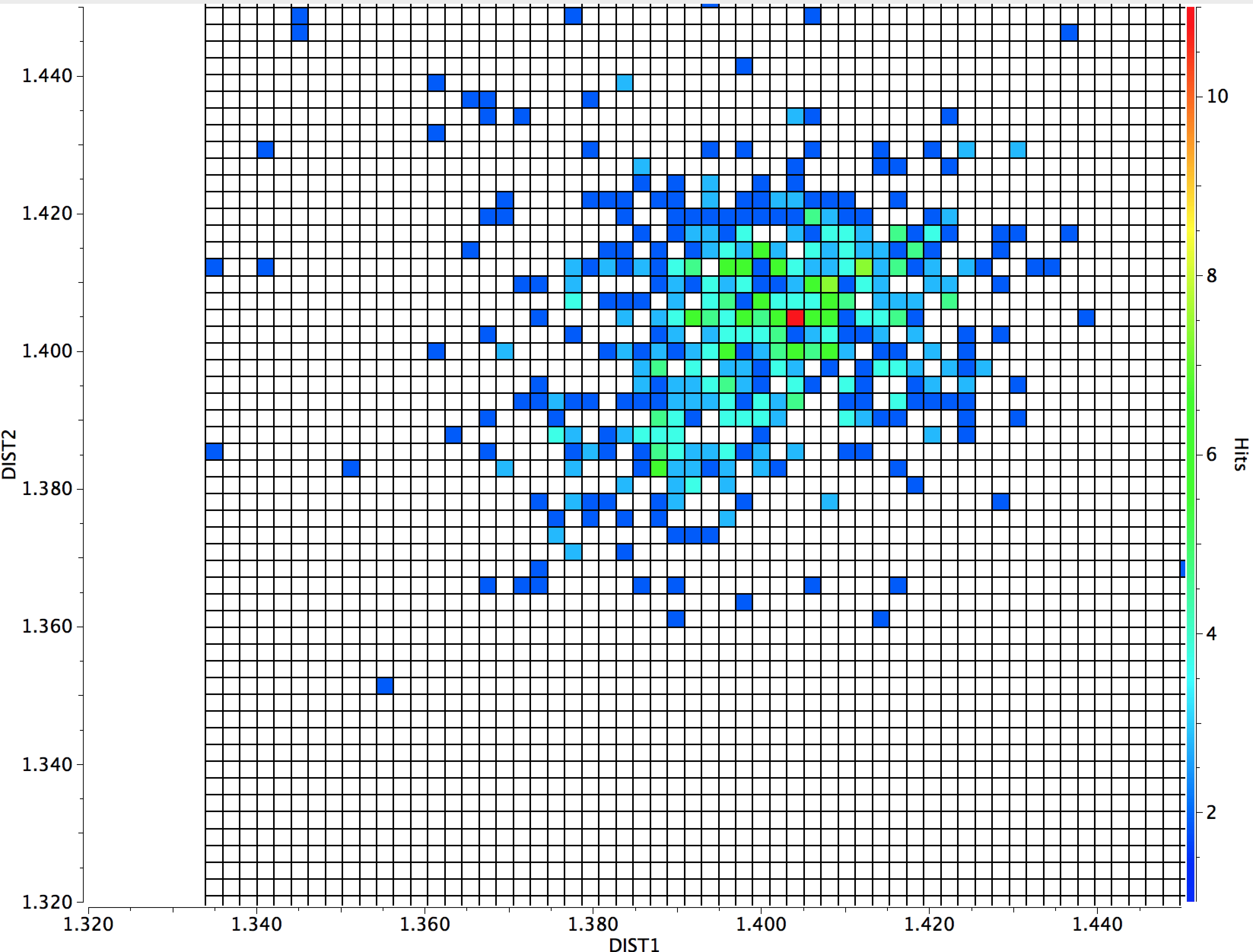
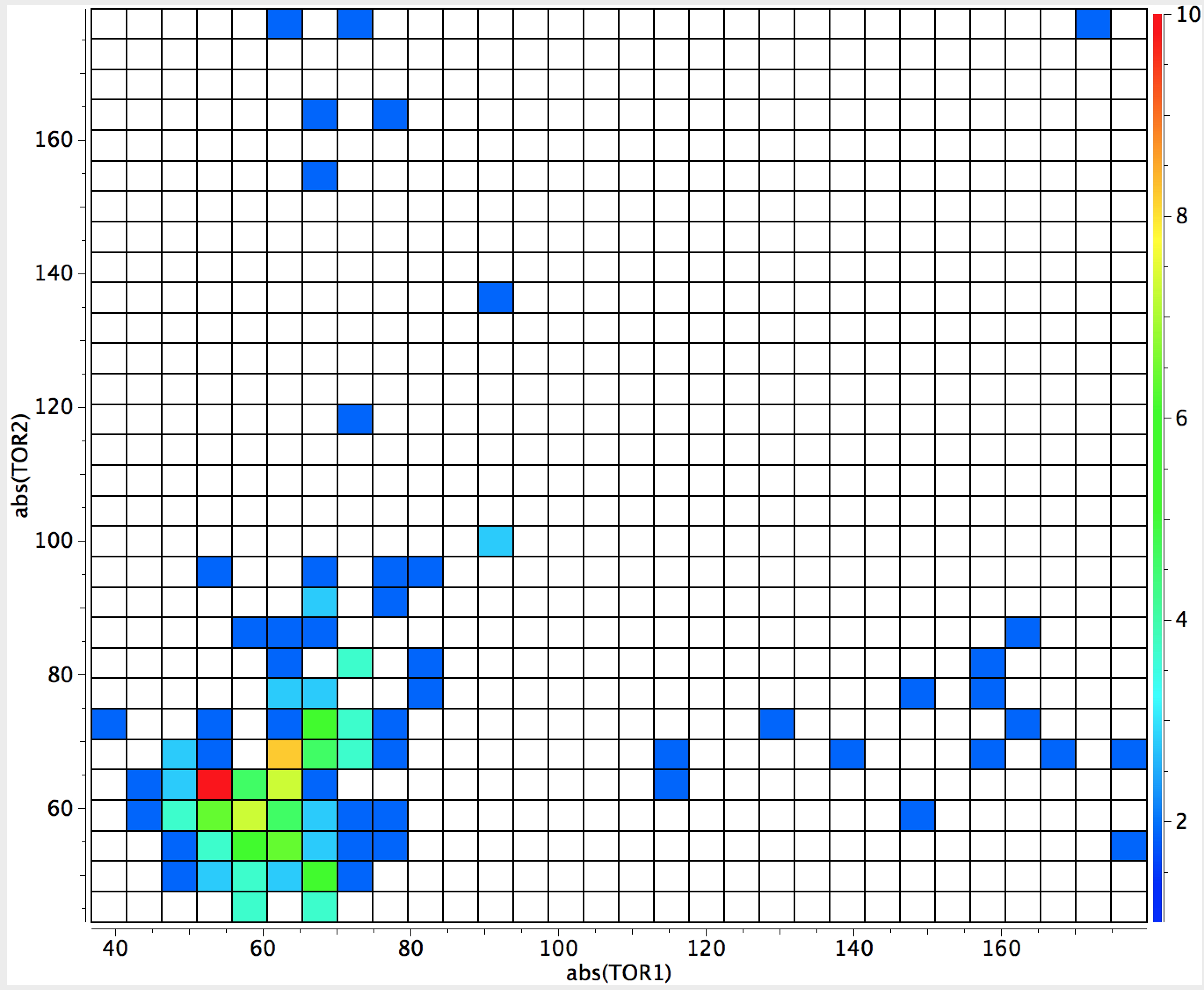
    1. You can see from the plot below that the hotspot occurs when both RO-CO torsions are ~65°. From this we will assume that the two (unseen) lone pairs at any one of the oxygens are distributed approximately tetrahedrally around each oxygen, and if this is true then one of them must by definition be oriented ~ 180° with respect to the same RO-CO bond (the other is therefore oriented -60°). This allows it to be antiperiplanar to the adjacent C-O bond and hence interact with its σ* empty orbital. So the hotspot corresponds to structures where BOTH oxygen atoms have lone pairs which interact with the adjacent O-C anti bond.
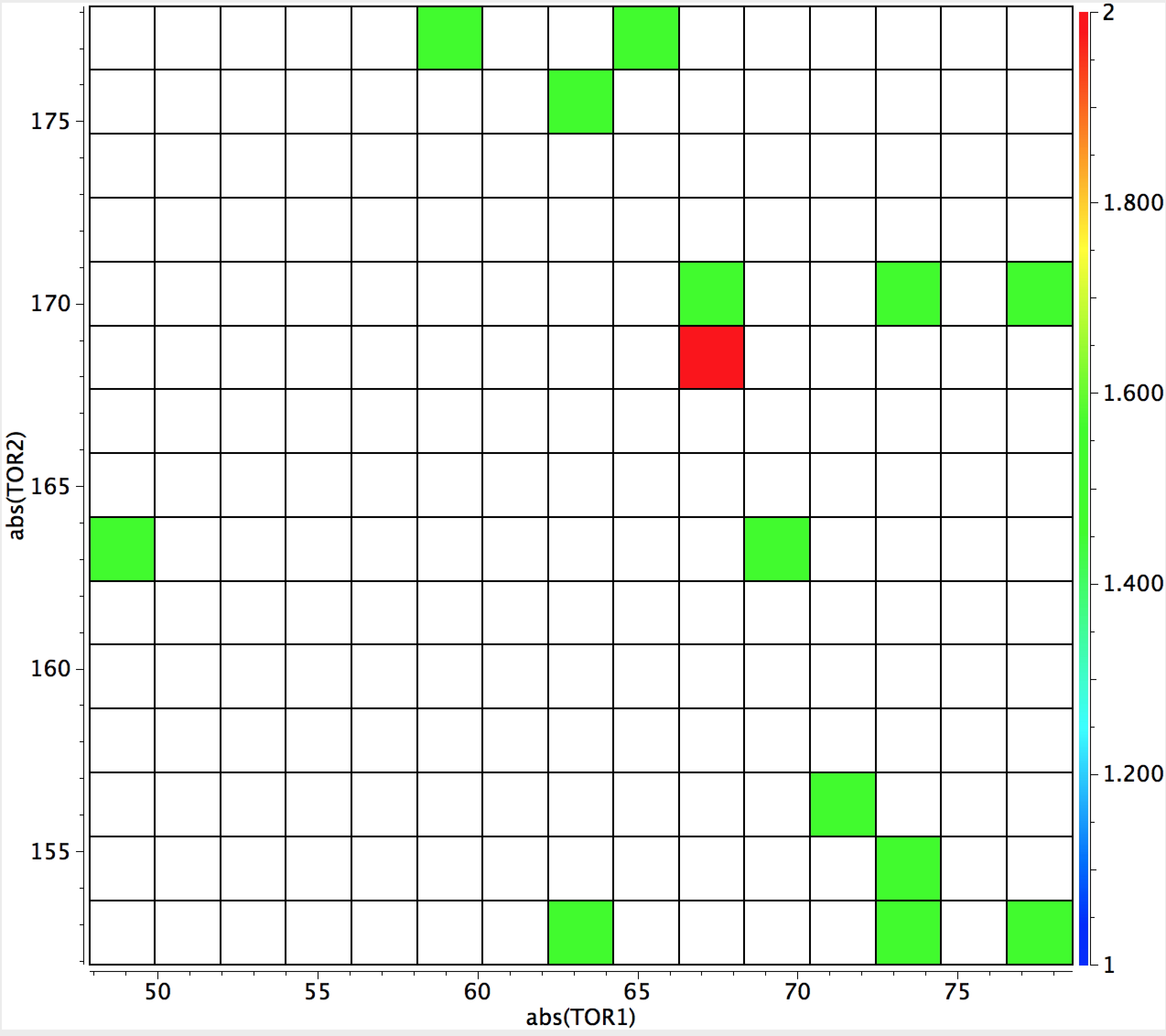
    2. There is a tiny cluster for which both RO-CO torsions are ~180° and hence neither oxygen has an antiperiplanar lone pair.
    3. Only slightly larger are clusters where one torsion is ~65° and the other ~180°, meaning that only one oxygen has an antiperiplanar lone pair.
    4. A plot of the two C-O lengths indeed shows an overall hotspot at ~1.40Å for both distances. If the search is filtered to include only torsions in the range 150-180°, the hotspot value increases to 1.415Å for both. If one torsion is restricted to 40-80° and the other to 150-180° the hotspot shows one C-O bond is about 0.012Å shorter than the other.

    Scheme

    Scheme

    I also include a further constraint, that the diffraction data must be collected below 140K. The hotspot moves to ~ 55/60° indicating values free of some vibrational noise.

    Scheme

    Interestingly, replacing  oxygen with  nitrogen reveals relatively few examples of the effect (C(NR2)4 is an exception). Replacing  O by divalent S produces only 13 hits, with the surprising result (below) that in all of them only one S sets up an anomeric interaction. Arguably, the number of examples is too low to draw any firm conclusions from this observation.

    Scheme


    Most diffractometers measure low angle scattering of X-rays by high density electrons. These are the core electrons associated with a nucleus rather than the valence electrons associated with lone pairs. Hence very few positions of valence lone pairs have ever been crystallographically measured.


    Acknowledgments

    This post has been cross-posted in PDF format at Authorea.

  • A visualisation of the effects of conjugation; dienes and biaryls.

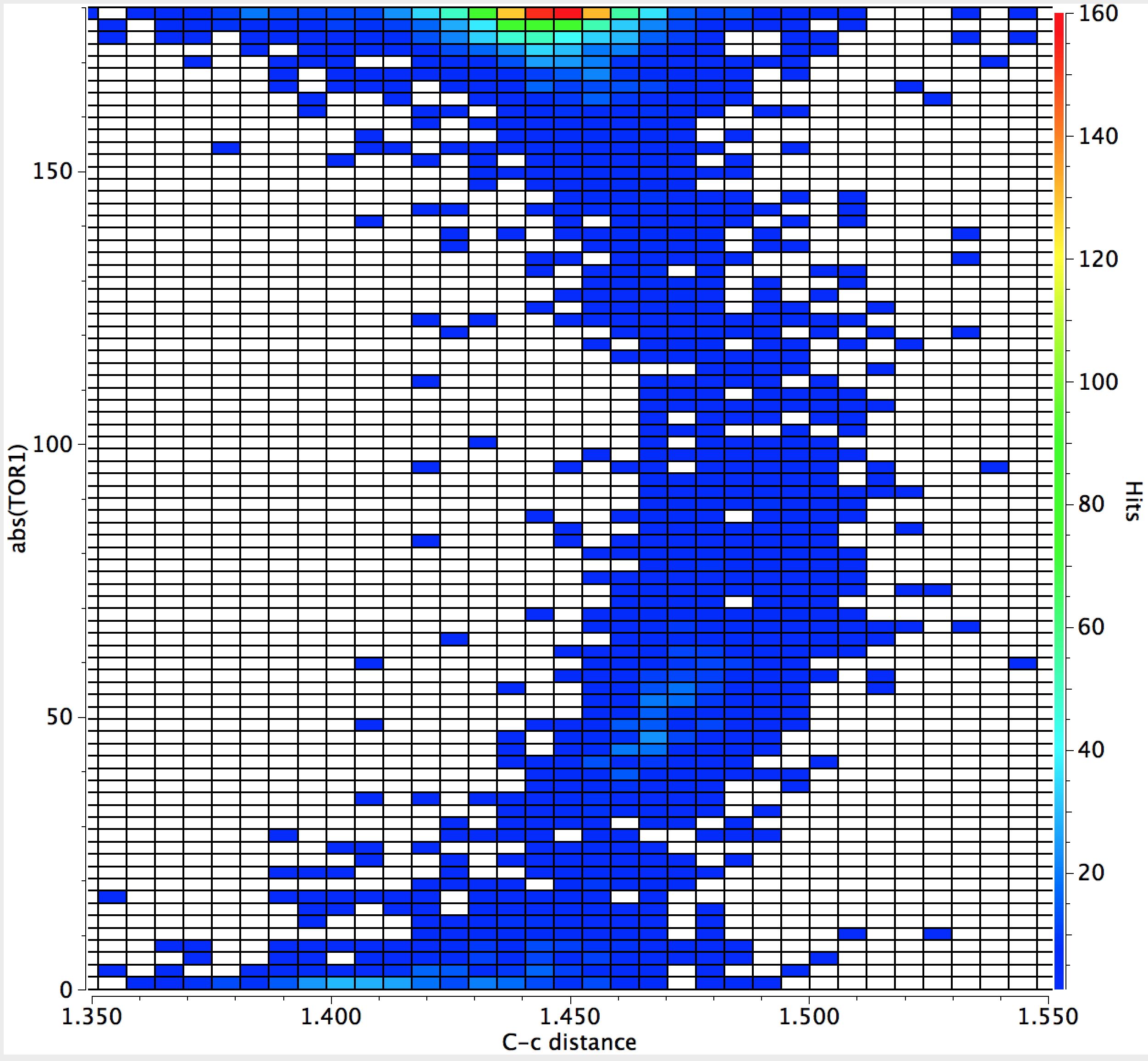
    Here is another exploration of simple chemical concepts using crystal structures. Consider a simple diene: how does the central C-C bond length respond to the torsion angle between the two C=C bonds?

    arm1

    The search of the CSD (Cambridge structure database) is constrained to R < 5%, no errors and no disorder and the central  C-C bond is specific to be acyclic.

    arm1

    1. Note first that the hotspot occurs for a torsion angle of 180°, a trans diene.
    2. There is just a hint that the C-C distance for a cis-diene might be a little shorter than the trans diene, but this might not be significant.
    3. There is a gentle curve illustrating that the C-C distance is indeed a maximum at 90°
    4. The C-C bond extends from ~1.445Å when the two double bonds are coplanar (fully conjugated) to ~1.48Å when orthogonal. Not much of a change, but statistically highly significant.

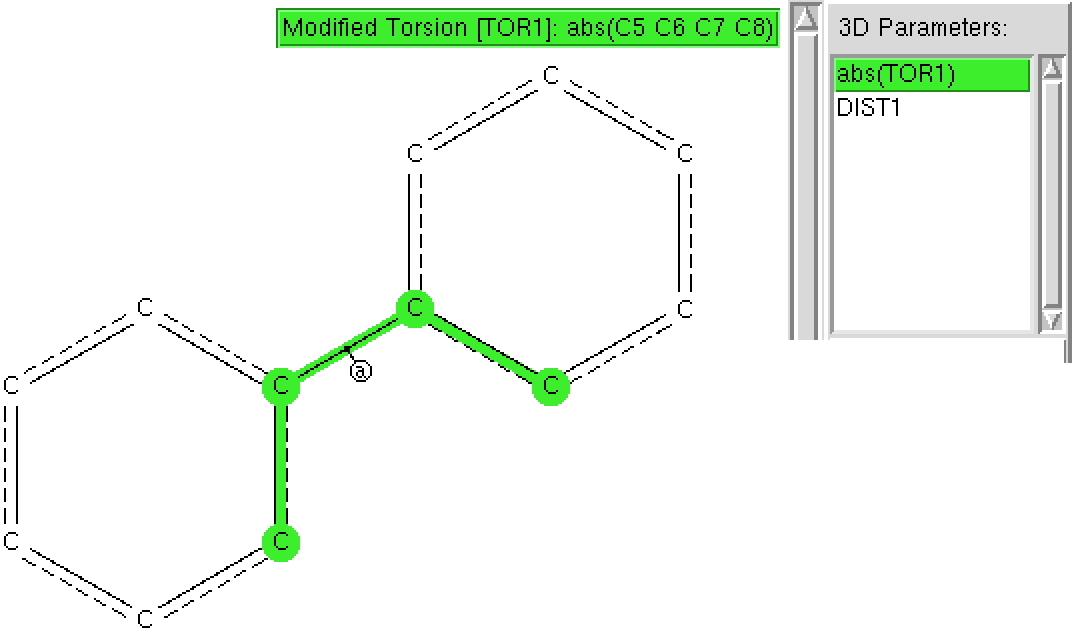
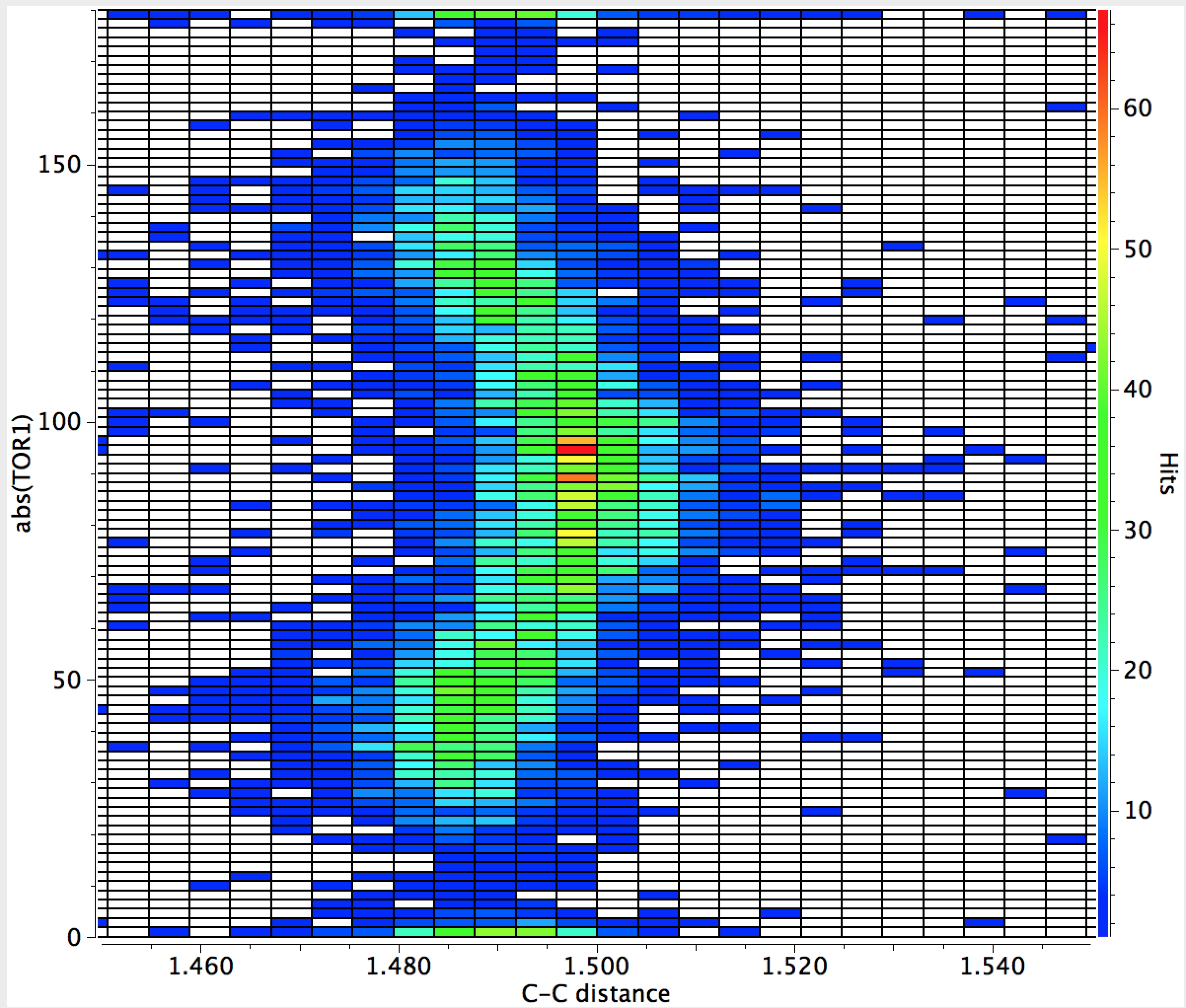
    Here is another search, this time of the C=C-C=C motif embedded into a biaryl, of which there are far more examples. This time, the (red) hotspot is actually at 90°, with local (green) hotspots at 0 and 180° but also at 45 and 135°. Again, you can easily spot the maximum in C-C bond length at 90° but notice how much smaller the bond lengthening is (~ 0.01Å). This lengthening is inhibited by retention of the aromaticity of the two aryl rings; again the statistical effect is highly significant. Perhaps also significant is that the  C-C bond at torsions of 0 or 180° appear to be no shorter than the values at 45 and 135°.

    arm1

    arm1

    Both these searches took about  5 minutes each, and serve to illustrate just how many basic chemical concepts can be teased out of a statistical analysis of crystal structures.


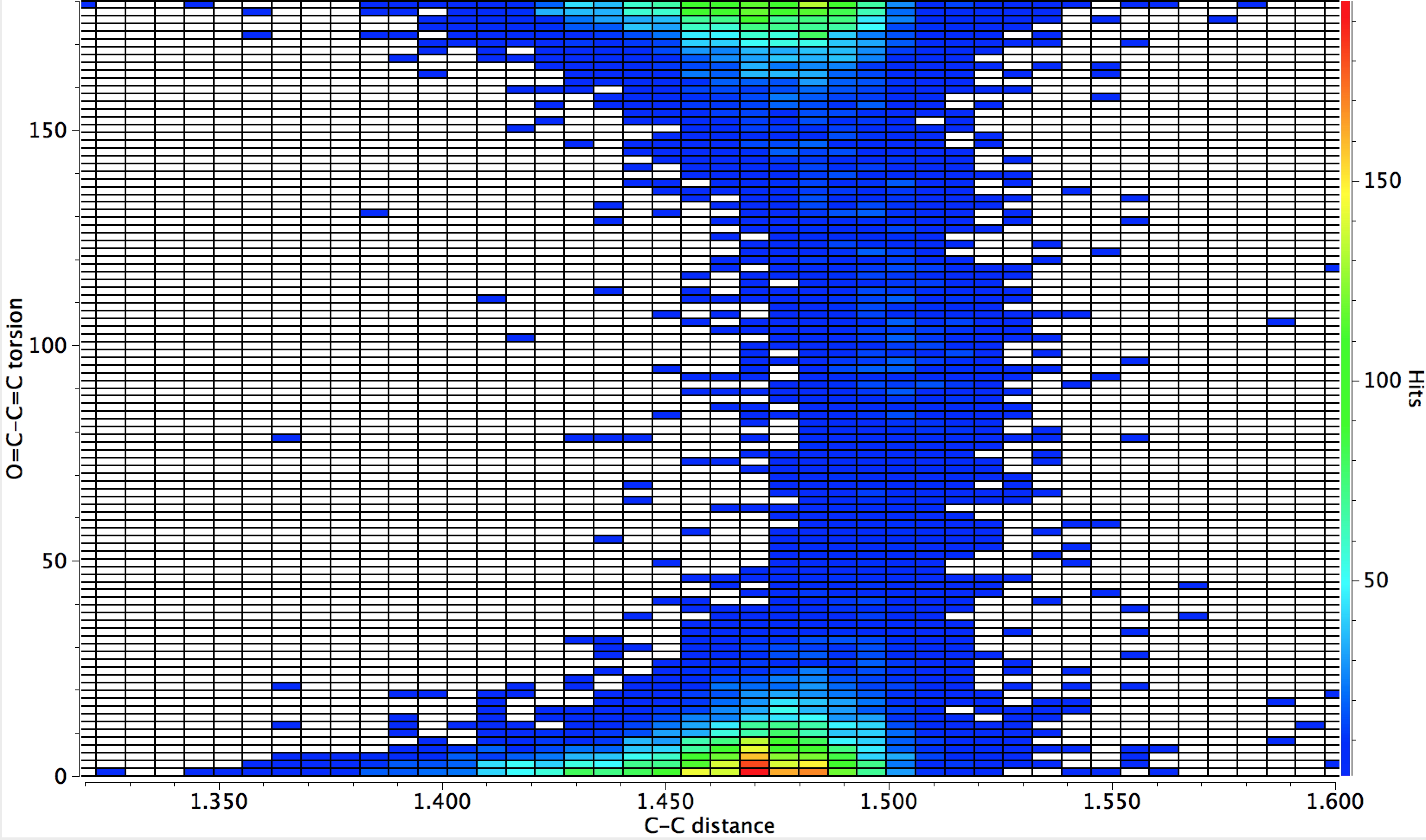
    The analogous diagram for O=C-C=C is shown below;

    arm1

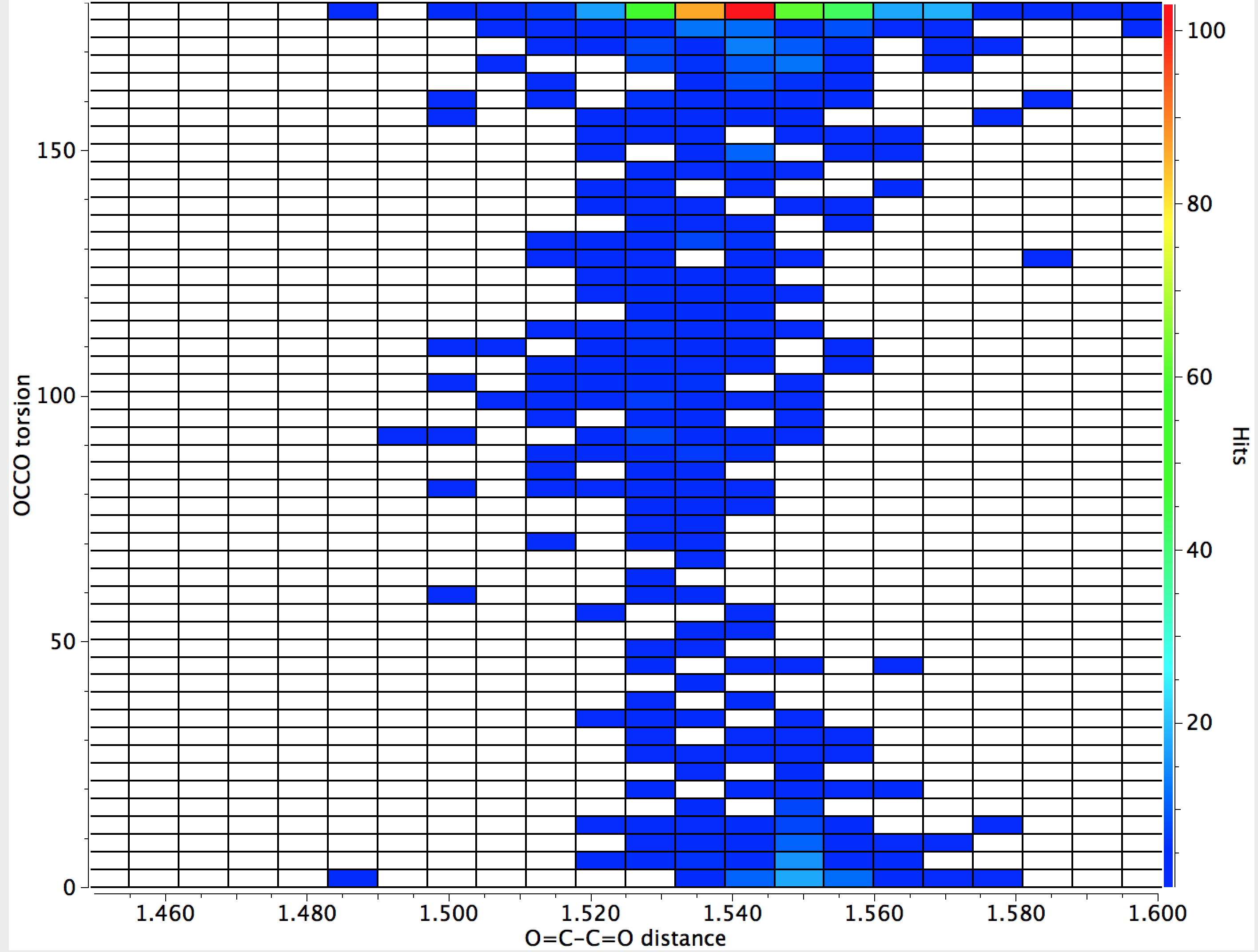
    That for  O=C-C=O is different however;

    arm1

    Acknowledgments

    This post has been cross-posted in PDF format at Authorea.