Category: Historical

  • The history of Alizarin (and madder).

    The Royal Society of Chemistry historical group (of which I am a member) organises two or three one day meetings a year. Yesterday the October meeting covered (amongst other themes) the fascinating history of madder and its approximately synthetic equivalent alizarin. Here I add a little to the talk given by Alan Dronsfield on the synthesis of alizarin and the impact this had on the entire industry.

    Although William Perkin famously (and accidentally) produced the first synthetic chemical dye in 1856 (Mauveine), the industry at that time was both large and dominated by dyes from natural products. Mauve was something of a niche colour; far more important was alizarin, both as a red dye (for cotton) and a red pigment (in painting) and up to 1869 it was sourced from the roots of the madder plant (which was difficult to farm) and from insects (which could be farmed). It was nonetheless expensive to produce it from either and so a race started to create it synthetically. Famously, two groups submitted patents for such a synthesis in 1869, William Perkin himself and two scientists working in BASF, Carl Graebe and Carl Liebermann.[cite]10.1002/cber.18690020106[/cite],[cite]10.1002/cber.186900201141[/cite] The latter were the winners (by one day) and they are now famed for their work (what a difference one day can make; Perkin is known for his other work, but not as much for the synthesis of alizarin). As with mauveine, the structures of these dyes were not known with certainty (or for mauveine even approximately) at the time, but Graebe and Liebermann had managed to prove that alizarin was derived from anthracene by reducing the former to the latter using zinc dust. Trouble was, the structure of anthracene itself was not certain in 1869! There were two probable candidates, (a) and (b) below.

    Alan told us how Graebe and Liebermann favoured structure (a), now known as phenanthrene, rather than (b), which we recognize as anthracene. A full story is told in this PhD thesis, written in 1919 and published in 1921[cite]10.1021/ja01437a023[/cite] and I can only tell a tiny bit of it here. Essentially (a) was preferred over (b) because the former could sustain three aromatic (benzene-like) rings, whereas the latter only two (p 3 of the thesis above). Years later in 1972, this concept emerged as the Clar π-sextet rule, but the idea was already more than 100 years old by then! And indeed thermodynamically, phenanthrene is more stable than anthracene. By 1872, circumstantial evidence was accumulating that in fact alizarin was derived from (b), largely via attempts to synthesize the molecule by various reactions. These often were performed at high temperatures (red-hot tubes), and we now know that many complex rearrangements can occur at such temperatures. In 1889[cite]10.1039/pl8900600095[/cite], Armstrong was quoting the structure of anthracene with no doubts about its structure. However, it took another 30 years or so for an entirely unambiguous total synthesis of anthracene to be devised.[cite]10.1021/ja01437a023[/cite] Also around that time the first structures based on crystallography were emerging (by William Bragg) that supported this hypothesis. Even so, the first modern crystal structure had to wait until 1950.[cite]10.1107/S0365110X50000641[/cite]

    We learn from this story that many chemical structures established during the 19th century were largely based on (admittedly a large) body of circumstantial evidence. A wonderful example of how a systematic rather than a circumstantial proof of the structure of naphthalene was established using chemical synthesis and degradations alone can be found here in the work by Armstrong. Evidence obtained from instruments was largely restricted to techniques such as thermochemistry and polarimetry in the 19th century and for the first twenty years of the 20th to e.g. infra-red spectroscopy.[cite]10.1103/PhysRevSeriesI.20.273[/cite] It is remarkable then that actually, most 19th century structures have stood the test of time. Moreover, not knowing the precise structure did not prevent the processes for making them to be patented. Nowadays of course, a simple crystal structure can often be solved in a few minutes and NMR spectroscopy takes a similar amount of time. We are no longer used to waiting for years or indeed decades for structural proof!


    This synthesis proved to be very expensive (requiring a step using bromine and then a second step to remove it). But shortly after, a much more efficient synthesis which dispensed with the bromine brought the cost of the dye down dramatically. The madder industry never really recovered from this blow.

  • Octet expansion and hypervalence in dimethylidyne-λ6-sulfane.

    I started this story by looking at octet expansion and hypervalence in non-polar hypercoordinate species such as S(-CH3)6, then moved on to S(=CH2)3. Finally now its the turn of S(≡CH)2.

    As the triple bonds imply, this seems to represent twelve shared valence electrons surround the sulfur, six from S itself and three from each carbon. The octet is clearly expanded from eight to twelve. But is all as it seems?

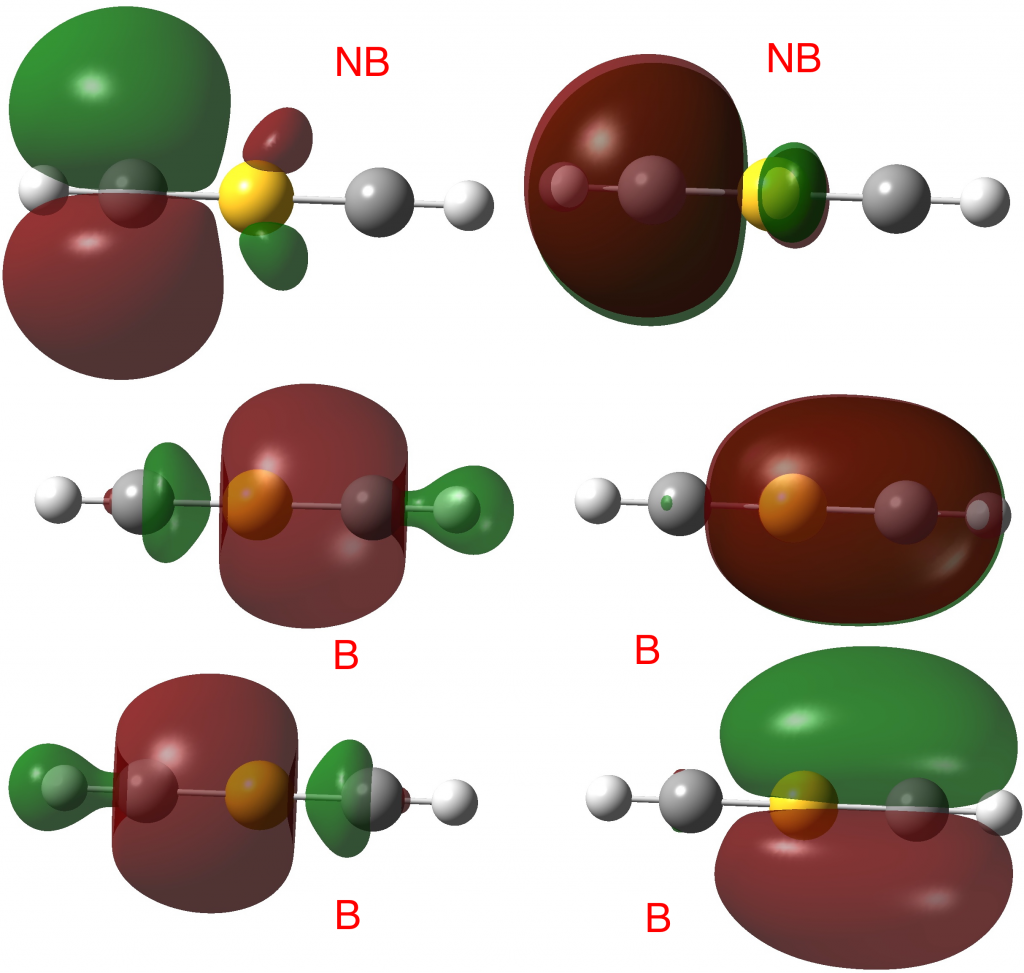
    The linear form reveals the following localized orbitals. Six NBOs are localized to the S-C regions, of which four are bonding, two σ and two π. The remaining four electrons are in two non-bonding lone pairs, with a mild anti-bonding S-C component. So the bond order comes out as ~four, not six! This corresponds to the story told in the earlier blogs that the electrons in excess of the octet tend to occupy either non or antibonding orbitals.

    In fact the full NBO analysis gives a value of 4.0920 for the S bond index and little Rydberg character; S: [core]3S(1.02)3p(3.61)3d(0.13).

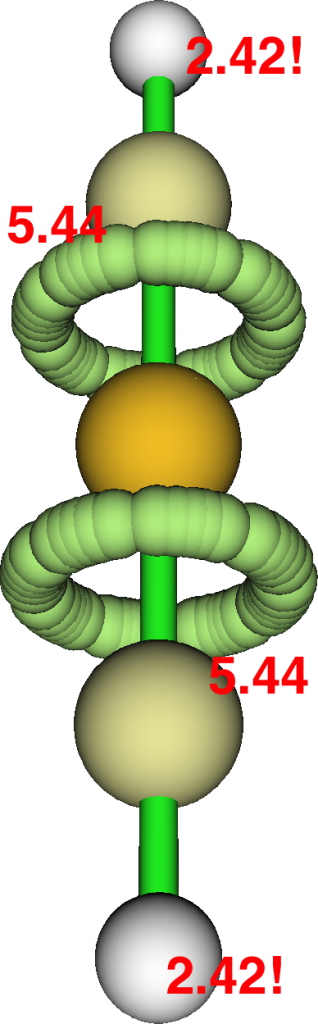
    Next, the ELF analysis, based not on orbitals but the derived electron densities. Each S-C region shows an ELF circular attractor integrating to 5.44e (or 10.88e for the S valence region). So the ELF reflects not only the density arising from bonding orbitals, but the non-bonding ones as well! 

    Take a look at the ELF basin for the two hydrogen atoms; at 2.42e each this shell is ALSO expanded from the normal 2! Apart from the normal C-H localised NBO orbital, one can also see small C-H bonding contributions from the four NBOs labelled B above as well. So ELF analysis of the shared electrons in this species seems to show octet expansion for S and similar shell expansion for H. But we now know that simply taking the ELF basin population and dividing by two to get the bond or valence index can be misleading. The ELF analysis includes non or even anti-bonding density contributions and so it cannot be used to infer hyperbonding (hypervalence).

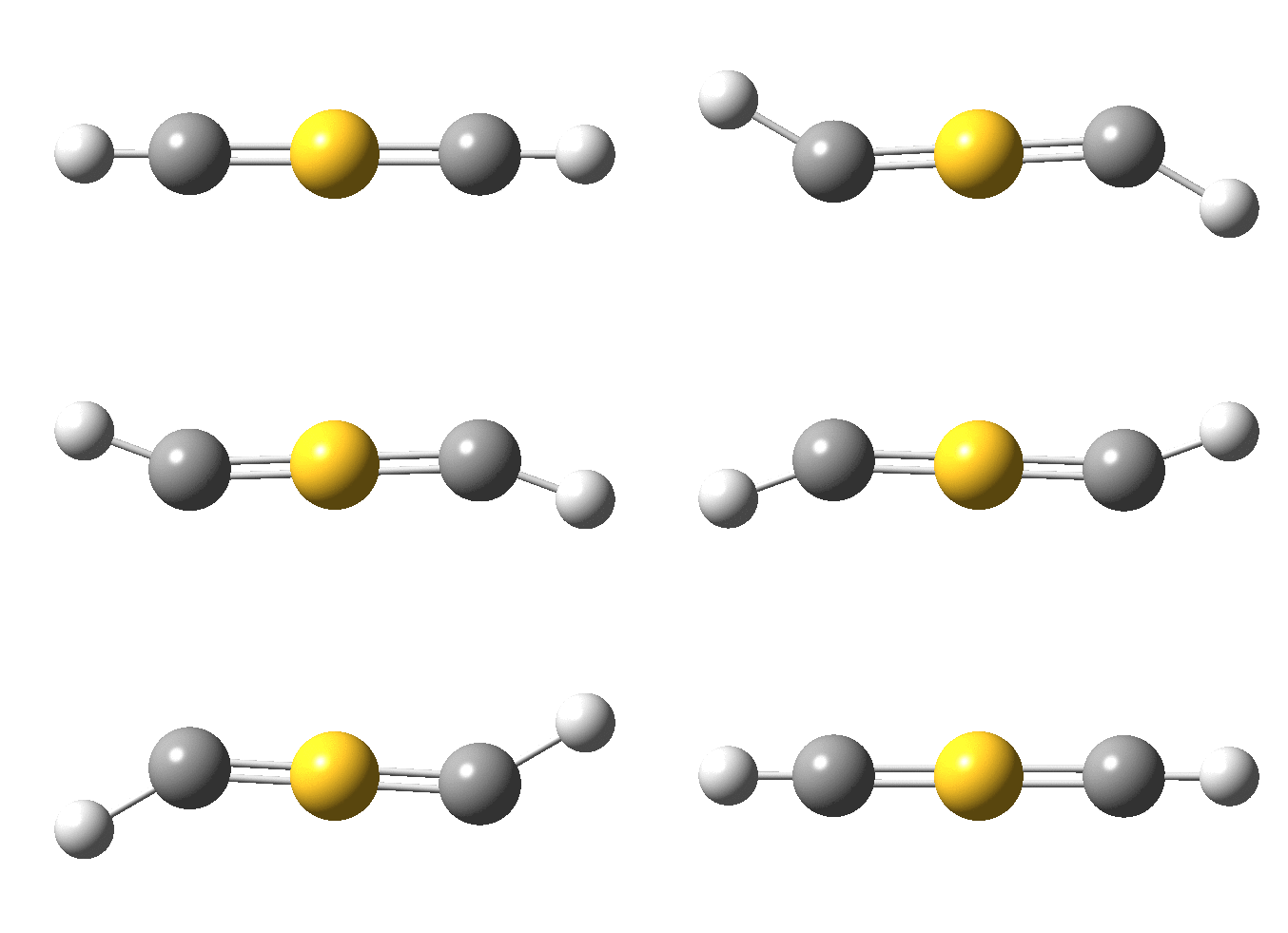
    I must now confess to withholding some vital information from you. The linear HC≡S≡CH molecule is not a minimum, having four computed negative force constants, the normal mode of one of which is animated  below. 

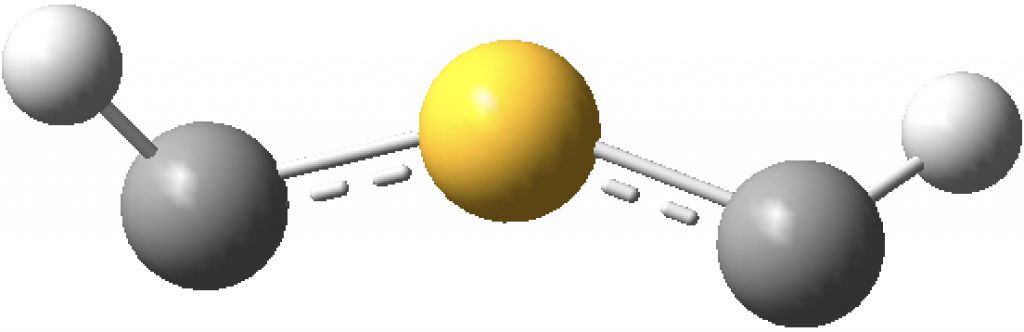
    The true minimum has C2 symmetry as follows and it corresponds to that mysterious structure shown at the top and hitherto not mentioned. This form is 14.6 kcal/mol lower in free energy than the linear variety. 

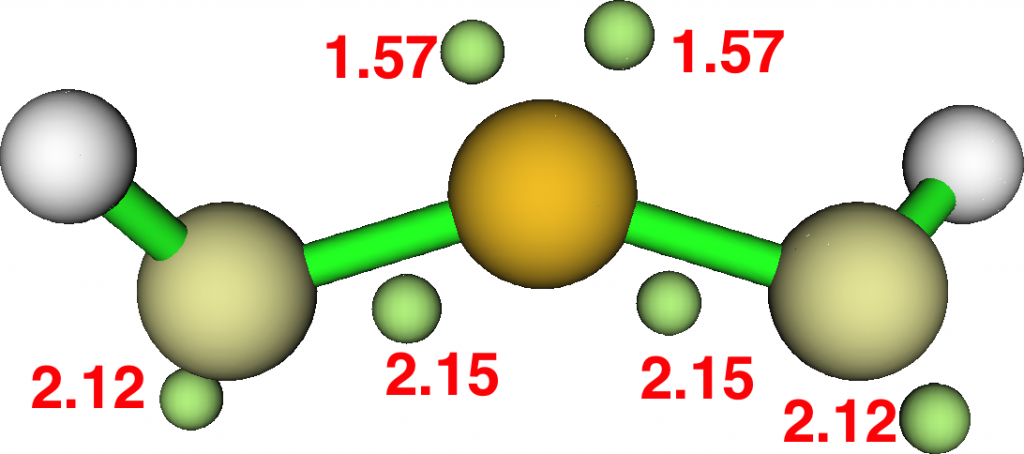
    The ELF analysis confirms this species as bis(carbene), with two “lone pairs” on S. All the octet expansion has vanished; of the ~six electrons hitherto located in each C-S region, four have morphed into lone pairs, leaving only ~two in the S-C regions. The sulfur is now allocated 7.44e, a  “normal” octet.

    At this point, I remind that the great G. N. Lewis himself, the original coiner of the eight electron valence rule, pondered whether acetylene might have a related bis(carbene) form. It is nice to come up with an example of this more than 100 years after his original suggestion.


    FAIR Data DOI for the collection: 10.14469/hpc/3333

  • Twenty one years of chemistry-related Java apps: RIP Java?

    In an earlier post, I lamented the modern difficulties in running old instances of Jmol, an example of an application program written in the Java programming language. When I wrote that, I had quite forgotten a treasure trove of links to old Java that I had collected in 1996-7 and then abandoned. Here I browse through a few of the things I found.

    The collection is at DOI: 10.14469/hpc/2657. Here I track down how some of them are doing 20+ years on.

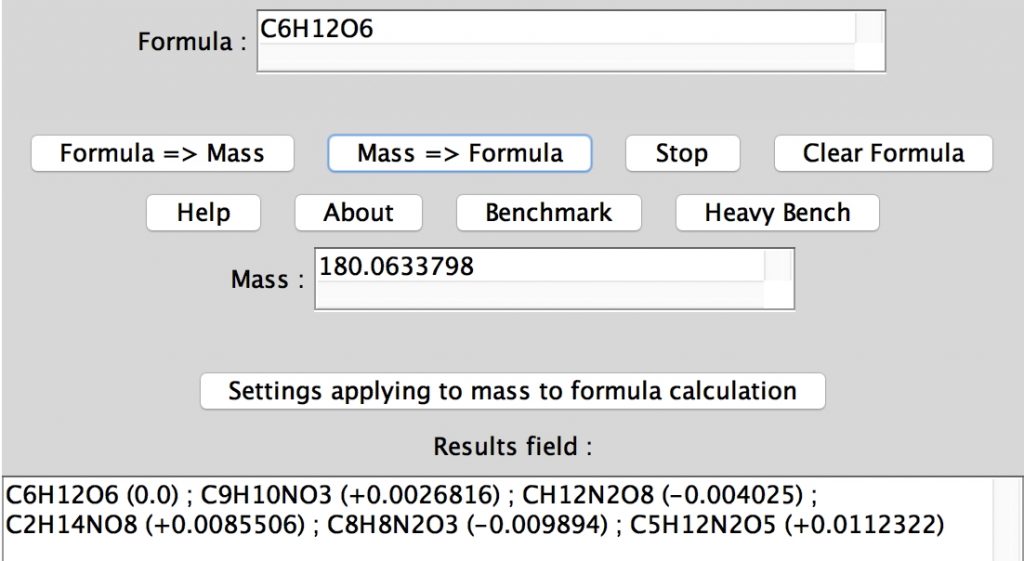
    1. Formula-To-Mass-To-Formula (f2m2f), which was started in August 1996 and was written by Guillaume Cottenceau, a french undergraduate student visiting London and who wanted to learn to program. I suggested he try Java, and as I recollect sent him out to the business park west of London where Sun Microsystems had an office to learn how to do so (they had only released the development kit a few months earlier!). The applet he wrote still works (being unsigned, you have to jump through a few hoops to allow it to run (but be quick, not many browsers will still let you do so!). The applet also has a benchmark feature. Running the heavy bench now takes ~ 0.4s on a laptop.  I cannot be sure,  but I seem to remember that this one took ~20 seconds back in 1997. 
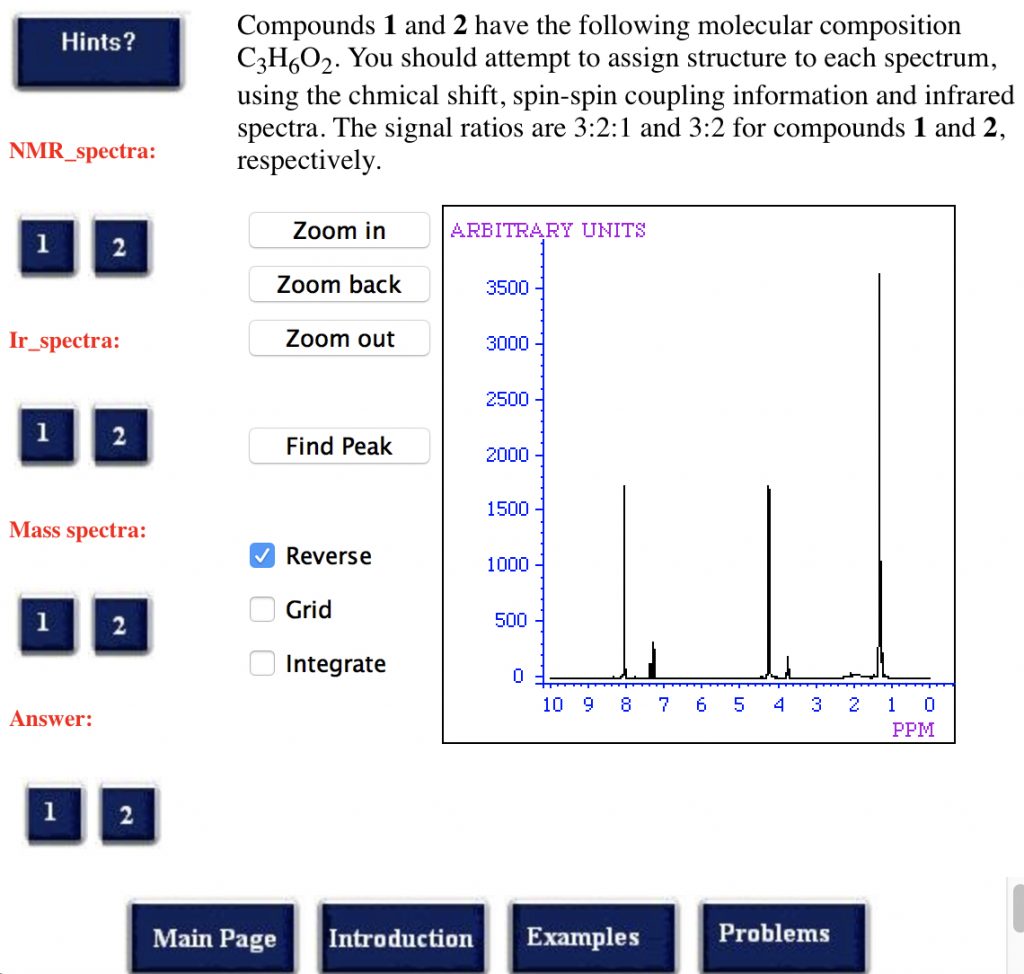
    2. Guillaume then returned to Paris to finish the above off, but also managed to find the time a year later to produce Jspec, a visualiser for NMR and MS. Darek Bogdal was visiting from Poland in August 1997(8?) and he incorporated these tools into a general spectral display and problem solving resource, which also still mostly works (with no curation!). The bit that does not work depended on the Chime plugin, now long gone and of course replaced in large measure by Jmol and now JSmol. 
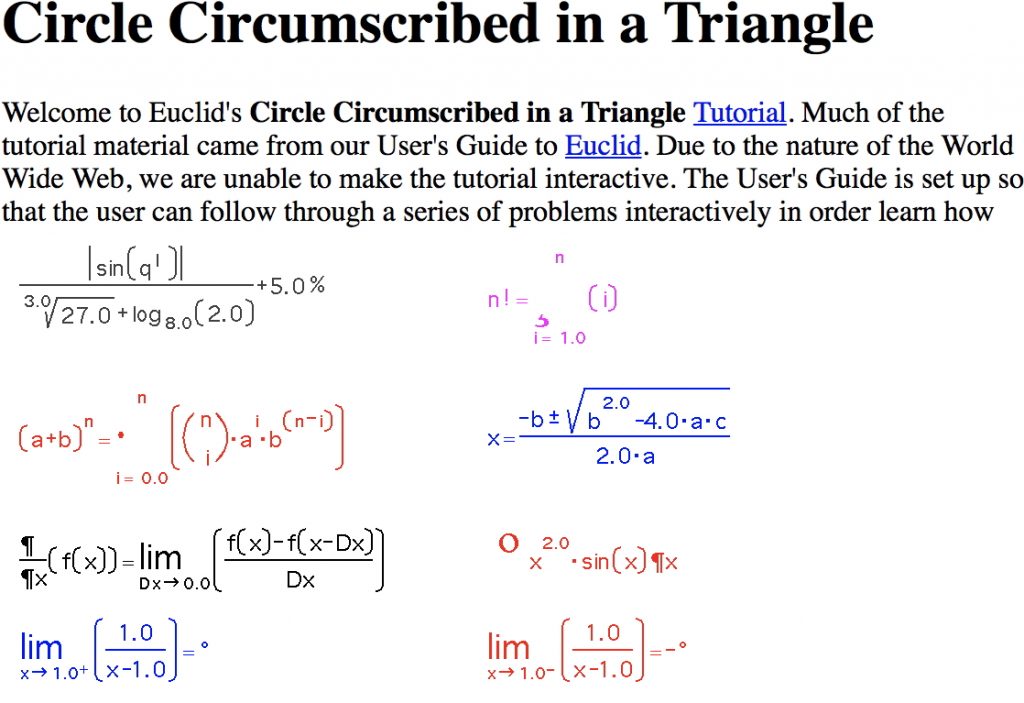
    3. Here is an equation setter. The original site has long gone, but I had copied the classes over and it also (mostly) works!
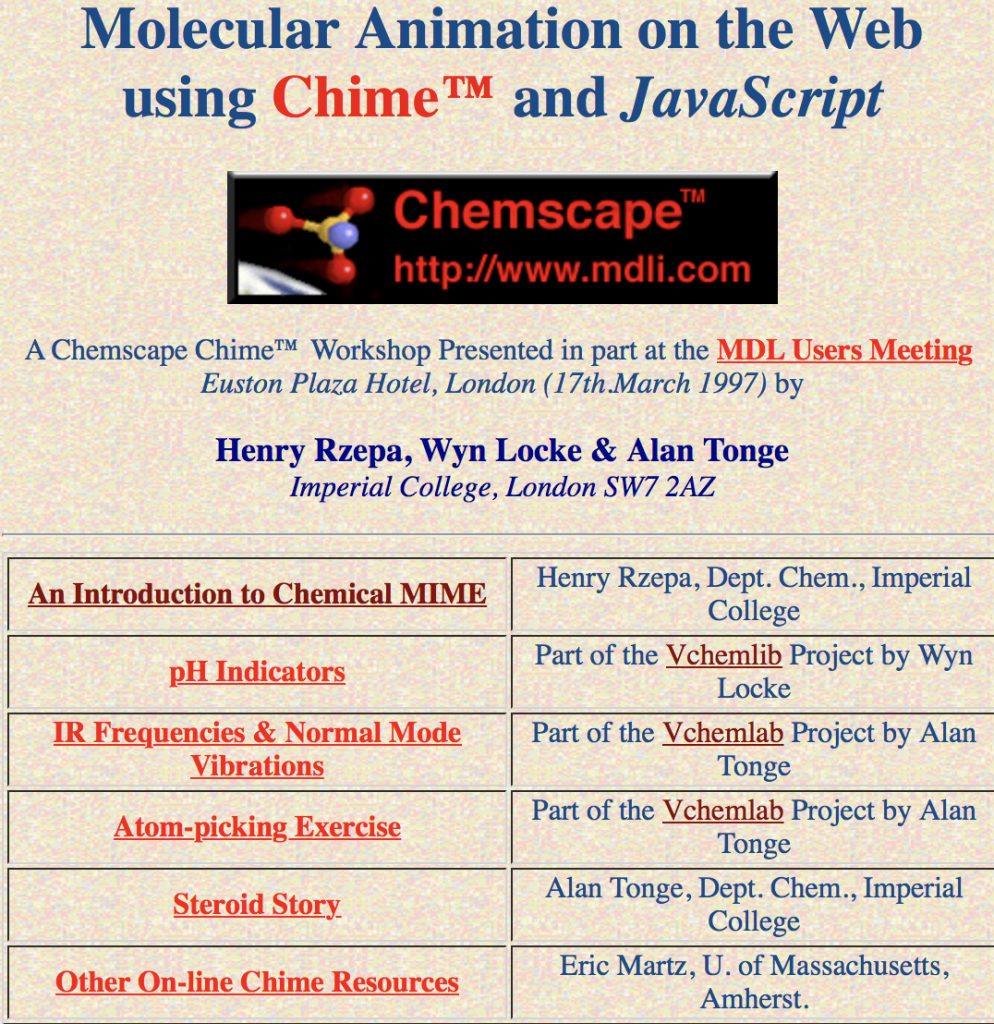
    4. This dates from 1997 by Wyn Locke and Alan Tongue and uses JavaScript plus the spectral viewer to communicate with Chime. All done much better by many others since of course.

    That said, many of the other links at DOI: 10.14469/hpc/2657 no longer work. In truth I am slightly surprised a few still do! 

    Quite possibly these screen shots may be the only visual images that can be created in the very near future, as all but very specialised web browsers drop “plug-in” (aka Java) support. So perhaps it will be RIP Java, at least for the in-browser frame mode (but certainly not for the stand-alone application mode).

  • The Chemistry Department at Imperial College London. A history, 1845-2000.

    The book of the title has recently appeared giving a rich and detailed view over 417 pages, four appendices and 24 pages of photographs of how a university chemistry department in the UK came into being in 1845 and its subsequent history of discoveries, Nobel prizes and much more. If you have ever wondered what goes on in an academic department, populated by and large by very bright and clever personalities and occasionally some highly eccentric ones, then go dip into this book.

    Here you will learn that starting in 1845, the department had 26 enrolled students, each paying a fee to attend lectures and to do experiments in the laboratories. You may observe the changes in laboratory practices over the years, and wonder how many of those early students survived their experiences and lived into old age. The book centres around the people in the department, with many anecdotes and stories about life in such a department, some of the stories about chemistry and some not! The chemistry these people discovered and recorded in journals can be quickly accessed using the (short) DOIs provided for many of the entries in the bibliography.

    Few academic departments can have been documented in such detail. Indeed one must wonder whether the wealth of written material available to the authors, Hannah Gay and Bill Griffith, during this period will be matched by the much more evanescent electronic records that have become prevalent since. Email was introduced into the department around 1987 and I suspect almost all that record has now vanished permanently. I would not envy the task of anyone faced with updating this history from 2001-2050! 

    An aspect that is much harder to document is the daily routines of the undergraduate students. The book has a wealth of information about the practical laboratories and the instruments and apparatus found in the department, but a little less about the changing face of the lectures and associated written materials, the tutorials and problems classes and student’s own interactions with the professors, once the core (academic) activities and experiences of an undergraduate. Nowadays one may well find sessions on entrepreneurship instead of a problems class, or a flipped classroom replacing the lecture.

    My own undergraduate stay in the department was from 1968-1971 and I might append some of those memories to this post in the future. If anyone reading this has their own evocative recollections of being a chemistry undergraduate, either at Imperial or elsewhere, can I invite you to share them here!

  • Revisiting (and maintaining) a twenty year old web page. Mauveine: The First Industrial Organic Fine-Chemical.

    Almost exactly 20 years ago, I started what can be regarded as the precursor to this blog. As part of a celebration of this anniversary,[cite]10.3390/molecules22040549[/cite] I revisited the page to see whether any of it had withstood the test of time. Here I recount what I discovered.

    The site itself is at www.ch.ic.ac.uk/motm/perkin.html  and has the title “Mauveine: The First Industrial Organic Fine-Chemical” It was an application of an earlier experiment[cite]10.1039/P29950000007[/cite] to which we gave the title “Hyperactive Molecules and the World-Wide-Web Information System“. The term hyperactive was supposed to be a play on hyperlinking to the active 3D models of molecules built using their 3D coordinates. The word has another, more negative, association with food additives such as tartrazine – which can induce hyperactivity in children – and we soon discontinued the association. This page was cast as a story about a molecule local to me in two contexts; the first being that the discoverer of mauveine, W. H. Perkin, had been a student at what is now the chemistry department at Imperial College. The second was the realization that where we lived in west London was just down the road from Perkin’s manufacturing factory. Armed with (one of the first) digital cameras, a Kodak DC25, I took some pictures of the location and added them later to the web page. The page also included two sets of 3D coordinates for mauveine itself and alizarin, another dyestuff associated with the factory. These were “activated” using HTML to make use of the then very new Chime browser plugin; hence the term hyperactive molecule.

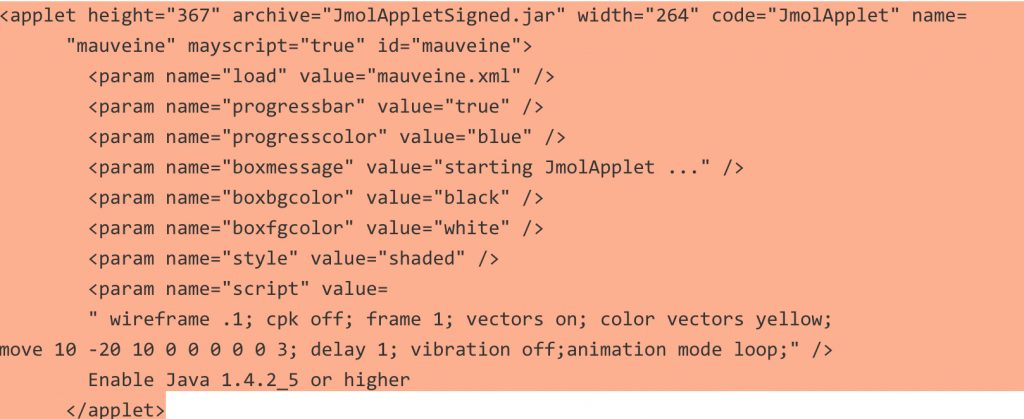
    This first effort, written in December 1995, soon needed revision in several ways. I note that I had maintained the site in 1998, 2001, 2004 and 2006. This took the form of three postscripts to add further chemical context and more recent developments and in replacing the original Chime code for Java code to support the new Jmol software (Chime itself had been discontinued, probably around 2001 or possibly 2004). With the passage of a further ten years, I now noticed that the hyperactive molecules were no longer working; the original Jmol applet was no longer considered secure by modern browsers and hence deactivated. So I replaced this old code with the latest version (14.7.5 as JmolAppletSigned.jar) and this simple fix has restored the functionality. The coordinates themselves were invoked using the HTML applet tag, which amazingly still works (the applet tag had replaced an earlier one, which I think might have been embed?).  A modern invocation would be by using e.g. the JSmol Javascript based tool and so perhaps at some stage this code will indeed need further revision when the Java-based applet is permanently disabled.

    You may also notice that the 3D coordinates are obtained from an XML document, where they are encoded using CML (chemical markup language[cite]10.1021/ci990052b[/cite]), which is another expression from the family that HTML itself comes from. That form may well last rather longer than earlier formats – still commonly used now – such as .pdb or .mol (for an MDL molfile). 

    Less successful was the attempt to include buttons which could be used to annotate the structures with highlights. These buttons no longer work and will have to be entirely replaced in the future at some stage.

    The final part of the maintenance (which I had probably also done with the earlier versions) was to re-validate the HTML code. Checking that a web page has valid HTML was always a behind-the-scenes activity which I remember doing when constructing the ECTOC conferences also back in 1995 and doing so probably does prolong the longevity of a web page. This requires “tools-of-the-trade” and I use now (and indeed did also back in 1995 or so) an industrial strength HTML editor called BBedit. To this is added an HTML validation tool, the installation of which is described at https://wiki.ch.ic.ac.uk/wiki/index.php?title=It:html5 I re-ran this again and so this 2017 version should be valid for a little while longer at least. The page itself now has not just a URL but a persistent version called a DOI (digital object identifier), which is 10.14469/hpc/2133[cite]10.14469/hpc/2133[/cite]. In theory at least, even if the web server hosting the page itself becomes defunct, the page could – if moved – be found simply from its DOI. The present URL-based hyperlink of course is tied to the server and would not work if the server stopped serving.

    To complete this revisitation, I can add here a recent result. Back in 1995, I had obtained the 3D coordinates of mauveine using molecular modelling software (MOPAC) together with a 2D structure drawing package (ChemDraw) because no crystal structure was available. Well, in 2015 such structures were finally published.[cite]10.3184/174751915X14474318419130[/cite] Twenty years on from the original “hyperactive” models, their crystal structures can be obtained from their assigned DOI, much in the same manner as is done for journal articles: Try DOI: 10.5517/CC1JLGK4[cite]10.5517/CC1JLGK4[/cite] or DOI: 10.5517/CC1JLGL5[cite]10.5517/CC1JLGL5[/cite].

    At some stage, web archaeology might become a fashionable pursuit. Twenty year old Web pages are actually not that common and it would be of interest to chart their gradual decay as security becomes more important and standards evolve and mature. One might hope that at the age of 100, they could still be readable (or certainly rescuable). During this period, the technology used to display 3D models within a web page has certainly changed considerably and may well still do so in the future. Perhaps I will revisit this page in 2037 to see how things have changed!


    The old code can still be seen at www.ch.ic.ac.uk/motm/perkin-old.html

    It should really be postscript 4.

  • The “hydrogen bond”; its early history.

    My holiday reading has been Derek Lowe’s excellent Chemistry Book setting out 250 milestones in chemistry, organised by year. An entry for 1920 entitled hydrogen bonding seemed worth exploring in more detail here.

    As with many historical concepts, it can often take a few years to coalesce into something we would readily recognise today, and hydrogen bonds are no exception. Wikipedia is another source of the history and it cites a 1912 article as the origin of the term in relation to the solvation of amines[cite]10.1039/CT9120101635[/cite] but also notes that the better known setting of water occurs later in 1920.[cite]10.1021/ja01452a015[/cite] Here I try to capture the essence of the concept with a few diagrams taken from these two articles.

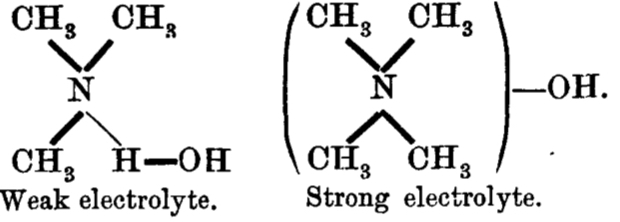
     Firstly “The state of amines in aqueous solution“[cite]10.1039/CT9120101635[/cite] which is mostly concerned with the measurement of ionization constants of primary, secondary and tertiary amines. It boils down to the below:

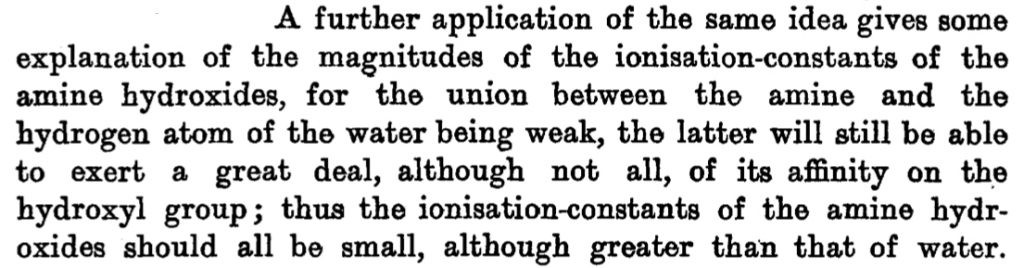
    and the connection to ionization is laid out as:

    Since in 1912, Lewis’ electron pair theory of the covalent bond had not yet emerged, the authors use the terms “strong union” and “weak union”, and of course it is the “weak union” that we now know of as the hydrogen bond. Some other comments about this seminal diagram:

    1. The article contains the very explicit and modern term stereochemical, which is used in a manner that suggests it was already common. But there is only a hint at most that the nitrogen atoms might be tetrahedral, or that the “weak union” between (what we now think of as the lone pair on) the nitrogen and the hydrogen of the water is directional.
    2. The second weak union between the tetramethyl ammonium (which we now describe as a cation) and the hydroxide (now described as an anion; both terms are however implied by the description strong electrolyte) is probably not what we would now call a hydrogen bond, more an intimate ion-pair.

    The second article in 1920 on water itself[cite]10.1021/ja01452a015[/cite] is post-Lewis, but perhaps applied in a manner which we would not entirely agree with nowadays. Thus dinitrogen, N≡N is shown as below with just a single connecting bond.

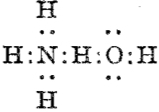
    Then we get the interaction between ammonia and water, analogous to the example shown above:

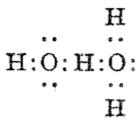
    and for water itself:

    which in each case shows the central hydrogen having what we now call a valence shell of four electrons, and hence more equivalent to the “strong unions” above. This shows that in 1920 chemists were rapidly adopting Lewis’ representations, but not always entirely successfully.

    On balance, I think the 1912 article sets out the modern concept of a hydrogen bond representing a weak union to a hydrogen rather better than the Latimer and Rodebush attempt (at least diagrammatically).


    Stereochemical notation is discussed in this post, and it dates from the 1930s.

    The modern take is explored here, in which the equilibrium set up between a “weak union” between ammonia and water (the weak electrolyte) and an isomeric “strong union” which represents ionization into an ammonium hydroxide ion-pair (the strong electrolyte) is favoured for the former by ΔG ~6 kcal/mol.

    The equilibrium between a “weak union” of two water molecules and the fully ionized strong union of hydronium hydroxide favours the former by ΔG ~23 kcal/mol.

     This 1920 representation does imply symmetry for the hydrogen, being ~equally disposed between the two oxygens. We now know that such symmetric hydrogen bonding is not unusual (see this post for how to fine-tune a hydrogen bond into this situation) but rather than requiring four electrons as implied in the diagram above, it is now better described as a three-centre-two-electron bond instead.


    This post has DOI: 10.14469/hpc/10732


  • Bond stretch isomerism. Did this idea first surface 100 years ago?

    The phenomenon of bond stretch isomerism, two isomers of a compound differing predominantly in just one bond length, is one of those chemical concepts that wax and occasionally wane.[cite]10.1016/S1631-0748(02)01380-2[/cite] Here I explore such isomerism for the elements Ge, Sn and Pb.

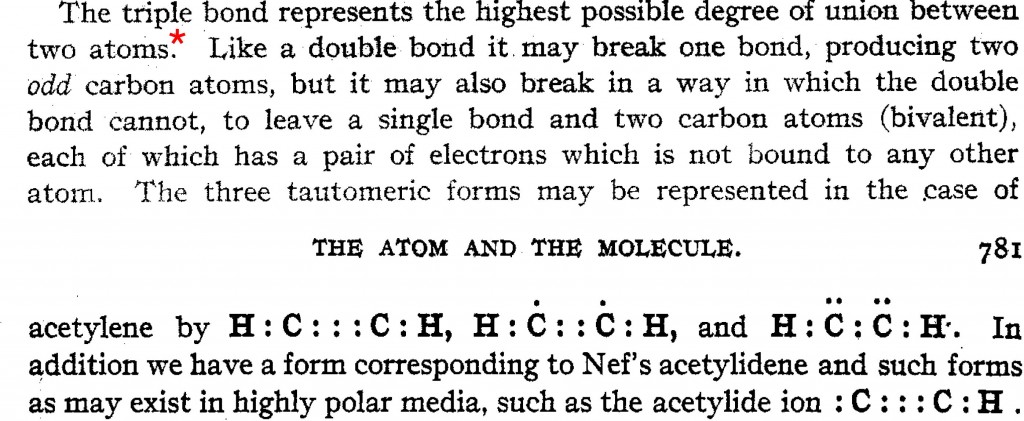
    In one earlier post, I noted a form of bond stretch isomerism that can arise from a Jahn-Teller distortion ending in two different geometries in which one or more pairs of bonds swap short/long lengths. Examples include substituted cyclo-octatetraenes[cite]10.1039/P29920001951[/cite] and octahedral d9-Cu(II) complexes.[cite]10.1021/ja905399x[/cite] A more interesting seminal possibility was implied by G. N. Lewis a century ago when discussing the arrangement of electrons in a (carbon-carbon) triple bond.[cite]10.1021/ja02261a002[/cite]

    lewis1
    *It took ~50 years to prove this assertion wrong.[cite]10.1021/ic50025a016[/cite]

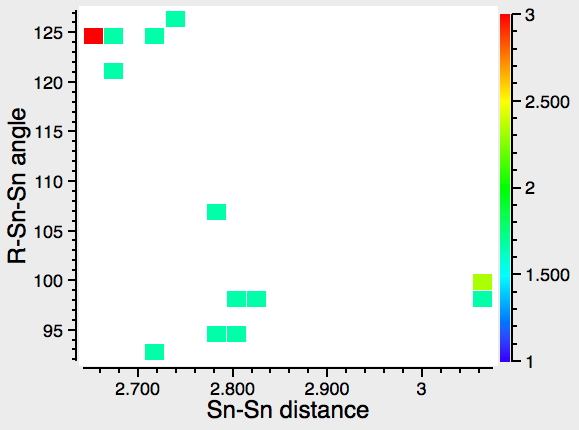
    In a commentary, I reported the results of a search of the crystal structure database for the geometries associated with RX≡XR systems (X= C, Si, Ge, Sn, Pb). Here I focus the search[cite]10.14469/hpc/249[/cite] specifically for X=Sn,Ge; this version of bond stretch isomerism also allows angles to change (= rehybridisation at atoms) in order to provide a mechanism for a barrier separating the two forms.

    For X=Sn, note the presence of up to three clusters, although the relatively low number of hits makes the statistics less certain.

    1. The hotspot cluster centered around angles of 125° and a Sn-Sn distance of ~2.6Å.
    2. Another with angles of <100° and Sn-Sn distances of ~3.3Å.
    3. A third with angles of <100° and Sn-Sn distances of 2.8Å, which may or may not be a genuine unique form of bonding.

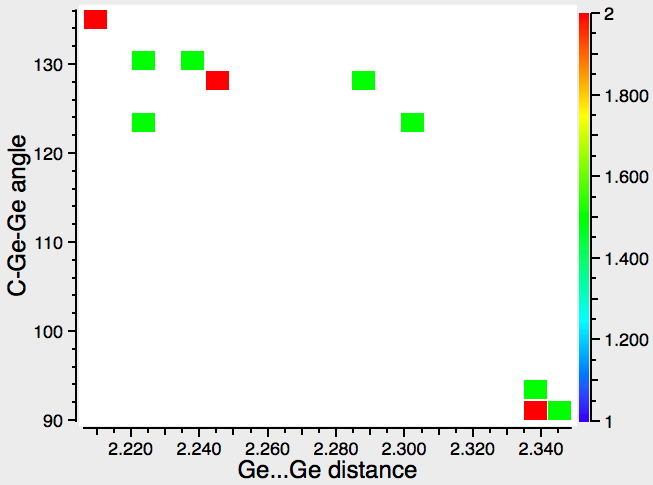
    This pattern was commented on in 2010 by Power[cite]10.1039/C0SC00240B[/cite], whose group synthesized most of the examples in the hits above. A plot of compounds with Ge-Ge bonds reveals both similarity with (two, possibly three clusters) and difference from (the clusters are closely spaced in terms of the Ge-Ge bond length, but separated in terms of angle) Sn.

    GeGe

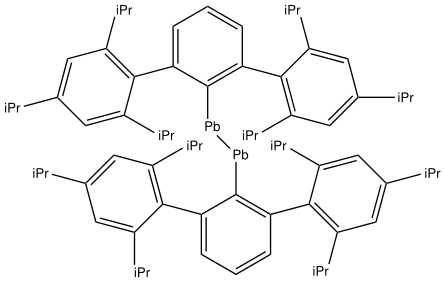
    Time for some computations (which at least will remove random errors in the geometry). I selected the only known example of an RPb-PbR compound[cite]10.1021/ja993346m[/cite] as a seed and put it through a B3LYP+D3/Def2-TZVPP calculation (with 172 atoms and 2920 basis functions, this is a relatively large calculation!), which reproduces the known structure pretty well (table).

    QIMQUY

    So what about another bond stretch isomers? The Pb=Pb variation is indeed a stable minimum around 28.0 kcal/mol above the known structure, which seems to put this form out of experimental reach (with this ligand/aryl group at least). With Sn for the same aryl ligand, the energy difference is smaller (~15.8 kcal/mol for this ligand; Powers reports other systems where the energy difference may be only ~5 kcal/mol). Judging by the distribution of the 13 hits recovered from the CSD search, both bond stretch isomers may be accessible experimentally. The calculations show that the GeGe bond isomers are much closer in energy than SnSn (for this ligand). For all three metals however, the calculated difference in the metal-metal length for the two isomers is ~0.45 – 0.52Å. This strongly suggests that whereas the SnSn plot above is demonstrating bond length isomerism, the GeGe plot may not be; at least not of the same type that the calculations here are revealing (via the Wiberg bond orders).

    System Relative energy XX distance RXX angle Wiberg bond order DataDOI
    Pb=Pb +28.0 2.767 118.7 1.666 [cite]10.14469/ch/191856[/cite]
    Pb-Pb 0.0 3.215 (3.188)[cite]10.1021/ja993346m[/cite] 93.7 (94.3)[cite]10.1021/ja993346m[/cite] 0.889 [cite]10.14469/ch/191873[/cite]
    Sn=Sn +15.8 2.640 123.1 1.911 [cite]10.14469/ch/191884[/cite]
    Sn-Sn 0.0 3.126 95.5 0.892 [cite]10.14469/ch/191881[/cite]
    Ge=Ge +0.5 2.263 125.2 2.138 [cite]10.14469/ch/191882[/cite]
    Ge-Ge 0.0   2.777 99.7 0.866 [cite]10.14469/ch/191883[/cite]

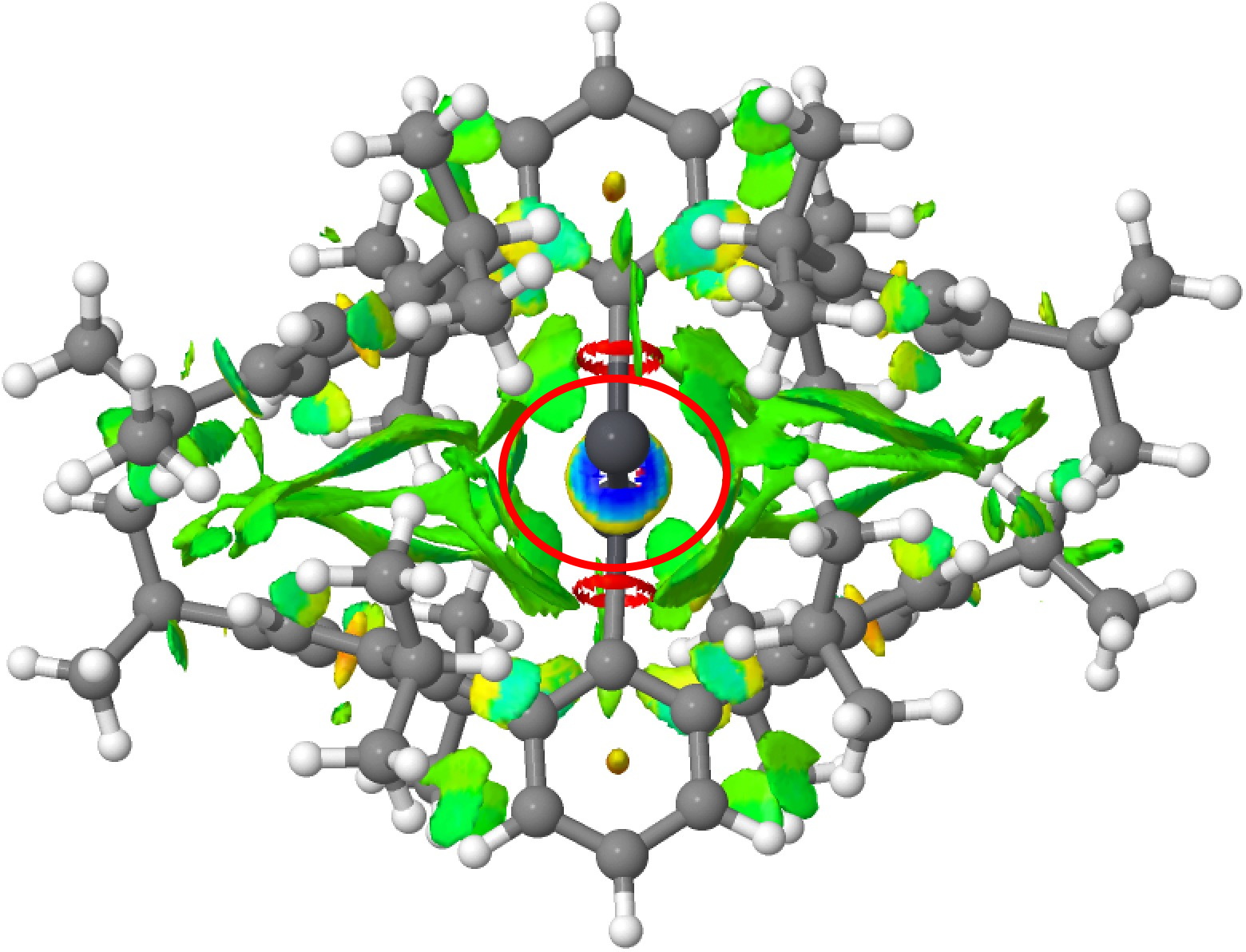
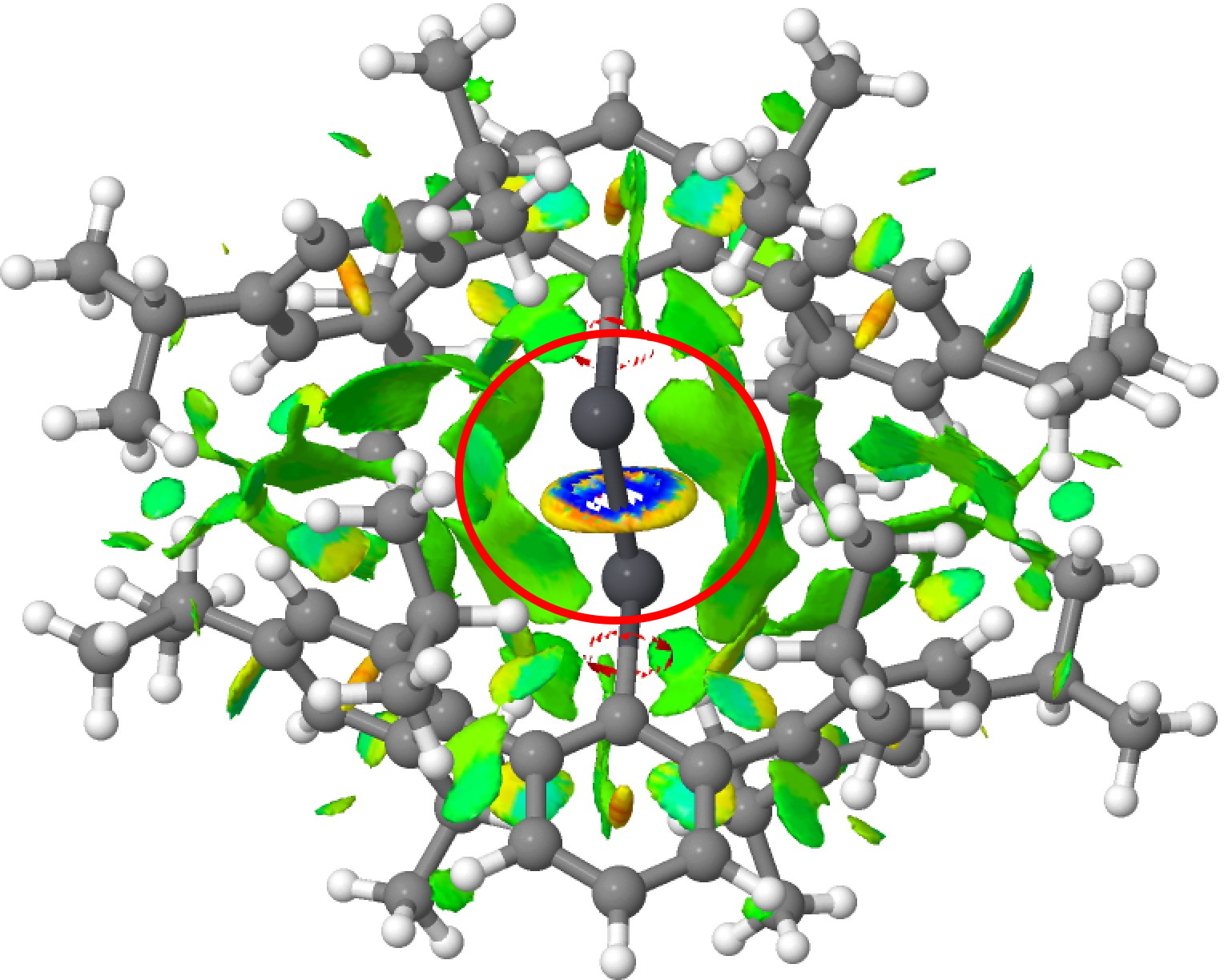
    No doubt the particular bond length form is being facilitated by the nature of the ligand and the steric interactions therein imparted, both repulsive AND attractive. These interactions can be visualised via NCI (non-covalent-interaction) plots (click on the image to obtain a rotatable 3D model). First Pb-Pb followed by Pb=Pb. Note how in both cases, the PbPb region is enclosed in regions of weak attractive dispersion interactions, which however avoid the "hemidirected" inert Pb lone pairs.[cite]10.1039/C4DT01406E[/cite]

    Pb-Pb Pb=Pb

    So in the end we have something of a mystery. There is evidence from crystal structures that at least two bond-stretch isomers of RSnSnR compounds can form, but the calculations indicate that the Sn=Sn form is significantly higher in energy (although not impossibly so for thermal accessibility). Conversely, the Ge=Ge equivalent is very similar in energy to a Ge-Ge form with a significantly longer bond length, but there seems no crystallographic evidence for such a big difference in bond lengths. Perhaps the answer lies with the ligands?

    It seems particularly appropriate on the centenary of G. N. Lewis' famous paper in which he clearly notes the possibility of three isomeric forms for the triple bond, to pay tribute to the impact his suggestions continue to make to chemistry.


    The individual entries can be inspected via the following dois: [cite]10.5517/CCYYS5T[/cite],[cite]10.5517/CC6942P[/cite],[cite]10.5517/CCTWKLT[/cite],[cite]10.5517/CCTWKMV[/cite],[cite]10.5517/CCTWKPX[/cite],[cite]10.5517/CCTWKQY[/cite],[cite]10.5517/CCTWKRZ[/cite],[cite]10.5517/CCTWKT1[/cite],[cite]10.5517/CCNYK04[/cite],[cite]10.5517/CC7FYSC[/cite]

    You can view individual entries via the following DOIs: [cite]10.5517/CC13R2MK[/cite],[cite]10.5517/CCT4VVM[/cite],[cite]10.5517/CC136VY3[/cite],[cite]10.5517/CC9ZXBH[/cite],[cite]10.5517/CC61ZRY[/cite],[cite]10.5517/CCTWKS0[/cite],[cite]10.5517/CCTWKNW[/cite],[cite]10.5517/CCTWKKS[/cite],[cite]10.5517/CCYYS4S[/cite],[cite]10.5517/CCYYS3R[/cite]


    Acknowledgments

    This post has been cross-posted in PDF format at Authorea.

  • I’ve started so I’ll finish. The ionisation mechanism and kinetic isotope effects for 1,3-dimethylindolin-2 one

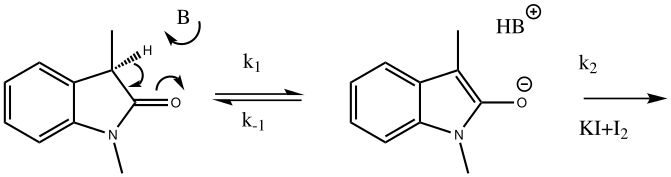
    This is the third and final study deriving from my Ph.D.[cite]10.1039/P29750001822[/cite]. The first two topics dealt with the mechanism of heteroaromatic electrophilic attack using either a diazonium cation or a proton as electrophile, followed by either proton abstraction or carbon dioxide loss from the resulting Wheland intermediate. This final study inverts this sequence by starting with the proton abstraction from an indolinone by a base to create/aromatize to a indole-2-enolate intermediate, which only then is followed by electrophilic attack (by iodine).  Here I explore what light quantum chemical modelling might cast on the mechanism.

    Indole diazocoupling

    The concentration of I3 is used to follow the reaction, given by the expression:  [I3] = k1[B][indolinone]t – k-1/k2*ln[I3] + const, where  k2* = k2/715[I] + k2' , the latter being the rate coefficient for the reaction between the enolate intermediate and I3. With appropriate least squares analysis of this rate equation, a value for k1 using either 1H or 2H (≡ D) isotopes can be extracted and this gives an isotope effect k1H/k1D of 6.3 ± 0.6. Note that this value does NOT depend on [B]. Here, I am going to try to see if I can construct a quantum mechanical model which reproduces this value.

    Indole diazocoupling

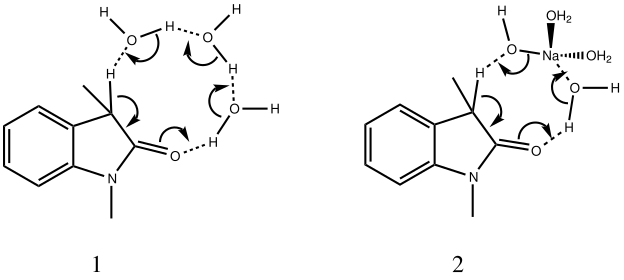
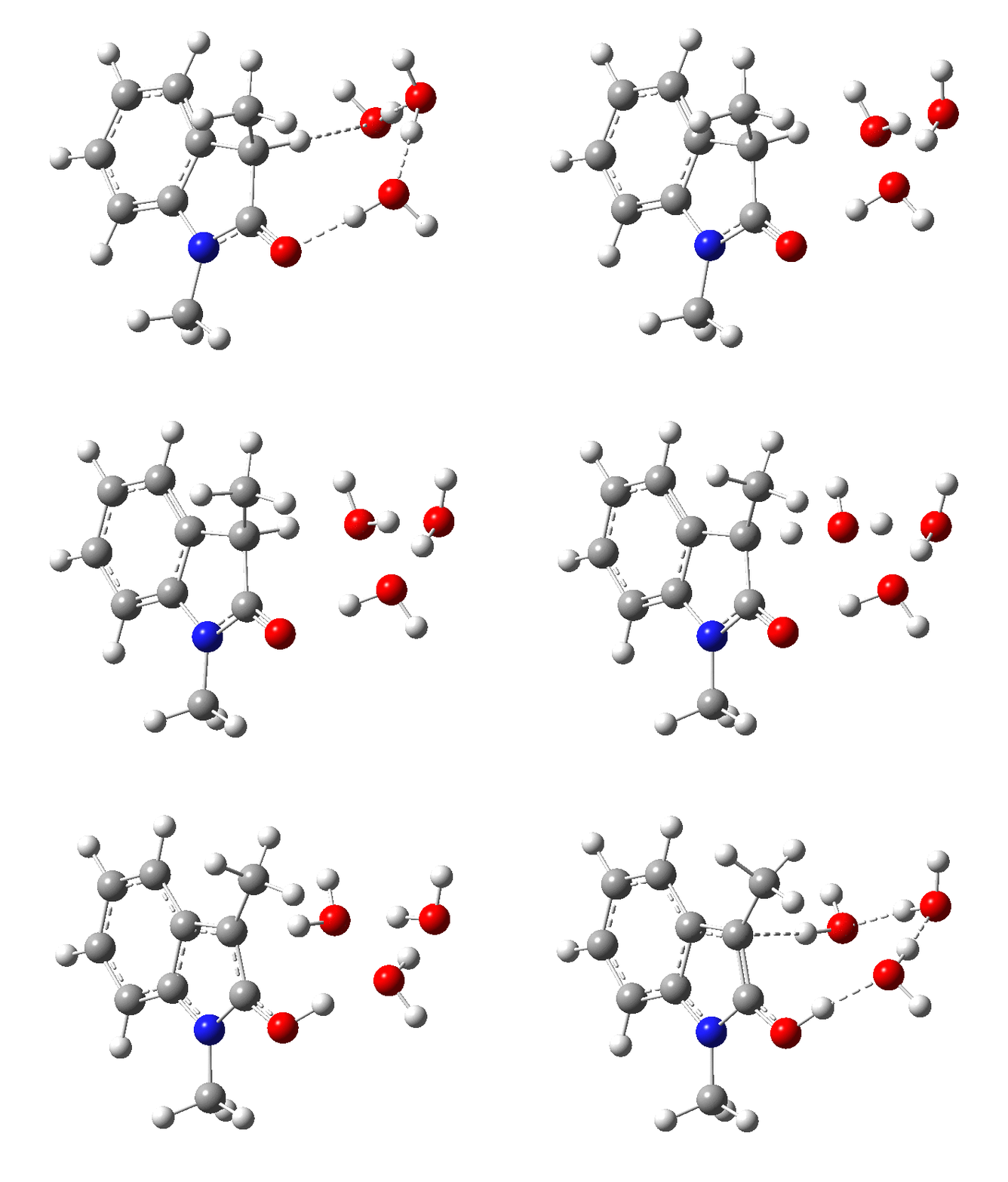
    1. Model 1 uses just three water molecules as a proton relay (B3LYP+D3/Def2-TZVP/SCRF=water).
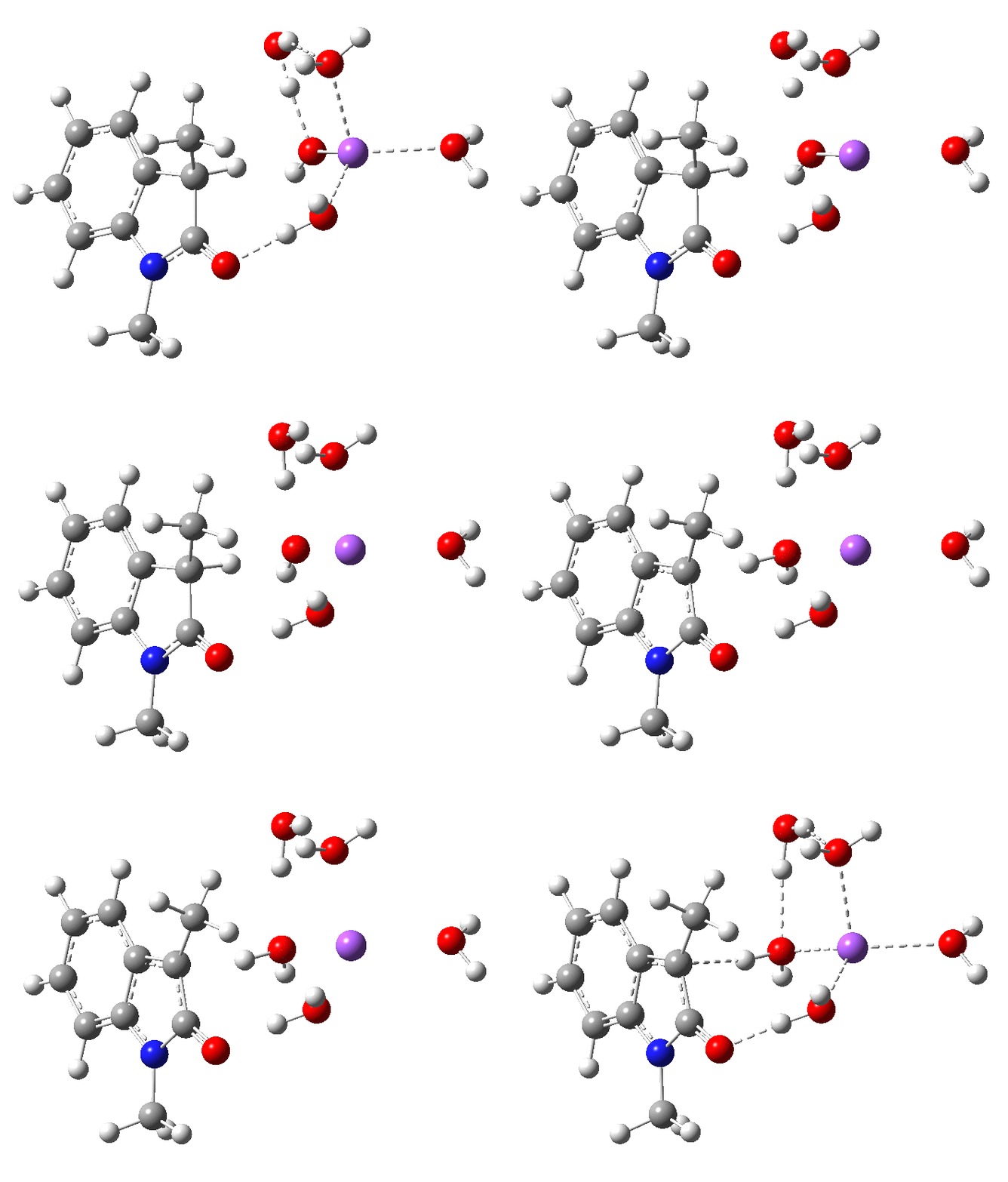
    2. Model 2 uses 2H2O.NaOH solvated by two extra passive water molecules. Since under these conditions, the NaOH is largely ionic, [B] ≡ [OH]
    Model ΔG298 (ΔH298) kH/kD (298K) DataDOIs
    1 28.0 (22.9) 10.3 [cite]10.14469/ch/191786[/cite],[cite]10.14469/ch/191765[/cite],[cite]10.14469/ch/191784[/cite]
    2 2.5 (2.8) 4.4 [cite]10.14469/ch/191787[/cite],[cite]10.14469/ch/191782[/cite],[cite]10.14469/ch/191785[/cite]

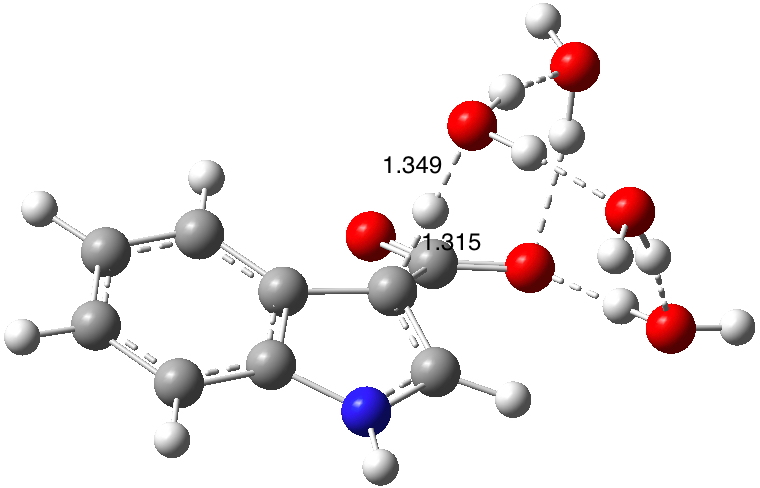
    The plot of rate vs [B] shows[cite]10.1039/P29750001822[/cite] that the uncatalysed (water) rate is very slow (intercept passes more or less through zero) and the calculated free energy barrier (28.0 kcal/mol) confirms a slow rate at ambient temperatures. Note in the final (aromatized) product, there is a noticeable hydrogen bond between the 3-carbon and a water molecule (2.14Å). The calculated kinetic isotope effect[cite]10.14469/hpc/202[/cite] is substantially larger than observed experimentally for the base catalysed contribution.

    Indolineone ionization using 3 water molecules

    In the presence of NaOH (standard state = 1 atm = 0.044M), the enthalpy barrier drops very substantially to 2.8 kcal/mol and the free energy to 2.5 kcal/mol. Similar behaviour was noted previously on this blog for the hydrolysis of thalidomide. Although the magnitude of the reduction in barrier in fact implies an extremely fast reaction, recollect that [B]=[OH] appears in the rate equation  and since its value is very much less than 0.044M, the observed rate is relatively slow.

    Indolineone ionization using 3 water molecules + NaOH

    The calculated KIE for the hydroxide catalysed mechanism is much smaller that for the water route, but also smaller than is observed. This is a value uncorrected for tunnelling, which given the small barrier might be significant. 

    These calculations show how a model for ionization of indolinone can be constructed, and used to e.g. probe the sensitivity of KIE to perturbations induced by ring substituents, which may form the basis of a future post.


    This is a non-linear equation with kinetics that straddle zero and first order behaviour. In 1972, it was not easily possible to graph such functions in a manner where the slope of a linear plot would yield the rate constant. It was only computers and languages such as Fortran which allowed such non-linear least squares analysis of the rate. In the event, it turned out that the presence of 50% methanol in the mixed aqueous solutions was the cause; in other solvents the kinetics approximated zero order behavour very well.


    Acknowledgments

    This post has been cross-posted in PDF format at Authorea.

  • I’ve started so I’ll finish. Mechanism and kinetic isotope effects for protiodecarboxylation of indoles.

    Another mechanistic study we started in 1972[cite]10.1039/P29770000281[/cite] is here 40+ years on subjected to quantum mechanical scrutiny.

    Indole diazocoupling

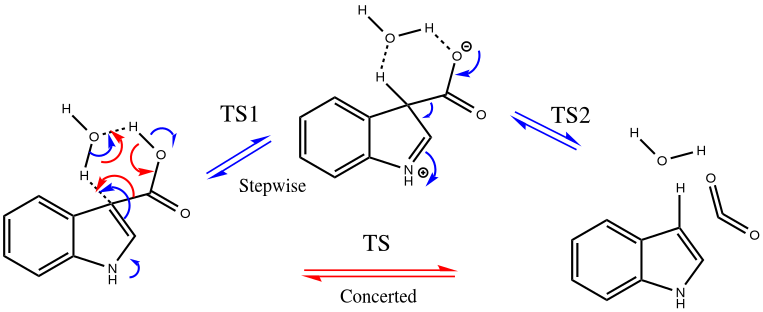
    The kinetics are again complex, the mechanism involving protonation of the indole carboxylate (by a general acid), followed by the presumption of a zwitterionic Wheland intermediate that then loses carbon dioxide in a second step (blue arrows). Kinetically indistinguishable is a concerted alternative in which both steps are conflated into a concerted but not necessarily synchronous process (red arrows). In 1972, this latter mechanistic alternative was never really considered, iin part because it was not easy to prove or disprove an asynchronous concerted route by experiment. A brief summary of the conclusions:

    1. The reaction was found to be catalysed by a general acid.
    2. But a residual rate at low acid concentration was measured, corresponding to catalysis by water as an acid (shown in the scheme above).
    3. A deuterium isotope effect of ~2.2-2.7 on the apparent protonation step was observed when the reaction was conducted in D2O rather than H2O (the disentangled complex kinetics yielded isotope effects for two other kinetic parameters as well, also in the range 2.0-2.6).
    4. The isotope effects were found to be insensitive to various substituents on the indole, leading to the final conclusion that isotope effects for proton transfer are little influenced by the symmetry of the process.

    Here, I set out to test some of these forty-year old assumptions; in particular to see if a model can be constructed that reproduces the unusually low value of the primary deuterium kinetic isotope effect, since normally proton transfers to carbon sustain a value closer to 7.

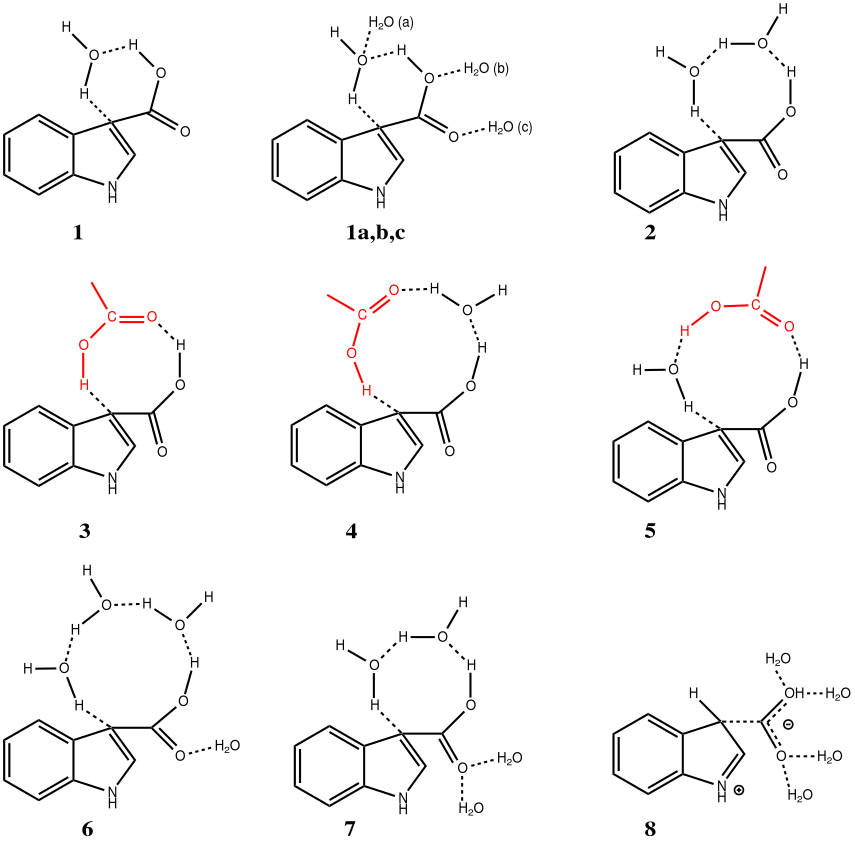
    Now for the mechanism. Shown below are eight potential models for the process.

    1. Model 1 is the most basic, with just a single water molecule delivering a proton to the 3-position of the indole and abstracting it from the carboxylic acid group.
    2. Models 1a, 1b and 1c add a second water as a passive hydrogen bonder.
    3. Model 2 is isomeric to 1a,b,c but the second water now actively participates in the proton relay.
    4. Model 3 replaces the single water molecule with a more acidic proton relay molecule, ethanoic acid (red).
    5. Models 4 and 5 augment model 3 with one water molecule as well, in two different positions.
    6. Model 6 uses a three-water proton relay with one H-bonding water.
    7. Model 7 uses a two-water proton relay with two H-bonding waters.

    Indole diazocoupling

    The results of a B3LYP+D3/Def2-TZVP/SCRF=water calculation are collected below in the table. The following conclusions can be drawn:

    1. Model 1, with just a single water molecule acting as proton transfer acid/base reveals a concerted route via TS. 
    2. Model 1b, with an extra water acting via a hydrogen bond now changes the mechanism to stepwise via  TS1 and  TS2, the latter being some 12.6 kcal/mol lower in energy and hence making  TS1 rate determining. The kinetic deuterium isotope effect (KIE) on  TS1 of  7.27 is much larger than is observed.  That for the second step TS2 is negligible.
    3. Model 2, isomeric with 1b, is lower by 4 kcal/mol, largely due to a more favourable geometry for linear proton transfer. The KIE is getting closer to the observed value as is the free energy barrier (measured as ΔG298 22 kcal/mol[cite]10.1039/P29770000281[/cite]).
    4. Model 3 replaces the water proton transfer agent by ethanoic acid, with a significant lowering of the barrier. This constitutes a prediction for protiodecarboxylation in ethanoic acid solutions.
    5. Models 4 and the isomeric 5 now combines models 2+3, and represents one possibility for general acid catalysis in aqueous ethanoic acid solutions. The KIE is predicted to rise significantly (again, this experiment has not been done).
    6. Model 7 incorporates model 2 (a two-water proton relay) with two additional passive water molecules acting via hydrogen bonds. The barrier is converging to the measured value, and the KIE has now dropped below the measured value! As before TS2 is lower (by 6.8 kcal/mol) than TS1.
    7. Model 6 (below) is isomeric with model 7 and incorporates a three-water proton relay with one solvating water, with a predicted KIE higher than model 6.

    Indole diazocoupling

    Model ΔG298 dataDOIs Mechanism kH/kD [cite]10.14469/hpc/179[/cite]
    1 33.8 [cite]10.14469/ch/191738[/cite],[cite]10.14469/ch/191728[/cite] TS[cite]10.14469/ch/191735[/cite] 9.88
    1a 35.6 [cite]10.14469/ch/191737[/cite],[cite]10.14469/ch/191733[/cite]
    1b 33.8 (21.2) [cite]10.14469/ch/191737[/cite],[cite]10.14469/ch/191732[/cite],[cite]10.14469/ch/191748[/cite] TS1,TS2[cite]10.14469/ch/191741[/cite] 7.27 (1.05)
    1c 33.9 [cite]10.14469/ch/191737[/cite],[cite]10.14469/ch/191729[/cite]
    2 29.9 [cite]10.14469/ch/191737[/cite],[cite]10.14469/ch/191731[/cite] TS1,TS2[cite]10.14469/ch/191739[/cite] 4.20
    3 20.9 [cite]10.14469/ch/191745[/cite],[cite]10.14469/ch/191743[/cite] TS1,TS2[cite]10.14469/ch/191749[/cite] 4.29
    4 25.7 [cite]10.14469/ch/191747[/cite],[cite]10.14469/ch/191734[/cite] TS1,TS2[cite]10.14469/ch/191751[/cite]
    5 24.4 [cite]10.14469/ch/191747[/cite],[cite]10.14469/ch/191742[/cite] TS1,TS2[cite]10.14469/ch/191754[/cite] 8.55
    6 23.9 [cite]10.14469/ch/191753[/cite],[cite]10.14469/ch/191755[/cite] TS1,TS2 5.66
    7 24.3 (8:17.9) [cite]10.14469/ch/191753[/cite],[cite]10.14469/ch/191750[/cite],[cite]10.14469/ch/191752[/cite] TS1,TS2[cite]10.14469/ch/191756[/cite] 1.44

    These models show that the arrangements of the solvation and proton-relay components of the mechanism are crucial to understanding the kinetic isotope effects induced by deuterium. The partition function ratios responsible for the KIE emerge[cite]10.14469/hpc/179[/cite] as a complex function of the structure and so the KIE itself provides a particularly sensitive probe of these structures. This exploration is not stochastical in nature;  there are clearly many more variations in which even more than four water molecules could be used in the model. One would take the Boltzmann population/weight of each pose and use these to predict the statistical probability of properties such as the KIE. Working in the other direction and from the results shown in the table, a population of ~25% of model 6 and 75% of model 7 would give a KIE in agreement with experiment. A more complete stochastical model would no doubt include many more solvation structures.

    In 1972, transition state models could only be slowly and painfully constructed by accumulating kinetic data and making many assumptions. Quantum computation provides a more systematic and rational way in which to base the assumptions. What has emerged for this reaction is that the rate determining protonation of a 3-carboxyindole prior to its decarboxylation is largely defined by the solvation structures that accumulate in the transition state;  we are really learning about solvation here rather than just proton transfer. The two techniques together, experimental kinetics and quantum chemical modelling, are true symbiotes in each informing the other.


    Here is a crystal structure which shows an O-H hydrogen bond to the π-face of the indole 5-ring, indicating the indole π-system is basic enough to hydrogen-bond with an acidic proton.[cite]10.5517/CC10K1M7[/cite] This water molecule has an additional role, which I will describe in a separate post.


    Acknowledgments

    This post has been cross-posted in PDF format at Authorea.

  • I’ve started so I’ll finish. The mechanism of diazo coupling to indoles – forty (three) years on!

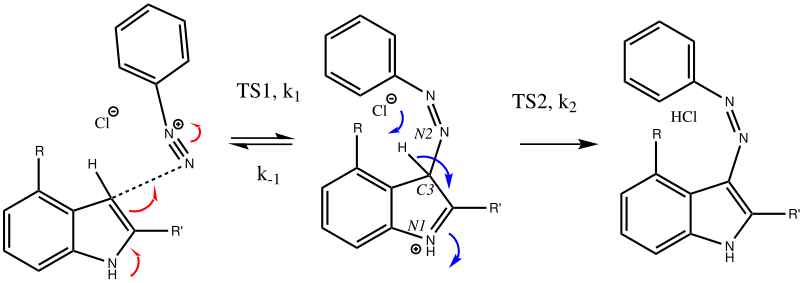
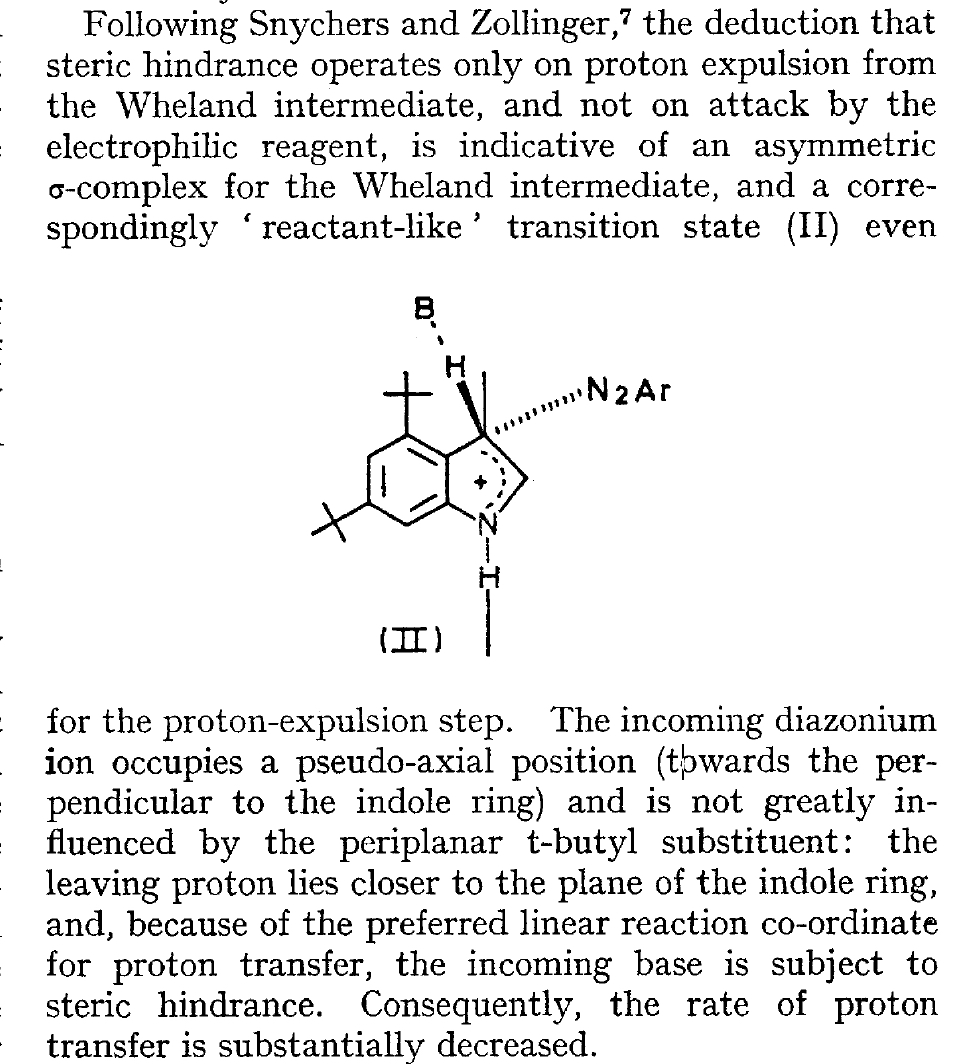
    The BBC TV quiz series Mastermind was first broadcast in the UK in 1972, the same time I was starting to investigate the mechanism of diazocoupling to substituted indoles as part of my Ph.D. researches. The BBC program became known for the catch phrase I've started so I'll finish; here I will try to follow this precept with the project I started then. Indole diazocoupling In 1972, one measured the rates of chemical reactions to gain insights into the transition state kinetic model. To obtain more data, we used isotopes such as 2H or 3H, together with substituents such as R-t-butyl to modify the potential energy surfaces of the reactions by inducing steric effects.[cite]10.1039/P29750001209[/cite],[cite]10.5281/zenodo.18777[/cite] We found that the kinetics for this reaction were actually complex (in part because of pH dependence) involving a Wheland intermediate (the formation of which is shown with red curly arrows above) followed by the collapse of this intermediate to the diazo-coupled product (blue arrows). Coupling to 2-methyl indole (R=X=H, R'=Me), 2-t-butyl indole (R=H, R'=t-butyl) and 4-methyl-2-t-butyl indole (R=Me, R'=t-butyl) revealed that the kinetic isotope effects induced by replacing H by D or T were "not apparent" (i.e. close to 1), the inference being that the rate constant k1 for those systems was slower than k2; the formation of the Wheland intermediate was rate determining (the rds) for the reaction. But with 2-methyl-4,6-di-t-butyl indole (R=t-butyl, R'=Me) this changed and a deuterium isotope effect of ~7 was observed. The rate determining proton removal from the Wheland intermediate k2 was now slower than k1. With 2,4,6-tri-t-butyl indole, we ended by noting that the reaction become almost too slow to observe and furthermore was accompanied by loss of a t-butyl cation as well as a proton. At this point we attempted to infer some transition state models consistent with these observations. Note that we had relatively little data with which to derive our 3D models (one needs to define a geometry using 3N-6 variables, along with its relative energy and force constants). The text and diagram of our attempt is shown below. TS1 The main points of this argument were;
    1. That the Wheland complex is asymmetric, with the diazonium ion adopting a pseudo-axial line of attack.
    2. In contrast, the leaving proton lies closer to the plane of the indole ring
    3. The abstracting base experiences "steric hindrance" if R = t-butyl but not if R' = t-butyl.

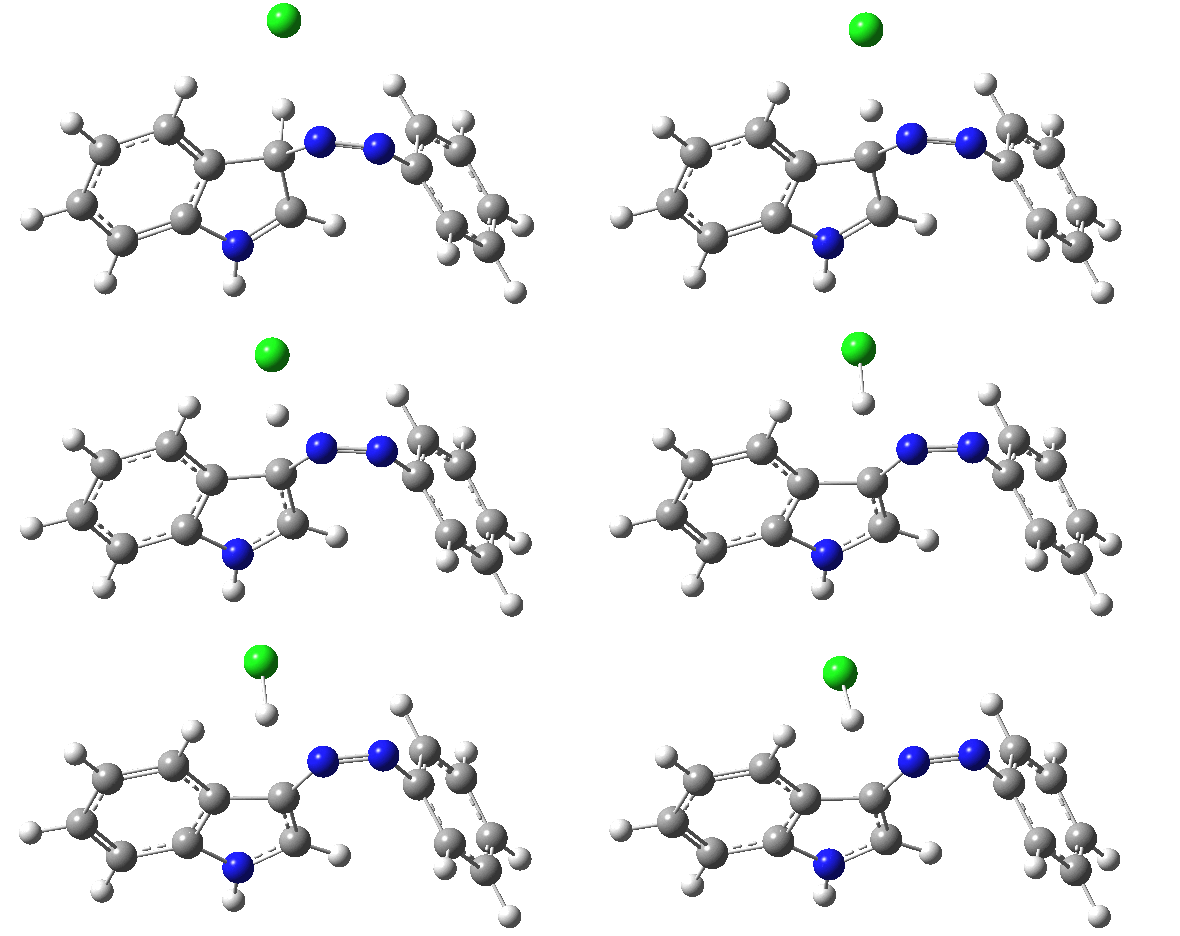
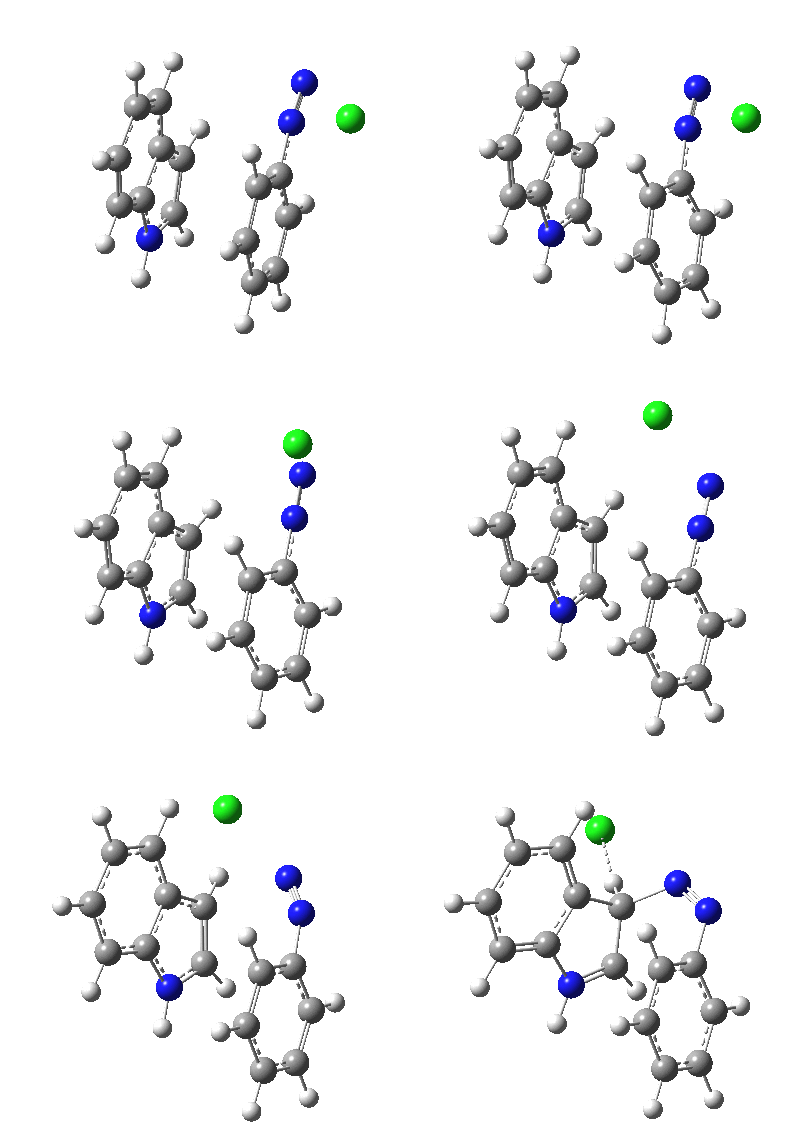
    I was eager to find out how one might test these models by quantum computation and my next stop in 1974 was to Austin Texas, where Michael Dewar's  group was soon to break the record for computing the geometry of a molecule with 49 atoms (similar in size to the reactions shown above) using the then very new semi-empirical MINDO/3 valence-shell quantum theory. The theory still needed much improvement in a great many aspects and the last forty years has brought us features such as density functional theories, far more accurate all-electron basis sets, superior geometry optimisation methods for transition states, code parallelisation, solvation treatments and increasing recognition that a particular form of electron correlation associated with dispersion energies needed specific attention. These methods would not have become applicable to molecules of this size had the computers themselves not become perhaps 10 million times faster during this period, with a commensurate increase in the digital memories required and decrease in cost. Time then to apply a B3LYP+D3/Def2-TZVP/SCRF=water quantum model to the problem. Four species were computed for each set of substituents; the reactant, a transition state for C…N bond formation (TS1), a Wheland intermediate and a transition state for C-H bond cleavage (TS2). The relative free energies of the last three with respect to the first are shown in the table below. An IRC for R=R'=H (below) was used to show that a bona-fide Wheland intermediate is indeed formed.[cite]10.14469/ch/191707[/cite]

    IRC animation for TS1, R=R'=H
    TS1 IRC
    IRC for TS2, R=R'=H
    TS2

    The relative free energies (kcal/mol) are shown in the table below and the following conclusions can be drawn from this computed model:

    1. For R=R'=H, ΔG298 for TS1 is higher than TS2 (✔ with expt)
    2. With R=t-butyl,R'=Me, ΔG298 of TS1 is 3.1 kcal/mol lower than with R=R'=H. This indicates that t-butyl and methyl groups actually activate electrophilic addition by stabiisation of the induced positive charge, and have no steric effect upon the first step (✔ with our conclusions).
    3. For R= t-butyl,R'=Me, ΔG298 of TS1 is lower than TS2 (✔ with expt).
    4. With R=R'= t-butyl, ΔG298 of TS2 is 4.9 kcal/mol higher than with R=R'=H and is 3.1 kcal/mol higher with R=t-butyl,R'=Me, indicating the steric effect acts on this stage.
    5. The angle of approach of the diazonium electrophile is ~123-118° for R=R'=H and R=R'=t-butyl, about 30° away from a strict pseudo-axial "reactant-like" approach as implied in our sketch above (❌ with diagram above)
    6. The angle of proton abstraction with the plane of the indole ring is 107° for R=R'=H and 100.3° for R=R'=t-butyl, the hydrogen being closer to pseudo-axial than equatorial, relative to the plane of the indole ring  (❌ with diagram above).
    7. The position along the reaction path for proton abstraction is much later with R=R'=t-butyl (rC-H ~1.42Å) than R=R'=H (rC-H ~1.27Å),  (❌ with the statement above: a reactant-like transition state even for the proton expulsion step).
    8. The cross-over between TS1/TS2 as the rds is in the region of the substituents R=Me,R'=t-butyl (~✔ with expt).
    9. The steric interaction occurs not so much between the incoming base and the t-butyl groups, but because of enforced proximity between the t-butyl group and the diazo group induced during the proton removal stage.
    10. The steric effect induced by R=t-butyl is greater than when  R'=t-butyl.
    11. The Wheland intermediate is in a relatively shallow minimum.
    R, R' TS1,
    ΔG298  k1
    ∠ N1-C3-N2 Int
    ΔG298 
    TS2,
    ΔG298  k2
    ∠ N1-C3-H ΔΔG
    (TS2-TS1)
    kH/kD
    (calc)
    [cite]10.5281/zenodo.19272[/cite],[cite]10.14469/hpc/176[/cite]
    R=R'=H 21.4[cite]10.14469/ch/191705[/cite],[cite]10.14469/ch/191698[/cite] 122.9 19.6[cite]10.14469/ch/191713[/cite] 18.6[cite]10.14469/ch/191712[/cite] 107.0 -1.8 0.925 (TS1)
    R=Me,R'=t-butyl 16.9[cite]10.14469/ch/191723[/cite],[cite]10.14469/ch/191719[/cite] 121.8 15.2[cite]10.14469/ch/191721[/cite] 18.4[cite]10.14469/ch/191720[/cite] 101.8 +1.5 0.900 (TS1)
    6.4 (TS2)
    R=t-butyl,R'=Me 18.3[cite]10.14469/ch/191722[/cite],[cite]10.14469/ch/191717[/cite] 115.2 16.0[cite]10.14469/ch/191726[/cite] 21.7[cite]10.14469/ch/191714[/cite] 100.9 +3.4 6.8 (TS2)
    R=R'=t-butyl 17.8[cite]10.14469/ch/191715[/cite],[cite]10.14469/ch/191706[/cite] 117.6 17.8[cite]10.14469/ch/191709[/cite] 23.5[cite]10.14469/ch/191718[/cite] 100.4 +5.2 6.9 (TS2)

    Possible errors in the model:

    1. I have not included any explicit solvent water in which hydrogen bonds to the base (the chloride anion) might moderate its properties.
    2. The ion-pair reactant complex between the phenyl diazonium chloride and the indole has many possible orientations, and these have not been optimised.
    3. The free energies are subject to the usual errors due to the rigid-rotor approximations and other artefacts of partition functions.
    4. Other DFT functionals have not been explored, nor have better basis sets.
    5. This current study is confined to formation of the cis-diazo product.

    But even such a model seems to reproduce much of what we learnt about diazocoupling to 2,4-substituted indoles. The calculations you see above took about a week to set up and complete; the original experimental work took (in real-time) ~150 weeks (interleaved with two other mechanistic studies). Also efficient implementation of the quantum theories, together with the computer resources to evaluate the molecular energies and geometries, was almost entirely lacking in 1972 and this has probably only become a realistic project in the last five years or so. So that 43 year wait to finish what I started seems not unreasonable. Nowadays of course, combining experimental kinetic measurements with computational models very often goes hand in hand. It is also worth speculating about the wealth of mechanistic data garnered during the heyday of physical organic chemistry during  the period ~1940-1980. The experiments were not then informed by feedback from computational modelling. However, it seems unlikely that very many of these mechanistic studies will ever be retrospectively augmented with computed models; the funding for the resources to do so is unlikely to ever be seen as a priority.


    A little more complex than the scheme above, since the reaction also exhibits dependency on acid concentration. Nowadays, there are a number of computer programs available for analysing such complex kinetics, but in 1972 I had to write my own non-linear least squares fitting analysis of the steady state equation to the measured rates[cite]10.5281/zenodo.18777[/cite] This replaced the use of graph paper to analyse (of necessity much simpler) rate equations. I note that mentions of non-linear least squares methods in kinetic analyses start around 1986[cite]10.1021/j100281a038[/cite] Even by 1992, the topic was considered novel enough to warrant a publication[cite]10.1002/aic.690380419[/cite]

    The related diazo coupling to activated aryls such as phenol or aniline shows a mechanistic cross-over between an entirely synchronous path in which no Wheland intermediate is involved (e.g. phenol)[cite]10.14469/ch/191700[/cite] to one where the intermediate does form (e.g. aniline).[cite]10.14469/ch/191699[/cite] Diazo coupling to e.g. benzofuran rather than indole by the way is also stepwise, but via a very shallow Wheland intermediate[cite]10.14469/ch/191730[/cite] and with a higher barrier than indole, making it a very slow reaction.


    Acknowledgments

    This post has been cross-posted in PDF format at Authorea.