Category: Historical

  • Benzene. As you have never seen it represented before!

    Continuing my european visits, here are two photos from Bonn. First, a word about how the representation of benzene evolved, attributed to Kekulé.

    The sausage formula
    The sausage formula

    Above is his first effort, made in 1865.
    The bent bond formula
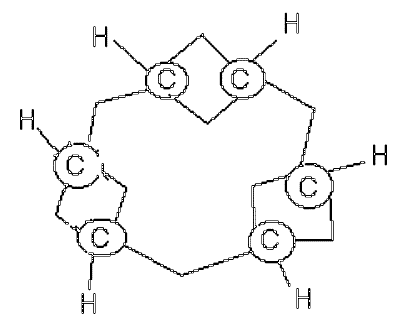
    The bent bond formula

    This one above is better, offered in 1866. But whilst what we now know as the double bond (C=C) is perhaps understandably kinked (and we now call these banana bonds, since nature tends to abhor kinks in electron density), so too are the single bonds!
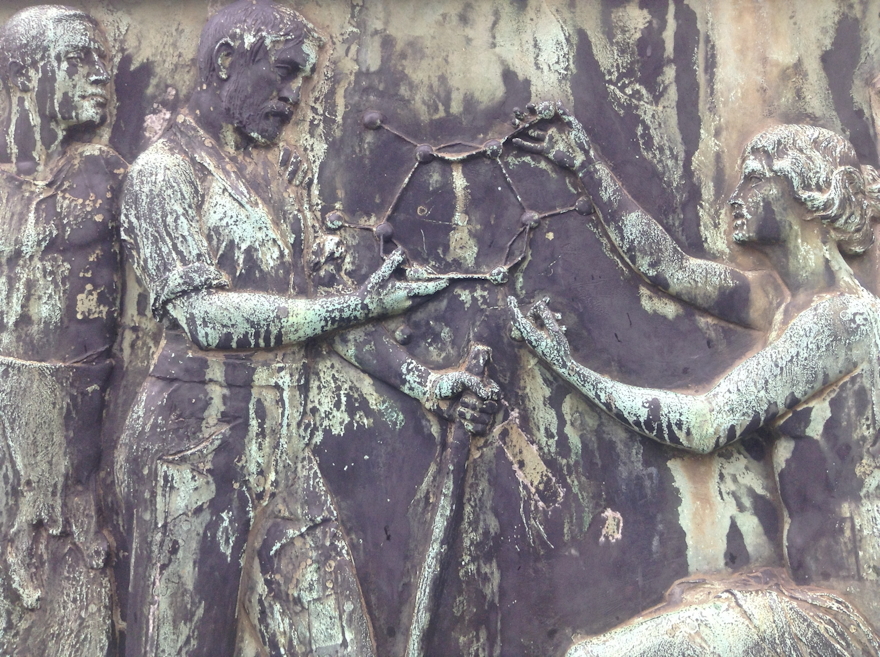
    The plinth
    The plinth

    So when it came to erecting a statue in his honour around 1890, the kinks were straightened out! The figure on the right (female) represents science (and purity). The two chaps on the left are workers representing industry. Note that they have still not quite gotten the lengths of the putative single and double bonds in proportion. By 1872 of course, Kekulé had proposed[cite]10.1002/jlac.18721620110[/cite],[cite]10.1002/jlac.18721620211[/cite] his oscillating model, the one that is taught to this day.

    I feel I should add one modern interpretation to this concept. An oscillation implies a frequency. Kekulé could only know that this oscillation was fast on what might be called the “laboratory scale” (in other words, no-one had been able to isolate the individual isomers of substituted benzenes, which implies that the rate constant inter-converting them was probably faster than k = 10-3 s-1 or a few minutes half-life). We now know that this oscillation is ~1014 s-1, the timescale of a molecular vibration! By the way, transition state theory tells us that Ln(k/T) = 23.76 – ΔG/RT where k is the unimolecular rate constant, ΔG the free energy barrier, T the temperature and R the gas constant. Setting ΔG to zero gives us a rate constant of ~1014 s-1 (the barrier must be zero, or very close to it).
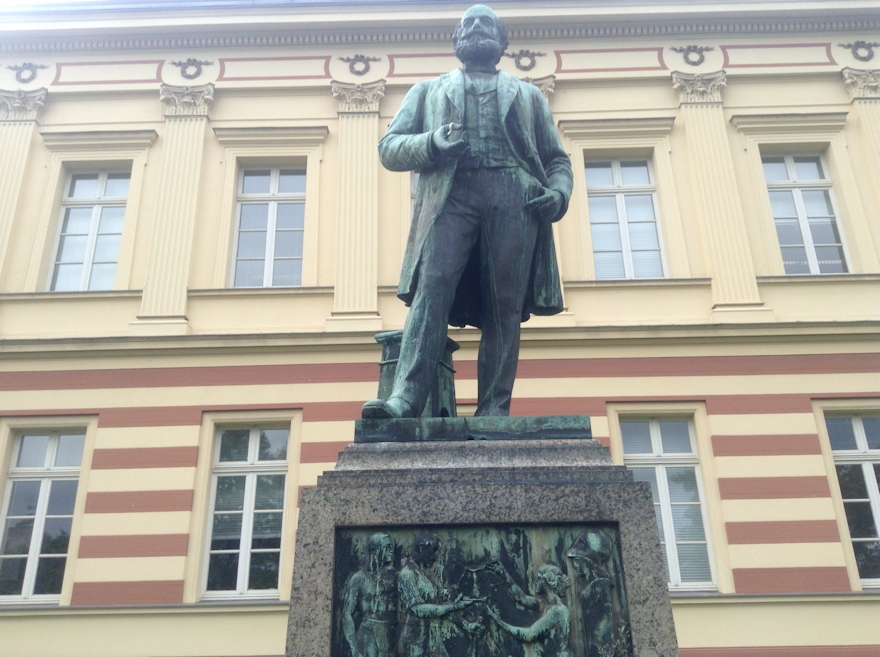
    The Statue
    The Statue

    Here is the statue atop the plinth above. Apparently it is honoured by the students with robes and other accoutrements on special occasions.


    Another famous timescale inference was by Beckmann in 1889[cite]10.1002/jlac.18892500306[/cite] when he deduced the existence of a transient unseen intermediate in the (what he thought was) racemisation of menthone. That intermediate of course was the enol.
  • An original chemistry lab from the early 19th century.

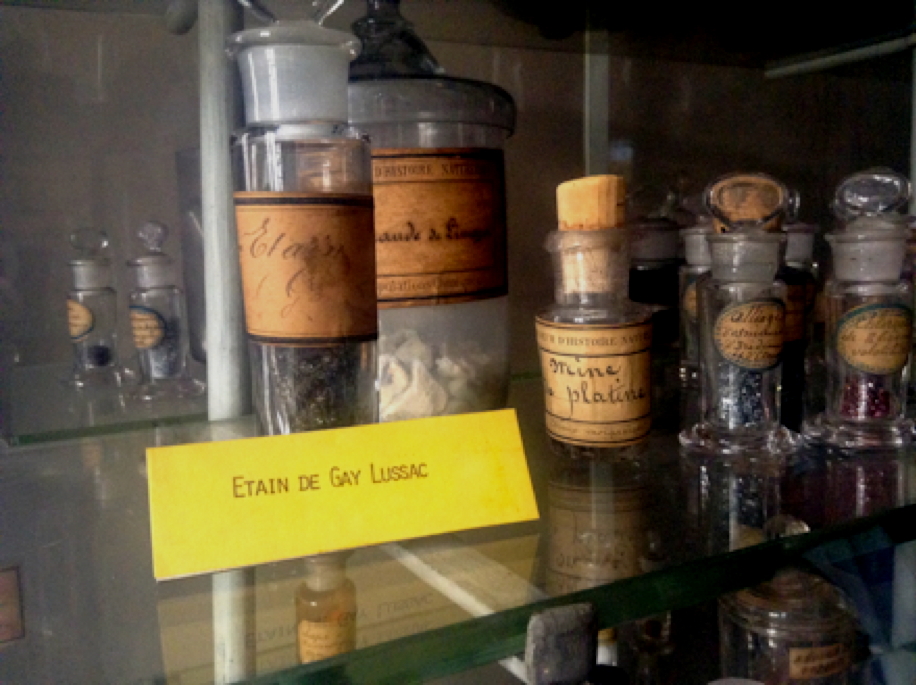
    Not a computer in sight! I refer to a chemistry lab from the 1800s I was recently taken to, where famous french chemists such as Joseph Gay-Lussac, Michel Chevreul and Edmond Fremy were professors. Although not used for chemistry any more, it is an incredible treasure trove of objects. Here are photos of some.

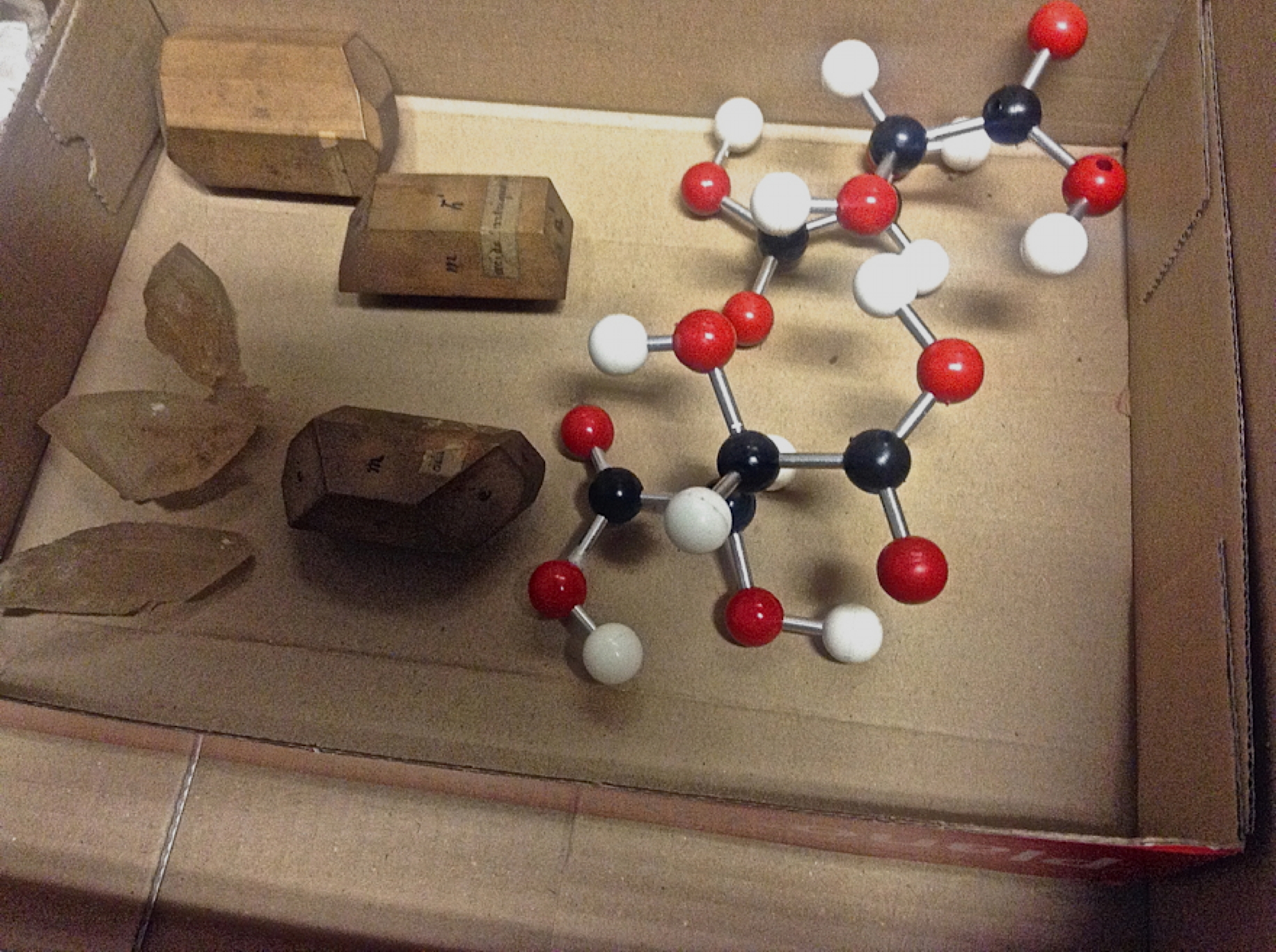
    Tartaric acid salts
    Tartaric acid salts

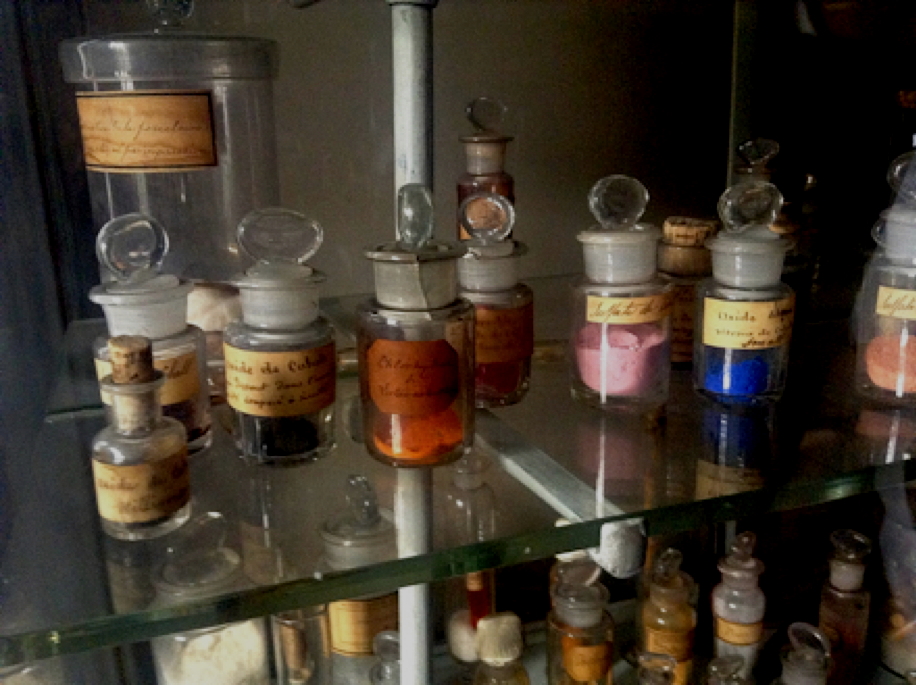
    This photo shows the crystals of (sodium ammonium) tartrate which Pasteur studied in 1848[cite]10.1107/S0108767309024088[/cite]. The crystals on the left are the actual chemical (but not Pasteur’s, although they are thought to be very old), but the wooden blocks in the centre were apparently made for Pasteur to illustrate the morphology.

    Gay-Lussac
    Gay-Lussac
    Samples
    Fremy?
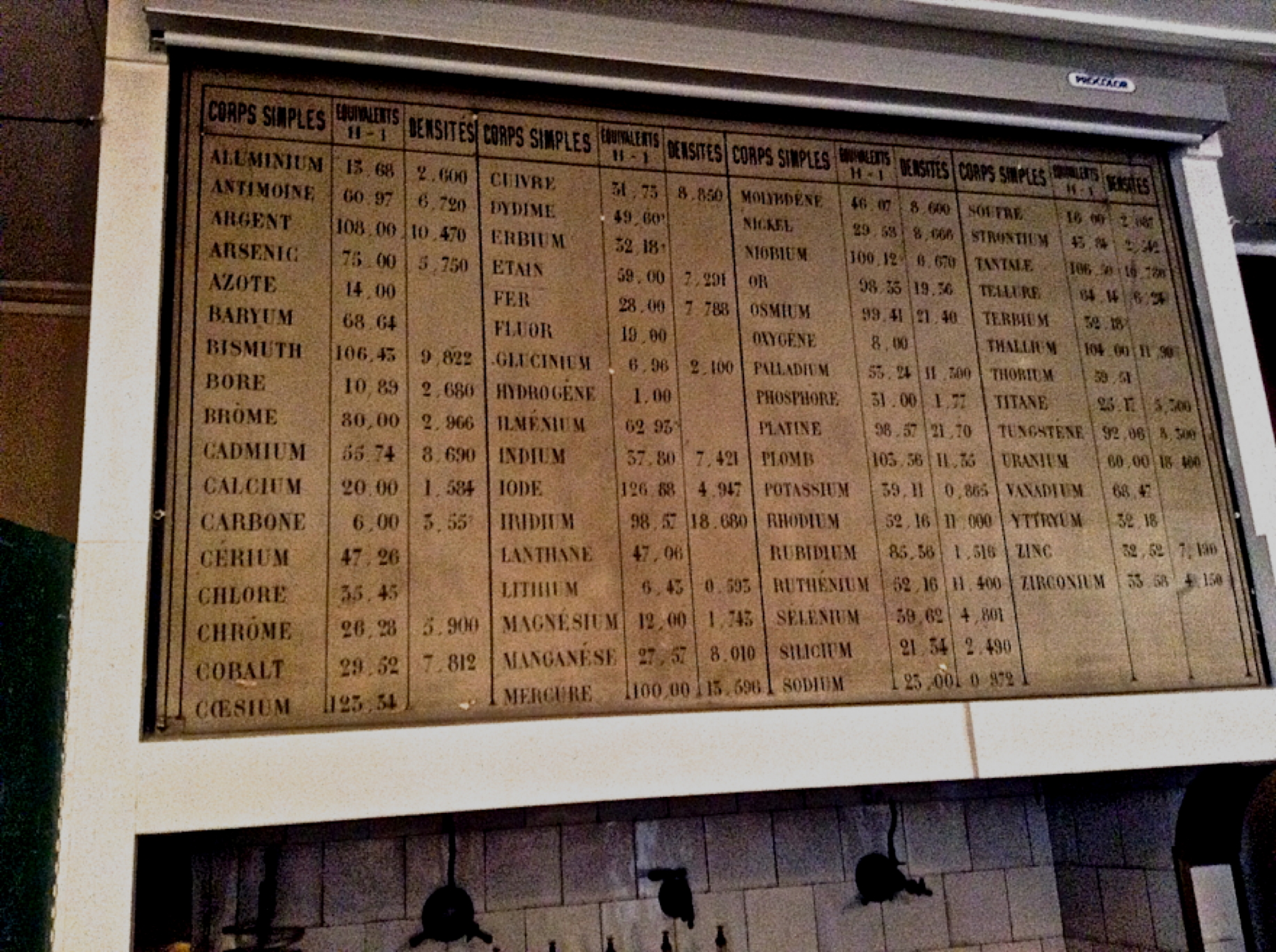
    Equivalents table
    Equivalents table

    This last one adorns one end of the lab, and lists the equivalent masses of a collection of known elements. In particular, those for carbon (6) and oxygen (8) were to be corrected in 1855, emerging as atomic weights (relative to hydrogen 1).

    It is good to see such heritage preserved. It is even better to emerge from this lab to be confronted by a brand new conference poster; just opposite on the corridor are real working labs, with real students producing posters. I guess, using computers!

  • A golden age for (computational) spectroscopy.

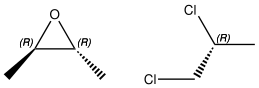
    I mentioned in my last post an unjustly neglected paper from that golden age of 1951-1953 by Kirkwood and co. They had shown that Fischer’s famous guess for the absolute configurations of organic chiral molecules was correct. The two molecules used to infer this are shown below.


    Using the theory Kirkwood had developed, the prediction for the optical rotation at the sodium D line for the (R,R) enantiomer of epoxybutene (Kirkwood did not use this R,R notation, which was still in the future) was +43°. The measured value was [α]D +59°. The (R,R) enantiomer did indeed correspond to Fischer notation.

    QED.

    A postscript is that a modern equivalent of Kirkwood’s result, using the ωB97XD/6-311+G(d,p) method gives +67° for the gas phase and +57° for solution (in CCl4). The experimental value relates to the pure liquid. In fact, Kirkwood had been very aware that solvation can influence the measured value of an optical rotation, and so even today, a match between experiment and calculation of ± 16 ° is considered a good fit.

    But when it comes to the second molecule, (R)-1,2-dichloropropane, we are in a different ball park. In fact, most of Kirkwood’s article is devoted to unravelling this second system. This is because it was realised that it is conformationally flexible. Two conformations (this term was then often used interchangeably with configuration, which might confuse a modern audience) called trans and skew (now called anti and gauche) were considered and it was realised that the relative populations would be influenced by temperature and particularly, the solvent. I quote here the final conclusion: We have assigned the absolute configuration of Fig. 2 to the dextrorotatory isomer of 1,2-dichloropropane. This was done without any experimental data concerning the optically active forms of the molecule, using only the calculated dependence of the rotatory power on conformation (Table II) and the information about the potential of internal conformation obtained from the electron diffraction and dipole moment measurements.

    Non trivial then! Perhaps this is why these techniques were not immediately picked up by synthetic chemists to verify the absolute configuration of their own molecules. But my point is that the use of such techniques now seems to be growing exponentially, which is why this post is headed the golden age of computational spectroscopy. So what of such a modern take on  (R)-1,2-dichloropropane (in heptane, which corresponds to the measured value of +20 to +30, and -21° for the (S) enantiomer). Well, there are in fact three viable conformations, not two as Kirkwood supposed. He did not know that the gauche stereoelectronic effect favoured two of them despite the greater steric encumbrance. The calculated rotations are +53 (anti), +96 (gauche) and -182° (second gauche conformer). Such dependence on conformation is sadly not unusual, and it means you have to know the Boltzmann population very accurately indeed to infer an observed value. This might in part explain the rather circuitous argument used by  Kirkwood for dichloropropane!

    Fortunately, nowadays optical rotation (more accurately referred to as optical rotatory power, or ORP) is just one of a growing armoury of spectroscopic measurements that can be computed to the accuracy required to draw firm conclusions. These include ORD (optical rotatory dispersion, or variation with the frequency of the polarised light used), ECD (electronic circular dichroism) and VCD (vibrational circular dichroism). It is still not absolutely routine, but these techniques are now found in an increasing number of synthetic chemists’ toolkits.

    And my final reflection is to ponder that the golden age of pharmaceutical synthesis (lets say  1950 – 2000, but  I know I may get dissent), in which certainty about the separate physiological effects of both enantiomers of chiral drugs became mandatory, would not have been possible without Kirkwood’s pioneering article, along of course with Bijvoet’s independent result.

  • Confirming the Fischer convention as a structurally correct representation of absolute configuration.

    I wrote in an earlier post how Pauling’s Nobel prize-winning suggestion in February 1951 of a (left-handed) α-helical structure for proteins[cite]10.1073/pnas.37.4.205[/cite] was based on the wrong absolute configuration of the amino acids (hence his helix should really have been the right-handed enantiomer). This was most famously established a few months later by Bijvoet’s[cite]10.1038/168271a0[/cite] definitive crystallographic determination of the absolute configuration of rubidium tartrate, published on August 18th, 1951 (there is no received date, but a preliminary communication of this result was made in April 1950). Well, a colleague (thanks Chris!) just wandered into my office and he drew my attention to an article by John Kirkwood[cite]10.1063/1.1700491[/cite] published in April 1952, but received July 20, 1951, carrying the assertion “The Fischer convention is confirmed as a structurally correct representation of absolute configuration“, and based on the two compounds 2,3-epoxybutane and 1,2-dichloropropane. Neither Bijvoet nor Kirkwood seem aware of the other’s work, which was based on crystallography for the first, and quantum computation for the second. Over the years, the first result has become the more famous, perhaps because Bijvoet’s result was mentioned early on by Watson and Crick in their own very famous 1953 publication of the helical structure of DNA. They do not mention Kirkwood’s result. Had they not been familiar with Bijvoet’s[cite]10.1038/168271a0[/cite] result, their helix too might have turned out a left-handed one!

    I record all this because I was today asked to provide an abstract for an NSCCS Themed Workshop shortly to be held at Imperial College on the uses of the Gaussian computational chemistry program in synthetic chemistry. One of the themes will be chiroptical spectroscopy. Gaussian of course deploys much of the theory developed by Kirkwood in the 1950s to make exactly the same sort of predictions that Kirkwood himself used to verify the Fischer convention in 1951. Whilst the majority of modern determinations of absolute configuration are still based on Bijvoet’s method,[cite]10.1038/168271a0[/cite] catching rapidly up are those based on chiroptical calculations. Perhaps in 2012 they are trusted more than they were in the 1950s? At any rate, such calculations are nowadays very much part of a modern undergraduate laboratory experience (slightly less so still in research laboratories I fear).

    Here is another coincidence. Both Pauling and Kirkwood worked in the same department (Institute of Technology, Pasadena, California). One can only speculate on whether Kirkwood might have wandered into Pauling’s office in late 1951 to alert him that the protein helix should be right rather than left-handed (oh to have been a fly on Pauling’s blackboard). So alerted, would Pauling have foreseen that eventually such determinations would be routinely made using the very quantum mechanics that he had popularised?


    He first proposed a method of calculating absolute configurations as early as 1937[cite]10.1063/1.1750060[/cite], applying this to d-butan-2-ol as he noted it (also known as (+)-butan-2-ol), assigning an (2R)-configuration.[cite]10.1021/ja803119p[/cite] It took a further 15 years for him to apply his method to Fischer’s configuration!

  • Henry Armstrong: almost an electronic theory of chemistry!

    Henry Armstrong studied at the Royal College of Chemistry from 1865-7 and spent his subsequent career as an organic chemist at the Central College of the Imperial college of Science and technology until he retired in 1912. He spent the rest of his long life railing against the state of modern chemistry, saving much of his vitriol against (inter alia) the absurdity of ions, electronic theory in chemistry, quantum mechanics and nuclear bombardment in physics. He snarled at Robinson’s and Ingold’s new invention (ca 1926-1930) of electronic arrow pushing with the put down “bent arrows never hit their marks“.  He was dismissed as an “old fogy, stuck in a time warp about 1894.” So why on earth would I want to write about him? Read on…

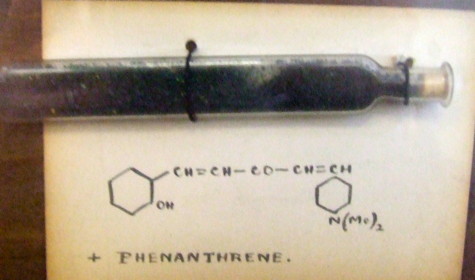
    He did worthy (nowadays this could mean dull) chemistry on e.g. naphthalenes, but I want to focus on two articles from the period 1887-1890[cite]10.1039/CT8875100258[/cite],[cite]10.1039/PL8900600095[/cite]. Let me set the scene by reminding of an earlier post showing the structure of a bis(stilbyl)ketone, dated 1921. The two aromatic groups (yes, they really are such) are drawn in the manner we would nowadays draw cyclohexane. This practice in fact continued in texts and articles for perhaps 30 more years! Not much sign of electronic accounting there then! And by a professor at Imperial College no less, where Armstrong had been.

    Aromatic molecule, circa 1921

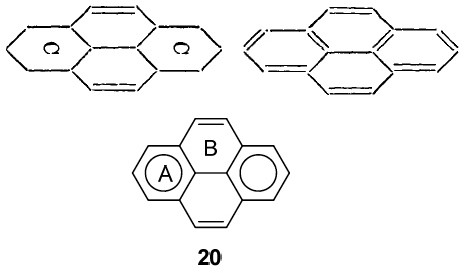
    So when would you date the diagrams below? So called Clar representations, originating from the 1950s? The one on the bottom below cites Clar and dates from 2010[cite]10.3390/sym2031653[/cite], but the one above it comes from Armstrong’s 1890 article!

    Two representations of pyrene, 2010 and 1890.

    Clar representations are used to count electrons (as coming in six packs). But there is little doubt that Armstrong’s use of a “C” (or inner circle, which is exactly what it is) means six as well. The evidence I present below, taken from his 1887 article.

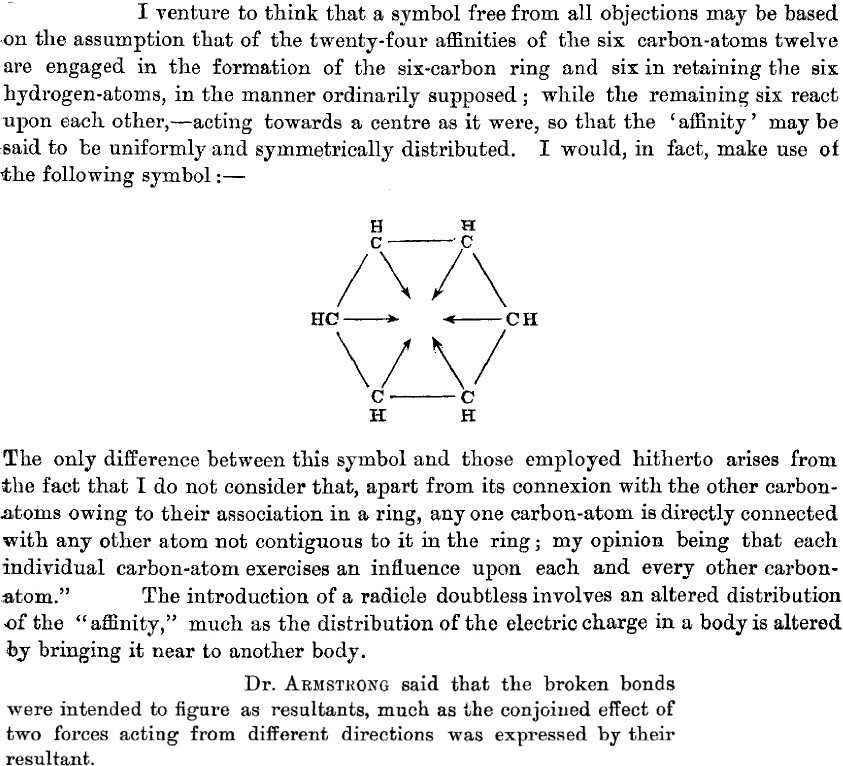
    Armstrong’s six-pack
    1. He counts the six carbons as having a total of 24 what he calls affinities (definition: An attraction or force between particles that causes them to combine), or four per carbon. Let us make life easy and equate affinity=electron (remember, the electron itself was not yet discovered or named!). He disposes of 12 affinities/electrons to form what we now call six carbon-carbon σ bonds, and a further six for the  six C-H bonds.
    2. He is left with exactly six affinities/electrons, which he presupposes to act upon each other, in the manner of resultants (the old term for vectors). In fact, he replaces these six vectors by a circle (the inner circle) in his second article of 1890.
    3. He invents delocalization in all but name when he states that any one atom has an influence on other atoms not contiguous to it in the ring (he really did have o/m/p directing influence in mind here).
    4. He compares the introduction of a substituent (R, which comes from the old name Radicle) perturbing the distribution of the affinity to how electric charges perturb each other. So, the affinity behaves as if it might have electrical (from which the name electron came of course) properties? And it might be described by a vector?
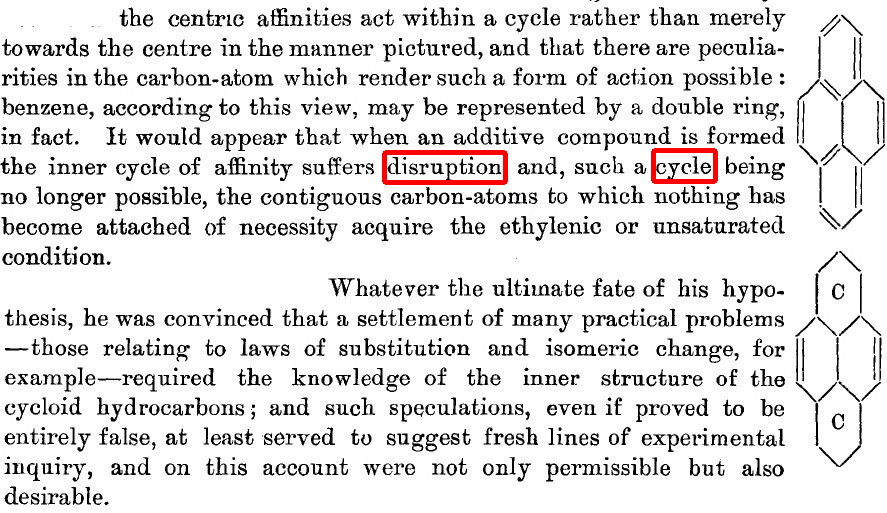
    5. Remember, this is a scientist who in later life did not believe in electronic theories of chemistry? Really? Well, again in 1890:
    Is this an affinity (=electronic) theory of chemistry?
    1. Here, he is refining his vector representation of affinities, saying that these vectors in effect define a circle, an inner circle no less. One that can be disrupted  (Robinson some 30 years later wrote[cite]10.1039/CT925270160[/cite] of how the cycle of six electrons are able to form a group that resists disruption) when an additive compound is formed (his examples are all electrophiles, what we now call electrophilic addition) such that the remaining carbons become merely unsaturated. There seems little doubt he is describing what we now call a Wheland Intermediate.
    2. Is this really a man who did not believe in electronic theories of chemistry? What about that concluding paragraph then? The laws of substitution require a knowledge of the inner structure of (what we now call the aromatic) hydrocarbons?
    3. And that such speculations may suggest fresh lines of experimental inquiry? This all sounds very much like the modern use of quantum mechanics and its electronic eigenvectors to describe the probability distribution of electrons (remember, Armstrong did not approve of this either) to probe the inner structure of molecules and to suggest new experiments.

    We have a real mystery. Armstrong got so very close to a modern theory of chemistry. Was he asleep when Stoney named the electron around 1891 and Thomson discovered it in 1897? If only he had followed his own advice! Ah well, just as well he was ignored in the 20th century when he preached against it all.


    W. H. Brock, “The case of the Poisonous Socks”, chapter 20, RSC Publishing, 2011, 978-1-84973-324-3 Clar, E. The Aromatic Sextet; Wiley: New York, NY, USA, 1972.