Tag: free energy

  • Secrets of a university admissions interviewer

    Many university chemistry departments, and mine is no exception, like to invite applicants to our courses to show them around. Part of the activities on the day is an “interview” in which the candidate is given a chance to shine. Over the years, I have evolved questions about chemistry which can form the basis of discussion, and I thought I would share one such question here. It starts by my drawing on the blackboard (yes, I really still use one!) the following molecular structure.
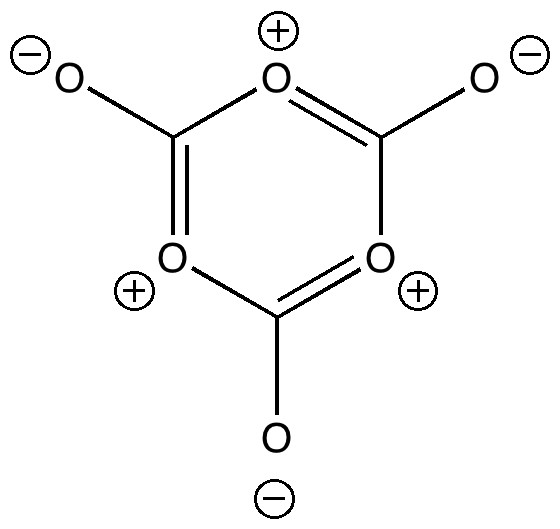
    Mystery molecule.

    The candidate is then invited to offer their initial impressions of this molecule, and shortly thereafter asked how they might make it[cite]10.1021/acs.joc.6b00647[/cite](or where perhaps they might be able to buy it). This of course floors even the most confident of applicants! But after a moments thought, most students can derive not only a molecular formula, but an empirical formula. From which it becomes apparent that it is actually a trimer of carbon dioxide. In the previous post, I showed the structure of solid CO2 and how an oxygen from one unit came fairly close to a carbon from another. So the next logical question might be to ask if this might lead to a molecule such as shown above. Why a trimer? Well, the aromatic core is also easily perceived, and one might expect some aromatic stabilization to result (which most of the candidates readily spot). Its also ionic, and here perhaps solvation may help stabilize. Finally, armed with Le Chatelier’s principle, one might conclude that pressure too would help. At this point of course, the realization normally dawns that possibly the purchase of a carbonated soft drink in a supermarket might offer perhaps a few molecules of the above. The discussion normally takes about 10 minutes, and is guaranteed to stimulate (and quite possibly exhaust) most students.

    But here in this post, I would like to offer the denouement. What actually are the chances of forming this species? Enter a B3LYP/6-311G(d,p) calculation of the free energy. We can do this for various models:

    1. The trimer energy evaluated in a continuum solvent (water). This works out at  83.4 kcal/mol higher than three monomers (in part due to the entropic requirements of coalescing three molecules into one). So, not many molecules in a fizzy drink then! (just as well perhaps, since e.g. benzene as an aromatic molecule would not be a pleasant additive).
    2. How aromatic is the molecule?  Well, a NICS(1) index of -2.3 ppm suggests little actual aromaticity. The C-O bond length (1.365Å) is certainly short enough. The Kekulé vibrational mode however is quite low (974 cm-1) compared to benzene, which is ~1310 cm-1 (remember, this mode represents how much energy it takes to distort an aromatic ring from a symmetric structure to the bond localized form).
    3. If its not aromatic, then perhaps after all a better representation might be:
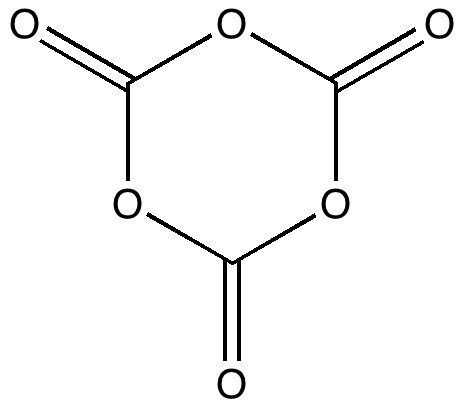
      A better resonance structure

      It is worth asking why even this perfectly reasonable form is so much higher in free energy than carbon dioxide itself.

    4. Would solvating the structure with three explicit water molecules help (as per below)? Deciding quite how the hydrogen bonds will form is an interesting exercise in its own right!
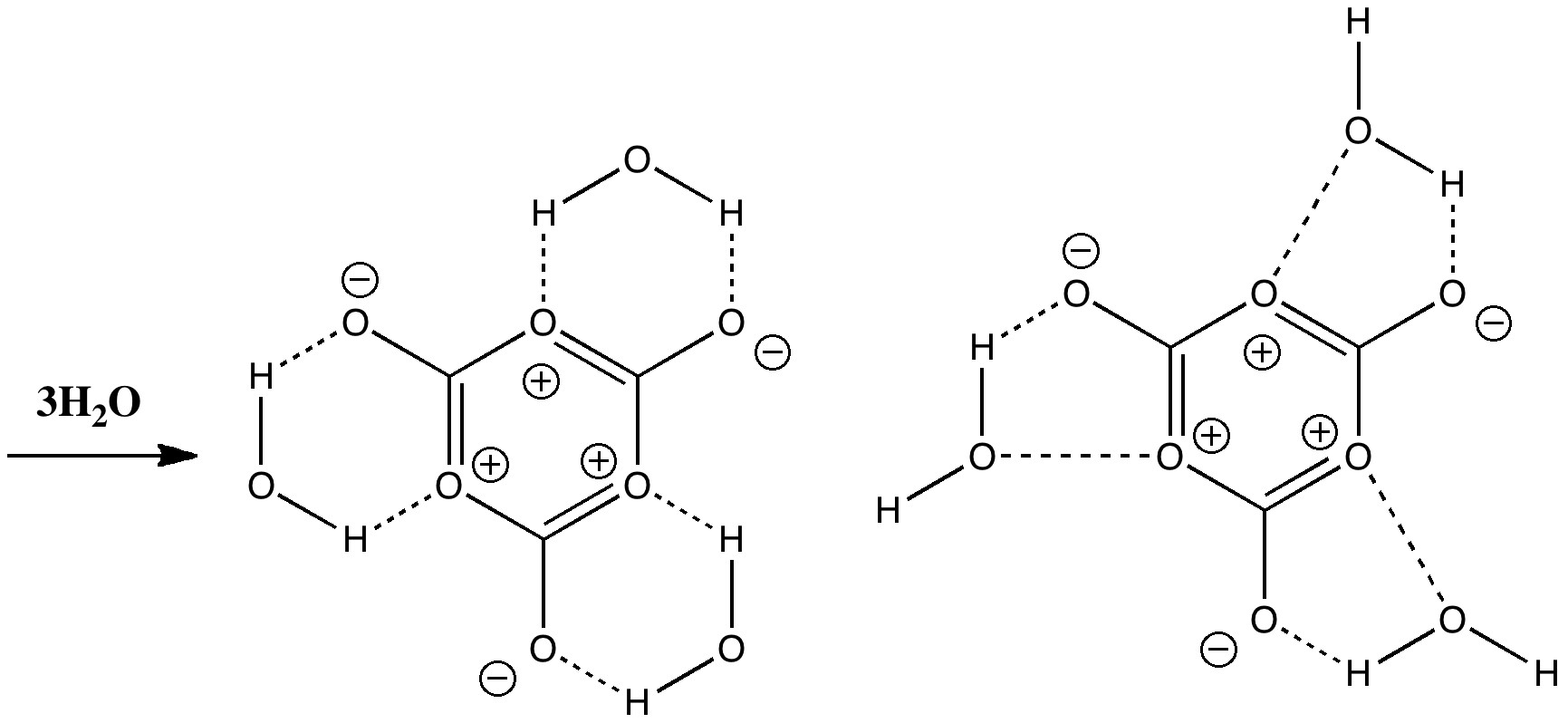
      Solvated trimer

      But now the energy is +96.8 kcal/mol compared to the monomers. Its that entropy again!

    5. Actually, oxygen is pretty poor at propagating aromaticity. Nitrogen is much better, so what about the following (historically, such s-triazines were in fact much better known than benzene itself in the first half of the 19th century).
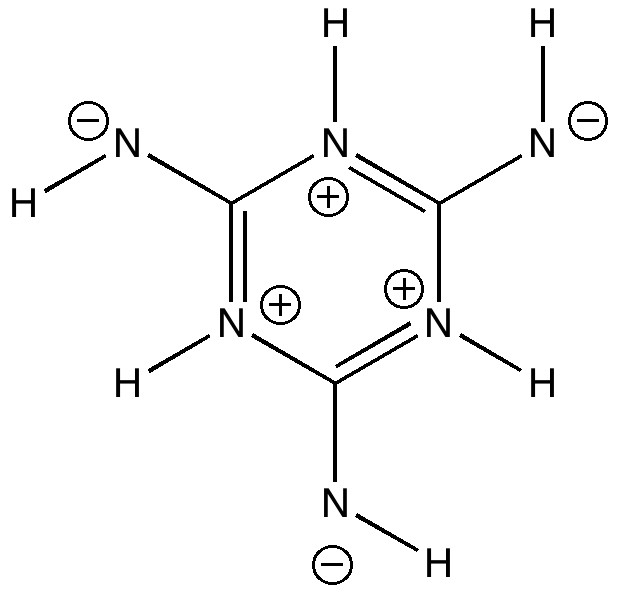
      Carbo-diimide trimer

      This is now merely +35.8 kcal/mol higher in free energy compared to three momers. The Kekulé mode is up to 1355 cm-1 (discuss!).

      There are many other facets of this that could be raised. But the main reason for introducing such a molecule for discussion is that just by looking at the structure, so many ideas can be explored. That, by and large, is how chemistry works.
  • The oldest reaction mechanism: updated!

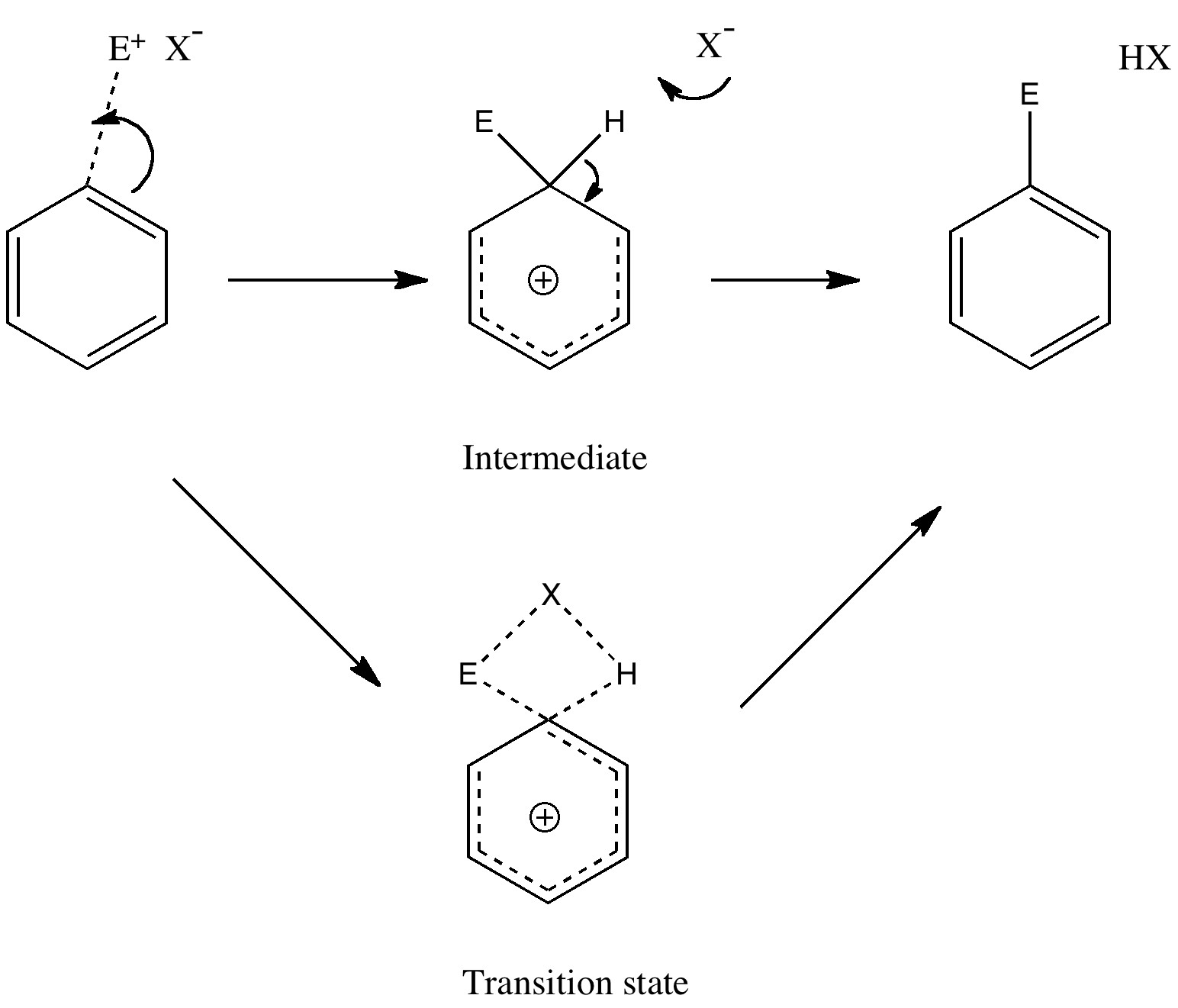
    Unravelling reaction mechanisms is thought to be a 20th century phenomenon, coincident more or less with the development of electronic theories of chemistry. Hence electronic arrow pushing as a term. But here I argue that the true origin of this immensely powerful technique in chemistry goes back to the 19th century. In 1890, Henry Armstrong proposed what amounts to close to the modern mechanism for the process we now know as aromatic electrophilic substitution [cite]10.1039/PL8900600095[/cite]. Beyond doubt, he invented what is now known as the Wheland Intermediate (about 50 years before Wheland wrote about it, and hence I argue here it should really be called the Armstrong/Wheland intermediate). This is illustrated (in modern style) along the top row of the diagram.

    The mechanism of aromatic electrophilic substitution

    In 1887, Armstrong had tabulated the well known ortho/meta/para directing properties of substituents already on the ring towards this reaction[cite]10.1039/CT8875100258[/cite]. He even offered an explanation, which is not entirely wrong, given that in 1890, the electron had not yet been discovered! That did not stop Armstrong, who invented an entity he called the affinity for the purpose of developing his theories (in this theory, benzene had an inner circle of six affinities, which had a tendency to resist disruption). Armstrong’s description of the properties of the affinity matches that of the (yet to be discovered) electron very closely! But that is enough of history. The mechanism shown above emerged in its present representation (and naming) during the heyday of physical organic chemistry between 1926 – 1940, and of course is an absolute staple of all text books on organic chemistry. But, sacrilege, is it correct? Could what is referred to as an intermediate instead be a transition state? (shown in the bottom pathway of the scheme).

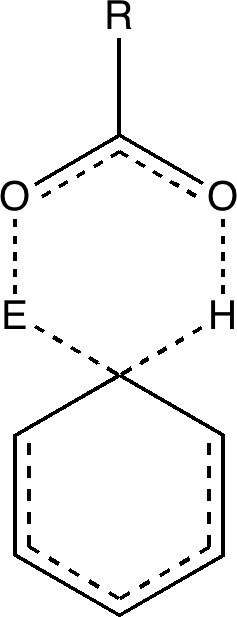
    Consider instead the following, in which X is replaced by an acetic acid motif;

    Transition state alternative to the Wheland

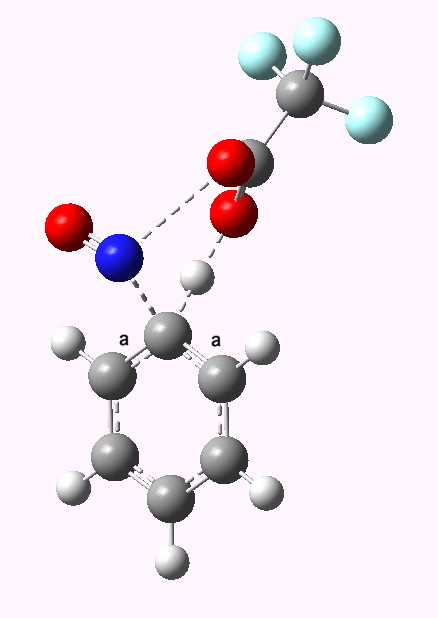
    The two steps, a bond formation between the benzene and E, and the proton abstraction from the benzene by X, are now synchronized into a single step, and the intermediate is now transformed into a transition state. Time to put this theory to the test. X is going to be made trifluoroacetate (R=CF3) and we are going to test it with E= NO+ and F+ (yes, trifluoroacetyl hypofluorite is a known chemical, and it really does fluorinate1 aromatic compounds at -78C). Firstly, E= NO+. A B3LYP/6-311G(d,p) calculation[cite]http://doi.org/10042/to-5172[/cite]  run in a solvent simulated as dichloromethane, reveals the mid point to indeed be a transition state and NOT an intermediate![cite]10.1021/ja021152s[/cite].

    Wheland as a transition state. Click image for animation

    There is one crucial aspect to this transition state that Armstrong himself made a point of. In the Wheland intermediate proper, the aromaticity of the benzene ring must be disrupted. As a transition state, it need not be (at least not completely). Thus the two bonds labeled as a have calculated lengths of ~1.415Å, only slightly longer than the aromatic length, and certainly not single bonds as implied by the Wheland intermediate! Notice also the significant motion by the hydrogen, which implies the reaction would be subject to a kinetic isotope effect (this would normally be interpreted in terms of the second stage of the stepwise reaction shown along the top a being rate limiting, but this result shows this need not be so). Thus, if the structure is favourable, this veritable old mechanism can be redesigned to give a new, 21st century look to a 19th century staple! By the way, the free energy of activation for this reaction is calculated as ~22 kcal/mol, a perfectly viable thermal reaction. No doubt, by suitable design of the group X, this might be reduced.

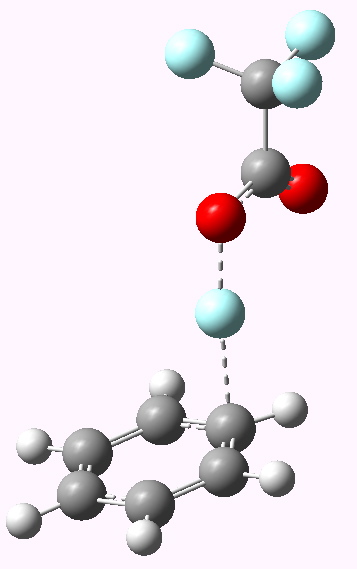
    Now on to E=F+[cite]http://dx.doi.org//10042/to-5171[/cite]. This looks a little different. F+ is now a much more voracious electrophile than the nitrosonium cation, and it therefore jumps ahead of the second mechanistic step, with no motion of the hydrogen being involved at this stage (one might also imagine making X a better base to swing things the other way).

    Transition state E=F+ leading to Wheland Intermediate. Click for  3D model.
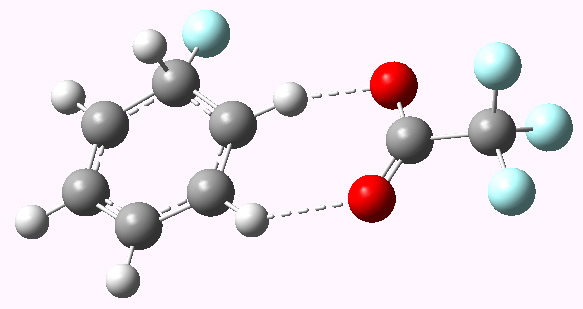
    Genuine Wheland intermediate for E=F+ Click for 3D model

    Now a full blown Armstrong/Wheland intermediate does indeed form (10042/to-5174); an intimate ion pair if you will, even in the relatively non polar dichloromethane as modelled solvent. The structure  (shown above) is rather unexpected.  This reaction has ΔG of ~5 kcal/mol,  which is significantly lower than for the E=NO+ system.

    Chemistry is full of surprises, and it is always a wonder how a slightly different take on even the oldest of reactions can reveal something new.

    Reference.

    <

    p>1. Umemoto, T.; Mukono, T.. 1-Acylamido-2-fluoro-4-acylbenzenes. Jpn. Kokai Tokkyo Koho  (1986), Patent number JP61246156.

  • Reactions in supramolecular cavities – trapping a cyclobutadiene: ! or ?

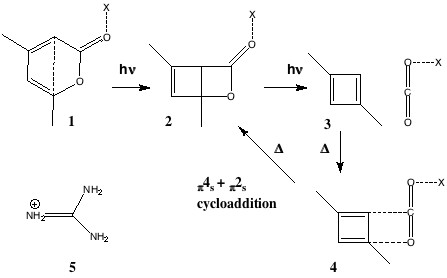
    Cavities promote reactions, and they can also trap the products of reactions. Such (supramolecular) chemistry is used to provide models for how enzymes work, but it also allows un-natural reactions to be undertaken. A famous example is the preparation of P4 (see blog post here), an otherwise highly reactive species which, when trapped in the cavity is now sufficiently protected from the ravages of oxygen for its X-ray structure to be determined. A colleague recently alerted me to a just-published article by Legrand, van der Lee and Barboiu (DOI: 10.1126/science.1188002) who report the use of cavities to trap and stabilize the notoriously (self)reactive 1,3-dimethylcyclobutadiene (3/4 in the scheme below). Again sequestration by the host allowed an x-ray determination of  the captured species!

    Scheme for production of 1,3-dimethylcyclobutadiene 3 and CO2.

    The colleague tells me he has himself already penned an article on the topic and submitted this to a conventional journal. However, their rules decree that whilst it is being refereed, I could not discuss the article here, or indeed even name its author. Assuming his article is published, I will indeed reveal his identity, so that he gets the credit he deserves! Meanwhile, I will concentrate in this blog purely on two other aspects of this reaction which caught my own eye after he brought the article to my attention.

    The reaction involves imobilising a precursor 1 in a crystalline calixarene network as shown above, and then in situ photolysis to form the Dewar lactone 2. Further photolysis then results in extrusion of carbon dioxide and the formation of 1,3-dimethyl cyclobutadiene 3 and CO2, both still trapped in the host crystals. Thus imobilised, here they both apparently remain (at 175K) for long enough for their X-ray structure to be determined. What attracted me to this chemistry was the potential of this reaction as a nice example of a Diels Alder reaction occuring in a cavity. The first example of such catalysis was reported by Endo, Koike, Sawaki, Hayashida, Masuda, and Aoyama (DOI: 10.1021/ja964198s) and I have used this in my lectures for many years. This latter example however illustrates the promotion of a cycloaddition, which inside a cavity is accelerated by a factor of ~105, rather than of the reverse cycloelimination. I explain this to students by invoking entropy. Normally, when two molecules react together, there is an entropic penalty, which can add 8 or more kcal/mol to the free energy of activation of a bimolecular reaction in the absence of the cavity.

    Structure of entrapped 1,3-dimethylcyclobutadiene, obtained from the CIF file provided via DOI: 10.1126/science.1188002

    By a strange coincidence, my name is also on a recently published article (DOI: 10.1021/ol9024259) with other colleagues on the use of (Lewis) acid catalysts to accelerate a type of reaction known as the Prins. This involves the addition of an alkene to a carbonyl group. Now as it happens, the reaction in the scheme above showing 42 happens to combine these features; it is both a Diels-Alder cycloaddition and also involves an alkene adding to a carbonyl compound! It is therefore noteworthy that the claimed reaction 123 + CO2 is done in the presence of a strong acid catalyst, the guanidinium cation 5, which is itself part of the structure of the calixarene-based host. It is represented as X in the scheme above, and can also be identified in the above 3D model via the light blue atoms.

    There are however crucial differences between these two earlier examples I quoted and the reaction of 23; the latter is in fact a cycloelimination and not a (cyclo)addition. In other words, according to literature precedent, the guanidinium cation-based cavity should act to accelerate the reverse cycloaddition 42 rather than the forward cycloelimination. Since the isomerisation 34 is thought to be fast, the question arises: how rapid is the reverse reaction 42? In particular, is it slow enough to allow X-ray diffraction data to be collected for 3/4 over the necessary period of 24 hours or more? Legrand, van der Lee and Barboiu do not address this point in their article. Nor is there discussion there of how the cavity and the acid catalyst might influence the position of the equilbrium 23 + CO2.

    This is where calculations can help. At the B3LYP/6-311G(d,p) level four different models were selected.

    1. Model A is a simple gas phase calculation for the singlet state, which reveals the free energy barrier for 42 is already quite modest for a Diels-Alder reaction (more typical values are ~22 kcal/mol), due no doubt to the instability/reactivity of the cyclobutadiene. However, at 175K, that would still be quite sufficient to prevent the reverse reaction from occurring to any extent over the period of X-ray data collection.
    2. Model B adds a condensed phase (water) to the model. This serves in part to simulate the condensed crystal environment (which is pretty ionic being a tetra ion-pair). The barrier drops to 12.1 kcal/mol.
    3. Adding one guanidinium cation to both these models (C and D) which simulate the Prins conditions, drops the barrier to 8.3 kcal/mol (model 4).
    4. You can inspect details of any of the calculations by clicking on the digital repository entry (shown as dr in the table), where full data is available.

    None of these models includes the entropic effects of full constraint in a cavity (which I estimated above as capable of reducing the free energy barrier for reaction by ~8 or more kcal/mol). If this correction is applied to model D, it would reduce the barrier to ~0 kcal/mol! The calculations also reveal that the reverse reaction 42 is exothermic, and this exothermicity is enhanced by the acid catalyst 5. It would be further enhanced by reducing the entropy of reaction by pre-organizing the reactants in the cavity. The tendency must therefore be for 3/4 to revert to 2 on purely thermodyamic grounds, and only the presence of a significant kinetic barrier would allow them to exist as separate species. This barrier, as one might infer from the calculations shown in the table below, may not be a large one. Even a barrier of 8 kcal/mol might require cooling to significantly lower than 175K to render the reaction slow on a ~24 hour timescale.

    Model ΔG4 → 2
    kcal/mol
    ΔGreac 4 → 2 Singlet-triplet
    separation
    A. Gas phase,X=none dr ts 16.8 dr -3.5dr +5.7 dr
    B. Continuum solvent (water),X=none dr ts 12.1dr -6.0 dr +7.7 dr
    C. Gas phase,X=guanidinium+ dr ts 6.1 dr -19.5dr +2.1dr
    D. Continuum solvent (water),X=guanidinium+ dr ts 8.3 dr -10.1 dr +7.7 dr

    So I end my own speculations here on the nature of the reaction reported by Legrand, van der Lee and Barboiu by asking: are the products they claim (1,3-dimethylcyclobutadiene and carbon dioxide) capable of existing as separate species for long enough inside their cavity, even at 175K, to allow for the collection of X-ray data for a structure determination?

    I tend to think probably not (? rather than !). But do decide for yourselves.


    Archived as http://www.webcitation.org/5rpkn2Z5S on 08/08/2010. See also this post.

  • Tunable bonds

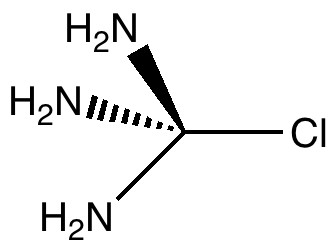
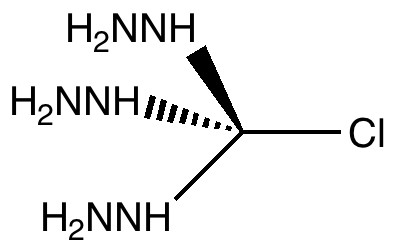
    Car transmissions come in two types, ones with fixed ratio gears, and ones which are continuously variable. When it comes to chemical bonds, we tend to think of them as being very much of the first type. Bonds come in fixed ratios; single, aromatic, double, triple, etc. OK, they do vary, but the variations are assumed as small perturbations on the basic form. Take for example the molecule shown below. The bonds as shown are all clearly single (the wedge and hashed bond are merely stereochemical notations). No-one would really think of drawing this molecule in any other way, and this idea of the transferability of bonds between molecules (all double bonds react in specific ways which are different from single bonds, and they also have characteristic spectroscopic properties, etc) is what allows molecules to be classified.

    A Highly tunable molecule

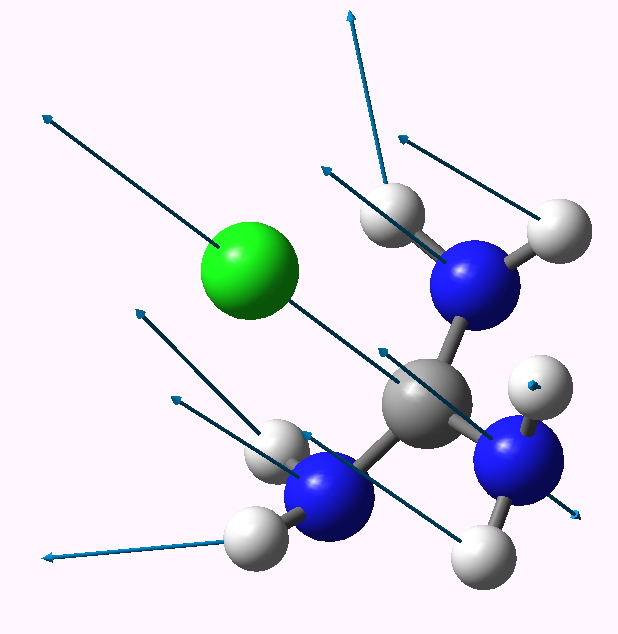
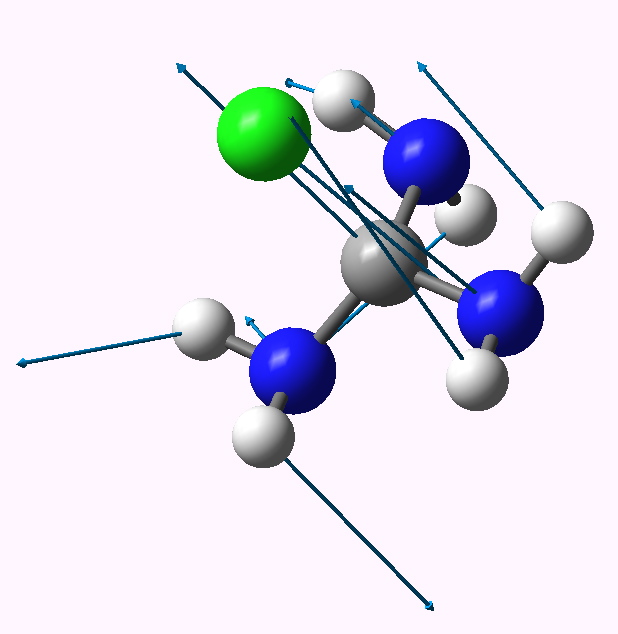
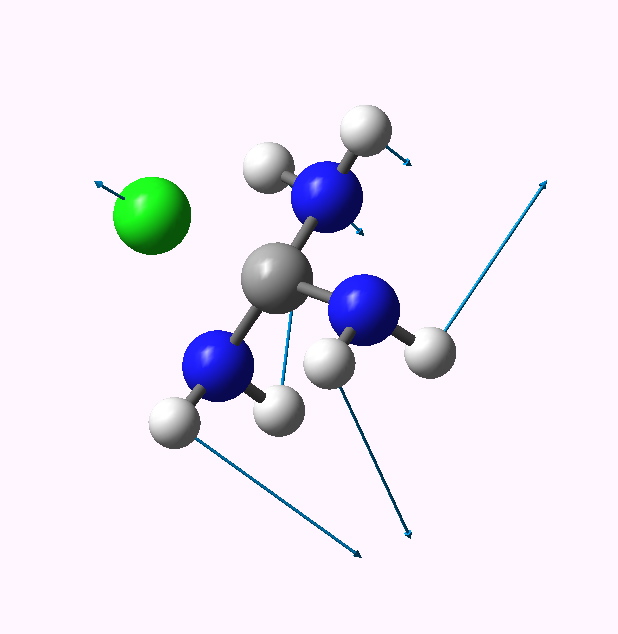
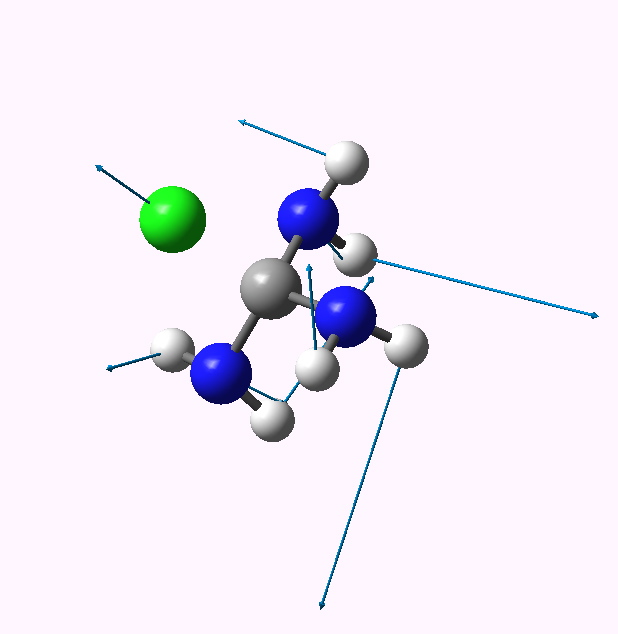
    With this molecule however, there really is an elephant in the room; the three electron lone pairs associated with each nitrogen atom (not shown above, but most chemists are trained to recognize their implicit presence). Where are they? Well, each lone pair will tend to orient itself such that it is aligned with an adjacent σ-bond. It has two such bonds to choose from, an adjacent C-N bond or a C-Cl bond. One might now envisage the following permuations; all three N lone pairs gang-up on the C-Cl bond, or perhaps only two do, or only one, or none. What happens in each of these scenarios? The table below shows these permutations calculated using B3LYP/6-31G(d).

    app lone pairs
    to C-Cl
    Relative free
    energy, kcal/mol
    C-Cl bond
    length, Å
    ν C-Cl, cm-1
    3 0.0 2.542 158
    2 4.2 2.099 221
    1 7.3 1.937 352
    0 14.4 1.869 441

    3 app lone pairs. Click for animation

    2 app lone pairs. Click for animation

    1 app lone pairs. Click for animation

    0 app lone pairs. Click for animation

    The C-Cl bond length changes from a normal single bond length (1.87Å) when none of the nitrogen lone pairs are antiperiplanar to the C-Cl bond, to a very abnormal 2.54Å when all three are, and the C-Cl stretching mode decreases in wavenumber from 441 to 158 cm-1. There is lots of other fun to be had inspecting the geometries and vibrations, but  I will leave that for you to explore rather than discuss it here. Click on the thumbnails above to start.

    This effect does have a name, sugar chemists call it the anomeric effect. But this one is supercharged! It would be quite reasonable to say that at some stage, the C-Cl single bond turns from being covalent to being ionic (and indeed, repeating the calculation using an applied solvent field certainly accelerates this process). Whilst this might be a contrived example and hence an extreme example, it does serve to remind us that on occasion, molecules may come with continuously variable transmissions rather than with fixed ratio gears!

    And a postscript. I mentioned the nitrogen lone pairs ganging up on the C-Cl bond. How might one go even one step further? A standard trick to enhance the donating power of a nitrogen lone pair is to replace the NH2 group with a hydrazine group, H2N-NH. The lone pair derived from the second nitrogen buttresses the first. This too has a name, it is called the α-effect.

    An anomeric effect on steroids

    For this example (see digital repository), the C-Cl bond length lengthens even further to 2.90Å, which interestingly, is the same value as for the SN1 transition state!

  • Anatomy of an asymmetric reaction. The Strecker synthesis, part 2.

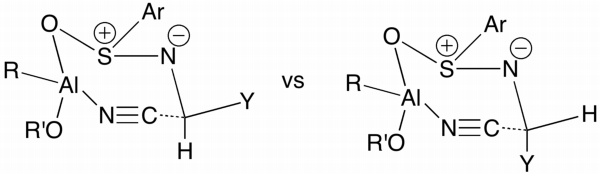
    In the first part of the post on this topic, I described how an asymmetric sulfoxide could be prepared as a pure enantiomer using a chiral oxygen transfer reagent. In the second part, we now need to deliver a different group, cyano, to a specific face of the previously prepared sulfoxide-imine. The sulfoxide is now acting as a chiral auxilliary, and helps direct the delivery of the cyanide group to specifically one face of the imine rather than the other. After removal of the aluminum carrier for the cyano group and hydrolysis of the cyano group to a carboxylic acid group, we end up with an enantiomerically pure amino acid.

    The Strecker synthsis: asymmetric delivery of cyanide anion. Click for 3D model of transition state
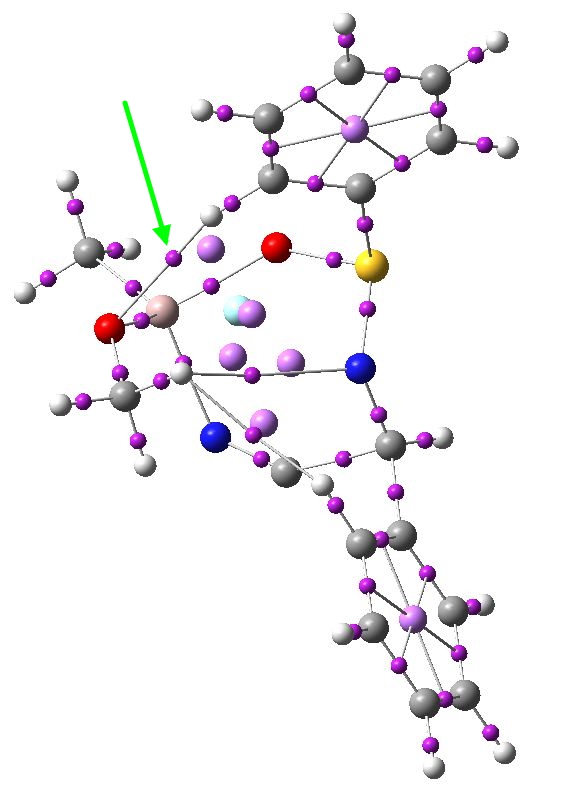
    Two transition states can be computed (ωB97XD/6-311G(d,p)/SCRF[dichloromethane], see DOI 10042/to-4927) and the S,S(S) diastereomer is found to be  1.35 kcal/mol lower in total free energy than the R,S(S) isomer. This agrees with the observed specificity. Again, a reason for the specificity needs identifying, and again we use  AIM.

    AIM analysis for the asymmetric delivery of cyanide to an imine, S,S(S) form.
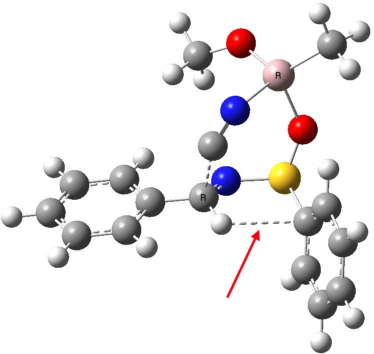
    In the favoured diastereomer, a BCP or bond-critical-point (green arrow above) can be found connecting a hydrogen from an aryl group to the oxygen of the Al-OMe group  via a weak hydrogen bond (H…O distance 2.25Å). In the disfavoured form, this interaction vanishes, and is instead replaced by a repulsive close N=CH…C-aryl contact of 2.49Å (for which there is no  BCP, red arrow below).

    Disfavoured transition state. R,S(S) form.

    The take home message from these two posts is that quite unusual interactions may often be responsible for asymmetric induction in a stereospecific reaction, and that helpful clues to these interactions may well be derived from an AIM analysis. Indeed, anyone doing stereospecific synthesis in the lab should be familiar with these methods! You have to be a jack-of-all-trades nowadays to keep up!

  • Anatomy of an asymmetric reaction. The Strecker synthesis, part 1.

    The assembly of a molecule for a purpose has developed into an art form, one arguably (chemists always argue) that is approaching its 100th birthday (DOI: 10.1002/cber.191104403216) celebrating Willstätter’s report of the synthesis of cyclo-octatetraene. Most would agree it reached its most famous achievement with Woodward’s synthesis of quinine (DOI: 10.1021/ja01221a051) in 1944. To start with, the art was in knowing how and in which order to join up all the bonds of a target. The first synthesis in which (relative) stereocontrol of those bonds was the primary objective was reported in 1951 (10.1021/ja01098a039). The art can be taken one step further. It involves control of the absolute stereochemistry, involving making one enantiomer specifically (rather than the mirror image, which of course has the same relative stereochemistry). Nowadays, a synthesis is considered flawed if the enantiomeric excess (of the desired vs the undesired isomer) of such a synthesis does not achieve at least ~98%. It is routine. But ask the people who design such syntheses if they know exactly the reasons why their reaction has succeeded, you may get a less precise answer (or just a lot of handwaving; chemists also like to wave their hands as well as argue).

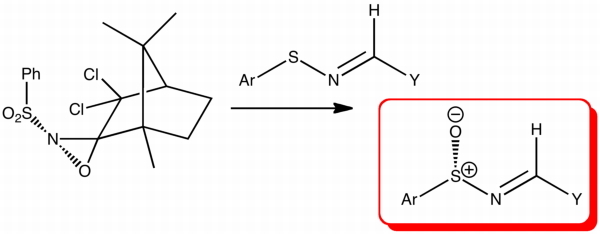
    Here I set out one such asymmetrically stereospecific scheme, which is the first part of a reaction used to make both natural and un-natural configurations of aminoacids; the Strecker synthesis.

    The asymmetric synthesis of an S(S) sulfoxide. Click for 3D model

    It makes use of a natural product based on the camphor ring system which nature provides as a single enantiomer. It is converted to an oxaziridine, and this reagent is now used to transfer one oxygen atom to an imino-thioether (DOI: 10.1021/ja00030a045). The result is the formation of a single S(S) enantiomer (the enantiomeric excess is > 98%) of a sulfoxide. In the second stage, cyanide is then delivered asymmetrically (i.e. to one face rather than the other) of the C=N group, the precursor to forming a pure enantiomer of an amino acid. Here we will probe why the first reaction, the asymmetric oxygen atom delivery, is so specific. It would be fair to say that this reaction was probably originally designed with no fundamental understanding of how it might achieve its magic asymmetric delivery. For example, those two chlorine atoms on the camphor ring look as if they were selected by trial-and-error. What indeed IS their role? Steric? Electronic? Other?

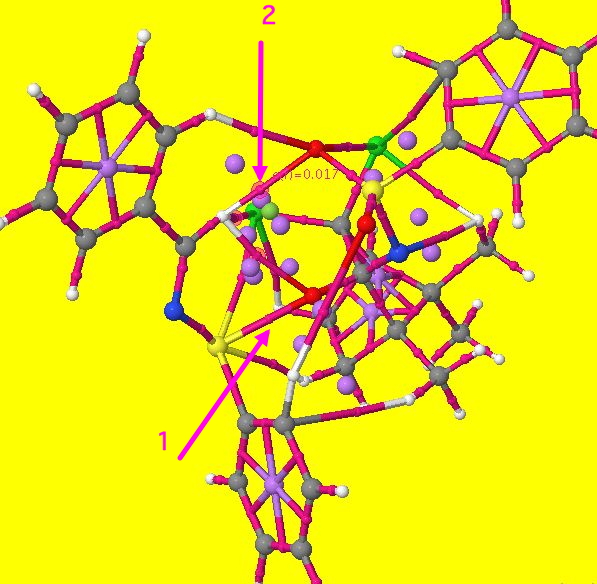
    If you click on the diagram above, a rotatable 3D model should appear (a static version is shown below). This is an AIM (atoms-in-molecules) analysis of the curvature of the electron density in this transition state (see DOI: 10042/to-4929). To help you navigate, arrow 1 is pointing to the small purple sphere representing the BCP (bond critical point) for the forming S…O bond. Three more purple spheres are highlighted with a halo. One of these is pointed to by arrow 2 below (to see the other two, you really will need the 3D model). This represents a BCP which appears between the hydrogen of the N=CH group and one of the oxygen atoms of the sulphone group. The label indicates the electron density at that point (0.017 au). This is characteristic of a hydrogen bond, albeit an unusual C-H…O type (a type that is too rarely invoked when explanations of stereospecificity are sought), and the density indicates its a reasonably strong one!

    AIM analysis of Transition state for oxygen transfer

    In fact, two more BCPs can be located between this H and other groups, and they too are marked with halos. The first leads to the oxygen atom being transferred, and the second to specifically one of the two chlorine atoms (there are other interactions to the chlorines as well). Now, it turns out that these interactions are largely absent for the alternative transition state (which would form the enantiomeric R(S) sulfoxide). Since a C-H…O hydrogen bond can easily be worth ~2 kcal/mol, it is no surprise to find that the energy of the favoured transition state is overall 2.4 kcal/mol lower in free energy compared to the isomer not formed. This represents (@300K) a ratio of 60:1 in the predicted ratio of the two species, or indeed an ee ~98%.

    Armed with this insight, one could design further experiments to test the hypothesis. For example, it appears only one of the two chlorines plays an active role. Replacing the passive chlorine with e.g. hydrogen might make little difference. Suppressing the hydrogen bonds by changing the N=CH to e.g. N=CF should have a big effect. The two oxygens of the sulfone also do not play equal roles. Perhaps this can be tested with a sulfoxide in place of the sulfone? All these hypotheses can of course first be tested with calculations. Of course, coming up with synthetic strategies for these new molecules might be tricky. But these experiments may give confidence (or demolish it) in the AIM technique used here to analyse the stereospecificity of this reaction.

    So the next time you hear a synthetic chemist proudly announce a new enantioselective synthesis, ask them what their deeper understanding of why their reaction works is. And be prepared to run away fast if they growl at you!

  • Dial a molecule: Can new reactions be designed by computer?

    One future vision for chemistry over the next 20 years or so is the concept of having machines into which one dials a molecule, and as if by magic, the required specimen is ejected some time later. This is in some ways an extrapolation of the existing peptide and nucleotide synthesizer technologies and sciences. A pretty significant extrapolation, suitable no doubt for a grand future challenge in chemistry (although the concept of tumbling a defined collection of atoms in a computer model and seeing what interesting molecules emerge, dubbed with some sense of humour as mindless chemistry, is already being done; see DOI: 10.1021/jp057107z).

    A possible carbene transfer reagent

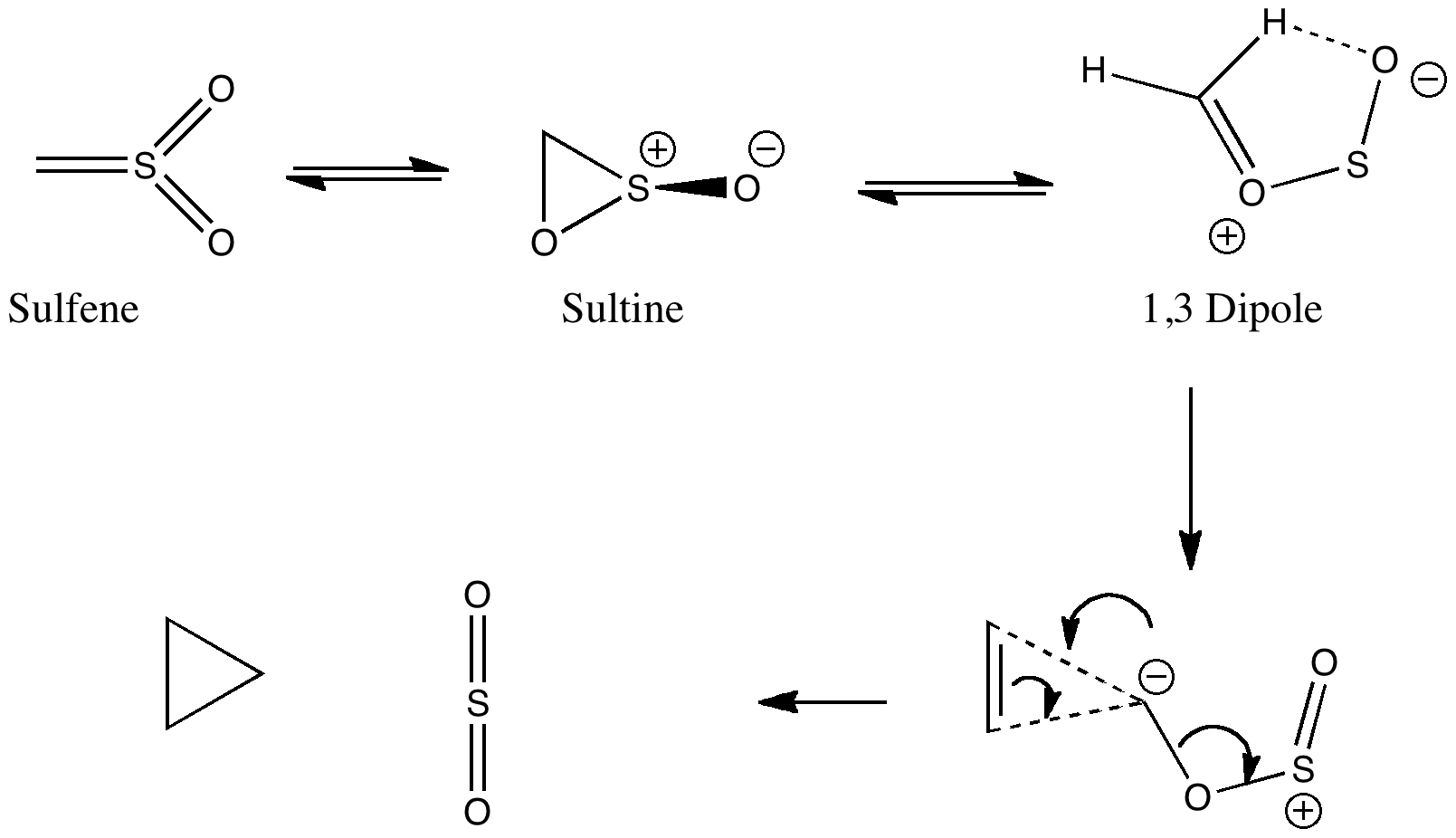
    Well, let us return to present day reality (I know it was a little unfair to capture your attention with such a grand title!). Consider the sequence above. Sulfenes are known simple elaborations of sulfur trioxide, with one oxygen replaced by a CH2 group. They can exist as isomeric rings, known as sultines (and which are of similar energy to the sulfenes, see DOI: 10.1016/j.theochem.2007.10.035). Few people have speculated upon what might be done with this small collection of atoms. It struck me (I am unaware it has struck anyone else, but I am happy to be corrected) that it might be useful as a reagent for delivering a carbene. The precedent is that oxaziridines (in which the SO unit is replaced by e.g. NR) can be used to transfer either oxygen or NR to alkenes, and dioxiranes (in which the SO unit is replaced by an oxygen) are very useful reagents for oxygen transfer to an alkene. In the example of the sultine, loss instead of carbene (CH2) would result in the thermodynamically stable sulfur dioxide. Also apparent is that the sultine is asymmetric (chiral) and so perhaps there is also a prospect of delivering that carbene asymmetrically (a reaction normally done with the help of metal catalysts). As shown above, the carbene is also nucleophilic, rather than electrophilic, which may also be useful in some contexts.

    Enter the computer, which will be used to see if these simple ideas can be turned into the design of a new reaction. Firstly, the assertion that the reaction producing cyclopropane and sulfur dioxide is exothermic is easily tested (B3LYP/cc-pVTZ); it comes out as exothermic in free energy by -26.6 kcal/mol (some of which of course is due to entropy). Next, the transition state for the delivery.

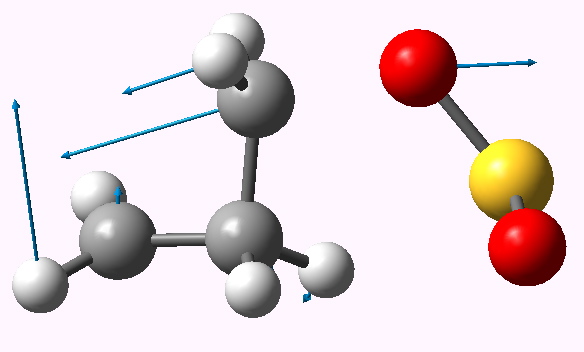
    Transition state for carbene transfer from sulfine

    This emerges (DOI: 10042/to-4476) with a free energy barrier of 37.4 kcal/mol relative to the sultine. Rather too high a barrier to constitute a useful synthetic reaction! But there is something interesting to be learnt from this transition state. Whilst the product is clearly cyclopropane and sulfur dioxide, the reactant is not the sultine but appears to be another species, labelled above as the 1,3 dipole (DOI: 10042/to-4487), a species which is 13 kcal/mol higher in free energy than the sultine itself (but does it have to be formed first, or is it merely on the reaction path?). There are other noteworthy aspects of the transition state. The carbene cycloaddition is a 4n electron process, with an apparent antarafacial component, this mapping onto inversion at the carbene centre. The bond formation at the alkene is very asynchronous, and the SO2 unit clearly does appear to act as a chiral auxilliary. Also these aspects would have to be factored into the eventual design.

    We now enter an optimization stage of the process, in which we try to reduce the activation barrier in order to produce a viable reaction. Replacing CH2 by CF2 however increases the barrier to 42.5 kcal/mol, whilst substituting Se for S induces a barrier of 40.6 kcal/mol. More variation of the various substituents (including the alkene) will be needed to see if such a reaction could actually be carried out, but this is relatively routine process, not attempted here (perhaps not entirely routine; thus predicting what might happen is easy compared to analyzing what does not happen, see DOI: 10.1002/anie.200801206). So, there is certainly no claim here that a new reaction has been designed. Rather a tentative hint at the kind of processes that might be involved, eventually, in dialing a molecule.

  • Conformational analysis of cyclotriborazane

    In an earlier post, I re-visited the conformational analysis of cyclohexane by looking at the vibrations of the entirely planar form (of D6h symmetry). The method also gave interesting results for the larger cyclo-octane ring. How about a larger leap into the unknown?

    Let us proceed as follows. One fun game to play in chemistry is to invoke iso-electronic substitutions. In this case, we can subtitute a nitrogen and a boron atom for a pair of carbons. Thrice invoked, it leads to a molecule known as cyclotriborazane.

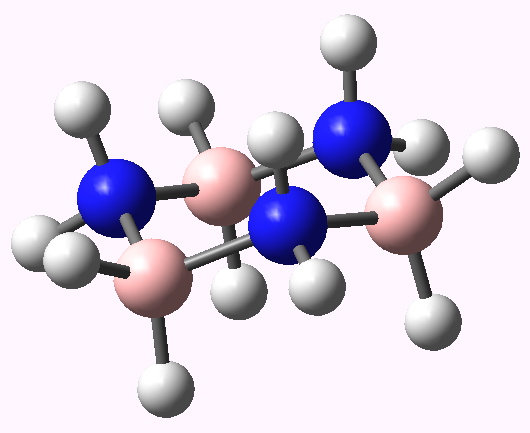
    Cyclotriborazane.

    This species is in fact very well known, and a crystal-structure was determined some time ago (DOI: 10.1021/ja00786a022). It is worth considering some of its properties.

    1. The species is crystalline, and sublimes rather than melts. Contrast this with the iso-electronic cyclohexane, which melts at around 6C (itself a surprisingly high value).
    2. The parent H3BNH3 also has a very high melting point of > 100C, which is attributed to an extensive array of so-called dihydrogen bonds in the crystal lattice, in which a positively charged hydrogen deriving from an NH is attracted to a negatively charged hydrogen deriving from a BH. Such dihydrogen bonds have been shown to be quite strong due to this electrostatic interaction, and are responsible for the extraordinary elevation of the melting point compared to the iso-electronic ethane.
    3. The chair form of cyclotriborazane aligns the three hydrogens shown in either blue or red in the axial positions. The three red hydrogens might be expected to be all negatively charged, and the three blue ones positively charged. So in the chair conformation, might we expected the electrostatic repulsions between either the blue or the red hydrogens to destabilize these axial positions, and hence perhaps even destabilize the chair conformation itself?

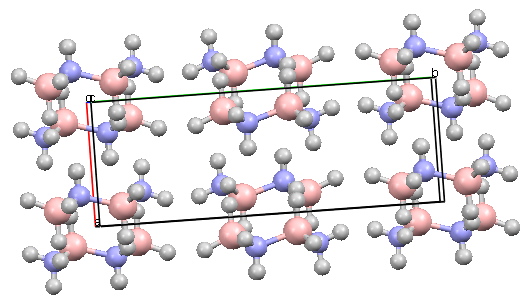
    The crystal structure however shows clearly that the chair is still the favoured conformation. Equally intriguing, one might expect the three blue hydrogens to stack up to attract electrostatically to the three red hydrogens. But you can see from the crystal packing if you activate the model below that this does not happen!

    Cyclotriborazane Crystal structure. Click for 3D
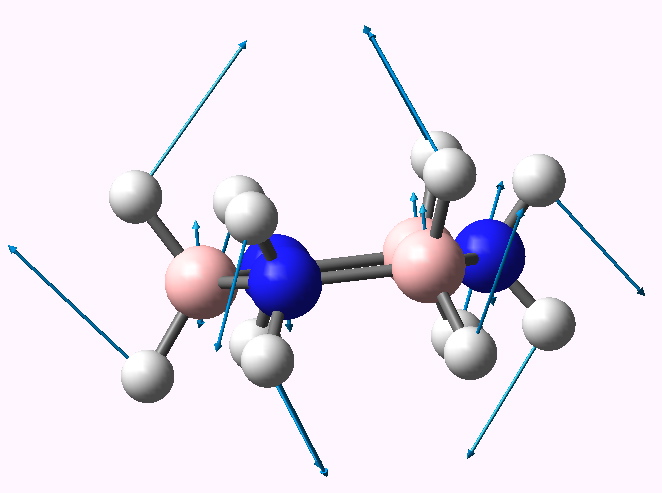
    What of the vibrational analysis, conducted as it was for cyclohexane itself (DOI: 10042/to-4170). Well, just as before, for the planar geometry, three imaginary modes are calculated (A2“, E”) and just as before, they distort the geometry in the direction of a chair (Cs symmetry), a C2-disymmetric twist boat (with a predicted optical rotation of -54°) and a boat respectively (the latter, as before, being a transition state connecting the two C2-enantiomers).

    Planar cyclotriborazane distorting to chair.
    But here we get a surprise! According to the B3LYP/6-311G(d,p) model, the final resting energy for the chair is almost the same (indeed 0.2 kcal/mol higher in free energy) as the twist-boat. Perhaps that blue/red repulsion did have an effect after all! If you look at the calculated structure, you can indeed see that the blue/red hydrogens are splayed-out, avoiding each other!

    Calculated geometry of the chair form of cyclotriborazane
    This is one of those molecules where one might have expected surprises. In the end, it is surprising at how similar cyclotriborazane is to its iso-electronic cousin cyclohexane.

  • Chemical intimacy: Ion pairs in carbocations

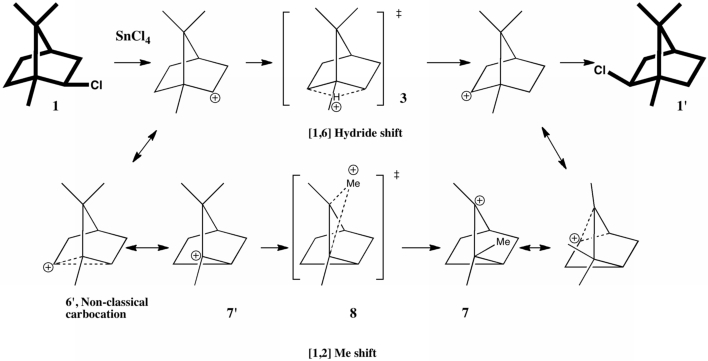
    The scheme below illustrates one of the iconic reactions in organic chemistry. It is a modern representation of Meerwein’s famous experiment from which he inferred a carbocation intermediate, deduced from studying the rate of enantiomerization of isobornyl chloride when treated with the Lewis acid SnCl4.

    The isomerisation of iso-bornyl chloride

    Meerwein himself suggested (in effect, since he lacked the modern terminology used here) that the reaction proceeded via a hydride shift 3, which was acting as the mirror in reflecting 1 onto 1‘. A few years later, isotopic labelling studies demonstrated that another pathway occurs, at more or less the same rate. This alternative proceeds via a series of [1,2] carbon shifts, with the mirror now being 8 rather than 3. I have documented the story in detail in an article that will shortly appear in the J. Chemical Education (DOI: 10.1021/ed800058c). There, calculations reveal that the two transition states, 3 and 8 (which the experiments above suggest should be almost equal in energy) in fact differed by ~8 kcal/mol in favour of the latter for a gas-phase model which does not include the counterion. These calculations were done at a level (B3LYP/cc-pVQZ) which indicates that 8 kcal/mol represents a real discrepancy not so much in the calculation as in the model used for that calculation. I suggested that perhaps the discrepancy might be due to tunneling effects in the hydride transfer reaction, accelerating that pathway compared to methyl transfer.

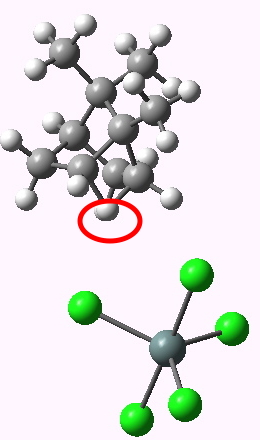
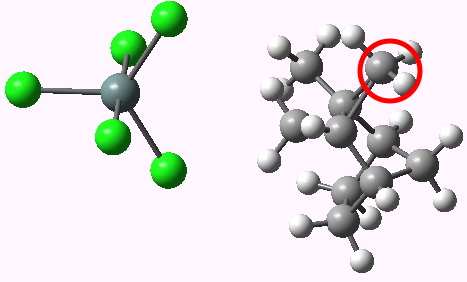
    What was missing from that particular model was the counter-ion, which is supposed to form an intimate ion-pair with the carbocation in moderately polar solvents. How much does the presence of such an object perturb the transition states?  To find out, we need calculate such systems (which by definition have very large dipole moments) with inclusion of solvation corrections. Now that new algorithms for computing transition states with solvation have made this a routine calculation, I can report an update to these results. This was done at the B3LYP/cc-pVTZ (aug-cc-pVTZ-pp for the Sn) level, using dichloromethane as a continuum solvent. Without the SnCl5 counterion, 3 and 8 differ by 5.4 kcal/mol in free energy (this difference now includes all the solvation free energy terms), and in the presence of the counter-ion this remains unchanged at 5.4 kcal/mol (see DOIs 10042/to-3668 and 10042/to-3667 without SnCl5 and 10042/to-3670 and 10042/to-3665 with). The free energy of activation with SnCl5 (see DOI: 10042/to-3695 for starting material) is 16.6 kcal/mol (for the [2,6] H shift) and 11.2 kcal/mol (for the  [1,2] Me shift), which indicates a facile room temperature reaction (as indeed is the case).

    TS H-transfer. Click for animation
    TS 1,2 Methyl shift. Click for animation

    What are the implications for this result?

    1. Modelling an (intimate) ion-pair is different from that of covalent compounds in one respect. Whereas the geometry at covalent atoms is very well established and largely predictable, ion-pairs are potentially much more flexible. In other words, it is nowhere near as obvious where to place the counter-ion. In the above diagrams, the SnCl5 is located at a reasonable position, but there are other positions where it could be. Although what is shown is an energy optimized structure, a full search of all the possible positions that the SnCl5 could adopt has not been undertaken, and the possibility must remain that another pose of the ion might be lower in energy, for either of the two transition states. Indeed, if it turns out there are many positions for the ion of very similar in energy, then the entropy of the system would have to be corrected for these microstates.
    2. Nevertheless, one can draw insight from the two structures shown above (click to animate the transition mode). The counter-ion for the hydride transfer does approach the transferring hydrogen quite closely, and does appear to establish a H-bond between two hydrogens and one chlorine. This would stabilize that structure relative to the methyl shift transition state, where such hydrogen bonds do not appear to form. In this case  however, these interactions do not change the relative stabilties.
    3. These ion-pairs do have very large dipole moments (~23D for 3, ~27D for 8), which suggests that the result might in fact be sensitive to the nature of the solvent (and presumably the counter-ion itself).

    Many reactions do take place in which intimate ion-pairs are formed (including a fair number of catalytic systems involving metals). We cannot generalise from the result above, but it may well be that the perturbation induced by such counter-ion may play significant roles in deciding selectivities. I would venture to suggest that increasingly modelling such as reported here will play a significant role in establishing mechanisms accounting for the selectivity of catalytic reactions.

  • How do molecules interact with each other?

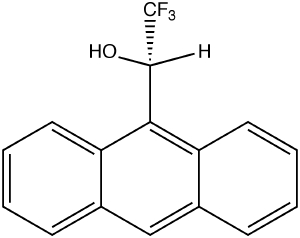
    Understanding how molecules interact (bind) with each other when in close proximity is essential in all areas of chemistry. One specific example of this need is for the molecule shown below.

    The Pirkle reagent
    The Pirkle reagent

    This is the so-called Pirkle Reagent and is much used to help resolve the two enantiomers of a racemic mixture, particularly drug molecules. The reagent binds to each enantiomer of a racemic drug differently, and this difference can be exploited by using e.g. column chromatography to separate the two forms. The conventional wisdom is that such chiral recognition occurs via a three-point binding model. In other words, at least three different interactions must occur between the Pirkle reagent and the drug to allow such chiral recognition.

    So how do we identify where these bindings might occur? A good place to start is to look at the self-binding of the Pirkle reagent, in other words, how does it interact with itself in the crystal state? An X-ray structure of the pure enantiomer of the Pirkle reagent shows that it binds with itself to form a loose dimer. We are now in a position to analyze exactly how this binding occurs. To do this, we are going to invoke a technique known as Atoms-in-molecules or AIM. This effectively looks at the curvature of the electron density in the dimer, and from the characteristics of this curvature, identifies a series of so called critical points, or regions where the first derivative of the electron density (referred to as ρ(r) ) with respect to the geometry is zero. These critical points come in four varieties only;

    1. A nuclear critical point, which almost exactly corresponds to where the nuclei are
    2. A bond critical point, which is the key to understanding not only where actual bonds are in the molecule, but also a range of weaker interactions which are conventionally not graced with the term bond, but which nevertheless can be essential in understanding how to molecules interact weakly with each other.
    3. The remaining two types of critical point relate to rings and cages, and we will not be concerned further with them here.

    The electron density required for this analysis could in principle come from the X-ray measurements themselves, but it is not easy to acquire this to the required accuracy (although it can be done). In this case, it is easier (and probably no less accurate) to calculate the density from a DFT-based quantum mechanical calculation. The result of this is shown below.

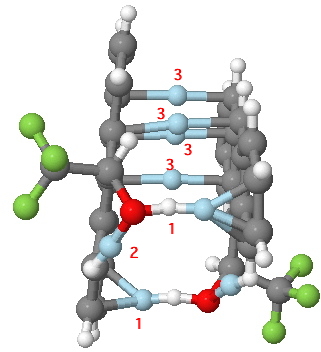
    Pirkle dimer. Click on image to obtain model
    Pirkle dimer. Click for 3D.

    The light blue spheres show the position of selected bond critical points or BCPs in the AIM analysis. So what do they tell us about how two molecules of Pirkle molecule interact with each other? Three different points labelled 1-3 are highlighted for discussion.

    1. Points 1 connect the hydrogen of the OH group with the carbons of the π-face of the anthracene ring (the left ring of the molecule as shown above). This is an unusual type of interaction known as a π-facial hydrogen bond, and it has only been recognized as such in the last 30 years. Note that this interaction is not restricted to occur just between a pair of atoms, but can involve more (in this case almost a whole benzene ring). By finding the value of the electron density ρ(r) at this BCP, one can estimate the energy of interaction resulting from its formation. In this case, ρ(r) ~ 0.014 au, and comparison with other types of hydrogen bond suggests that this value corresponds to an interaction energy of around 2.5 kcal/mol. This is a little weaker than a conventional OH…O hydrogen bond, but is still quite significant. Two of these interactions occur in this Pirkle dimer.
    2. Points 2 are equally unexpected. They connect the oxygen of the same OH group involved in the previous interaction, and one of the ring C-H groups. Again, that C-H…O groups can interact has only been recognized relatively recently. The value of ρ(r) of ~ 0.018 indicates a hydrogen bond strength of ~3 kcal/mol, again hardly insignificant.
    3. There are four specific interactions of the final type 3. These occur in the region of overlap of the two anthracene rings, and these are referred to as π-π stacking interactions. Again, the ρ(r) of ~ 0.005, calibrated against known systems, suggests that each is individually worth around 1 kcal/mol.

    So adding up all eight interactions indicates that the two molecules of the Pirkle reagent have an interaction energy of around 15 kcal/mol resulting just from these weak bonds (there are other types of interactions between two molecules known as dispersion forces, which also contribute), and which together provide more than enough free energy to overcome the entropy required to bring the two molecules together.

    Armed with tools such as AIM, one can now be more confident in analyzing the various terms that contribute to two molecules interacting with each other, and in the case of chiral molecules, how these interactions may result in chiral recognitions.