Tag: free energy

  • Di-imide reduction with a twist: A Möbius version.

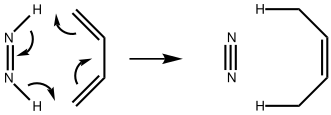
    I was intrigued by one aspect of the calculated transition state for di-imide reduction of an alkene; the calculated NMR shieldings indicated an diatropic ring current at the centre of the ring, but very deshielded shifts for the hydrogen atoms being transferred. This indicated, like most thermal pericyclic reactions, an aromatic transition state. Well, one game one can play with this sort of reaction is to add a double bond. This adds quite a twist to this classical reaction!

    The original di-imide reduction can be viewed as a six-electron process; one that fits the 4n+2 aromaticity rule. In fact, this is a specific instance of a more general topological rule, first proposed in 2008, which suggests that for 4n+2 electron thermal reactions, the electronic topology conforms to that of a Möbius link, for which the so-called linking number Lk is even (o, 2, 4, etc). For systems in which 4n electrons participate, such as the homologated example above, the rule changes to the topology of a Möbius knot, for which the linking number is odd (1, 3, etc)[cite]10.1021/ja710438j[/cite]. One interesting consequence of all this topology is that all the systems for which Lk > 0 are chiral (achiral benzene is thus seen as an exception rather than the norm of aromaticity)[cite]10.1021/jp902176a[/cite].

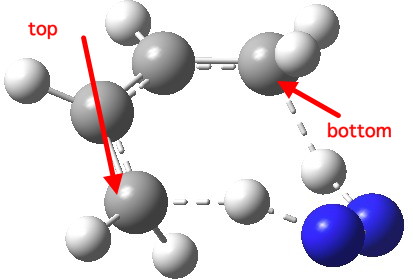
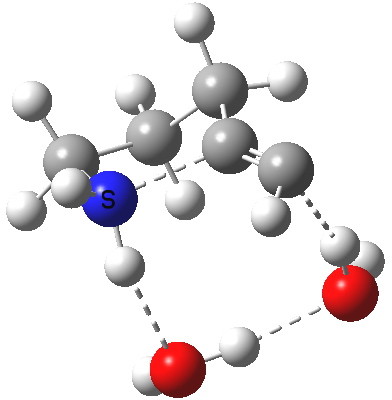
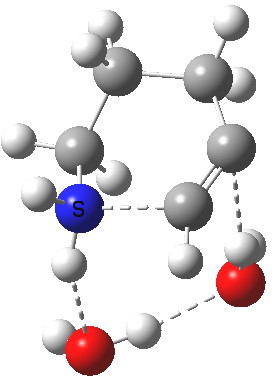
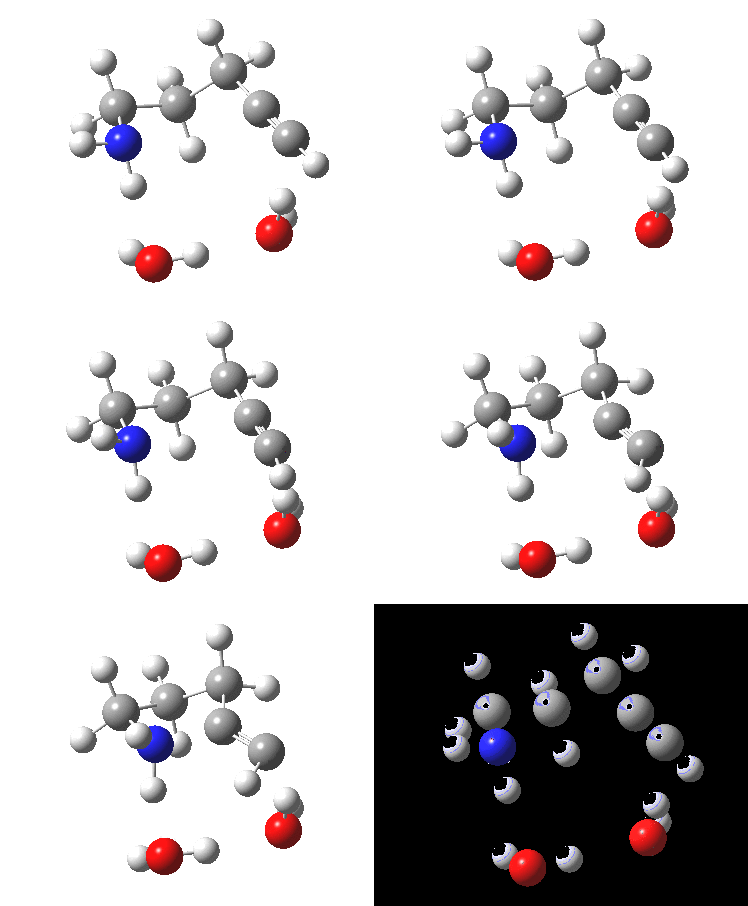
    Transition state for 8-electron di-imide reduction. Click for 3D.

    The calculated transition state for this reaction is shown above. As befits a torus knot, the two hydrogen atoms are transferred to opposite faces of the butadiene; an antarafacial mode. Now, to be fair the alternative mode in which the hydrogens are delivered suprafacially to just a single alkene is 26.1 kcal/mol lower in free energy. We might conclude that di-imide does not reduce butadiene in this manner, and that getting an experimental example of such stereochemistry might be a challenge!

    What of the aromaticity of this Möbius version? The NICS(0) at the ring critical point is -15.7 ppm, whilst the shieldings of the transferring hydrogens are +14.0 ppm. So just like its 4n+2 electron counterpart, this Möbius di-hydrogen transfer reaction also proceeds through an aromatic transition state.

  • The “unexpected” mechanism of peroxide decomposition.

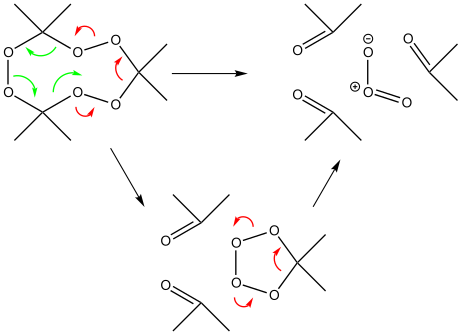
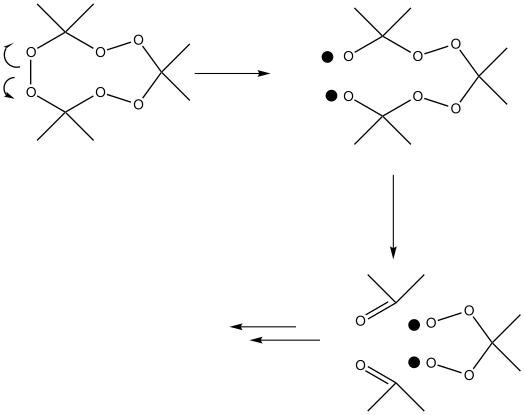
    A game chemists often play is to guess the mechanism for any given reaction. I thought I would give it a go for the decomposition of the tris-peroxide shown below. This reaction is known to (rapidly, very rapidly) result in the production of three molecules of propanone, one of ozone and a lot of entropy (but not heat).[cite]10.1021/ja0464903[/cite]

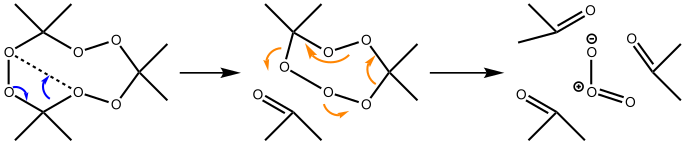
    The conventional approach might be to try to push some sensible arrows (an approach not always followed up it has to be said, by a reality check using quantum mechanics). I found the arrows that emerged from my playing interesting for the following reasons. 

    1. One scheme might be a process involving six arrows (twelve electrons), which leads directly to the products.
    2. Or, one might try to group the arrows into two sets of three (shown in green and red above). A moment’s consideration suggests that the green set has to precede the red set (if not concurrent), resulting in the initial production of two molecules of propanone and the tetraoxapentane derivative shown. This new molecule then suffers a simple 2+4 pericyclic cycloelimination as the second stage.
    3. It is possible of course that the process may simply consist of homolytic O-O cleavages via biradicals. I will defer discussing this point until later. 

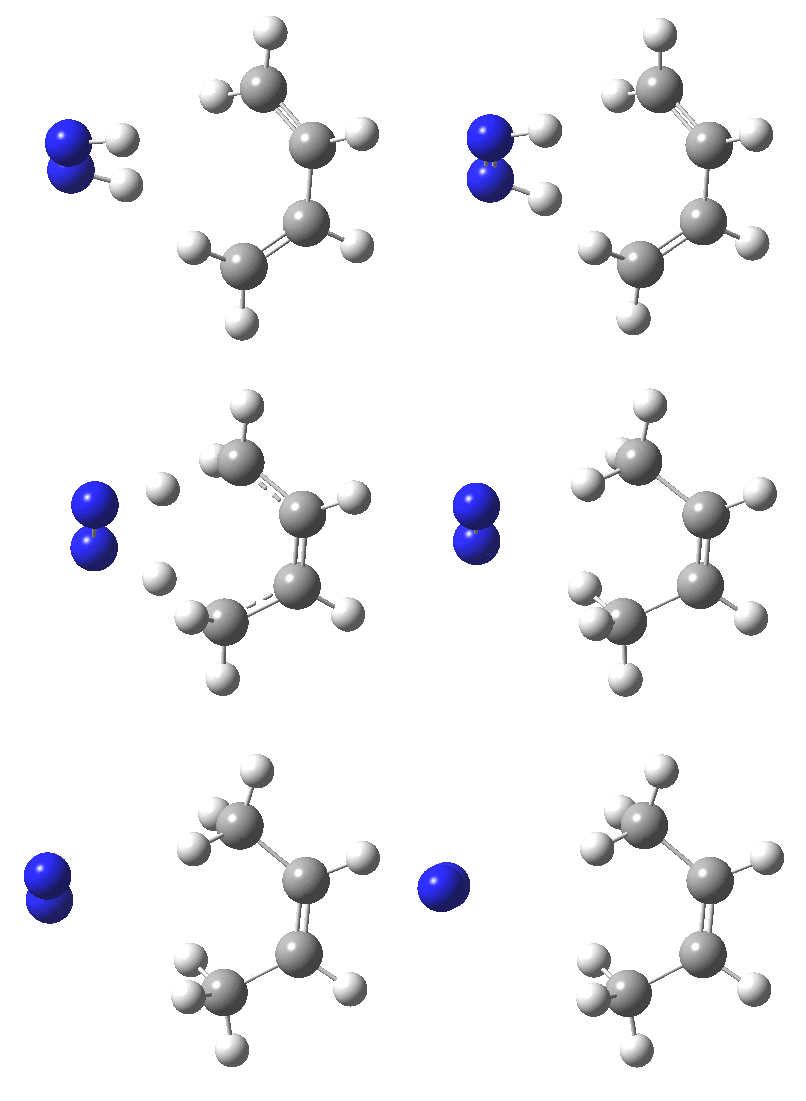
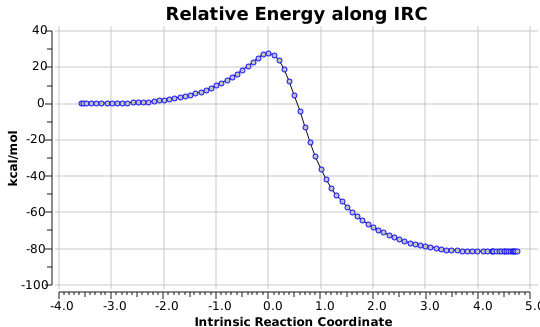
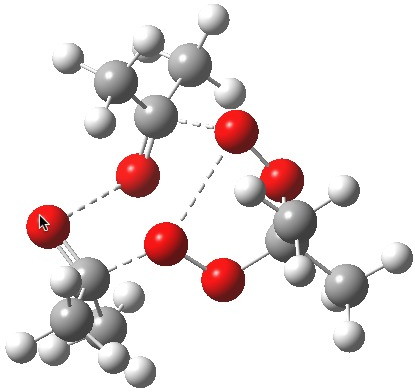
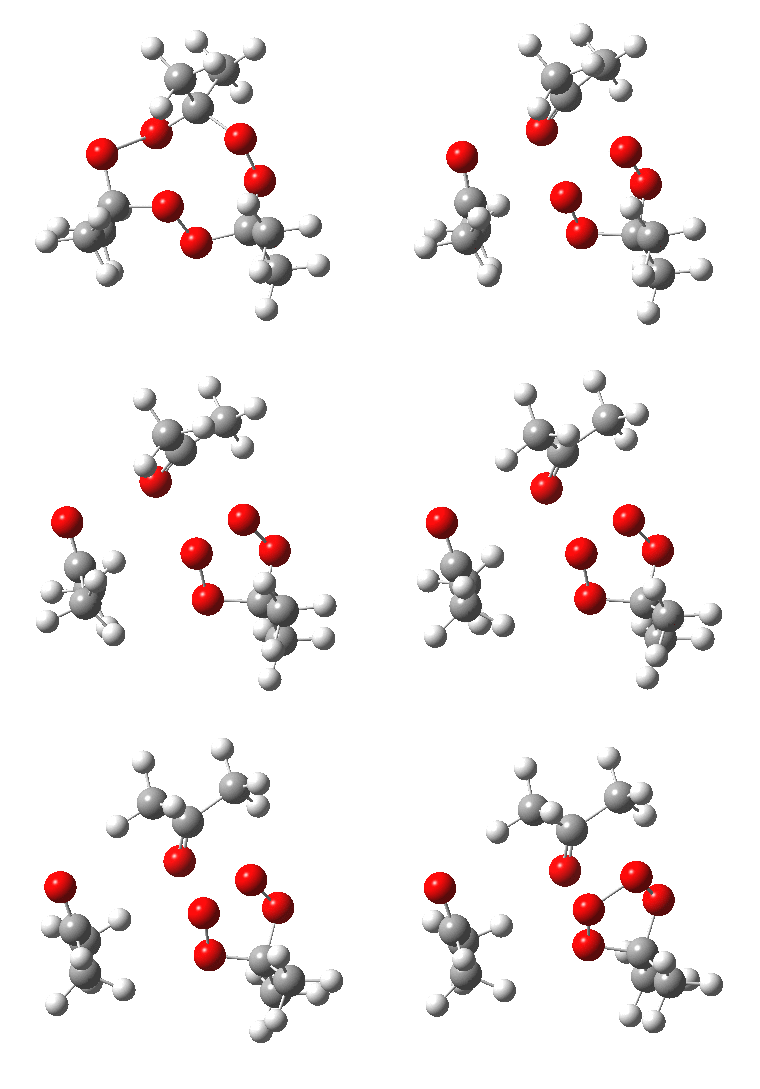
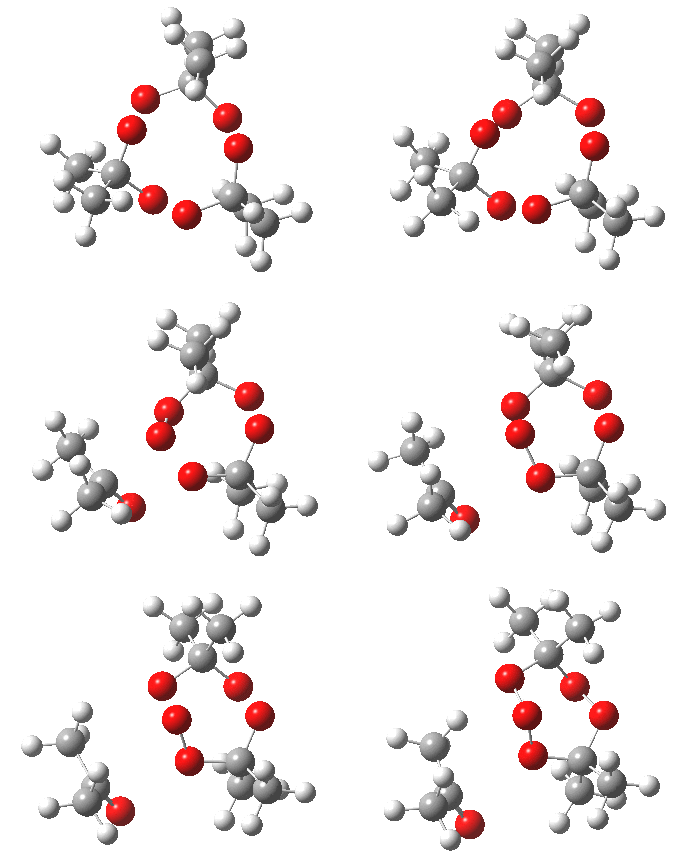
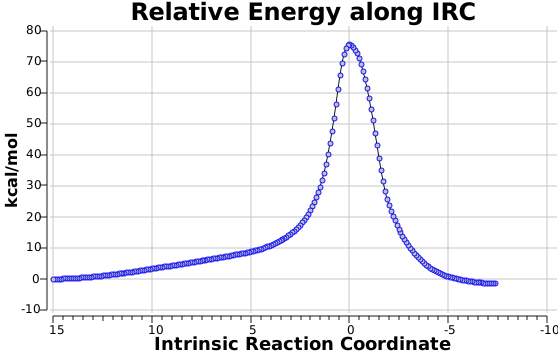
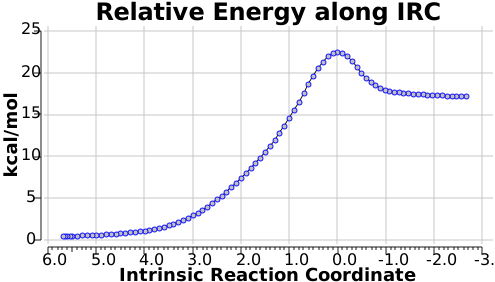
    The reality check would then consider whether the two processes are consecutive or concurrent. The following is computed at the wB97XD/6-311G(d,p) level, and corresponds clearly to the three green arrows shown above (no motion corresponding to the red arrows is discernible) and hence would be a consecutive process with a distinct intermediate on the path. The IRC seems to support this.

    Saddle point for decomposition. Click for first imaginary vibration.
    Saddle point for decomposition. Click for second imaginary vibration.
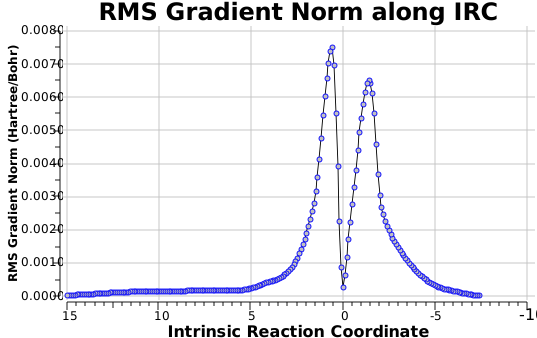
    IRC for apparent concerted decomposition.

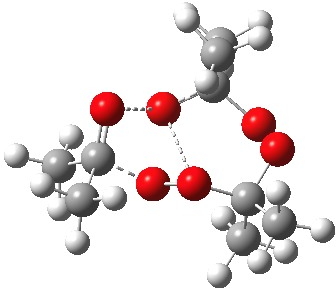
    The diagram is shown twice above, because this geometry is in fact not a transition state but a second-order saddle point, with two imaginary vibrations. The first corresponds to the green arrows, but the second represents an asymmetric diversion to a quite different path. This second imaginary vibration can be followed in two directions, each potentially leading to a new lower energy saddle point. I was only able to locate one of these, shown below (if I track down the other,  I will append it).

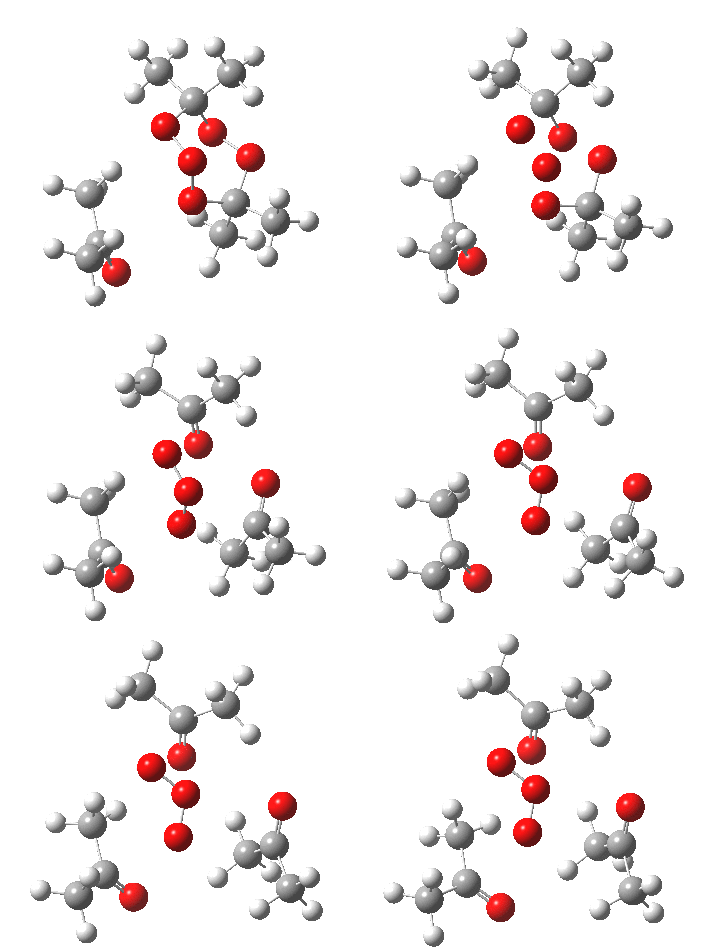
    Transition state for initial fragmentation. Click for 3D.
    IRC for blue arrows. Click for 3D
    IRC for orange arrows. Click for 3D.

    As it happens, this corresponds to a rather different partitioning of the electron arrows, into a group of two first (blue) followed by four (orange). The first (proper) transition state is 5.0 kcal/mol lower in ΔG than the second order saddle point. The second transition state is 16.3 kcal/mol lower than the first. The intermediate in this process is actually different from the one shown earlier, but it can also eliminate ozone and two molecules of propanone.
    What have we shown thus far? That one’s naive arrow pushing may in fact not come up with the goods. But how about that reality check? Whoops! Look at that activation barrier. The free energy (which is lower than the barrier itself because of the large +ve entropy of the reaction) is still a whopping 70 kcal/mol. 
    So the conclusion from all of this? Well, that homolytic pathways, involving a cleavage of an O-O bond to produce a biradical, are very probably the real mechanism after all. Something like the below perhaps? (OK, so you might have told me that at the outset!).


    As milestones go, this is my 250th post.


  • Thalidomide. The role of water in the mechanism of its aqueous racemisation.

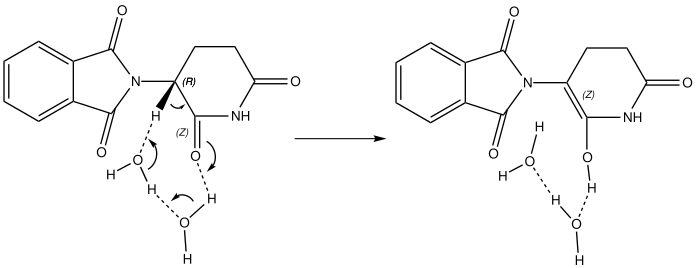
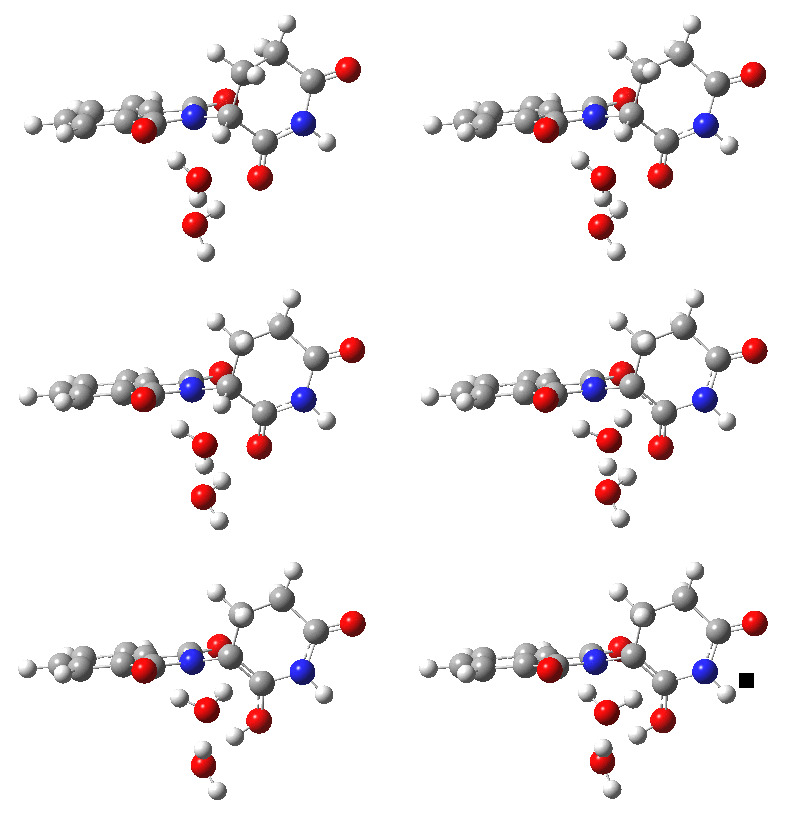
    Thalidomide is a chiral molecule, which was sold in the 1960s as a sedative in its (S,R)-racemic form. The tragedy was that the (S)-isomer was tetragenic, and only the (R) enantiomer acts as a sedative. What was not appreciated at the time is that interconversion of the (S)- and (R) forms takes place quite quickly in aqueous media. Nowadays, quantum modelling can provide good in-silico estimates of the (free) energy barriers for such processes, which in this case is a simple keto-enol tautomerism. In a recently published article[cite]10.1002/chem.201202651[/cite], just such a simulation is reported. By involving two explicit water molecules in the transition state, an (~enthalpic) barrier of 27.7 kcal/mol was obtained. The simulation was conducted just with two water molecules acting as solvent, and without any additional continuum solvation applied. So I thought I would re-evaluate this result by computing it at the ωB97XD/6-311G(d,p)/SCRF=water level (a triple-ζ basis set rather than the double-ζ used before[cite]10.1002/chem.201202651[/cite]), and employing a dispersion-corrected DFT method rather than B3LYP.

    Keto-enol tautomerisation occupies a unique position in the history of mechanistic chemistry[cite]10.1002/jlac.18892500306[/cite]. In 1889, Beckmann got the whole field rolling by proposing an inferred enol intermediate (which he did not observe) to explain the isomerism of menthone to iso-menthone in conc. sulfuric acid. In modelling the enolisation of thalidomide, I have used both implicit and explicit solvents acting in a self-consistent manner. This approach is not yet much adopted in the wider literature[cite]10.1021/jo100920e[/cite]. I have deployed it extensively in this blog as an encouragement to others (selected examples are listed at the bottom of this post). It is worth noting at the outset that the transition state reported previously[cite]10.1002/chem.201202651[/cite] has a computed dipole moment of ~10D. My experience[cite]10.1021/jo100920e[/cite] suggests that any geometry with a dipole moment of this magnitude (or greater) is likely to relax when placed into a continuum field, and this relaxation becomes an important perturbation of both the computed geometry of the transition state and the intrinsic reaction coordinate profile computed from that starting point.

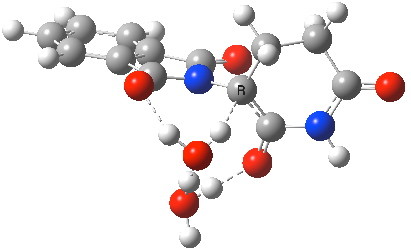
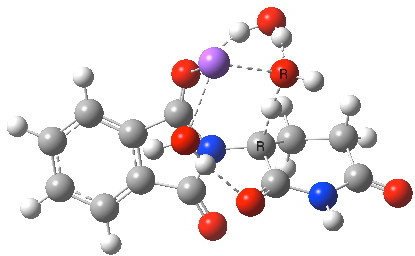
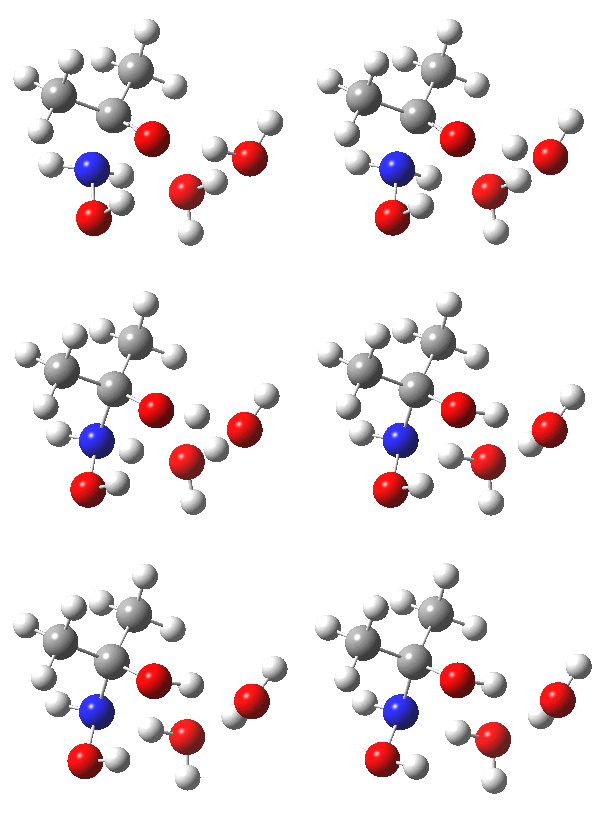
    The (re)computed geometry of the aqueous transition state for enolisation of thalidomide is shown below, and for which the entropy-corrected ΔG298 is 31.0 kcal/mol (the barrier for the prototypical enolisation of propanone is computed as 34.4 kcal/mol). The value in the literature[cite]10.1002/chem.201202651[/cite] is given as 27.7 kcal/mol for the zero-point-energy corrected total energy barrier, but this value notably does NOT include any entropic corrections. The measured literature value for ΔG298 is reported as 24.3 kcal/mol at pH 8, a value which probably also includes contributions from both the pure water catalysed route and those from hydroxide anion catalysis (see below). At this point, I should remind that the free energy of activation for a bi- or termolecular reaction in solution must be obtained by correcting the value obtained for a standard state of 1 atmosphere (the state used for the value quoted above). According to Alvarez-Idaboy and co-workers[cite]10.1021/ol060261z[/cite], this amounts to a total correction of -4.5 kcal/mol for a bimolecular reaction, and -8.73 kcal/mol for a termolecular reaction. Where one of the components of a termolecular reaction is also the solvent, these corrections probably need to be themselves reduced. But this does achieve a reduction in the computed value of 31.0 kcal/mol to something quite close to the experimental value! 

    Aqueous transition state for enolisation of thalidomide. Click for 3D.

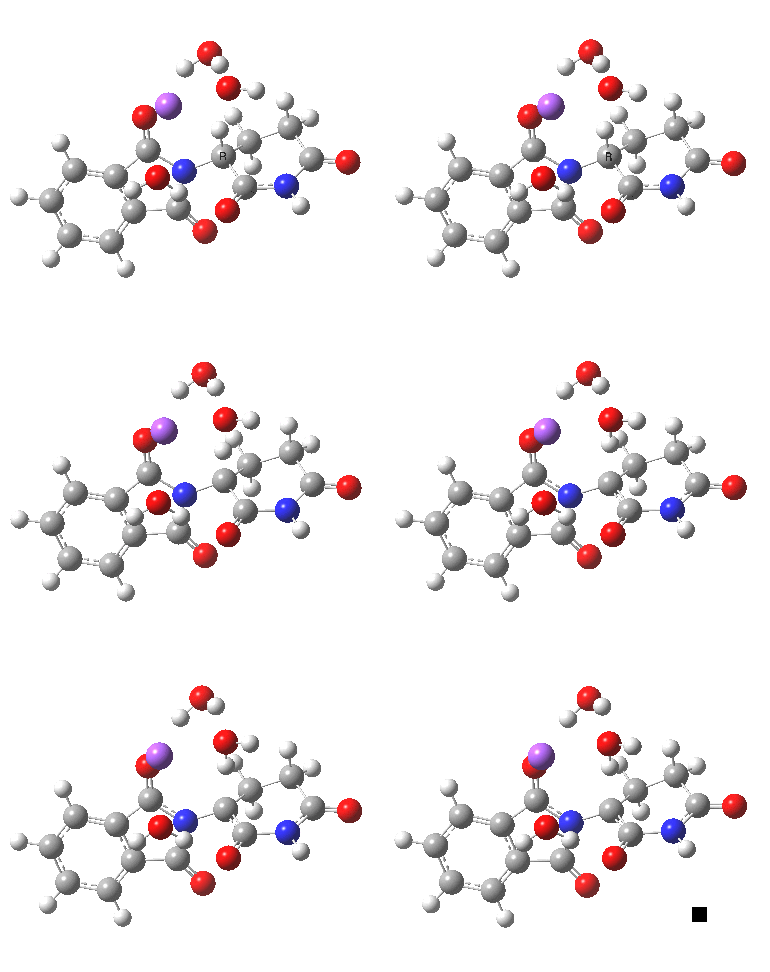
    Next, I want to consider the base-catalysed enolisation pathway. As with the reaction of dichlorobuteneone with tolyl-thiolate about which I wrote in another post, the authors of the thalidomide study[cite]10.1002/chem.201202651[/cite] modelled this route by introducing a solvated hydroxide anion, “OH·H2O” into the structure without any accompanying counter-ion. In other words, their total system has an overall negative charge. I argued before, and I argue again here, that there is no real need to have to do this. Why not for example introduce NaOH•H2O instead? One might argue that the cationic counter-ion so introduced cannot be properly modelled, but the combination of explicit first-sphere water molecules coupled with a continuum model actually handles these counter-ions reasonably well. So may I introduce you to my version of the base-catalysed reaction, involving a contact-ion-pair:

    Base-catalysed (NaOH) enolisation of thalidomide. Click for 3D.

    This has ΔG298 4.7 kcal/mol, much lower than the neutral water catalysed reaction. This value is of course for a standard state for [Na+OH] (1 atm). At pH 8, [OH] is at least six orders of magnitude less, which may rationalise why the experimental rate is so much slower than this barrier might imply. The IRC corresponds to proton transfer.

    I would like to end by noting that many mechanisms which would otherwise involve the development of charge-separation may well borrow a protic solvent molecule in the manner shown here to reduce the degree of charge-separation needed.  Further examples of this are listed below.


    1. Oxime formation from hydroxylamine and ketone. Part 2: Elimination.
    2. Oxime formation from hydroxylamine and ketone: a (computational) reality check on stage one of the mechanism.
    3. Transition state models for Baldwin dig(onal) ring closures.
    4. Transition state models for Baldwin’s rules of ring closure.
    5. The mechanism (in 4D) of the reaction between thionyl chloride and a carboxylic acid.
    6. Mechanism of the diazomethane alkylation of a carboxylic acid.
    7. The mechanism of the Baeyer-Villiger rearrangement.
    8. Stereoselectivities of Proline-Catalyzed Asymmetric Intermolecular Aldol Reactions.
    9. Secrets of a university tutor: tetrahedral intermediates.
  • Oxime formation from hydroxylamine and ketone: a (computational) reality check on stage one of the mechanism.

    The mechanism of forming an oxime from nucleophilic addition of a hydroxylamine to a ketone is taught early on in most courses of organic chemistry. Here I subject the first step of this reaction to form a tetrahedral intermediate to quantum mechanical scrutiny.

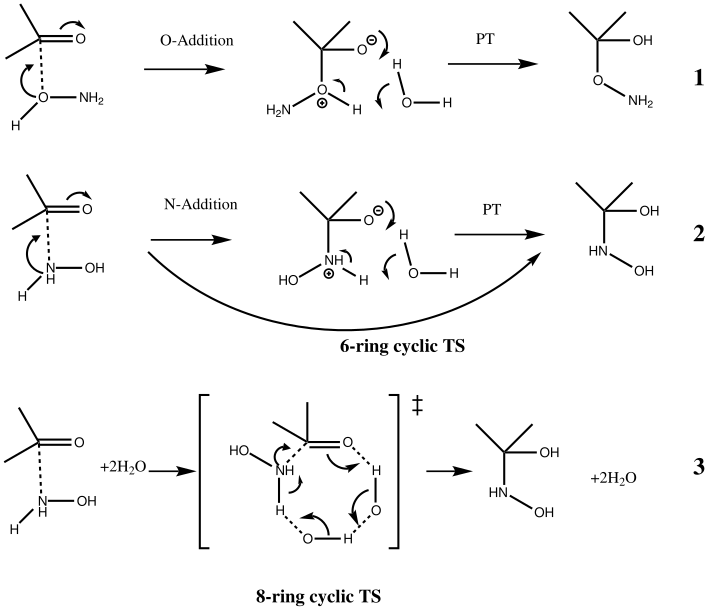
    1. The first decision is to decide which atom of the hydroxylamine acts as the nucleophile. Reaction 1 shows the oxygen and reaction 2 the nitrogen. The text books will tell you that nitrogen nucleophiles are better than oxygen ones. This is because nitrogen is less electronegative than oxygen (it has a smaller nuclear charge) and so binds its single lone pair less tightly than oxygen does its two lone pairs. Sometimes the Klopman-Salem equation is invoked, which tells you that the reactivity is directly proportional to the overlap between the donor MO and the (empty) acceptor MO, and inversely proportional to the energy gap between these two orbitals. Nitrogen wins out because its lone pair is “larger” and hence overlaps better, and because its donor MO energy is higher than oxygen and hence the energy gap between it and the π* C=O acceptor is lower. 
    2. Reality check: We need to construct a suitable transition state for both possibilities, and then compare their free energies. There is a choice of choosing a stepwise pathway (the one shown in all the text books) in which the bond from N or O to C is formed in an initial step, and then followed by a step often just labelled PT to transfer the proton using solvent molecules. These two steps can also be conflated into a single concerted mechanism involving a 6-membered ring transition state. Quantum mechanically, this latter option has the advantage of avoiding any great build up of charge separation at any stage in the mechanism, but has the disadvantage that the entropic loss at the transition state is greater (although “borrowing” a water molecule from a bulk solvent for this purpose is easier than doing so from an infinite distance away).
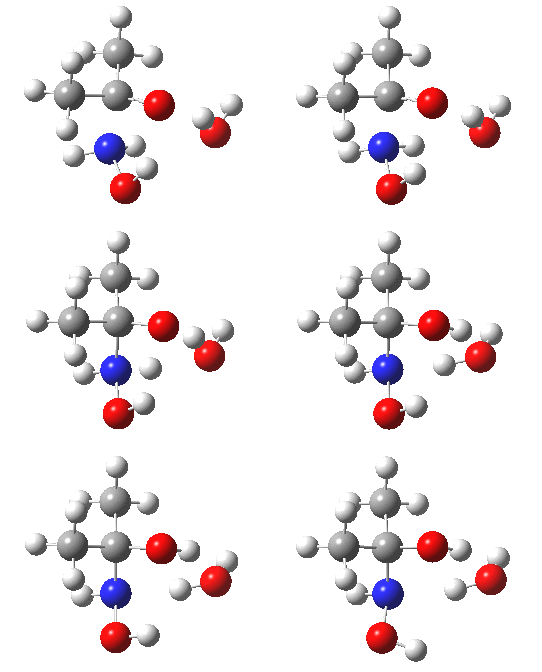
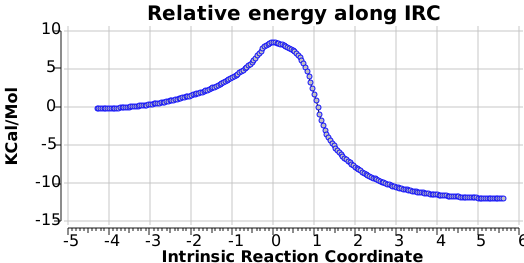
      1. Shown below is a ωB97XD/6-311G(d,p)/SCRF=water calculation of the transition state for N-attack. It has a dipole moment of 6.2D, which is really quite small, and far from that expected for the zwitterionic intermediate shown in the stepwise mechanism (that would be between 15-30D).
        Cyclic transition state for N-attack.
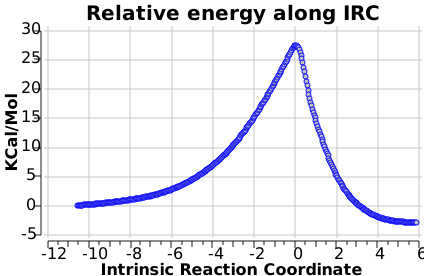
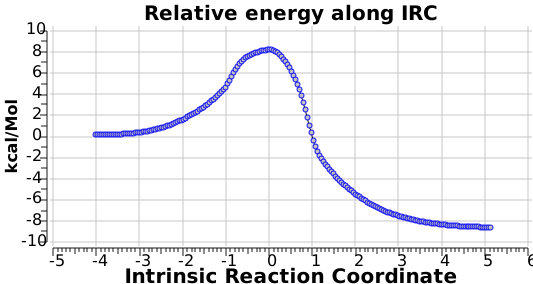
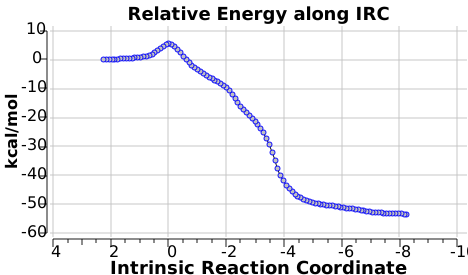
      2. The intrinsic reaction coordinate shows a concerted reaction with quite a small barrier. It is small because the nitrogen is in fact a super-nucleophile, its nucleophilicity has been augmented over that of a simple amine by a so-called α-effect from the adjacent two pairs of lone pairs on the oxygen activating the nitrogen lone pair by lone-pair repulsions. 
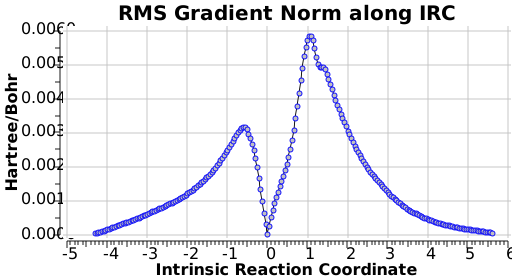
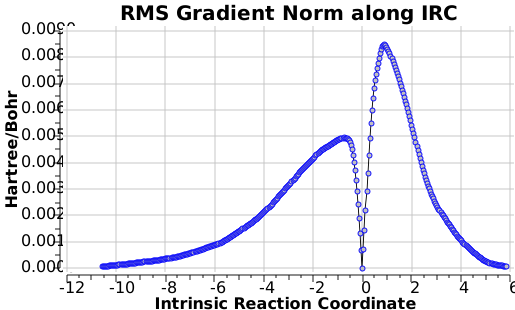
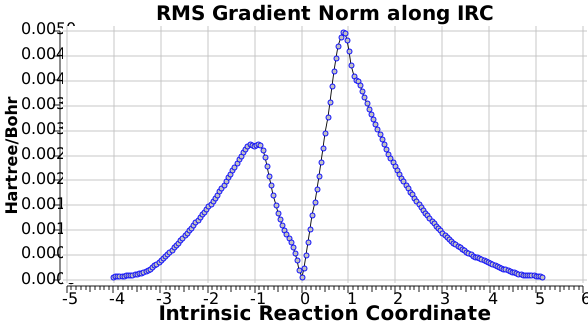
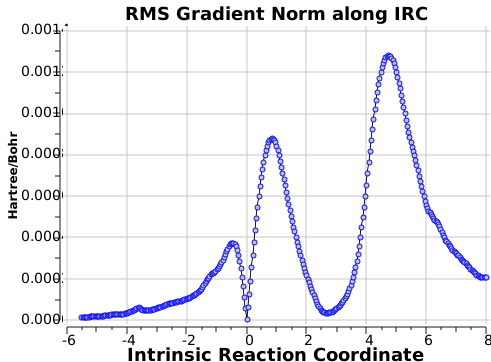
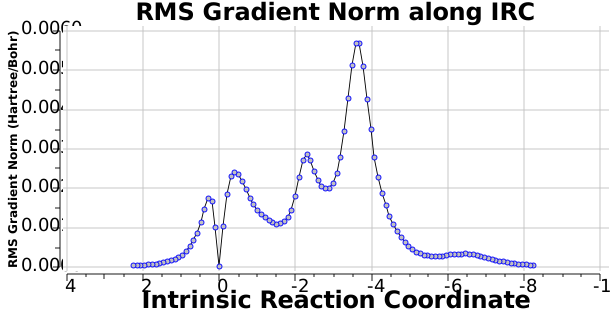
      3. The gradient norm along the coordinate also shows an almost synchronous reaction. The only blip occurs at around IRC +1.3, and this corresponds to the transfer of a proton from NH to a water molecule. An earlier proton transfer from water to the carbonyl oxygen was essentially synchronous with formation of the N-C bond. This synchronicity is what helps avoid any large build up of charge separation. For this reason, I cannot help but feel that the text books could absorb this lesson and show a cyclic concerted reaction mechanism as a probable alternative to two stepwise processes.
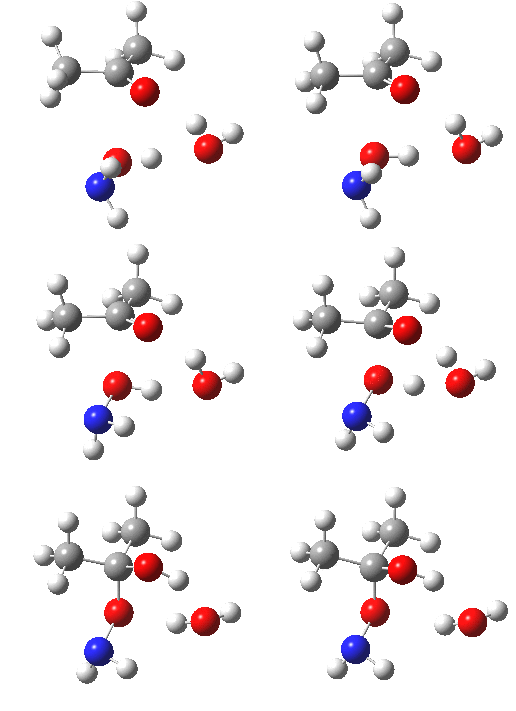
    3. Next, O-attack. The IRC for this isomeric mode shows a significantly higher barrier compared to N (the computed relative free energies show the O to be higher by 8.3 kcal/mol than the N) and smaller exothermicity. It reveals even greater synchrony of the two proton transfers with the O-C bond formation. So we have a reality check of the text-books on this point in the form of an energy difference, which is always useful.
      O-attack.
    4. Now that our proton transfers are involved in the mechanism, it is time to take a closer look at the geometry of these transfers. On this point, the text books tell us that the most favourable geometry for a proton transfer is having the proton co-linear with the two oxygens. Whilst this is largely true for the geometries shown above, the resulting 6-membered ring as a result adopts a triangular shape, which is not ideal for the bond angles. This could be solved by incorporating a second water molecule, to give us model shown above.
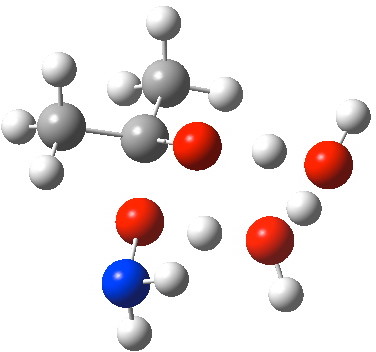
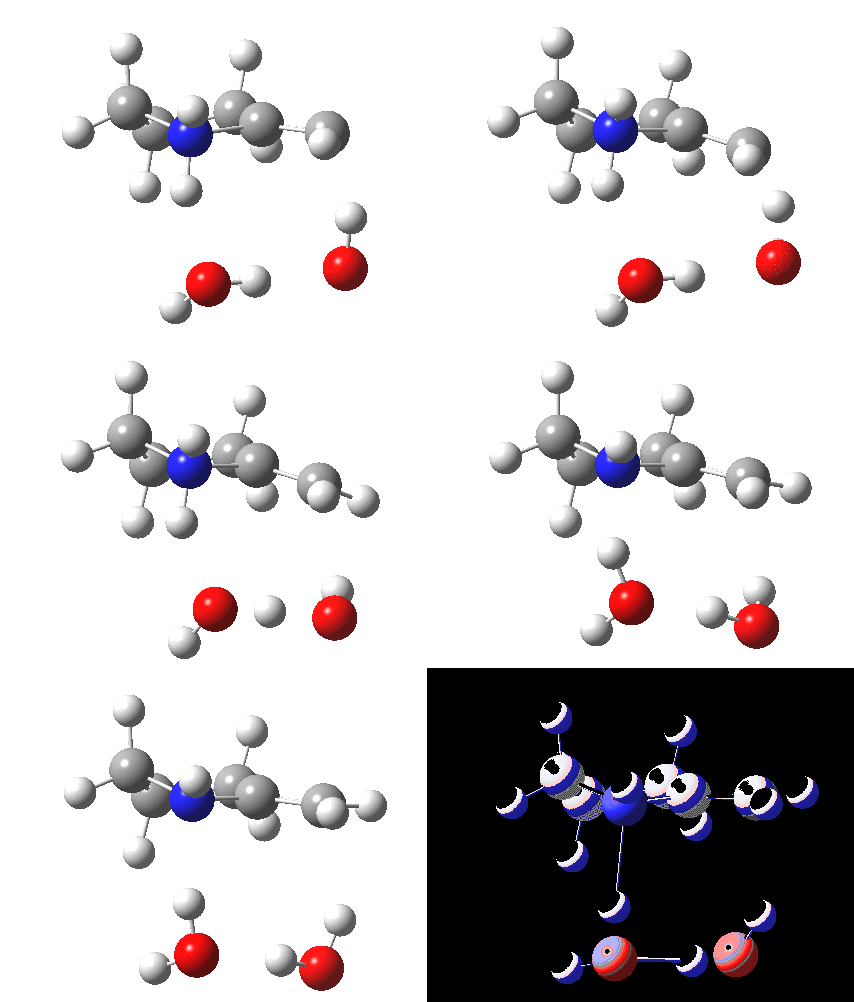
      1. A second water molecule can be placed in two alternative positions. The first simply solvates the 6-ring transition state. The second actively participates via an enlarged 8-membered ring transition state. It turns out that the latter is lower by 4.5 kcal/mol in free energy, largely due to the far better bond angles and the almost exactly linear proton transfers now possible.
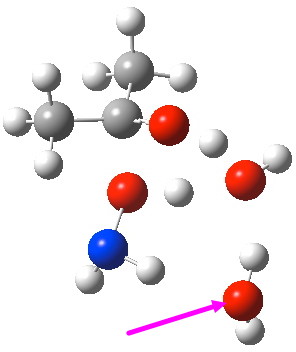
        O-Transition state with two water molecules, one merely hydrogen bonding to the 6-ring (magenta arrow).
        O-Transition state with two water molecules, both part of a cyclic transition state.
      2. So the following is our best model. It is 10.4 kcal/mol lower in free energy than the isomeric O-attack transition state. The timing of the bonds shows that N-C formation coincides with the first proton transfer to the carbonyl oxygen, followed by an O to O proton transfer and finally N to O. The dipole moment at the transition state is 5.9D, revealing little explicit charge separation.
        N-attack via an 8-ring transition state.

    It is worth concluding this exploration by reiterating that the models above are not complete. A bulk solvent would allow (statistical) participation of more than just two solvent molecules, and the dynamics of such a (very complex) process has yet to be explored. But I hope what you see here is a bit closer to “reality” than many a text-book author has when they illustrate their books.


    Acknowledgements

    This post has been cross-posted in PDF format at Authorea.


  • Dynamic effects in nucleophilic substitution at trigonal carbon (with Na+) revisited.

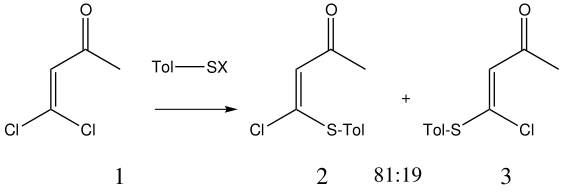
    This reaction looks simple but is deceptively complex. To recapitulate: tolyl thiolate (X=Na) reacts with the dichlorobutenone to give two substitution products in a 81:19 ratio, a result that Singleton and Bogle argue arises from a statistical distribution of dynamic trajectories bifurcating out of a single transition state favouring 2 over 3. On the grounds (presumably) that the presence of both the cation X (=Na+) and H-bonded solvent (ethanol) are uninfluential, neither species was explicitly included in the transition state model used to derive the dynamics. I speculated whether in fact the spatial distribution of counterions and solvent (set up by explicit hydrogen bonds and O…Na+ interactions) might in fact be perturbed from un-influential randomness by co-ordination to the carbonyl group present in the system. I also raised the issue of what the origin of the electronic effects leading to the major product might be. 

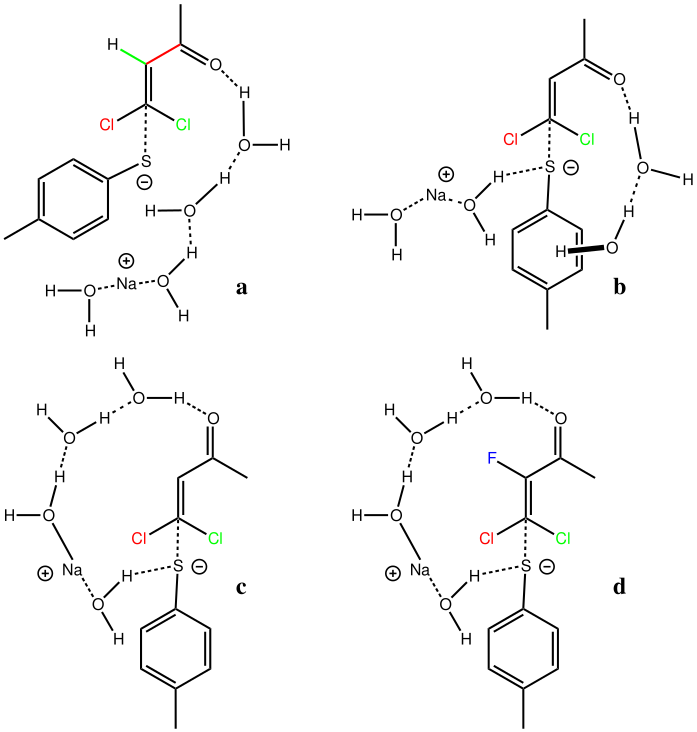
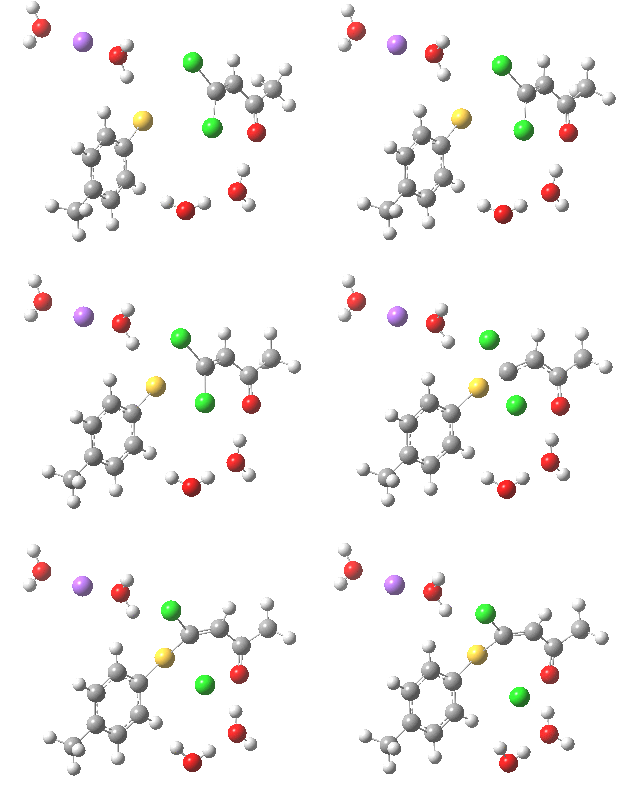
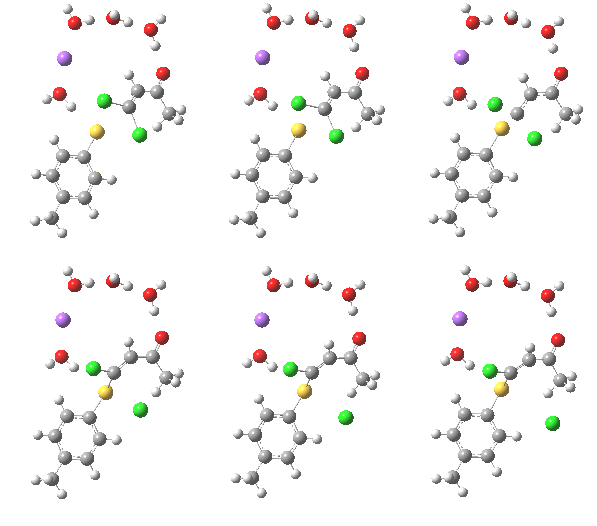
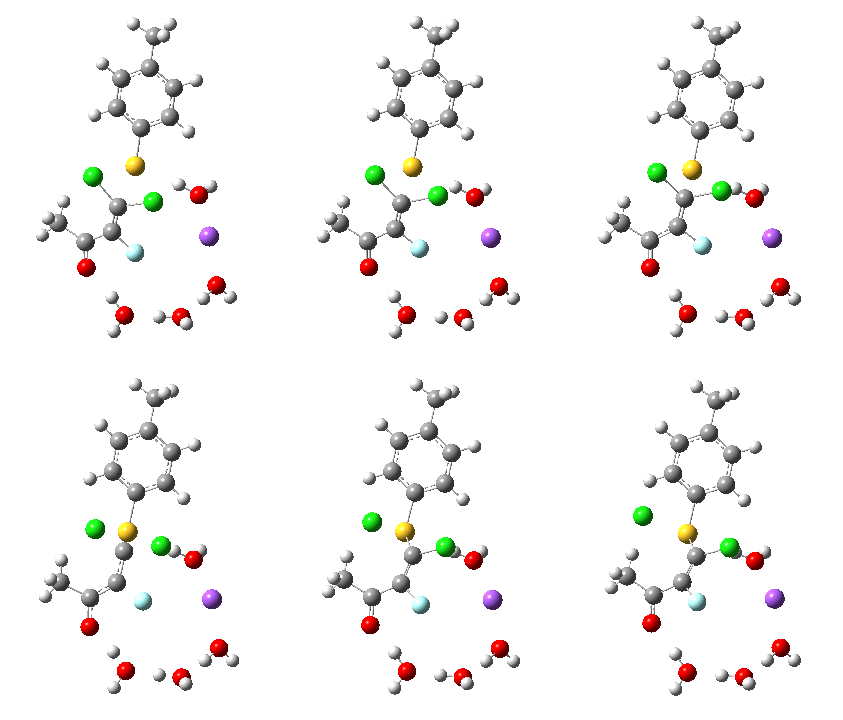
    In this post I try to delve deeper into both these issues. In the earlier model, I focused on possible coordination models around that carbonyl, using two Na+ cations (on the premise that such coordination has precedent in crystal structures). This model did (correctly) predict this major product, and we are now discussing what the origins of the minor product may be (it is a measure of how far computational modelling has come that we are nowadays increasingly concerned with these minor outcomes). Here I move to a more stochiometric model using just one Na+ assisted with four solvent molecules (modelled here with just water). This results in an overall charge of zero on the whole system, which avoids having to create what could be regarded as artificially charged models resulting from omission of the counterion. Three possible arrangements of these additional units are shown below, selected for the following reasons:

    • (a) was set up to explore whether the orientation of the tolyl thiolate ring might be determined by either π-facial hydrogen bonds to the solvent, or a π-facial interaction with the Na+
    • (b) was set up to explore if moving the Na+ closer to the thiolate would influence which of the two chlorines (red or green) would be eventually ejected.
    • (c) was set up to explore whether the orientation of the carbonyl group might be influencing the outcome, based on differing stereoelectronic interactions between the two C-Cl bonds and either the C-C(C=O) unit or the alternative C-H bond.
    • (d) whether replacing the C-H bond in (c) with a C-F bond results in a different interaction with the two C-Cl bonds.

    We might ask why stop at just these four? Surely one should sample all reasonable explicit models that might have a significant Boltzmann population in the real reaction? That is certainly desirable (but a much larger computational project); here I am just using these models for the purpose of understanding a little better what might be going on.

    Model (a)

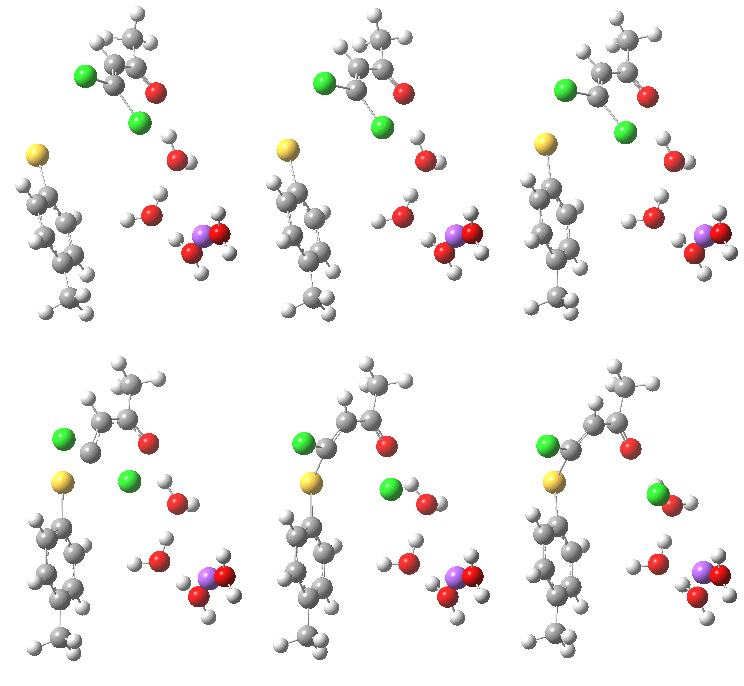
    This is optimised using the same level as before (B3LYP/6-31+G(d,p)/SCRF=ethanol) and reveals that the Na+ cation ends up with coordination just from solvent, and not from the aryl face. The chlorine labeled green in the diagram above ends up being evicted, and its trajectory then leads it (slowly) towards the Na+ cation in a reaction that is fully concerted (no enolate anion intermediates along the route).

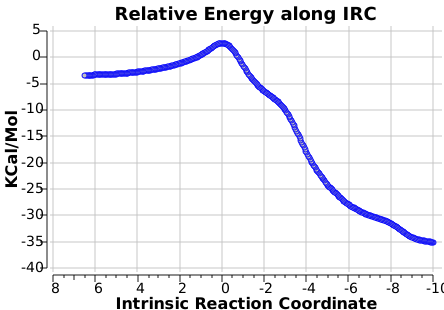
    The IRC for this model has the following intriguing features:

    1. At an IRC = 0.0 (the transition state), the lengths of the C-Cl bond for the atom labelled red is 1.84Å and green is 1.817Å. This situation persists until around IRC = -1 (1.926Å and 1.915Å). In other words, the longer of the two C-Cl bonds is NOT the one that is about to be ejected. But here is the even odder thing. The Wiberg bond order index of these two C-Cl bonds is respectively 0.932 and 0.916 at this stage. Here we see the longer bond having also the larger bond order, and so the bond order (but not the bond length) turns out to be the more reliable indicator of which bond is about to break totally. The NBO E(2) term shows that the C-Cl(green) bond has a significant interaction with the antiperiplanar C-H bond (also shown in green) of 4.9 kcal/mol, compared with the C-C (red) σ-bond which has a lower E(2) term for interaction with the antiperiplanar C-Cl(red) bond of 2.1. [Added in proof: Donation from the C-Cl bonds into the C-S σ* bond is also greater for C-Cl(green, 81 kcal/mol) than C-Cl(red, 25 kcal/mol)]**. These effects all conspire to weaken the C-Cl(green) bond more than the C-Cl(red) alternative.
    2. Only at IRC -1.5 (well past the transition state) do the two C-Cl bond lengths become equal (~1.95Å). So initially at least, BOTH C-Cl bonds start to cleave, but then stereoelectronic effects take over and a discrimination in favour of the green C-Cl bond wins out over the red. 
    3. By IRC -4, the C-Cl(red) bond has reversed its elongation, and has contracted back down to 1.86Å, whilst the C-Cl(green) has continued to extend to 2.76Å.
    4. By IRC  -8, the formation of  NaCl is complete.
    5. Thus we can say that the major product of this reaction results from stereoelectronic control discriminating between the two chlorine atoms.
    6. We might also observe that because post-transition state the two C-Cl bonds continue to elongate (before one bond continues on its way and the other backtracks), the dynamics of what goes on (via coupling with rotational and other vibrational modes) could easily account for the (minor) outcome, as indeed Singleton and Bogle argued.
    Model (b)

    The next task is to see how stable the above effects are to the disposition of the Na+ and solvent molecules. Model (b) shows the same behaviour; the chlorine atom is evicted via stereoelectronic control, rather than simply heading off towards the Na+ atom (i.e. electrostatic control).

    Model (c) also demonstrates how the stereoelectronic alignments dominate over stabilisation of the forming chloride anion. This time, the chloride is evicted into a region not occupied by either solvent molecules or the Na+ ion, the charge being stabilised only by the continuum solvent field.

    Model (c) was also subjected to a robustness test of the actual wavefunction. The original method was based on B3LYP/6-31+G(d,p)/SCRF=ethanol. Accordingly, (c) was re-computed using ωB97XD/6-311+G(d,p)/SCRF=ethanol. The DFT functional is a more modern one that includes the effects of dispersion attractions, and the basis set is of triple rather than double-ζ quality. The essential features are unchanged.

    Model (d) tests whether perturbing the electronic environment has more effect than changing the explicit surroundings.

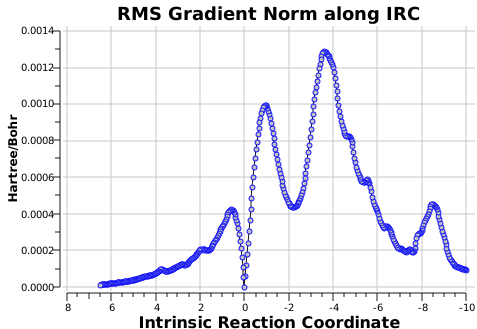
    1. It turns out that this is even more complex stereoelectronically. Observe how the bond to the (cyan coloured) fluorine atom elongates before shortening again as the anti-periplanar C-Cl bond breaks. The length starts off as 1.41, lengthens to 1.45 (at IRC +2.6) before ending up as 1.414Å, again the result of stereoelectronic effects. 
    2. A second noteworthy feature is that at IRC +2.6, the gradients (almost but not quite) drop to zero. At this stage, both C-Cl bonds AND the C-F bond are approximately at their maximum length, and this almost constitutes a discrete intermediate along the pathway.
    3. The feature in the gradients at IRC +5 represents the eviction of the chloride.

    I will conclude by summarising the above. The formation of the dominant product 2 seems to be the result of stereoelectronic control at the transition state. This outcome seems to be pretty robust to the transition state model constructed, namely whether one (or two) Na+ counter-ions are included in the model, and indeed their position, as well as the inclusion of up to four explicit solvent molecules. This robustness even extends to an electronic perturbation resulting from replacing a C-H bond by a C-F bond. Thus constructing a selection of physically realistic models with neutral charge and solvent has not resulted in locating an explicit transition state which (in terms of its free energy) might account for the formation of the minor product 3.

    Another test which might be envisaged would be to take e.g. model (a) and subject it to molecular dynamics to show that the outcome, in which ~20% of the trajectories lead to 3, is itself robust towards addition of counter-ion and solvent to the original model.


    These values do seem to be very basis set dependent. Thus using B3LYP/6-311+G(d,p), the σC-Cl(green) to σ*C-S value is 58 and σC-Cl(red) to σ*C-S is 18. The trend however occurs across basis sets.


  • More joining up of pieces. Stereocontrol in the ring opening of cyclopropenes.

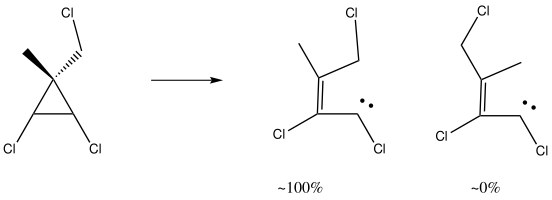
    Years ago, I was travelling from Cambridge to London on a train. I found myself sitting next to a chemist, and (as chemists do), he scribbled the following on a piece of paper. When I got to work the next day Vera (my student) was unleashed on the problem, and our thoughts were published[cite]10.1039/C39920001323[/cite]. That was then.

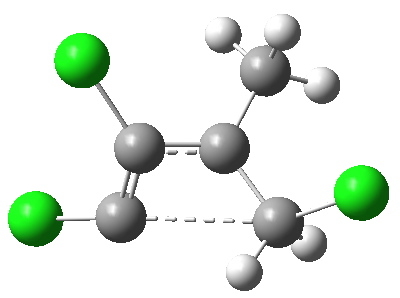
    This is now. I have just finished a post on ring-opening reactions of oxirene, a 4n electron anti-aromatic ring. I was casting around for an example of a calculation done just before the modern Internet era, and happened upon the above. Although this was a mere 20 years ago, much of the detail had faded; I had not thought much about it in the intervening years, but I did recollect that although we had attributed the high stereoselectivity shown above to a stereoelectronic orbital alignment, I was not entirely happy with the interpretation. Put simply, we had relied on a molecular orbital diagram, and this diagram (in resplendent colour in the journal, one of the few being so published at that time, and for no colour charge to boot) was just too complicated. Arguably it was the fixated complexity (I remember at the time that it looked complicated no matter what the viewing angle was) that set me on the road to the use of the Web, and ultimately here to this blog. So I thought a re-analysis using modern algorithms and presentation might help simplify. The newly recalculated transition state (ωB97XD/6-311G(d,p)[cite]10.14469/ch/14180[/cite] looks like:

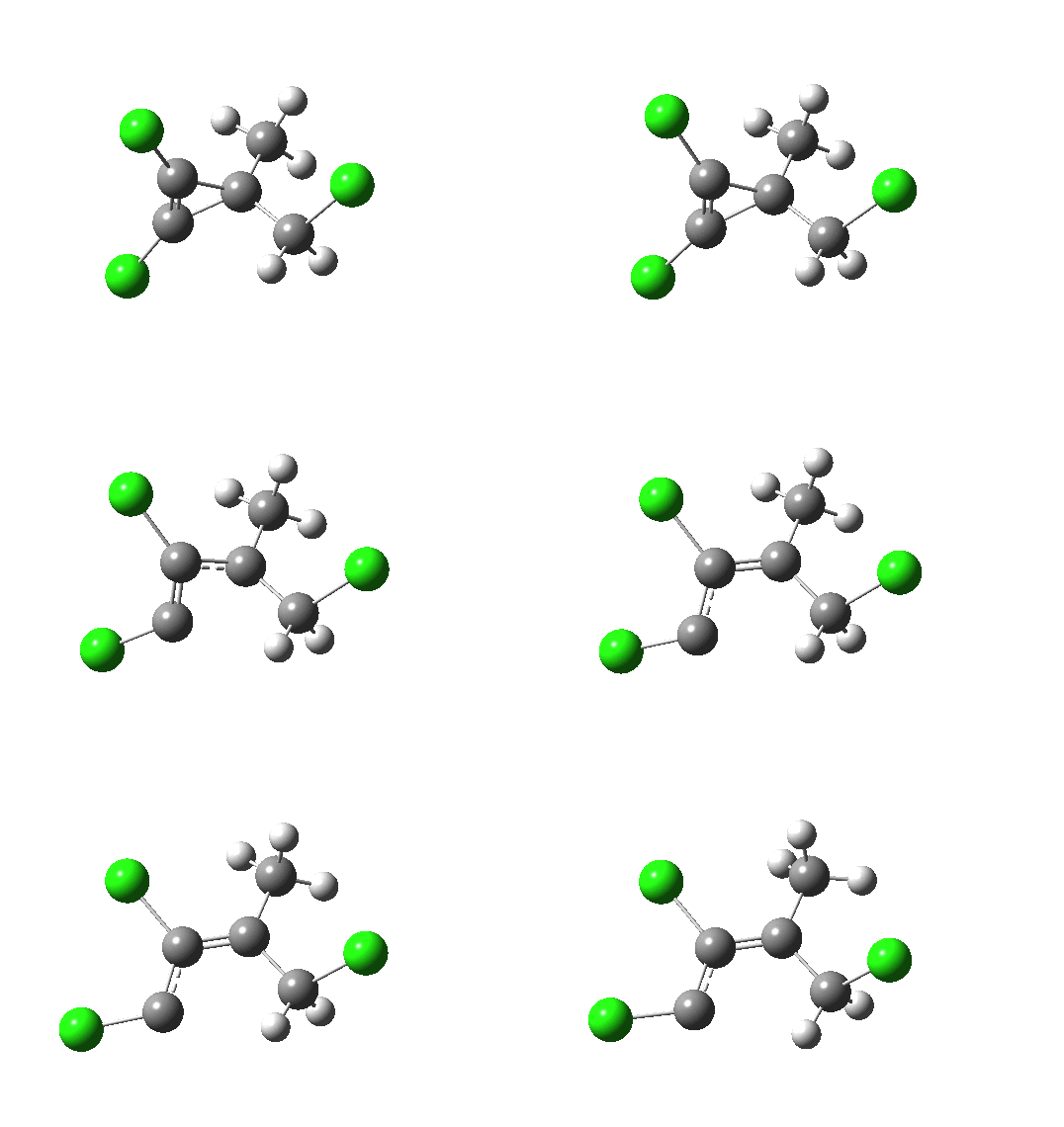
    Transition state for ring opening of a cyclopropene. Click for 3D.
    1. The reaction is a 4n (n=1) electron electrocyclic ring opening and so according to the rules, should proceed with the formation/cleavage of an antarafacial bond. You might think that there are not quite enough substituents to reveal this stereochemistry, but there are if the carbene lone pair is included. So how to add the lone pair?
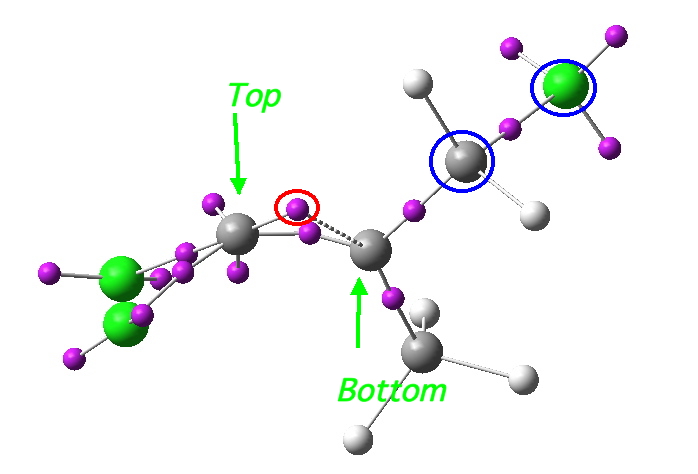
    2. Well, its coordinates can be computed using the ELF (electron localisation function). The relevant lone pair is ringed in red below. Using (old technology, i.e. a static figure) you may choose to believe me when I argue that this lone pair is above the plane of the forming ring from the perspective shown, whilst the terminus of the bond it forms is to the bottom. This defines an antarafacial component. Well, I might have carefully manipulated the viewing angle to show this. Now, in 2012 rather than 1992, you can load the 3D coordinates by clicking below, and check for yourself!
      Lone pair centroid for the transition state. Click for 3D
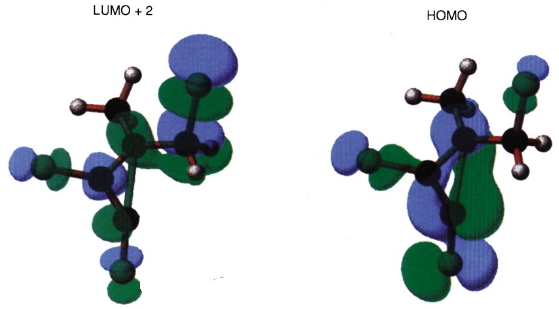
    3. What about the stereo-control? Take a look at the angle between the axis of the C-Cl bond (atoms ringed in blue) and the centroid of the carbene lone pair (red). It is about 162°, or almost anti-periplanar. A magic orientation in organic chemistry. Time to attack the orbitals again. Our published diagram looked as below. It shows the HOMO aligning with the LUMO+2 (if your eyes are not distracted by all the other detail).
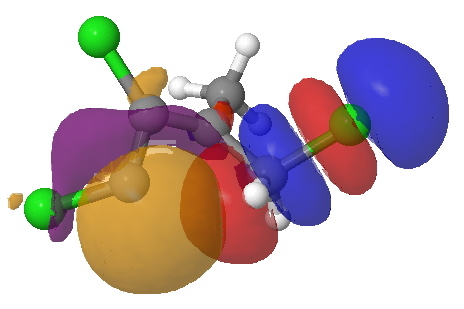
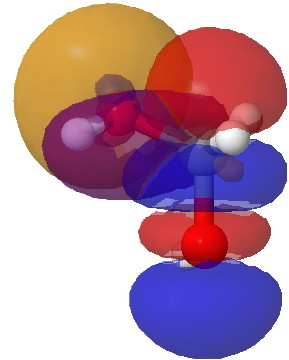
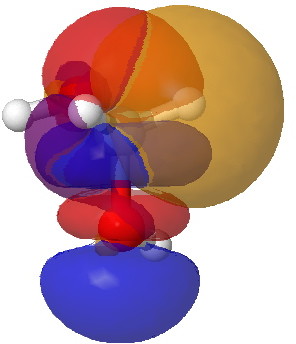
      But we can now simplify such a complex molecular orbital by using instead a localized version, an NBO. A little explanation is needed. The NBO orbital shown with red/blue phases is antibonding for the C-Cl bond. That with orange/purple is the carbene lone pair. Where orange overlaps with red, we have a positive overlap that stabilises the system. The NBO E2 perturbation energy is around 4.6 kcal/mol. Although this may seem small, it is actually quite large for a through-space interaction of this type. It is this stabilisation (amounting to ~ 1.6 kcal/mol in free energy) that accounts for the high selectivity for the stereoisomer shown above.
      NBO for transition state. Click for 3D.

    Well, I think that the passage of 20 years has enabled us to tidy up the origins of the stereoelectronic effect responsible for controlling this reaction, and to produce clearer diagrams which the reader can interactively explore for themselves. It did take 20 years to join things up though!

    [cite]10.6084/m9.figshare.1285422[/cite]

  • Transition state models for Baldwin dig(onal) ring closures.

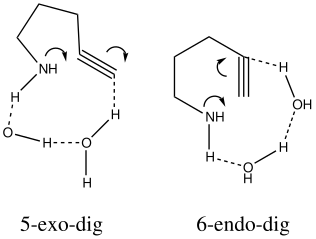
    This is a continuation of the previous post exploring the transition state geometries of various types of ring closure as predicted by  Baldwin’s rules. I had dealt with bond formation to a trigonal (sp2) carbon; now I add a digonal (sp) example (see an interesting literature variation). 

    As before, I have added two solvent (water) molecules to the model, since the immediate product of the closure is a zwitterionic intermediate, which is likely to be stabilised by the solvent. I also used the same nucleophile as before to facilitate comparison.

    5-exo-dig transition state. Click for 4D.
    6-endo-dig transition state. Click for 4D.

    The digonal angle of attack is 121° for the  exo form, and 116° for the endo, both larger than was the case in the trig systems. The relative free energies of the two transition states is 3.6 kcal/mol in favour of the exo isomer. The hydrogen bond network is somewhat strained, since two solvent molecules cannot quite reach the forming carbanion at the optimal angle to form a good hydrogen bond to it. Instead, the water has to content itself with a π-facial hydrogen bond between the alkyne and the H-O. As a result, proton transfer to the carbon requires a separate activation step (or a stronger acid than water). 

    5-exo-dig transition state
    6-endo-dig transition state

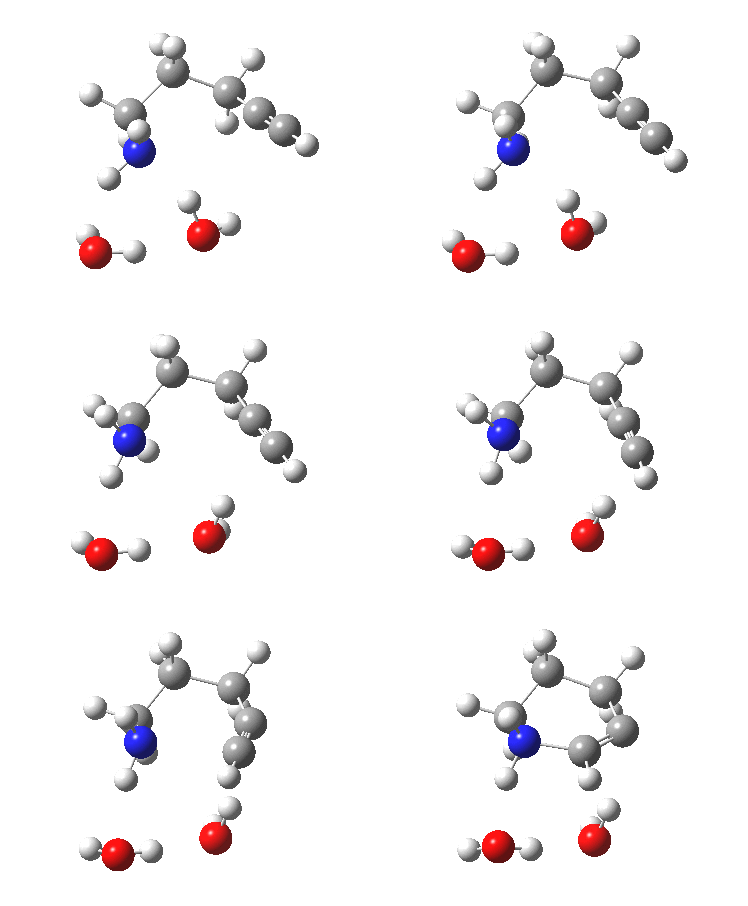
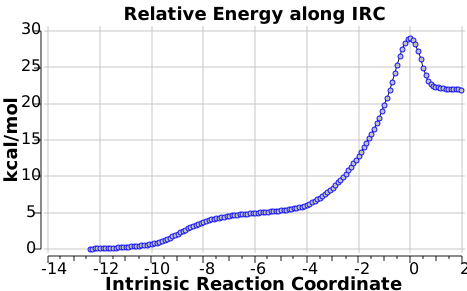
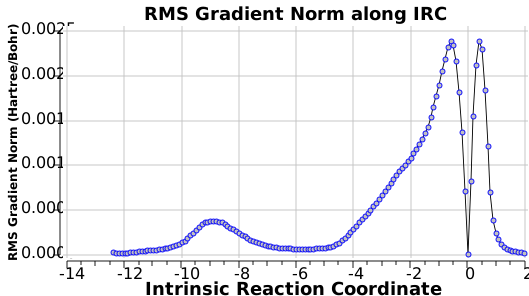
    The IRC for the 6-endo-dig pathway has features worth commenting upon.

    1. At IRC -12, the two solvent molecules form a triangular network with the nucleophilic amine.
    2. By IRC -9, one of the water molecules has split itself off from this triangle, and started to move towards the triple bond, which is gradually becoming a better acceptor of a hydrogen bond.
    3. At IRC -3, this water molecule is now forming a  π-facial hydrogen bond to the alkyne, which is still largely in place at the end of this step of the mechanism.

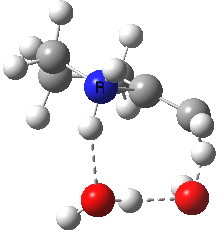
    To complete the mechanism, I have added the final step in the reaction, a proton transfer from the amine to the carbon recipient, as facilitated by the bridge of solvent molecules connecting the start and end of the process. The free energy of this transition state is 0.3 kcal/mol higher than the N-C bond forming reaction, making it (just) the rate determining step.

    Proton transfer
    Transition state for proton transfer. Click for 4D
    1. The feature at IRC = 0.0 (the transition state) is the first proton transfer, from  C to O.
    2. The second feature at  IRC -2.5 is an O to O proton transfer
    3. At IRC -4, the third and final proton transfer can be seen, from O to N.
    4. At IRC -6.5, a weak π-OH hydrogen bond forms.

    There is one more common type of cyclisation covered by Baldwin’s rules, this time involving tet(rahedral) or sp3 centres. This turns out to be the most interesting of the lot; reporting on this will have to wait a little!

  • The mechanism of the Baeyer-Villiger rearrangement.

    The Baeyer-Villiger rearrangement was named after its discoverers, who in 1899 described the transformation of menthone into the corresponding lactone using Caro’s acid (peroxysulfuric acid). The mechanism is described in all text books of organic chemistry as involving an alkyl migration. Here I take a look at the scheme described by Alvarez-Idaboy, Reyes and Mora-Diez[cite]10.1039/b712608e[/cite], and which may well not yet have made it to all the text books!

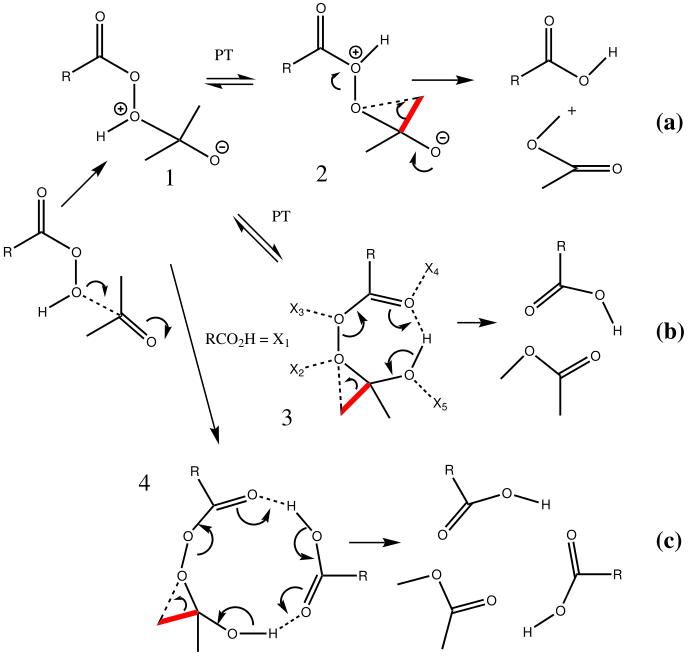
    The text-book mechanism involves pathway (a, R=CF3) via species 1 and 2. A characteristic feature of many a mechanism of this type is the need for a step often labelled just PT (proton transfer). Very often, a proton will find itself attached to the wrong atom, and before the mechanism can be completed, it must be transferred to the correct location. Confusingly, there can be many ways of doing this, differing in the timing of the proton choreography. Deciding that running order can be perplexing to new students of chemistry. Tutors often will say that since PTs are very fast, it does not matter when this step occurs, since in effect all paths will lead to the final product. But we might imagine that the energies of all the various pathways can be (in principle) obtained from quantum calculations and that one will prevail over the others.

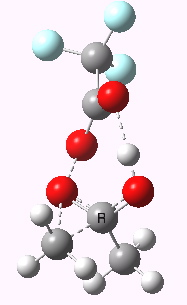
    Path (b) is just one such variation, but with a twist, since it involves starting from 3 and proceeding via a cyclic transition state in which the migrating alkyl group (shown in red above) moves in concert with the relocating proton. I have repeated the original calculations (from 2007) using a somewhat updated procedure, much in the same way that the transition state for the aldol reaction was. A ωB97XD/6-311G(d,p)/SCRF=dichloromethane calculation[cite]10.14469/ch/13926[/cite] of step (b) gives the transition state and associated intrinsic reaction coordinate (IRC) shown below.

    Cyclic 7-ring mechanism for the Baeyer-Villiger. Click for 3D.
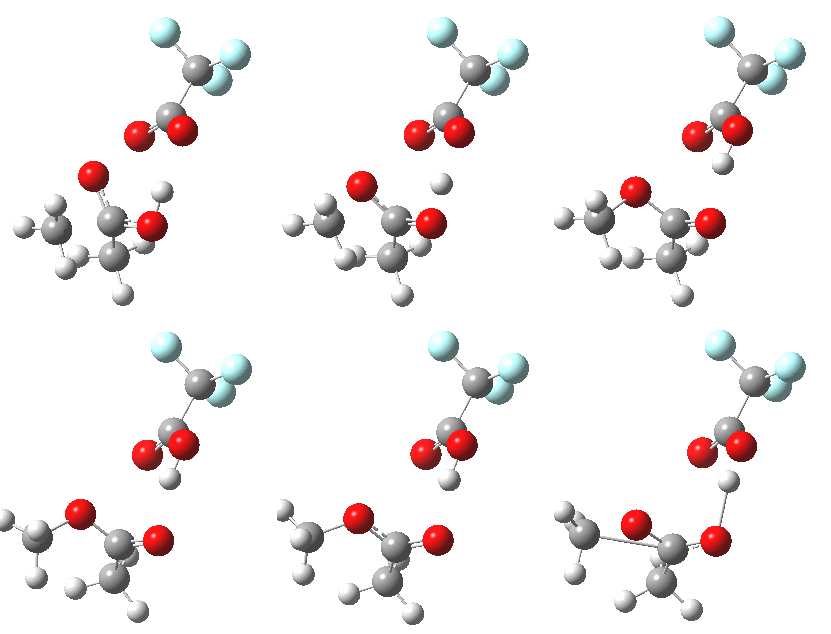
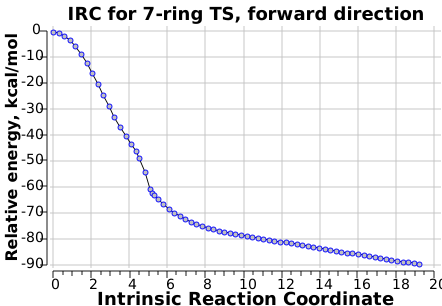
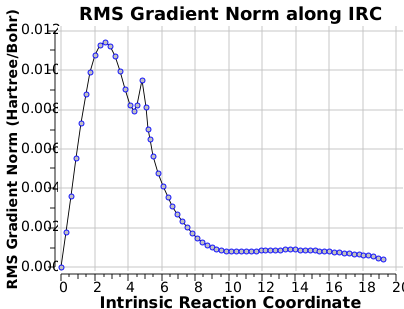
    IRC for 7-ring TS, forward direction only.

    Choreographically, this transition state is quite complex. Five bonds, all different in some aspect, are changing in asynchronous concert.

    1. Following the transition state[cite]10.14469/ch/13929[/cite] towards the product, between IRC=0 and +4, we see the cleavage of the O-O bond occurring in synchrony with the migration of the alkyl (methyl) group towards the oxygen (think of it as an SN2 reaction at oxygen). Notice the antiperiplanar stereoelectronic alignment of the migrating (methyl) and the axis of the O-O bond, which strongly differentiates which of the two alkyl groups migrates. The non-migrating group is essentially orthogonal to the O-O bond.
    2. At IRC = +5 we see a sudden abrupt feature, which corresponds to transfer of the proton, and which is complete by IRC = +6. Protons, being light, do tend to move quickly when they decide to.
    3. The final noteworthy feature from IRC=+6 to >20 is the rotation of the newly formed methoxy group, starting from orthogonality with the carbonyl group (~IRC +6) to co-planarity (IRC > 20). The origins of this effect are associated with the same orthogonal/antiperiplanar stereoelectronic alignments that determined which alkyl group migrated earlier.
    4. Notice a minor feature, which is the rotation of the methyl groups to set up weaker stereoelectronic interactions.

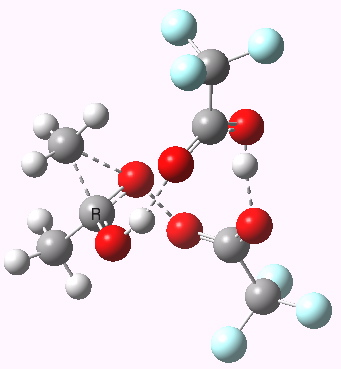
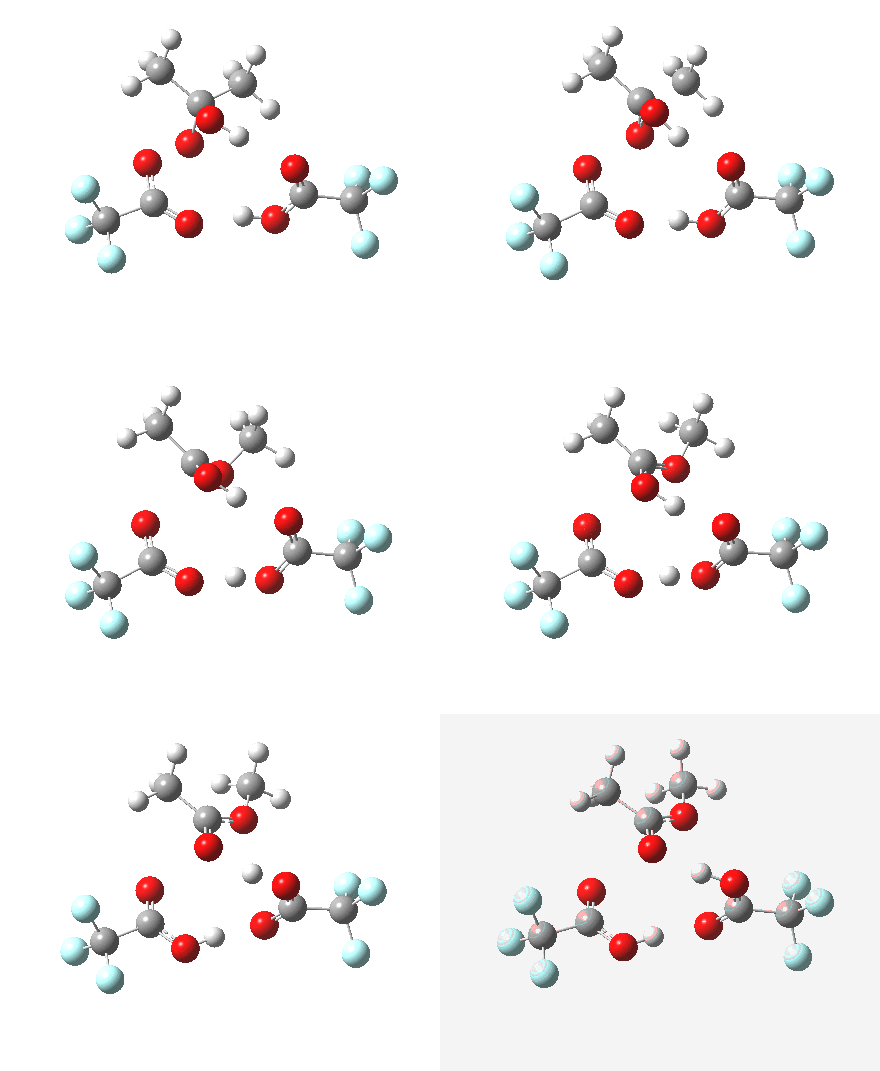
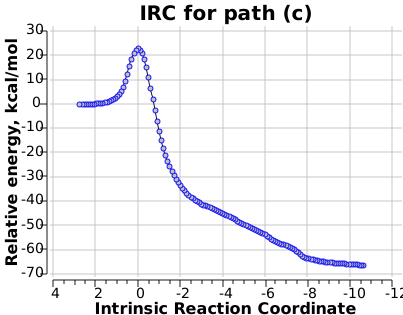
    Path (c) is another variation, where an extra molecule of acid (X1, 4) helps catalyse the reaction, this time by creating an 11-membered ring 4 leading to a transition state with potentially two proton transfers as well as the alkyl migration.[cite]10.14469/ch/13927[/cite] By involving an additional second molecule of acid as catalyst, we now have seven participating bond changes. Whilst the original path (b) six endo and two exo electrons move in a cycle which is tantalisingly close to but not quite pericyclic (?), path (c) extends this by four electrons. It might be tempting to try to apply a selection rule here (such as 4n+2) but I am not sure it would be justified. 

    Baeyer-Villiger, 11-ring transition state. Click for 3D
    1. IRC +3 represents the starting tetrahedral intermediate 4 hydrogen bonded to an extra (trifluoroacetic) acid molecule.
    2. The transition state occurs at IRC =0.
    3. By IRC -2, O-O cleavage and methyl migration are essentially complete, but no protons have moved.
    4. From IRC -2 to -5, the methoxy group rotates to adopt the planar conformation of an ester.
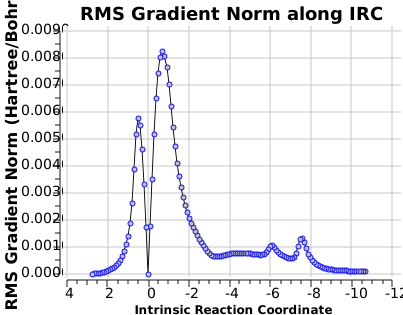
    5. Only after this rotation does the first proton transfer start, at IRC -6, and this is then followed in rapid succession by a second at  -7 to complete the reaction to form ethyl ethanoate and two molecules of (trifluoroacetic) acid. This is a reversal of the sequence seen with path (b). Because no intermediates are discernible in the IRC, one must describe this as a concerted rearrangement, but in fact the bond choreography is far from synchronous. This is one aspect which conventional  arrow pushing does not capture.

    To directly compare the energies of paths (b) and (c), we can repeat (b) with the addition of a more passive acid catalyst, in four new positions 3, X2 – X5. None of these are lower than 4 itself. There is one more surprise. Species 1 is not actually a minimum, but rearranges to e.g. the cyclic ring shown below. Its free energy is still higher than that of 3.

    I will end with the following speculation. The point of interest to most students of the Baeyer-Villiger reaction is not the nature of the actual transition state, but deciding which of the two possible alkyl groups will migrate (in the example above both are methyls, but if one were e.g. phenyl it would migrate in preference to the methyl). The transition state teaches us that the group antiperiplanar to the O-O bond migrates. Can a system be devised where the antiperiplanar preference takes precedence over the migratory aptitude? For example, based on the following[cite]10.1039/p19940003295[/cite] (click to see 3D structure below in which one R group is clearly pre-disposed to migrate in preference to the other).

  • Spotting the unexpected. The hydration of formaldehyde.

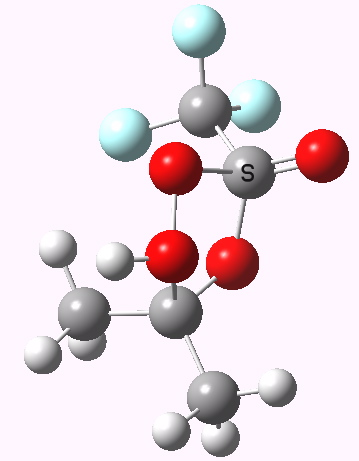
    In my previous post I speculated why bis(trifluoromethyl) ketone tends to fully form a hydrate when dissolved in water, but acetone does not. Here I turn to asking why formaldehyde is also 80% converted to methanediol in water? Could it be that again, the diol is somehow preferentially stabilised compared to the carbonyl precursor and if so, why?

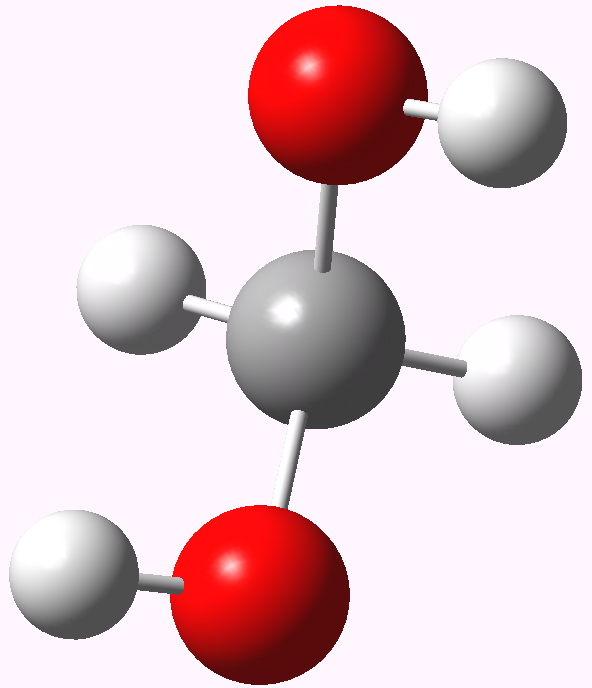
    Methanediol.

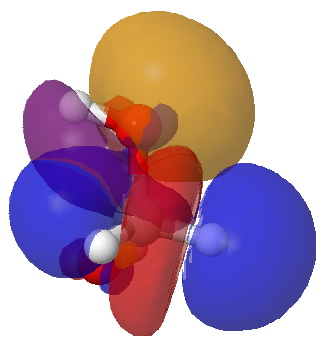
    The lowest energy geometry is shown above. Conspicuously, it does not form an intramolecular O-H…O hydrogen bond, but adopts a C2-symmetric form. NBO analysis for this geometry reveals two interactions larger than the rest. The first, shown below, involves overlap of an oxygen lone pair (Lp) donor orbital with a C-H acceptor (purple+blue, orange-red), and this is worth E(2) 6.1 kcal/mol (there are two of these). Unfortunately, the analogous NBO interaction in acetone itself originating from a C-Me bond as acceptor is 6.3 kcal/mol and so this interaction does not differentiate between the two.

    NBO interaction between O Lp and a C-H acceptor. Click for 3D

    The larger NBO interaction of E(2) = 16.9 kcal/mol arises from the same donor orbital interacting with the C-O acceptor (the presence of the more electronegative oxygen accounts for it being the better acceptor). In acetone however, this too has the high value of 16.8 kcal/mol.

    NBO interaction between Oxygen Lp and C-O acceptor. Click for 3D.
    Another possible interaction might be from a H-C donor to a C-O acceptor. But as you can see below, the positive overlap (red+orange) is matched by the negative overlap (orange+blue) and this interaction turns out to be insignificant.

    interaction between a C-H donor and a C-O acceptor. Click for 3D
    We have to seek elsewhere for differentiation between formaldehyde and acetone. To do this, I have added four explicit water molecules as solvent, and looked at the free energies of diol formation from the carbonyl (wB97XD/6-311G(d,p)/scrf=water).

    Methanediol with four water molecules. Click for 3D.

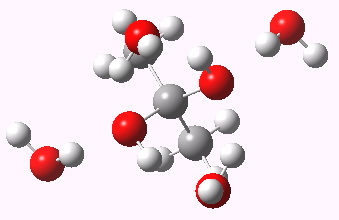
    Propanediol with four water molecules.

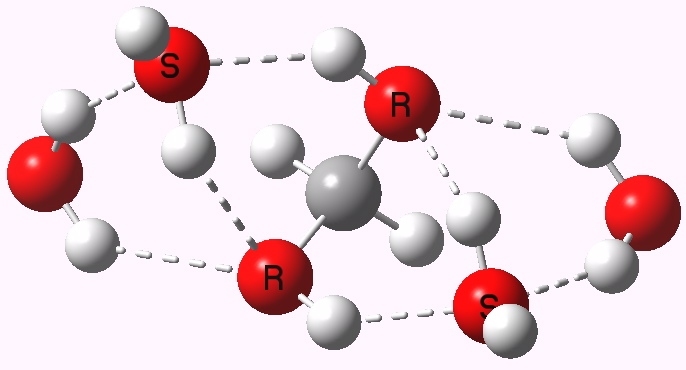
    The water molecules combine with the methanediol to form an elegant lattice of hydrogen bonds, involving two rings of three oxygens and one ring of four oxygens. This compact motif is less stable for propanediol, which instead prefers a structure forming fewer hydrogen bonds, largely because of the presence of the hydrophobic methyl groups. The result is that the free energy of hydration of formaldehyde to the diol, assisted by hydrogen bonds formed to four water molecules, is exothermic at -1.2 kcal/mol, whereas that for acetone is endothermic at  +7.5 kcal/mol.

    As with most things water, a proper stochastic exploration of all the possible configurations of the hydrogen bonds is necessary for a definitive explanation. But it does seem that a probable theory for why formaldehyde readily forms a diol whereas acetone does not lies not so much in stereoelectronic donor-acceptor interactions but in the hydrogen bonds set up in the solvated diol.

  • The dawn of organic reaction mechanism: the prequel.

    Following on from Armstrong’s almost electronic theory of chemistry in 1887-1890, and Beckmann’s radical idea around the same time that molecules undergoing transformations might do so via a reaction mechanism involving unseen intermediates (in his case, a transient enol of a ketone) I here describe how these concepts underwent further evolution in the early 1920s. My focus is on Edith Hilda Usherwood, who was then a PhD student at Imperial College working under the supervision of Martha Whitely.1

    The doctoral degree itself had only been introduced into British universities in 1919,1 and so Usherwood was very much a forerunner of the modern system of training.The academic staff and students at Imperial totalled 30, making it one of the largest research schools in UK chemistry at the time. Usherwood’s project was on tautomers, or isomers of molecules which differ only in the position of a labile hydrogen atom. The then quite novel electron-pair symbolism introduced by G. N. Lewis’ in 1916 was adopted to represent two tautomeric equilibria (the supposed mobile or tautomeric hydrogens being enclosed in […])2

    1. [H]C:::N ⇔ C::N[H]
    2. [H]C:::CH ⇔ C::CH[H]

    or in our more modern representation (in which lines replace colons, and charges are used to ensure the octet rule is adhered to when possible):

    1. H-C≡N ⇔ C≡N+-H
    2. HC≡CH ⇔ :C=CH2

    Modern structural techniques such as electron diffraction or microwave spectroscopies not yet existing, the problem was tackled using specific heat measurements as a function of temperature. This method suggested to Usherwood that for e.g. equilibrium 2, the concentration of iso-acetylene (we now call this vinylidene) was insignificant at ordinary temperatures, but it became appreciable between 200-300°C. Further evidence was claimed for the formation of the “unseen” vinylidene by observing ketene as a by-product of the oxidation of acetylene. This article very much set the trend of (an almost mandatory) speculation on the outcome of (nowadays much more complex) reactions by the need to formulate a reaction mechanism in which various (otherwise undetected but) plausible intermediates are involved.

    Moving on some 90 years, and how might one approach such a problem nowadays? Well, I have oft argued on this blog that a good place to obtain an immediate reality check on a proposed mechanism is a calculation. It will come as no surprise that a very accurate calculation can be done on the systems shown above. For example, CCSD(T)/cc-pVTZ will yield a free energy for the equilibria with a pretty small error (< 1 kcal/mol). We use ΔG = -RT Ln K to inter-convert free energies and equilibrium constants. If we are generous and state that in order to observe an appreciable concentration of a minor species, the equilibrium constant can be no smaller than 10-3, its energy cannot be greater than 4 kcal/mol above the more abundant isomer. Our reality check will be to see if the free energy of vinylidene is indeed no more than 4 kcal/mol greater than acetylene. Well, CCSD(T)/cc-pVTZ predicts vinylidene is 41.3 kcal/mol higher @298K, reduced to 33.8 @2000K (and before you ask, these results took a total of perhaps 30 minutes to obtain).

    In 1924, the concept of calculating the relative energies of two species using first principles was not even a glimmer on the horizon. The nature of mechanisms was slowly and often painfully established by recourse to experiments alone. And many of the unseen intermediates often remained just such, their existence only inferred indirectly from the models one constructed (of specify heats in Usherwood’s case). It is perhaps no great surprise that these models do not always stand the test of time. In this case, within a year of Usherwood’s publication, Partington was suggesting that the model for the specific heats of acetylene should have included allowance for polymer formation.3 The modern take, armed with the calculation I note above, might in fact side with Partington after all. As for the formation of ketene by oxidation, it is indeed known that (peracid) oxidation of an alkyne will produce ketene, but the modern mechanism (an interesting exercise in arrow pushing for a student) does not involve vinylidene intermediates.

    I will add at this point that Hilda Usherwood was married to Christopher Ingold, and the pair of them subsequently published many of the seminal articles in what became known as physical organic chemistry. That legacy continues to this day with (as I noted above) the almost mandatory speculation about the mechanism of any new reaction. But it is only in the last five years or so that these speculations have started to be increasingly tested against reliably accurate computation. A new era is underway.


    1 My post was inspired by reading W. H. Brock, “The case of the Poisonous Socks”, chapter 28, RSC Publishing, 2011, 978-1-84973-324-3.

    2 These representations are taken from ref 1, p 225 (and include a correction of replacing C:C as drawn there by C::C. The original article apparently appeared in the proceedings of the British Association of 1924, which is not yet available online.

    3 Brock, in ref 1, p226, suggests that Usherwood stood her ground on this one, and won her case by showing that Partington’s evidence for polymerization was valid for only a small part of the temperature range she had investigated. I have not managed to track down the original sources for this exchange.