Tag: free energy

  • Mechanism of the reduction of a carboxylic acid by borane: revisited and revised.

    I asked a while back whether blogs could be considered a serious form of scholarly scientific communication (and so has Peter Murray-Rust more recently). A case for doing so might be my post of about a year ago, addressing why borane reduces a carboxylic acid, but not its ester, where I suggested a possible mechanism. Well, colleagues have raised some interesting questions, both on the blog itself and more silently by email to me. As a result, I have tried to address some of these questions, and accordingly my original scheme needs some revision! This sort of iterative process of getting to the truth with the help of the community (a kind of crowd-sourced chemistry) is where I feel blogs do have a genuine role to play.
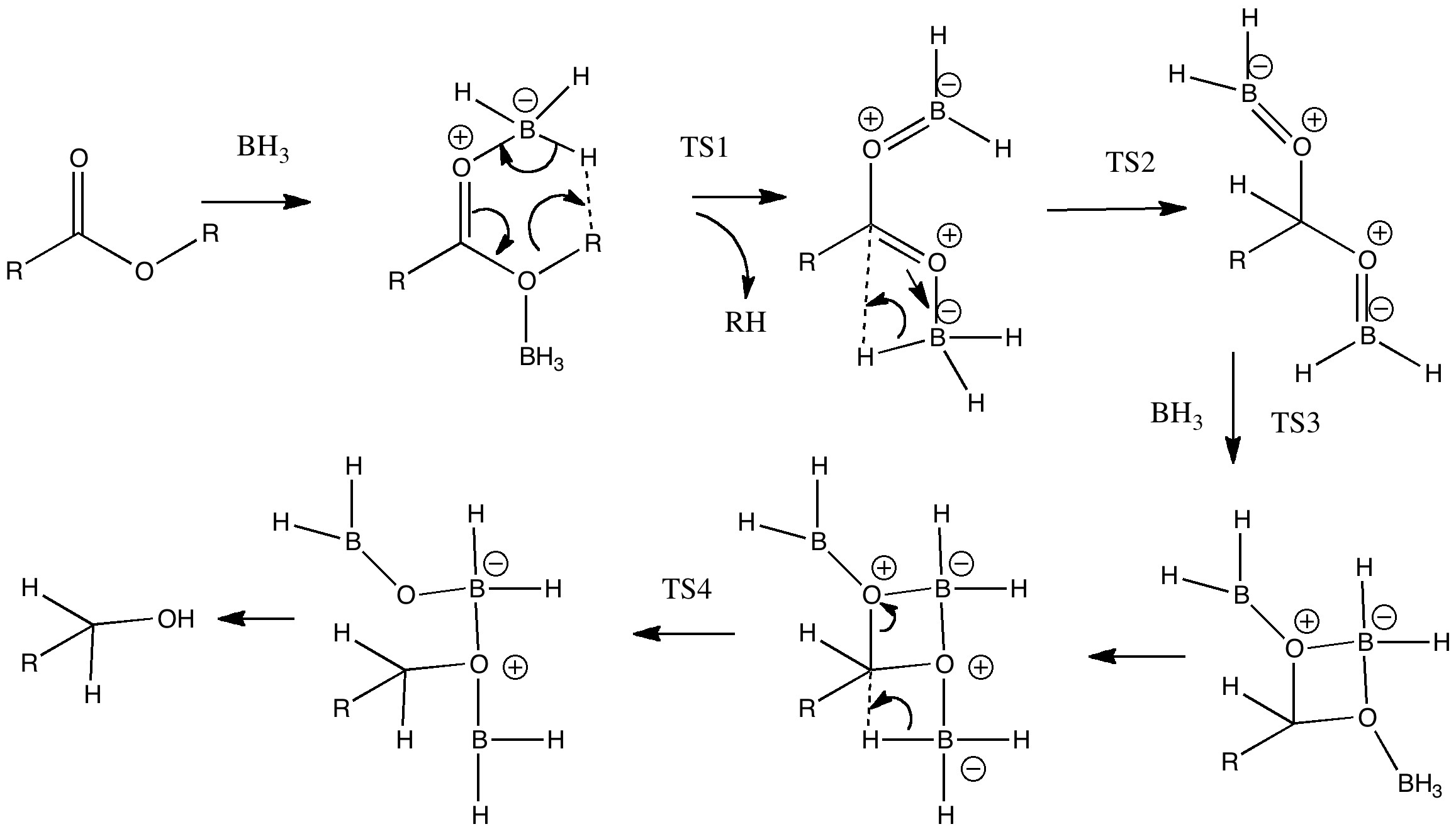
    The reduction of a carboxylic acid by borane

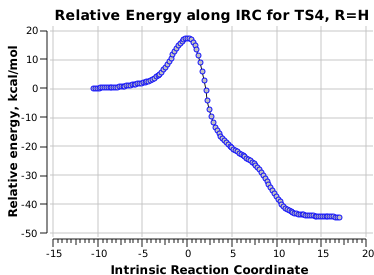
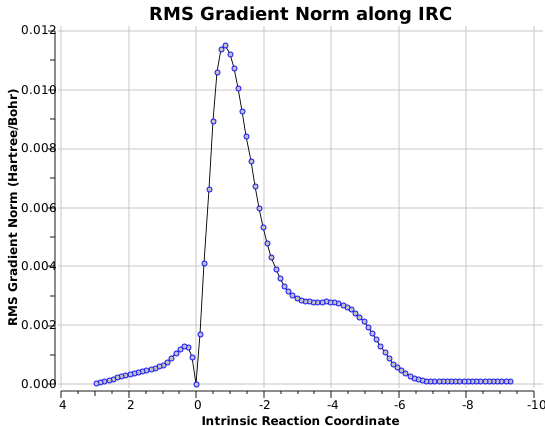
    TS1 in this scheme is modified from before to include an extra borane coordinating to the oxygen of the O-R group. I will include here the intrinsic reaction coordinate [computed at ωB97XD/6-311G(d,p)], since it shows some fascinating features.
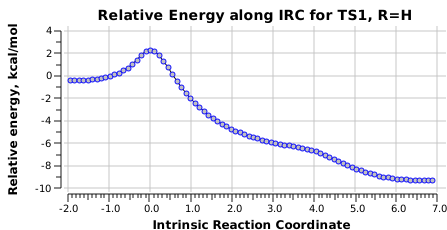
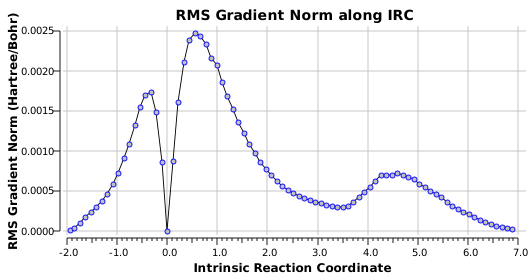
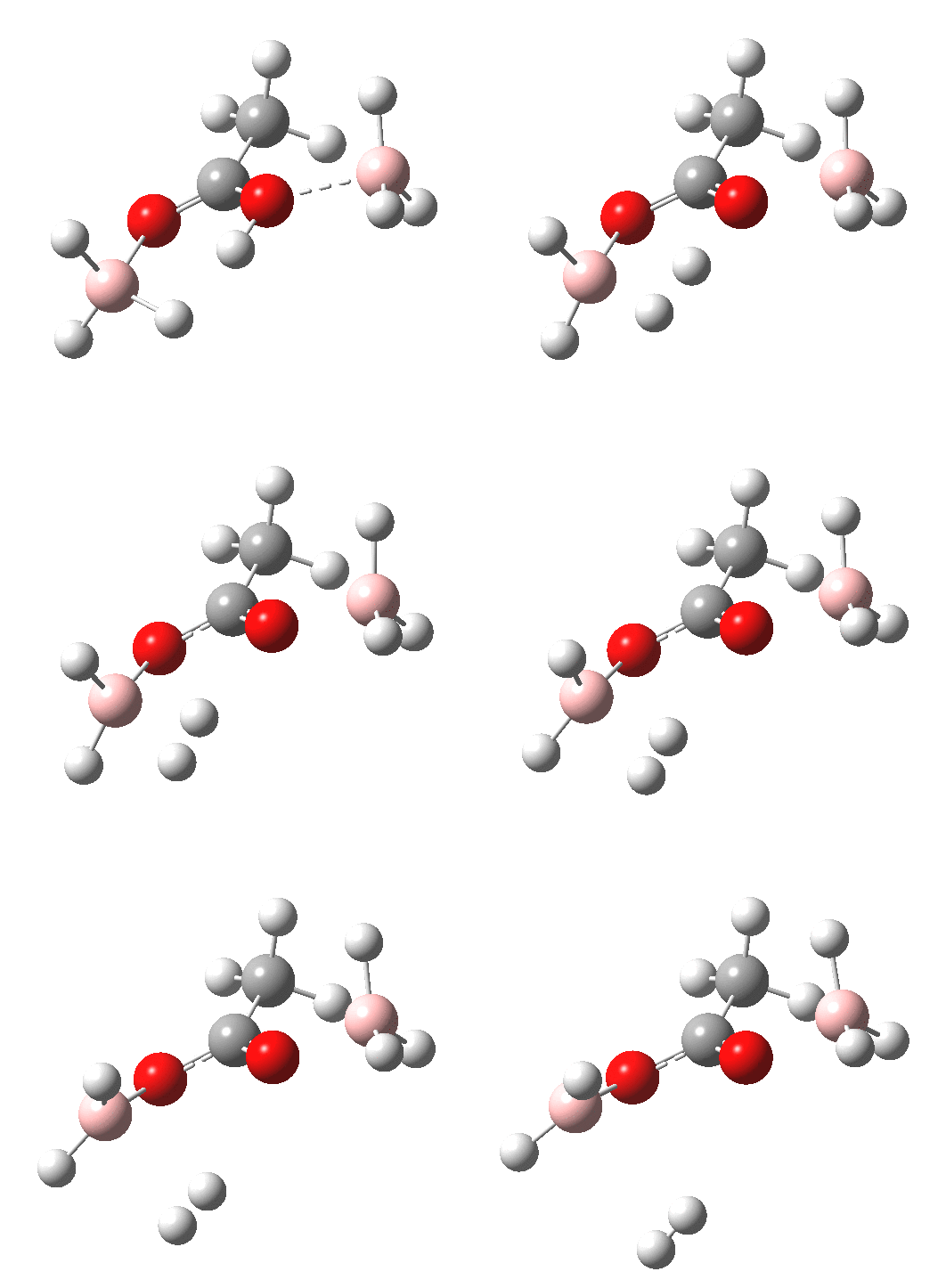
    One notes that the barrier for extrusion (R=H) is lower than before, due to the effect of the extra coordinated BH3 group. But notice the “bump” at an IRC value of ~4.0. If one inspects the gradients along the IRC, they reveal that the ejecting H-H molecule is tempted to coordinate to the boron to form a 5-coordinate species (a “hidden intermediate”) before abruptly changing direction and flying off into space!
    You can see an animation by invoking this link  or below:
    acyloxy+bh3-irc

    What happens if R=Me (an ester)? Well, the activation energy is now closer to 40 kcal/mol, which means the rate of the reaction would be very slow. Notice the bump corresponding to 5-coordinate boron has now vanished!
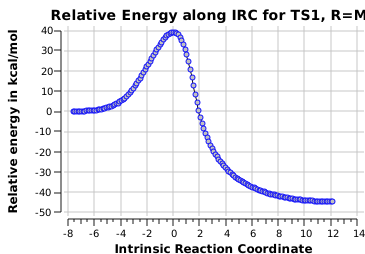
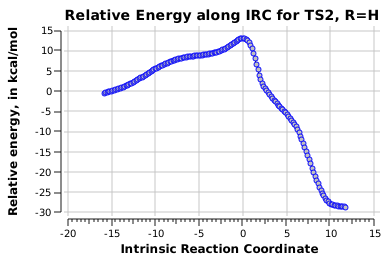
    Again, a link for IRC animation of the reaction (it is rather nice, even if a say so myself). QED? Well, not quite. One still has to show that TS2 – TS4 do not control things! The IRC for TS2 (the first addition of a hydrogen to the carbon) is shown below, again with fascinating bumps along the way. The TS2 animation is here. The free energy of TS2 is 6.9 kcal/mol lower than TS1 (even though the actual activation barrier is higher), which makes the latter the rate determining step. Note the bumps at  IRC = -8 and +5. These are due to rotations setting up the reaction.
    TS3, a ring closing reaction (animation) shows an unexpected feature which I leave you to discover for yourself. TS4 is the second and final addition of a hydrogen to the carbon, with animation and resembling an SN2 inversion. The reaction is completed by hydrolysis.
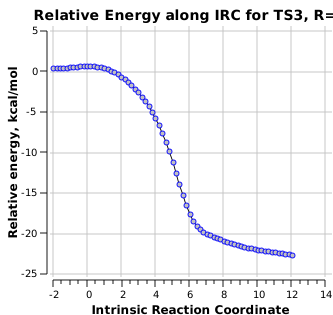
    The relative free energies of TS1, 2, 3 and 4 are respectively 0.0, -6.9, -35.0 and -19.4 kcal/mol, which makes the overall rate limiting step TS1. If that is the case, then this explains why borane reduces only a carboxylic acid and not an ester.

    Now all I have to do is explain all of this to my tutorial group! Mind you, this is a deceptively complex mechanism, and who knows if it may yet spring surprises.

    Acknowledgments

    This post has been cross-posted in PDF format at Authorea.
  • The importance of being complete.
    To (mis)quote Oscar Wilde again, ““To lose one methyl group may be regarded as a misfortune; to lose both looks like carelessness.” Here, I refer to the (past) tendency of molecular modellers to simplify molecular structures. Thus in 1977, quantum molecular modelling, even at the semi-empirical level, was beset by lost groups. One of my early efforts (DOI: 10.1021/ja00465a005) was selected for study because it had nothing left to lose; the mass spectrometric fragmentation of the radical cations of methane and ethane. Methyl, phenyl and other “large” groups were routinely replaced by hydrogen in order to enable the study. Cations indeed were always of interest to modellers; the relative lack of electrons almost always meant unusual or interesting structures and reactions (including this controversial species, DOI: 10.1021/ja00444a012). Inured to such functional loss, we modellers forgot that (unless in a mass spectrometer), cations have to have a counter anion. Here I explore one example of the model being complete(d).

    The ion-pair complex of cyclobutadiene.
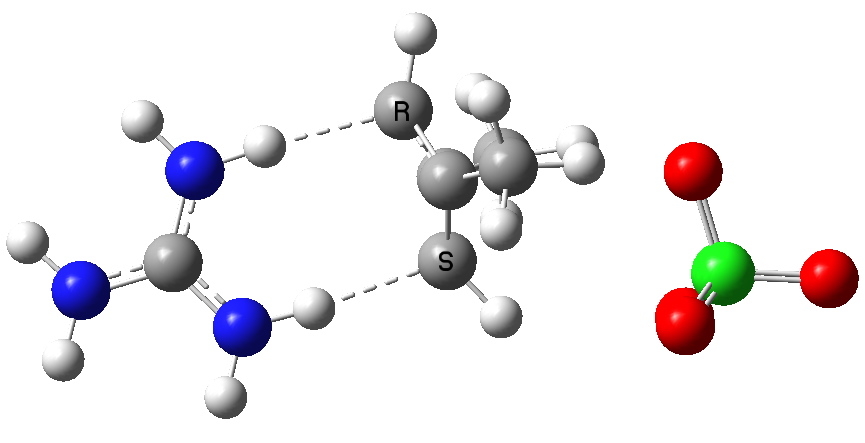
    In the earlier post on this topic I had explored the possibility of a new isomer of cyclobutadiene, induced by the presence nearby of a strong acid, in the form of guanidinium cation. You might note there was no mention of any counterion! Well, here I add it in to complete the model, using perchlorate. I was following in a sense my own advice on Steve Bachrach’s blog, where the NMR spectrum of the adamantly cation was discussed. I had argued there that the anion (I chose SnCl5) might actually have an effect on the NMR. For the cyclobutadiene complex above without a counter-ion, this non-planar form of the cyclobutadiene was calculated earlier to be ~8.5 kcal/mol in free energy higher than the rectangular conventional geometry. Add the perchlorate as above, and this energy difference drops to 4.1 kcal/mol (modelled in water as a solvent). So the counter-ion CAN make a difference!

    What are the implications to a modeller of adding counter ions? Well, when you start doing such calculations, you find that the practical matter of optimising the geometry is not quite as straightforward as it is found to be for what I would call covalently bonded systems. These latter have pretty predictable geometries, and these geometries are pretty rigid. Ion-pairs on the other hand are less predictable. Note for example in the above diagram that the perchlorate counterion sits to one side of the molecule, and is not symmetrical. The potential energy surface can be very flat indeed, which means that locating the optimal geometry can be quite a struggle. And unlike a covalent structure, where once the location of the covalent bonds is decided, there is little further ambiguity, ion-pairs may have many different possible relative orientations. Thus the above one may not be unique!

    But the last word to this post should be: do not forget counter ions if you a looking at ionic species, and always strive to be complete!

  • Some fun with no-go areas of chemistry: cyclobutadiene.

    Organic chemistry has some no-go areas, where few molecules dare venture. One of them is described by a concept known as anti-aromaticity. Whereas aromatic molecules are favoured species, their anti-equivalent is avoided. I previously illustrated this (Hückel rule) with cyclopropenium anion. Now I take a look at cyclobutadiene, for which the π-system is said to be iso-electronic (where two electrons in a double bond have replaced the carbanion lone pair).

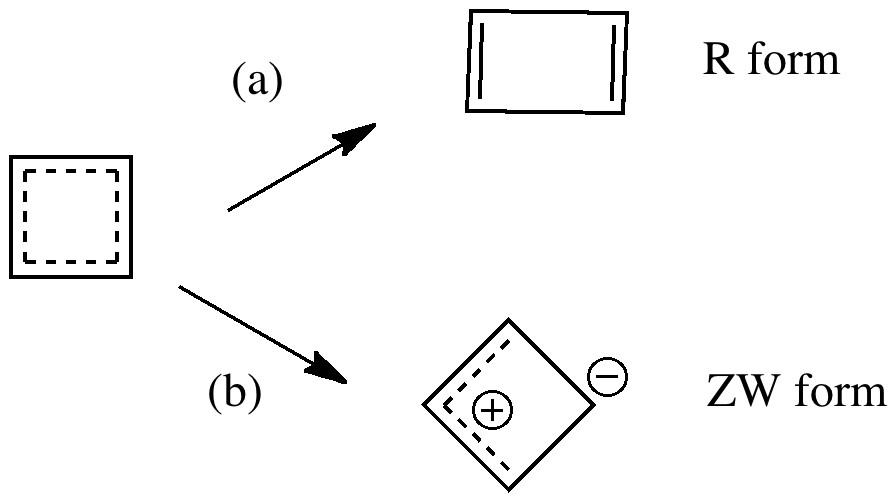
    Geometric distortions available to square cyclobutadiene

    The scheme above starts with a square geometry for the cyclobutadiene. This is strongly anti-aromatic, and the molecule will strive to reduce this by indulging in a geometrical distortion. The conventional distortive mechanism is into an R or rectangular geometry, where two of the C-C bonds get shorter and two longer. The trouble with this mode is that is does not actually prevent the π-π overlaps which made it anti-aromatic in the first place, it just reduces the effect. Thus rectangular cyclobutadiene is still a very very reactive and unstable molecule. So here I suggest another distortion mode, shown above as the ZW, or zwitterionic form. This converts the species into a combination of an allylic carbocation and a secondary carbanion. The latter would be expected to pyramidalize, thus reducing those pesky π-π overlaps. I am unaware of such a ZW-mode ever having been previously explored.

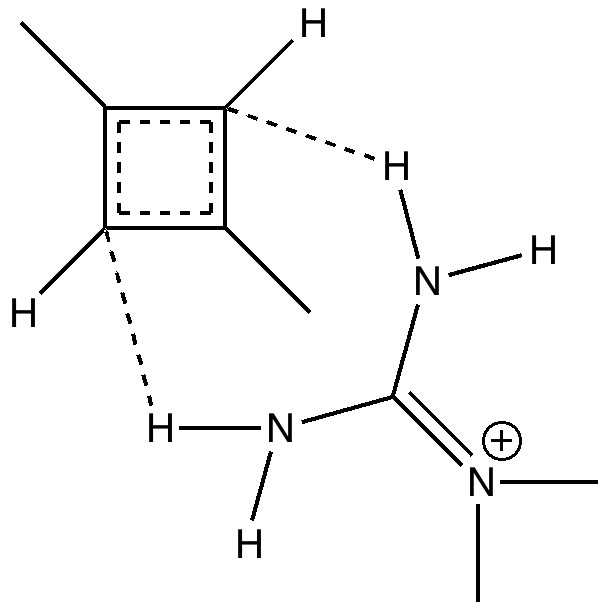
    Any student of organic chemistry will be very familiar with how to go about stabilising either a carbocation or a carbanion. We need to do this, since another guiding tenet of organic chemistry is to try to avoid charge separation whenever possible (another almost no-go area). I am going to pull a surprise by evaluating the following model for this post.

    Stabilization model for cyclobutadiene
    1. Firstly, two methyl groups have been placed at the carbocationic centres to stabilise the positive charge. Tertiary carbocations are of course well known to be more stable than secondary ones (I should state that methoxy groups in the same position would stabilise even more, but that is for another post).
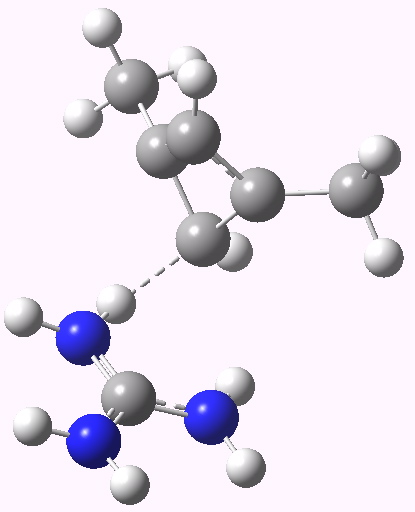
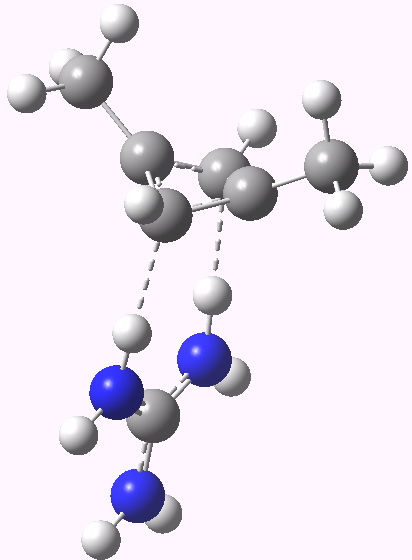
    2. The carbanion could itself be stabilised with an electron withdrawing substituent (say CN) but here I am going to stabilise it with hydrogen bonding to a guanidinium cation. This has just the right shape to form two unusual hydrogen bonds from the N-H to either of the carbanionic lone pairs we might wish to promote (dashed lines above).
    3. Finally, we are going to simulate this in water as a solvent, in order to stabilize the zwitterion. One zwitterion that DOES form is of course that from the amino acid glycine, but it only forms when placed in water (and life as we know it would not be possible if amino acids did not do this).
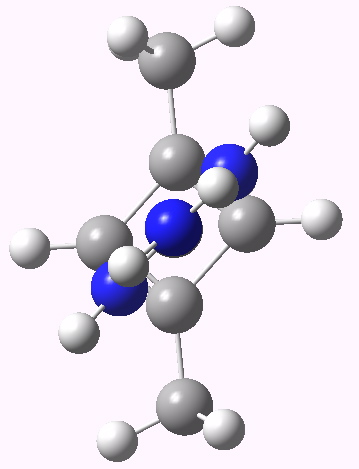
    The results are thus. The R distorted form does come out the most stable (ωB97XD/6-311G(d,p)/SCRF=water). An unsymmetrical ZW form (forming just one C…H-N hydrogen bond) is 11.2 kcal/mol higher in free energy, whilst a symmetrical form (as shown above, forming two C…H-N hydrogen bonds) is only 8.5 kcal/mol higher in free energy. It turns out that the R form of the 1,3-dimethylcyclobutadiene is itself stabilised by hydrogen bonding to the guanidinium cation. These hydrogen bonds form to the centre of the shortened C=C alkene bonds rather than being directed at an atom (π-facial bonding). In contrast, the ZW forms sustain hydrogen bonds directly to the carbons. To explore these unusual features, click on any of the three thumbnails below.
    R form ZW-u form ZW-s form
    CBD R form. Click for 3D
    Zwitterionic form. Click for 3D.
    Zwitterionic symmetric form. Click for 3D

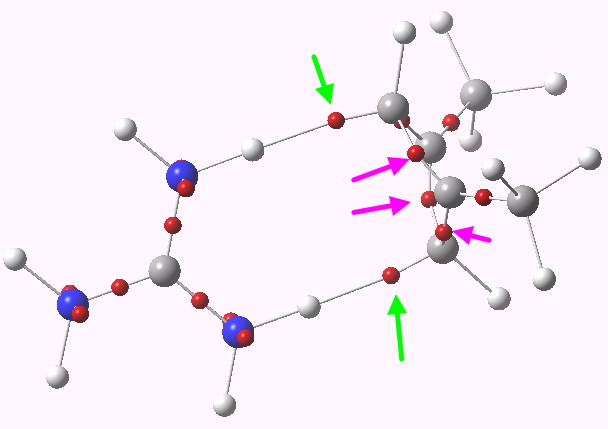
    Where have the electrons gone in e.g. the symmetric ZW system? An ELF analysis tells us. The two ELF basins labelled with green arrows contain 1.2 electrons each. The basins corresponding to the 4-ring are labelled with magenta arrows. Put simply, 2.4 electrons have fled the ring, and associated themselves instead with the N-H…C hydrogen bonds. By removing ~2 electrons from an anti-aromatic ring, one converts it into an aromatic one (4n => 4n+2)!

    ELF analysis. Click for 3D
    We have learned that the highly reactive alkene bonds in R-distorted cyclobutadiene can be reasonable hydrogen bond donors, but that an alternative distortion into a zwitterionic form can be stabilised by forming an even stronger hydrogen bond to the forming carbanion. A symmetric form of this latter is unusual, since it still sustains four equal C-C bond lengths, but anti-aromaticity is now avoided by pyramidalising two of the carbons and hydrogen bonding to them both. As I noted earlier, these isomers of cyclobutadiene have not hitherto been proposed, and they do seem good candidates for experimental investigations.

  • Anatomy of a simple reaction: the hydration of an alkene.

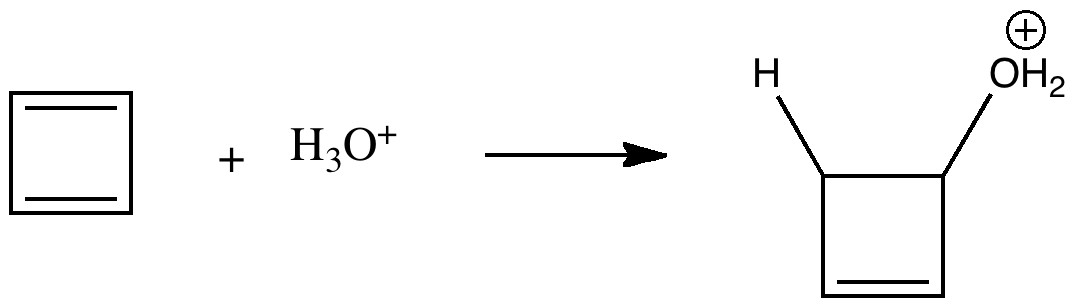
    The hydration of an alkene by an acid is one of those fundamental reactions, taught early on in most chemistry courses. What can quantum mechanics teach us about the mechanism of the reaction?

    The hydration of ethene by a hydronium cation.

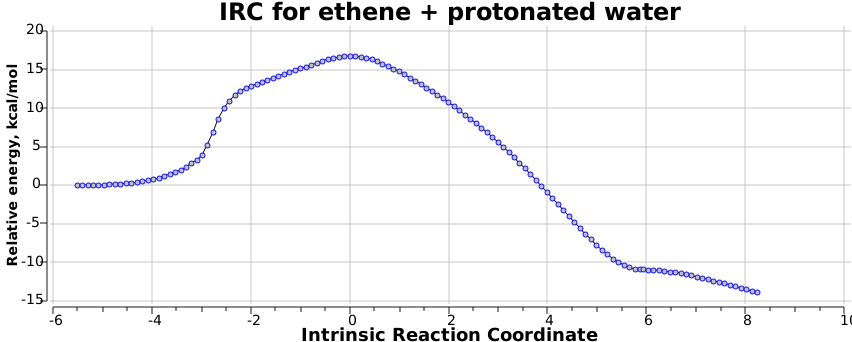
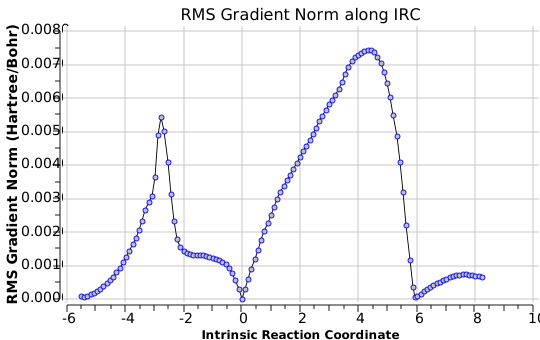
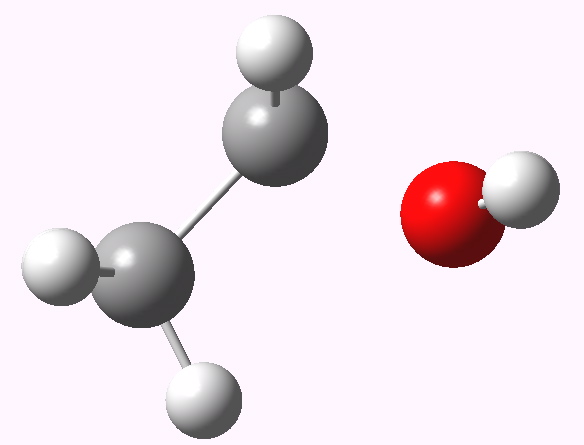
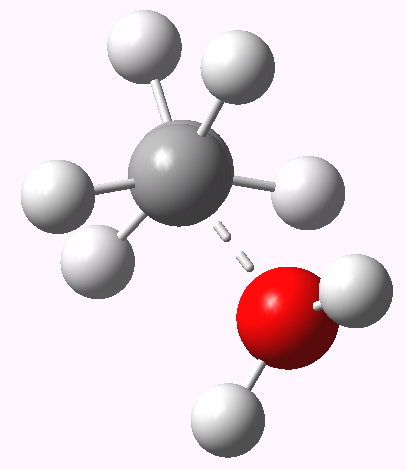
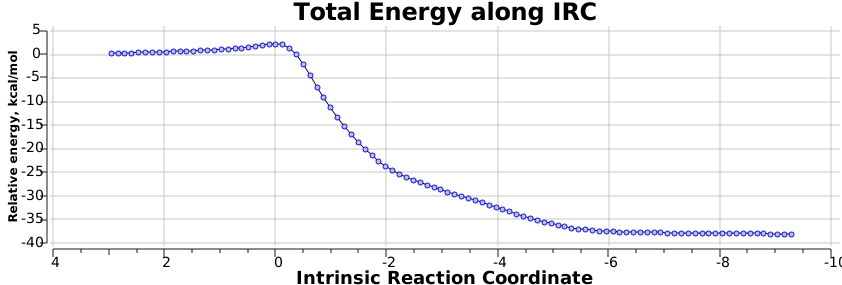
    The diagram below shows us the IRC, or intrinsic reaction coordinate for the process (for definitions, see here), the reaction proceeding from left to right as shown in the scheme above, with a (free energy) barrier of 14.4 kcal/mol and exothermic by a similar amount (wB97XD/6-311G(d,p) with a continuum solvation correction for water).

    One first notices that it is not the smooth bell-shaped profile that is normally drawn in text books. It has bumps/detail. What do these mean? Before dissecting, lets look at another plot, this time the RMS (root mean square) gradients of the 3N-6 geometric variables along the reaction coordinates. These reveal two regions where the RMS gradient is almost zero (other than reactant and product).

    1 2 3
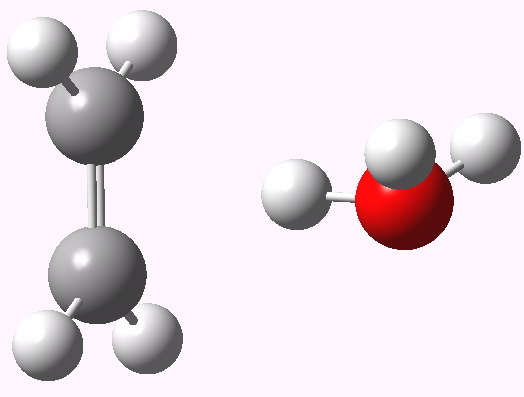
    Hydrogen-bonded reactant
    Forming bridged protonated ethene
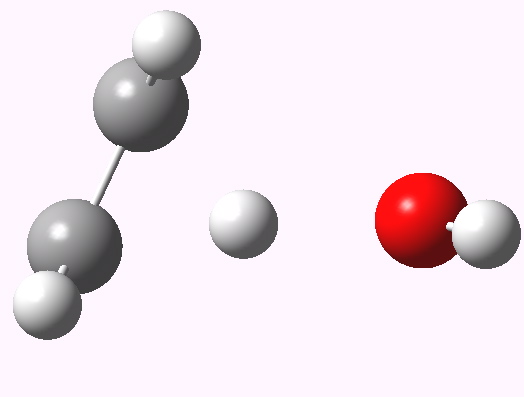
    The transition state Click for 3D.
    4 5
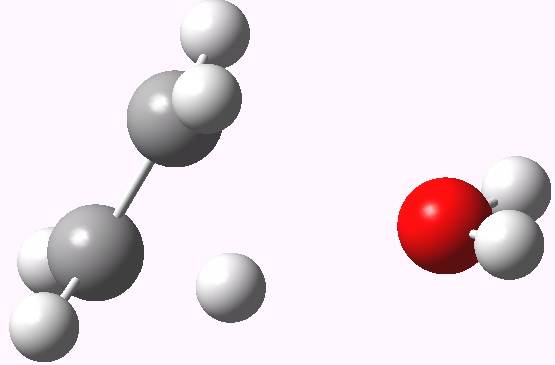
    Second phase, C-O bond formation
    Rotating from eclipsed to staggered

    Five distinct stages can be seen.

    1. The hydronium ion approaches the ethene, and forms quite a strong π-facial hydrogen bond.
    2. Water now starts separating from the hydrogen bonded complex, thus relocating the H-bond from the alkene to the water.
    3. The formal transition state (the only one) is reached, with the proton moving from the symmetric bridged ethyl cation to one end, and the water is starting to move to the other end. Not perhaps the most obvious of transition states!
    4. The formation of the C-O bond is now completing, and the C-C bond is now almost purely converted from double to single.
    5. Only at this stage does the eclipsed conformation of the newly formed ethanol start to rotate into a staggered and final conformation.
    6. Overall, the reaction is concerted (if not synchronous), and its reverse would be classified as an E2 elimination.

    You can see quite a lot of simple basic principles in chemistry are illustrated along this reaction coordinate. We have space for one more: what happens if you make the alkene very much more reactive? How about cyclobutadiene, which in avoiding anti-aromaticity, has become highly reactive.

    Hydration of cyclobutadiene.

    The IRC for this variation is shown below. Notice now the much smaller barrier to reaction (~0.4 kcal/mol in ΔG), and the much greater exothermicity overall.

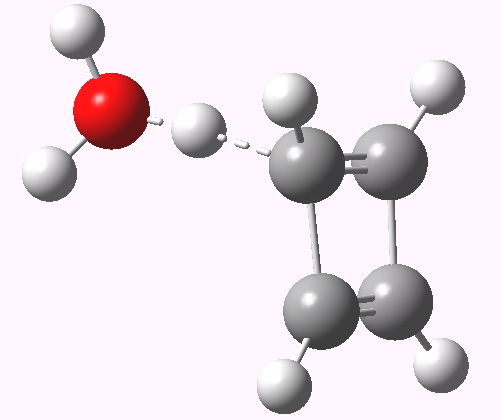
    The transition state is also different. It corresponds to proton transfer from the hydronium cation to one carbon of the cyclobutadiene, to form a stabilised allyl cation. In terms of the reverse elimination, this now corresponds to an E1 type, involving an intermediate species, and the reaction is no longer concerted.

    The transition state for protonation of cyclobutadiene
    I will stop here, reminding that these two simple reactions have taught us a lot about basic organic chemistry.

  • Mindless chemistry or creative science?

    The (hopefully tongue-in-cheek) title Mindless chemistry was given to an article reporting[cite]10.1021/jp057107z[/cite] an automated stochastic search procedure for locating all possible minima with a given composition using high-level quantum mechanical calculations. “Many new structures, often with nonintuitive geometries, were found”. Well, another approach is to follow unexpected hunches. One such was described in the previous post, and here I follow it to one logical conclusion.

    One structure leads to another

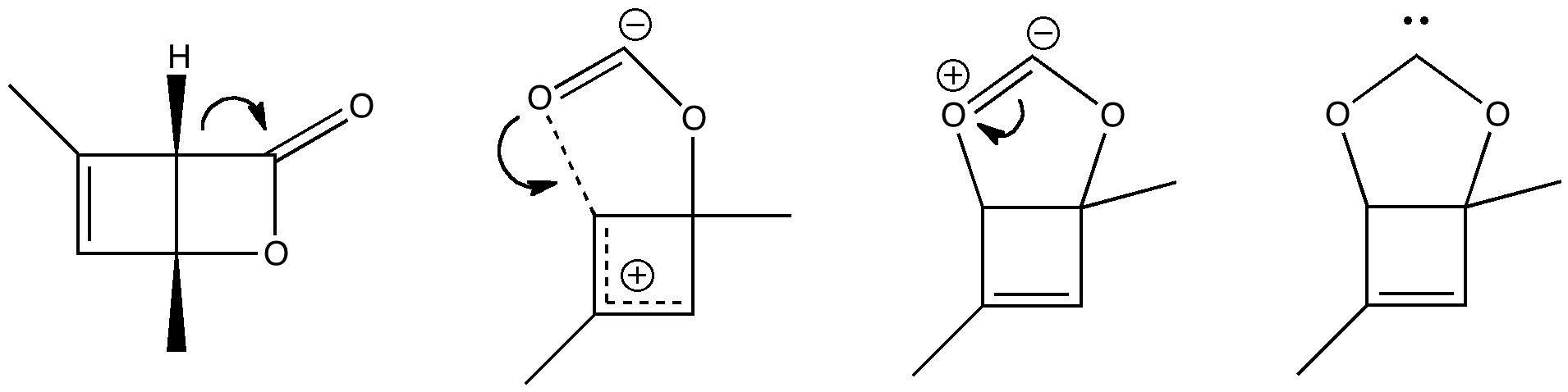
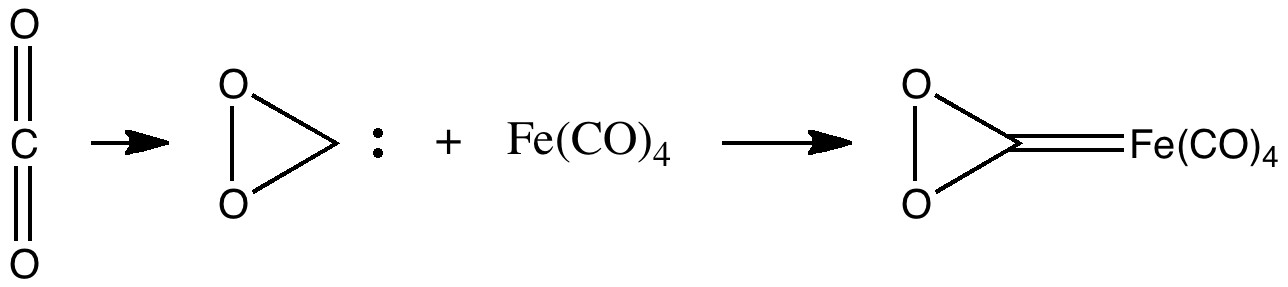
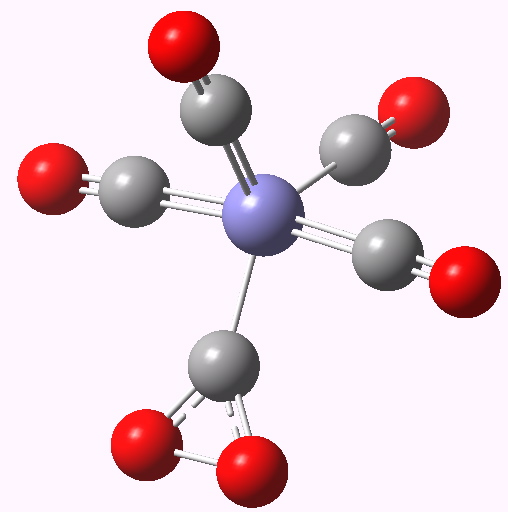
    The train of thought started with the recent speculation upon a zwitterionic intermediate in the photolysis of a dimethyl-pyrone. Closure of this is likely to require a very low barrier, and this leads to a bicyclic species, which could be written as a carbene. One then asks if carbon dioxide itself could be so represented? If so, could that carbene be stabilised with a metal, as below? A reality check, as noted in the earlier post, is that a similar complex with iron tetracarbonyl is known, and appears to be stable.

    Sequestration of carbon dioxide?

    Enter quantum mechanics, which will tell us exactly how stable. Firstly, the spin state of the complex has to be determined, and it turns out the singlet (low spin) is lower than either the triplet (medium spin) or quintet (high spin) states. It took around five minutes (ωB97XD/6-311G(d) ) to establish that the free energy of the reaction between carbon dioxide and iron tetra carbonyl is endothermic in free energy by ~100 kcal/mol. So no sequestration of CO2 by iron carbonyl then!


    Iron tetra carbonyl-carbon dioxide complex. Click for 3D

    As a scientist, I always find it fascinating how one can jump from one topic to a completely different one in just a few steps. But one always needs reality checks in doing so! Perhaps automated mindless searches (bounded by quantum mechanical reality checks) will perhaps one day come up with something really important. All us humans have to do is recognise this when it happens.

  • Computational “reality checks” for mechanistic speculations.

    I have mentioned Lewis a number of times in these posts; his suggestion of the shared electron covalent bond still underpins much chemical thinking. Take for example mechanistic speculations on the course of a reaction, a very common indulgence in almost all articles reporting such, and largely based on informed  arrow pushing. This process is bound to follow the rules of reasonable Lewis structures for any putative intermediates. Here, I suggest that we are now firmly in an era where such speculations must of necessity be backed up by quantum mechanical estimates of the energies and structures. I would propose that journals routinely encourage referees to insist on such (additional) checks. Let me give one specific example of the need to do this (part of a follow up to an earlier article I blogged on previously).

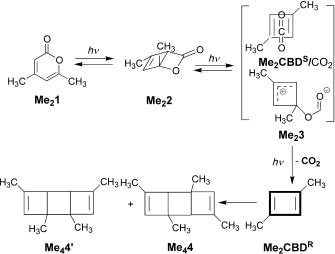
    Scheme 1 (reproduced from 10.1002/chem.201100693 )

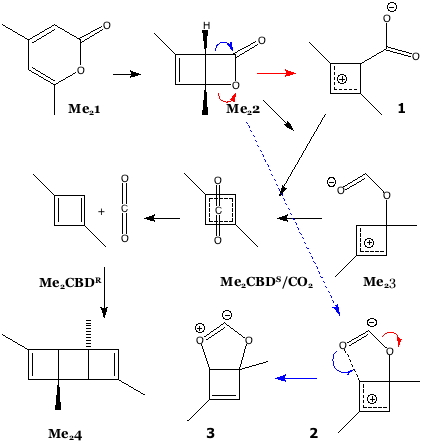
    The example is found as scheme 1 of an article written by Legrand, Gilles, Petit, van der Lee and Barboiu entitled “Unprecedented Synthesis of 1,3-Dimethylcyclobutadiene in the Solid State and Aqueous Solution” (DOI: 10.1002/chem.201100693;  Scheme 1 reproduced here  with the permission of the publishers). Structures 1 – 3 are my additions, and are not present in scheme 1 of the above article.

    Possible species involved in the mechanism for photochemical irradiation of dimethyl pyrone.

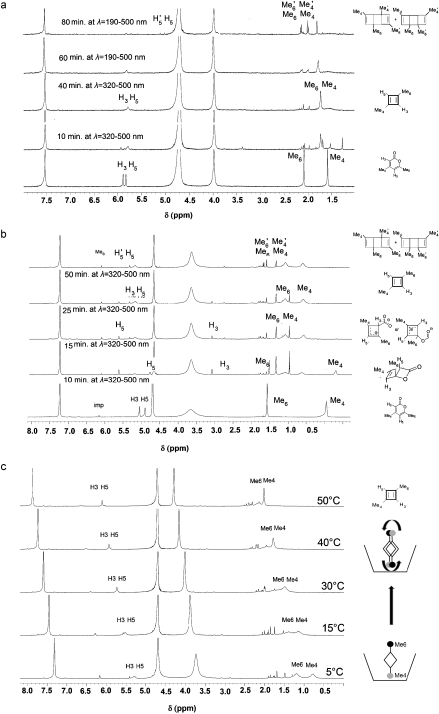
    The scientific problem is to identify what the products are of photolysis of Me21. The species is contained as a guest inside a calixarene host, the whole assembly being dissolved in water (D2O). This was photolysed and the products characterised by (inter alia) their 1H NMR spectra, Figure 7. Focus in particular on 7b, which shows a set of five spectra that are claimed to identify the consecutive species Me21, Me22, (Me23 or 1), Me2CBDS/CO2, Me2CBDR and Me24 as the outcomes of photolysis at “different irradiation times at l=320–500 nm or at l=190–500 nm“.

    Figure 7 (taken from 10.1002/chem.201100693, reproduced with permission of publisher )

    How might one apply a computational reality check to this scheme? Lewis himself might have ventured to suggest that representation Me23 does not adhere to his rules; a modern chemistry student would draw it instead as 2, a vinyl zwitterion. This species in turn could either eliminate carbon monoxide (red arrow) or ring close to give the unusual ylid 3 (blue arrow). In fact DFT calculations on the isolated molecules in water (ωB97XD/6-311G(d,p)/SCRF=water) indicate that the C-O bond in an isolated molecule of Me2does not persist and fragments to carbon monoxide and an alkoxy zwitterion, making it around ~36.5 kcal/mol higher in free energy than the alternative zwitterion 1. The third species 3 is somewhat more stable, being ~20 kcal/mol above 1. Calculations also reveal that whilst rectangular Me2CBDR is obtained on the singlet surface, the square Me2CBDS/CO2 can only be obtained on the triplet surface. This state however is ~8-10 kcal/mol higher in energy and unlikely to have a long lifetime before it decays down to the singlet surface. One could study all the species in the scheme above in this manner, but that analysis is for another place and time.

    Until relatively recently, such reality checks would be all one might attempt computationally. But these experiments were NOT conducted on isolated molecules in solution, they were done in the presence of a calixarene host. Could that change things? Zwitterion 1 can be placed inside this cavity and the calculation repeated (again simulating solvent water), as can 2. In fact the latter spontaneously collapses to 3, and now has an energy ~ 27 kcal/mol higher than 1. Whether 1 itself (or indeed Me2CBDR) has any persistent lifetime is another issue, and one not addressed in this blog post.

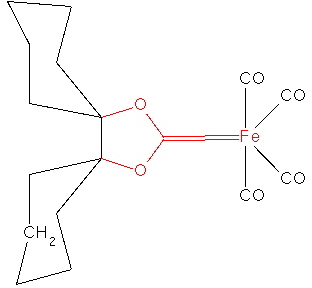
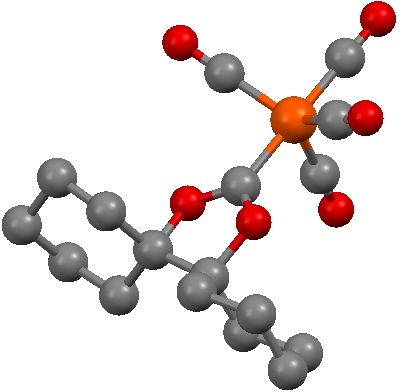
    In fact, the reality check has another purpose, which is to stimulate other ideas. In this case for example one could regard 3 as a carbene, in which case one might ask if coordination of the carbene to a suitable metal might be a stabilizing mode. Amazingly, a number of such systems are known! I show just one below.

    SCHXFe structure diagram.

    SCHXFe. Click for 3D structure.

    There is a lot more that could be said (and written) about this article, including discussion of the 1H NMR spectra, but I will stop at this point. Hopefully, I have shown how simple computational reality checks on a proposed mechanism can easily result in both unexpected outcomes and ideas for new chemistry!

  • The Sn1…Sn2 mechanistic continuum. The special case of neopentyl bromide

    Introductory organic chemistry invariably features the mechanism of haloalkane solvolysis, and introduces both the Sn1 two-step mechanism, and the Sn2 one step mechanism to students. They are taught to balance electronic effects (the stabilization of carbocations) against steric effects in order to predict which mechanism prevails. It was whilst preparing a tutorial on this topic that I came across what was described as the special case of neopentyl bromide, the bimolecular solvolysis of which has been identified (DOI: 10.1021/ja01182a117) as being as much as 3 million times slower than methyl bromide. This is attributed to a very strong steric effect on the reaction, greater even than that which might be experienced by t-butyl bromide! Time I thought, to take a look at what might make neopentyl bromide so special, and what those supposed electronic and steric effects were really up to.

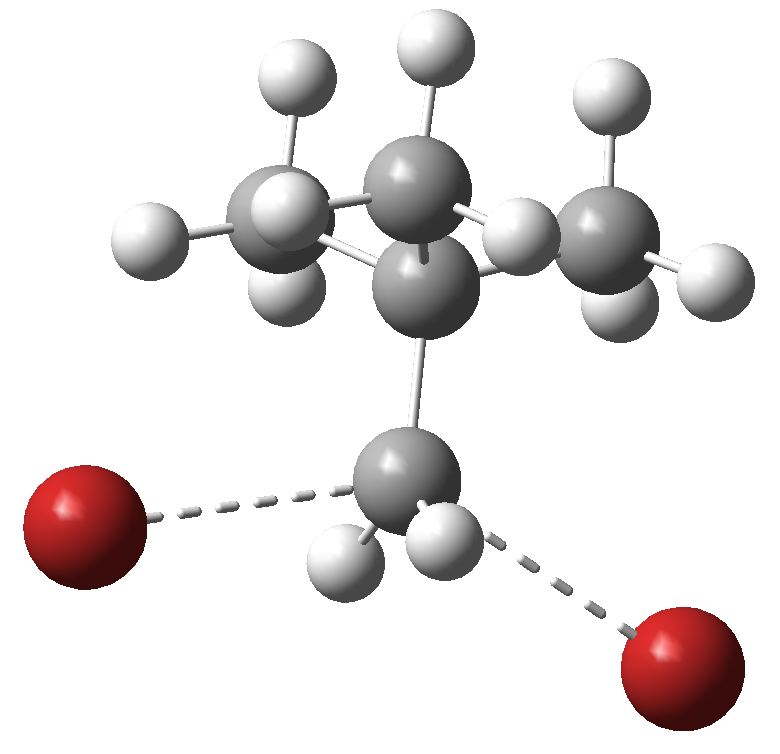
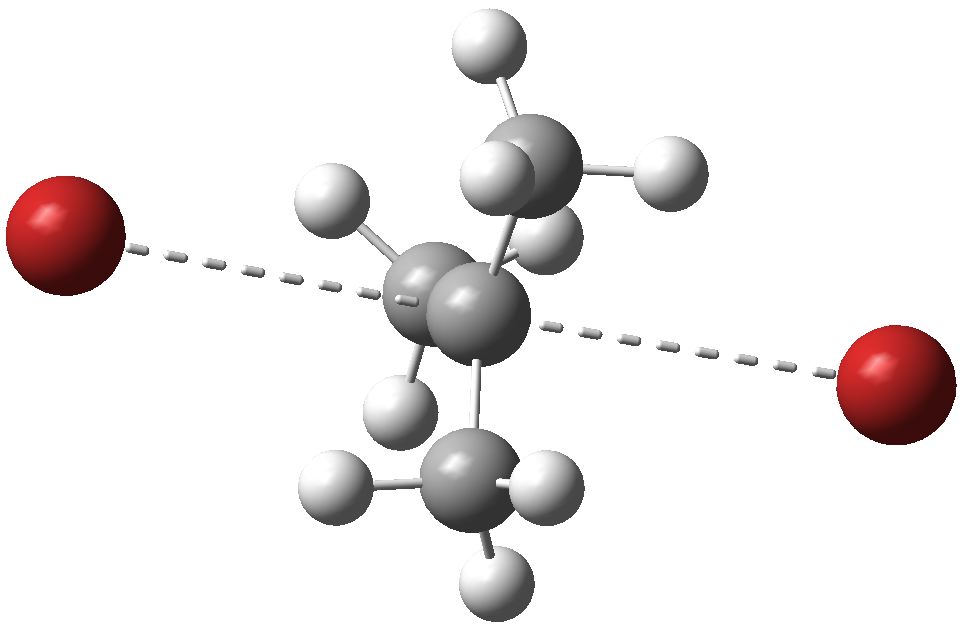
    How does one construct a quantitative model? Well, a method which incorporates both van der Waals effects (dispersion attractions) and solvation in computing a potential energy surface seems appropriate. I used ωB97XD/6-311G(d,p) with SCRF correction for methanol as solvent. This predicts the following transition state structure. The calculated (free energy) barrier from the reactant is 30.2 kcal/mol.

    Sn2 transition state structure for neopentyl bromide. Click for 3D.
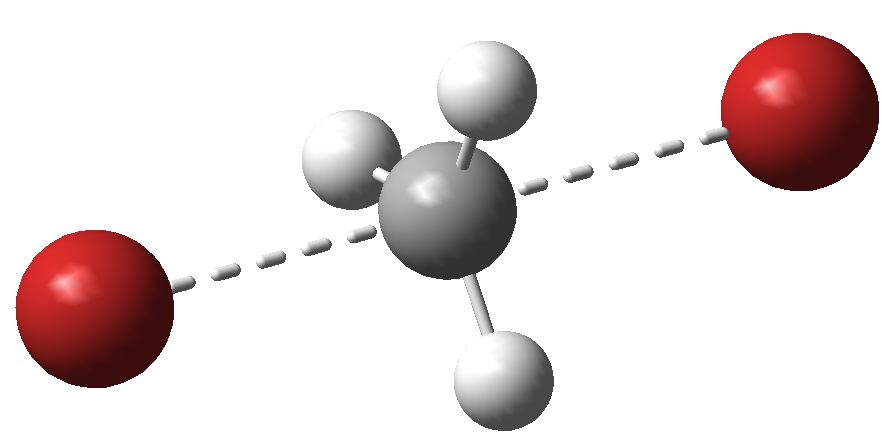
    Compare this with that for methyl bromide itself, for which a free energy barrier of 20.8 kcal/mol is calculated, a reasonably facile reaction at room temperature.

    Sn2 transition state for methyl bromide. Click for 3D.
    What do these models tell us?

    1. Firstly, the difference in free energy of activation, ΔΔG, for the two reactions is 9.4 kcal/mol. We can apply this equation: ΔΔG = -RT ln (kmethyl/kneopentyl). This comes out at around 8.3 million (at 298K). The agreement with experiment is not at all bad (in reality, one might expect a better model to include explicit hydrogen bonding from the reagants to the solvent, which are neglected in this simple model).
    2. Next, notice that whilst the transition state for methyl bromide can sustain a linear arrangement of the Br…C…Br atoms, that for neopentyl bromide is quite bent, at 140° Why is it bent? To cast light on that, we need to know the van der Waals radii for H (1.1) and Br (1.95Å), giving a sum of 3.05Å. Any contact between these two that is significantly shorter than this value could be reasonably defined as steric bumps. Indeed, inspecting the model throws up four Br…H contacts of ~2.9Å. If the Br…C…Br atoms were linearly arranged, these bumps would be far worse. So neopentyl bromide is indeed sterically hindered!
    3. But wait, how about measuring the C…Br distances in the transition states? About 2.7Å for neopentyl, but noticeably shorter at 2.5Å for methyl bromide. We can interpret that as indicating that the neopentyl bromide transition state has a little more carbocation character than methyl bromide. The extreme manifestation of that would be an ion pair, or more accurately an ion triple, such as Br(-)…C(+)…Br(-). So, as the carbocation character increases, the steric effects would decrease!
    4. But this needs further calibration. So how about t-butyl bromide. Students of course are told that for this species, there is a change in mechanism from Sn2 to Sn1. What does the computer say? The calculated structure is shown below, and it reveals a barrier of 18.9 kcal/mol, with a C-Br length of 3.43Å.
      Sn1 (Sn2) transition state for t-butyl bromide solvolysis. Click for 3D
      Well, the barrier is even lower than methyl bromide! And the C-Br distances almost 1Å longer. This supports the Br(-)…C(+)…Br(-) model, and confirms that lengthening the C-Br distance in the transition state does tend to indicate more ionic (i.e. Sn1) character. If you inspect the transition state vibrational mode, you will find another spectacular difference. For the Sn2 reaction proper, the motion is of mostly the two bromines and the central carbon. With the Sn1 mechanism, it is rotation of a methyl group (which is attempting to align with the carbocation centre being formed). This methyl motion is why such Sn1 reactions exhibit large secondary deuterium kinetic isotope effects! Again, the closest approaches between H and Br are ~ 2.9 -3.0Å, in this case very similar to the Sn2 mechanism.

    So in this simple example, we can see illustrated many interesting effects; the balance between Sn1 and Sn2, the close approaches between atom pairs that characterize steric effects, the difference between fully ionic and less ionic structures, how the reaction normal mode (coordinate) changes with this changing mechanism. The text books have not gotten it wrong, but its nice to have some numbers associated with these concepts.

  • Janus mechanisms (the past and the future): Reactions of the diazonium cation.

    Janus was the mythological Roman god depicted as having two heads facing opposite directions, looking simultaneously into the past and the future. Some of the most ancient (i.e. 19th century) known reactions can be considered part of a chemical mythology; perhaps it is time for a Janus-like look into their future.

    Reaction of the diazonium cation with cyanide.

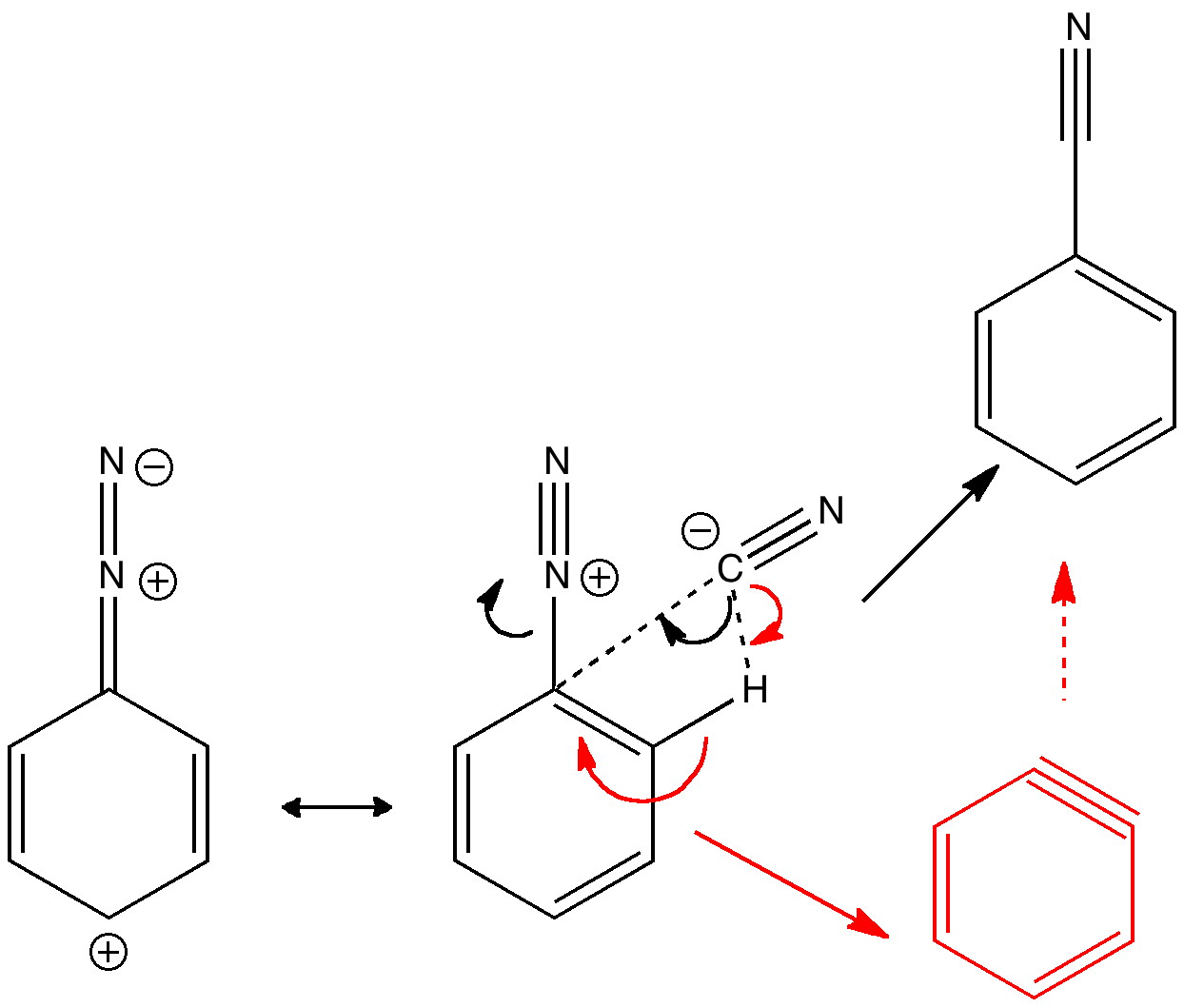
    The phenyl diazonium ion is often introduced early in most chemistry teaching; it is used to produce spectacularly coloured solutions from colourless starting materials and makes an immediate impression.1 The reaction of this species with cyanide salts often appears in introductory courses of aromatic chemistry as a means of producing aryl cyanides. It entered the text books around a century ago as the Sandmeyer reaction (using copper(I)cyanide, but it is also reported as occurring using more ionic cyanide salts as well).2 The mechanism of the ionic reaction however has been given little attention recently. One common representation is as a unimolecular reaction to lose nitrogen gas forming an arene cation, which is mechanistically then followed by fast quenching with cyanide anion to replace the diazo group with the cyano group.

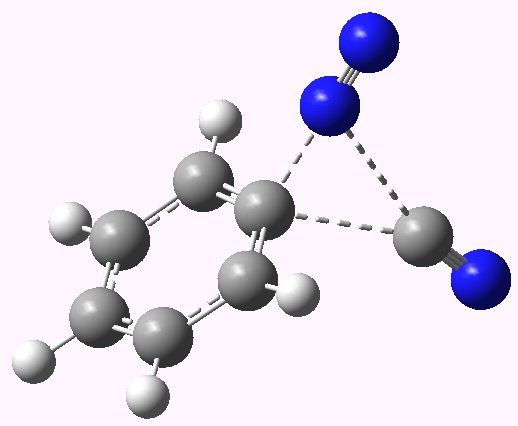
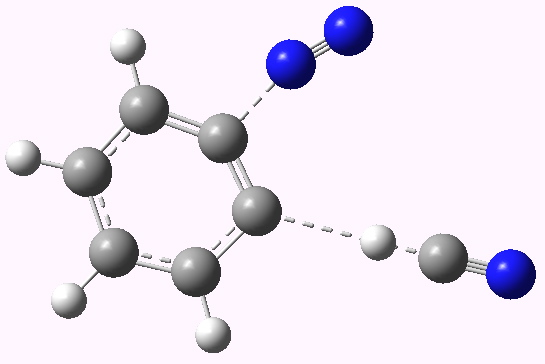
    Computational modelling of such ion-pair reactions has now become possible,3 and is going to be used here to peek into the future. A B3LYP/6-311G(d,p)/SCRF calculation shows a transition state involving C-N cleavage, with an adjacent cyanide ion doing rather more than merely spectating. The dipole moment of the transition state is 11D (in acetonitrile as solvent). The structure shows the ion-pair endeavouring to minimise the charge separation, with the cyanide approaching at a rather different angle from the departing diazo group. This sort of SN2 displacement at an sp2 (as opposed to sp3) carbon centre is mechanistically quite unusual.4 The free energy of activation for this mechanism is calculated as 24.9 kcal/mol, which is slightly worryingly high for what is considered a room-temperature reaction (the same method gave quite reasonable barriers for another ion-pair mechanism3).

    Phenyldiazonium cation + cyanide anion; substitution mechanism. Click for 3D

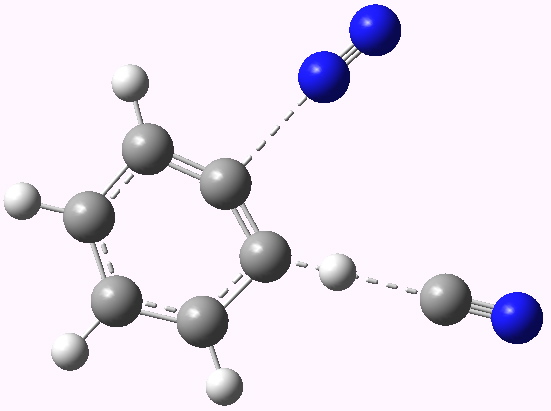
    So time to see if all is what it might seem. There are many other mechanisms that might be explored; below is what seems quite a reasonable one, the elimination of the diazo-group with accompanying proton abstraction to form a benzyne. This transition state has an activation free energy of 17.8 kcal/mol, a much more reasonable value for a room temperature reaction. The dipole moment is 17.1D (the reactant ion-pair is 19.7D).

    Benzyne mechanism, in acetonitrile solvent. Click for 3D

    So could it be that this veritable reaction actually proceeds via a different mechanism from that in the text books? Benzyne would be formed as a very reactive intermediate, and presumably in the presence of cyanide anions, it would react by nucleophilic addition to form benzonitrile, the same product as before. How could this be verified? Well, if the carbon atom carrying the diazonium group were to be labelled as say 14C, the original mechanism would carry all that label at one carbon in the benzonitrile product. But the benzyne mechanism would scramble the label between two carbons. Janus therefore sees the future in the shape of a useful experiment which could be done to distinguish the two alternative mechanisms.

    It is also noteworthy that the two alternative transition states have different dipole moments, and so are affected differently by solvent polarity. Thus in water, the activation free energies are respectively (substitution/elimination) 25.1 and 17.9, whilst in benzene as solvent they are much higher: 48.7 and 39.0 kcal/mol. The effect of the solvent upon the structure of the transition state is also considerable. Below is shown the benzyne elimination mechanism as calculated in the non polar benzene as solvent. Note how the proton transfer is much more advanced, and the C…N cleavage is less advanced than in acetonitrile as solvent.

    Benzyne transition state, in benzene solvent. Click for 3D

    We are seeing something of a revolution here. Gradually, the mechanisms of the reaction library built up over the last 100 years or so are increasingly being explored using quantitative calculations. It seems entirely likely that more surprises will crop up.


    1. At the age of ~12 I was introduced to chemistry via this reaction, an exposure at least in part why almost 50 years later I am still doing chemistry and why I write this blog.
    2. Kazitsyna, L. A.; Gruzdneva, V. N. Vestnik Moskovskogo Universiteta, Seriya 2: Khimiya, 1975, 16, 331-7.
    3. The ion-pair mechanism of the racemisation of iso-bornyl chloride, another ancient and almost mythological reaction, has recently been studied in this manner.[cite]10.1021/jo100920e[/cite]
    4. Z. Wu and R. Glaser, “Ab Initio Study of the SN1Ar and SN2Ar Reactions of Benzenediazonium Ion with Water. On the Conception of “Unimolecular Dediazoniation” in Solvolysis Reactions”[cite]10.1021/ja047620a[/cite]


    This post has DOI: 10.59350/g18gn-rra49

  • (anti)aromaticity avoided: a tutorial example

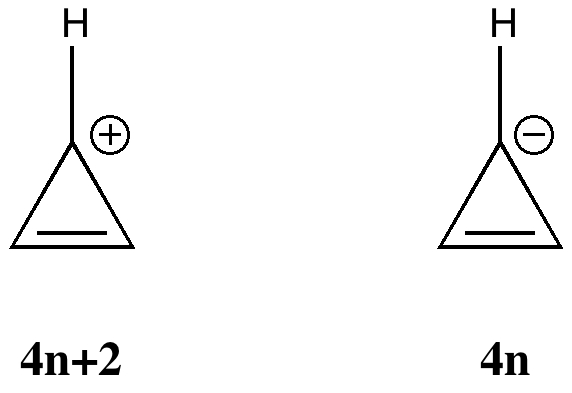
    More inspiration from tutorials. In a lecture on organic aromaticity, the 4n+2/4n Hückel rule was introduced (in fact, neither rule appears to have actually been coined in this form by Hückel himself!). The simplest examples are respectively the cyclopropenyl cation and anion. The former has 2 π-electrons exhibiting cyclic delocalisation, and the 4n+2 (n=0) rule predicts aromaticity. Accordingly, all three C-C distances are the same (1.363Å).

    Cyclopropenium cation and anion

    The anion however appears to have 4 π-electrons, and must therefore belong to the 4n (n=1) rule and exhibit antiaromaticity. Pretty straight forward thus far. But students have a knack of asking apparently simple, but quite thought provoking questions. This one was “does one count lone pairs of electrons“? Perhaps a different way of putting it would be “does the lone pair really count as π-electrons?”

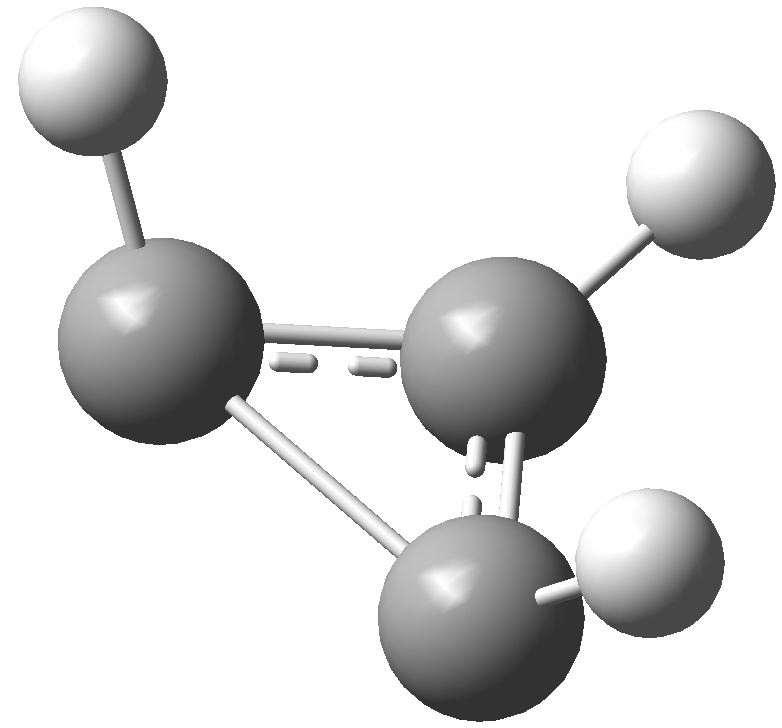
    So, time for a calculation. Well, it turns out there are two isomers of the anion. The first has two C-C bond lengths of 1.383Å and one of 1.841Å; two short and one (very) long. Moreover, the whole system is very much non planar.

    Cyclopropenium anion, first isomer

    This isomer turns out to be really a 4π-allyl anion in disguise. To avoid any danger of cyclic conjugation (and hence antiaromaticity), the groups at the end of the allyl fragment rotate. So yes, this IS a 4π-electron system, but the molecule has cleverly distorted to avoid antiaromaticity as best it can.

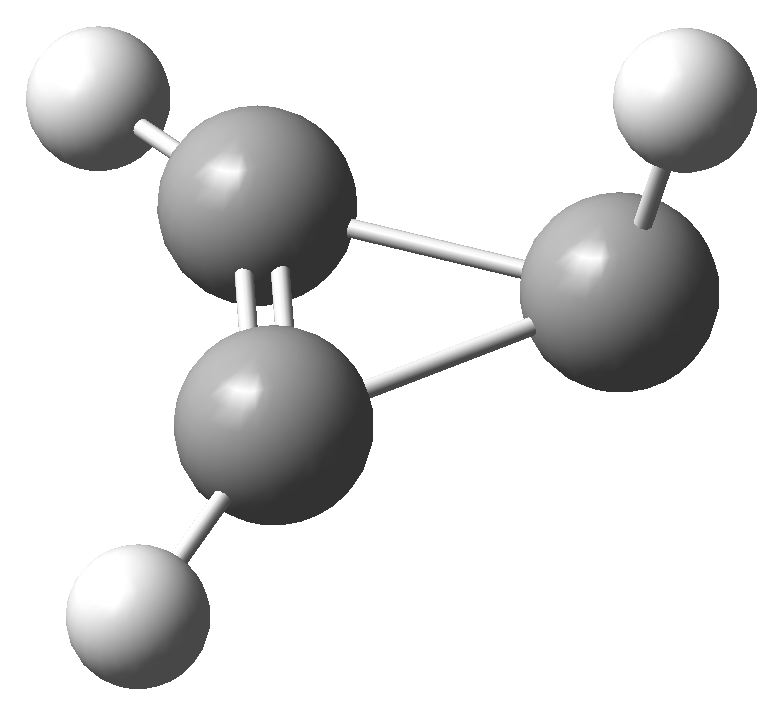
    Cyclopropenium anion. Isomer 2.

    What about the second isomer? This now has one short (1.293Å) and two long (1.598Å) C-C lengths. The carbon bearing the two long bonds is now highly non planar. It is best described as an isolated double bond (2 π-electrons) trying to get as far away as possible, and to avoid as much overlap as it can, with a lone pair (NOT π) on the third carbon. Now, the lone pair really does NOT count, since it is too far from the other 2 π-electrons, and inclined at the wrong angle, to overlap effectively with them. The two isomers are almost the same in energy (the first being the lower in free energy by ~1 kcal/mol).

    So what kind of answer would one give to the inquisitive tutee? Firstly, as the name implies, antiaromaticity is not good for a molecule. If it possibly can, it will avoid it. For the cyclopropenium anion, there are two quite effective ways of avoiding antiaromaticity. It is not, as a result, actually a good example of an antiaromatic system. Because molecules can be very clever at avoiding antiaromaticity, remarkably few examples of genuine antiaromatics actually exist!

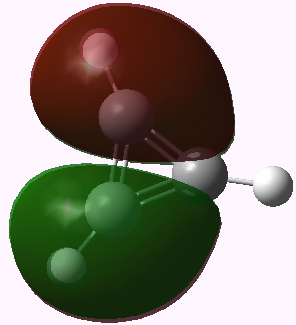
    I end with another way of looking at this problem using group theory. The cyclopropenium cation has D3h symmetry, and the LUMO (lowest unoccupied) molecule orbital in fact belongs to the E” irreducible representation. This means it is doubly degenerate. To form the anion from it, two electrons must be placed in one of these orbitals (but unless an open shell is formed, one cannot place one electron in each). Whichever orbital receives the two electrons is now stabilised, the degeneracy must break, and the resulting geometry must reflect this. The two symmetry-broken geometries are precisely those shown above.

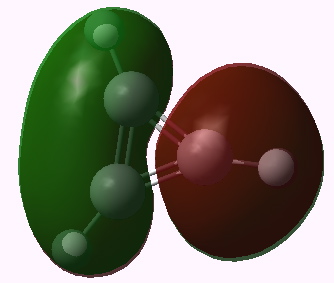
    Cyclopropenium cation, E" LUMO orbital 11. Click for 3D
    Cyclopropenium cation, E" LUMO orbital 12. Click for 3D
  • Rate enhancement of the Diels-Alder reaction inside a cavity

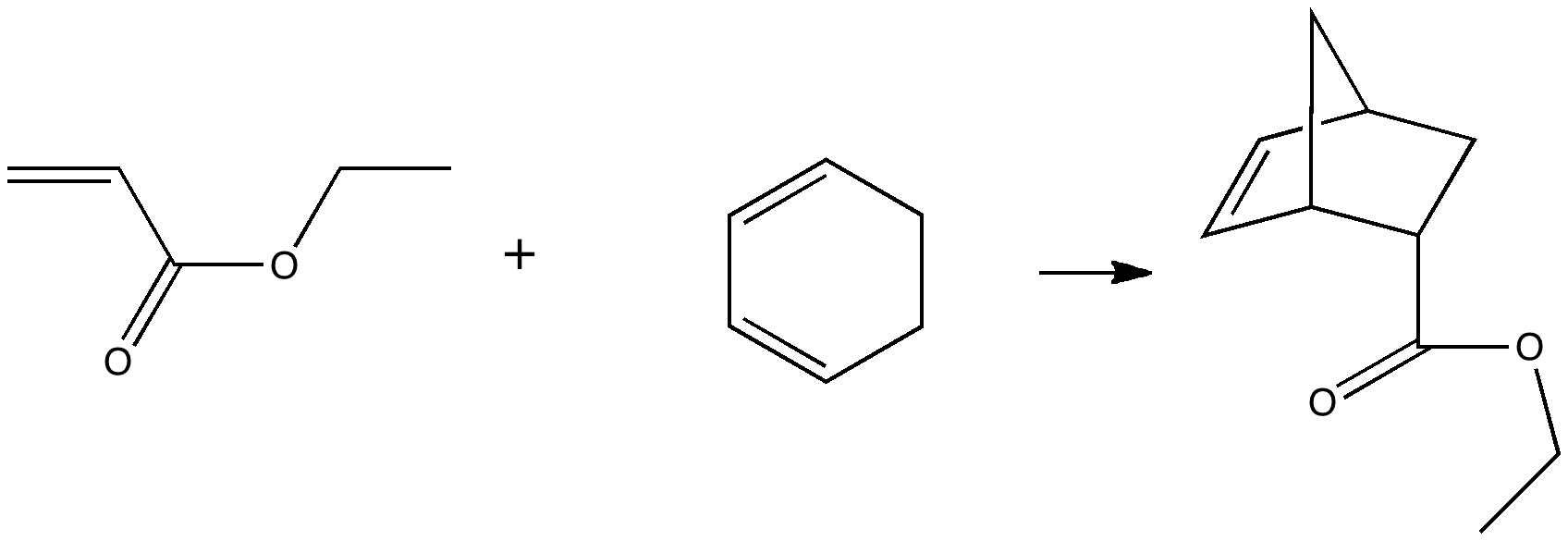
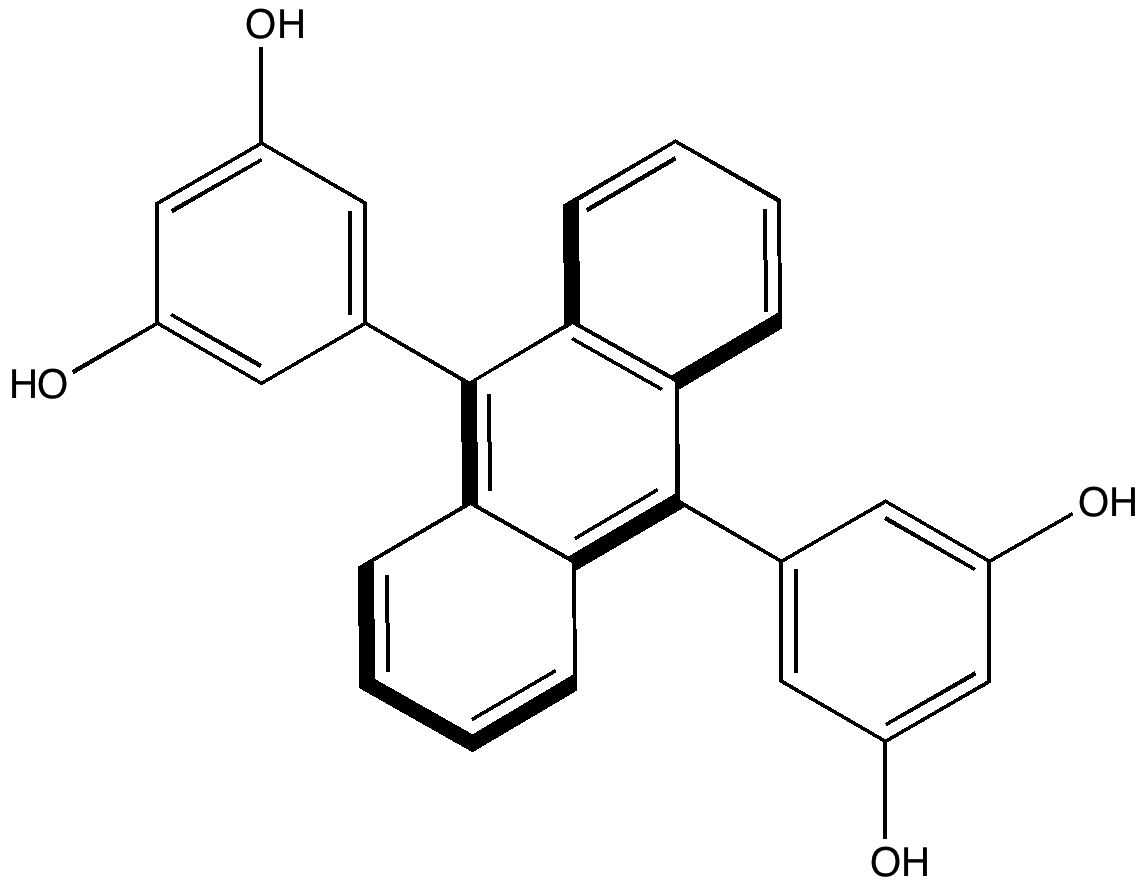
    Reactions in cavities can adopt quite different characteristics from those in solvents. Thus first example of the catalysis of the Diels-Alder reaction inside an organic scaffold was reported by Endo, Koike, Sawaki, Hayashida, Masuda, and Aoyama[cite]10.1021/ja964198s[/cite], where the reaction shown below is speeded up very greatly in the presence of a crystalline lattice of the anthracene derivative shown below.

    A Diels-Alder reaction. Click for animation.
    Organic scaffold based on an anthracene derivative. Click for crystal structure.

    Its difficult to be precise about how much faster, since the kinetics depend on reorganisation of the scaffold, the actual reaction kinetics, and diffusion of the products in and out of the cavity. It does however mean that a poor solution reaction (reflux, many hours, modest yield) can be accomplished in an hour or so at room temperature in high yield.

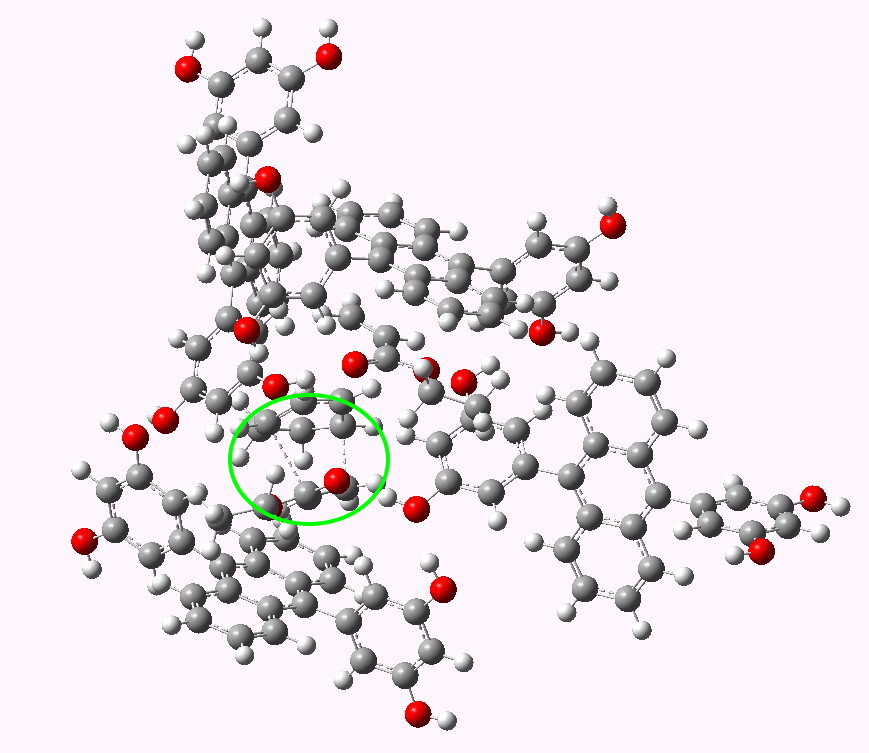
    Some idea of what is going on can be probed using calculation. Because the host and the guest interact though van der Waals or dispersion forces, a new breed of density functional theory which takes these into account is used (ωB97XD). The basic assemblage comprises the reactants shown below, enclosed in a cage formed by four of the anthracene units. A total of 236 atoms. This is a pretty challenging size for a full-blown quantum mechanical calculation. Here, its been done using a reasonable basis set, 6-31G(d) and with a continuum solvation model applied (dichloromethane). If you are interested in this sort of thing, that is 2292 basis functions. I started the calculations in mid September, and its taken more than six weeks to optimise (on 8-processor computers).

    Firstly, the results for a control calculation in dichloromethane. The energies of activation of the two isolated reactants coming together at the transition state are calculated as:
    ΔG298 29.5, ΔH 15.5, T.ΔS  -13.98 kcal mol-1
    (ΔS -46.9 cal K
    -1mol-1)

    which are of course the various contributions to the equation ΔG = ΔH – T.ΔS. Note in particular how the last term increases the free energy barrier by ~14 kcal mol-1! Using the equation
    Ln k/T = 23.76 – ΔG/RT
    one can estimate a rate constant of ~4 x 10⁻⁶ hour-1 at 298K (i.e. very slow at room temperatures). If the unfavourable -T.ΔS term is ignored (ΔG = ΔH), the rate constant increases to ~9 x 10⁴ hour-1 at 298K (i.e. fast), quite a difference. What about the values when the reactants and transition state are surrounded by the host?

    ΔG298 20.0, ΔH 16.5, T.ΔS -3.49 kcal mol-1
    (ΔS -11.7 cal K
    -1 mol-1)

    The key difference is that the last term is now  much smaller, this reduces the free energy of activation and the estimated rate constant at 298K is now ~ 0.01 s-1 (42.5 hour-1).  This magnitude of rate constant corresponds to a reasonably fast reaction at room temperatures.

    Transition state for  Diels Alder inside a cavity. Click for 3D.

    This post demonstrates that the fascinating area of supermolecular chemistry can be just as amenable to computational exploration as the more conventional reaction.