Tag: metal

  • X-ray analysis and absolute configuration determination using porous complexes.

    This is another in the occasional series of “what a neat molecule”. In this case, more of a “what a neat idea”. The s-triazine below, when coordinated to eg ZnI2, forms what is called a metal-organic-framework, or MOF. A recent article[cite]10.1038/nature11990[/cite] shows how such frameworks can be used to help solve a long-standing problem in structure determination, how to get a crystal structure on a compound that does not crystallise on its own.
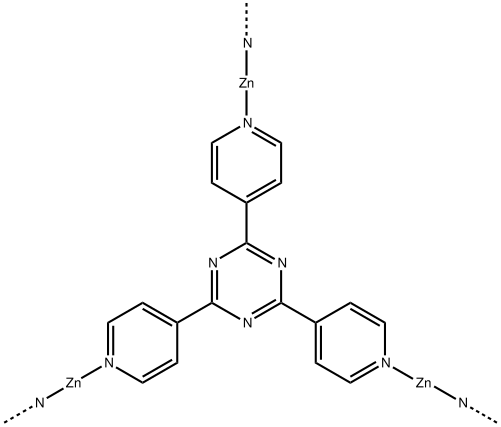
     

    MOF

    The essence of the technique is to select a small crystal of the MOF (which crystallises well) and allow your own molecule to diffuse in from solution. So captured inside the framework, the X-ray analysis can now be done on the absorbed host molecule together with the MOF framework. Below you can see two of the structures reported solved by this technique. The first shows the target molecule (green arrows) but also three molecules of cyclohexane (the diffusing solvent, red arrows), nicely illustrating its chair conformation.
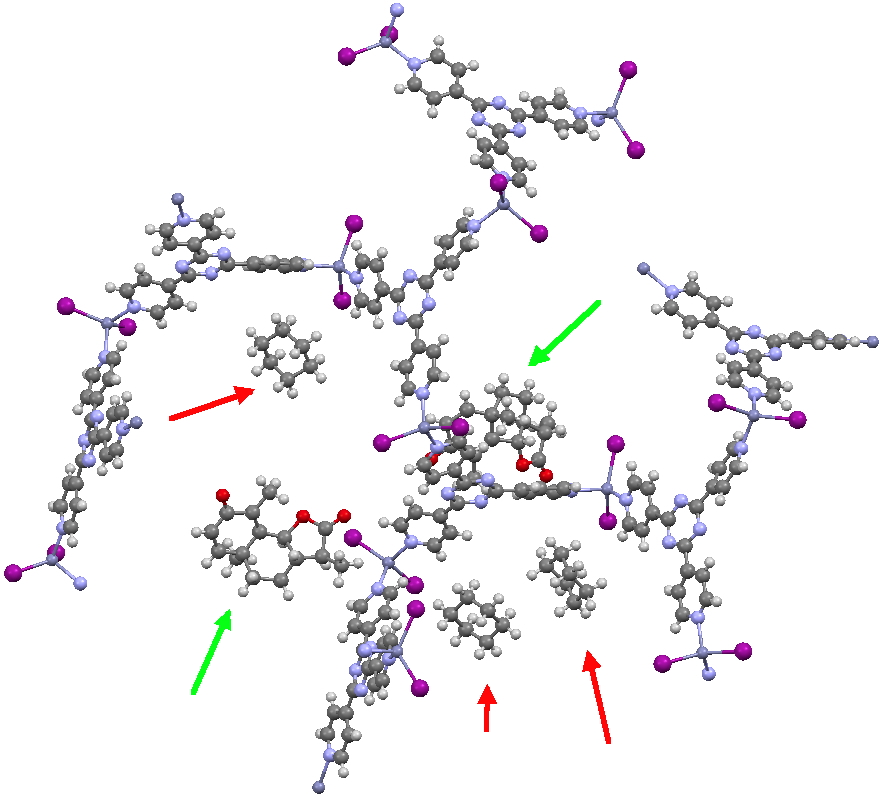
    Click for  3D.
    Click for 3D.

    This second example shows the structure of a marine natural product, of which only  about 5µg was available (green arrow). The structure (of miyakosyne A) shows a conformationally flexible substituted saturated backbone, a molecule which traditionally might be expected to be disordered because of its flexibility. These structures were performed on a standard diffractometer, and the authors point out that if more intense synchrotron radiation were to be used, even smaller samples (< 10ng) could be determined. They also note that full occupancy of the MOF lattice does not need to be achieved for the method to succeed.
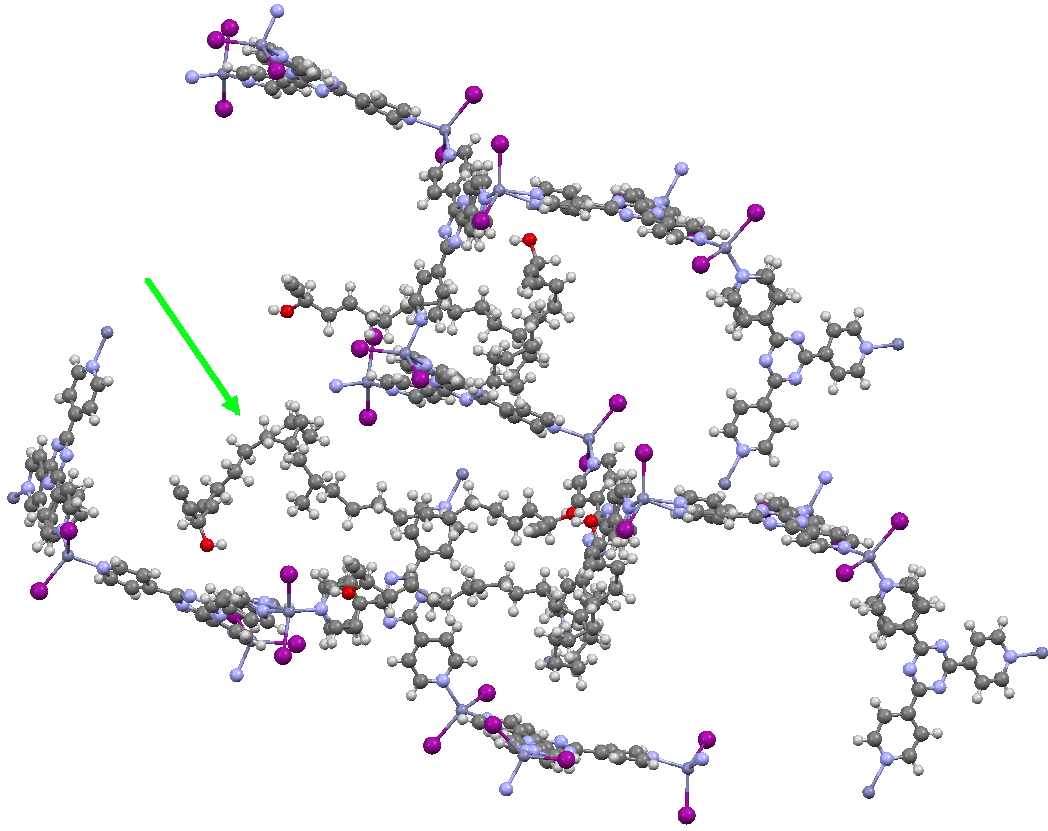
    Click fdx.doi.org3D.
    Click for 3D.

    I end with noting that in an earlier post, I observed how chiroptical methods can nowadays be increasingly successfully used to determine absolute configurations of chiral molecules. Miyakosyne A, a molecule with three chiral centres had proved to be a challenge using such techniques; one of these centres (at C14) could not be determined by any chiroptical method. The configuration was however successfully determined as (S) by this new crystallographic technique. I think this is a huge contribution to the science of structure and configuration determination![cite]10.1002/(SICI)1521-3773(19990115)38:1/2<153::AID-ANIE153>3.0.CO;2-U[/cite]
  • Lithiation of heteroaromatic rings: analogy to electrophilic substitution?

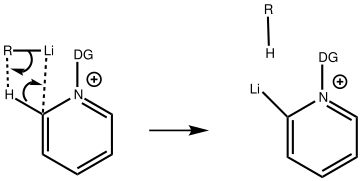
    Functionalisation of a (hetero)aromatic ring by selectively (directedly) removing protons using the metal lithium is a relative mechanistic newcomer, compared to the pantheon of knowledge on aromatic electrophilic substitution. Investigating the mechanism using quantum calculations poses some interesting challenges, ones I have not previously discussed on this blog.

    Li

    My model will be the system above, based on the pyridine ring, and also carrying a directing group (R=Me, DG = O). The reagent used to remove the hydrogen and to substitute it (with a carbon-metal bond) is an alkyl lithium. The arrow pushing I have shown is speculative, since at this stage we have no idea if it really is such a pericyclic process. Indeed things are about to get complicated when we find out that the structure of the electron deficient lithium alkyls is much more complex than one might imagine.

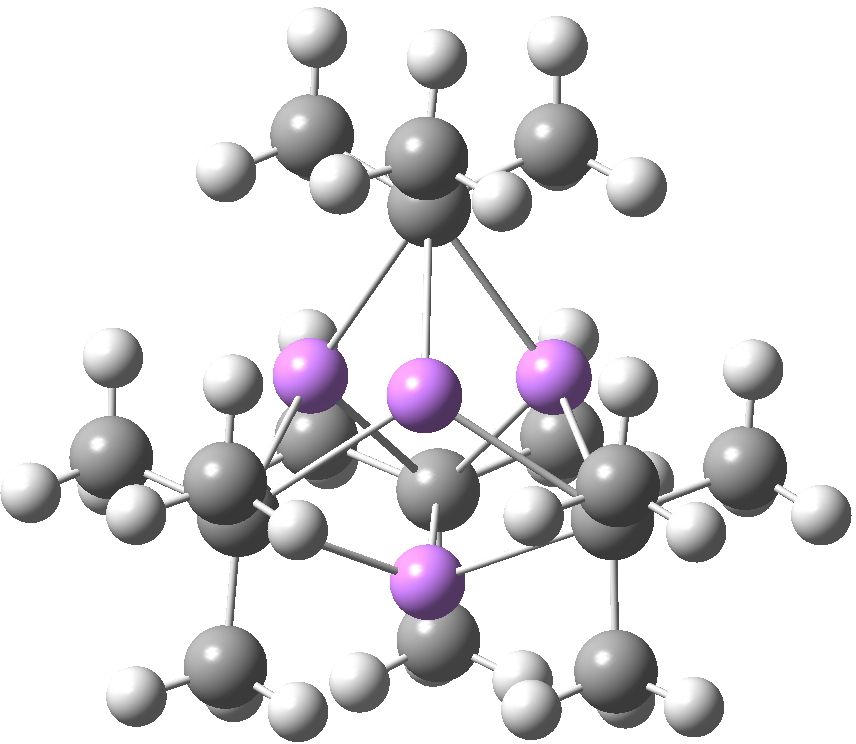
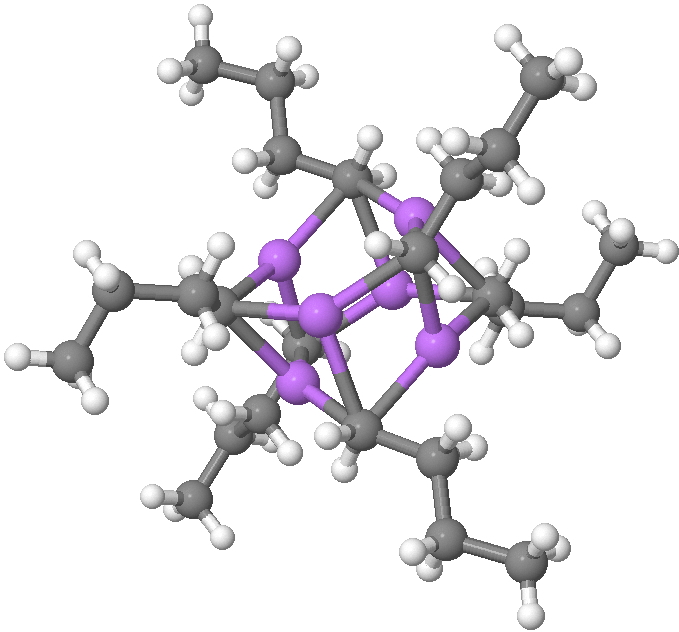
    Fortunately, crystal structures are available. Let me start with n-butyl lithium, a very commonly used reagent[cite]10.1002/anie.199305801[/cite]. This forms a complex cluster of six lithiums, in which each metal is surrounded by three CH2 terminii of the n-butyl anion, and vice-versa, each  CH2 group is in contact with three lithium atoms (making the carbanionic carbon in effect hexa-coordinate).

    SUHBEC. CLICK FOR 3D.
    SUHBEC. CLICK FOR 3D.

    Another frequently used lithium alkyl is the t-butyl derivative, which has a different tetrameric motif, again with each Me3C coordinated to three Li atoms (making this carbon again hexa-coordinate).

    SUHBIG. Click for 3D.
    SUHBIG. Click for 3D.

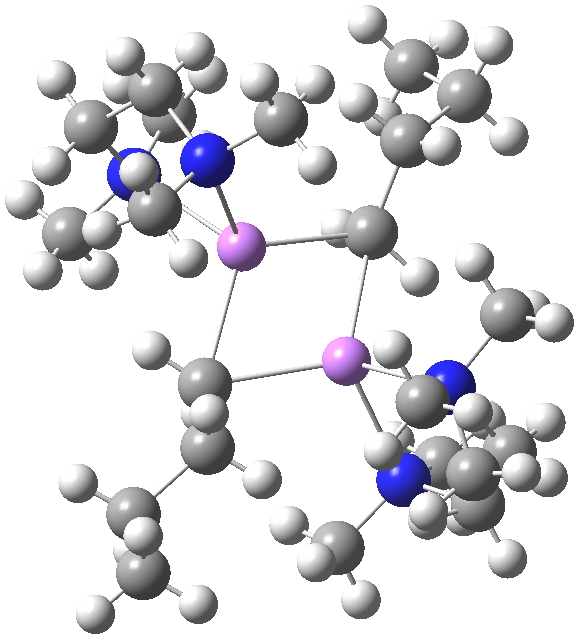
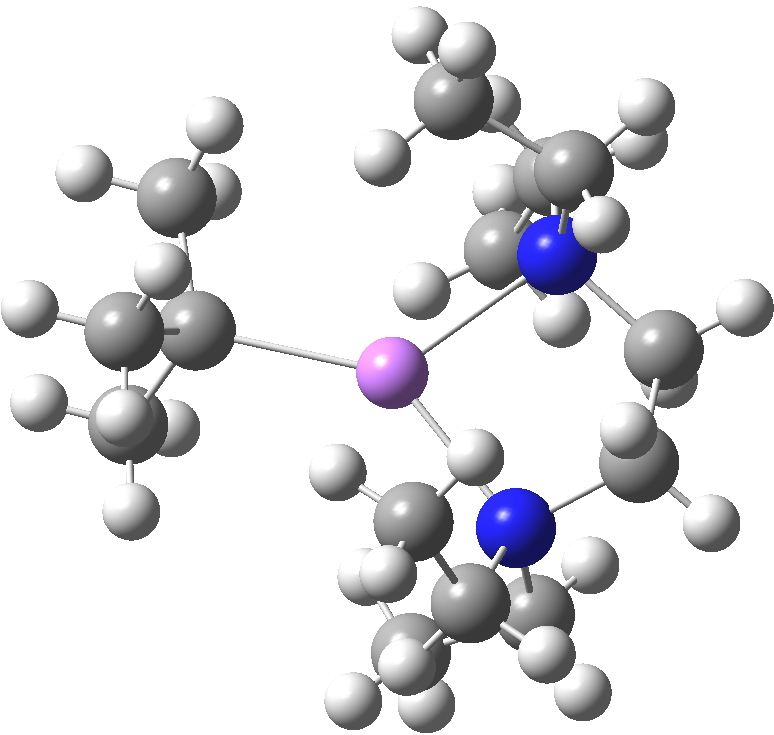
    The interesting issue now is whether these metal alkyls react in these oligomeric forms or whether they are in equilibrium with a reduced monomeric form that constitutes the reactive species. With n-butyl lithium, it is possible to try to achieve this chemically by adding tetramethylethylenediamine. As you can see from the structure below, this strategy can be only partially successful; in this instance the  CH2  coordination is reduced from three Li atoms to two[cite]10.1021/ja00057a050[/cite]. With t-butyl lithium, this strategy reduces the structure to a true monomer[cite]10.1021/ja8058205[/cite], the Me3C now being just 4-coordinate.

    WAFJAO. Click for 3D.
    WAFJAO. Click for 3D.
    LOKTAH. Click for 3D.
    LOKTAH. Click for 3D.

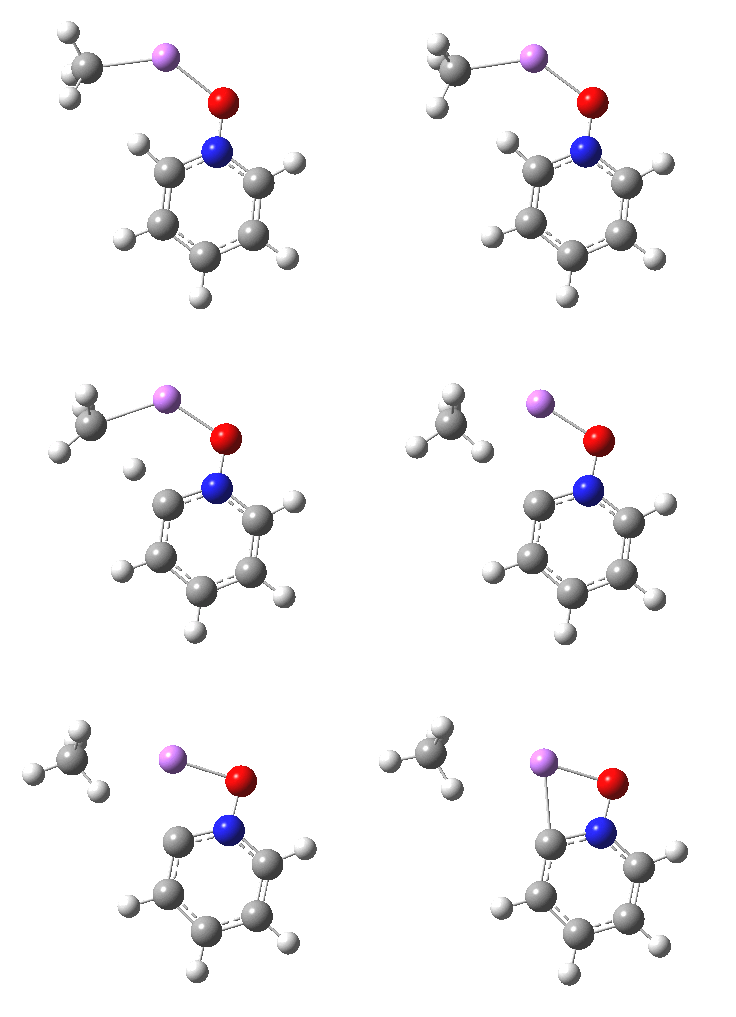
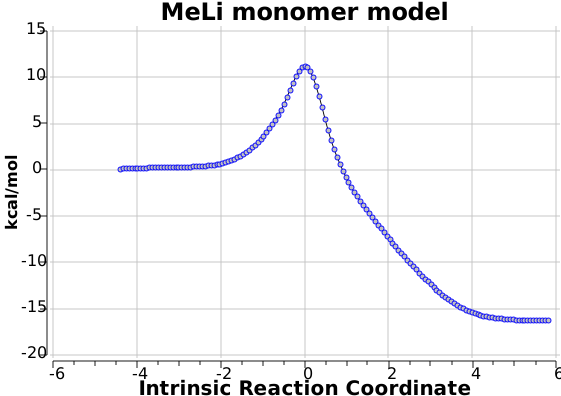
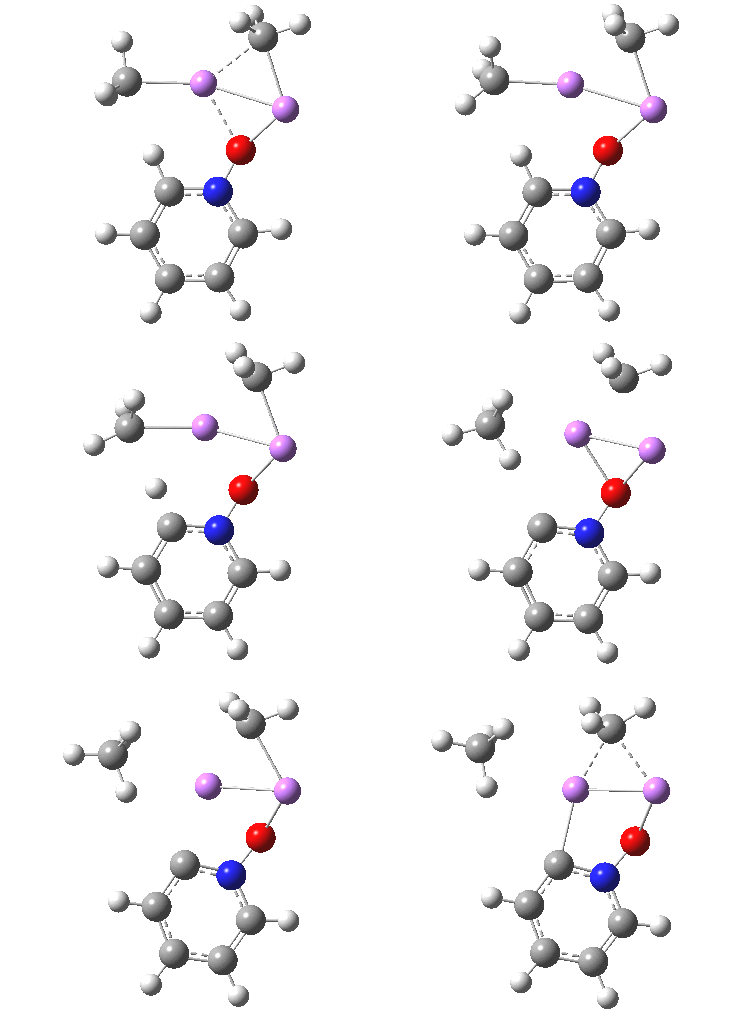
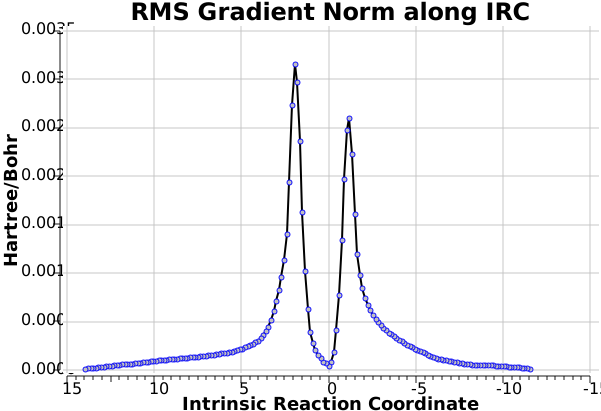
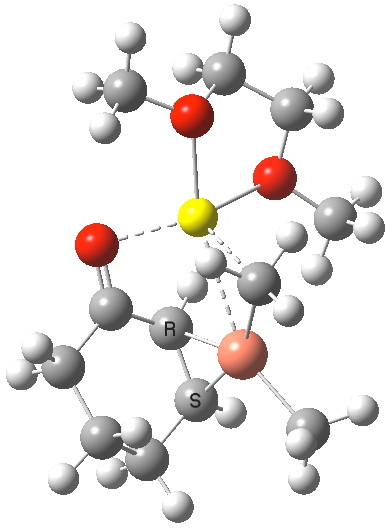
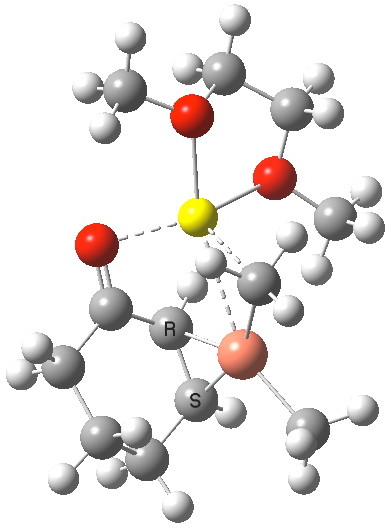
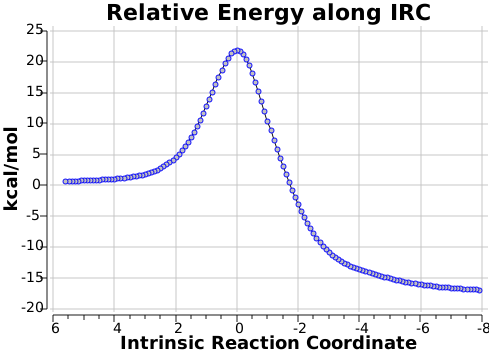
    These systems are all pretty large to investigate using modelling, and so I will start the process by reducing the alkyl lithium model down to just a monomeric CH3Li molecule, placing it and pyridine-N-oxide into a continuum solvent cavity (ωB97XD/6-311G(d,p)/SCRF=benzene) and seeing what happens[cite]10.6084/m9.figshare.651068[/cite]. You can see it is both facile and a concerted process, corresponding pretty much to the arrow pushing illustrated at the top of this post.

    Li1a  Li1a

    But wait, where have we seen an aromatic substitution reaction which does exactly this in a single concerted step, first remove a proton and then replace it with an electrophile? This was in fact revealed in the IRC for electrophilic substitution of indole in the 1-position! Of course, there is a difference. With indole, we had pseudo-inversion at the nitrogen centre (a pseudo-Sn2 reaction if you will), whereas here it is pseudo-retention at the 2-carbon.

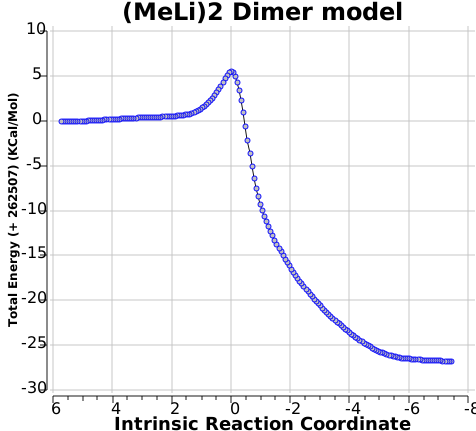
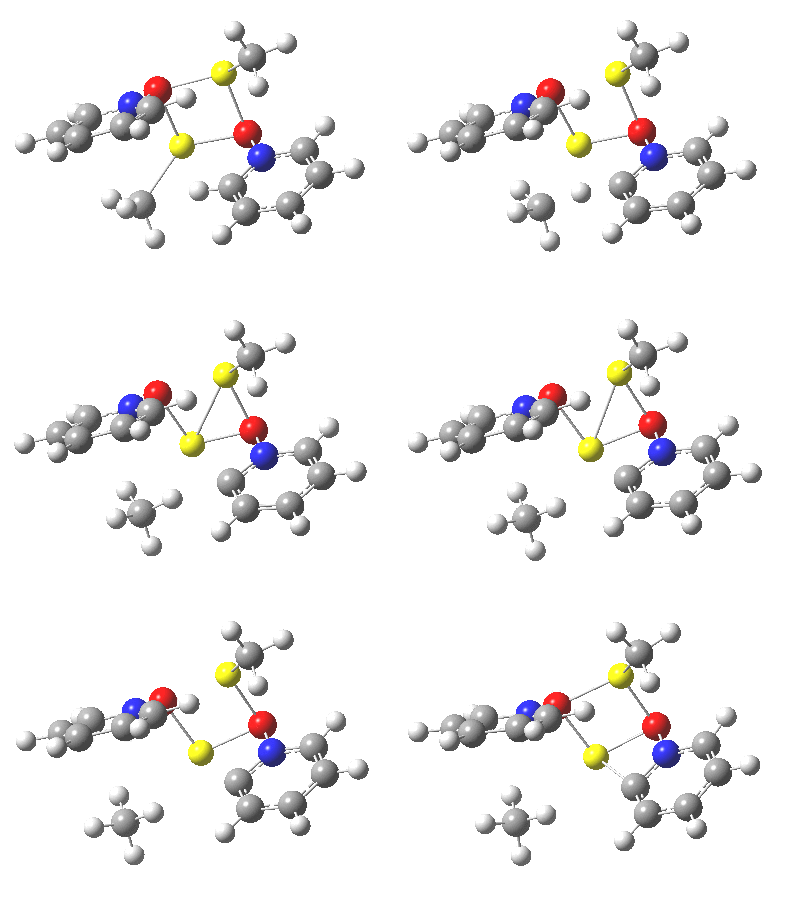
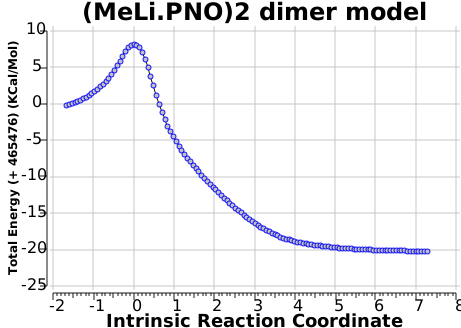
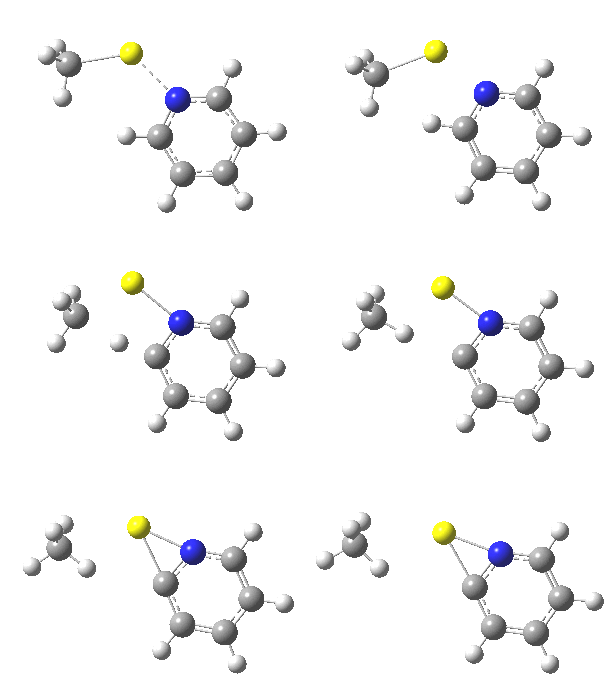
    Is this model robust? Let us try a dimeric (MeLi)2 model coordinated to one pyridine-N-oxide. The IRC[cite]10.6084/m9.figshare.651764[/cite] is very similar, but the initial barrier to proton transfer is lower.
    Li2 Li2

    Next, we have a model in which two molecules of pyridine-N-oxide (PNO) aggregate around two molecules of MeLi. This model is starting to resemble the tetramethylethylenediamine partially de-aggregated n-butyl lithium structure shown as WAFJAO above. The basic features[cite]http://doi.org/10042/24399[/cite] of the process remain intact, including the small barrier.
    Li2d Li2d

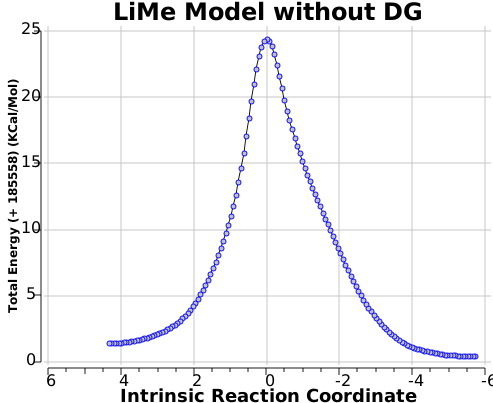
    Finally, I go back to the simple model, but with the directing group (DG) removed to give just pyridine. The profile[cite]10.6084/m9.figshare.653672[/cite] is the same, but the barrier is much larger. So perhaps both aggregation and coordination to a directing group help accelerate the reaction?
    Li0a Li0a

    So two reaction types, not normally associated with each other, turn out to have some intriguing similarities and an interesting difference.

  • Why is N,O-diphenyl hydroxylamine (PhNHOPh) unknown?

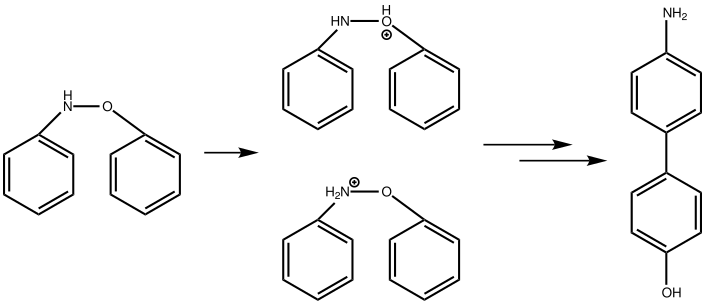
    If you search e.g. Scifinder for N,O-diphenyl hydroxylamine (RN 24928-98-1) there is just one literature citation, to a 1962 patent. Nothing else; not even a calculation (an increasing proportion of the molecules reported in Chemical Abstracts have now only ever been subjected to calculation, not synthesis). A search of Reaxys also offers only one hit[cite]10.1016/S0040-4039(01)90757-9[/cite] reporting one unsuccessful attempt in 1963 to prepare this compound. Again, nothing else. Yet show this structure to most organic chemists, and I venture to suggest few would immediately predict this (unless they are experts on benzidine rearrangements).
    PhNHOPh

    The eagle-eyed reader of this blog may have noticed my noting in previous posts that the benzidine rearrangement proper is normally promoted by double protonation, and that reaction via monoprotonation has a significantly higher barrier. So what are the corresponding predicted reaction barriers for PhNHOPh? I start in fact with catalytic monoprotonation. The calculations are at ωB97XD/6-311G(d,p)/SCRF=water (closed shell) level.

    System N-protonated O-Protonated
    Reactant  0.0  11.3
    TS N-O  7.3  17.4
    π-complex  2.1  6.0
    TS C-C  4.8  13.2
    Relative to N-protonated reactant, in kcal/mol.

    So it seems that even monoprotonation (on nitrogen) results in a very small ΔG298 barrier to the formation of a π-complex and its subsequent facile breakdown to form a C-C bond. I had noted in the earlier post that Ghigo and co-workers[cite]10.1002/ejoc.201001636[/cite] had found that with diprotonated diphenyl hydrazine, the resulting π-complex has some open shell (biradical) character. The calculations reported here on the monoprotonated system are done as closed shell, but any biradical character this might have will only serve to even further reduce the barriers seen in the table. So we may confidently conclude that even monoprotonated N,O-diphenyl hydroxylamine will rapidly rearrange. A follow-up investigation for the diprotonated route hardly seems necessary!
    But here is a challenge: if one were able to prepare PhNHOPh in thoroughly deprotic conditions, might it be isolable? There is precedent; the keto form of phenol can indeed be isolated under such conditions.[cite]10.1021/ja00951a064[/cite].

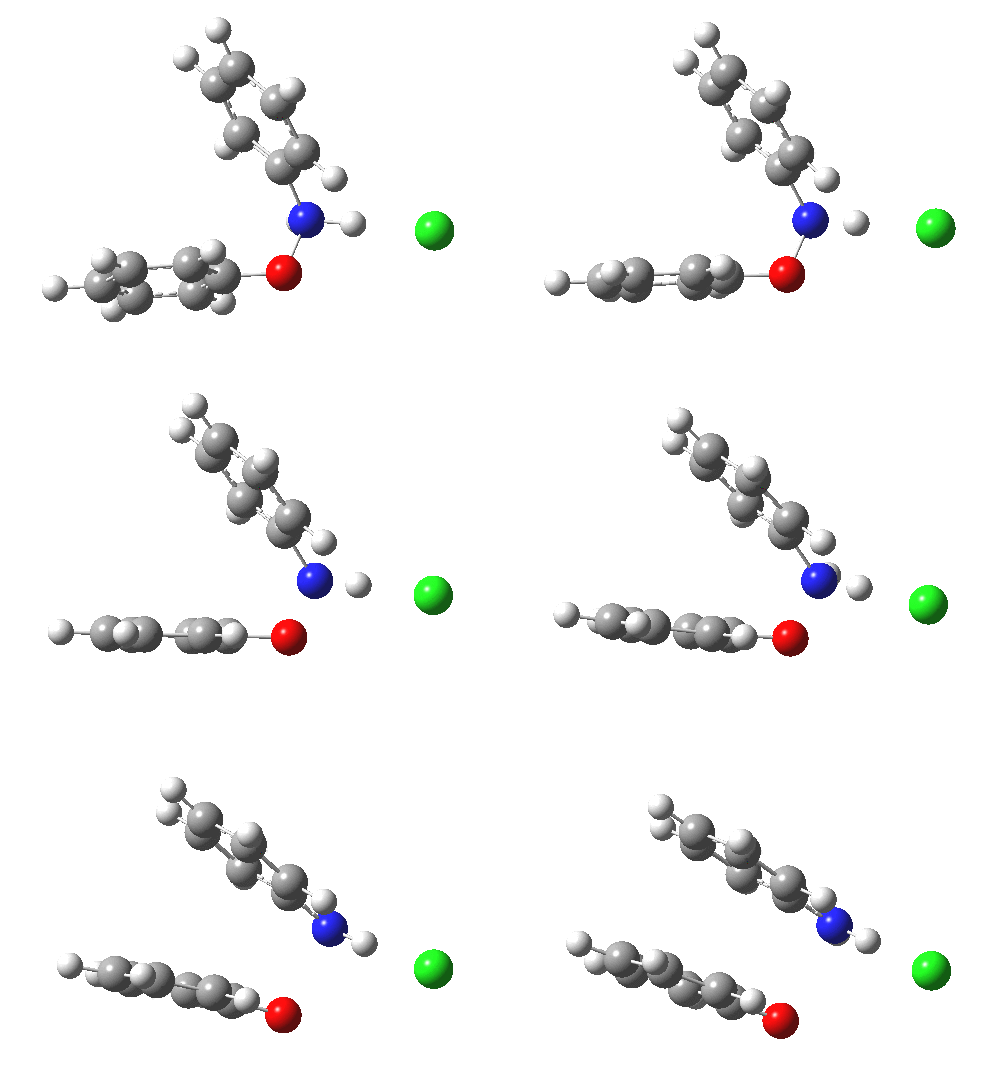
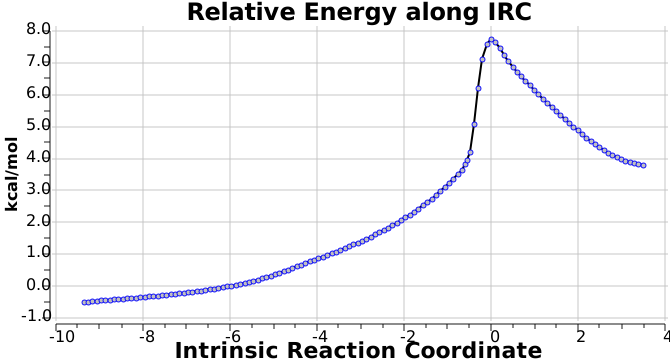
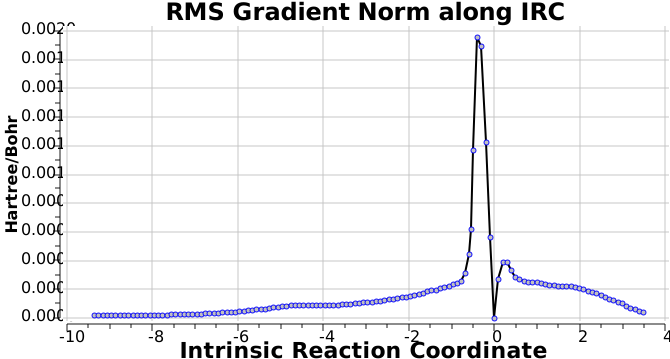
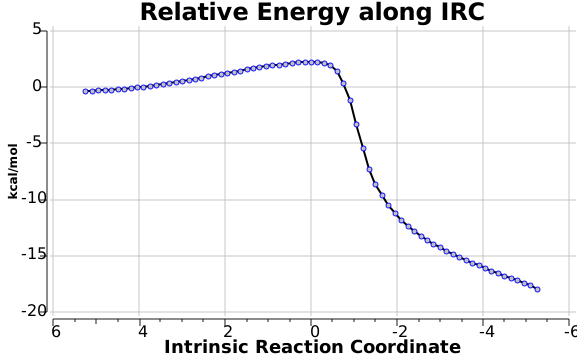
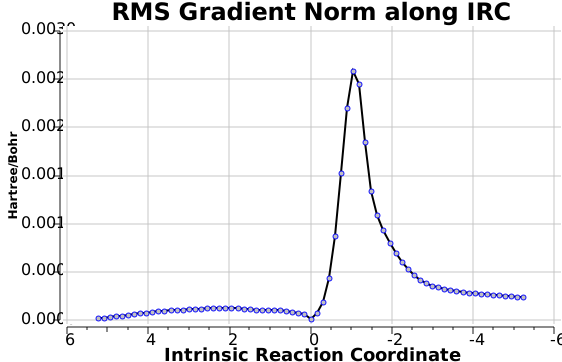
    Here are some intrinsic reaction coordinates to finish with. Firstly, for the formation of the  π-complex from N-protonated precursor:

    PhNH2OPh-NO
     PhNH2OPh-NO PhNH2OPh-NOG 

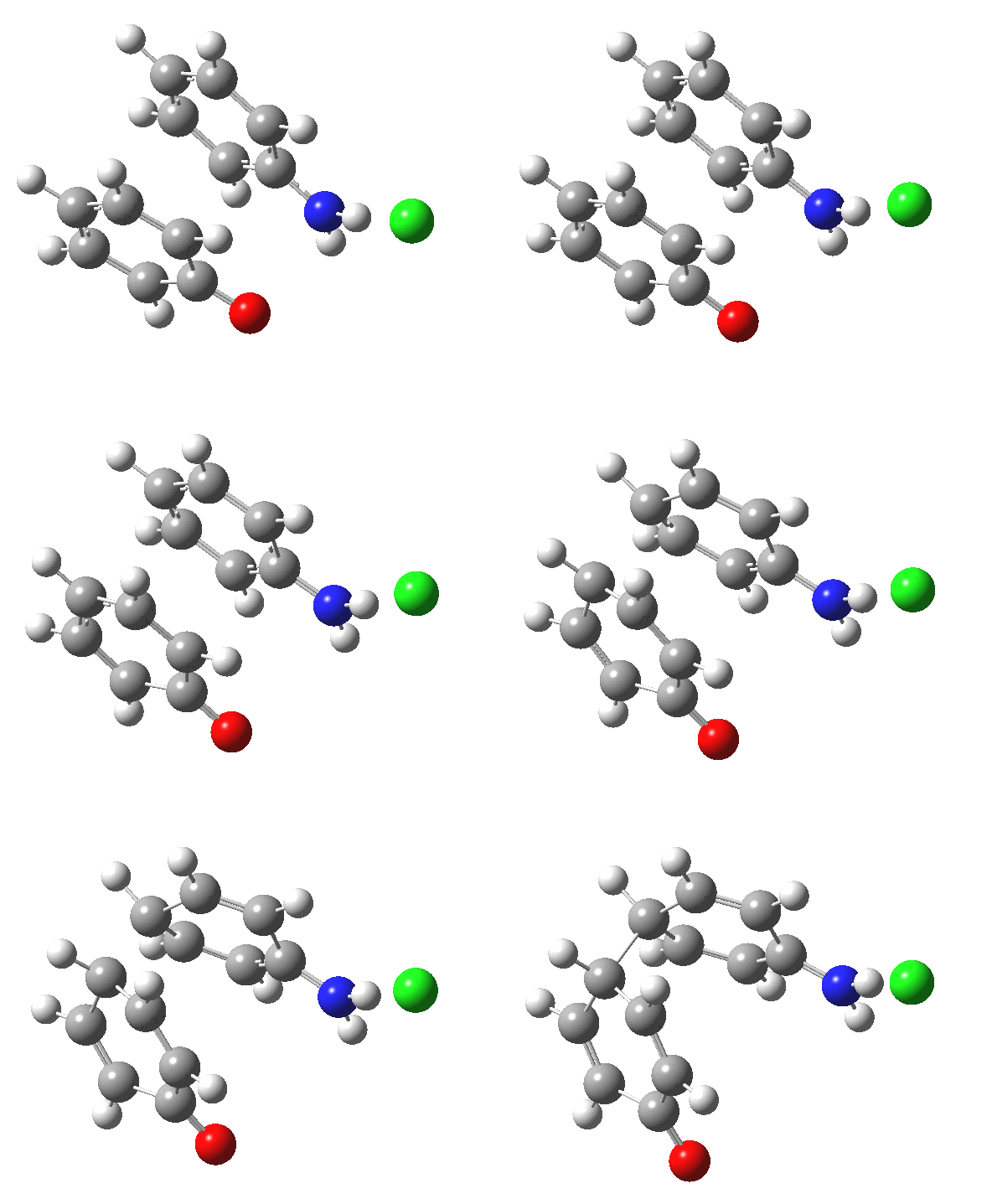
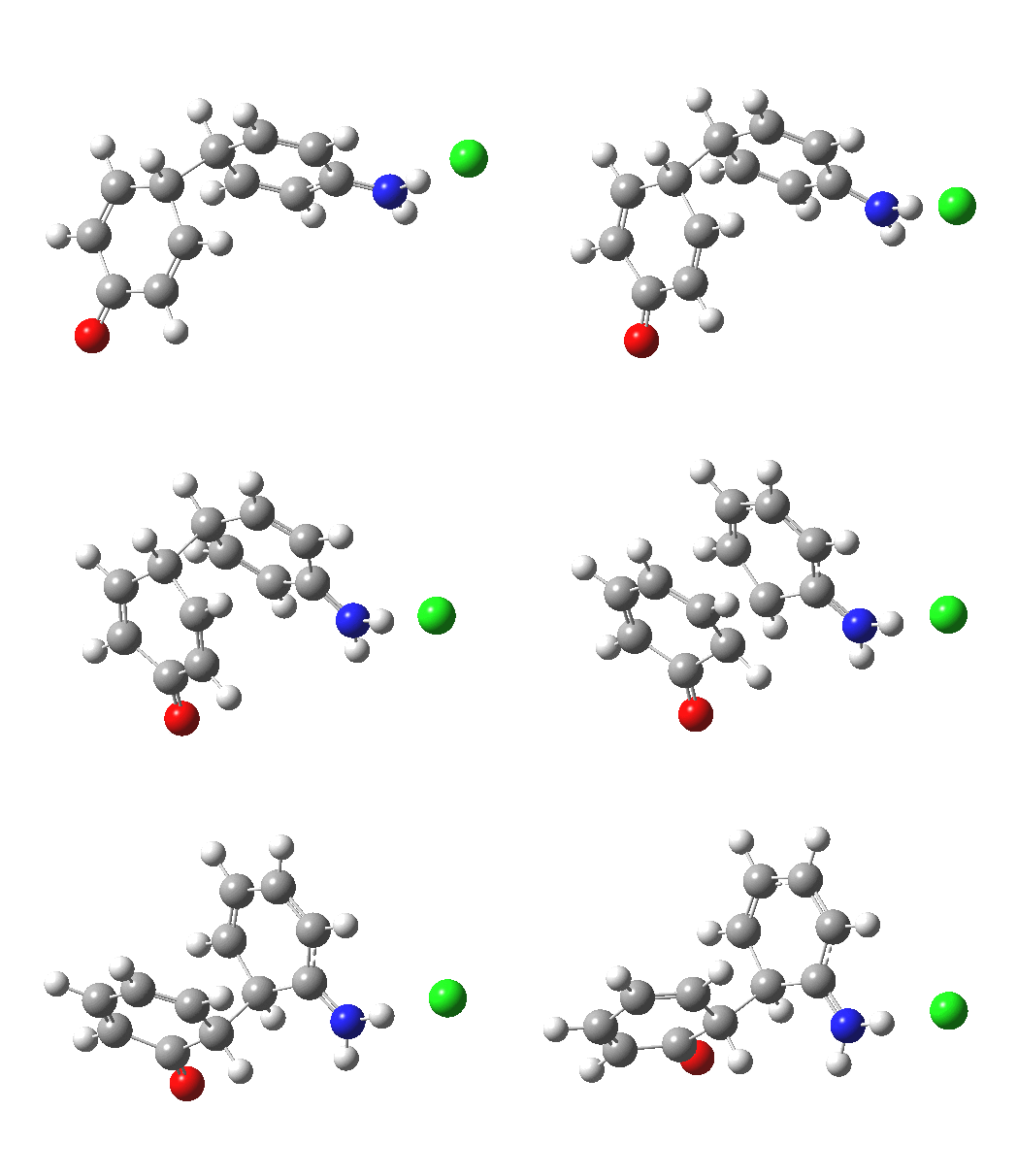
    Once formed, the  π-complex collapses readily to the 4,4′-coupled biphenyl. 

    PhNH2OPh-pi2p
     PhNH2OPh-pi2p PhNH2OPh-pi2pG 

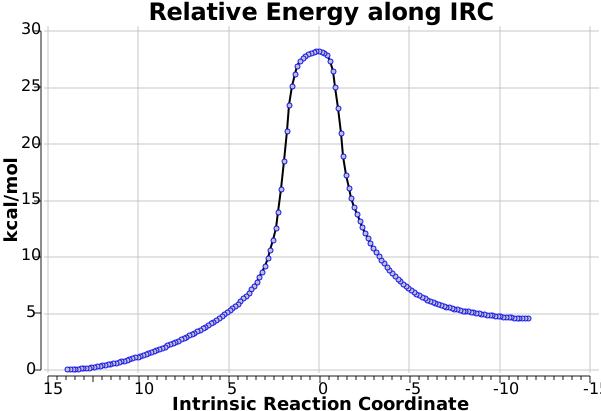
    There may be another pathway which collapses to the 1,1′-coupled biphenyl which I have not found yet. A [3,3] sigmatropic rearrangement converting the 4,4′ to the 1,1′-biphenyl is higher in energy, but still just about accessible thermally.

    PhNH2OPh-o2p
     
    PhNH2OPh-o2p
    PhNH2OPh-o2pG
     

    To end, here is a question. Could one systematically identify “gaps” in the distribution of known molecules; species which appear as if they should exist, but have never been reported? Of these, the majority will no doubt be absent from the record simply because they uninteresting. But some, as here, are absent because they are too unstable to exist, unless (extreme?) precautions are taken to remove the factors responsible for their instability (in this case, protons). Cyclobutadiene was one such famous example (stabilised by coordination to a metal). Certainly, computation nowadays can help identify conditions for how such molecules might be isolated.


    In contrast, PhNHSPh (N-Phenylbenzenesulfenamide) is a well known species[cite]10.1107/S1600536808019491[/cite].

  • The gauche effect: seeking evidence by a survey of crystal structures.

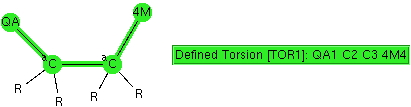
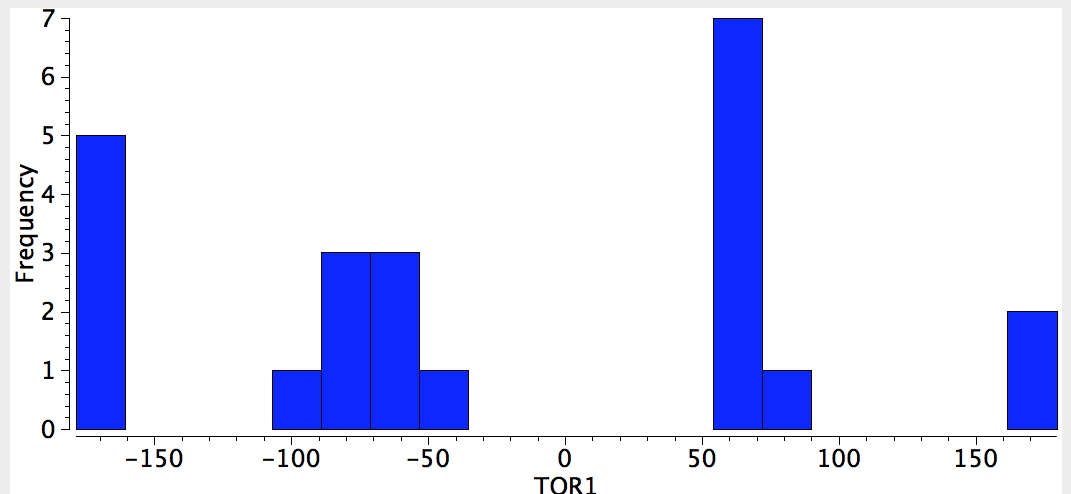
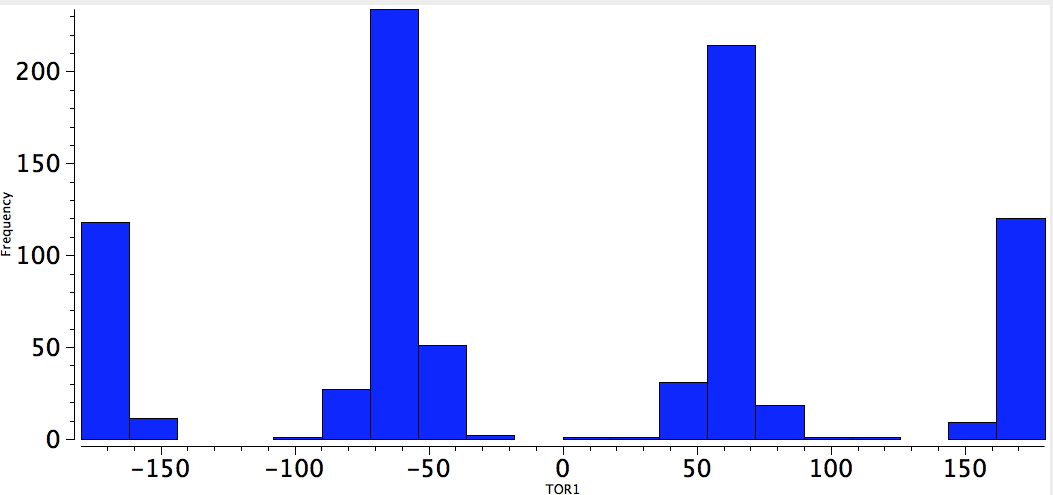
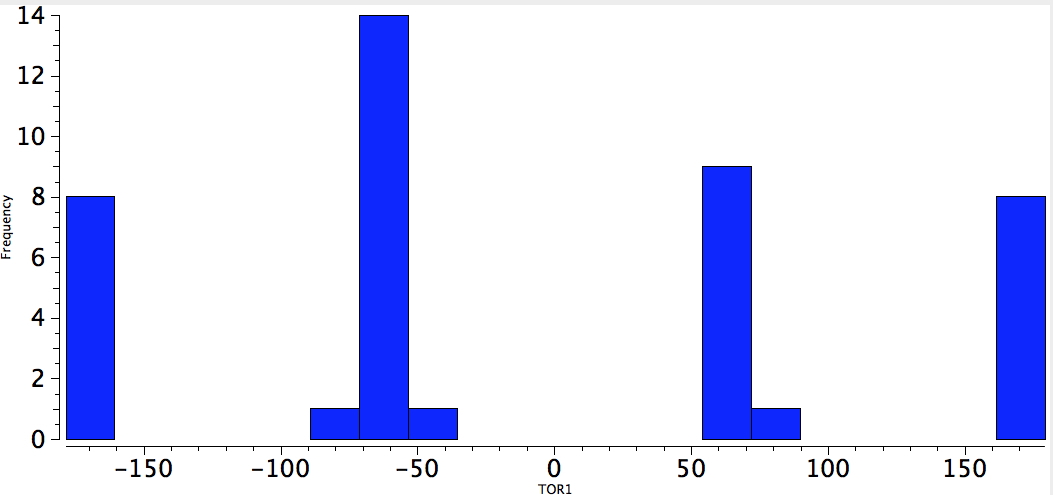
    I previously blogged about anomeric effects involving π electrons as donors, and my post on the conformation of 1,2-difluorethane turned out one of the most popular. Here I thought I would present the results of searching the Cambridge crystal database for examples of the gauche effect. The basic search is defined belowCCDC-search

    Here, we define a four-atom torsion (TOR1), the two central carbon atoms having two groups R which can be only H or C. These two carbons are also defined as acyclic. The restrictions of the search as defined above also include R-factor < 0.05, not disordered and no errors. These combine to reduce the number of hits significantly (although not dissimilar distributions are obtained for less restricted searches). Each search takes only a few seconds, and one can rattle through many permutations very quickly.

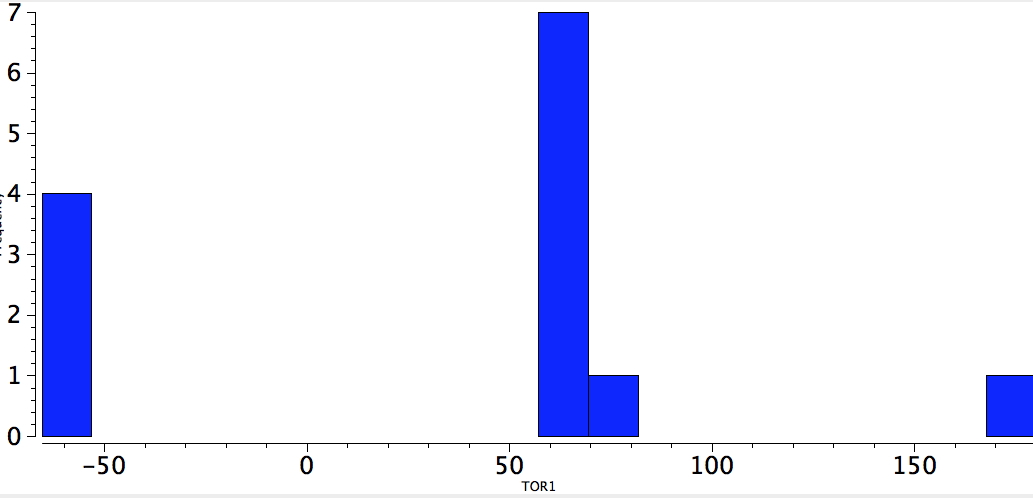
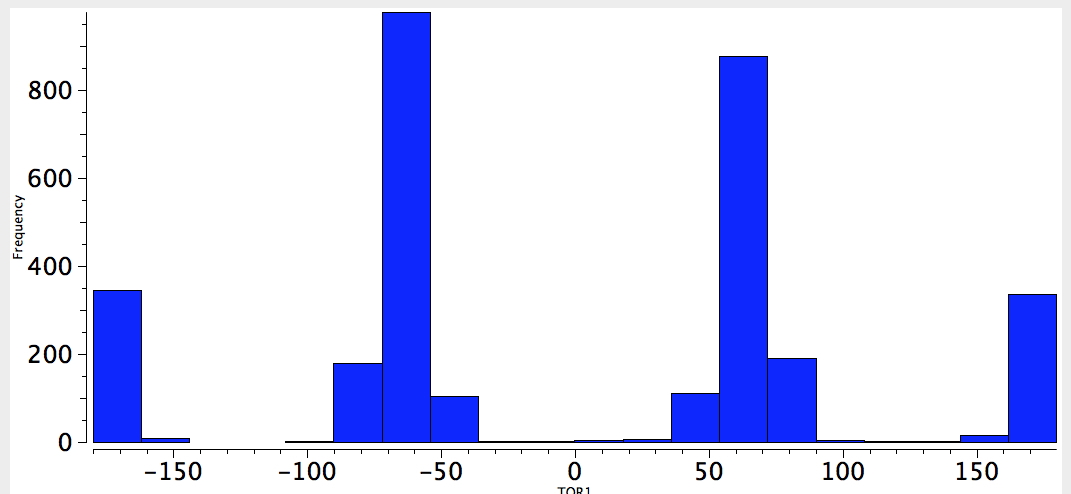
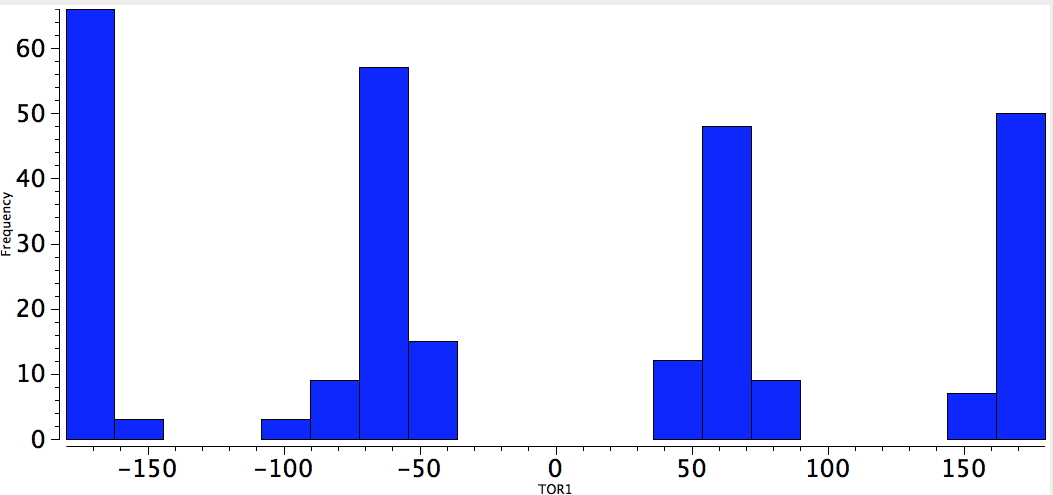
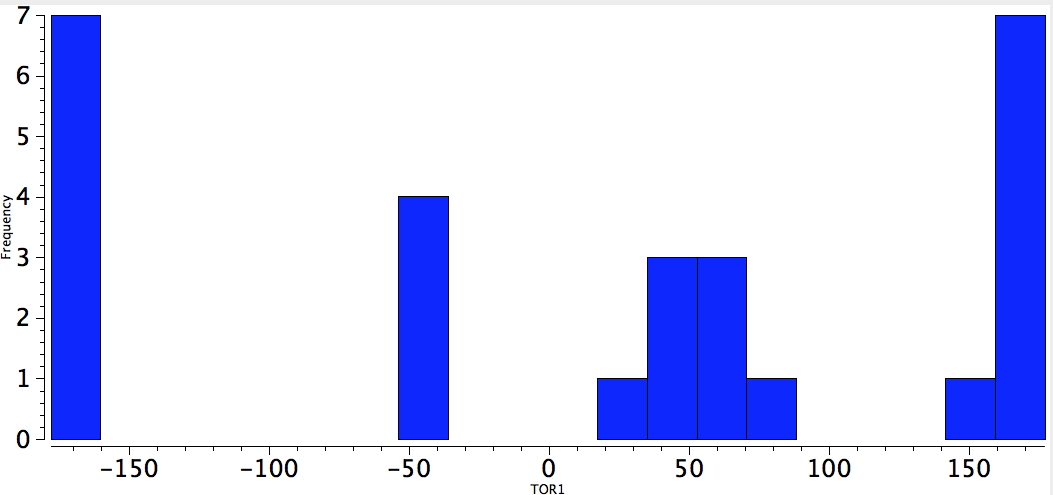
    So here come the results. First, QA=4M=F. All but one of the examples has a torsion in the region of 60°, the classic gauche effect!

    F-C-C-F
    F-C-C-F

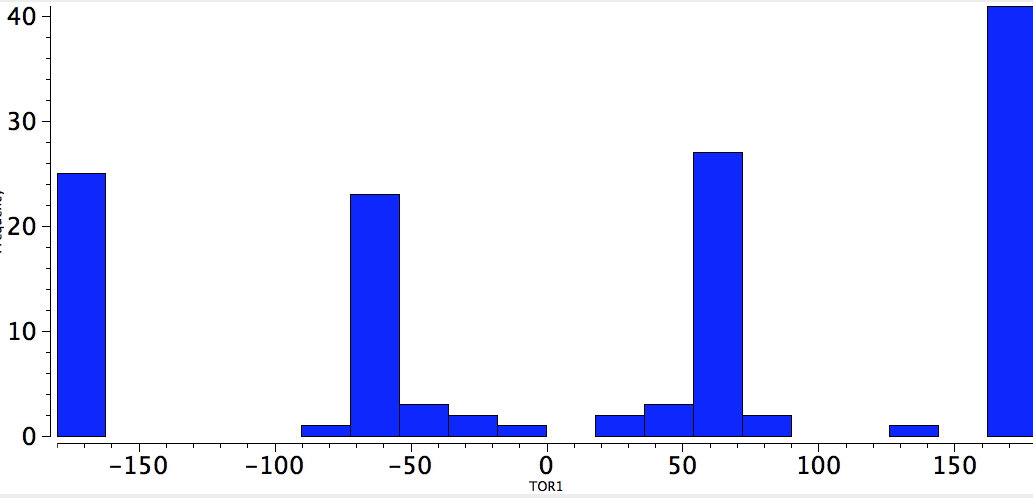
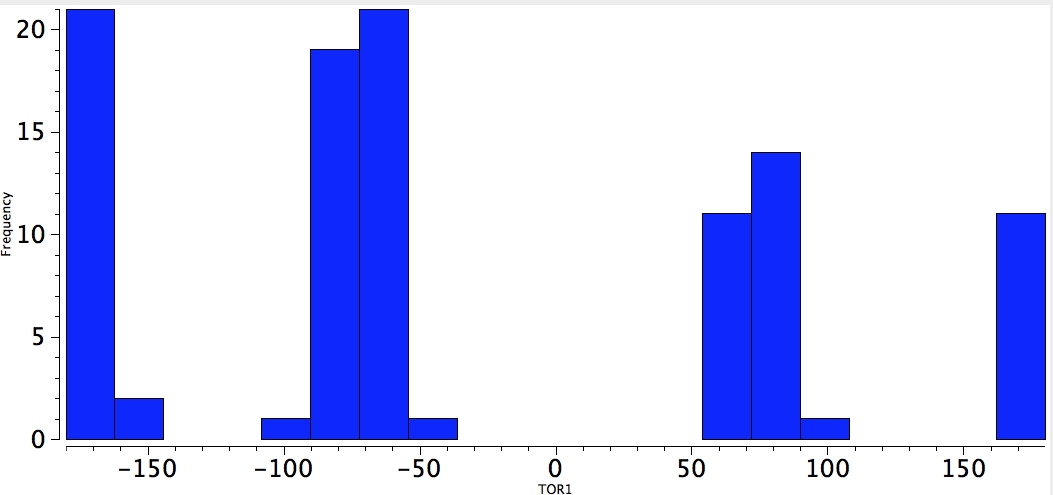
    Next, QA=O, 4M=F. Rather more hits, and the effect is almost as clear-cut. I should point out that the apparent "exceptions" to the gauche conformation may arise from structural restrictions, and each really would have to be inspected individually for the reasons (which I do not attempt here). 

    OCCF
    OCCF

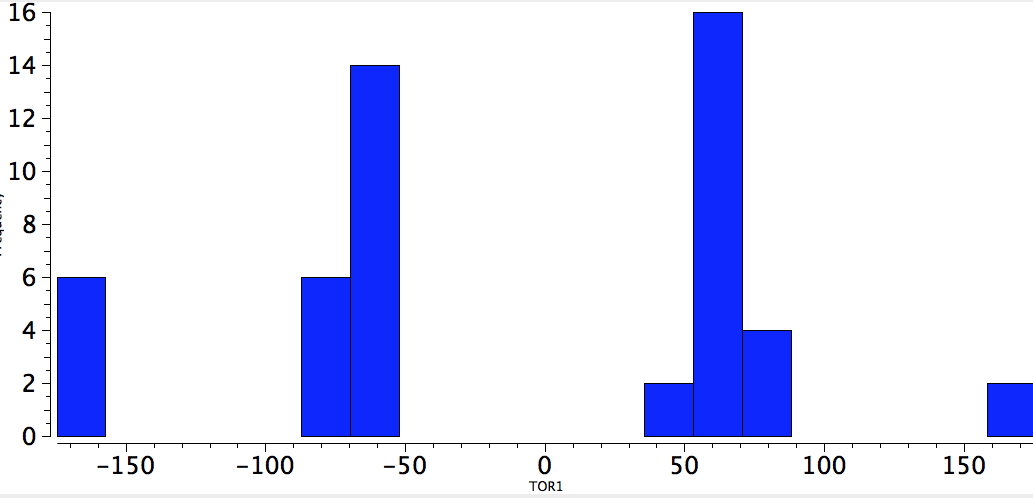
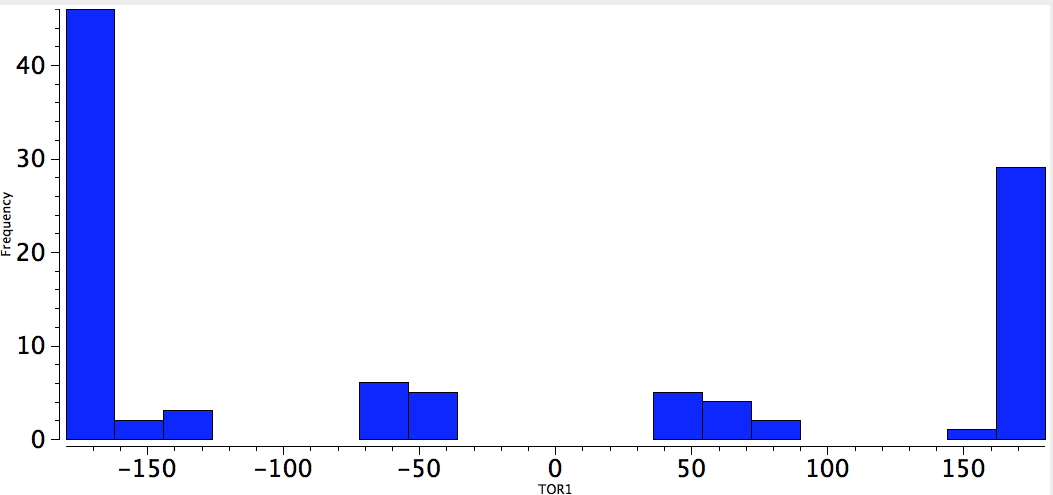
    With QA=4M=O,  one has many more instances. The effect is pretty convincing (it may be that hydrogen bonding may also control the conformation).

    O-C-C-O
    O-C-C-O

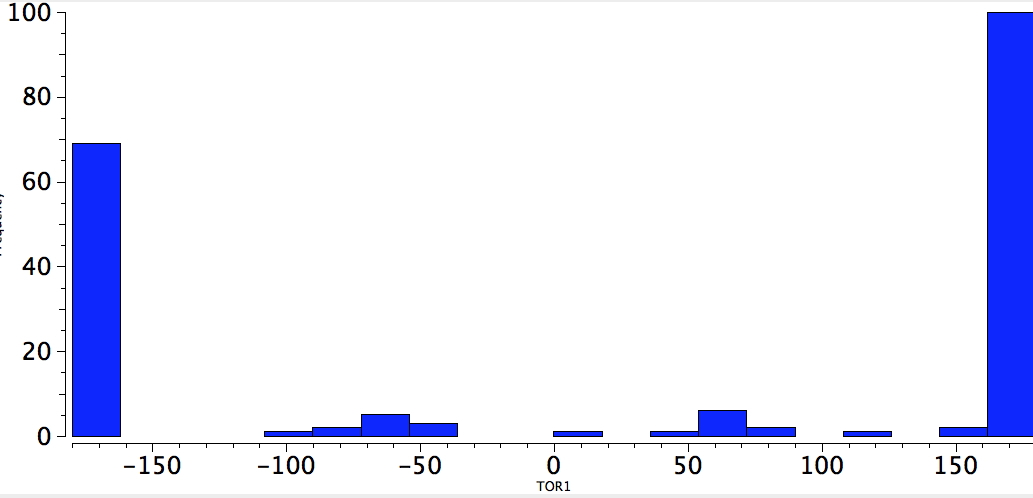
    Now for QA=4M=Cl. The distribution is slanted more to the anti conformation, but there are still quite a few gauche.

    Cl-CC-Cl
    Cl-CC-Cl

    With QA=4M=S, the conformations are now almost all anti; the gauche effect is no more! 

    S-C-C-S
    S-C-C-S

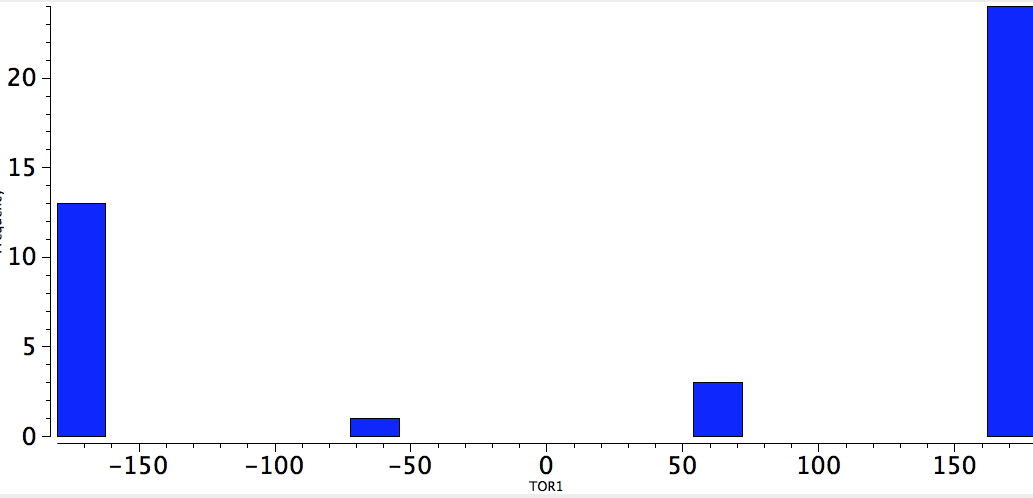
    And for QA=4M=Br, it has also almost vanished (there is only one instance for I, and that too is antiperiplanar).

    Br-C-C-Br
    Br-C-C-Br

    I now return to an earlier post in which I speculated that a cyano group might participate in the anomeric effect. Well here it is in the gauche effect; QA=CN, 4M = any of N,O,F,Cl,S. Quite a few gauche orientations for this pseudo-halogen!

    Neg-C-C-CN
    Neg-C-C-CN

    Another group that can act as a powerful acceptor of electrons from a donor is QA=N(Me)3+.. With 4M= N, O, F, Cl, here  the population of gauche conformers is large. QA=CF3 is a similar group.

    Neg-C-C-NMe3
    Neg-C-C-NMe3
    Neg-C-C-CF3
    Neg-C-C-CF3

    One can envisage other combinations. Thus QA= C=C, 4M = any of  N, O, F, Cl. An alkene seems one of the more powerful gauche effect participants!

    alkene-C-C-Neg
    alkene-C-C-Neg

    And alkynes, perhaps slightly less so.

    Alkyne-C-C-Neg
    Alkyne-C-C-Neg

    What about metals (QA = any metal, 4M = any of N, O, F, Cl, S). Well, not particularly biased either way, but clearly one in which the identity of the metal may matter.

    Metal-C-C-electronegative
    Metal-C-C-electronegative

    I should end with inverting the model. If QA is electropositive (any group to the left of carbon, or below it in the periodic table) and 4M is electronegative, than they align almost exclusively anti-periplanar and not gauche. But notice how relatively few examples there are.  Synthetic chemists, please make more such molecules!

    Electropositive-C-C-Electronegative
    Electropositive-C-C-Electronegative

    If you thought the gauche effect was restricted to just a few molecules, think again!


    Acknowledgments

    This post has been cross-posted in PDF format at Authorea.

  • How to tame an oxidant: the mysteries of “tpap” (tetra-n-propylammonium perruthenate).

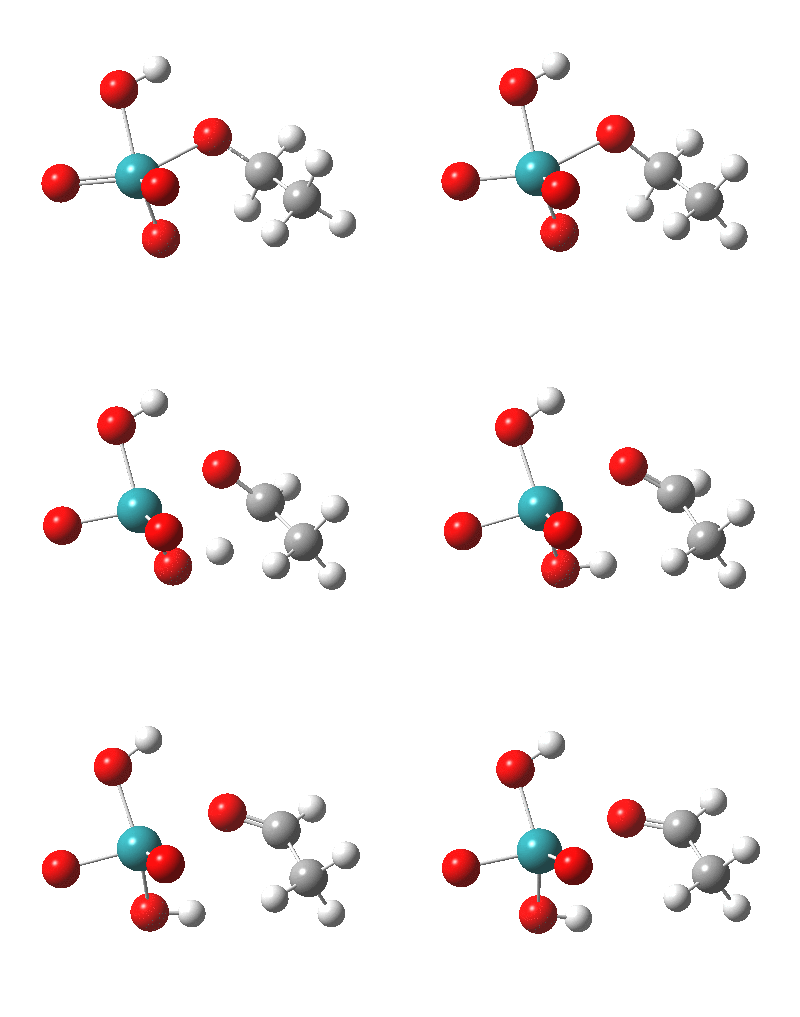
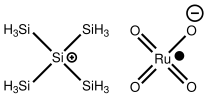
    tpap[cite]10.1055%2Fs-1994-25538[/cite], as it is affectionately known, is a ruthenium-based oxidant of primary alcohols to aldehydes discovered by Griffith and Ley. Whereas ruthenium tetroxide (RuO4) is a voracious oxidant[cite]10.1139/v76-304[/cite], its radical anion countered by a tetra-propylammonium cation is considered a more moderate animal[cite]10.1021/jo00038a009[/cite]. In this post, I want to try to use quantum mechanically derived energies as a pathfinder for exploring what might be going on (or a reality-check if you like). 


    tpap

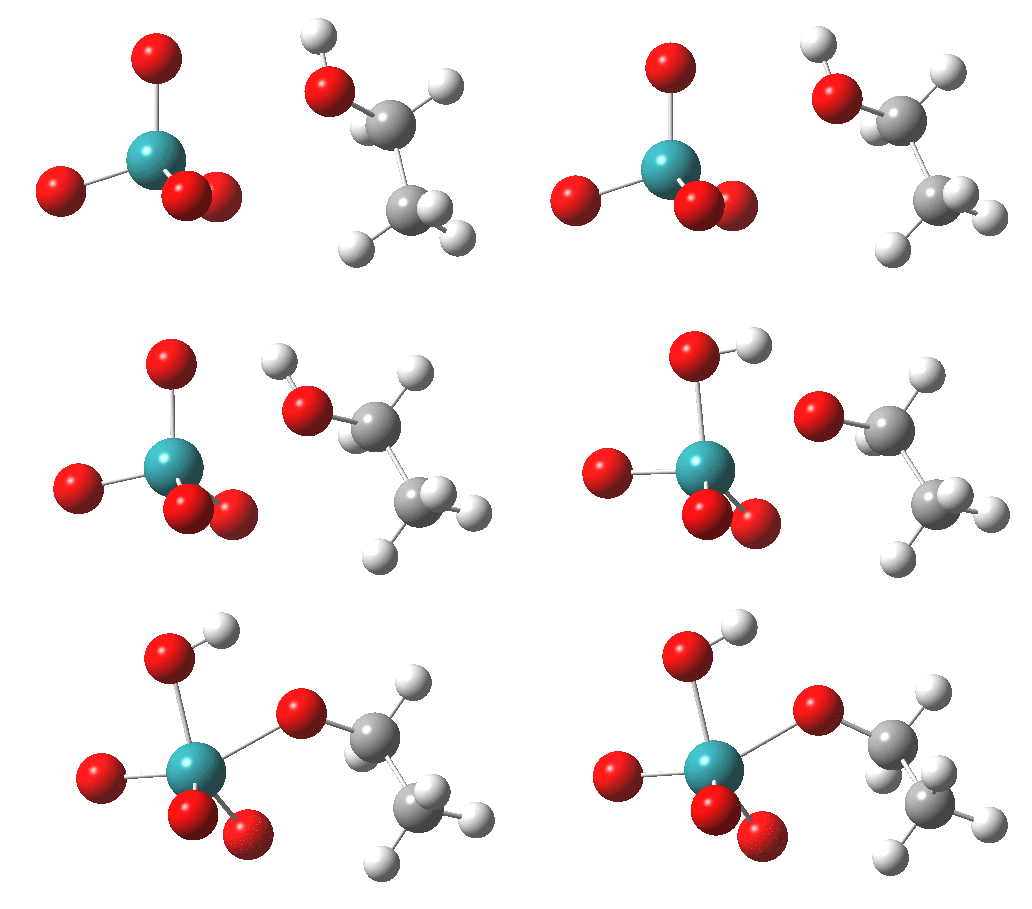
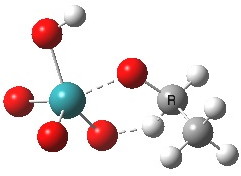
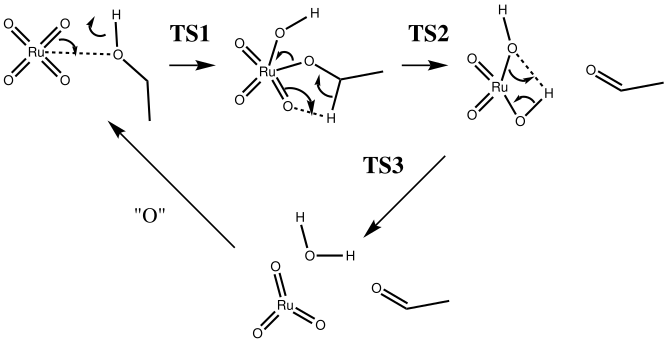
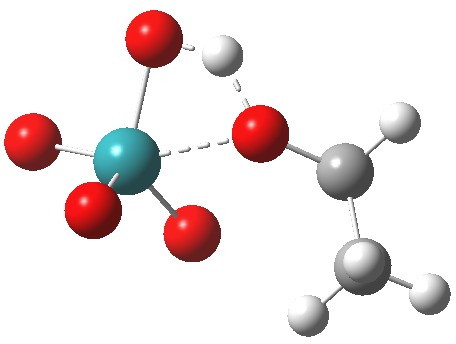
    A basic (i.e. simple) mechanism for oxidation of an alcohol by RuO4 is shown above. Here I reality-check this mechanistic pathway with the help of ωB97XD/Def2-SVPP/SCRF=dichloromethane calculations. I should point out that since the mechanism is going to involve ion-pairs, it is particularly important to adopt a solvent=corrected model from the outset[cite]10.1021/jo100920e[/cite]. TS1 is the transition state for addition of the alcohol to the metal, a process which involves a synchronous proton transfer for the singlet electronic state.

    TS1. Click for 3D
    TS1 as a singlet. Click for 3D
    tpap-TS1

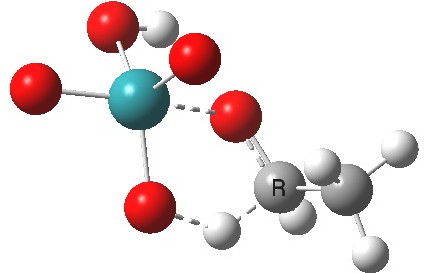
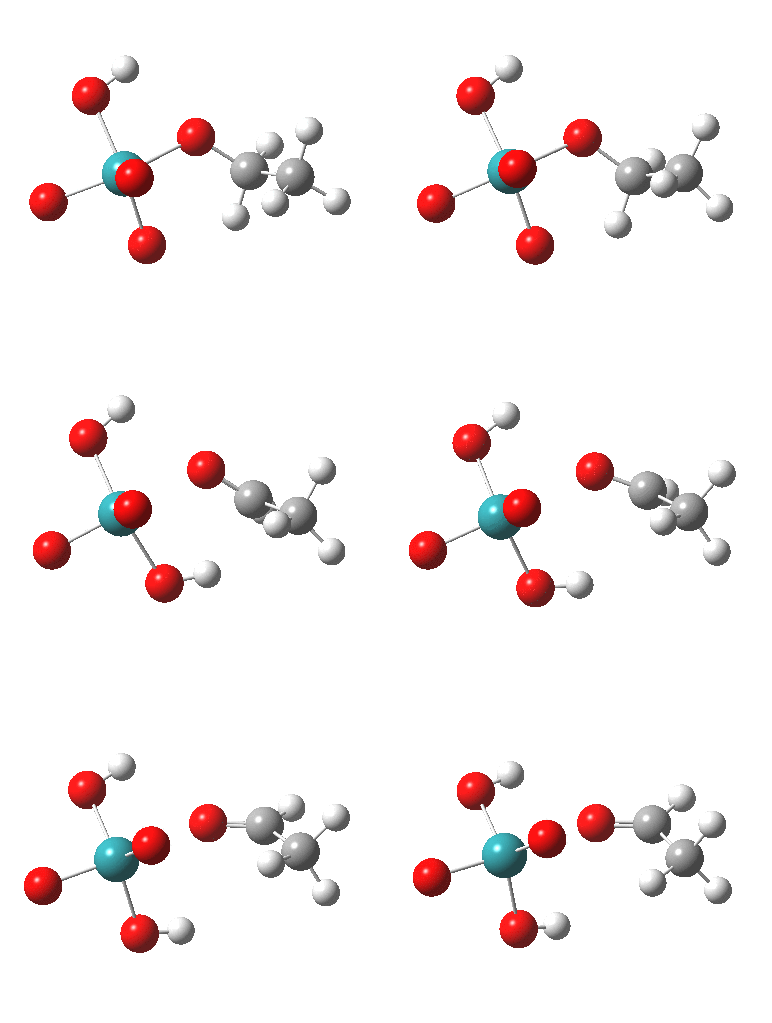
    Next comes TS2, which involves a hydride abstraction with concomitant reduction of the oxidation number of Ru(VIII) to Ru(VI). It is higher in free energy than TS1 by 1.1 kcal/mol. The barrier corresponds to ΔG298 37.1 kcal/mol. The process completes by low energy elimination of water (TS3) from the Ru(VI) species to give RuO3, which either undertakes further oxidisation to give RuO2, or might instead be re-oxidized back to RuO4 by oxygen (or an amine N-oxide) to complete a catalytic cycle.

    TS1. Click for 3D
    TS2 as a singlet. Click for 3D
    tpap-TS2
    TS2 as a triplet. Click for 3D
    TS2 as a triplet. Click for 3D
    RuO4-ts2-triplet

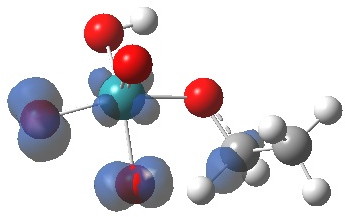
    Right away, we have a problem; ΔG298‡ 37.1 kcal/mol is too high to be a realistic pathway, and yet RuO4 is a known oxidant[cite]10.1139/v76-304[/cite]. One way out is to see if the triplet state energy of this system might be lower. Whilst the triplet-state reactant is higher in energy (by 27.5 kcal/mol) , TS2  is lower and corresponds to a reduced barrier of ΔG298 28.2 kcal/mol. Better, but a (small?) question mark still remains, since one would really expect the barrier to be ~20 kcal/mol or less for a “voracious oxidant”. Perhaps the incursion of triplets makes it indiscriminate? The spin density at the transition state is shown below, it extends across both oxygen, carbon and Ru.

    ts2-triplet-spin

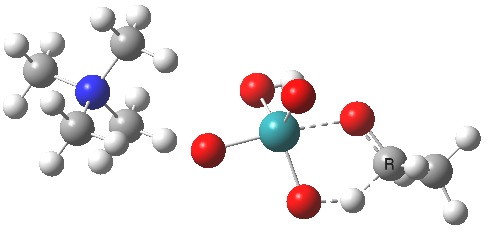
    The tpap modification to this process is to use Ru(VII) in the form of a radical anion partnered with a quaternary ammonium cation. The basic reagent is therefore an ion-pair, hence the solvation approach mentioned earlier is needed to describe the energetics of such a species. The R alkyl groups here are modelled as methyl rather than propyl.

    tpap1

    TS2 for this radical-ion-pair is shown below, and it has ΔG298 30.8 kcal/mol, 2.6 kcal/mol higher than for the un-moderated reagent. In this case, the higher-spin quartet states are higher  in energy (by at least ~7.9 kcal/mol) and so do not participate. 

    tpap-ts2

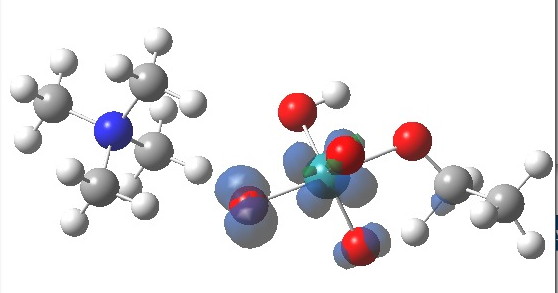
    The spin density for tpap-TS2 also reveals it to be concentrated on Ru and one oxygen. Little is transferred to the ethanol, and we might infer then that this TS corresponds to transfer of two-electrons from the ethanol to the Ru-oxidant. This corresponds to Ru(VII) being reduced to Ru(V), i.e. a 2-electron oxidation/reduction. Unfortunately, an attempt to chart the reaction across a whole reaction coordinate (IRC) failed with SCF-convergence problems, which might suggest a change in the spin-configuration during this process. A more sophisticated multi-configurational approach might be needed to properly establish the electron dynamics of what is turning out to be a more complex reaction than first seemed.

    tpap-ts2-spin-density

    It is time to sum up what might have been learnt.

    1. A reality check on the energetics of a viable-looking mechanistic route can establish whether such a mechanism does have a low enough free-energy to be viable at (in this case) room temperatures.
    2. In fact, observing that our initial mechanism had too high an energy led us to discover a triplet-state path that was significantly lower in energy. However, even this is still a bit too high.
    3. The tpap-variation of the oxidant, which enforces a doublet-state upon the mechanism,has a barrier which appears to be similar to the triplet-state RuO4 mechanism. This too may be too high in energy. At least we can probably rule out a quartet-state mechanism.
    4. And so it seems appropriate to end here by noting that experimentally[cite]10.1021/jo00038a009[/cite] the kinetics of tpap oxidations appear to be autocatalytic. The rate speeds up once some RuO3 (or RuO2) has been formed, and this suggests that perhaps a binuclear system containing two Ru atoms is a faster oxidant than the mononuclear variety. This reminds of the mechanism for Sharpless perepoxidation, where two metal centres were needed to control the stereochemistry.
    So after all of this, we have not really found an explanation of why tpap is a more selective and moderate oxidant than the rapacious RuO4. But perhaps this is because more complex models with more than one Ru-atom need to be constructed. This would in turn allow the oxidative hydride abstraction from the alcohol to occur in a larger (7) ring transition state, which is always the preferred geometry for such transfers. If I find such, I will report back here.

  • Secrets revealed for conjugate addition to cyclohexenone using a Cu-alkyl reagent.

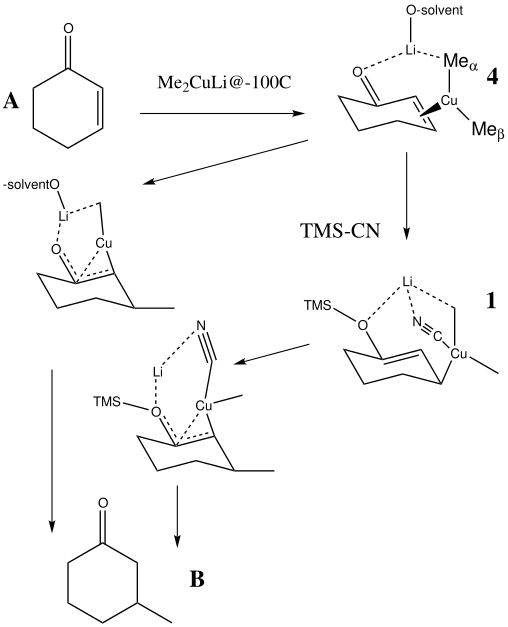
    The text books say that cyclohexenone A will react with a Grignard reagent by delivery of an alkyl (anion) to the carbon of the carbonyl (1,2-addition) but if dimethyl lithium cuprate is used, a conjugate 1,4-addition proceeds, to give the product B shown below. The standard explanation is that the alkyl copper is a “soft” nucleophile attacking the soft conjugate carbon, whereas the alkyl magnesium is a “hard” nucleophile attacking the hard carbonyl carbon. Is this the best explanation? 

    In 2007, one of those wonderfully simple experiments was done[cite]10.1021/ja067533d[/cite]. The dimethyl lithium cuprate reagent (dissolved in THF) was injected into an NMR sample tube at -100°C containing A, and the spectrum measured immediately. The species identified as 4 (the numbering as used in the reference) has two 1H methyl resonances[cite]10.1021/ja027744s[/cite] at ~ -0.04 to – 0.23 ppm (assigned to Meβ) and -1.08 to -1.11ppm (assigned to Meα), and the copper coordinates to the alkene as a π-complex. If TMS cyanide is added, 4 is immediately converted to complex 1, in which the π-complex is replaced by a simple C-Cu σ-bond. Compound 4 upon heating gives B, whilst 1 gives the silyl enol ether of B.
    How does this match quantum simulation[cite]10.1021/ja0675346[/cite]? First, the 1H NMR result for 4 (at the wB97XD/6-31G(d,p)/SCRF=THF level and with the lithium coordinated to an ether solvent) comes out as -1.4 ppm (Meα) and -0.31 ppm (Meβ). The 13C is 76.4 and 60.6 ppm for the vinyl carbons (positions 3 and 4, obs) and 64.5/56.7 (calc). These latter values are affected by spin-orbital coupling to the metal, which can shift the values by up to about 10 ppm[cite]10.1021/np0705918[/cite], but the relative values are also in good agreement. So the reaction must proceed starting from this π-copper complex.

    The IRC reveals a concerted transfer of  Meβ to the conjugate 4-position of B, with a reasonable barrier to reaction which indicates that on warming to room temperatures, the complex 4 will readily react. Formally at least, this corresponds to reductive elimination from the Cu(III) species to form a Cu(I) complex (in which however the metal now coordinates to the enol double bond rather than the alkene).

    IRC for methyl transfer. Click for 3D transition state.

    I will deal with the case of methyl transfer from 1 in a later post. With 4, we can directly see that the origins of conjugate 1,4-addition an α,β-unsaturated ketone are that the Cu reagent forms a π-complex to the alkene, which positions one of the alkyl groups on the metal in the ideal position to attack in conjugate manner. Regarding the different behaviour of the magnesium Grignard reagent, it boils down to asking why it does NOT form a π-complex in this situation (I would note here that Mg-π-complexes are indeed known).

  • Trimethylenemethane Ruthenium benzene

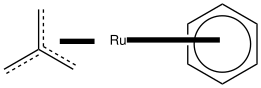
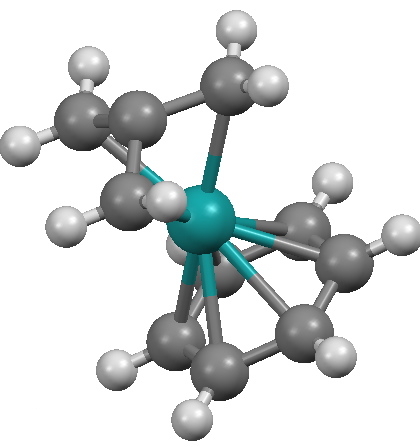
    Every once in a while, one encounters a molecule which instantly makes an interesting point. Thus Ruthenium is ten electrons short of completing an 18-electron shell, and it can form a complex with benzene on one face and a ligand known as trimethylenemethane on the other[cite]10.1039/C39910001457[/cite].

    This four-carbon molecule has been known for a long time[cite]10.1021/ar50055a003[/cite] as a highly reactive intermediate, and as with cyclobutadiene (another 4π-electron species), it can be greatly stabilised (and crystallised) by coordination to a metal. Some twenty examples are known, and one is shown below.

    JODLIX. Click for 3D.

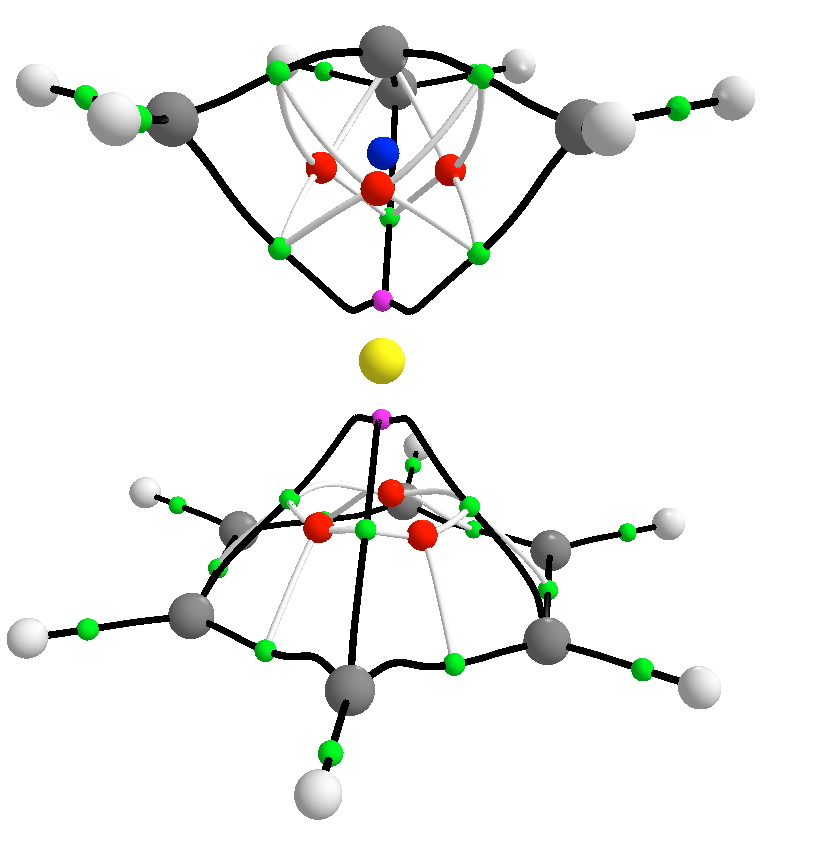
    Why might it be interesting? Because the trimethylenemethane has four carbons, of which the closest to the metal is the central one (2.03Å). The three outer distances are longer at 2.19Å. If one were to (formally) draw a bond from the metal to the central carbon atom, that atom would become what is known as hemispherical, i.e. all four ligands would be contained in a single hemisphere. This molecule is however normally represented with bonds only to the peripheral carbons, and with no bond to what is after all the shortest of the four distances! 

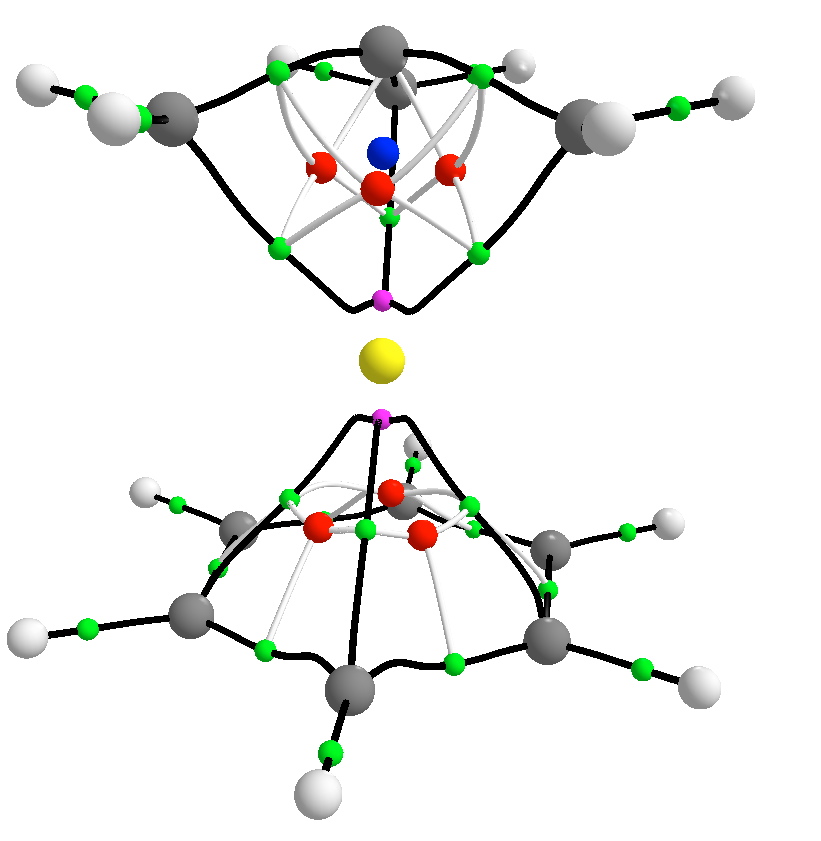
    A QTAIM analysis gives the same answer. Only three bond-critical points are found in the topology of the electron density (red), and at the centre where one might have expected a Ru-C bond, one finds in fact a cage-critical point (blue). Of course, another way of looking at the molecule is that the trimethylenemethane simply contributes four electrons to the valence shell of the metal without trying to partition these into bonds. These four electrons, together with six from the benzene ligand, complete the 18-electron ruthenium shell.

    So the take home message is that whilst the concept of discrete two-centre bonds still has its uses, this little molecule reminds us that bonds can be slippery customers. The common practice in most computer codes that represent molecules, of joining up the shortest contacts to form “bonds”, would lead us in this instance to hemispherical carbon. The consensus seems to be that this molecule does not exhibit this.


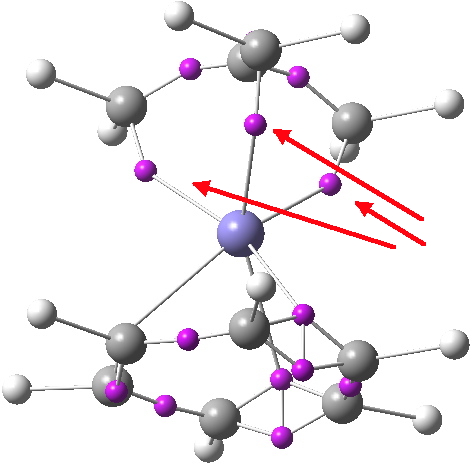
    POSTSCRIPT:  An  ELF analysis of the related Iron complex is shown below. It too shows three disynaptic basins for the three peripheral  C-Fe “bonds” (red arrows), and none for the central one. The total basin integration for these three is  4.82e, a bit more than the nominal  4-electron ability of the ligand. 

    Click for 3D
  • Alkene metathesis springs a surprise.

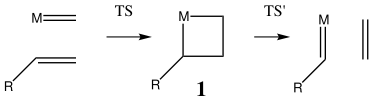
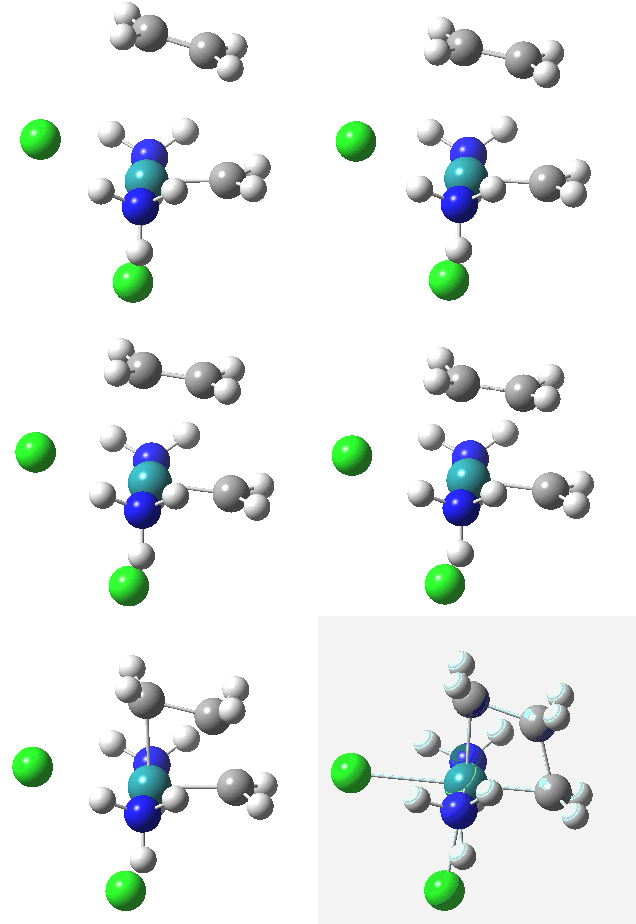
    Alkene metathesis is part of a new generation of synthetic reaction in which a double C=C bond is formed from appropriate reactants where no bond initially exists (another example is the Wittig reaction), with the involvement of a 4-membered-ring metallacyclobutane ring 1 (again, very similar to the Wittig). I thought it might make a good addition to my collection of reaction mechanisms and so as the first step I set about locating the transition state (TS or TS’) for the reaction, using in this case a model for Grubbs’ catalyst. I have located a fair few transition states in my time, and was frankly not expecting a surprise. This is the story that showed otherwise …

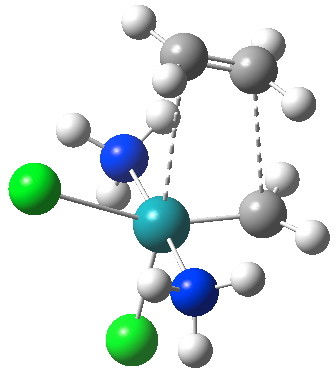
    The reaction involves the formation of a C-C bond, and one can normally rely on that bond length being in the range 2.0 – 2.3Å. Thus the thermal 2+2 cycloaddition of two ethenes can have a C-C length of 2.0Å, albeit accompanied by a fascinating trapezoidal geometry. My initial thought was that this reaction might be similar. Using as the metal Ru (the one deployed for the Grubbs catalyst) the hunt proved to be unusual difficult. Eventually, it emerged (ωB97XD/Def2-SVPD/SCRF=dichloromethane) as shown below (I have deployed simple ammine ligands as replacements for the usually used pyridine, and chlorine around the metal; at this stage the subtleties of steric and electronic tuning of the catalyst are not needed). 

    Transition state for alkene metathesis. Click for 3D.

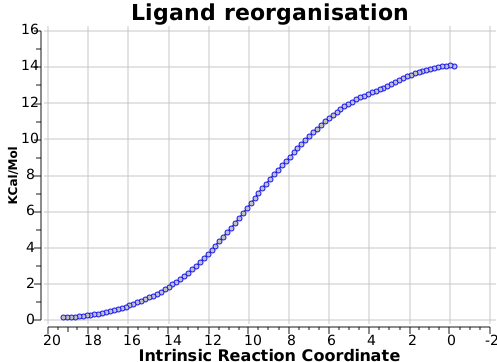
    The C-C bond is 3.0 Å, well outside the normal limit of forming C-C bonds. Indeed, at this length it has hardly started to form at all (neither has the Ru-C bond, at 3.4Å). So conventionally one would conclude it must be an early (very early) transition state, and such would also have a very small barrier to reaction (thus the barrier for cycloaddition between osmium tetroxide and propene is < 1 kcal/mol for an Os...O length of 2.36Å) But no, the IRC shows the barrier is around 14 kcal/mol (quite reasonable for a thermally facile reaction).

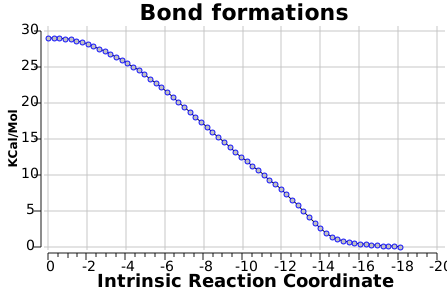
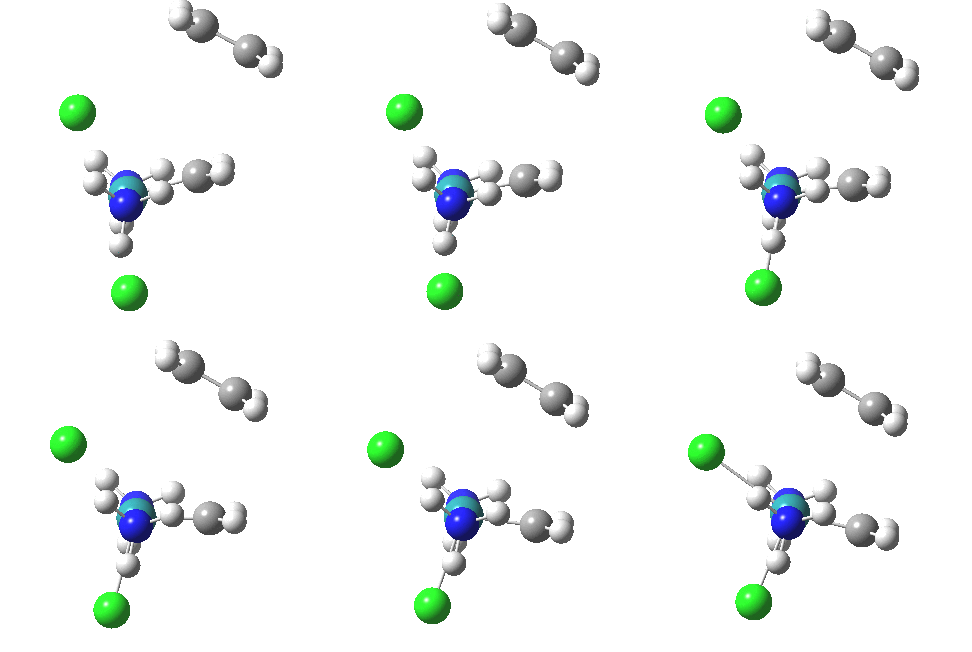
    The IRC reveals all. Put simply, the initial Ru complex has a trigonal bipyramidal geometry. Such a shape has no free ligand site large enough to accommodate an incoming alkene. A free site can be however generated by changing the metal coordination to square pyramidal. So the initial approach of an alkene plays that role, by effectively repelling the Cl and Ru=CH2 ligands into the square pyramidal geometry. This process by the way is not dissimilar[cite]10.1021/ed083p336.2[/cite] to pseudorotation in PCl5. No C-C bond formation can happen whilst this geometrical reorganisation takes place (another example of high barriers induced purely by changes in bond angles is atropisomerism in taxol).

    Reorganisation of ligands up to TS Formation of bonds after TS

    It is only after the transition state is passed that the bond formation can start to take place. So this reaction takes place in two very distinct stages, a reorganisation of the coordination around the metal, and then bond formation. Why might this be interesting? Well, because designing a better catalyst requires knowledge of the intrinsic reorganisations involved, and the order in which they happen. One might imagine that such two-stage behaviour in catalysts is in fact not that unusual.


    Several ruthenium metallacyclobutanes have been isolated as crystalline solids. One example is shown below.

    A ruthenium metallacyclobutane. Click for 3D.

    Another example is the carbonylation of methyl manganese pentacarbonyl, which I will cover in a future post.

  • Mindless chemistry or creative science?

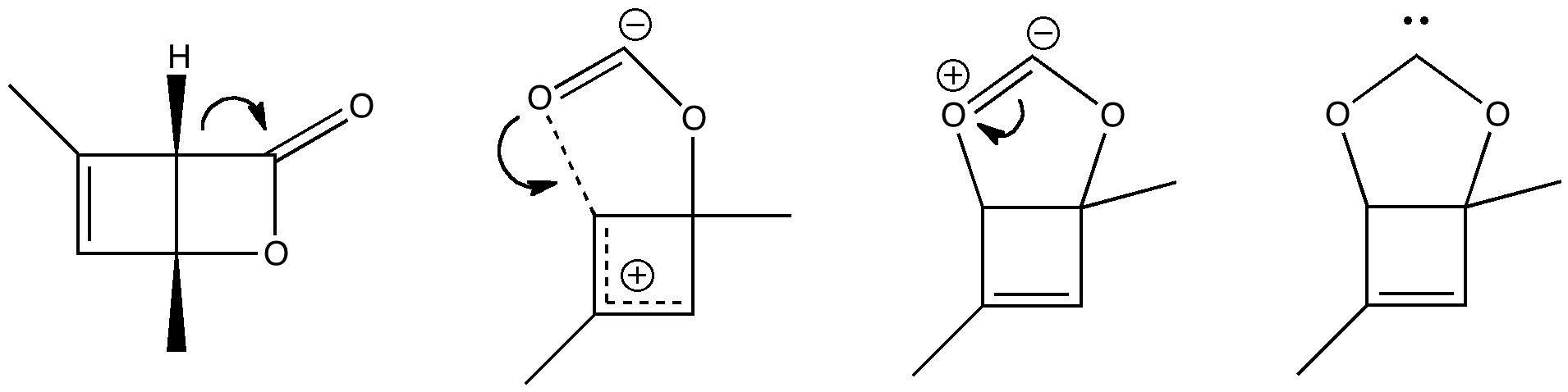
    The (hopefully tongue-in-cheek) title Mindless chemistry was given to an article reporting[cite]10.1021/jp057107z[/cite] an automated stochastic search procedure for locating all possible minima with a given composition using high-level quantum mechanical calculations. “Many new structures, often with nonintuitive geometries, were found”. Well, another approach is to follow unexpected hunches. One such was described in the previous post, and here I follow it to one logical conclusion.

    One structure leads to another

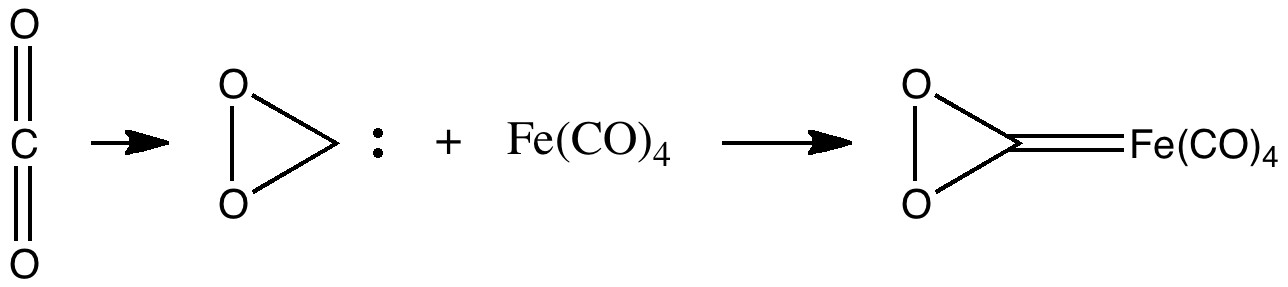
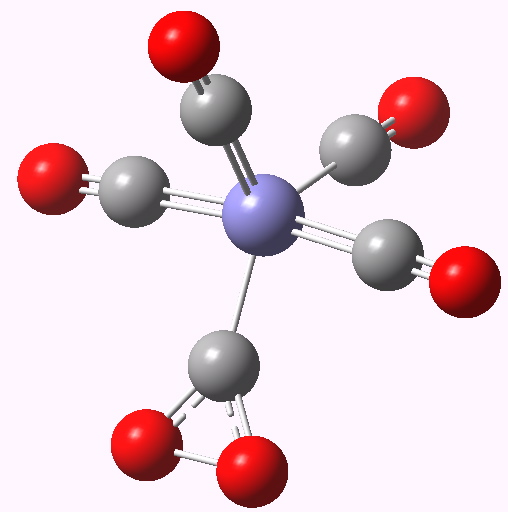
    The train of thought started with the recent speculation upon a zwitterionic intermediate in the photolysis of a dimethyl-pyrone. Closure of this is likely to require a very low barrier, and this leads to a bicyclic species, which could be written as a carbene. One then asks if carbon dioxide itself could be so represented? If so, could that carbene be stabilised with a metal, as below? A reality check, as noted in the earlier post, is that a similar complex with iron tetracarbonyl is known, and appears to be stable.

    Sequestration of carbon dioxide?

    Enter quantum mechanics, which will tell us exactly how stable. Firstly, the spin state of the complex has to be determined, and it turns out the singlet (low spin) is lower than either the triplet (medium spin) or quintet (high spin) states. It took around five minutes (ωB97XD/6-311G(d) ) to establish that the free energy of the reaction between carbon dioxide and iron tetra carbonyl is endothermic in free energy by ~100 kcal/mol. So no sequestration of CO2 by iron carbonyl then!


    Iron tetra carbonyl-carbon dioxide complex. Click for 3D

    As a scientist, I always find it fascinating how one can jump from one topic to a completely different one in just a few steps. But one always needs reality checks in doing so! Perhaps automated mindless searches (bounded by quantum mechanical reality checks) will perhaps one day come up with something really important. All us humans have to do is recognise this when it happens.

  • Beryllocene and Uranocene: The 8, 18 and 32-electron rules.

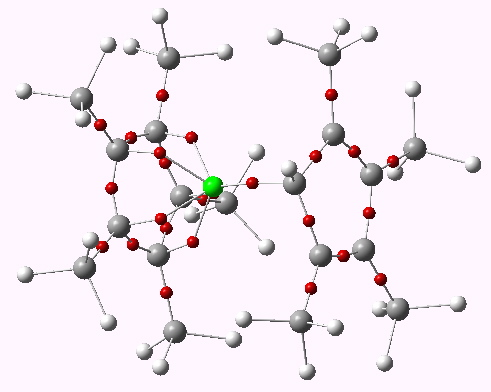
    In discussing ferrocene in the previous post, I mentioned Irving Langmuir’s 1921 postulate that filled valence shells in what he called complete molecules would have magic numbers of 2, 8, 18 or 32 electrons (deriving from the sum of terms in 2[1+3+5+7]). The first two dominate organic chemistry of course, whilst the third is illustrated by the transition series, ferrocene being an example of such. The fourth case is very much rarer, only one example ever having been suggested[cite]10.1002/anie.200604198[/cite], it deriving from the actinides. In this post, I thought I would augment ferrocene (an 18-electron example) with beryllocene (an 8-electron example) and then speculate about 32-electron metallocenes.

    Cp*-beryllocene. ELF analysis. Click for 3D.
    The crystal structure of (nonamethyl)bis-cyclopentadienyl beryllium [cite]10.1039/b208972f[/cite] illustrates the octet rule directly. Be is ionised to Be2+, the charge balanced by two cyclopentadienyl anions. The octet is formally filled by donation of six electrons from one Cp* anion, and only two from the other, filling the s and p shells of the metal (the 1 and 3 in the sum alluded to earlier). The ELF analysis suggests the molecule is less ionic than ferrocene. ELF disynaptic basis are located for all five Be-C bonds on the η-5 ring, and only one for the η-1 ring. The latter basin contains 1.87 electrons (a conventional electron pair bond), whilst the five former range range from 0.57 to 0.68 electrons, adding to 5.02. The formal octet is thus not entirely filled, but in this sense, it is less ionic than ferrocene. (See DOI 10042/to-8371 for details of the calculation).


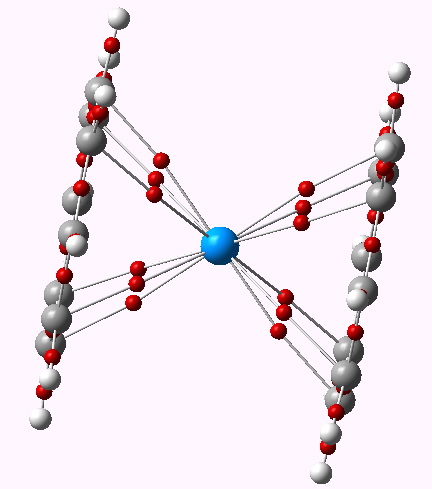
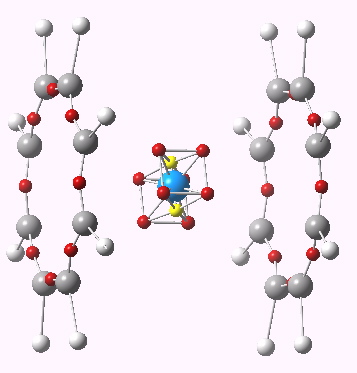
    Uranocene is a rather different beast. The ligands are not cyclopentadienyl, but cyclo-octatetraenyl. Uranium has a radon core, and a 5f3, 6d1 and 7s2 valence shell(s) electron configuration. Ionised to U4+, formally the 5f, 6d and 7p shells are all empty; a total of 14 + 10 + 6 electrons would be required to achieve a 32-electron filled shell , or 30 additional electrons. The two COT ligands, as di-anions (achieving aromaticity) could provide only 20. So uranocene (Cambridge refcode URACEN10, DOI 10.1021/ic50111a034) is far from the holy-grail of a 32-electron complete molecule.

    Uranocene. AIM analysis. Click for 3D
    The QTAIM analysis of the electron density (the molecule itself is a triplet spin state) shows only six bonds from each COT ligand to the metal. The ELF analysis shows NO U-C disynaptic basins, unlike either beryllocene or ferrocene (the features surrounding the U derive from pseudopotential used for the calculation). This indicates that uranocene is the most ionic of the three metallocenes.


    Uranocene. ELF analysis. Click for 3D
    Could a molecule be contrived that might achieve (a formal) 32-electron filled 5f,6d,7p valence shell? One would probably need a ligand contributing 14 rather than 10 electrons whilst keeping the size of the ring manageable, quite a challenge. There may not be enough space for three 10-electron ligands. So, no examples of 32-electron metallocenes just yet then!