Tag: free energy

  • A 5-high straight flush of water-ionised acids?

    I do not play poker, and so I had to look up a 5-4-3-2-1(A), which Wikipedia informs me is a 5-high straight flush, also apparently known as a steel wheel. In previous posts  I have suggested acids which can be ionised by (probably) 5, 4, 3 or  1 discrete water molecules in the gas phase; now to try to track down  a candidate for ionisation by the required two water molecules to form that straight flush.

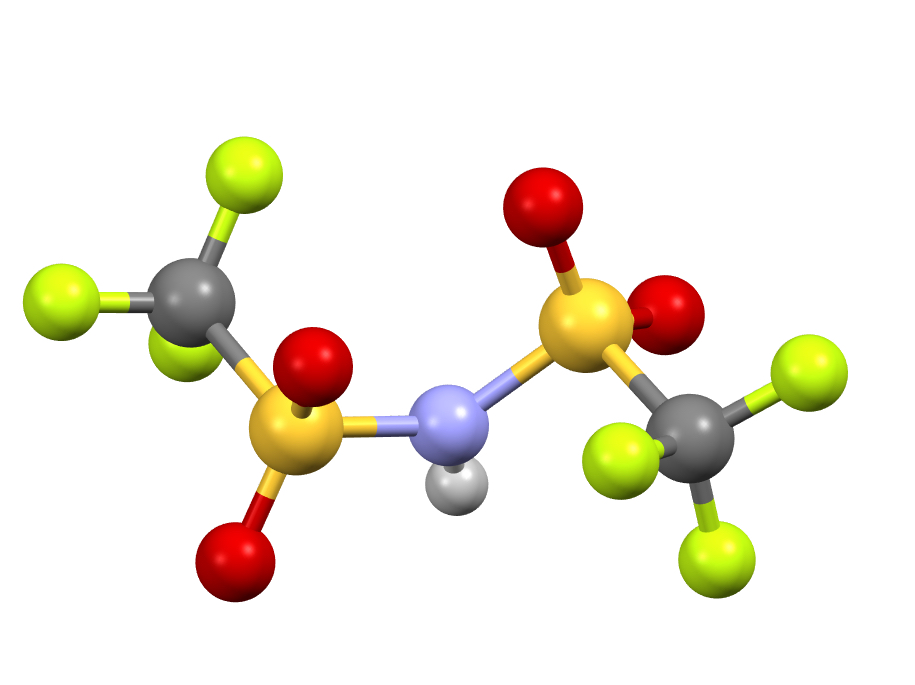
    As the counter-anion to quaternary ammonium cations, bis(trifluoromethylsulfonyl)imide is a component of some ionic liquids. Its conjugate acid is thought[cite]10.1524/zkri.1998.213.4.217[/cite],[cite]10.5517/CC3ZYWW[/cite] to protonate on the nitrogen.

    Click for 3D
    Click for 3D

    My first obvious attempt was to place two waters near that N-H to see if it would ionise from that position.[cite]10.14469/ch/191136[/cite] The proton remains attached to the nitrogen(-:
    ZURWEO-N

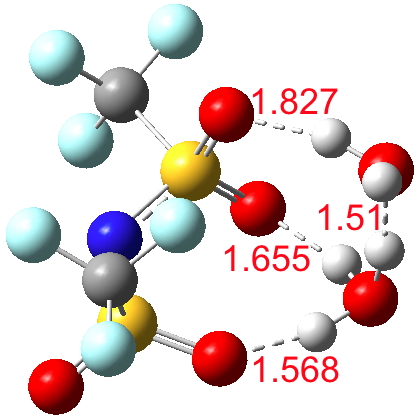
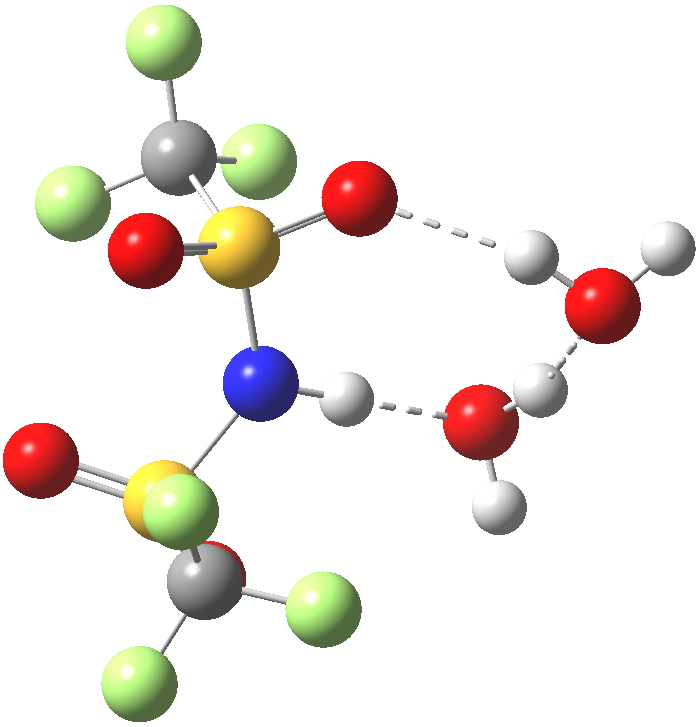
    Next, how about re-locating the waters so that they are closer to the sulfonyl oxygens? This time we do have the characteristic hydronium cation forming.[cite]10.14469/ch/191137[/cite] However, the free energy of this isomer is +6.7 kcal/mol higher relative to the NH form. So not a 5-high straight flush in a strict sense, but it perhaps does give a hint of how one might design the missing card.

    Click for 3D
    Click for 3D

    Confession time. I did spend many a Wednesday afternoon as an undergraduate playing the card game bridge.


  • Chiroptical spectroscopy of the natural product Steganone.

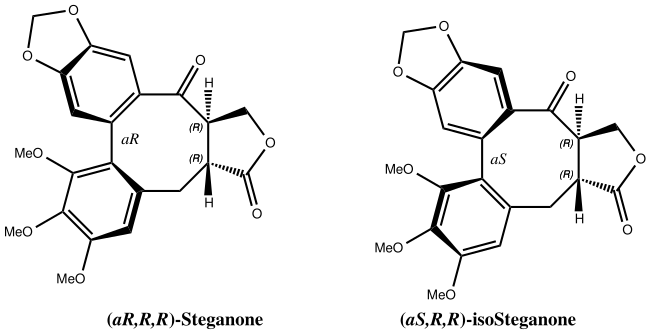
    Steganone is an unusual natural product, known for about 40 years now. The assignment of its absolute configurations makes for an interesting, on occasion rather confusing, and perhaps not entirely atypical story. I will start with the modern accepted stereochemical structure of this molecule, which comes in the form of two separately isolable atropisomers.
    steganone
    The first reported synthesis of this system in 1977 was racemic, and no stereochemistry is shown in the article (structure 2).[cite]10.1039/P19770001674[/cite] Three years later an “Asymmetric total synthesis of (-)steganone and revision of its absolute configuration” shows how the then accepted configuration (structure 1 in this article) needs to be revised to the enantiomer shown as structure 12 in the article[cite]10.1016/S0040-4039(00)78586-8[/cite] and matching the above representation. The system has continued to attract interest ever since[cite]10.1039/P19820000521[/cite],[cite]10.1039/A900743A[/cite],[cite]10.1039/C39950001943[/cite],[cite]10.1002/ejoc.201402761[/cite], not least because of the presence of axial chirality in the form of atropisomerism. Thus early on it was shown that the alternative atropisomer, the (aS,R,R) configuration initially emerges out of several syntheses, and has to be converted to the (aR,R,R) configuration by heating[cite]10.1039/P19820000521[/cite]. One could easily be fooled by such isomerism!

    Absolute configurations can be established in several ways.

    1. From precursors of known absolute configuration. This was the most common method until relatively recently, but it is very expensive since asymmetric syntheses are often much more complex and longer than racemic ones. There is always a small residual doubt that any transformation in the synthesis might have altered the configuration in an unexpected manner.
    2. From an X-ray of the final configuration (Bijvoet). Very often the structure is determined on a derivative of the target compound (the original may not form suitable crystals). There is also the doubt that the selected crystals may in fact be a minor form and do not represent the bulk of the system in solution. This is especially true where atropisomerism is concerned, since the solid state structure may not represent the same atropisomer present in solution.
    3. In the last decade or so, it has become more common to make use of the computation of measured chiroptical spectroscopies to see if they match. It turns out that this method appears never to have been applied to Steganone, and here I attempt to rectify this.

    First, let us compute the optical rotation. The (aR,R,R) stereoisomer is also known as (-)-Steganone, because the measured specific rotation is [α]589 -170° ± 30.[cite]10.1039/P19820000521[/cite] It is computed (MN12L/6-311++G(d,p)/SCRF=chloroform) as -240°, [α]365 -2251[cite]10.14469/ch/189647[/cite]. The other atropisomer (aS,R,R) is computed to be 4.5 kcal/mol higher in free energy with [α]589 +408°[cite]10.14469/ch/189646[/cite], and measured as +150.[cite]10.1039/P19820000521[/cite] There is some uncertainty in the computed values, since the rotations can be dependent on the conformation not only of the rings, but the substituents. You might imagine that the conformation of eg a -OMe group is unimportant, but this is not so. In this case, I have used a crystal structure of a related species to serve as the start point for optimising the MeO conformations. The greater mismatch between computation and experiment for the (aS,R,R) stereoisomer probably needs an exploration of more conformations of the -OMe groups. At least in both cases the signs match between computation and measurement.

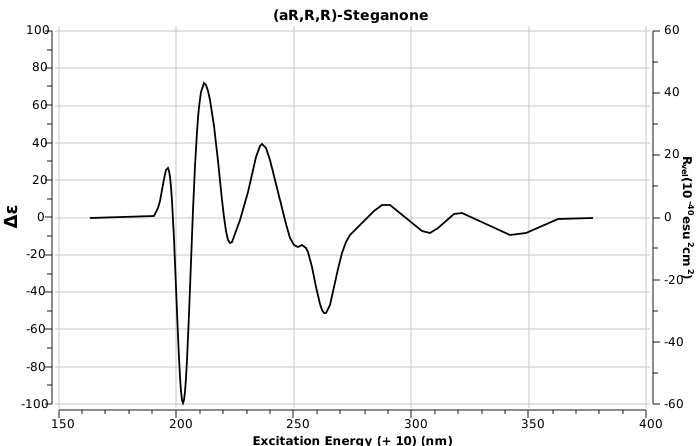
    Next, the electronic circular dichroism (ECD), which has also been measured[cite]10.1039/P19820000521[/cite] for the (aR,R,R) isomer as Δε 201nm (-ve Cotton effect), 218 (+ve), 244 (-ve), 276 (+ve) 304 (-ve) and 337 (-ve). Bearing in mind that the baselines in ECD spectra are notoriously difficult to define (moving it up or down can easily invert a Cotton effect), the agreement with the calculated spectrum MN12L/6-311++G(d,p)/SCRF=chloroform, nstates=200)[cite]10.14469/ch/189649[/cite] might seem reasonable, although the calculated version has more peaks in the region 225-265 than are reported (e.g. 235, +ve, 265, -ve).
    (R,R)-steganone-9
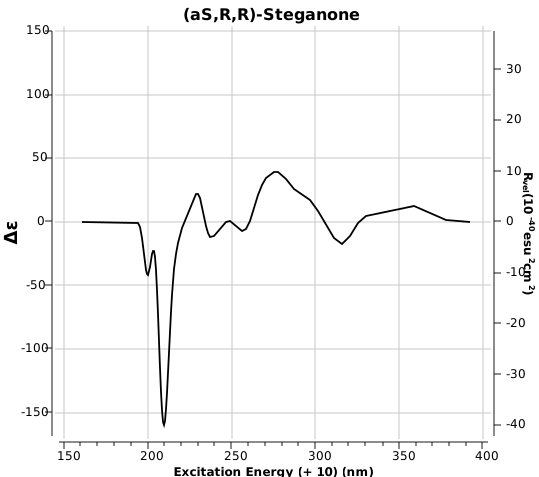
    The (aS,R,R) isomer seems a less good fit. The +ve peak at 218 is missing, the +ve 276 peak matches better than the other isomer, but the 337nm peak is again the wrong sign.
    (aS,R,R)-steganone

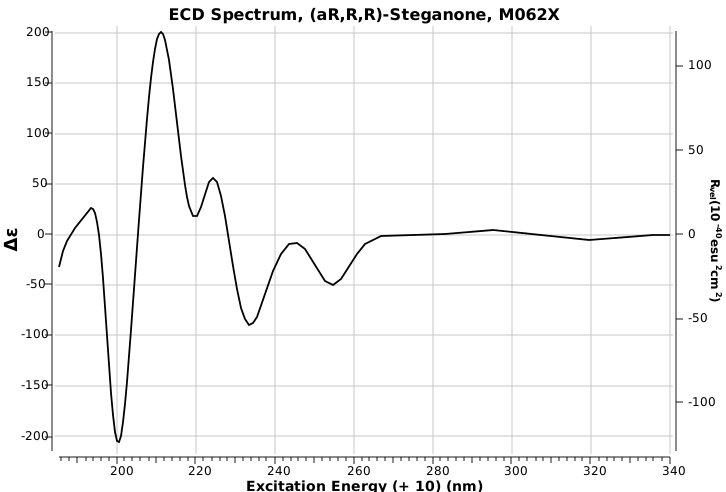
    Of course, in such a game it may be the DFT functional used for the simulation that itself might be misleading, MN12L in this case. Just to check, I also include the results using M062X[cite]10.14469/ch/189657[/cite] to see how variable these simulations might be. The measured peaks at 201, 218, 244 and 337nm match, but the ones at 276 and 304nm do not.
    s-m062x

    Although matching computed with measured ECD spectra is commonly used to assign absolute configurations of molecules, you can see from these results that the technique is not a cast iron one! Even scanning through myriad DFT procedures to find the one that fits best is probably not a complete solution either. Can anything be done to further increase confidence?

    How about Vibrational Circular Dichroism (VCD) predictions?[cite][/cite],[cite]10.14469/ch/189651[/cite]. Like ECD, VCD is also sensitive to conformation, which is why some modern instruments have low temperature probes operating at close to 0K which strive to capture only a single lowest energy conformation (although of course in any simulation, you have to identify that conformation reliably!). At some stage in the future, the VCD spectra of steganone might indeed be measured, and hence compared with the below. It might serve to increase confidence in the chiroptical methods as a means of assigning configuration.
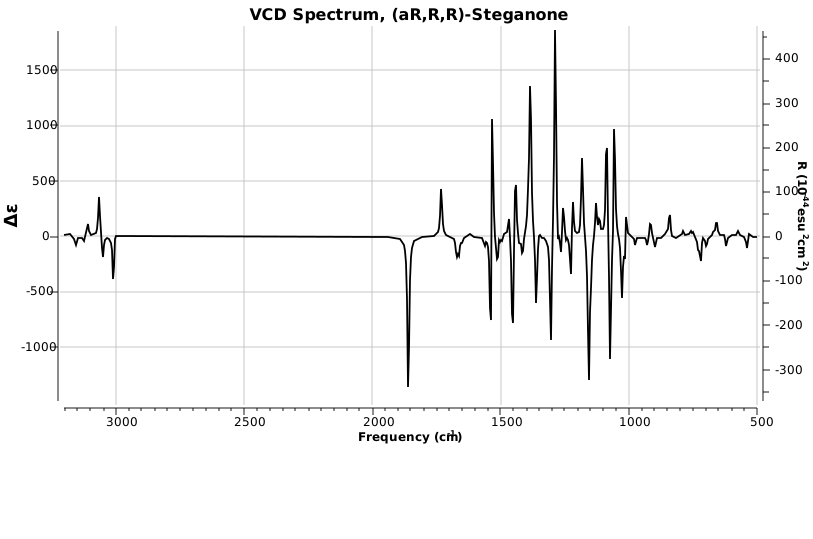
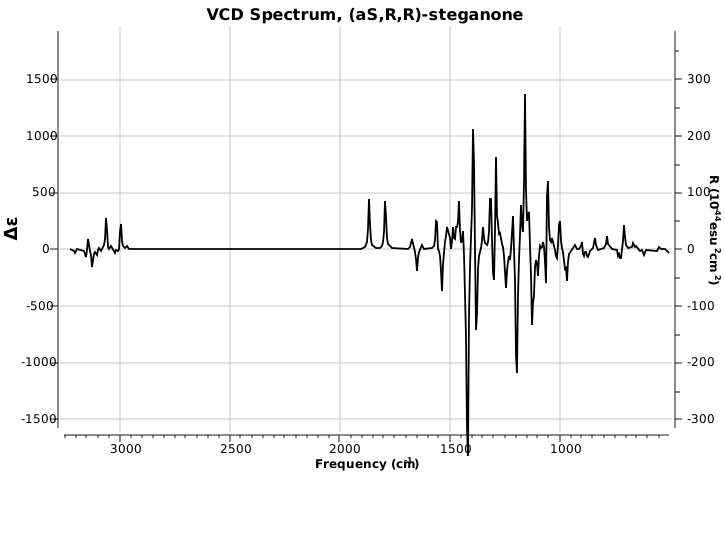
    (aR,R,R)-steganone (aS,R,R)-steganone

    We might conclude from this short exploration of chiroptical spectroscopy that no one single measured or computed value can be absolutely definitive; rather it is the accumulation from various sources that builds up the case for a particular configuration. But at least the above simulations do serve to add some useful additional data for the record.
  • Ribulose-1,5-bisphosphate + carbon dioxide → carbon fixation!

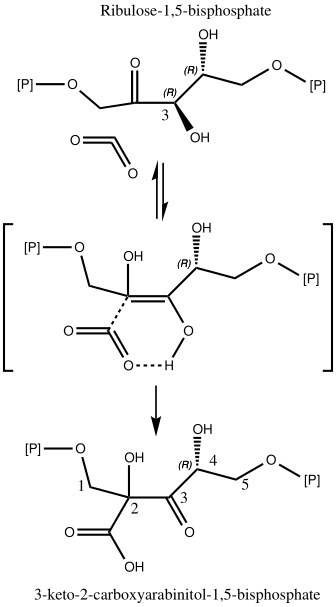
    Ribulose-1,5-bisphosphate reacts with carbon dioxide to produce 3-keto-2-carboxyarabinitol 1,5-bisphosphate as the first step in the biochemical process of carbon fixation. It needs an enzyme to do this (Ribulose-1,5-bisphosphate carboxylase/oxygenase, or RuBisCO) and lots of ATP (adenosine triphosphate, produced by photosynthesis). Here I ask what the nature of the uncatalysed transition state is, and hence the task that might be facing the catalyst in reducing the activation barrier to that of a facile thermal reaction. I present my process in the order it was done.

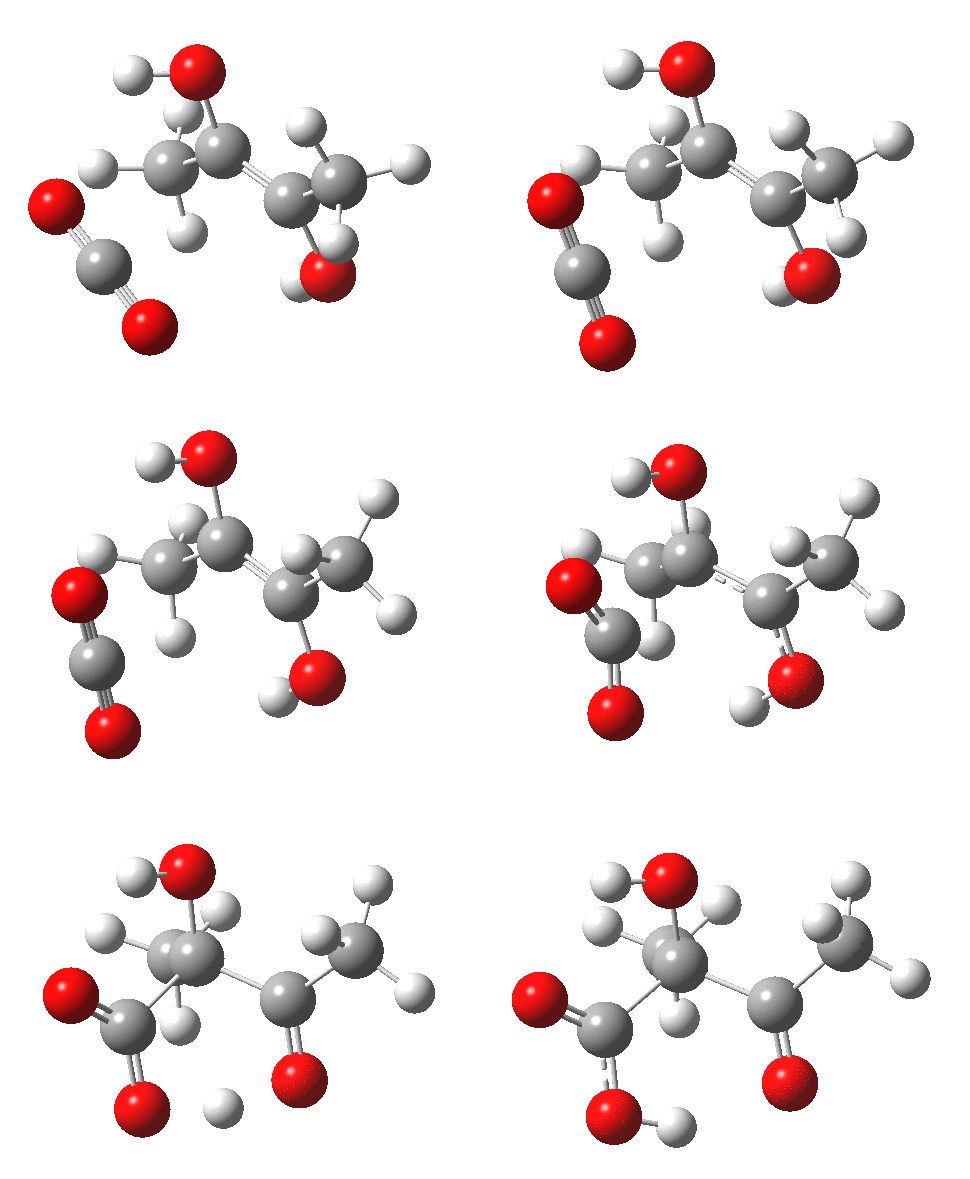
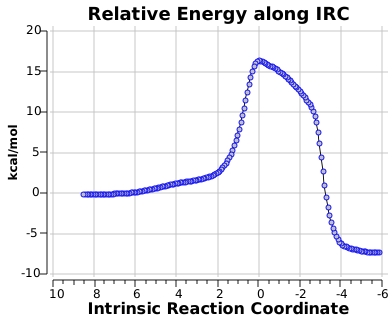
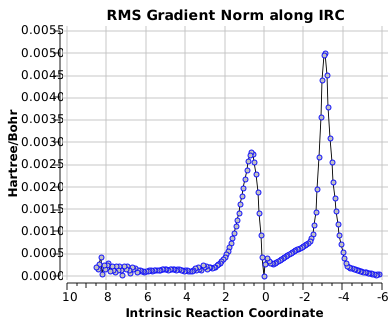
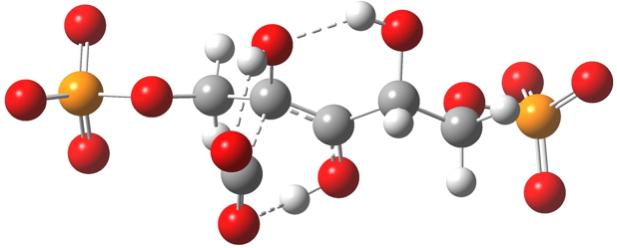
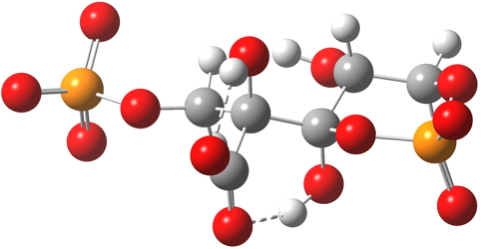
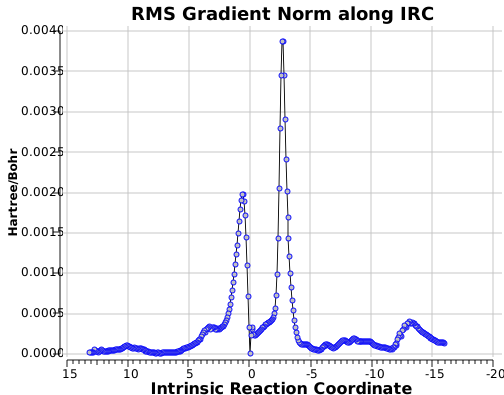
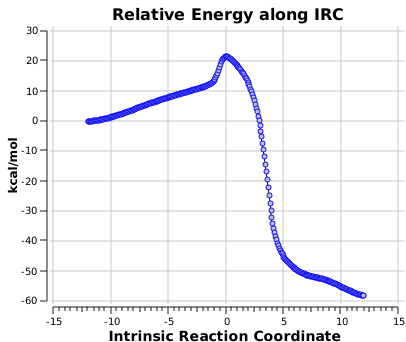
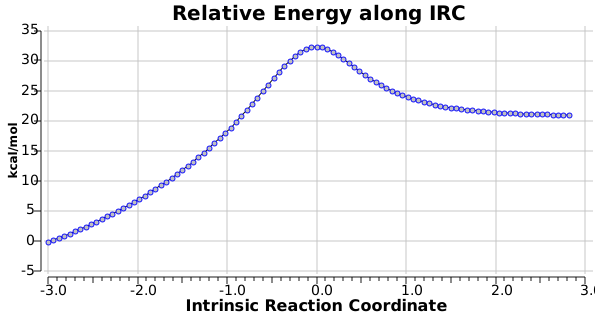
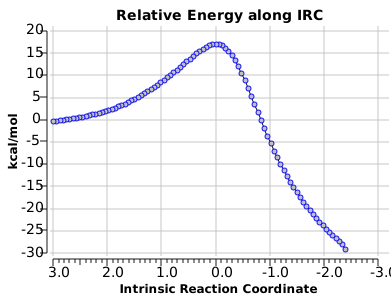
    carboxFirstly, I will hypothesize that since C3 needs to lose a hydrogen, the easiest way of doing so is to form the enol of Ribulose-1,5-bisphosphate. I am going to start by reducing the above model to its core; C1 and the attached phosphate is replaced by a methyl, and C4-5 likewise. In this model, it takes 13.1 kcal/mol of free energy to enolize.[cite]10.6084/m9.figshare.1004015[/cite],[cite]10.6084/m9.figshare.1004023[/cite] This species can then react with CO2 (potentially with an accompanying proton transfer) to give 3-keto-2-carboxyarabinitol 1,5-bisphosphate directly. The transition state at the ωB97XD/6-311G(d,p)/SCRF=water level[cite]10.6084/m9.figshare.1004011[/cite] has an IRC (intrinsic reaction coordinate)[cite]10.6084/m9.figshare.1004037[/cite] that reveals the activation barrier is ~17 kcal/mol with respect to the enol (19.5 in ΔG298), with the overall reaction[cite]10.6084/m9.figshare.1004038[/cite] being exo-energic by -2.6 kcal/mol with respect to the enol, but endo-energic by +10.5 kcal/mol with respect to keto-Ribulose-1,5-bisphosphate + carbon dioxide. Note the characteristic feature at IRC -3.0 of a hidden zwitterionic intermediate, which marks a belated proton transfer occurring AFTER the transition state for C-C bond formation. The reaction is asynchronous for this basic model.
    carbox
    carboxE
    carboxG
    For this very basic (phosphate-free) model of Ribulose-1,5-bisphosphate, the total computed free energy barrier@298K is 32.6 kcal/mol (standard state of 0.041M; reduced by ~1.9 kcal/mol for more concentrated, e.g. 1M solutions). This is ~13 kcal/mol too high to correspond to a uncatalysed fast process at room temperatures, a gap that the phosphate end-groups and the enzyme have to address (a challenge typically enzymes do manage to achieve).

    With a basic model in place, it is time to restore those truncated phosphate end-groups to see what their contribution might be (treated as dianions each for the time being, and stabilized by using a continuum solvent field for water). First, the energies:

    System ΔΔG Data DOI
    Ribulose-1,5-bisphosphate as keto + CO2  0.0 [cite]10.6084/m9.figshare.1004086[/cite]
    Ribulose-1,5-bisphosphate as enol + CO2 13.0 [cite]10.6084/m9.figshare.1004066[/cite]
    Transition state 34.8 [cite]10.6084/m9.figshare.1004112[/cite]
    Acyclic 3-keto-2-carboxyarabinitol 1,5-bisphosphate 11.5 [cite]10.6084/m9.figshare.1004085[/cite]
    Cyclic 3-keto-2-carboxyarabinitol 1,5-bisphosphate -7.3 [cite]10.6084/m9.figshare.1004111[/cite]

    Note the network of hydrogen bonds formed at the transition state geometry (below) and the various gauche stereo-electronic alignments[cite]10.6084/m9.figshare.1004026[/cite] which you should really explore in the Jmol 3D model invoked by clicking below.

    carbox-TS
    Click for 3D
    1. Addition of the phosphate groups has little effect on the energetics of the keto/enol equilibrium,
    2. or on the barrier to reaction with  carbon dioxide.
    3. But, they DO provide a new low energy sink I have not seen described before for the reaction (below), which makes the overall process from Ribulose-1,5-bisphosphate + CO2 exo-energic by -7.3 kcal/mol. Thus the phosphates provide the overall thermodynamic driving force for the carbon fixation.

      Click  for 3D
      Click for 3D. Cyclic low-energy cyclic chair isomer of 3-keto-2-carboxyarabinitol 1,5-bisphosphate
    4. Which leaves the role of the enzyme as one of reducing the overall activation barrier. The reaction MUST be enzymatically favoured, since the enzyme also needs to control when the cycle occurs, via a light-sensitive switch. If no enzyme-catalysis were needed, then carbon-fixation would occur in the dark, and consume all available ATP in the process. Inferred purely from the results in the table above, two functions can be listed:
      • The enzyme can help increase the effective molarity of the bimolecular reaction between Ribulose-1,5-bisphosphate + CO2. As noted above, increasing the concentration from e.g. 1 atmosphere (0.041M) to 1M reduces ΔG by 1.9 kcal/mol.
      • The most influential role the enzyme could play is to bind the enol form of Ribulose-1,5-bisphosphate preferentially over the keto form. If most of the substrate is bound in this form, that would reduce the overall barrier by 13 kcal/mol, more than enough to enable a room temperature reaction.
      • There may of course be many other subtle effects in operation, such as preferential stabilisation of the transition state, which cannot be inferred here without a detailed knowledge of the enzyme. I have deliberately tried to avoid doing that, since I wanted to see what might be concluded purely from the energetics found above.

    There is one final step required; a very rapid decomposition of the 3-keto-2-carboxyarabinitol 1,5-bisphosphate (cyclic or not) to produce two molecules of 3-phosphoglycerate. I will leave my computational-energetic analysis and mechanism of that step to another post.


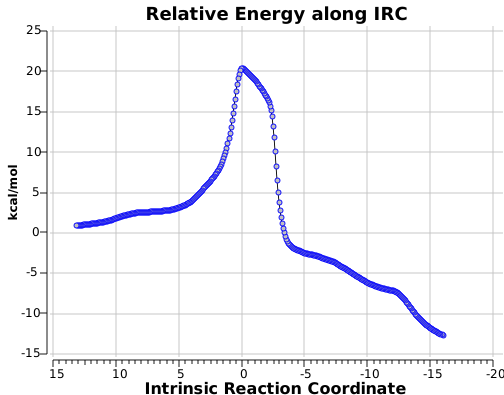
    Postscript. An IRC on the full phosphate model took three days to run and has only just finished.[cite]10.6084/m9.figshare.1004557[/cite] The profile is similar to that obtained for the phosphate-free model, with the exception of the IRC feature at -13, where one phosphate group rotates and starts to H-bond to the 3-keto-2-carboxyarabinitol, resulting in a lower energy conformation than that reported above. The energy of this new conformation[cite]10.6084/m9.figshare.1004614[/cite] relative to the starting point (labelled as 0.0 above) is +2.3 kcal/mol (c.f. +11.5 for the previous conformation). The phosphates clearly remain a strong driving force for the reaction. It is quite possible that even more stable forms of this product could be found (by varying where the acidic protons reside) but at least we now know that the product can be more stable than the reactant (by at least -7.3 kcal/mol), which is the important conclusion.
    carbox-prod1E
    carbox-prod1G

    Postscript 1. Yet another lower energy isomer of the product has popped out[cite]10.6084/m9.figshare.1004778[/cite] being -13.1 kcal/mol lower than the initial reactants.


    I do not describe much molecular biology on this blog, but an urge to rectify this was inspired by a TV program I watched four days ago charting how the pathway chronologically known first as the Calvin, then the Calvin-Benson and now the Calvin-Benson-Bassham cycle for carbon fixation became known (and how it gradually gathered attribution). As a chemist who was trained to try to understand reaction mechanisms, my immediate question (unsurprisingly not addressed at all in the TV program) was: what is the key carbon-carbon bond forming step? Here, I simply wanted initially to answer that one simple question and perhaps the aspect of the relative timing of any C-C bond formation and associated proton transfer. This latter idea in turn was hovering in the background of my mind from association with our previous project in proline-catalysed aldol reactions, where a similar question can be posed and indeed has been answered.[cite]10.1039/C3SC53416B[/cite] The rest of what you see here led directly from trying to answer that initial question. Peter Medawar’s 1963 talk Is the scientific paper a fraud? presented the argument that scientific journal articles give a misleading idea of the actual process of scientific discovery[cite]10.1002/embr.201338302[/cite]. I hope that perhaps as a blog post, the above does give a little insight into the scientific process I experienced for myself over a period of the last two days (and with conclusions which may of course turn out to be quite wrong).


    Acknowledgments

    This post has been cross-posted in PDF format at Authorea.

  • Enantioselective epoxidation of alkenes using the Shi Fructose-based catalyst. An undergraduate experiment.

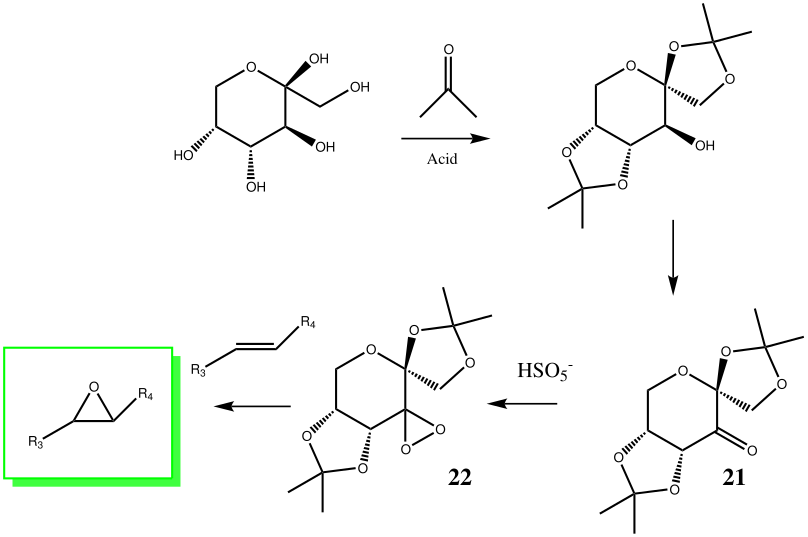
    The journal of chemical education can be a fertile source of ideas for undergraduate student experiments. Take this procedure for asymmetric epoxidation of an alkene.[cite]10.1021/ed077p271[/cite] When I first spotted it, I thought not only would it be interesting to do in the lab, but could be extended by incorporating some modern computational aspects as well. 

    Fructose

    Oxygen atom transfer from this chiral dioxirane produces a specific enantiomer of the chiral epoxide in often high enantiomeric excess. For each alkene, there are up to eight possible transition states, arising from the following permutations:

    1. The two oxygen atoms of the oxidant are not equivalent
    2. Either the re or the si face of the alkene can be presented to the oxidant
    3. and the alkene itself can orient endo or exo with respect to the oxidant.

    In fact, using the standard ωB97XD/6-311G(d,p)/SCRF=solvent method used on this blog, locating each transition state for any specific alkene can take about 24 hours, and hence doing all eight can take a week or more per alkene. We have groups of around 20 students doing this experiment, and so it was not practical in terms of computing resources to get them all to individually find these transition states. Instead, we give the students access to groups of eight pre-run calculations[cite]10.6084/m9.figshare.988346[/cite] for four different alkenes and invited them to perform various tasks for their selected alkene. These include: 

    1. Identify the free energy of each of the eight transition states for their alkene, and using these suggest a predicted enantiomeric outcome for the epoxide
    2. Using the energy of the lowest transition state leading to the other enantiomer, work out a predicted enantiomeric excess for the reaction
    3. Produce a non-covalent-interactions isosurface and try to reconcile this with the predicted ee by visual inspection.
    4. Run a QTAIM analysis of the wavefunction for the optimal transition state to inspect various topological critical points, especially the weaker ones that are not normally considered.
    5. Ponder any anomeric or other stereoelectronic interactions that might be present in any selected transition state.
    6. Track down the crystal structures of the catalyst precursor itself (the ketone) and comment on any interesting aspect of its structure.

    There are more tasks the students have to perform, and a full description will appear in an article I am writing.

    <

    p>

  • What is the best way of folding a straight chain alkane?

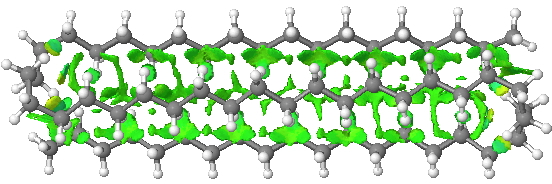
    In the previous post, I showed how modelling of unbranched alkenes depended on dispersion forces. When these are included, a bent (single-hairpin) form of C58H118 becomes lower in free energy than the fully extended linear form. Here I try to optimise these dispersion forces by adding further folds to see what happens.

    002

    I had noted a small kink in the bent single-hairpin form (above, red circle). What about making a full bend at that point? Such forms have been previously investigated using OPLS-AA mechanics[cite]10.1021/jp064811m[/cite], with the finding that such a triple-hairpin conformation (below) was 9.7 kcal/mol higher in energy than the single hairpin (above). OK, its got eight gauche-turns more (four per bend, and which do cost energy), but it also has three rather than just one row of close dispersion-stabilising contacts to compensate. Using quantum rather than molecular mechanics (B3LYP+D3/TZVP), I found that this triple-hairpin folded form was 3.2 kcal/mol higher in free energy than the single hairpin.[cite]10.6084/m9.figshare.988335[/cite]

    Click for  3D
    Click for 3D

    One folded at a slightly different point (below) was in fact higher 4.7 kcal/mol in energy that the single hairpin,[cite]10.6084/m9.figshare.988334[/cite] indicating that there is an optimum position for the bend.

    Click for  3D
    Click for 3D

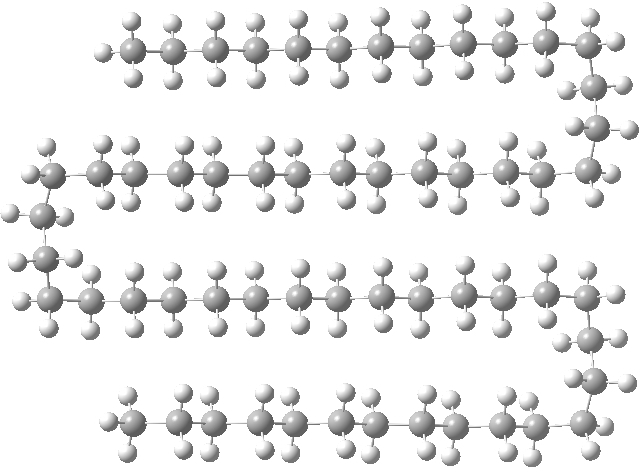
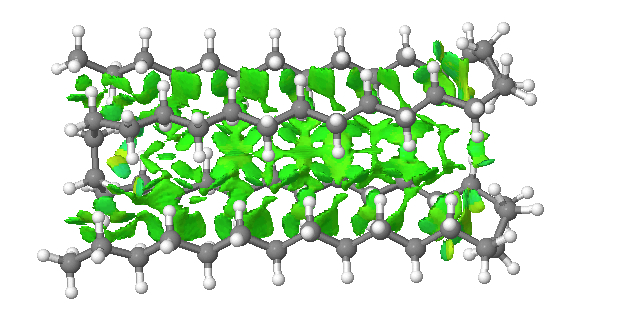
    I was convinced better folds could be found. So how about this double-hairpin, but in three dimensions to form a prism so that each chain has just as many contacts as the triple-hairpin, but is achieved with two-fewer gauche-turns? Its free energy[cite]10.6084/m9.figshare.988771[/cite] is 1.6 2.5 kcal/mol lower than the single-hairpin. It did not feature in the previous report[cite]10.1021/jp064811m[/cite] and hence represents a new lowest-energy folding (the colour indicates three ribbons of attractive non-covalent interactions, using the NCI technique). I would point out that such “manual” searching for better folds is not really sustainable; a statistical method would normally be used (MD or Monte-Carlo).

    Click for  3D
    Click for 3D

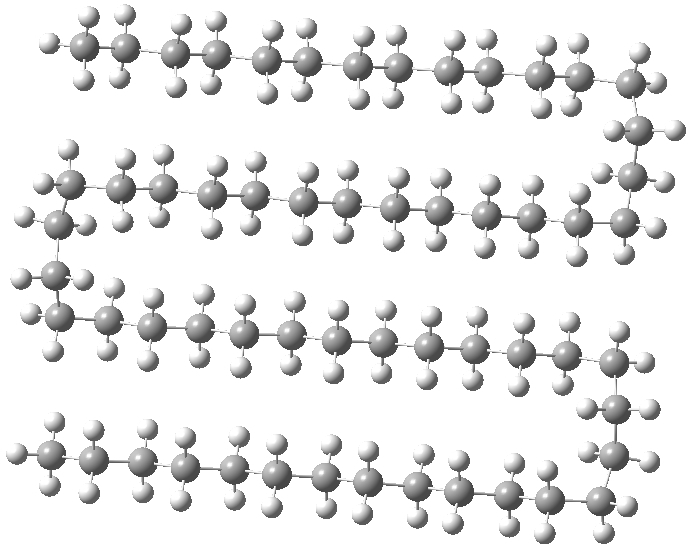
    A similarly folded version of the triple-hairpin can be made (below), with more opportunity for five rows of close dispersion contacts. This time however, the free energy is 1.9 kcal/mol higher than the single hairpin[cite]10.6084/m9.figshare.988333[/cite] (but the position of the fold does need to be optimised and perhaps a better one can be found). This result does imply that there is an optimum balance between the energy penalty of creating four gauche-turns per fold and the additional energy stabilisation of the dispersion. Perhaps the triple hair-pin above is close to that optimum?

    Click for  3D
    Click for 3D

    Unfortunately no crystal structures for the higher linear alkanes have been reported that would give us a reality check on any of these models. Can it really be that difficult to crystallise such molecules?

  • The mechanism of diazo coupling: more hidden mechanistic intermediates.

    The diazo-coupling reaction dates back to the 1850s (and a close association with Imperial College via the first professor of chemistry there, August von Hofmann) and its mechanism was much studied in the heyday of physical organic chemistry.[cite]10.1021/ja00830a009[/cite] Nick Greeves, purveyor of the excellent ChemTube3D site, contacted me about the transition state (I have commented previously on this aspect of aromatic electrophilic substitution). ChemTube3D recruits undergraduates to add new entries; Blue Jenkins is one such adding a section on dyes.

    diazonium

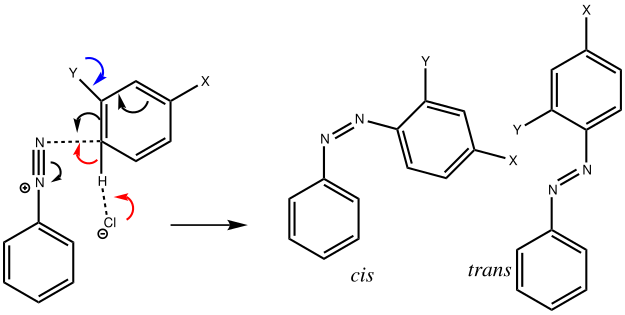
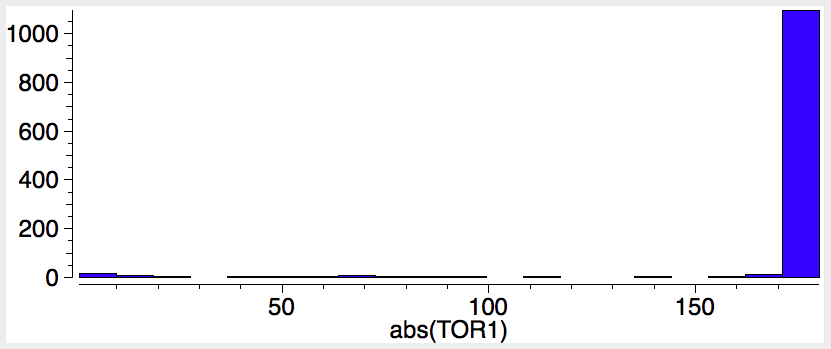
    The mechanism can be rate limiting either in the initial electrophilic attack (black arrows) or in the subsequent proton removal (red arrows using an intermolecular base such as chloride anion).[cite]10.1039/P29750001209[/cite]. The product is normally assumed to be the trans-diazo compound rather than cis. This distribution is certainly true in the crystal structure database (below, although some examples of cis are known, including azobenzene itself). Would this distribution be reflected in the transition states? Initial attempts by the ChemTube3D team had resulted only in a cis-transition state being located, and they asked me to check this out.

    diazo

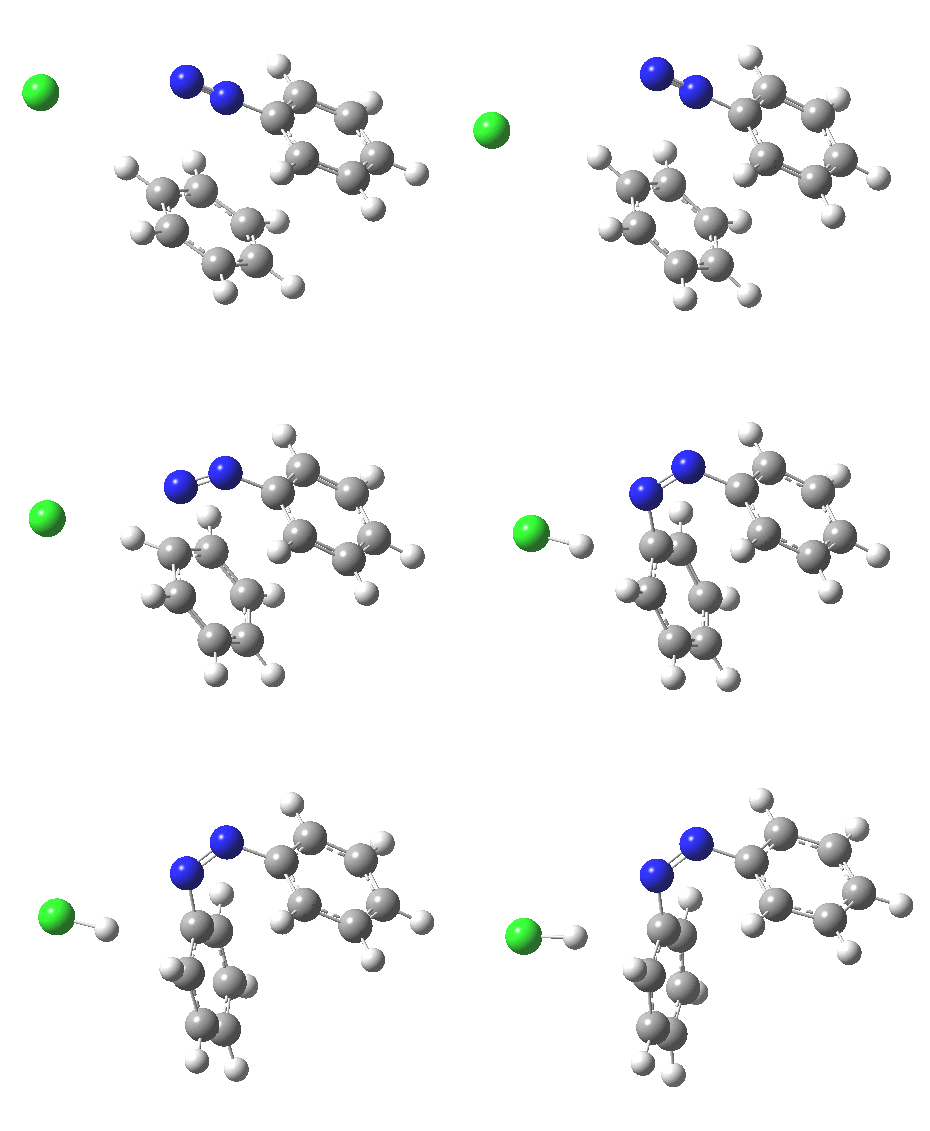
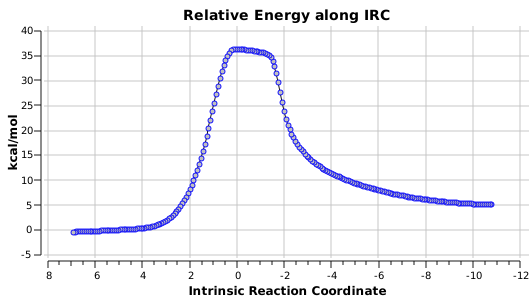
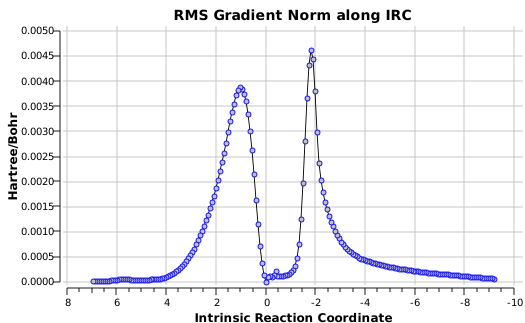
    ωB97XD/6-311G(d,p)/SCRF=water calculations using phenyl diazonium chloride (I do like my counter-ions) coupling to benzene resulted in location of both cis[cite]10.6084/m9.figshare.956138[/cite] and trans[cite]10.6084/m9.figshare.956139[/cite] transition states, the former being the lower by 1.0 kcal/mol in free energy (this might well be due to the dispersion stabilisation from π-π stacking). The IRC for the cis is shown below.[cite]10.6084/m9.figshare.956209[/cite]

    cis-diazocis-diazoEcis-diazoG

    You can see that the entire process is concerted. The Wheland intermediate normally invoked as part of the mechanism of aromatic electrophilic substitution is not a proper intermediate but a hidden one for the reaction with X=Y=H. The reaction coordinate has a flat top, and that passage along this part represents the hidden Wheland. The reaction barrier is high however, and it is certainly observed that only activated arenes (phenols, anilines, X,Y=OH, NH2) actually couple with diazonium cations. For these, the hidden intermediate is stabilized by the substituent, and no doubt emerges as a real intermediate.

    For my thesis work, I studied[cite]10.1039/P29750001209[/cite] diazo-coupling of indoles. I might have a go at returning to that work, to see if calculations can replicate my finding, that for unhindered indoles proton removal from the Wheland intermediate is fast, but add a few t-butyl hindering groups and it becomes slow.


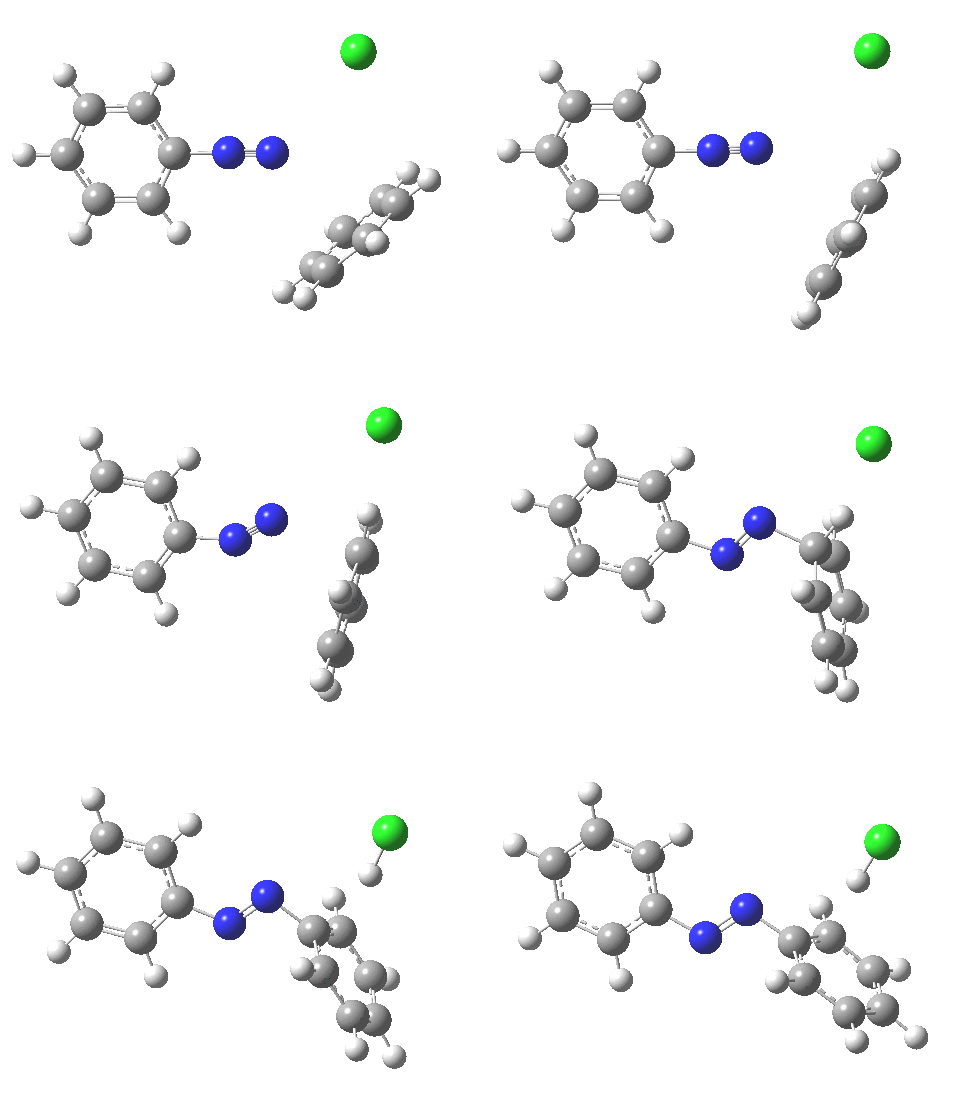
    PS. Here is the IRC for the formation of trans-diazobenzene.[cite]10.6084/m9.figshare.956213[/cite]

    trans


    Such diazo compounds make up a significant proportion of the 50 or so real molecules I have personally added to the collection of 84 million or so thus far identified.

    Working with ions has one statistical problem that covalent systems do not have; where to geometrically place the counter-ion. One should really stochastically explore reasonable locations before concluding the likely location of the globally lowest energy pose.

  • Molecule-sized pixels.

    The ultimate reduction in size for an engineer is to a single molecule. It’s been done for a car; now it has been reported for the pixel (picture-element).[cite]10.1021/ja404256s[/cite]

    pixel

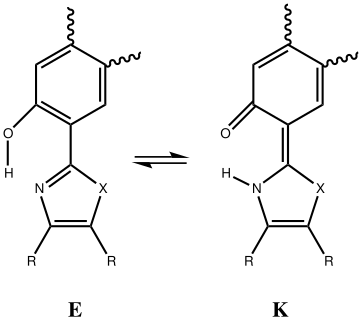
    The molecule above (X=O, NR, R=aryl, etc) has been shown to be capable of acting as a molecular pixel. To give some idea of the reduction in size, computer displays currently only squeeze 400 or so pixels into an inch (the archaic, but common units used to measure pixel sizes). The secret to engineering this is to prevent energy transfer occurring between adjacent pixels (= molecules on this scale), and this has been done using quite simple chemistry!pixel-excitation

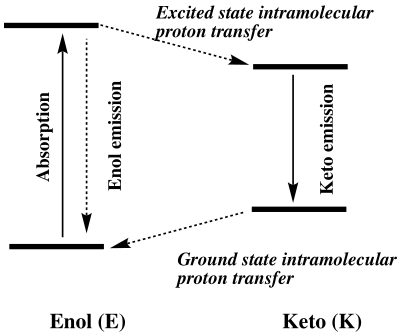
    The concept is to allow a molecule to reach an excited state by photon absorption, but to prevent emission from occurring (which would result in energy transfer to adjacent molecules) by inducing a rapid change in the molecular structure of the excited state. This reaction has to be very fast, and one of the fastest reactions is the intramolecular proton transfer. In this example it converts the enol form of the oxazole E to the keto form K. On the ground state surface, prior to excitation, the enol form is the lower in free energy (retaining the aromaticity of the phenyl ring). The basis of the molecular design is to find a molecule where it is the keto form that is lower in energy on the excited state surface, such that the excited state intramolecular proton transfer is both fast and in effect irreversible. In the keto form, any emission down to the ground state is now incapable of energy transfer to adjacent molecules (which are presumed to be still in the ground state and hence the enol form).

    This sort of system is perfect for designing with the help of quantum calculations, and to give just a hint of how this could be done, I thought I would illustrate how the energetics of the ground and excited states could be quickly obtained to show that the above energy diagram really does apply to these molecules (R=H, X=O). At the ωB97XD/6-311G(d,p)/SCRF=chloroform level, the enol[cite]10.6084/m9.figshare.769259[/cite] is 11.4 kcal/mol lower in free energy than the keto form[cite]10.6084/m9.figshare.769260[/cite]. A vertical (non-adiabatic) excitation to the first excited singlet now produces a system where the enol[cite]10.6084/m9.figshare.769248[/cite] is 3.9 kcal/mol higher than the keto form[cite]10.6084/m9.figshare.769230[/cite], which reflects the above diagram exactly.

    It is easy to see now that variation in R, X or other parts of the molecule could be rapidly scanned computationally to find out how such variation alters these relative energies. Computational tuning could then be used to e.g. optimize avoidance of energy transfers between adjacent molecules (pixels) and no doubt to also predict the actual absorption energies (i.e. colours) of new candidate molecules.


    Here I introduce the use of the so-called “short-doi“. The data citations above refer to the Figshare repository, the first citation of which takes the long form http://dx.doi.org/10.6084/m9.figshare.769259 By invoking http://shortdoi.org/10.6084/m9.figshare.769259 one can obtain the short form http://doi.org/nd9, of which the essential part, nd9, is now just 3-characters long. This form might be an alternative to QR-codes in e.g. lecture slides and other media where the human has to remember the value. In a machine-sense of course, the short form offers no advantage over the long form.

    Strictly speaking, one should locate the conical intersection for proton transfer on the excited state, but the above calculations take only minutes literally, whereas locating a conical intersection is a rather more complex task.


  • Mechanism of the Boekelheide rearrangement

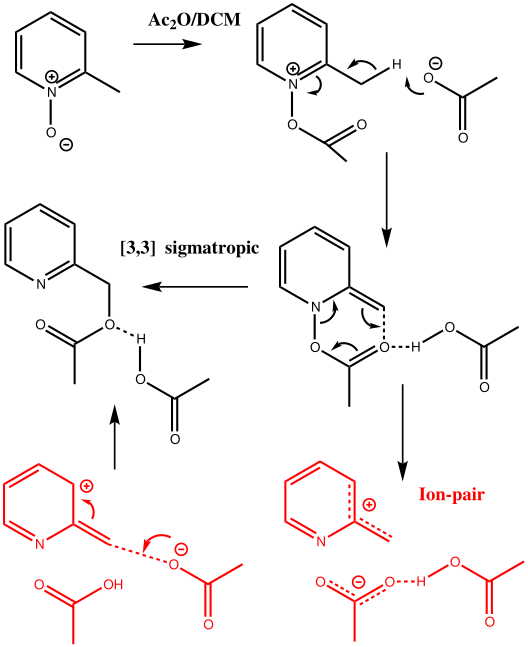
    A reader asked me about the mechanism of the reaction of 2-picoline N-oxide with acetic anhydride to give 2-acetoxymethylpyridine (the Boekelheide Rearrangement[cite]10.1002/ejoc.201000936[/cite]). He wrote ” I don’t understand why the system should prefer to go via fragmentation-recombination (… the evidence being that oxygen labelling shows scrambling) when there is an easy concerted pathway available (… a [3,3]sigmatropic shift). Furthermore, is it possible for two pathways to co-exist?” Here is how computation might enlighten us.

    boeckelheide

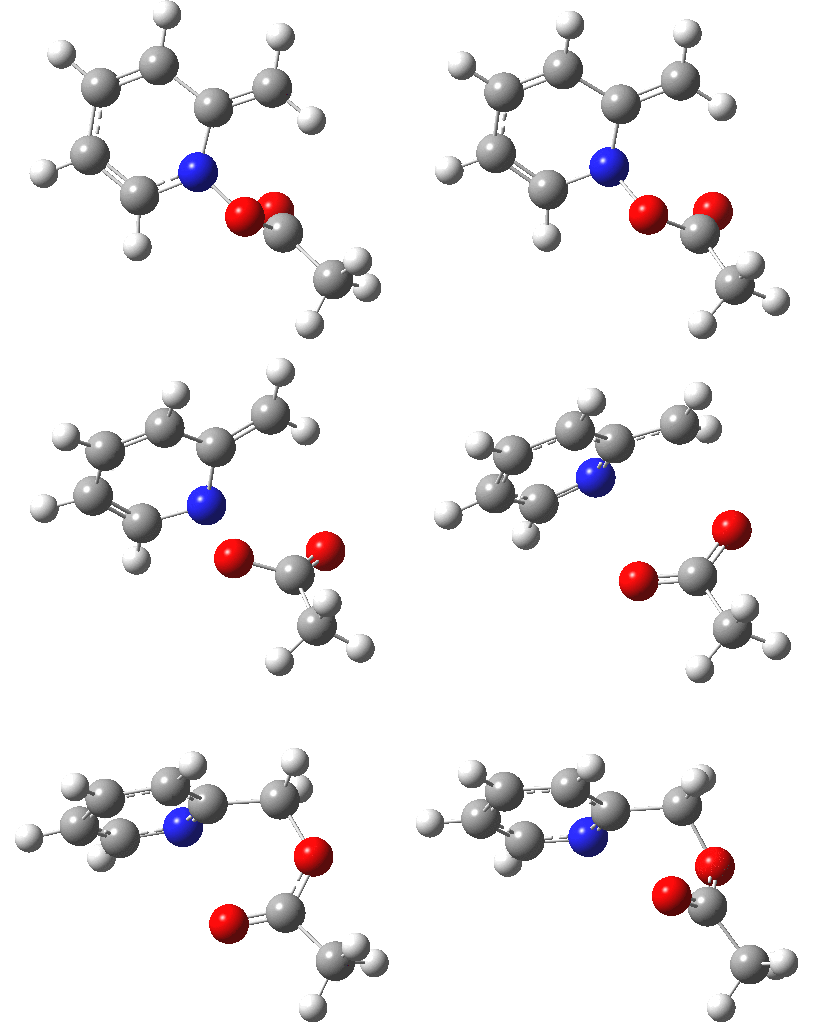
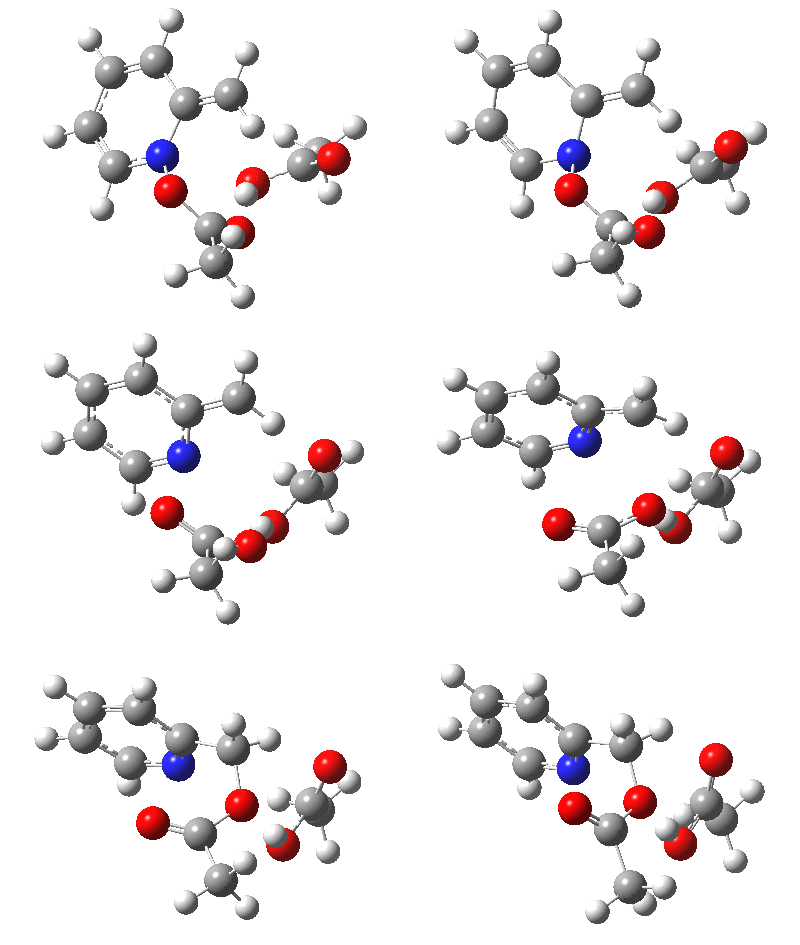
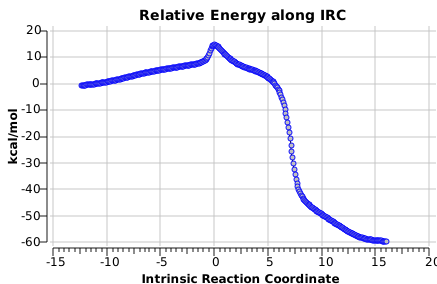
    The first model I built discards the apparently extraneous product in the first reaction, ethanoic acid. A transition state is located (ωB97XD/6-311G(d,p)/SCRF=dichloromethane) and its intrinsic reaction coordinate is shown below.[cite]10.6084/m9.figshare.730627[/cite]

    Boek1

    Boek1 Boek1G
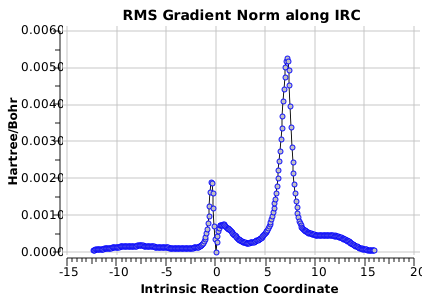
    1. One first notes that the reaction is concerted, with no intermediates along the route.
    2. The reaction barrier (~21 kcal/mol) is quite reasonable for a [3,3] sigmatropic reaction.
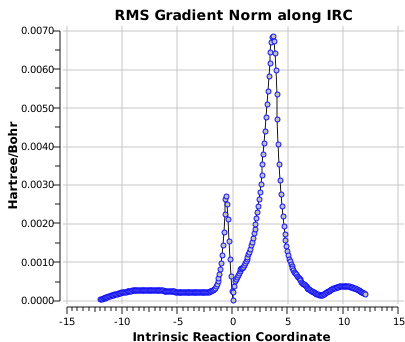
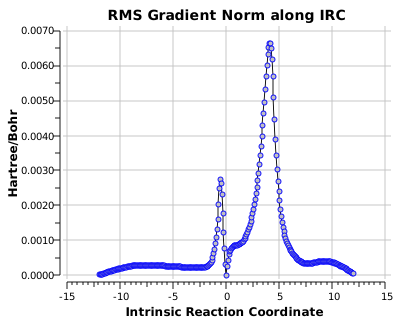
    3. There is an almost undiscernible blip (inflexion) in the gradient norm at about +1 and a more obvious one at IRC +8. The latter is a hidden intermediate corresponding to a conformational rotation about the newly formed C-O bond. The former is more significant, since it is providing the faintest of hints that a hidden intermediate[cite]10.1021/ar900013p[/cite] corresponding to an ion-pair (in red in the scheme above) might be attempting to form. But it is only a hint, no more.

    So an easy concerted pathway is indeed available. But the solvent model (dichloromethane) is not really very polar. How about water, which should better stabilise any ion-pair intermediate? That tiny blip in the gradient norm of the IRC (@~1) becomes a bit more prominent, but the reaction is computed as resolutely concerted.

    Boek2G

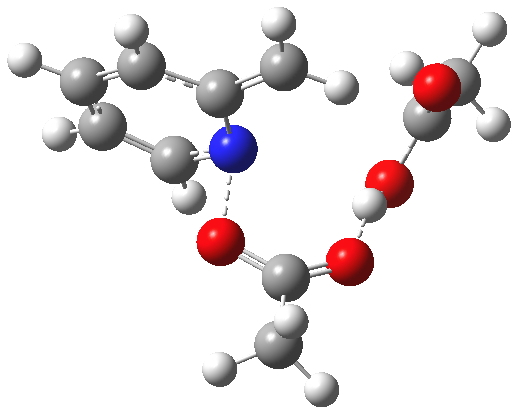
    So to explain why oxygen label scrambling is possible, we have to adopt a better model. That ethanoic acid discarded from our first attempt is re-instated. It serves the purpose of potentially stabilising any ion-pair which might form via explicit hydrogen bonds.[cite]10.6084/m9.figshare.730621[/cite]

    Click  for 3D.
    Click for 3D.

    The IRC[cite]10.6084/m9.figshare.731688[/cite] for this variation does indeed show a change; at IRC +3, there is now a very prominent hidden intermediate feature, showing that the additional molecule of ethanoic acid formed in the first step is stabilizing the ion-pair. It also serves to reduce the barrier to the reaction (by ~4 kcal/mol).

    Boek4
    Boek4  Boek4G

    Although the Boekelheide rearrangement sounds like a rather obscure reaction that few have heard of, discussing it actually introduces an important concept common to many reactions. That is that they can proceed via either relatively neutral or highly ionic pathways, and that the balance between these two may be both subtle and influenced by external factors. In this case, the formation of a hydrogen bond stabilising the transition state for the reaction. This of course is also how many an enzyme achieves its action! For the Boekelheide rearrangement, a single hydrogen bonded ethanoic acid promotes, but does not fully establish the ion-pair mechanism over the neutral [3,3] pericyclic rearrangement. However, one might imagine that adding perhaps a second explicit stabilising H-bond might swing the balance over from merely a hidden intermediate to a real (ion-pair) intermediate. It is also possible that changing the acidity of this component (by replacing e.g. CH3CO2H by e.g. CF3CO2H) might achieve the same result.

    As to whether “it is possible for two pathways to co-exist”, a nice example of this in my experience comes from the enantiomerisation of isobornyl chloride in cresol,[cite]10.1021/jo100920e[/cite] which has been shown by extensive isotope labelling to proceed by two concurrent but very different pathways. It is probably more common than we realise.


    It is worth noting that the [3,3] sigmatropic reaction is unimolecular, whereas the ethanoic-assisted variation is bimolecular. Apart from taking into account the entropic requirements of the latter, it is also necessary to redefine the standard state for the free energy from 1 atm to a more reasonable 1M, which reduces the free energy barrier by about 1.9 kcal/mol, and a correction which reduces the free energy of a bimolecular reaction a further 2.6 kcal/mol can be applied as a solvent correction.[cite]10.1021/ol060261z[/cite]. These two corrections mean that bimolecular solution reactions are often not so unfavourable compared to unimolecular equivalents as is often made out.

  • Woodward’s symmetry considerations applied to electrocyclic reactions.

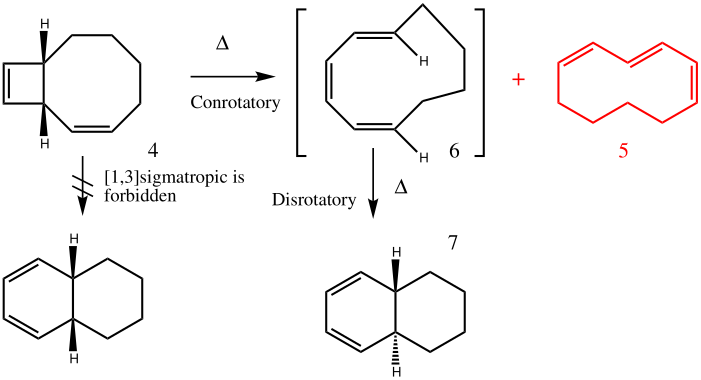
    Sometimes the originators of seminal theories in chemistry write a personal and anecdotal account of their work. Niels Bohr[cite]10.1007/BF01326955[/cite] was one such and four decades later Robert Woodward wrote “The conservation of orbital symmetry” (Chem. Soc. Special Publications (Aromaticity), 1967, 21, 217-249; it is not online and so no doi can be given). Much interesting chemistry is described there, but (like Bohr in his article), Woodward lists no citations at the end, merely giving attributions by name. Thus the following chemistry (p 236 of this article) is attributed to a Professor Fonken, and goes as follows (excluding the structure in red):

    wood

    A search of the literature reveals only one published article describing this reaction[cite]10.1021/jo00238a023[/cite] by Dauben and Haubrich, published some 21 years after Woodward’s description (we might surmise that Gerhard Fonken never published his own results). In fact this more recent study was primarily concerned with 193-nm photochemical transforms (they conclude that “the Woodward-Hoffmann rules of orbital symmetry are not followed”) but you also find that the thermal outcome of heating 4 is a 3:2 mixture of compounds 5 and 6, and that only 6 goes on to give the final product 7. It does look like a classic and uncomplicated example of Woodward-Hoffmann rules.

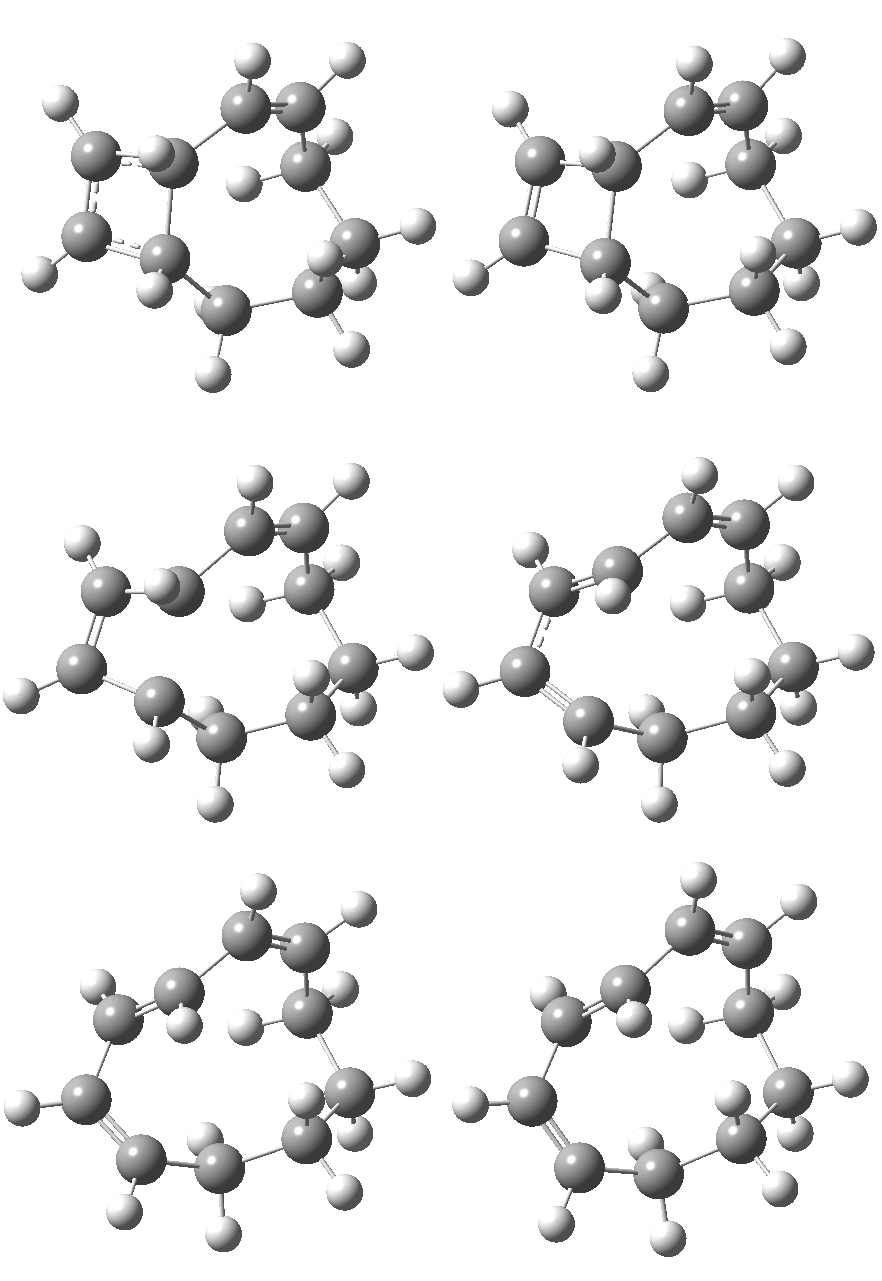
    So let us subject this system to a “reality check” (ωB97XD/6-311G(d,p) calculations). The transform of 4 → 5 rotates the two termini of the cleaving bond in a direction that produces the stereoisomer 5, with a trans alkene straddled by two cis-alkenes[cite]10.6084/m9.figshare.704833[/cite]. The two carbon atoms that define the termini of the newly formed hexatriene are ~ 4.7Å apart; too far to be able to close to form 7.

     4 → 5  4 → 6
    8 8

    But with any electrocyclic reaction, two directions of rotation are always possible, and it is a rotation in the other direction that gives 4 → 6[cite]10.6084/m9.figshare.704834[/cite], ending up with a hexatriene with the trans-alkene at one end and not the middle (for which the free energy of activation is 3.1 kcal/mol higher in energy). Now the two termini of the hexatriene end up ~3.0Å apart, much more amenable to forming a bond between them to form 7.

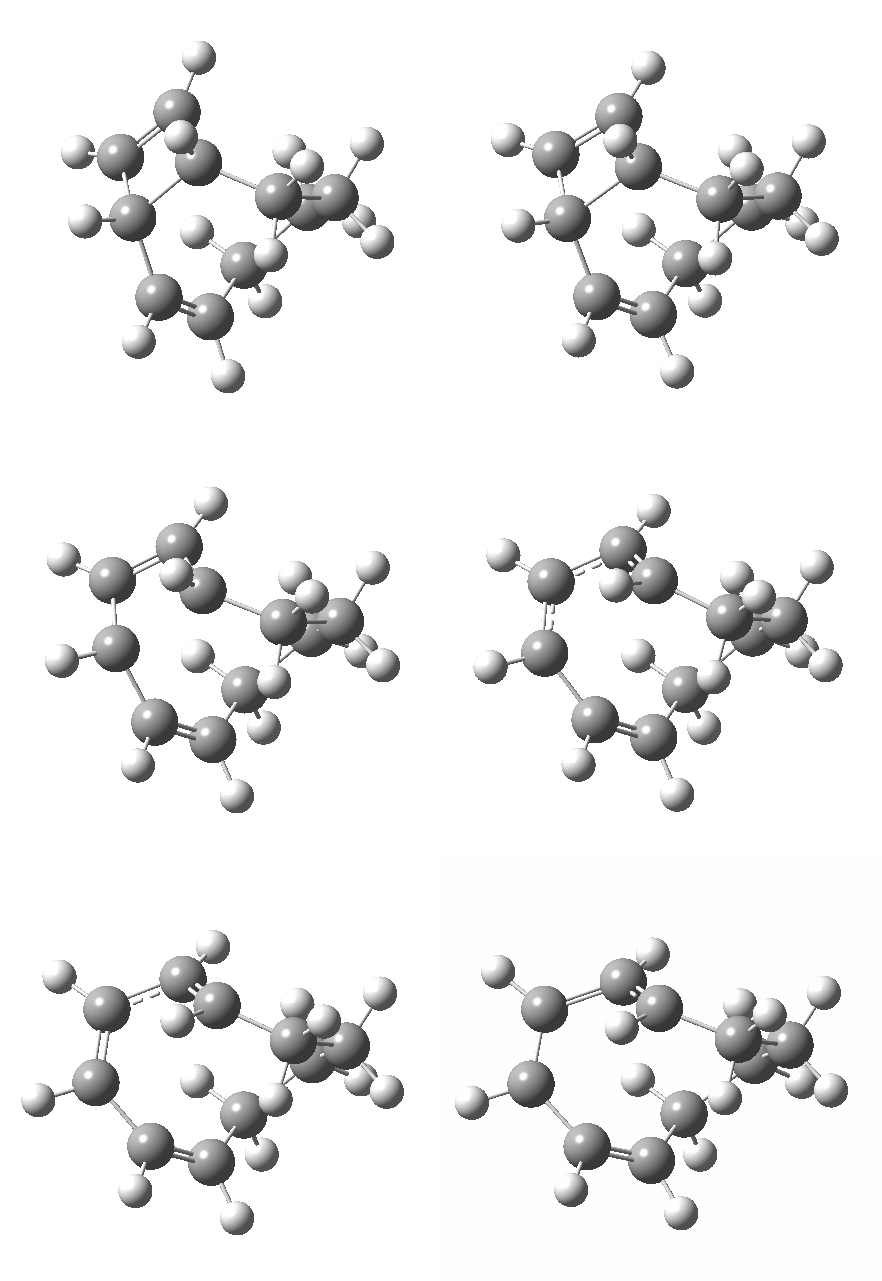
    It is at this point that the apparently uncomplicated nature of this example starts to unravel. If one starts from the 3.0Å end-point of the above reaction coordinate and systematically contracts the bond between these two termini, a transition state is found leading not to 7 but to the (endothermic) isomer 8.[cite]10.6084/m9.figshare.704755[/cite]This form has a six-membered ring with a trans-alkene motif (which explains why it is so endothermic). 

    wood1
    6 ↠ 8
    8 wood2

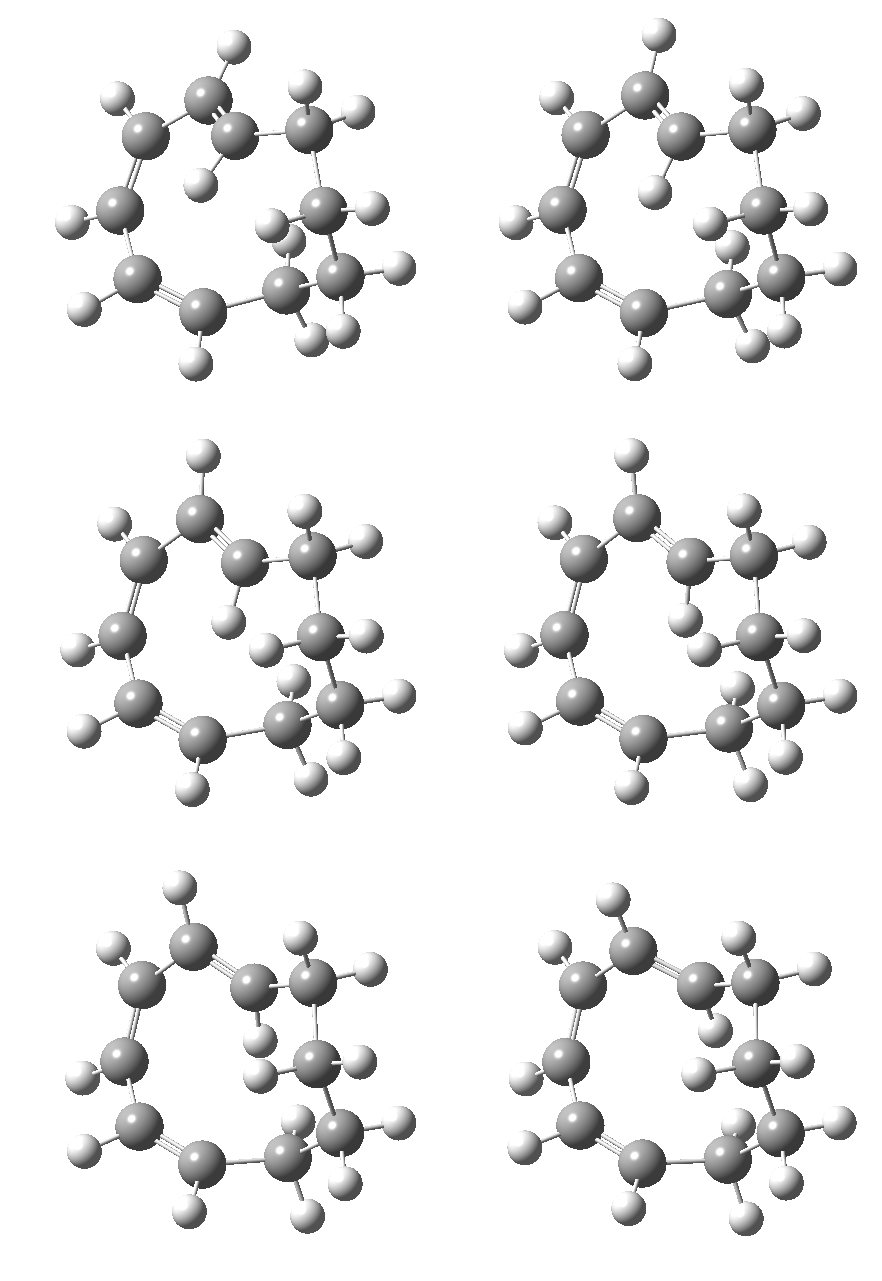
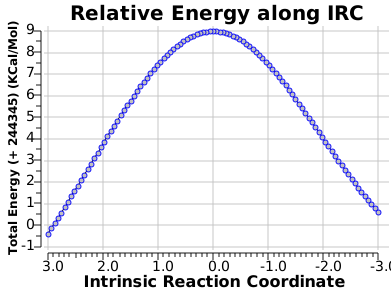
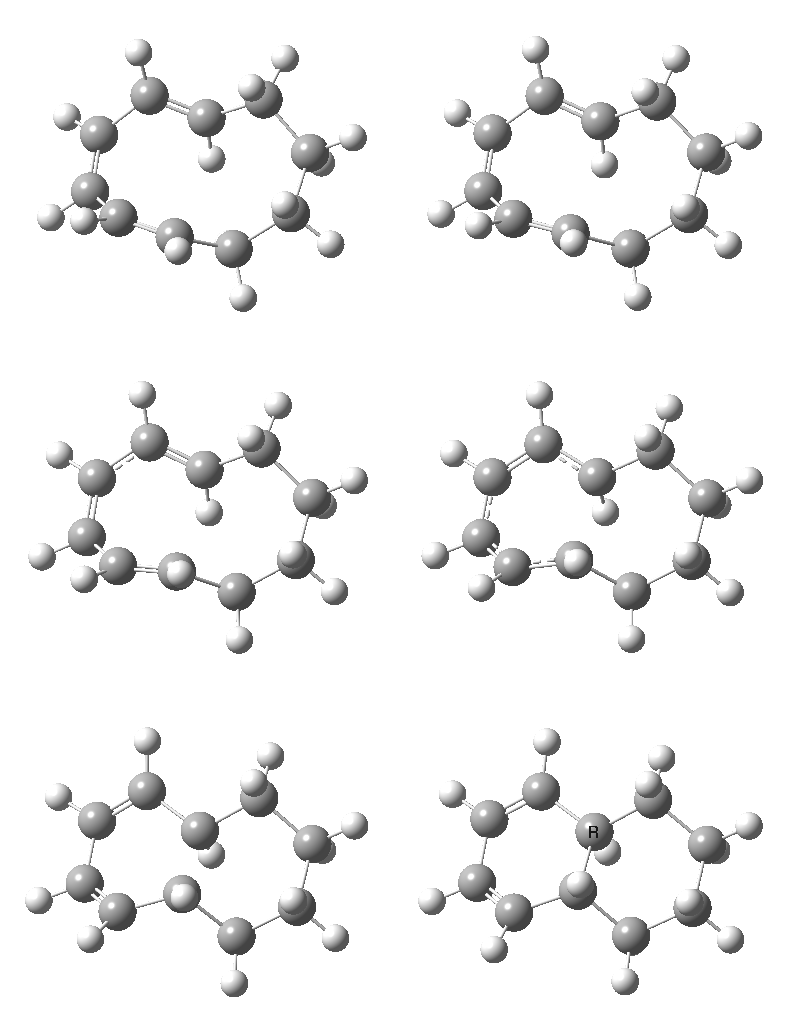
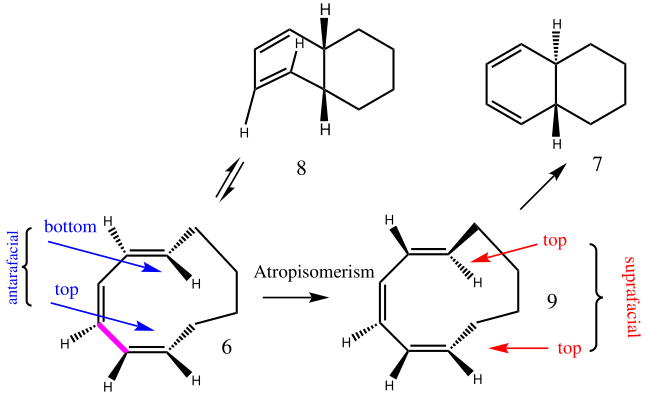
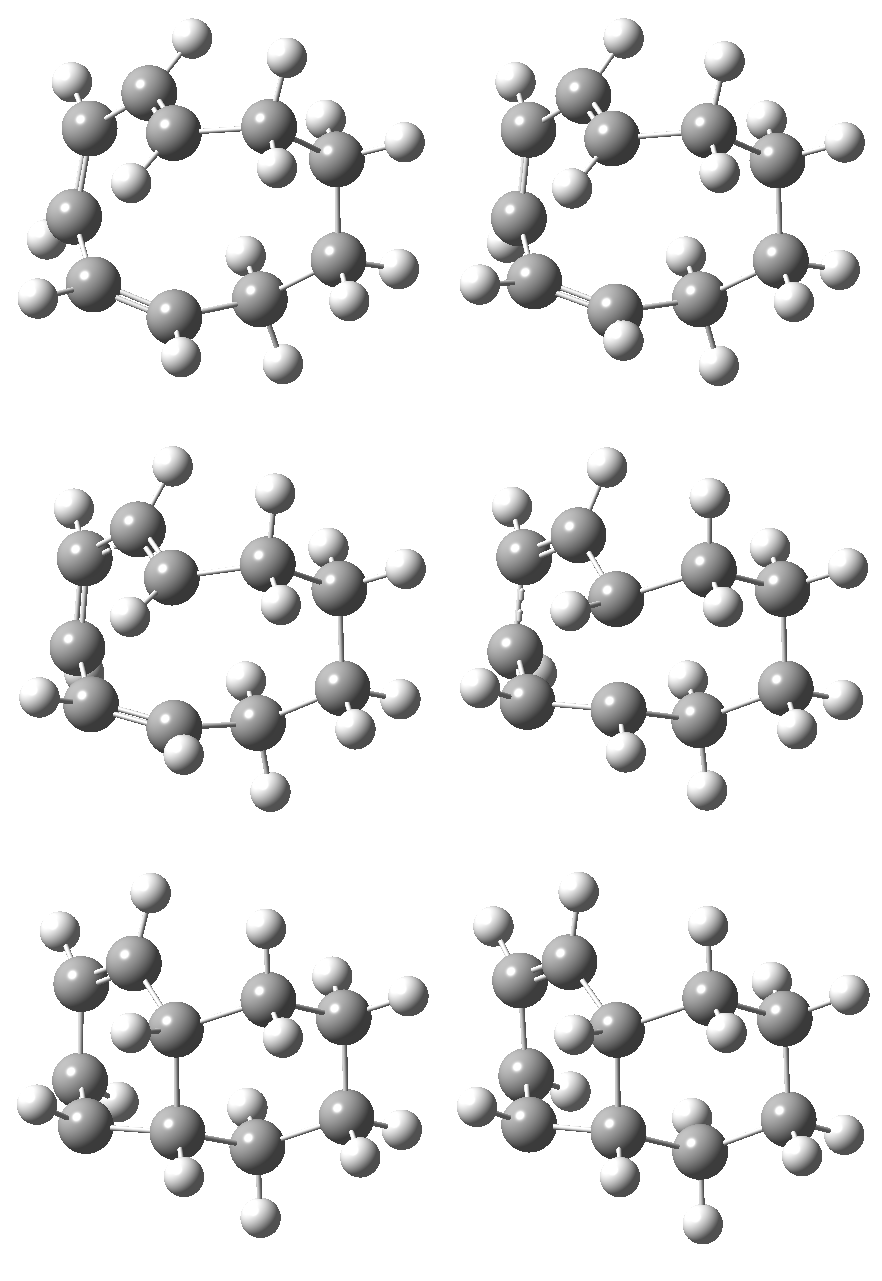
    Before discussing the implications of this transition state, I illustrate another isomerism that 6 can undertake; a low-barrier atropisomerism[cite]10.6084/m9.figshare.704754[/cite] to form 9, followed by another reaction with a relatively low barrier, 9 ↠  7[cite]10.6084/m9.figshare.704844[/cite]to give the product that Woodward gives in his essay.

    6 ↠ 9
    6-atrop 6-atrop
    9 ↠ 7
    9to7a 9to7a

    We can now analyse the two transformations 6 ↠ 8 and 9 ↠  7. The first involves antarafacial bond formation (blue arrows) at the termini and an accompanying 180° twisting about the magenta bond which creates a second antarafacial component[cite]10.6084/m9.figshare.704841[/cite]. So this is a thermally allowed six-electron (4n+2) electrocyclisation with a double-Möbius twist[cite]10.1039/b510508k[/cite]. The second reaction is a more conventional purely suprafacial version[cite]10.6084/m9.figshare.704995[/cite] (red arrows) of the type Woodward was certainly thinking of; it is 18.0 kcal/mol lower in free energy than the first (the transition state for 6 ↠ 9 is 10.8 kcal/mol lower than that for 9 ↠ 7).

    I hope that this detailed exploration of what seems like a pretty simple example at first sight shows how applying a “reality-check” of computational quantum mechanics can cast (some unexpected?) new light on an old problem. We may of course speculate on how to inhibit the pathway 6 ↠ 9 ↠ 7 to allow only 6 ↠ 8 to proceed (the reverse barrier from 8 is quite low, so 8 would have to be trapped at very low temperatures). 

  • Au and Pt π-complexes of cyclobutadiene.

    In the preceding post, I introduced Dewar’s π-complex theory for alkene-metal compounds, outlining the molecular orbital analysis he presented, in which the filled π-MO of the alkene donates into a Ag+ empty metal orbital and back-donation occurs from a filled metal orbital into the alkene π* MO. Here I play a little “what if” game with this scenario to see what one can learn from doing so.

    Au+cbd

    Firstly, I will use Au+ instead of Ag+, so as to make a comparison with Pt2+ a little more direct. The electronic configurations are of course [Xe].4f14.5d10.6s0 and [Xe].4f14.5d8.6s0 respectively. I will also replace a simple ethene with cyclobutadiene, the intent here being that this cyclo-diene is a very much better π-donor due to its anti-aromatic character. It also now has the possibility of acting as a four or a two-electron donor. I started with M=Pt+[cite]10.6084/m9.figshare.703546[/cite] by adding another double bond to the structure of the ethene complex. 

    Pt-cbd

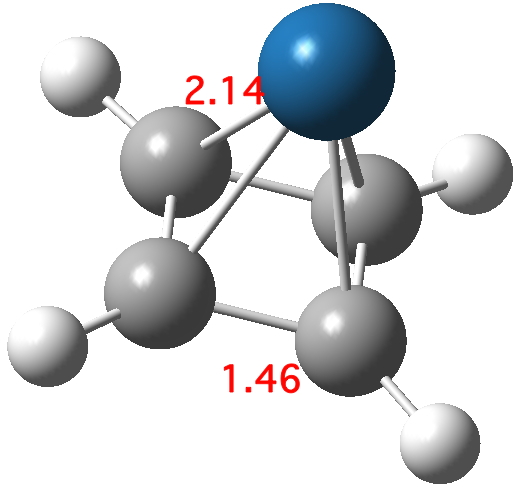
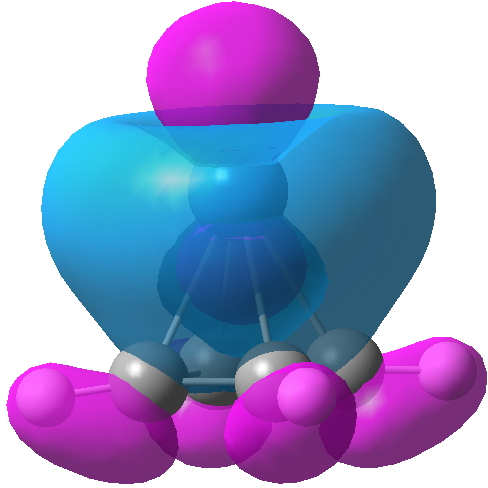
    Optimising this starting structure in fact moves the metal and the final geometry has C4v symmetry; in other words the metal is bound symmetrically to all four carbons. The four C-C lengths are all the same (1.46Å) and strongly suggest that four electrons from the cyclobutadiene are participating in bonding; the Pt2+ is clearly capable of accepting four electrons, two into 6sand two into 5d8. In the process, the cyclobutadiene looses its antiaromaticity. The molecular orbitals of this species are all lovely; I illustrate just one below.

    Click for  3D.
    Click for 3D.

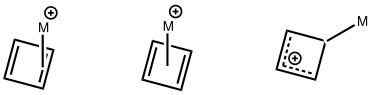
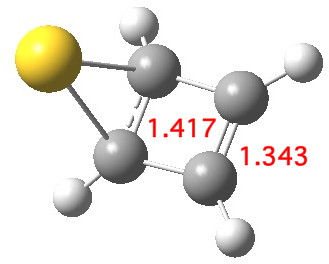
    If the Pt in this C4v structure is mutated into Au+, the resulting optimised stationary point exhibits a negative force constant characteristic of a transition state[cite]10.6084/m9.figshare.703547[/cite]. As the d-shell is already fully, the Au can only accept two electrons, and this is therefore a nice illustration of the “18-electron” rule in operation. So, the Au+ complex must exist in at least one lower energy form. For example, one where the Au+ is coordinated to only one alkene is 94 kcal/mol lower in free energy.[cite]10.6084/m9.figshare.703576[/cite] This form results in electrons from the coordinated alkene being donated into the 6s Au orbital, and this action reduces the anti-aromaticity of the cyclobutadiene ring.

    Au-cs

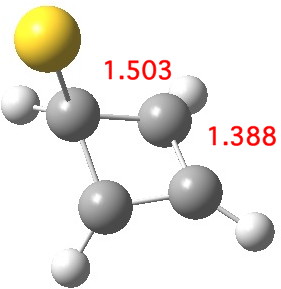
    Another isomer also achieves this result, resulting in a further lowering in free energy of 11.0 kcal/mol[cite]10.6084/m9.figshare.703577[/cite] The anti-aromaticity this time is eliminated by forming an allyl cation on the ring. I have described this mode in another post, commenting on the effect when a guanidinium cation interacts with cyclobutadiene.Au-cs1

    We have learnt that cyclobutadiene has many modes for eliminating 4n-electron antiaromaticity and other destabilising influences upon the ring. It can accept four electrons from a suitable acceptor (Pt2+), or two electrons from Au+ in two different ways.