Tag: free energy

  • Hidden intermediates in the (acid catalysed) ring opening of propene epoxide.

    In a previous post on the topic, I remarked how the regiospecific ethanolysis of propene epoxide[cite]10.1021/ja01208a047[/cite] could be quickly and simply rationalised by inspecting the localized NBO orbital calculated for either the neutral or the protonated epoxide. This is an application of Hammond’s postulate[[cite]10.1021/ja01607a027[/cite] in extrapolating the properties of a reactant to its reaction transition state. This approach implies that for acid-catalysed hydrolysis, the fully protonated epoxide is a good model for the subsequent transition state. But is this true? Can this postulate be tested? Here goes.
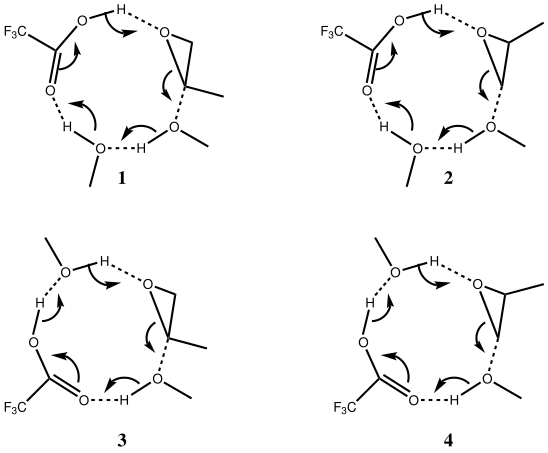
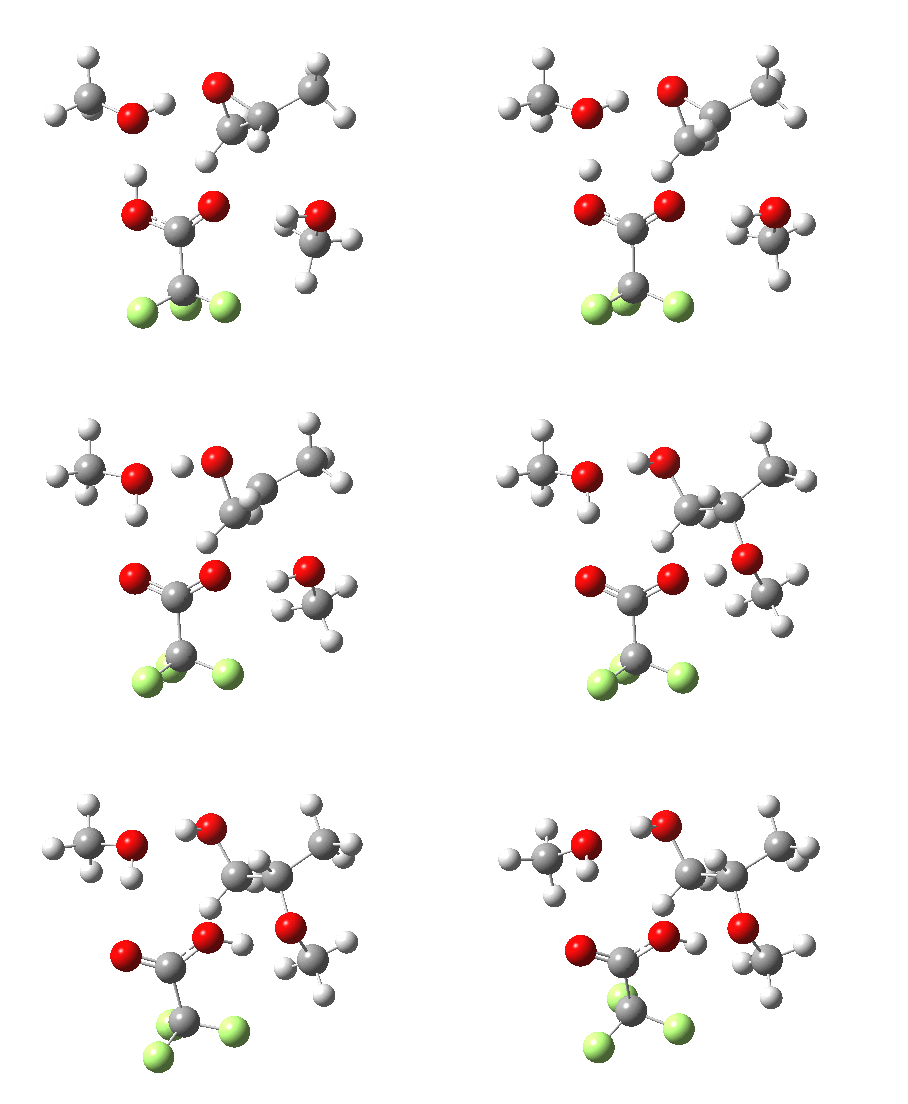
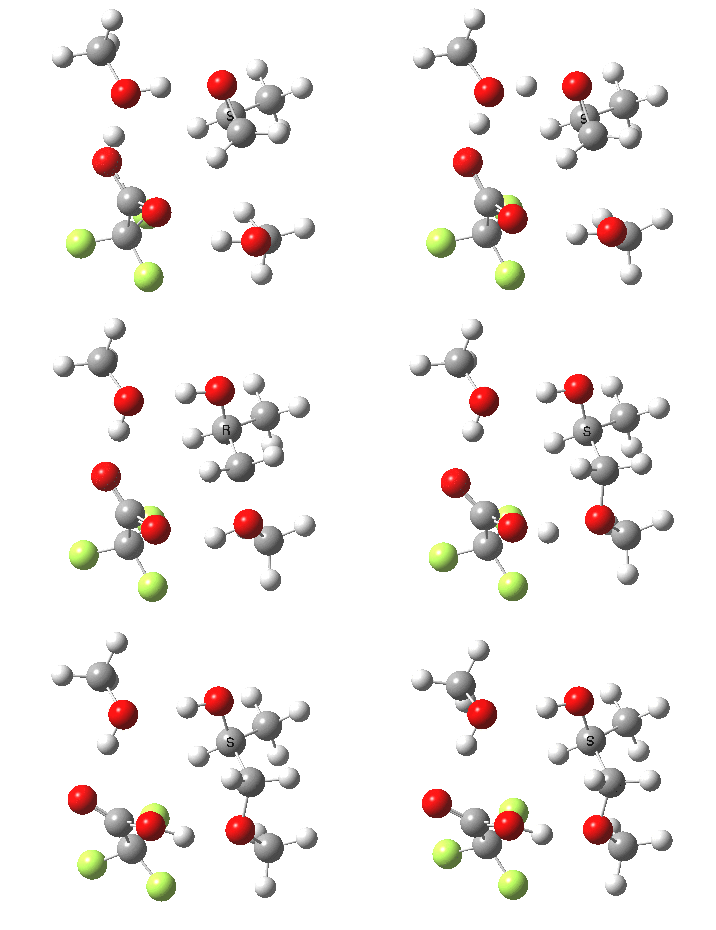
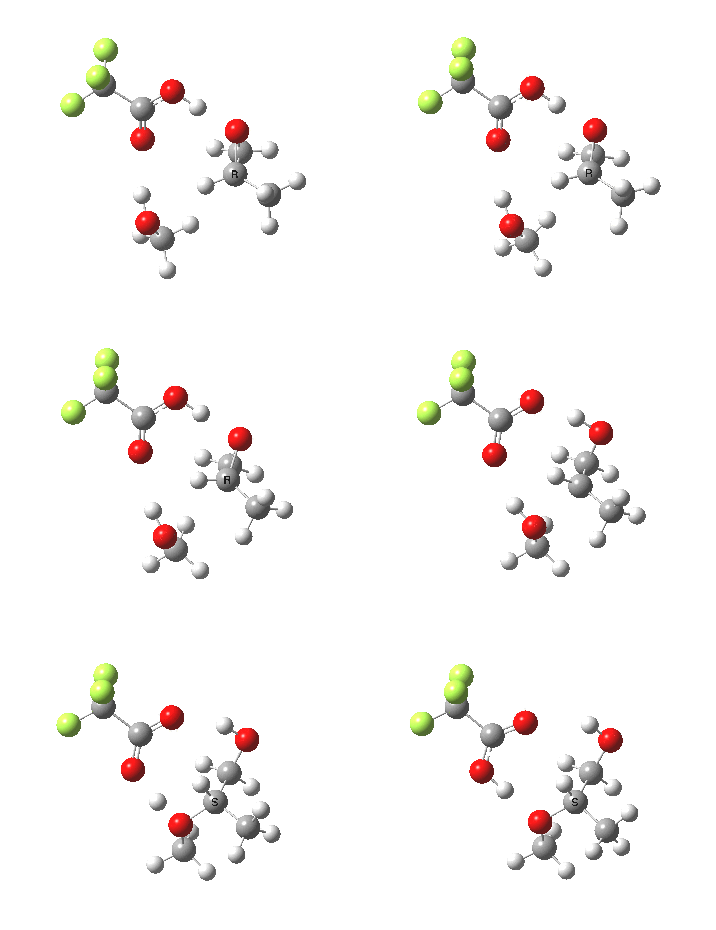
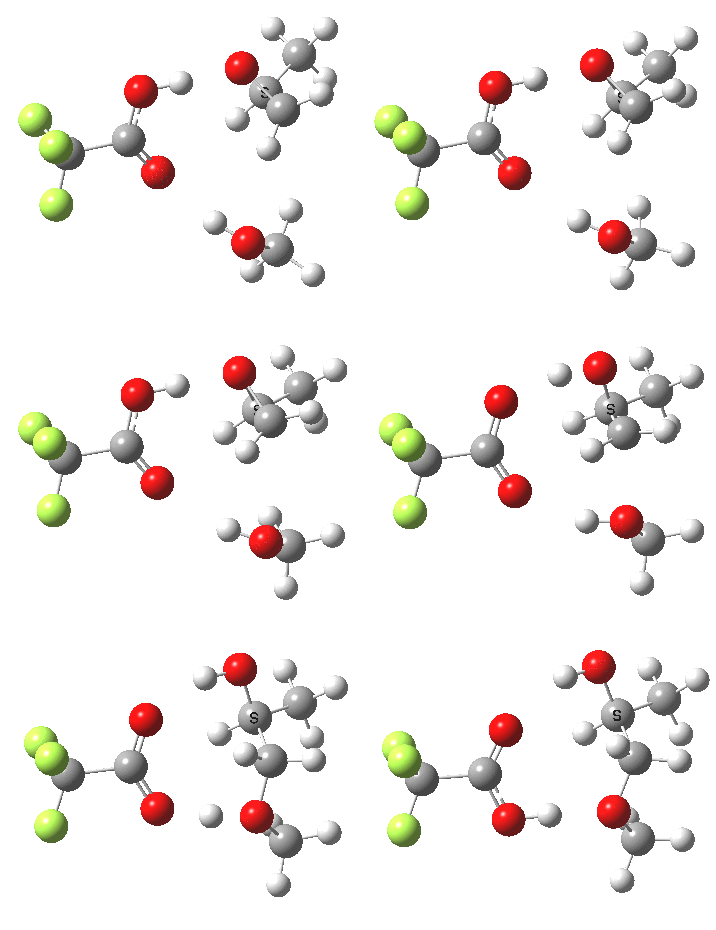
    pe_cf3Here, I show eight transition state models. As the acid I use CF3CO2H, with methanol as the nucleophile attacking propene epoxide, and I have initially included one additional methanol helping facilitate the proton transfers. Isomeric transition states differ in where the methyl substituent is located (1/2 and 3/4) and in the relative position of the acid and the additional methanol (1/3 and 2/4). In 1/2, the acid is directly protonating the oxygen of the epoxide. In 3/4, it is instead inducing methanol to act as its proxy. Two further transition states 5 and 6 directly replace the CF3CO2H with one (much less acidic) methanol, to test the effect the presence of the acid has on the reaction barriers. Finally,  7 and 8 remove from these models the non-nucleophilic proxy methanol from the ring to test the effect of reducing ring size from 10 to 8.

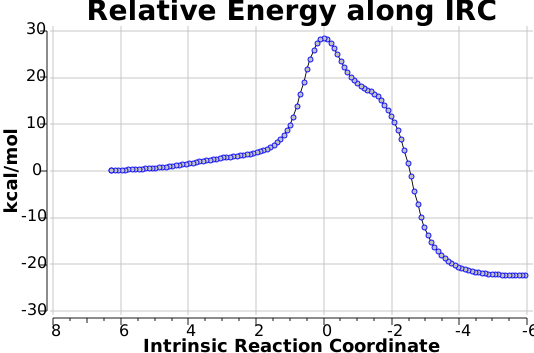
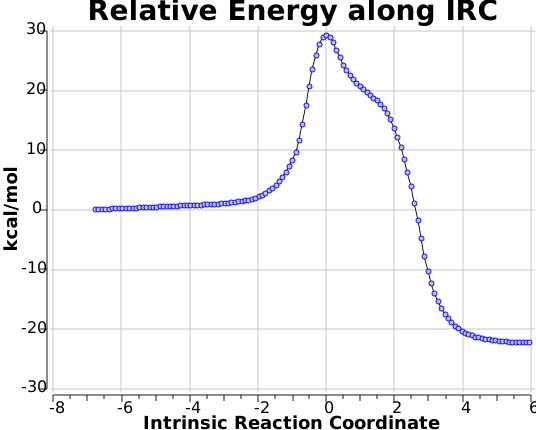
    With no catalyst present, we know that the rate of hydrolysis is very slow[cite]10.1021/ja01208a047[/cite], and that the major product (55%) is the 1-alkoxy-2-propanol, with the 2-alkoxy-1-propanol being the minor component (16%). As acid concentration increases, the amount of the latter eventually exceeds the former. The computed barriers (ωB97XD/6-311G(d,p)SCRF=methanol) for this mode (transition states 5 and 6) are ~29 kcal/mol, which pretty much matches the experimental observation (for ethanol). What does not match is the preference for nucleophilic attack at the least substituted carbon resulting in 1-alkoxy-2-propanol; instead the  2-alkoxy-1-propanol is predicted to have the lower free energy barrier of activation by 1.7 kcal/mol. This will need further investigation in a future post.


    Property 5, 2-alkoxy-1-propanol 6, 1-alkoxy-2-propanol.
    ΔΔG‡, kcal/mol 0.0 +1.7
    IRC animation pe-meOH pe-meOH-iso
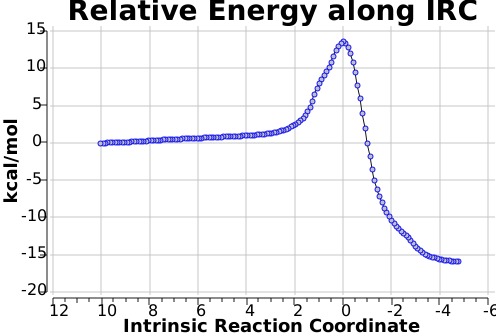
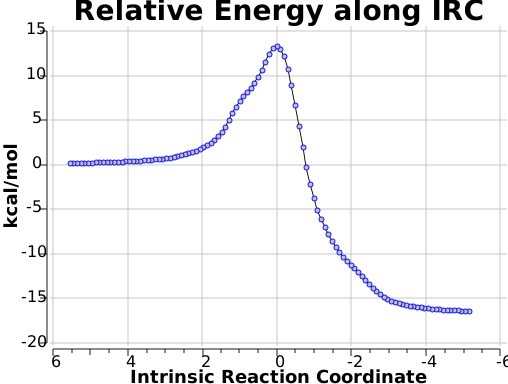
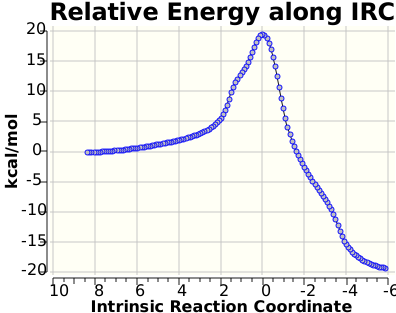
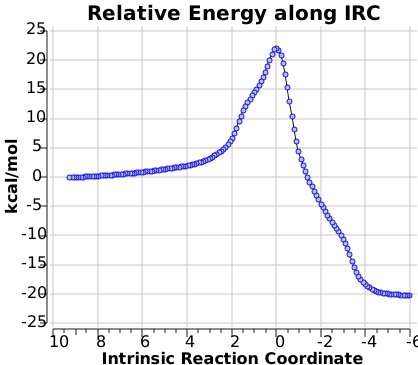
    IRC Energy pe-meOH pe-meOH-iso
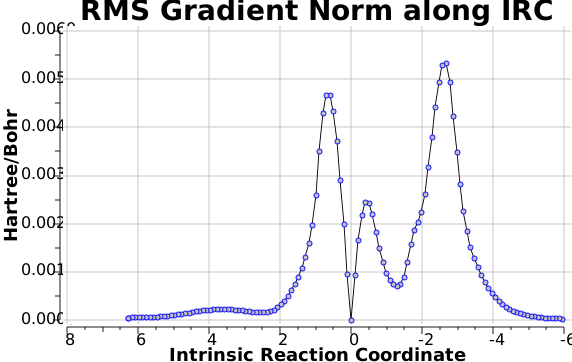
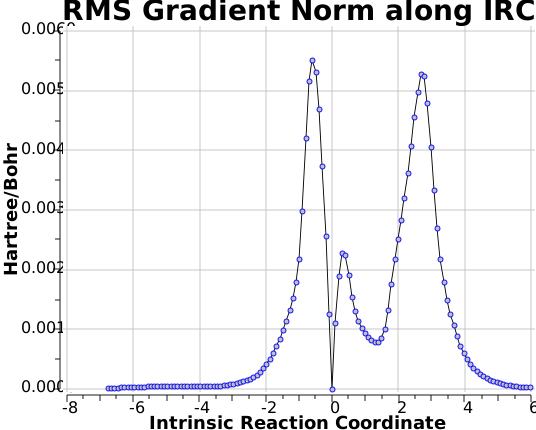
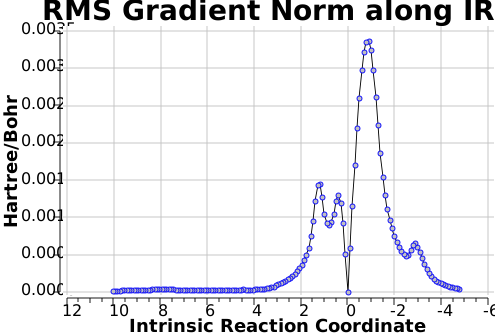
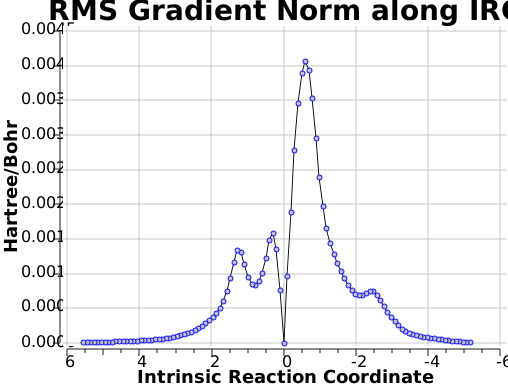
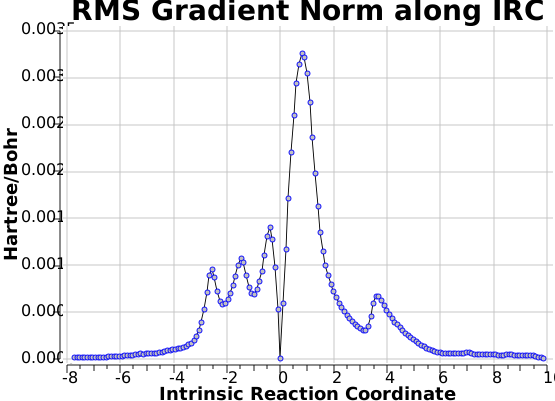
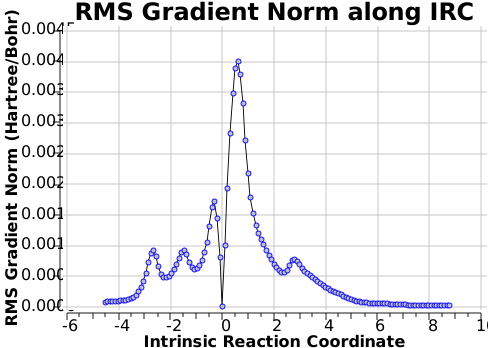
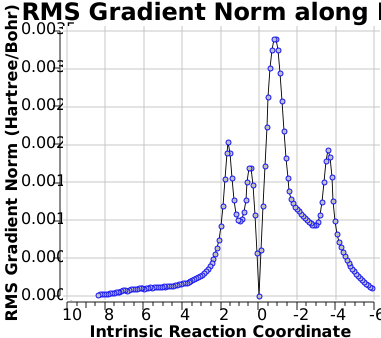
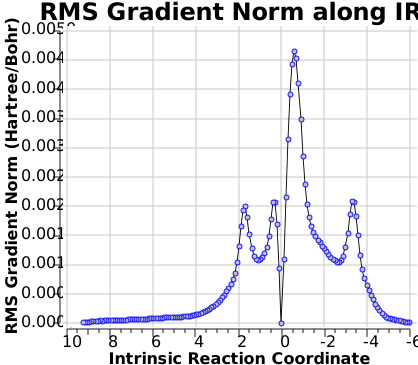
    IRC Gradients pe-meOHG pe-meOH-isoG
    IRC [cite]10.6084/m9.figshare.694931[/cite] [cite]10.6084/m9.figshare.694918[/cite]

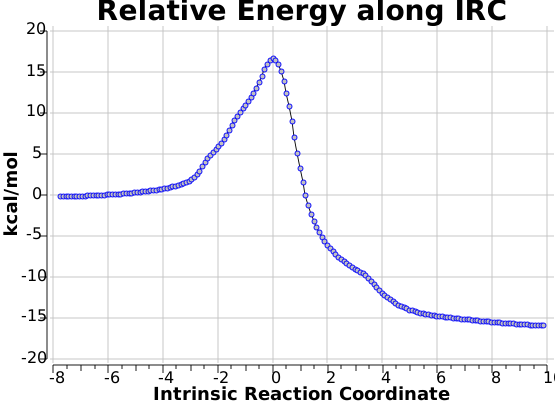
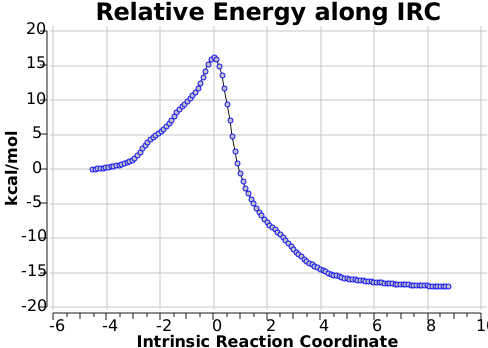
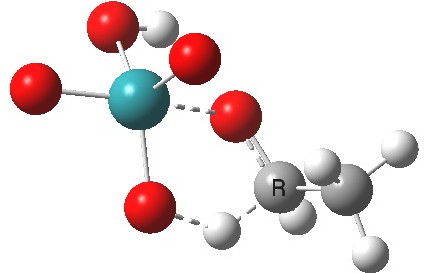
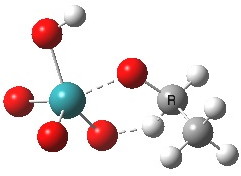
    What of the IRCs? Both isomers show an interesting dip in the gradient norms (at~-1.5 for 5 and +1.5 for 6), typical of a “hidden intermediate“. The geometry at this point (below) shows that the erstwhile epoxide bonds are largely formed/cleaved, and this has resulted in a zwitterionic intermediate attempting to form (the nucleophilic oxonium being +ve and the cleaved oxyanion -ve). Such species have no permanence however (not for even one molecular vibration), and are immediately destroyed by three more or less synchronous proton transfers (IRC -2.5 or +3.0). I would add that in many a text-book illustration of this process, this “hidden intermediate” would in fact be exposed as an explicit actual intermediate.
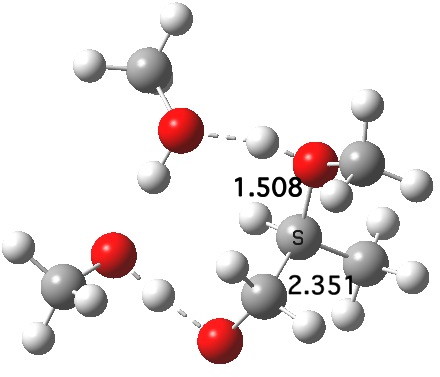
    Click for  3D.
    Click for 3D.

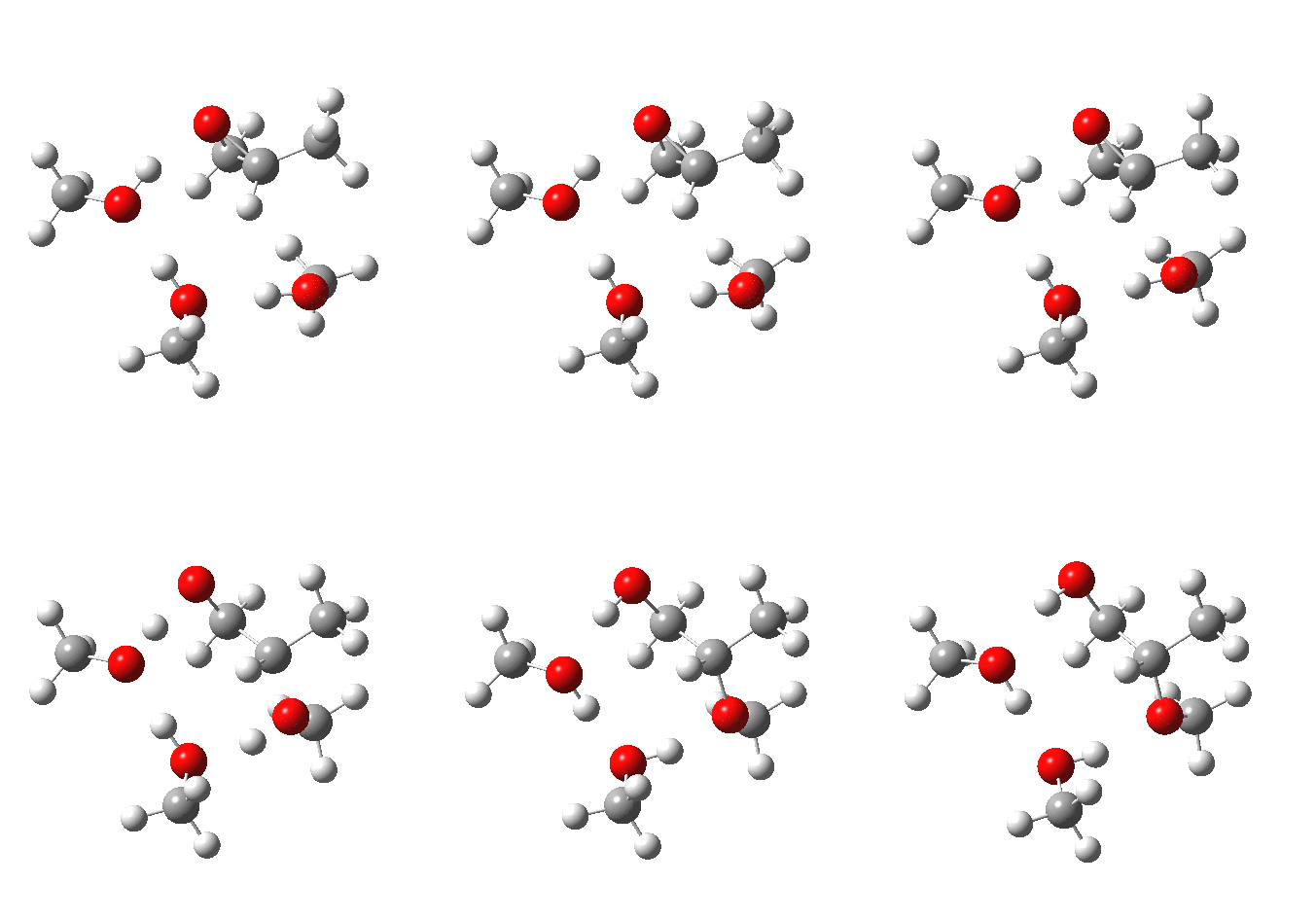
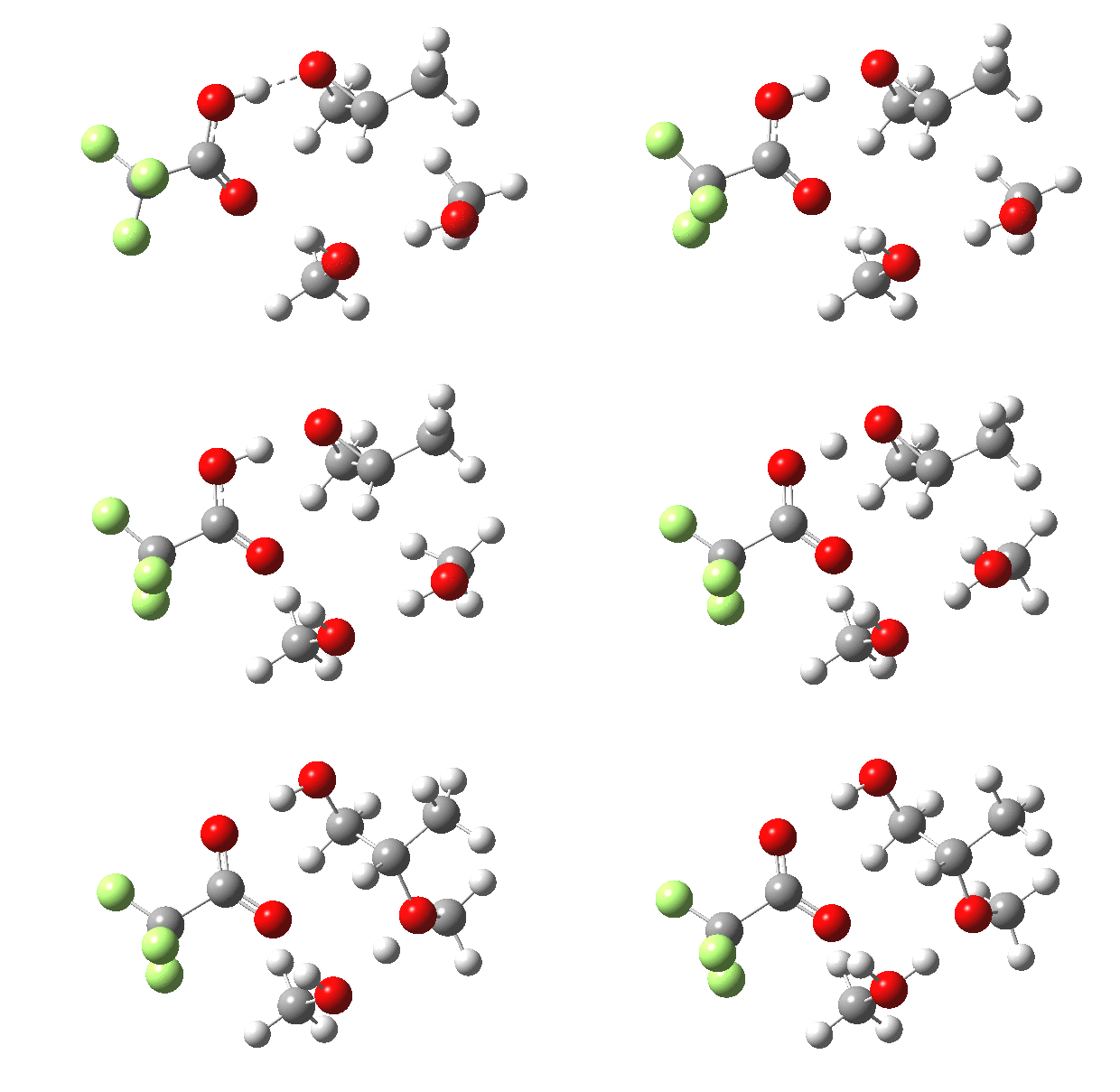
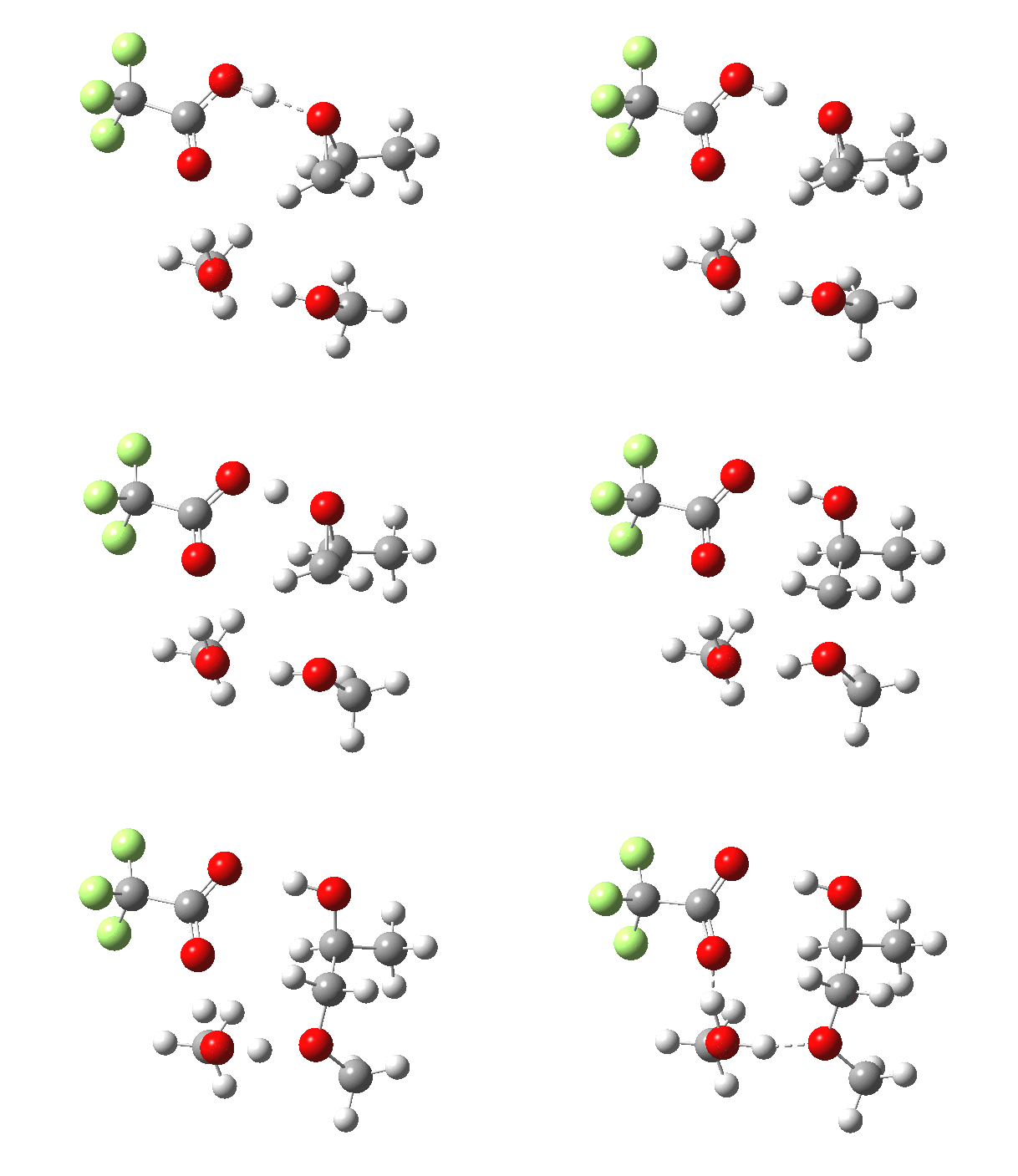
    What happens when we replace one methanol in the above model with one molecule of trifluoracetic acid, resulting in transition states 14 (below). 

    1. The barrier drops dramatically, from ~29 kcal/mol to ~13 kcal/mol. This changes the reaction from a very slow one at room temperatures to a very fast one at room temperatures.
    2. The IRC now shows an extra “hidden intermediatebefore the transition state, as well as one after. The synchronicity of the proton transfers is broken, and now they occur in two distinct stages, one before and one after the transition state. The one before corresponds to protonation of the epoxide oxygen by the trifluoracetic acid, which occurs before the C-O bond is formed/cleaved at the transition state itself. The second hidden intermediate corresponds to the zwitterion arising from the  trifluoracetic anion and the oxonium cation located at the original attacking methanol. This is then subjected to proton transfer (IRC ~ -2.5 in both cases) to transfer the proton onto the auxiliary methanol to form what appears to be the final ring-opened neutral product in the presence of methyl oxonium trifluoroacetate.
    3. So adding a species which can form a stable anion (in other words a strong acid) de-synchronises the reaction. However, all the intermediates are still hidden, and the process is still concerted!
    4. But, oddly, the predicted preference for 1 is if anything slightly decreased compared to the use of methanol only in the model (i.e. 5/6). This does not seem to correspond to the increased prevalence of 1 in the presence of acid as observed in the experiments.

    Property 1,2-alkoxy-1-propanol 2, 1-alkoxy-2-propanol.
    ΔΔG 0.0  +1.4 
    IRC animation pe-MeOH-CF3CO2Ha pe-MeOH-CF3CO2H-isoa
    IRC Energy pe-MeOH-CF3CO2Ha pe-MeOH-CF3CO2H-isoa
    IRC Gradients pe-MeOH-CF3CO2HG pe-MeOH-CF3CO2H-isoG
    IRC [cite]10.6084/m9.figshare.694894[/cite] [cite]10.6084/m9.figshare.694907[/cite]

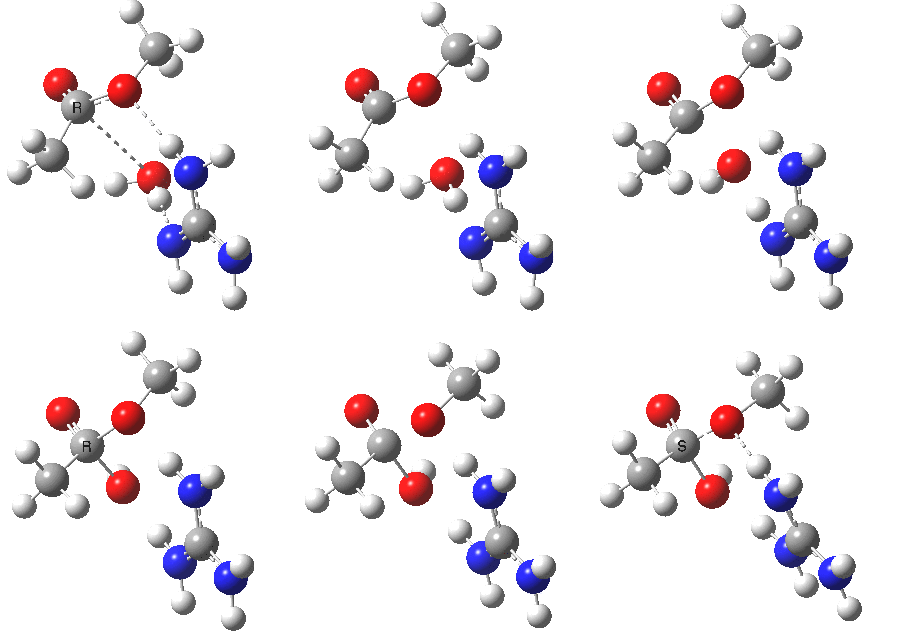
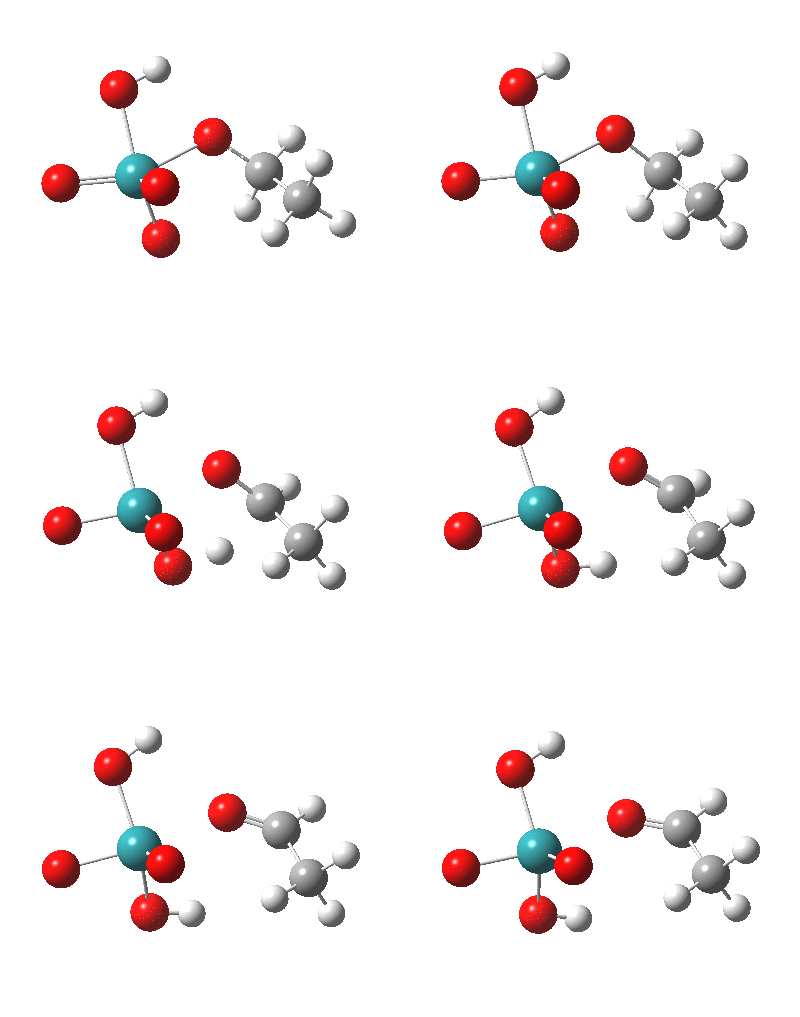
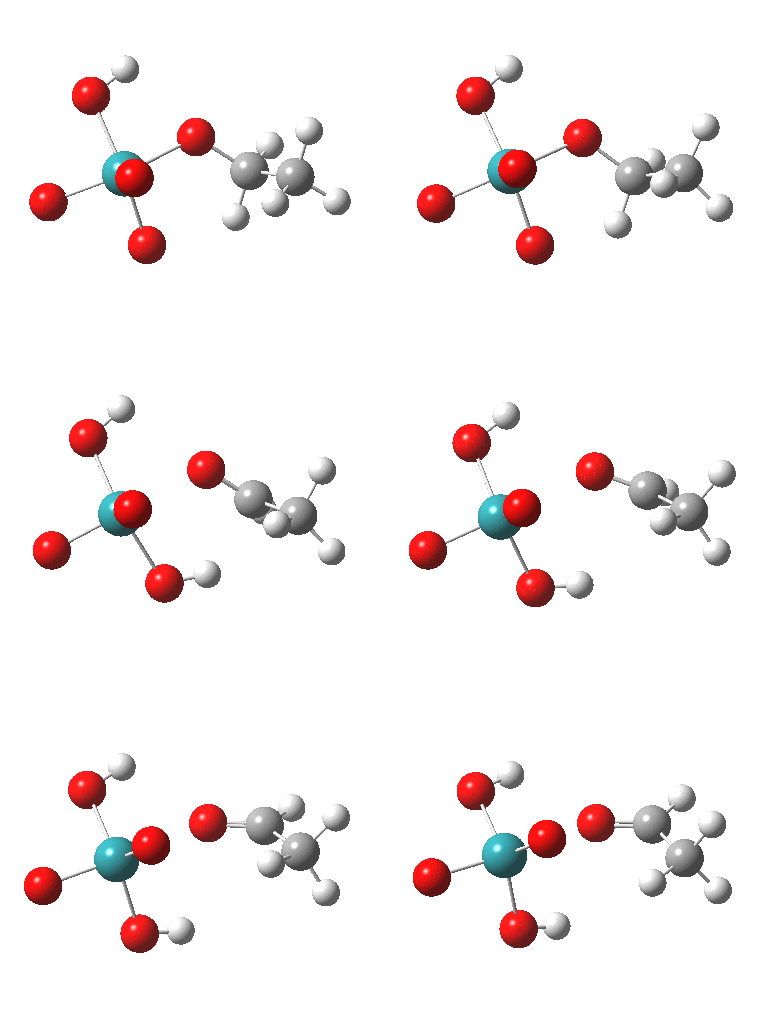
    Before moving on to the last models 7/8, I must mention the aspect of where the strong acid is located in the model. If it is located away from the epoxide oxygen, the IRC changes again, now revealing three hidden intermediates.

    1. The first corresponds to the acid transferring a proton to the non-nucleophilic methanol to form incipient methyl oxonium trifluoracetate
    2. The second has the methyl oxonium as an acid transferring its proton to the epoxide oxygen.
    3. Then comes the transition state when the O-C bonds are formed/broken.
    4. The last hidden intermediate is the oxonium trifluoracetate zwitterion resulting from ring opening, prior to a final proton transfer to reform trifluoroacetic acid.
    5. This pathway overall in free energy, is about 2.0 kcal/mol higher than the previous one involving direct proton transfer from the acid itself.

    Property 3, 2-alkoxy-1-propanol 4, 1-alkoxy-2-propanol.
    ΔΔG 1.8 +3.5 
    IRC animation pe-MeOH-CF3CO2H-other  pe-cf3-other
    IRC Energy pe-MeOH-CF3CO2H-other  pe-cf3-other
    IRC Gradients pe-MeOH-CF3CO2H-otherG  pe-cf3-otherG
    IRC [cite]10.6084/m9.figshare.697508[/cite] [cite]-[/cite]

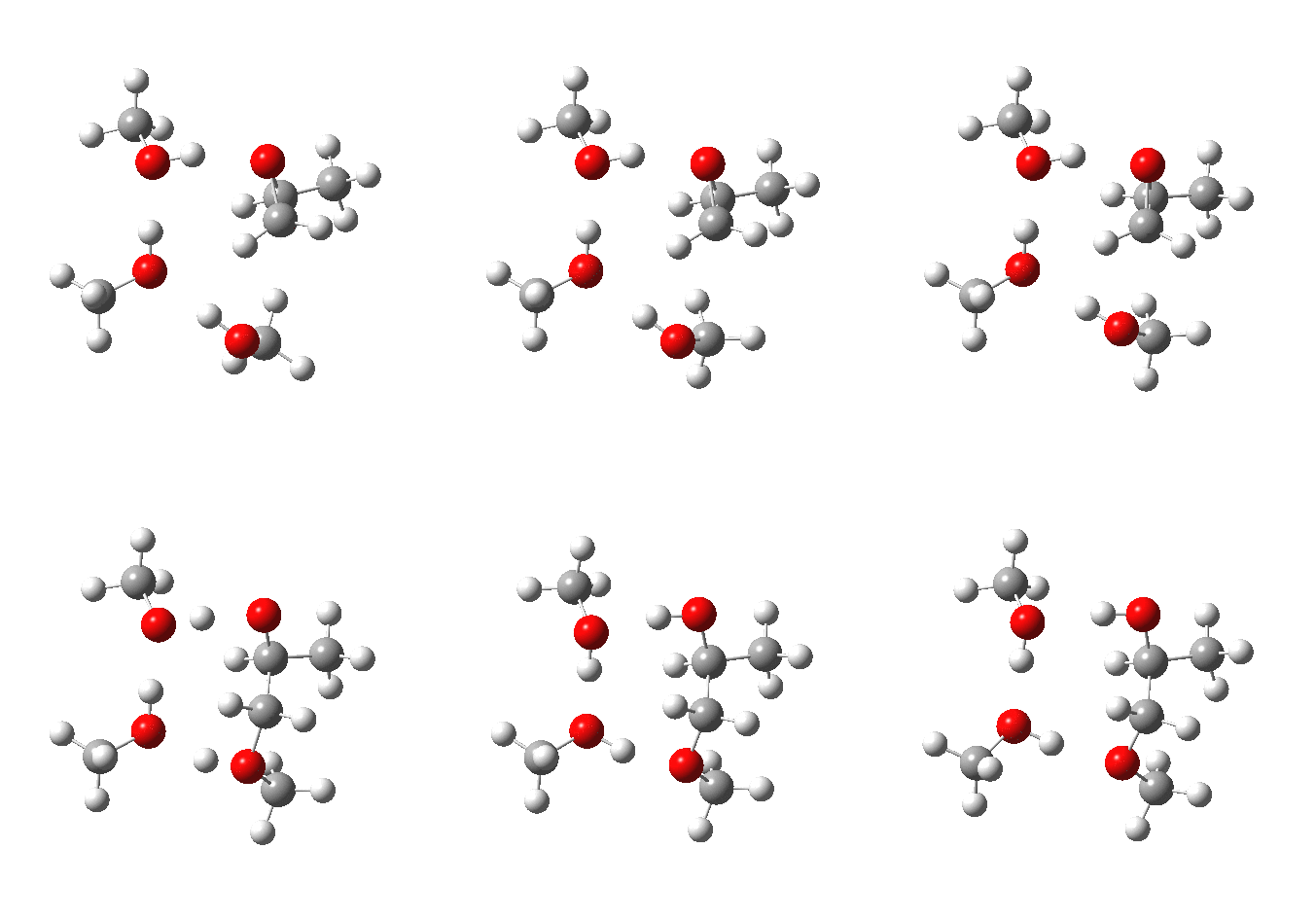
    The final model 7/8 tests what happens when that additional methanol is removed from the proton transfer sequence in 1-4. The smaller ring for the transition state induces an increase in the barrier from ~13 to ~20 kcal/mol; this model also naturally “absorbs” an addition methanol to decrease the free energy and mutate into 1-4. The preference for 7 over 8 is increased compared to the other models. The presence of two hidden intermediates in this model is particularly noticeable.


    Property 7, 2-alkoxy-1-propanol 8, 1-alkoxy-2-propanol
    ΔΔG 0.0 +3.5 
    IRC animation  pe-cf3+meoha pe-cf3-nome-othera 
    IRC Energy  pe-cf3+meoh  pe-cf3-nome-other
    IRC Gradients  pe-cf3+meohG  pe-cf3-nome-otherG

    To answer the question posed at the start of this post, in the IRC explorations above we see that in the presence of trifluoroacetic acid, the transition state is indeed preceded by a proton transfer. This reassures that Hammond’s principle can indeed be applied. The (relative) free energies of the acid catalysed transition state models used here all correctly predict the observed regiochemistry, but we still have to explore the base catalysed route. Watch this space.
  • A sideways look at the mechanism of ester hydrolysis.

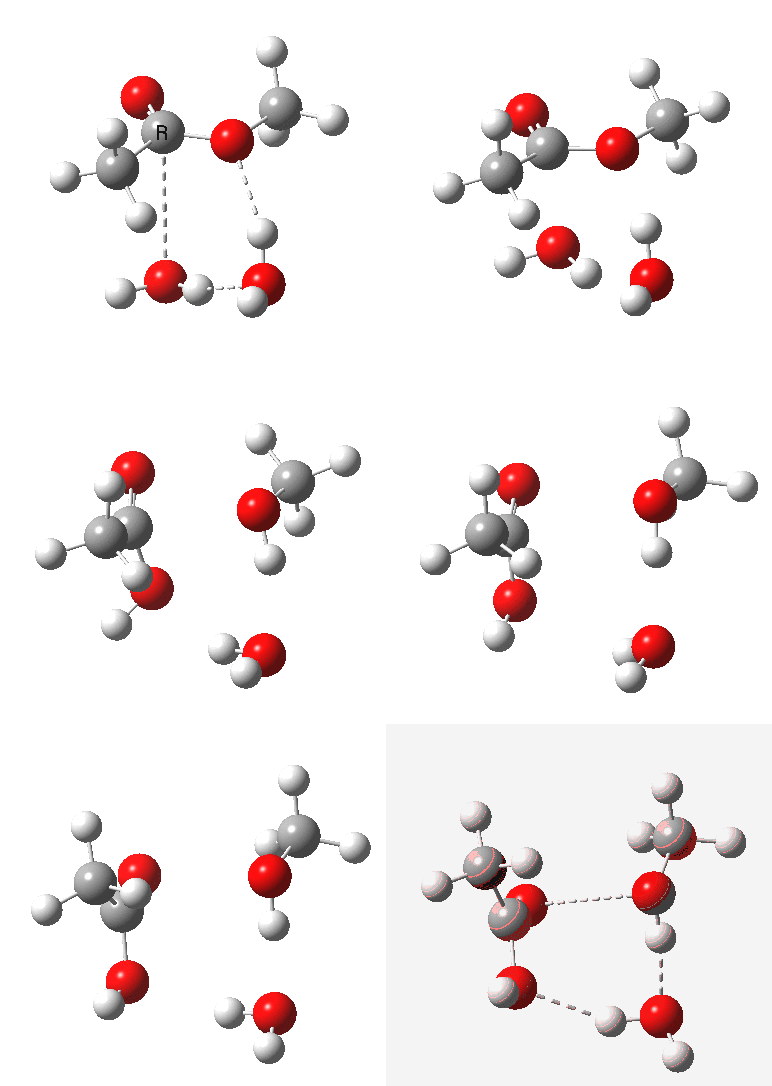
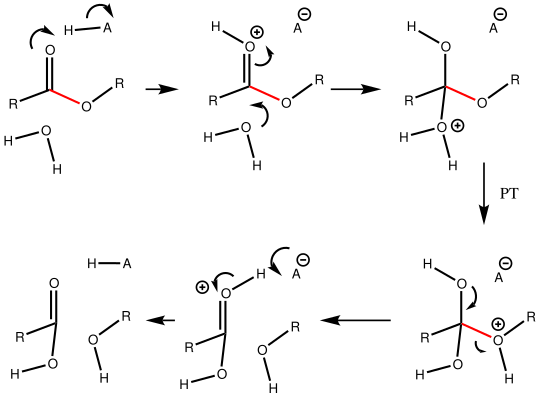
    The mechanism of ester hydrolysis is a staple of examination questions in organic chemistry. To get a good grade, one might have to reproduce something like the below. Here, I subject that answer to a reality check.

    actyl

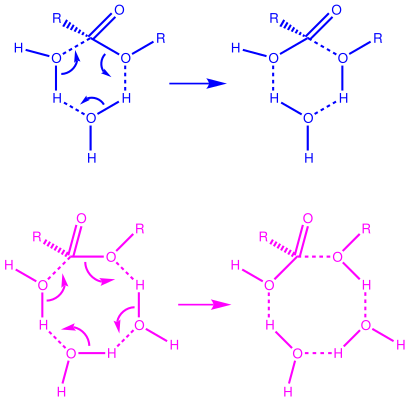
    In this scheme, HA is a general acid, R=Me, and the net result is to break what is called the acyl-oxygen bond (red). The mechanism is actually incomplete, since the label PT designates a proton-transfer (the mechanism for which is left somewhat undefined). Additionally, a lot of charges come and go and five steps or so are involved. So a student might be tempted to “fast-track” the whole process. Below I show two such fast-tracks (I prefer to say simplifications):

    acetyl-ester1

    In the blue mechanism, the role of HA is actually played by one water molecule, and a second water is assisting the PT step (a far more thorough analysis of the mechanism can be found in this reference[cite]10.1139/V09-011[/cite]). The reaction is bimolecular in ester and the HA (=water in this case). The third water would make it a termolecular reaction overall, but if the reaction takes place in water itself than [H2O] would be constant. It would correspond to what the text books call AAC2 since we consider one molecule as an acid HA. But, one could look at it differently and consider the second water as a nucleophile generated by concurrent deprotonation (by the first water). This would make it a BAC2 type. It turns out that if one makes the mechanism cyclic, the AAC2 and BAC2 annihilate each other in effect to create a single (peri)cyclic mechanism (which has no well known name, but might be referred to as the co-operative pathway). Such a mechanism can be extended using a third water molecule (magenta diagram); I will come to the reason for including that presently.

    Why would one want to even consider such mechanisms? Because, if you look carefully, you will see no charges! Charge separation (= large dipole moment) takes energy. It is normally thought that this energy is more than compensated for by additional solvation (a process which is implicit rather than explicitly shown in text-book diagrams). But if you do not generate charge separation, you might not need that solvation energy. I will turn to quantum mechanics to try to decide what might be viable (I hesitate to use the term “going on”). 

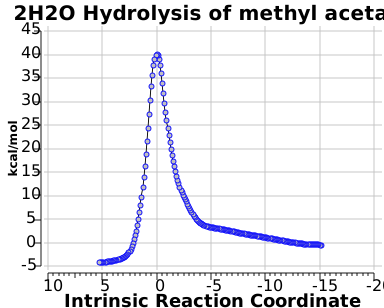
    A ωB97XD/6-311G(d,p)/SCRF=water model (in which solvation is approximately included as a continuum model) calculation yields the following for the blue mechanism.

    acyl-ester[cite]10.6084/m9.figshare.661351[/cite] acyl-ester
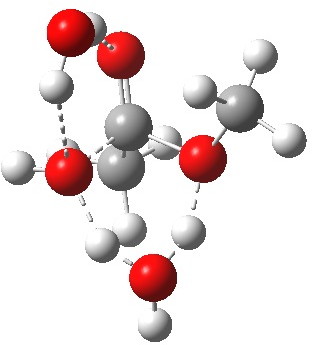
    1. Points to note are that it is concerted, in other words the quantum mechanics tells us that all the bonds CAN make and break in a single concerted process within a single kinetic step.
    2. The mechanism has an uncanny resemblance to the nucleophilic aromatic substitution I reported a couple of posts ago! It resembles an Sn2 displacement at an sp2 centre. Such juxtaposition of these two mechanisms is also not found in text-books. Recollect that with such aromatic substitution, it was possible to get both cncerted and stepwise mechanisms, depending on the substituents. Perhaps the same might be possible here?
    3. However, the energy barrier for the process with the substituents shown above (~45 kcal/mol) is rather too high (the experimental value is estimated as >22 kcal/mol[cite]10.1139/V09-011[/cite]). There may be at least three reasons for this;
      • (a) a better solvation model would be needed to lower the energy,
      • (b) the angles subtended at the transferring protons are strained (they optimally should be linear) and
      • (c) water is a very poor general acid (or base)!

    But as an answer in an examination, would the blue mechanism actually be wrong? You will have to ask the instructor setting the question how they might respond to that, although these authors[cite]10.1139/V09-011[/cite] certainly conclude that such a concerted mechanism is the more “correct”, at least for hydrolysis in water without added acid or base.

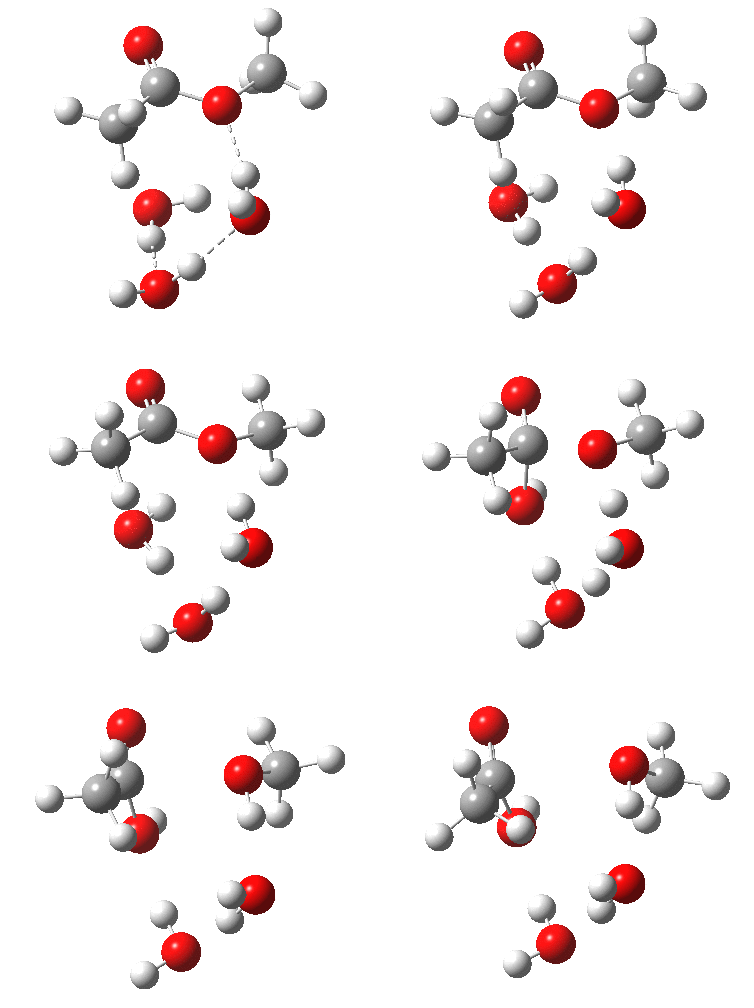
    Point  (b) above can be addressed by adding another water molecule, as per the magenta mechanism so as to enlarge the ring and reduce the angular strain. But before I present the results, I need to “normalise” the system by ALSO adding one (solvating) water molecule to the blue route, as below, so that we can directly compare the energies of the blue and magenta pathways.

    Click for  3D.
    Click for 3D.

    The result is a larger ring where the angular strain is clearly reduced. There is an entropic penalty for introducing that third water molecule, but despite this the free energy comes out 5.5 kcal/mol lower, and the activation barrier is also lower (~37 kcal/mol, still rather higher than experiment). It has been reported that incorporation of a 4th water molecule further improves matters[cite]10.1139/V09-011[/cite].

    acetyl3H2Oa[cite]10.6084/m9.figshare.661789[/cite]  acetyl3H2Oa
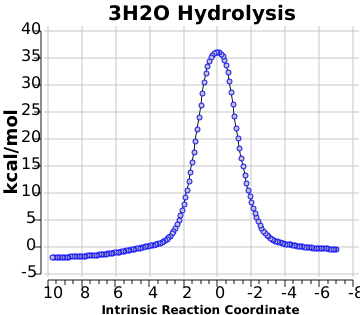
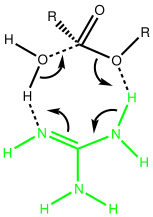
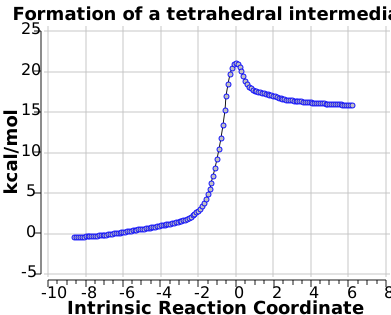
    We can also address both points (b) and (c) above by replacing HA=H2O by HA=guanidiniumH+ (green), a better general acid. This polar modification introduces the ability for the system to better sustain charge separations, and indeed the initial product is now an ion pair tetrahedral intermediate (methoxide anion and guanidinium cation) carrying a dipole moment of 14.5D, an increase over the value for the transition state with three waters, 9.7D. The barrier (~21 kcal/mol) has gone in the opposite direction, decreasing significantly compared to the water catalysed reaction. The tetrahedral intermediate sits in an energy well of ~4 kcal/mol.

    acetyl-ester2

    acet-g[cite]10.6084/m9.figshare.661791[/cite] acet-g
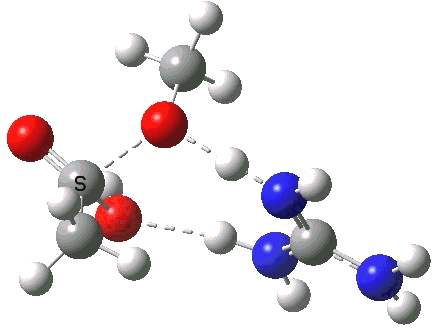
    A second transition state exiting the tetrahedral intermediate has a free energy barrier[cite]10.6084/m9.figshare.661799[/cite] about 2.5 kcal/ol lower than the one entering it.
    Click for  3D.
    Click for 3D.

    What might we have learnt? That ester hydrolysis using pure water could proceed through a cyclic and concerted transition state, involving three (or perhaps more) water molecules passing a proton baton along the chain, and in the process avoiding any large build up of charge separation. Replace two of these waters with say guanidine as a general acid/conjugate base capable of conjugatively stabilising charge-separated species and the mechanism changes to a stepwise reaction involving a dipolar tetrahedral intermediate sitting in a relatively shallow energy well.

    Not possibly a picture that we might expect a student sitting an introductory examination in organic chemistry to reflect in its entirety, but also one that perhaps the text-books might start to hint at? Or: at some stage, armed  merely with a “smart watch-cum-supercomputer”, a student taking such an exam might respond by performing the calculations described here as their submitted answer? Well, not for a year or two perhaps. But it has to be said that everything you see in this post was performed over less than two days of elapsed time, so these “reality checks” are not that time-consuming. Whether you choose to believe them or not of course is another matter.

  • Kinetic vs Thermodynamic control. Subversive thoughts for electrophilic substitution of Indole.

    I mentioned in the last post that one can try to predict the outcome of electrophilic aromatic substitution by approximating the properties of the transition state from those of either the reactant or the (presumed Wheland) intermediate by invoking Hammond’s postulate[cite]10.1021/ja01607a027[/cite]. A third option is readily available nowadays; calculate the transition state directly. Here are the results of exploring this third variation.

    indole

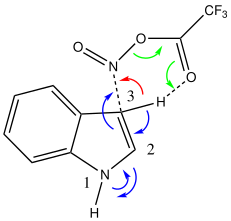
    I am going to use the model shown above, which is actually the relatively unusual electrophile nitrosium trifluoracetate. My reasons for this strange selection are:

    1. I prefer the complete model, with counter-ion. In this instance, we leave open the option of whether the reagent reacts via an ion-pair or whether it involves a concerted process involving covalency at any stage for the O=N…O bond.
    2. To make this model more realistic, we are going to add a continuum solvent field (dichloromethane) to allow any (partial) ion-pair character to develop.
    3. The acetate counter-ion is also retained in order to allow the proton removal to occur, either concurrently with the formation of a C-N bond or (pre- or post) successively with it.
    4. This combination does allow for a properly characterised transition state to be located and an intrinsic reaction coordinate can then be used to probe for the nature of the pathway.
    5. This model is then applied to three positions around the pyrrole ring, including the nitrogen itself (position 1). The known outcome of course is that the electrophile substitutes in the 3-position.

    The mechanism can either be a more conventional stepwise nucleophilic/electrophilic push-pull (blue + green arrows) or it has the potential of avoiding the formation of any (Wheland) intermediate by instead being a concerted (red + green arrows) process. We will leave the detailed timing of these arrows to the quantum mechanics to settle. The results (ωB97XD/6-311G(d,p)/SCRF=dichloromethane) are as follows (relative energies in kcal/mol).

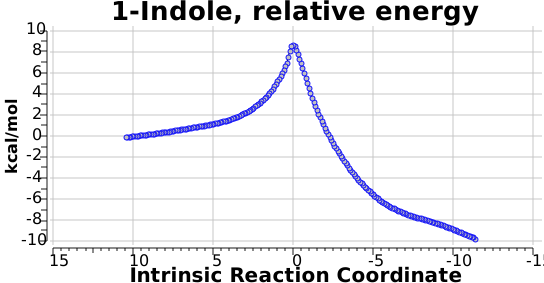
    Substitution at the nitrogen (1-position) is the clear winner in terms of the free energy of activation (ΔG, kinetic control) but the clear looser in terms of the free energy of reaction (thermodynamic control).

    Position Transition state Product
    1 -4.93 10.62
    2 1.96 4.86
    3 0.0 0.0

    Time to take a detailed look at the three transition states located and their intrinsic reaction coordinates.

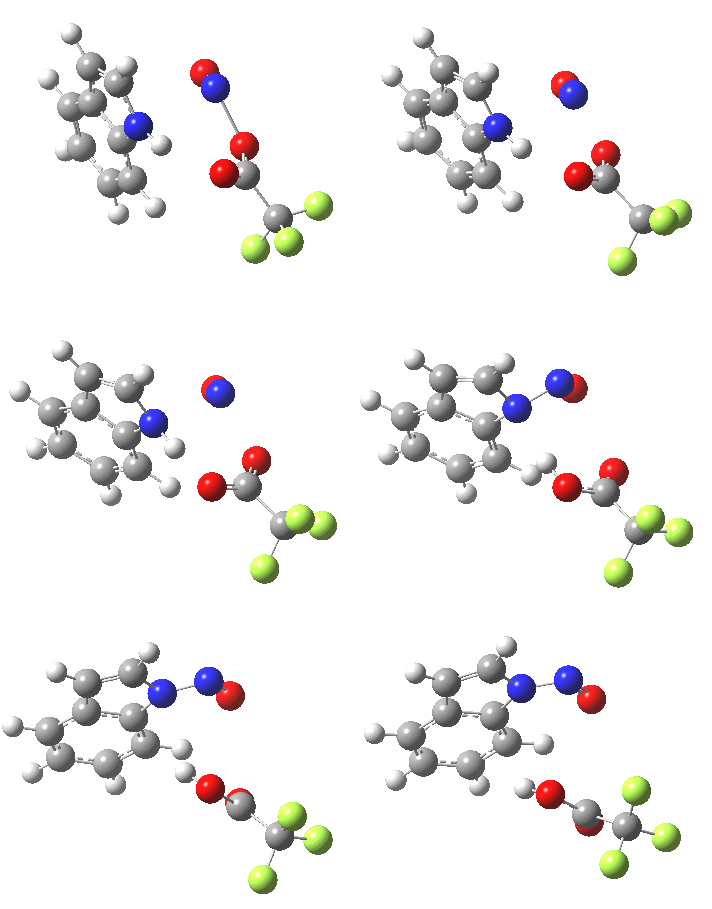
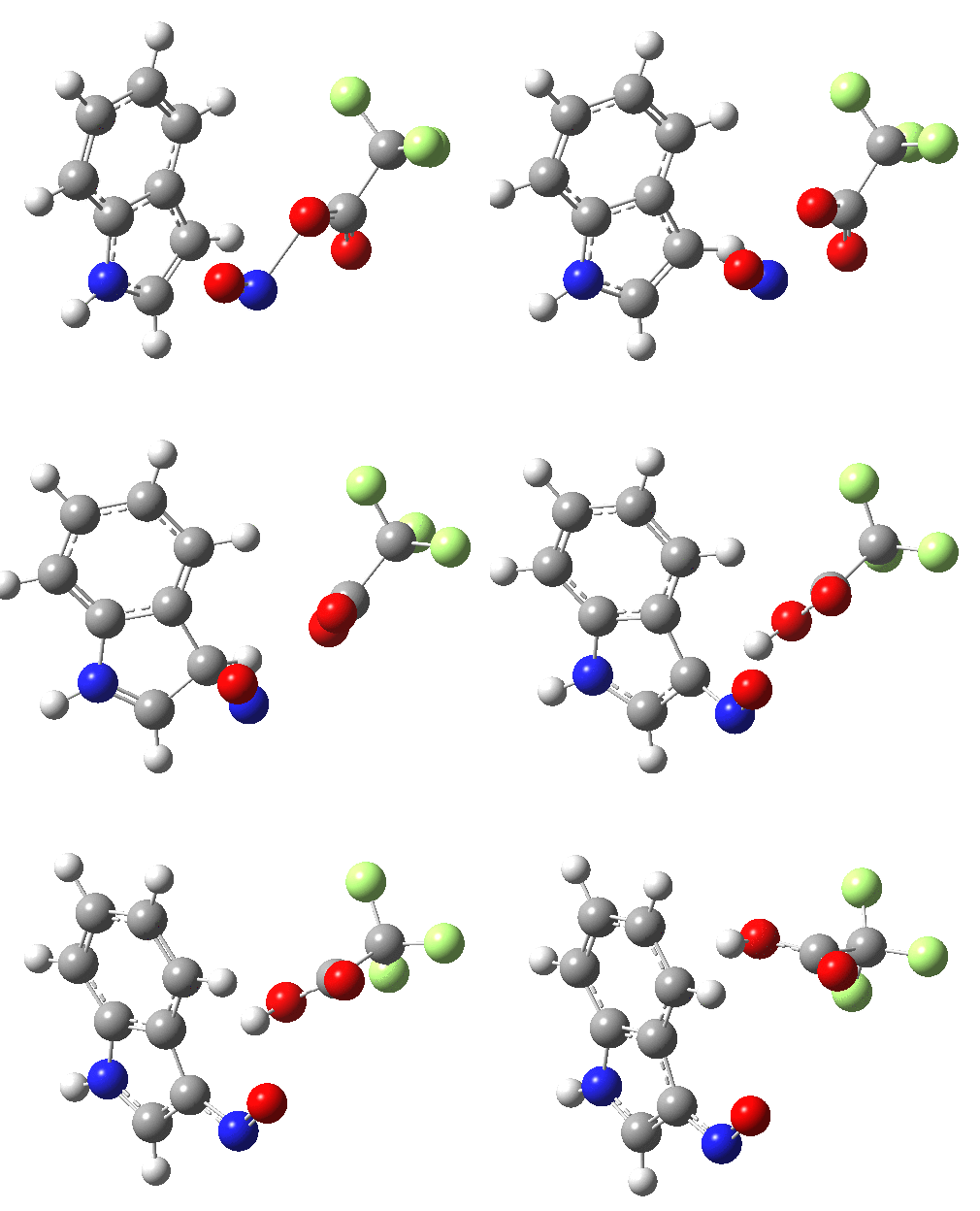
    1. The IRC profile for the N-reaction is a nice example of a concerted reaction (the equivalent red + green arrows above) in which the trifluoracetate firstly heterolyses off the nitrosonium cation to form an ion-pair, and then as a basic anion, it abstracts the relatively acidic N-H proton. Only then does the N-NO bond fully form to quench the ion-pair. The overall barrier to this process is only ~9 kcal/mol. This detailed choreography is certainly not a variation I have ever seen described in any text-book!
      indole1 indole1
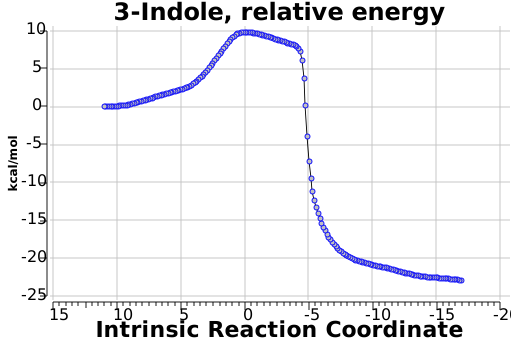
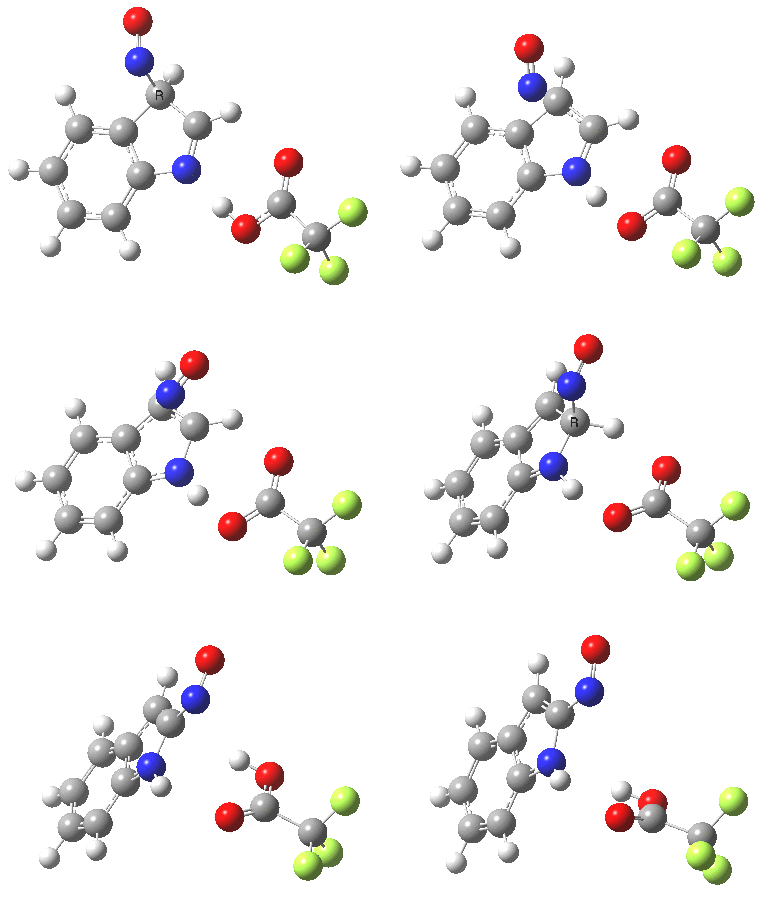
    2. In contrast, the IRC for substitution at the 3-position reverses the order of C-N formation and C-H removal, the latter now happening at the end (IRC ~ -5) rather than at the start. As before, the process is however still concerted, with no formation of an actual Wheland intermediate at any stage. This makes the Hammond-based prediction of the transition state properties by extrapolating those of such a presumed intermediate rather tenuous if the intermediate in question actually has no existence on the potential energy surface!
      Indole3a Indole3b
    3. Yet another surprise in store for reaction at the 2-position. Although the transition state itself has the form expected and the IRC leads down from this TS to the expected 2-substituted product, the trifluoracetate counter-ion adopts a different role by being enticed away from a cyclic geometry to instead form a strong hydrogen bond to the N-H proton. This means that the start point is no longer the covalent nitrosyltrifluoroacetate, but instead an ion-pair involving an actual Wheland intermediate at the 3-position! So the existence or otherwise of this intermediate very much depends on where the counter-ion is. I would again remind that this counter-ion rarely has much of a role (if any) to play in text-book analyses of this reaction. And now the reaction becomes one involving a migration of the NO group from the 3-Wheland intermediate to the 2-position, followed by proton-removal from that position. The barrier (~15 kcal/mol) is however higher than the others, and so this variant pathway is not actually observed.
      indole2 indole2

    The actual outcome (3-position) emerges as the clear thermodynamic winner, but 1-substitution as the (reversible?) kinetic preference. This does raise one intriguing question: might electrophilic substitution of indole in the 3-position actually arise from this initial kinetically controlled 1-substitution followed by some form of rearrangement to the most stable thermodynamic 3-product? I have not identified such a route, which may well be mediated by the position of the trifluoracetate component (and the nature of the solvent and its ability to stabilize ion-pairs).

    I am however encouraged that this exploration of transition states has if nothing else introduced some new ideas. I do worry that much organic chemistry continues to be taught against the “text-book” interpretations, and we do need to identify conduits for new ideas to ensure that the core of organic chemistry continues to be vibrant.


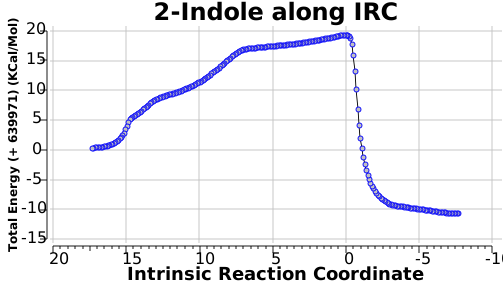
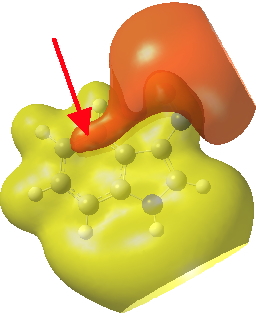
    Postscript: If you inspect the tail end of the  IRC for the  3-indole substitution, you will see the formation of trifluoroacetic acid by proton abstraction from the  3-position. This tail involves a gradual drifting of this acid (IRC ~-10 to -18) to take up a new position over the 4-carbon of the indole by the formation of a π-facial bond. This more or less coincides with the shape of the molecular electrostatic potential of the product in that region (below). 

    Click for  3D.
    Click for 3D.

    ‡ A concerted process for aromatic electrophilic substitution of benzene by the nitrosonium cation has been reported[cite]10.1021/ja021152s[/cite], but here the proton transfer occurs AFTER the C-N=O bond is formed.

  • The conformation of acetaldehyde: a simple molecule, a complex explanation?

    Consider acetaldehyde (ethanal for progressive nomenclaturists). What conformation does it adopt, and why? This question was posed of me by a student at the end of a recent lecture of mine. Surely, an easy answer to give? Read on …

    acetaldehyde

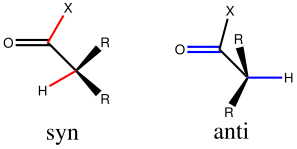
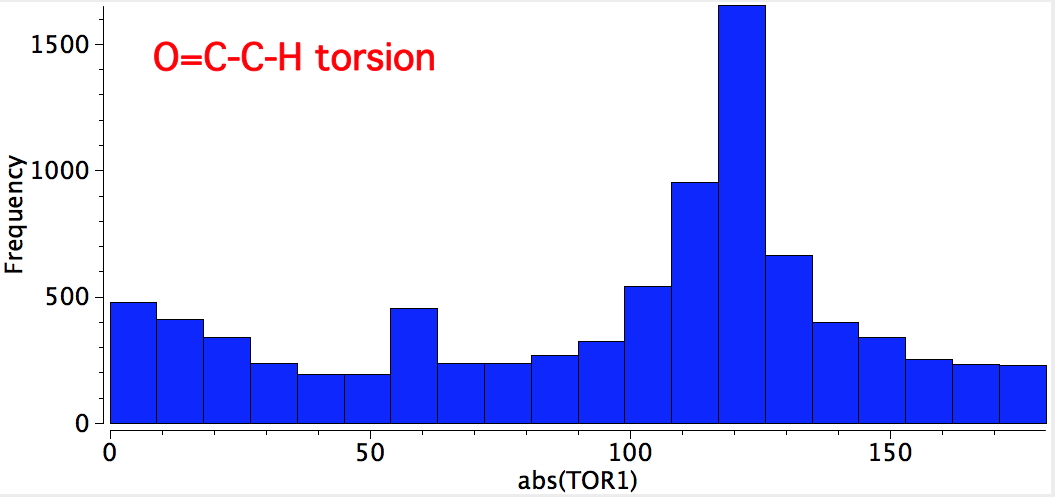
    There really are only two possibilities, the syn and anti. Well, I have discovered it is useful to start with a search of the Cambridge data base. With R=H or C, X unspecified,  acyclic and T ≤ 175K, two searches were performed. The first identified the torsion around O=C-C-H. This clearly shows a maximum at 120° (with twice the probability), and a smaller one at 0°. This matches syn; the anti conformation above would be expected to have peaks at 60° and 180°; the latter in particular is singularly missing.

    acetaldehyde-180

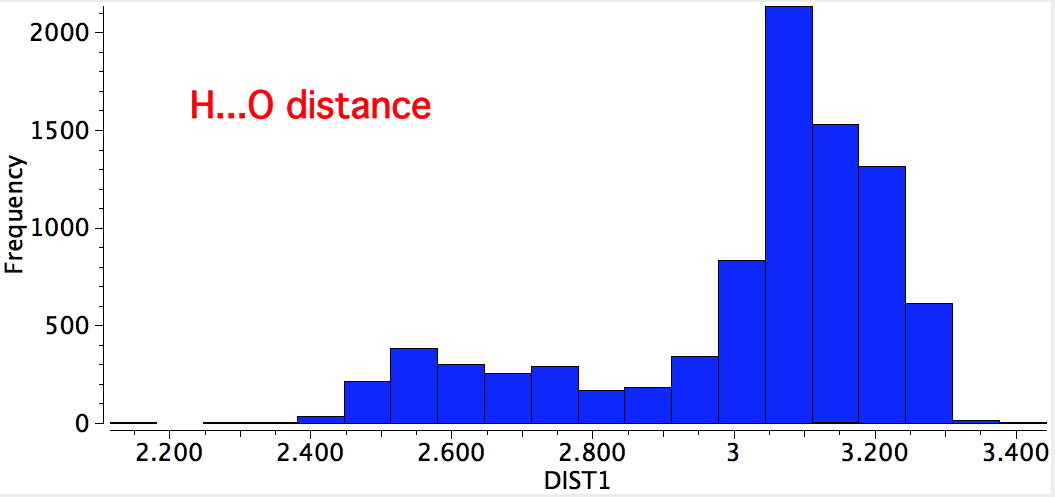
    An alternative search is to define the distance between the oxygen and the H. For the syn conformer, distances of ~2.5 and 3.1Å are expected; for the anti conformer, 2.7 and 3.3Å. Again, syn matches better. Remember, searches based on the position of a hydrogen are less reliable than most, so these distributions provide only a statistical indication.

    acetaldehyde-dist

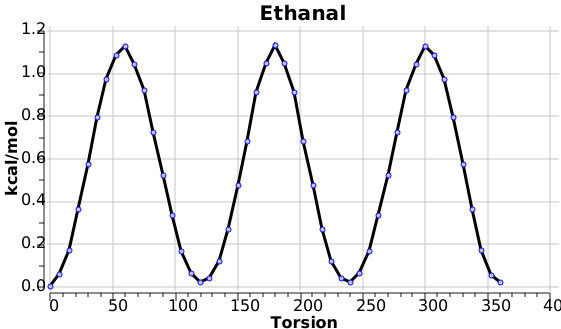
    Now for a (ωB97XD/6-311G(d,p) calculation of the rotational barrier. The minima occur at torsions of 0, 120 and 240°, matching syn, although the barrier is very low.

    acet-rot

    Now to try to find explanations. The standard one finds this in three effects:

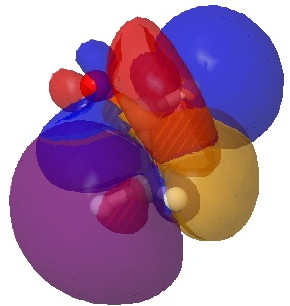
    1. Donation from two C-H bonds (R=H above) into the π*C=O NBO orbital (in the manner that was used to explain the cis-orientation of the two methyl groups in cis-butene). 
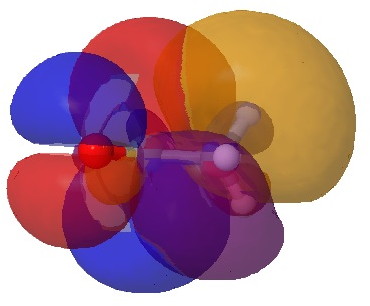
    2. Donation from the single co-planar C-H bond into the σ*C=O NBO orbital (blue bonds above)
    3. Pauli bond-bond repulsions between two filled NBOs. 

    Effect 1 has an NBO perturbation energy E(2) of 7.0 kcal/mol for the syn conformer and 6.45 for the anti. The explanation is the π*C=O NBO "leans outward", overlapping better with the C-H bonds in the syn than in the anti.  the One up to the syn! Effect 2 has values of 1.3 for the syn and 4.1 for the anti. The latter now has the edge. But wait, there are other (smaller) interactions. The syn has an antiperiplanar orientation of the two C-H bonds shown above (X=H,red), E(2) = 3.3 vs 0.6 for the corresponding syn-planar orientation in the anti-conformation. It's now a tie; neck-and-neck.

    Effect three suggests that the disjoint NLMO steric exchange energy is 54.34 for the anti and 53.88 (i.e. lower) for the syn. It is vaguely disappointing that no absolutely clear-cut explanation emerges. But then the difference (in total free energy) is only 1.4 kcal/mol. But even this small difference in energy can manifest in fairly clear-cut conformational preferences obtained from crystal structures. Ultimately of course, all effects in chemistry are reducible to the sum of lots of small effects (in other words unpredictable until one does the sum). 

    I cannot end without mentioning the largest of all the NBO interactions, namely the in-plane lone pair on the oxygen as donor and the aldehyde proton C-H as acceptor (X=H). This has values of 29.3 for syn and 28.8 kcal/mol for anti. This manifest (inter alia) in a greatly reduced C-H vibrational wavenumber (ν 2982 for syn, 2900 cm-1 for anti) compared to the methyl C-H values (~3043-3164).

    So this tiny little molecule ended up a little less obvious than might have seemed at the outset. One can find interesting things in even the tiniest of things! 


    HC...C-H alignment. Click for  3D.
    HC…C-H alignment. Click for 3D.
    HC...C-H alignment. Click for  3D.
    O=C*…C-H alignment. Click for 3D.

    Acknowledgments

    This post has been cross-posted in PDF format at Authorea.

  • Sharpless epoxidation, enantioselectivity and conformational analysis.

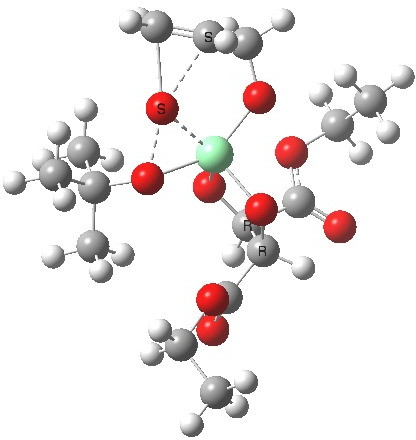
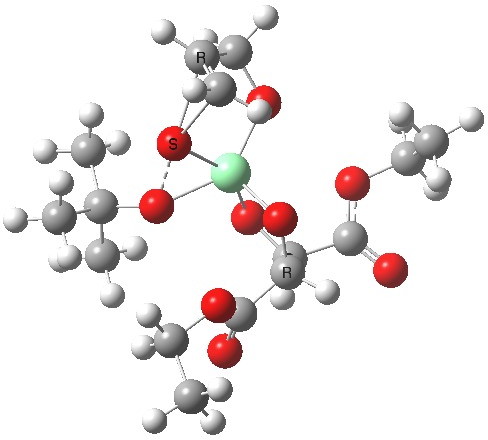
    I return to this reaction one more time. Trying to explain why it is enantioselective for the epoxide product poses peculiar difficulties. Most of the substituents can adopt one of several conformations, and some exploration of this conformational space is needed.

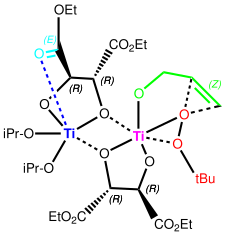
    sharpless-binuclear

    Amongst the conformational possibilities are the two rotations shown below. The blue rotates the ester with respect to the Ti-O-C unit, and the red rotates within the ester group itself. In fact the conformations of esters almost invariably adopt the first conformation shown, a s-cis orientation where one lone pair from the alkoxy group is anti to the axis of the carbonyl group (red rotation). Crystal structures of binuclear titanoxy compounds show both options for the blue rotation.sharpless-conf

    One might imagine that there are two rotations about the C-O and O-Ti bonds in the iPr-O-Ti fragment as well. Whilst some of the many permutations are precluded simply on steric grounds, this still leaves a lot of possibilities. I have certainly not explored anything like the full set, but felt it worth reporting two conformations which have lower energies than the ones I reported in this post. If I find any yet lower in energy, I will add a postscript here.

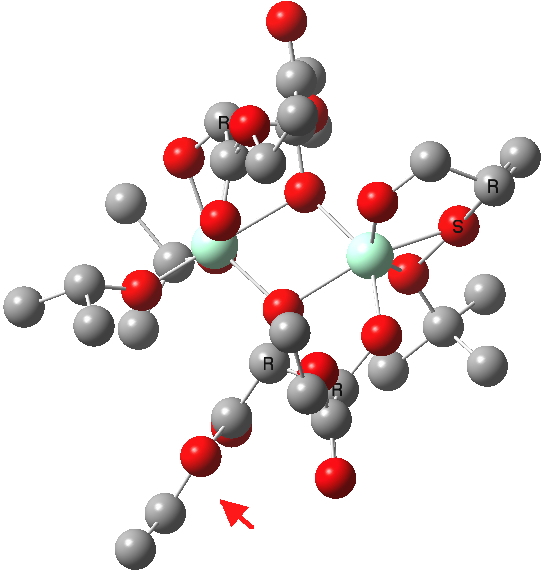
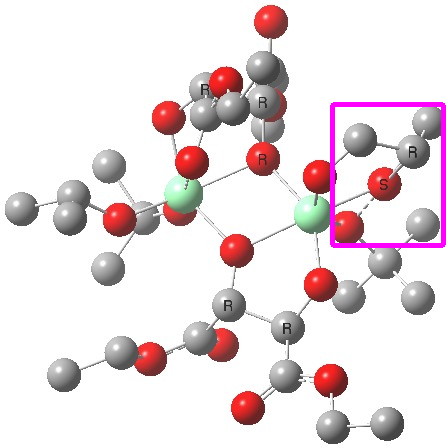
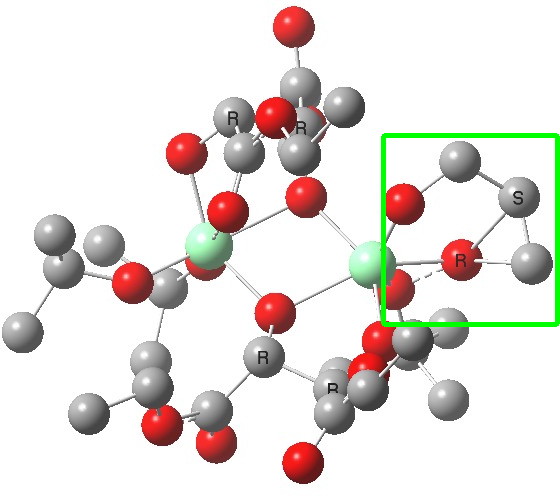
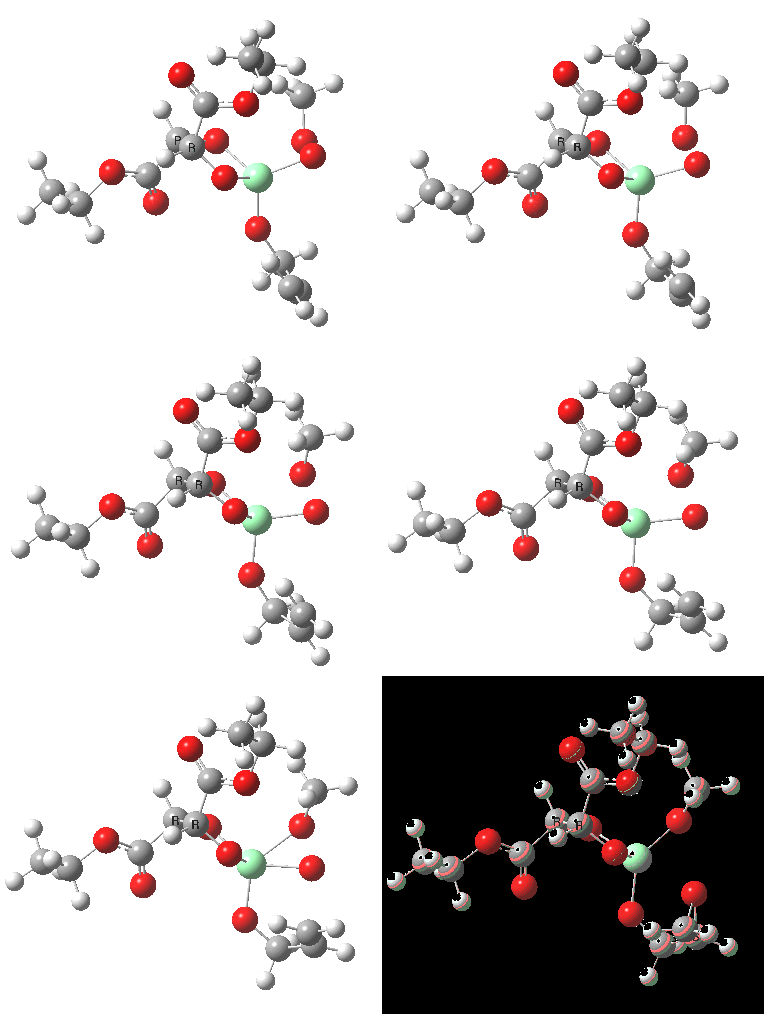
    New conformations (hydrogens removed for clarity)
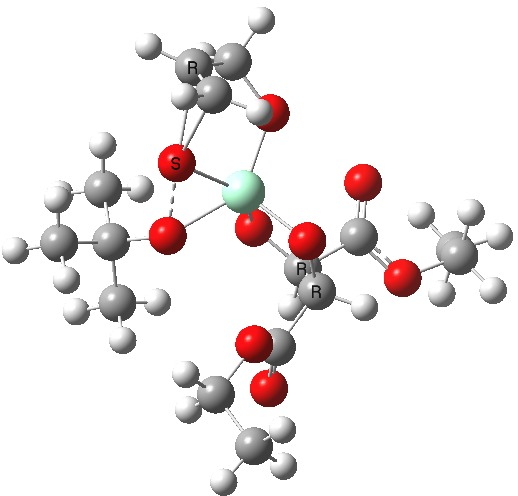
    R. Click for  3D
    (R). Click for 3D
    S Click for  3D.
    (S). Click for 3D.
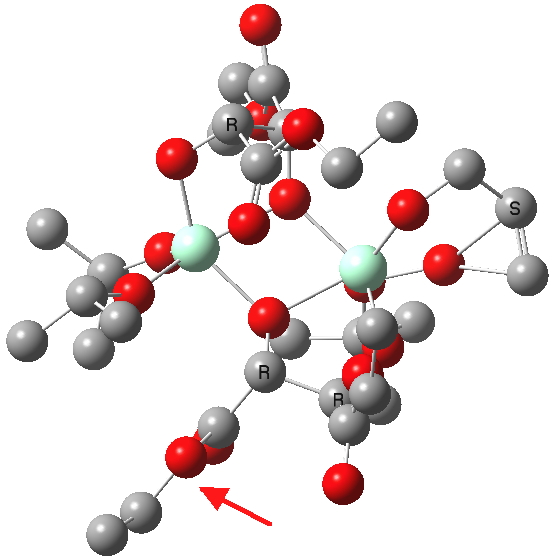
    Old conformations
    (R). Click for 3D.
    (S). Click for 3D
    (S). Click for 3D

    The conformations differ in the regions indicated with a red arrow; the (R) being 10.1 and the (S) 7.5 kcal/mol lower in ΔG298. Note how a change in conformation of just one group can “knock-on” to other groups. The relative energies (kcal/mol) of these two new conformations are shown below, broken down into three components.

    Enantiomer Total energy Attractive dispersion energy Free energy
    R  +2.2  +2.9  +0.3
    S  0.0  0.0  0.0

    As before, (S) wins out clearly in terms of the dispersion attractions, which appears to be also reflected in the total energy of each system (in other words, differentiation from non-dispersion terms is not large). The free energy includes the entropy calculated from the normal vibrational modes using the rigid-rotor-harmonic-oscillator approximation. Whilst it too shows (S) to be the lower in energy, the distinction is less clear-cut than with the old conformations. One is often warned that the RRHO oscillator approximation is not good for molecules with many free rotors (which normally means about single bonds), although one normally might expect that comparing two very similar systems will result in a lot of cancellation of errors. But this result here does suggest that for the Sharpless system, which has many free-rotor groups, free energies might need taking with an extra dose of caution. I would also add that one does need to optimise the geometry of transition states for such systems with extraordinary accuracy; for these two examples, one does need to achieve values for the six “zero” translations and rotations of < 10 cm-1, which can involve heroic efforts (as it did here!). 

    I end by reiterating my earlier conclusion. The Sharpless seems to be an example of a reaction which achieves stereospecificity by the accumulation of many very tiny effects (the dispersion attractions), and hence the use of a dispersion-corrected method is absolutely critical. It may also in part involve accumulation of another set of small effects contributing to the total entropy and hence free energy. What it appears not to be is a manifestation of a small number of larger effects (e.g. stereoelectronic alignments) which can be “named”. Chemistry by and large is always an attempt to achieve simple explanations by use of the latter; in other words developing simple heuristics or rules that can be transferred between systems. Where you have an effect that is in effect an accumulation of many terms, it is much more difficult to express this as simple transferable rules. Chemistry at such a level then is reduced simply to computing the sum of these small effects, rather than relying on simple rules. Have we perhaps reached this level with the Sharpless per-epoxidation? Would it be such fun if it were?

  • How to tame an oxidant: the mysteries of “tpap” (tetra-n-propylammonium perruthenate).

    tpap[cite]10.1055%2Fs-1994-25538[/cite], as it is affectionately known, is a ruthenium-based oxidant of primary alcohols to aldehydes discovered by Griffith and Ley. Whereas ruthenium tetroxide (RuO4) is a voracious oxidant[cite]10.1139/v76-304[/cite], its radical anion countered by a tetra-propylammonium cation is considered a more moderate animal[cite]10.1021/jo00038a009[/cite]. In this post, I want to try to use quantum mechanically derived energies as a pathfinder for exploring what might be going on (or a reality-check if you like). 


    tpap

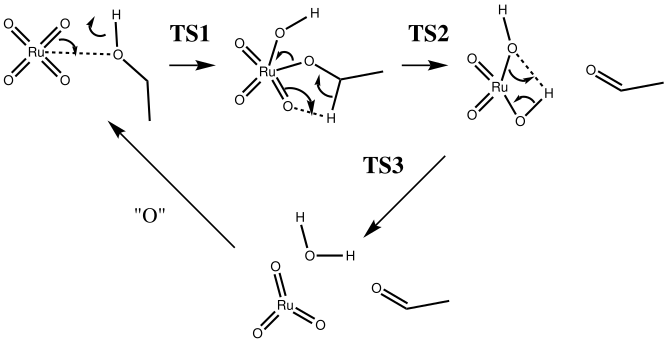
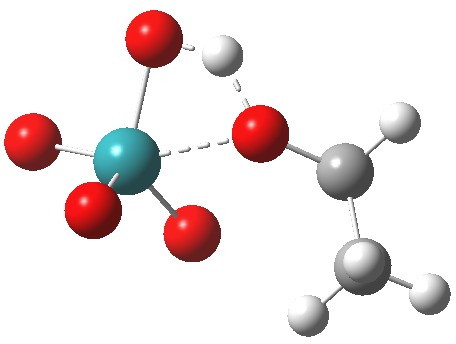
    A basic (i.e. simple) mechanism for oxidation of an alcohol by RuO4 is shown above. Here I reality-check this mechanistic pathway with the help of ωB97XD/Def2-SVPP/SCRF=dichloromethane calculations. I should point out that since the mechanism is going to involve ion-pairs, it is particularly important to adopt a solvent=corrected model from the outset[cite]10.1021/jo100920e[/cite]. TS1 is the transition state for addition of the alcohol to the metal, a process which involves a synchronous proton transfer for the singlet electronic state.

    TS1. Click for 3D
    TS1 as a singlet. Click for 3D
    tpap-TS1

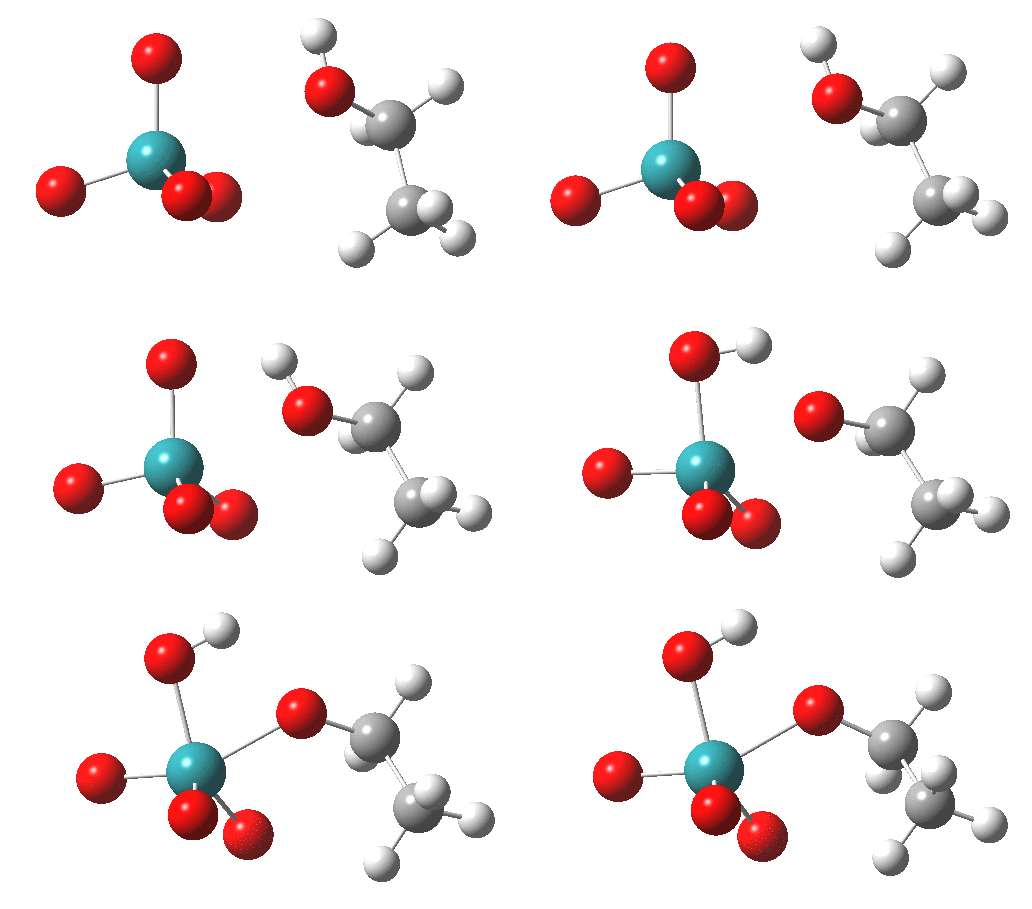
    Next comes TS2, which involves a hydride abstraction with concomitant reduction of the oxidation number of Ru(VIII) to Ru(VI). It is higher in free energy than TS1 by 1.1 kcal/mol. The barrier corresponds to ΔG298 37.1 kcal/mol. The process completes by low energy elimination of water (TS3) from the Ru(VI) species to give RuO3, which either undertakes further oxidisation to give RuO2, or might instead be re-oxidized back to RuO4 by oxygen (or an amine N-oxide) to complete a catalytic cycle.

    TS1. Click for 3D
    TS2 as a singlet. Click for 3D
    tpap-TS2
    TS2 as a triplet. Click for 3D
    TS2 as a triplet. Click for 3D
    RuO4-ts2-triplet

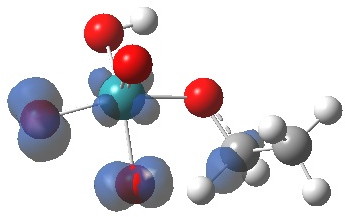
    Right away, we have a problem; ΔG298‡ 37.1 kcal/mol is too high to be a realistic pathway, and yet RuO4 is a known oxidant[cite]10.1139/v76-304[/cite]. One way out is to see if the triplet state energy of this system might be lower. Whilst the triplet-state reactant is higher in energy (by 27.5 kcal/mol) , TS2  is lower and corresponds to a reduced barrier of ΔG298 28.2 kcal/mol. Better, but a (small?) question mark still remains, since one would really expect the barrier to be ~20 kcal/mol or less for a “voracious oxidant”. Perhaps the incursion of triplets makes it indiscriminate? The spin density at the transition state is shown below, it extends across both oxygen, carbon and Ru.

    ts2-triplet-spin

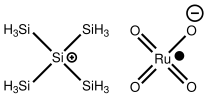
    The tpap modification to this process is to use Ru(VII) in the form of a radical anion partnered with a quaternary ammonium cation. The basic reagent is therefore an ion-pair, hence the solvation approach mentioned earlier is needed to describe the energetics of such a species. The R alkyl groups here are modelled as methyl rather than propyl.

    tpap1

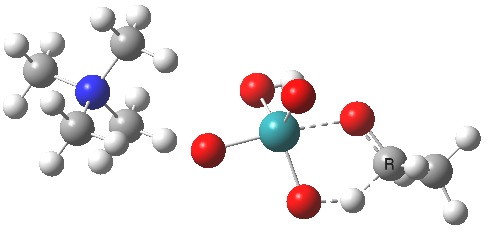
    TS2 for this radical-ion-pair is shown below, and it has ΔG298 30.8 kcal/mol, 2.6 kcal/mol higher than for the un-moderated reagent. In this case, the higher-spin quartet states are higher  in energy (by at least ~7.9 kcal/mol) and so do not participate. 

    tpap-ts2

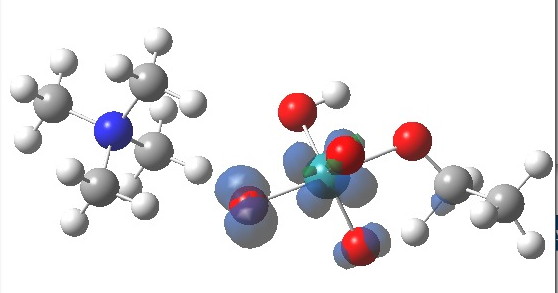
    The spin density for tpap-TS2 also reveals it to be concentrated on Ru and one oxygen. Little is transferred to the ethanol, and we might infer then that this TS corresponds to transfer of two-electrons from the ethanol to the Ru-oxidant. This corresponds to Ru(VII) being reduced to Ru(V), i.e. a 2-electron oxidation/reduction. Unfortunately, an attempt to chart the reaction across a whole reaction coordinate (IRC) failed with SCF-convergence problems, which might suggest a change in the spin-configuration during this process. A more sophisticated multi-configurational approach might be needed to properly establish the electron dynamics of what is turning out to be a more complex reaction than first seemed.

    tpap-ts2-spin-density

    It is time to sum up what might have been learnt.

    1. A reality check on the energetics of a viable-looking mechanistic route can establish whether such a mechanism does have a low enough free-energy to be viable at (in this case) room temperatures.
    2. In fact, observing that our initial mechanism had too high an energy led us to discover a triplet-state path that was significantly lower in energy. However, even this is still a bit too high.
    3. The tpap-variation of the oxidant, which enforces a doublet-state upon the mechanism,has a barrier which appears to be similar to the triplet-state RuO4 mechanism. This too may be too high in energy. At least we can probably rule out a quartet-state mechanism.
    4. And so it seems appropriate to end here by noting that experimentally[cite]10.1021/jo00038a009[/cite] the kinetics of tpap oxidations appear to be autocatalytic. The rate speeds up once some RuO3 (or RuO2) has been formed, and this suggests that perhaps a binuclear system containing two Ru atoms is a faster oxidant than the mononuclear variety. This reminds of the mechanism for Sharpless perepoxidation, where two metal centres were needed to control the stereochemistry.
    So after all of this, we have not really found an explanation of why tpap is a more selective and moderate oxidant than the rapacious RuO4. But perhaps this is because more complex models with more than one Ru-atom need to be constructed. This would in turn allow the oxidative hydride abstraction from the alcohol to occur in a larger (7) ring transition state, which is always the preferred geometry for such transfers. If I find such, I will report back here.

  • Vitamin B12 and the genesis of a new theory of chemistry.

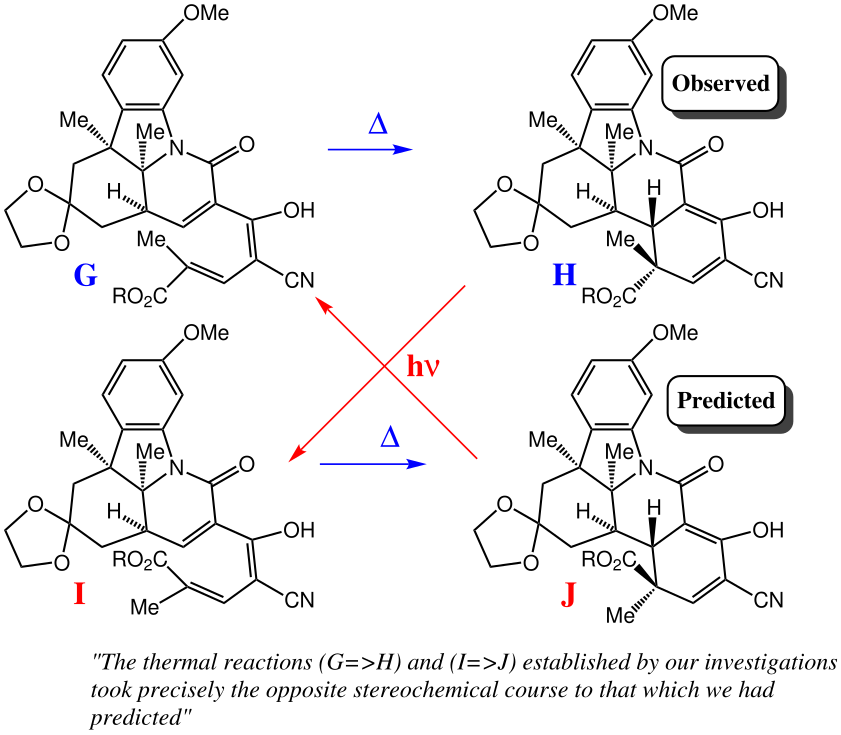
    I have written earlier about dihydrocostunolide, and how in 1963 Corey missed spotting the electronic origins of a key step in its synthesis.[cite]10.1021/ja00952a037[/cite]. A nice juxtaposition to this failed opportunity relates to Woodward’s project at around the same time to synthesize vitamin B12. The step in the synthesis that caused him to ponder is shown below.

    p2

    In the 1950s, Linus Pauling was the shining example in the use of model building in chemistry, and the so-called CPK (Corey, Pauling and Koltun) model was being adopted by most synthetic chemists as a part of the design of their syntheses (I have argued that the progenitor of the CPK model was in fact created by Loschmidt, in 1860). These were physical models, and it is quite likely that Woodward would have used one to ponder the conversion shown above as G ⇒ J or H. As you can read from the quote above (taken from  Chem. Soc. Special Publications (Aromaticity)196721, 217, a document not available online), he had concluded that G ⇒ J was more likely than G ⇒ H, and so was considerably surprised when the reaction actually proceeded to give the latter and not the former. In fact, photolysis of (the undesired) H gave I, which then did give (the desired) J upon heating, so he got what he wanted in the end (he usually did!). Of course, we now know that this electrocyclisation proceeds under what is sometimes called orbital control (as explained by Woodward and Hoffmann[cite]10.1021/ja01080a054[/cite]) and what can also be taught as a manifestation of transition state aromaticity[cite]10.1021/ed084p1535[/cite].

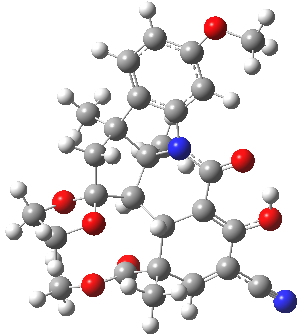
    For this blog, I do not want to investigate the transition states, but just to update Woodward’s use of physical (possibly CPK) models to predict the outcome of reactions. CPK models are characterised by their use of van der Waals radii for the atom spheres, the so-called space-filling representation, and as such they are in effect looking at the repulsive steric interactions (the 12 of the 6-12 potential). What they do not do is measure the attractive dispersion contributions to the model. I had suggested that differential dispersion contributions may be a (dominant?) factor in explaining why Sharpless epoxidation goes enantioselectively. With this in mind, I optimized the geometry of species H and J above at a dispersion and solvent-corrected level of theory (ωB97XD/6-311G(d,p)/SCRF=dichloromethane) to see if the relative stabilities of the products might agree with Woodward’s prediction that J should have formed.

    ΔG 0.0 kcal/mol ΔG +1.0 kcal/mol
    H. Click for 3D
    H. Click for 3D
    J. Click for  3D.
    J. Click for 3D.

    This computation shows that H is the lower in free energy by 1.0 kcal/mol, and by 0.8 kcal/mol in dispersion energy. So Woodward’s hypothesis that J was the more likely to form on steric grounds is not supported by this modern equivalent of a CPK model. I should add that a CPK model may only take an hour or so to build (but possibly weeks to order the components) whereas this quantum model took around 9 hours to compute. 

  • Why is the Sharpless epoxidation enantioselective? Part 1: a simple model.

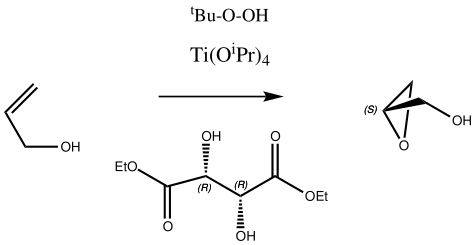
    Sharpless epoxidation converts a prochiral allylic alcohol into the corresponding chiral epoxide with > 90% enantiomeric excess[cite]10.1021/jo00369a032[/cite],[cite]10.1021/jo00360a058[/cite]. Here is the first step in trying to explain how this magic is achieved.

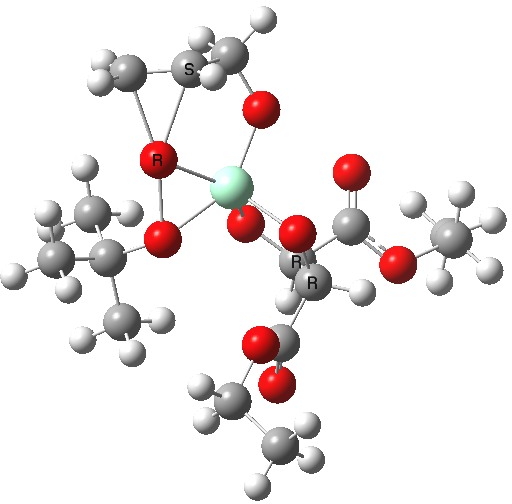
    The scheme above shows how (achiral) prop-2-enol is converted using the asymmetric catalyst (R,R)-diethyl tartrate  and t-butyl hydroperoxide as oxidant into the (S)-chiral epoxide. The first step is to try to construct a simple model for the reaction, and in this post I will start by using one titanium as the core of the stage on which these actors will perform. This is the mononuclear model. One can simply envisage that a molecule of tartrate displaces two iPrOH molecules from Ti(OiPr)4 in an ester exchange to form a Ti(OiPr)2(tartrate) complex. The remaining two iso-propanols are then replaced by one molecule each of prop-2-enol and tBu-OOH. Now we have the species Ti(OOtBu)(O-CH2CH=CH2)(tartrate) as the starting point from which a transition state for oxygen transfer to the alkene to form the (S) epoxide (for R,R tartrate) can be constructed (ωB97XD/6-311G(d,p)/SCRF=dichloromethane model).

    Mononuclear TS for S-epoxide. Click for 3D.
    Mononuclear TS for R-epoxide. Click for 3D.
    IRC for mononuclear model showing oxygen atom transfer

    The transition state leading to (S) epoxide emerges as 0.86 kcal/mol higher in ΔG than the (R), contrary to the experimental result where (S) is formed with high specificity[cite]10.1021/jo00369a032[/cite]. Inspecting the model, it is clear that the allylic alcohol substrate sits in a very open pocket un-encumbered by any nearby groups (bottom right in the animation above) and so the lack of π-facial selectivity is perhaps not surprising.

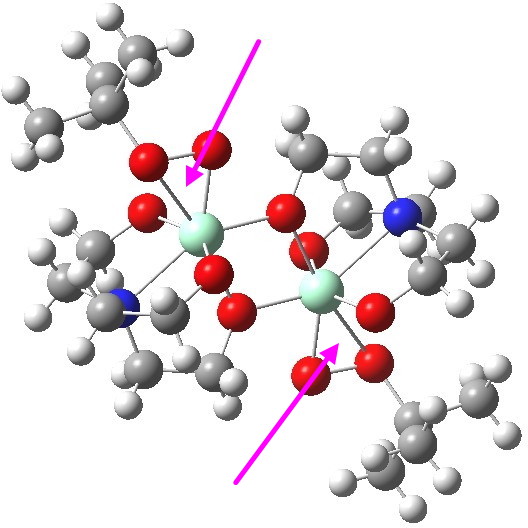
    To elaborate the model, I will turn to a crystal structure determined for a Ti complex bearing a t-butyl peroxy group[cite]10.1021/ja954308f[/cite], showing it to be a binuclear complex (magenta arrows indicate the peroxy groups) with bridging oxygen atoms.

    ZUKJIY. Click for 3D

    In the follow-up post,  we will see whether these binuclear models can do better at explaining the enantioselectivity of the Sharpless reaction.


    See this post for an example of such “single-site” catalysis using Mg or this article for an example using silver[cite]10.1002/chem.201200547[/cite].

    A binuclear Zn catalyst with similar oxy-bridges is used to co-polymerise epoxides themselves with carbon dioxide[cite]10.1021/ma300803b[/cite]. Many such binuclear complexes are known.

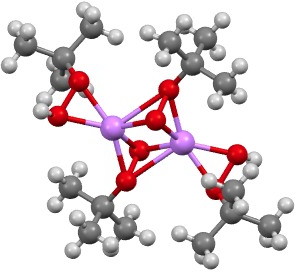
    The other element for which a number of examples of such t-butyl peroxy bonding are known is oddly enough, lithium.[cite]10.1002/chem.200900746[/cite]
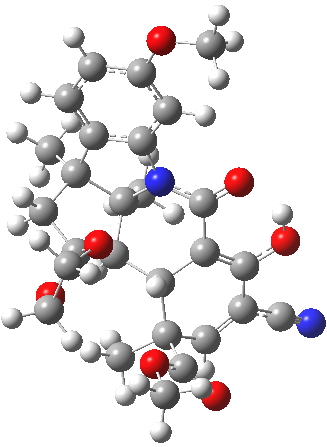
    MUKVAQ. Click for 3D.

    Postscript: Two lower energy conformations for the S and R transition states have been found, the latter being 1.6 kcal/mol lower in free energy. 

    S R
    S-new R-new
  • The mechanism of the Birch reduction. Part 2: a transition state model.

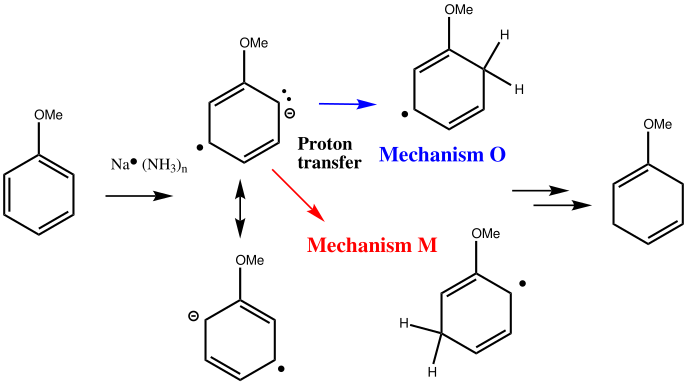
    I promised that the follow-up to on the topic of Birch reduction would focus on the proton transfer reaction between the radical anion of anisole and a proton source, as part of analysing whether the mechanistic pathway proceeds O or M.

    To add some context, Hammond’s postulate [cite]10.1021/ja01607a027[/cite] states that “the structure of a transition state resembles that of the species nearest to it in free energy.” If the structure of the transition state for proton transfer above resembles that of the radical anion precursor we would call this an early transition state and it would be a reasonable approximation to infer properties of the reaction from the properties of that radical anion. The previous post explored those properties via the computed molecular electrostatic potential (MEP) and the highest energy NBO (natural bond orbitals, which are used here instead of molecular orbitals). Unfortunately, they did not agree with each other. Remember that Hammond’s postulate dates from 1955, an era when it was not practical to compute the structure of a transition state directly using quantum mechanics (certainly not so for such a complex reaction as that shown above). Indeed, one might argue that such a structure has only become computable in a practical sense very recently! As I showed previously, the radical ion-pair resulting from a 1-electron transfer from sodium to anisole has a dipole moment of ~11.6D, and the reaction is conducted in a solvent of medium polarity. This combination means that one really is obliged to take into account the dielectric of the solvent, and indeed any strong explicit hydrogen bonds that might be present. The codes for doing this have really only recently become robust enough to tackle such an endeavour[cite]10.1021/jo100920e[/cite], which might explain why such calculations are not yet abundant, or ubiquitously cited in the text books.
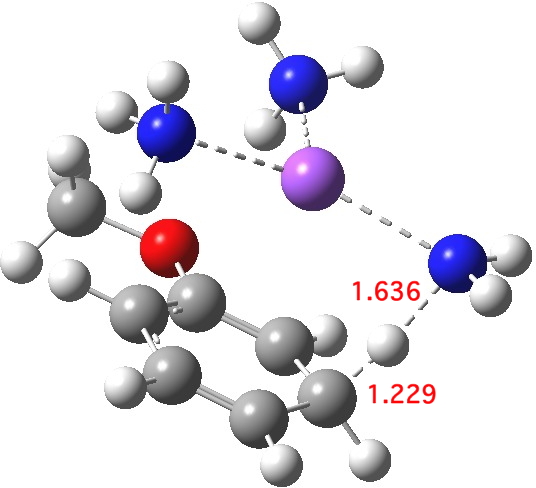
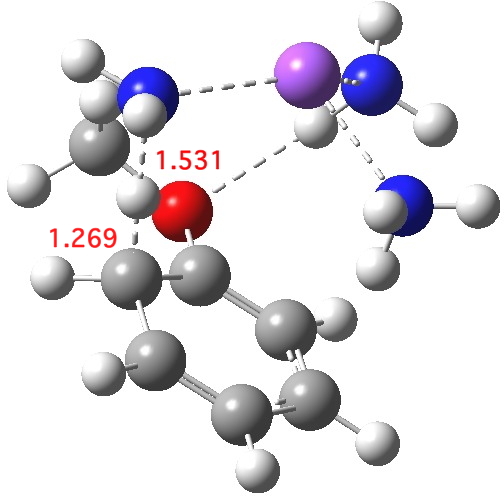
    Proton transfer for M mechanism. Click for 3D.

    The proton transfer via one M mechanism is shown above. The proton source is ammonia, which is known from experiment to lead to sluggish reactions (the more acidic t-butanol is often added to speed up the reaction), but we can see that the transition state is very late, νi 423.8 cm-1. The N…H bond is largely broken, and the C-H bond is mostly formed. The dipole moment is 7.7D, also different from that of the reactant. Perhaps, knowing this, it is not too surprising that inferences based on Hammond’s postulate as applied to the reactant are not reliable. The value of ΔG298computed from this model is 22.8 kcal/mol, which is on the high-ish side for a reaction to occur readily at room temperatures or below.[cite]10.1021/ja00159a078[/cite] This nevertheless nicely conforms what we already know, that a more acidic proton donor is needed to achieve a fast reaction.
    Proton transfer for O mechanism. Click for 3D.

    The proton transfer via one O mechanism is similar, but a tad less “late”. This already raises doubts about application of Hammond’s postulate to this system; one cannot really compare two reactions in which each reactant differs in its resemblance to its transition state. The dipole moment of this alternative transition state is also 7.7D, but the transition imaginary mode is much higher at νi 869 cm-1. The free energy barrier is 21.0, some 1.8 kcal/mol lower than the barrier for the M mechanism. This corresponds to a rate about 21 times faster for O over M (at 298K).

    To conclude, we characterise two (of the four) isomeric transition states for protonation of the radical anion intermediate in the Birch reduction of anisole. These two transition states are actually different in several subtle regards, differences which would not have manifested if only the properties of the reactant had been considered. The final word must be that the text books are likely correct on this one, although a little more work is still needed to tidy up loose ends.  

  • The mechanism of the Birch reduction. Part 1: reduction of anisole.

    The Birch reduction is a classic method for partially reducing e.g. aryl ethers using electrons (from sodium dissolved in ammonia) as the reductant rather than e.g. dihydrogen. As happens occasionally in chemistry, a long debate broke out over the two alternative mechanisms labelled O (for ortho protonation of the initial radical anion intermediate) or M (for meta protonation). Text books seem to have settled down of late in favour of O. Here I take a look at the issue myself.

    Readers of my blog will note that I promote the use of models which are as reasonably complete as one can make them. In this case, if the intermediate is an anion, then I argue that the model should include the positive counter-ion. This is very often simply not included, on the grounds that it “probably does not influence things”. Well, not on this blog! My model is methoxybenzene, a sodium atom solvated by 3NH3 (the reaction itself is done in liquid ammonia with some added t-butanol) and continuum solvent (not ammonia itself, but acetonitrile which has a similar dielectric to liquid ammonia with some added butanol). 

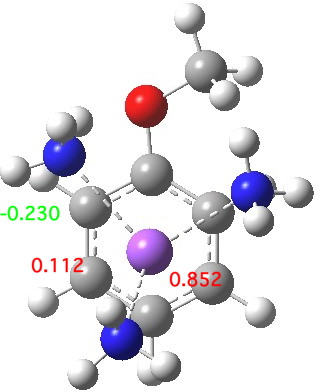
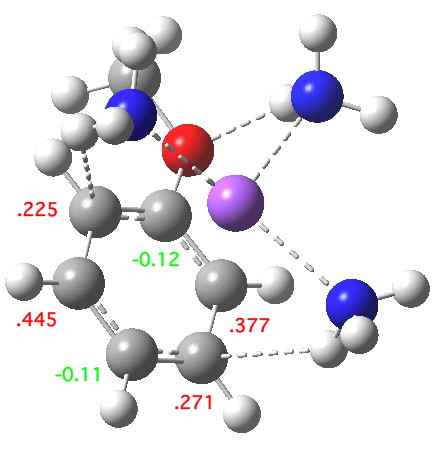
    The start point is a solvated sodium atom (loosely) coordinated to anisole (methoxybenzene). The calculation (ωB97XD/6-311+G(d,p)/SCRF=acetonitrile) on this neutral system shows the spin density arising from the single unpaired electron is mostly (0.851) on the sodium, although a little spin density has crept onto the anisole. The dipole moment (12.0D) shows that solvation cannot just be ignored. 

    Start point, with select spin densities. Click for 3D

    The next stage involves an electron transfer from the sodium to the anisole ring, and indeed the spin densities transfer from the Na to the two ortho- and two meta-positions on the ring (the residual value on Na is -0.02). This suggests that the valence bond representations in the diagram above are incomplete (they imply spin density on only two rather than four carbon atoms). The geometry of the anisole ring now shows bond alternation, with two long bonds (1.45 – 1.46Å) and four short bonds (1.39-1.41Å). This could be viewed as the result of a pseudo-Jahn-Teller distortion resulting from placing an electron into one of the degenerate LUMO molecular orbitals of the benzene-like set. The free energy ΔG298 of this charge-transferred product is 11.1 kcal/mol exothermic compared to the reactant and it has a dipole moment of 11.6D, similar to the precursor despite being an ion pair!

    The contact ion-pair resulting from electron transfer. Click for 3D.

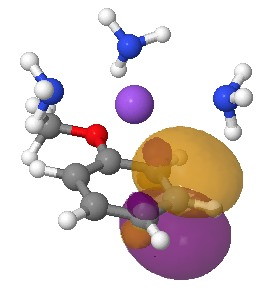
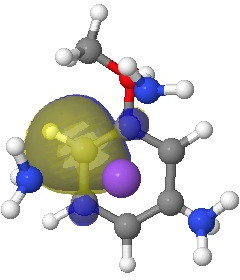
    I start the analysis of how this species will protonate by inspecting the four highest energy NBOs (natural bond orbitals). Their energies are -0.144, -0.152, -0.167 and -0.167 au. The first of these with the highest energy might be expected to be the most basic. It corresponds to M in the above scheme (below). The next however is O and the last two are the remaining O/M positions.

    Highest energy (-0.144) NBO orbital on M. Click for 3D.

    Next highest energy (-0.152)  NBO on O. Click for 3D.

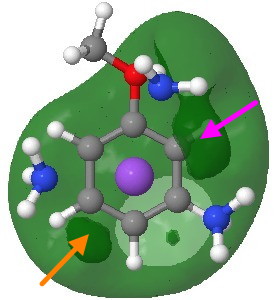
    Another measure of basicity is the molecular electrostatic potential (a measure of how attractive any point in space is towards a proton). It is shown below (as a green surface) only as the -ve potential (that part that is attractive to a proton). On the face bearing the proton donors (the ammonia groups attached to the Na) there is a clear preference for O (marked with a magenta arrow, but not the same O as predicted by the NBO), but with a slightly smaller basin corresponding to M (again, not the M from the NBO analysis and marked with an orange arrow).

    Molecular electrostatic potential (-ve phase). Click for 3D

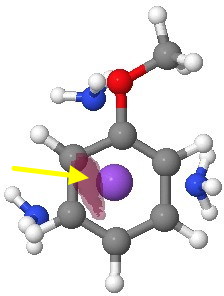
    Viewed from the other side of the anisole ring (and rendered at a higher threshold), the electrostatic potential seems to favour O, but only very slightly over M. There really is not much in it.

    Molecular electrostatic potential (-ve phase, other face). Click for 3D.

    All these properties are measures of the radical-anion-ion-pair. It is clear these different measures do not agree with one another! What we really need is the transition state for the proton transfer. I will go off and hunt for these. If I find them, I will report back here. And beyond the transition state are the dynamic trajectories for the protonation, which ultimately may be the only way of finally resolving this conundrum.